
Reviewed · WALKING TOURS
Cape Town: Bo-Kapp Walking Tour and Malay Cooking Class
Bo-Kaap’s painted houses are the easy part to photograph. The better reason to come here is to hear the story behind the streets, visit local shops, learn about spices, and then cook in a resident’s home. I especially like the combination of local history and home cooking, plus the chance to make roti and samosas with your own hands rather than simply watching a demonstration.
The tour also gets two practical things right: it is long enough to work up an appetite, and the meal is generous enough to feel like lunch or dinner. The main consideration is the small cooking area. In a full group, only one or two people may have room to work at the counter at a time, so this is interactive but not a private, one-on-one class.
Key points at a glance
- Bo-Kaap beyond the photo stop: Walk the cobblestone streets while learning about Cape Malay culture, local traditions, historic buildings, and the first mosque in South Africa.
- A real cooking lesson: Fold samosas, prepare chicken curry, make flaky roti, and mix sambal, also called salsa salad.
- Faldela’s spice lesson: Expect a lively explanation of spices, their uses, and their health benefits at a local spice shop.
- A generous shared meal: Eat the dishes you helped prepare, followed by koesisters and cardamom tea.
- Recipes to take home: The recipes are sent by email, giving you a useful souvenir instead of another trinket.
- Good value at $68: Four hours, a museum entrance fee, water, a guided walk, and a full cooked meal make this a strong choice for food and culture lovers.
Why Bo-Kaap is more than a row of colorful houses
Bo-Kaap is one of Cape Town’s most recognizable neighborhoods, but a quick walk past its bright facades tells you very little. This experience gives the colors a human and cultural setting.
Your guide leads you through the older parts of the neighborhood, pointing out historic buildings and explaining local customs. You learn about the Cape Malay community and the role of Islam in Bo-Kaap’s identity. The walk also includes information about the area’s first and oldest mosque in South Africa, along with a cultural museum.
That context matters. Without a guide, you can take attractive photographs, but you may miss why the neighborhood looks and feels the way it does. The walk helps you notice architectural details, religious landmarks, and the close ties among local residents.
The guides are local people rather than outside narrators. Faldela leads some sessions, while other dates have featured Gadija, Gandija, or Ilyas. The exact guide may vary, but the useful feature is the local connection. Faldela is clearly well known on her street, and Ilyas has led walks as someone deeply familiar with the community.
You may also stop at local art, souvenir, and other small businesses. Meeting artists or seeing a home being renovated can make the walk feel less like a checklist of sights and more like a look at a living neighborhood.
More Walking Tours in Cape Town
- Cape Town: Nathi Langa Township Walking Tour
★ 4.9 · 493 reviews - Cape Town: Art, Culture & History Walking Tour
★ 4.9 · 392 reviews - Cape Town: Street Art Walking Tour in Woodstock
★ 4.8 · 293 reviews
Starting at the purple house
The meeting point is a purple house with flower pots on top. That is a memorable landmark, but you still need to pay attention when you arrive because the tour takes place in a residential area rather than at a large attraction entrance.
Wear comfortable shoes. Bo-Kaap’s streets include cobblestones, and the walking portion takes place before the cooking session. The total activity lasts four hours, with the walk serving as a useful first chapter and appetite builder.
Starting with the walk is the right order. You get the setting and background before sitting down to discuss food. By the time you begin cooking, the spices and dishes have a cultural meaning rather than appearing as a random menu.
The pace is designed for conversation and explanation, not a race through the neighborhood. That makes it a good fit if you want to ask questions. It also means you should not book it expecting a rapid sightseeing tour that covers every major Cape Town landmark.
The mosque, museum, and local shops
The walking route includes some of Bo-Kaap’s oldest buildings and an explanation of the community’s Muslim traditions. The mosque is an important stop because it links the neighborhood’s daily life, faith, and history.
A cultural museum is also part of the plan, and the museum entrance fee is included. The exact flow can vary, so you should check with your host about how much time is spent inside. One session did not include a museum visit, with the guide explaining that the museum was not especially strong, so you may prefer to set aside your own time if seeing it is important to you.
That is a useful distinction. The best part of the experience is not a formal museum display. It is the guide’s interpretation of the neighborhood, along with the walk through streets where people live and work.
The local shops add another layer. You might browse art and souvenirs, meet an artist, or stop at a spice shop. These visits support small businesses and give you a chance to buy something connected to the place, though shopping is not the main point of the tour.
A spice lesson that earns its place
The spice shop stop is one of the more distinctive parts of the itinerary. Instead of just smelling a few jars and moving on, you learn about different spices, how they are used, and their possible health benefits.
Faldela is especially lively during this part of the experience. If you enjoy food knowledge, start a video when she begins explaining the spices, provided your group and guide are comfortable with it. There is a lot to remember, including different ways to use each spice.
This section is useful at two levels. First, it prepares you for the cooking class by helping you recognize the flavors in Cape Malay food. Second, it gives you ideas you can use at home, even if you do not recreate the entire meal.
Keep the health claims in perspective. The tour presents traditional and practical uses for spices, but this is a food lesson, not medical advice. The value is in learning how the ingredients fit into local cooking and everyday kitchen habits.
More cooking classes in Cape Town:
- Cape Town: Malay Cooking Class and Lunch in Bo-Kaap
★ 4.8 · 515 reviews - Authentic African Cuisine Cooking Experience
★ 5.0 · 236 reviews - Cape Town: Cape Malay Cooking Class in Bo-Kaap
★ 4.8 · 120 reviews - Cape Town: Authentic African Cuisine Cooking Experience
★ 4.9 · 31 reviews
Cooking in a Bo-Kaap home
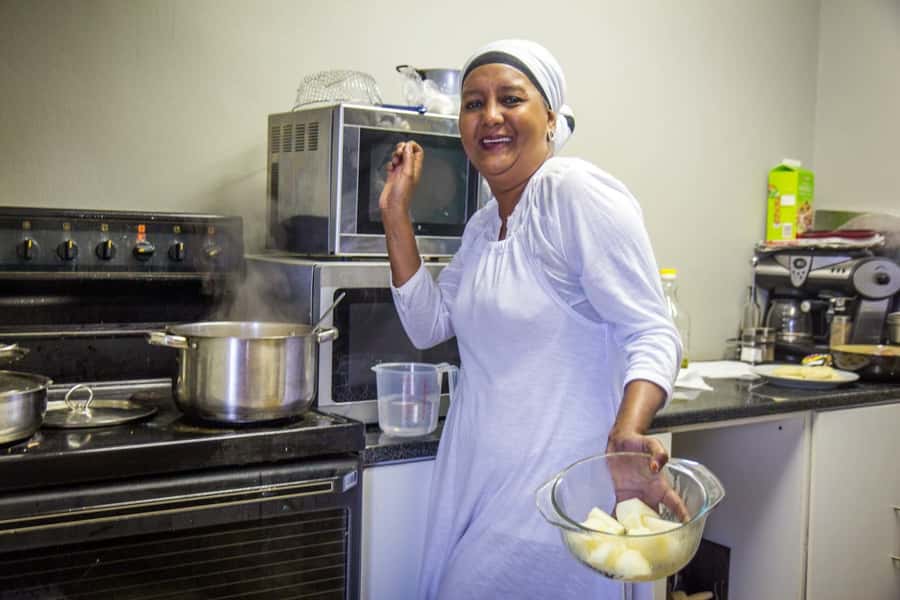
After the walk, you return to the host’s home for the cooking class. Faldela is the main cooking host associated with this experience, and the setting is warm and personal rather than a commercial culinary school.
You begin with the first course, folding samosas. You may also prepare chili bites, depending on the session and menu. Folding the pastry is the kind of small skill that makes the class worthwhile because you can repeat it at home without specialist equipment.
The main dish is chicken curry. You prepare it with an explanation of the spices and the methods that give Cape Malay food its character. The class is organized, but the teaching style is relaxed and humorous. Faldela keeps people involved and shares the tricks that make the food more flavorful.
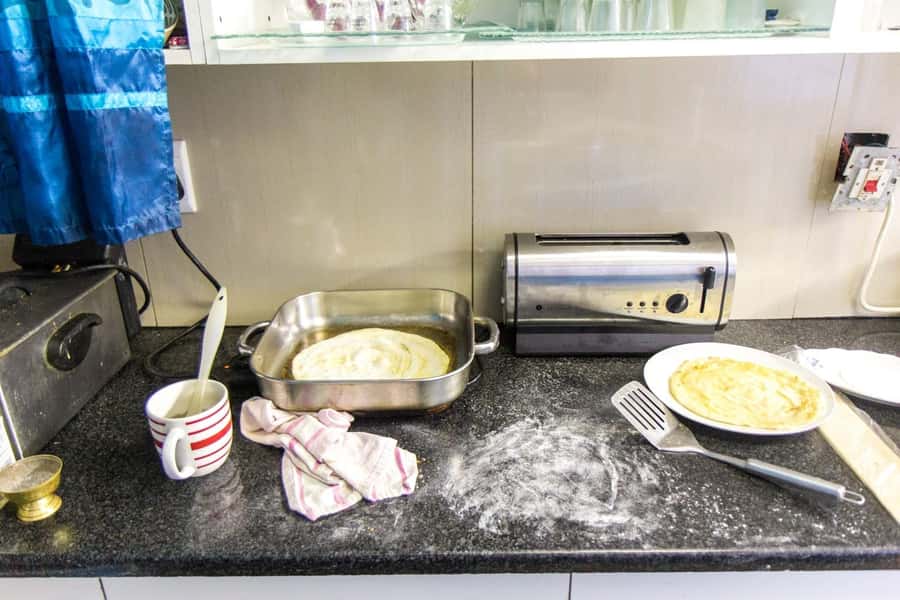
Then comes the roti. This is likely to be the most hands-on and rewarding task. You learn to make the flatbread from scratch, including the folding technique that creates flaky layers. Several people have gone home eager to try it again, which tells you more than a standard cooking demonstration would.
You also make sambal, described here as salsa salad. It provides a fresh contrast to the curry, roti, and fried items. The menu is substantial, and you should arrive ready to eat rather than treating the cooking as a small tasting.
How interactive is the class?
You do take part, but you should set realistic expectations about the space. The cooking area is small and may only comfortably fit one or two people at the work surface at once.
That does not make the class poor. It simply means participation may happen in turns. You could fold samosas while someone else works on the roti, then switch places. In a larger group, some of your learning may come from watching the technique closely and asking questions.
The teaching is not overly formal. Faldela does much of the work when needed, which helps keep the meal on schedule and ensures that the results are good. If you want a serious professional kitchen class where every participant prepares every component independently, this may feel too compact.
If you want a friendly introduction to Cape Malay cooking, the small home setting is part of its appeal. You are learning in the same kind of domestic environment where these dishes make sense, rather than in a polished studio designed only for tourists.
Dietary needs have been handled well in some sessions, but the supplied information does not spell out every available adaptation. Contact the provider before booking if you have a serious allergy or strict dietary requirement.
Sitting down to eat what you made
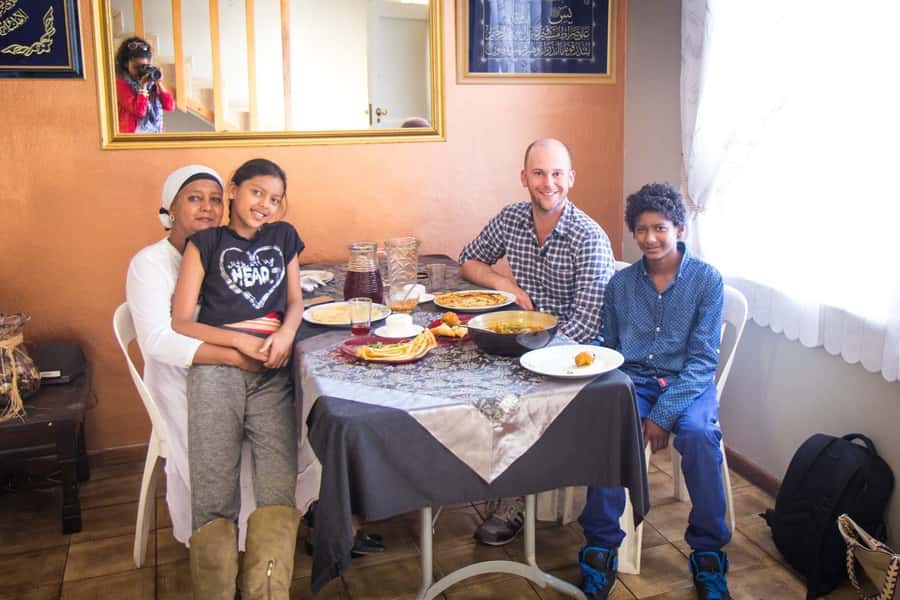
The meal is the payoff, but it is not just a final plate handed to you. You sit down with the host and fellow participants and share the food prepared during the class.
The menu includes chicken curry, roti, sambal, samosas, and possibly chili bites, followed by koesisters and cardamom tea. Koesisters are spicy, sweet-savory Cape Malay donuts flavored with cardamom and other spices. They give the meal a distinctly local finish.
I like this shared table because it changes the mood of the activity. The walk provides information, the cooking provides useful skills, and the meal gives you time to talk. You may find yourself comparing notes with people from different countries while your host explains more about the food and neighborhood.
The food is described as plentiful, so this should satisfy you as a full meal rather than a token sample. Water is included. Additional food and drinks are not included, and alcohol is not part of the experience.
What makes the $68 price worthwhile
At $68 per person, this is not the cheapest way to see Bo-Kaap. You could walk through the neighborhood on your own for little or no cost. The price makes sense if you value the guide, the home setting, the cooking instruction, the meal, and the recipes afterward.
Four hours is a useful length. A shorter walk could leave you with photographs but little understanding. A longer cooking class might offer more detailed technique, but it could also become tiring for people who mainly want a cultural introduction.
The value is strongest for anyone who would otherwise pay separately for a Cape Town food activity and a guided neighborhood visit. Here, the two parts support each other. The walk explains the community, and the cooking gives you a direct way to connect with its food traditions.
The included museum entrance fee and water are helpful, though they are not the main reason to book. The meal and personal instruction carry most of the value.
Who should book this experience?
I would recommend it to you if you want a small-scale cultural activity that combines food, conversation, and place. It suits first-time visitors who want more context for Bo-Kaap, as well as returning visitors looking for something beyond the usual Cape Town sights.
It is especially good for:
- People who enjoy learning by doing
- Couples, families, and small groups who like shared meals
- Solo visitors who want a social activity
- Home cooks interested in samosas, curry, roti, and Cape Malay spices
- Anyone who wants to support local businesses and spend time in a residential community
You do not need to be a skilled cook. The class is designed to guide you through the steps, and the host helps keep the results on track. Even if cooking is not your main interest, the walk and conversation make the activity worthwhile.
I would think twice if you dislike group participation, have difficulty standing in a compact kitchen, or want a major sightseeing tour rather than a neighborhood experience. The colorful houses are part of the appeal, but this is not mainly a photography outing.
Practical details before you book
The tour is conducted in English and includes a live guide. Comfortable shoes are the only specific item listed to bring, but you should also plan to arrive ready for a four-hour activity that combines walking, standing, cooking, and eating.
The host meeting point is the purple house with flower pots on top. Starting times vary, so check availability for your date.
Free cancellation is available up to 24 hours before the activity for a full refund. You can also reserve now and pay later, which is useful if your Cape Town schedule is still shifting.
The cooking host and walking guide may not always be the same person. Faldela is associated with the cooking portion, while Gadija, Gandija, and Ilyas have led walking tours on different occasions. If a particular guide matters to you, ask when booking rather than assuming who will lead your session.
Should you book the Bo-Kaap cooking class?
Yes, if you want to understand Bo-Kaap through both its streets and its food. The strongest parts are the local guides, the spice explanation, the hands-on roti and samosa work, and the generous meal shared in a home.
Book it with the right expectations. You will not have unlimited counter space, and the museum visit may not be the highlight. But for $68, four hours of guided neighborhood context, cooking instruction, a full Cape Malay meal, and take-home recipes is a solid deal.
If your Cape Town plan already includes a standard Bo-Kaap photo stop, this is the better way to spend extra time there. You leave with more than pictures. You take home a clearer sense of the community and the ability to make flaky roti yourself.
FAQ
How long does the Bo-Kaap walking tour and cooking class last?
The activity lasts four hours. It includes the Bo-Kaap walking tour, local stops, the cooking class, and the shared meal.
What food will I prepare?
You will help fold samosas, prepare chicken curry and roti flatbread, and make sambal, also described as salsa salad. Some sessions also include chili bites.
What dessert is included?
The meal ends with koesisters, which are spicy, sweet-savory donuts, and cardamom tea.
Is the museum entrance included?
Yes. The museum entrance fee is included in the activity price. The exact amount of time spent at the museum can vary.
Who leads the tour?
Faldela is associated with the cooking class. Walking guides have included Faldela, Gadija, Gandija, and Ilyas, depending on the session.
What should I bring?
Bring comfortable shoes for the cobblestone walking route. Water is included.
Can I cancel or pay later?
You can cancel up to 24 hours in advance for a full refund. Reserve now and pay later is also available.
More workshops and classes in Cape Town
- Private Surf Lesson
★ 5.0 · 53 reviews - Private Surf Lesson in Cape Town – Transport & Photos Included
★ 5.0 · 50 reviews - Muizenberg Cape Town: Private Surf Lesson
★ 5.0 · 37 reviews - Private Cape Malay Cooking Class in Cape Town with a Local Family
★ 5.0 · 24 reviews
Just listed around Cape Town
- Cape Town: Inspiring sustainable change through Street Art★ 4.9 · 5 reviews
- Cape Town Tandem Paragliding Square 1 Paragliding★ 5.0 · 5 reviews
- SandBoarding in Capetown + PhotoShoot★ 4.0 · 5 reviews
- Cape Town: Full-Day Private Peninsula Tour★ 3.6 · 5 reviews
- Private FULL DAY Tour: Cape of Good Hope & Boulders Beach★ 5.0 · 5 reviews
- Cape Town Full Day Family Fun With Kids Private Tour★ 4.0 · 5 reviews
- Private Tour to Aquila Game Reserve in Cape Town – see the Big5★ 5.0 · 5 reviews
- Peninsula Tour Cape Town★ 5.0 · 5 reviews
Walking Tours, compared.

Browse the lists this tour appears in