

Reviewed · SOWETO & APARTHEID MUSEUM TOURS
Soweto: Walking Tour with a Local Guide and Lunch
Soweto is best understood on foot, where memorials, famous homes, street food, and ordinary neighborhoods sit close together. This tour connects the 1976 uprising to present-day life, with local guides such as Maweza sharing personal stories alongside the wider story of South Africa.
I like the walk through Moema Street, which follows the route of the historic student march, and the simple local lunch, often a Kota or similar street-food meal. The main drawback is that four hours covers a lot of ground, so expect steady walking, a brief taxi ride, and only a short visit inside Nelson Mandela’s House. The entrance fee there is extra.
Key points to know before you book

- Start at the Hector Pieterson Memorial: Meet in front of Vilakazi Espresso, opposite the memorial, and begin with the events of June 1976.
- Follow the march route: Walking down Moema Street gives the uprising a physical setting rather than leaving it as a museum lesson.
- See two Nobel Peace Prize-linked homes: Mandela’s House can be visited inside for an extra fee, while Desmond Tutu’s former home is viewed from outside.
- Eat local street food: Lunch is included, but drinks are not, and the meal may be a set choice rather than a full menu.
- Ride a minibus taxi: The short trip to Orlando East adds a slice of everyday transport to the tour.
- Expect a serious, personal tour: The guide covers apartheid, politics, hardship, culture, and daily life, not just the famous sights.
Why walking Soweto changes the story

Soweto is often presented through a short list of names: Nelson Mandela, Desmond Tutu, Hector Pieterson, and the 1976 uprising. That list matters, but it can make the township feel like a page in a history book. Walking between the landmarks gives you a better sense of how those stories connect to homes, shops, roads, schools, and ordinary community life.
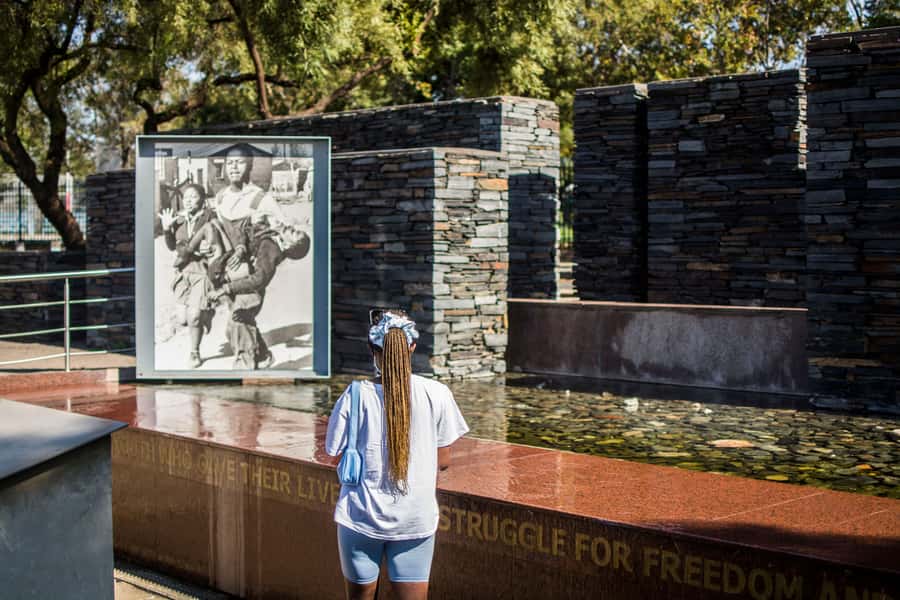
The tour begins at Vilakazi Espresso, opposite the Hector Pieterson Memorial. That is a useful meeting point because the memorial immediately puts you in the setting of the student protests that helped expose the violence of apartheid to the world.
Your guide explains the events of 1976 and the significance of the young people who protested against Afrikaans being used as a language of instruction. The visit is not just a quick photo stop. You spend about 20 minutes here, with time for an introduction, guided explanation, and a look at the memorial site.
I would arrive with an open mind. This is a serious subject, and the tour does not smooth away the painful parts of Soweto’s past. That honesty is one of its strengths.
More Walking Tours in Johannesburg
- Soweto Walking Tour with Lunch
★ 5.0 · 288 reviews - Johannesburg: Local Food Tasting Guided Walking Tour
★ 4.7 · 192 reviews - Johannesburg: City Centre Walking Tour
★ 4.8 · 152 reviews
Moema Street and the 1976 student march
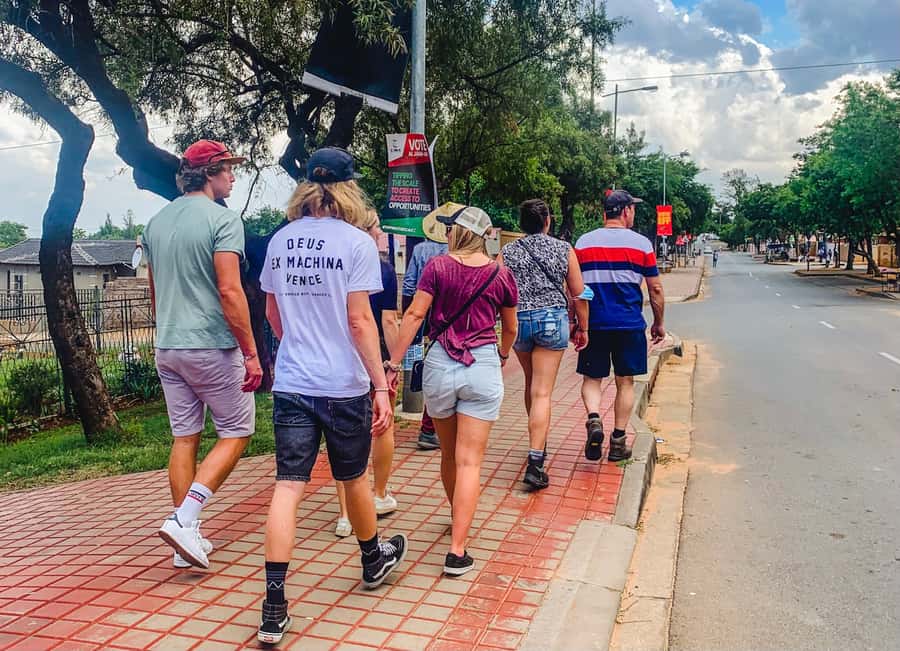
From the memorial, you walk down Moema Street, retracing part of the route associated with the historic march. This is where the tour moves beyond a standard monument visit. You are not only hearing where events happened. You are walking through the streets and seeing the setting around them.
The value here comes from the guide’s ability to connect place and history. Maweza, who is repeatedly praised for his personal connection to Soweto and his clear storytelling, has been described as more of a historian than a simple sightseeing guide. Other guides, including Teboho, Thabo, and Mulalo, have also led groups on the route.
Expect plenty of questions and discussion. The tour is delivered in English, and an English audio guide is also included. The live guide is the important part, though. You can ask about apartheid, the uprising, present-day Soweto, or South Africa’s wider political story as you go.
Mandela’s House on Vilakazi Street

The walk continues to Vilakazi Street in Orlando West, one of Soweto’s best-known streets. Nelson Mandela’s House is the major stop here. You have roughly 20 to 25 minutes to explore inside the home where Mandela lived before his long imprisonment.
The entrance fee is not included, so bring extra cash or confirm the current admission arrangements before setting out. That extra cost is worth considering when you compare this tour with other Soweto outings. The guided walk itself has a solid amount of content, but the interior visit is an add-on rather than part of the advertised price.
The house offers a personal counterpoint to the larger political story. You see the place connected to Mandela’s early adult life and the struggle against apartheid, rather than only hearing about him in a museum or from a distant viewpoint.
Time is limited, so do not expect a slow, detailed museum visit. You will get a focused look inside, followed by time on Vilakazi Street. The area is also a natural place for photographs and a little browsing.
Desmond Tutu’s home and the meaning of Vilakazi Street
A short walk brings you to the former home of Desmond Tutu. The stop lasts around five minutes, and the house is viewed from outside. It is brief, but it adds an important layer to the street’s identity.
Mandela and Tutu both lived on Vilakazi Street, an unusual concentration of political and religious leadership in one neighborhood. The guide uses the stop to explain Tutu’s role in South Africa’s transition and the wider story of resistance, reconciliation, and public life.
This is a good example of the tour’s pace. Some stops are full visits, while others are quick explanations and photo opportunities. If you want long museum time at every location, four hours will feel compressed. If you want a connected overview with plenty of walking, the rhythm works well.
More Soweto and Apartheid Museum visits:
- Johannesburg: Hop-On Hop-Off Bus with Optional Soweto Tour
★ 4.6 · 985 reviews - Soweto /Johannesburg and Apartheid Museum Guided Full Day Tour
★ 5.0 · 932 reviews - Johannesburg Hop-On Hop-Off City Tour with Soweto Option
★ 4.5 · 768 reviews - Half-Day Tour of Soweto Tour
★ 4.5 · 712 reviews
Lunch on Vilakazi Street
Lunch comes at a local shop on Vilakazi Street, with about 25 minutes set aside for street food and tasting. The meal is included, but drinks are not. Bring cash if you want something extra.
The food is part of the point. A local Kota, a substantial South African township-style sandwich, has been served on this tour, and another description compared the lunch to a Soweto-style chip butty. The exact meal may vary, so treat this as a local, filling stop rather than a restaurant tasting menu.
One useful detail is that a vegetarian option has been available, but you should raise dietary needs with the guide early. There may not be a broad choice of dishes, and the lunch can feel basic if you are expecting a sit-down meal with several courses.
I like this kind of food stop because it keeps the tour grounded. You are eating where the guide chooses to eat locally, not stepping away from Soweto for a generic tourist lunch. If you want to try a drink or sample something else, plan to pay separately.
Winnie Mandela House and the local political story
After lunch, the route includes a brief stop at Winnie Mandela’s House, with about 10 minutes for photos, sightseeing, and explanation. Like the Tutu stop, this is not presented as a long interior museum visit.
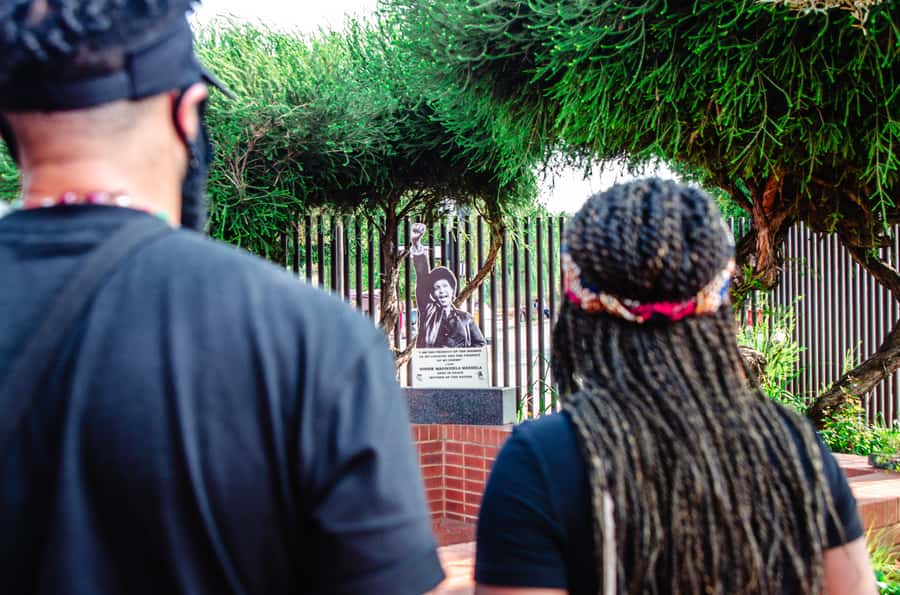
The stop helps broaden the story beyond Nelson Mandela alone. Winnie Mandela’s public role, political identity, and place in the anti-apartheid struggle are part of Soweto’s story, and the guide can place her home within that setting.
This is also where a local guide adds real value. A guide with personal ties to Soweto can explain how public figures, family life, political movements, and township neighborhoods overlap. The tour is not only about famous people. It asks you to look at how national events affected local streets and households.
Orlando East and the minibus taxi ride

From the western part of the route, you take a minibus taxi to Orlando East. The ride is short, but it matters because it introduces you to a normal form of local transport rather than keeping the entire tour inside a private vehicle.
This is not a luxury transfer. It is a practical part of the township experience, and you should expect the same kind of public transport used by local residents. The taxi ride also breaks up the walking, which helps on a hot day.
The itinerary covers many stops in four hours, so the transport connection keeps the route moving. Still, most of the experience is on foot. Comfortable shoes are essential, and sunscreen, water, and a hat or other sun protection make sense. The tour runs rain or shine, so bring suitable clothing if the forecast is poor.
Nomzamo Park and daily life beyond the famous streets

Nomzamo Park is an informal settlement included near the end of the tour. The stop lasts about 25 minutes and may involve walking through or passing by areas of corrugated-metal homes and modest infrastructure.
This is the part that requires the most care from you. You are entering a lived-in community, not an open-air museum. Listen to the guide, follow local etiquette, and let residents set the tone of any interaction. The visit is intended to give you a better sense of daily life, hardship, and community strength, not to turn poverty into a photo backdrop.
The guide may give you the choice to interact with residents and children or observe from a little distance. That flexibility is important. You should never feel pushed into taking photographs, making conversation, or entering an area where you feel uncomfortable.
A small donation may be welcomed by the community, but it is not listed as part of the tour price. Carrying some cash is useful, both for this possibility and for street performers or other small purchases. One practical tip: keep enough cash for your guide’s tip as well if you feel the service deserves it.
The Soweto Towers finish

The final major stop is the Soweto Towers in Orlando East. The pair of brightly painted cooling towers is one of the township’s most recognizable modern sights, and the stop gives the tour a visual change after the memorials and political landmarks.
You have about 15 minutes for photographs, sightseeing, and a short guided explanation. The towers are also a reminder that Soweto is not frozen in the apartheid era. The township has a present-day identity shaped by work, music, food, art, public transport, and changing neighborhoods.
Do not expect a long activity at the towers. This is a viewing and photo stop, not a separate adventure outing. Its place at the end works well because the tour finishes with a contemporary symbol after spending much of the day tracing the past.
What the local guide adds
The strongest reason to choose this tour is the guide. Maweza is frequently identified as the lead guide, and his background growing up in Soweto gives the history a personal frame. He is described as animated, thoughtful, funny, and able to answer questions without losing the group’s focus.
That does not mean the tour is a one-man performance. Teboho, Thabo, and Mulalo have also guided groups, and the central strength is the local perspective. Guides have adjusted the pace, checked how comfortable people felt, and tailored the conversation to different ages and interests.
You can expect serious historical explanation, but not a dry lecture. Dancing, local conversation, political discussion, and personal stories have all formed part of the atmosphere on different outings. The tone can shift from moving to lighthearted, which feels natural for a real neighborhood.
Safety is another practical concern. Several accounts describe the guides as attentive and reassuring, including help waiting with a visitor for an Uber at the end. That is encouraging, but you should still use normal city awareness and follow the guide’s instructions.
Is $43 a fair price?
At $43 per person, the tour offers four hours with a local English-speaking guide, lunch, bottled water, the walking route, and the minibus taxi ride. The price does not include hotel pickup or drop-off, drinks, or admission to Mandela’s House.
I consider that fair value if you want context rather than a quick drive past the main sights. You are paying for the guide’s time and local understanding as much as for the food and transport. The tour moves through several parts of Soweto and includes both famous locations and less commercial areas.
The value is weaker for someone who wants a private vehicle, a slow museum schedule, or a polished culinary experience. Lunch is local and straightforward, and the walking pace can be demanding. Add the Mandela House entrance fee and any drinks or donations to your budget.
The booking terms are flexible: you can reserve now and pay later, and cancellation is free up to 24 hours before the tour for a full refund. Starting times vary, so check availability when booking.
Who should book this Soweto walk?
I would choose this tour if you want to understand how Soweto fits into South Africa’s political and social story. It suits adults, families with older children, and visitors who prefer conversation and local contact over a bus window.
It is also a good match if you have already visited the Apartheid Museum or Constitution Hill and now want to see places connected to that history. The museum gives you the national framework. This walk gives you streets, homes, food, and present-day neighborhoods.
Families can manage it, and children aged 8, 12, and 15 have taken part successfully. Still, explain beforehand that the tour includes difficult history and a visit near an informal settlement. Anyone with limited mobility should note that wheelchair users cannot take part, and there is substantial walking.
What to bring and how to prepare
Wear comfortable shoes. You will walk through several neighborhoods, and the tour is not designed for formal footwear.
Bring sunscreen, water, a camera, cash, hand sanitizer or tissues, and a face mask or other protective covering. Bottled water is included, but your own water is still sensible on a hot day.
Cash is especially useful for drinks, optional purchases, street performers, donations, and a tip for the guide. Keep your belongings secure and ask before photographing people, homes, or children.
Meet in front of Vilakazi Espresso, opposite the Hector Pieterson Memorial. Hotel pickup and drop-off are not included, so arrange your own way to and from the meeting point.
Should you book this Soweto tour?
Book it if you want a serious, local-led introduction to Soweto that mixes history with everyday life. The walking route, the 1976 uprising sites, Mandela and Tutu landmarks, street food, minibus taxi, and Nomzamo Park create a fuller picture than a simple landmark drive.
Skip it if you need a private vehicle, wheelchair access, a long lunch, or a carefully chosen menu. Also think twice if you dislike walking in hot or wet weather.
For most independent visitors to Johannesburg, this is a strong four-hour choice. Go with comfortable shoes, extra cash, and respect for the community, and you will get far more than a checklist of famous names.
FAQ
Where does the Soweto walking tour start?
Meet your guide in front of Vilakazi Espresso, opposite the Hector Pieterson Memorial.
How long does the tour last?
The tour lasts four hours.
What language is the tour conducted in?
The live tour guide speaks English, and an English audio guide is included.
Is lunch included?
Yes. Lunch and bottled water are included. Drinks are not included.
Is entry to Nelson Mandela’s House included?
No. The entrance fee for Nelson Mandela’s House is not included in the tour price.
Is hotel pickup and drop-off provided?
No. You must make your own way to the meeting point and arrange your return afterward.
Can wheelchair users join the tour?
No. The activity is not suitable for wheelchair users.
More lunch stops in Johannesburg
- Full-Day Soweto, Apartheid Museum and Lunch Tour
★ 5.0 · 410 reviews - Soweto: Guided Bicycle Tour with Lunch
★ 4.9 · 292 reviews - Johannesburg and Soweto Apartheid Full Day Tour w/Lunch
★ 4.9 · 219 reviews - Guided Bicycle Tour of Soweto with Lunch
★ 5.0 · 180 reviews
Just listed around Johannesburg
- Constitutional Hill and Soweto 5 hours tour.★ 5.0 · 5 reviews
- 5 Day Kruger Glamping Safari and Panorama Tour★ 5.0 · 5 reviews
- Cradle of Humankind and Maropeng Day Tour from Johannesburg★ 4.0 · 5 reviews
- Johannesburg: Hot Air Balloon Flight★ 5.0 · 5 reviews
- Lion park★ 4.5 · 5 reviews
- Half Day Soweto and Apartheid Museum Guided Tour★ 5.0 · 5 reviews
- Pretoria Historical Tour★ 4.0 · 5 reviews
- 5 Day Kruger National Park and Panorama Route Safari★ 4.5 · 5 reviews
Soweto & Apartheid Museum Tours, compared.

Soweto /Johannesburg and Apartheid Museum Guided Full Day Tour
Read our review →
Johannesburg Hop-On Hop-Off City Tour with Soweto Option
Read our review →
Jo’berg in 1 Day: Soweto, Apartheid Museum & City Tour
Read our review →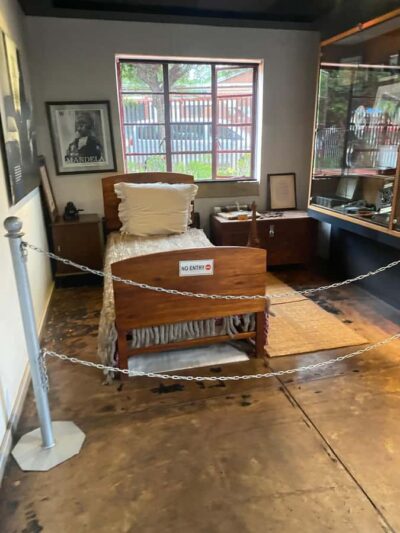
Full-Day Tour with Soweto and Apartheid Museum
Read our review →

Full-Day Soweto, Apartheid Museum and Lunch Tour
Read our review →Browse the lists this tour appears in