
Reviewed · CITY TOURS
Johannesburg: City Centre Walking Tour
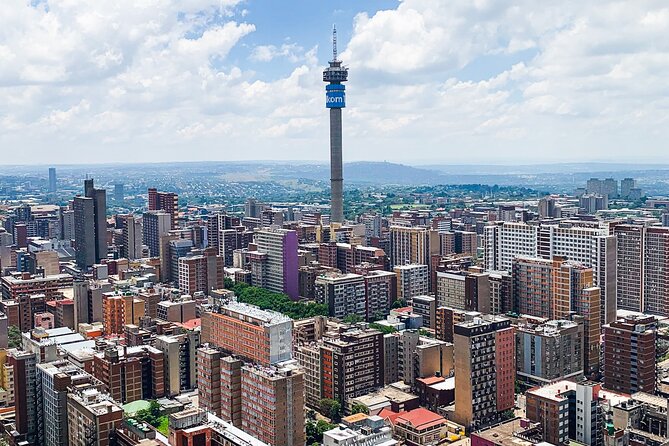
Johannesburg’s city centre is not a polished postcard. That is precisely why this walk matters. From Gandhi Square to Nelson Mandela Bridge, you see old gold-rush buildings, working courts, migrant-labor history, street art, and the city’s present-day struggles. I like the honest look at the CBD, and I like that guides such as Refiloe and Mulalo bring personal warmth to serious history. The main consideration is that conditions and access can change, and some stops, including the Workers Museum or Carlton Centre viewpoint, may not be open as described.
I especially like two things here: the route connects South African history to real streets, rather than keeping it inside a museum, and the guides make safety part of the experience without pretending the city has no problems. You should expect a brisk three-hour walk, city noise, uneven moments, and frank talk about politics, housing, crime, and urban decline. Comfortable shoes are not a suggestion. They are the basic equipment.
Key points to know before you book

- Gold built the city: Follow Johannesburg’s beginnings from Gandhi Square through Main Street and Ferreirasdorp, where the first gold diggers settled.
- Mandela’s working life comes first: Chancellor House shows the practical side of Nelson Mandela and Oliver Tambo’s legal work, beyond the familiar monuments.
- Newtown adds the human story: The Workers Museum explains migrant labor and the conditions faced by workers who powered the mines.
- The guide shapes the day: Refiloe, Thabo, Mulalo, Mathapelo, Tebogo, Clement, and other local guides have led the walk, with particular praise for clear history and a friendly manner.
- You finish in a different Joburg: The route moves from older commercial streets into Newtown, Mandela Bridge, and youthful Braamfontein.
- Allow for changing access: Carlton Centre’s famous high viewpoint is no longer reliably open, and the Workers Museum can be closed, especially on Mondays.
Why this walk shows the Johannesburg most tours skip
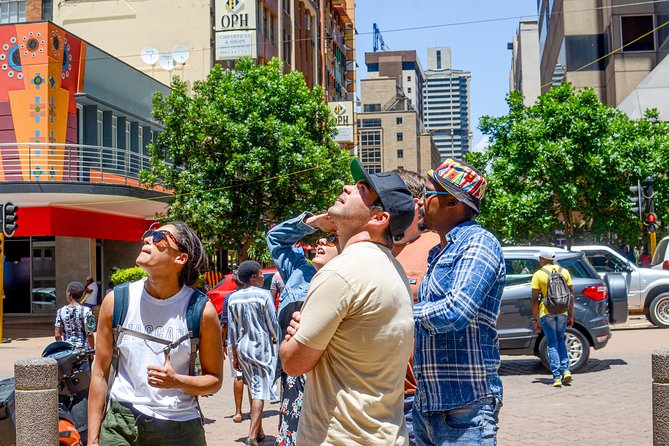
Many first-time visitors base themselves in Sandton, where hotels, offices, malls, and restaurants make life easy. This tour takes you somewhere less tidy but far more revealing: Johannesburg’s Central Business District.
I like the contrast. You are not only looking at grand façades or hearing a polished version of the past. You are also seeing how a major city functions today, with busy sidewalks, courts, post offices, businesses, public squares, art spaces, and buildings in varying condition.
That makes the tour useful for two kinds of people. If you are nervous about walking through the CBD alone, a local guide gives you a sensible route and keeps you oriented. If you already know Johannesburg, the historical links add depth to streets you may otherwise pass without a second thought.
The tour has earned a 4.8 rating from 152 bookings, and that makes sense. The strongest praise centers on the guides, not on flashy attractions. Refiloe is repeatedly singled out for his energy, humor, and command of Johannesburg history. Other guides, including Thabo, Mulalo, Mathapelo, Tebogo, and Clement, have also been praised for making visitors feel cared for and safe.
More Walking Tours in Johannesburg
- Soweto: Walking Tour with a Local Guide and Lunch
★ 4.9 · 648 reviews - Soweto Walking Tour with Lunch
★ 5.0 · 288 reviews - Johannesburg: Local Food Tasting Guided Walking Tour
★ 4.7 · 192 reviews
Gandhi Square and the gold that changed everything
Meet outside Nando’s at Gandhi Square, near the Metropolitan Building area. This is a practical starting point, though you should confirm the exact meeting details before setting off because the restaurant name is sometimes written as Ghandi Square in booking information.
From here, the guide begins with Johannesburg’s gold-mining story. The city grew quickly after gold was found on the Witwatersrand, drawing workers, investors, traders, and people from across southern Africa. Main Street gives that story a physical setting, with old commercial buildings and traces of the financial power that gold created.
This opening is valuable because Johannesburg is not an ancient city with centuries of gradual growth. It is a young city shaped by mining, money, labor, segregation, and rapid expansion. The walk helps you see why the centre once carried such importance and why its current condition is tied to those earlier forces.
The first main stop is the Carlton Centre, scheduled for about 20 minutes. It is one of the city’s best-known high-rise landmarks and an obvious place to discuss Johannesburg’s scale. The practical warning is important: the upper viewing area has stopped accepting visitors, despite its former place on many city sightseeing plans.
You may still visit the building and learn about its role, but do not book this walk solely for a panoramic observation deck. Guides have sometimes offered another view of the skyline when the tower access is unavailable.
Courts, post offices, and the working city
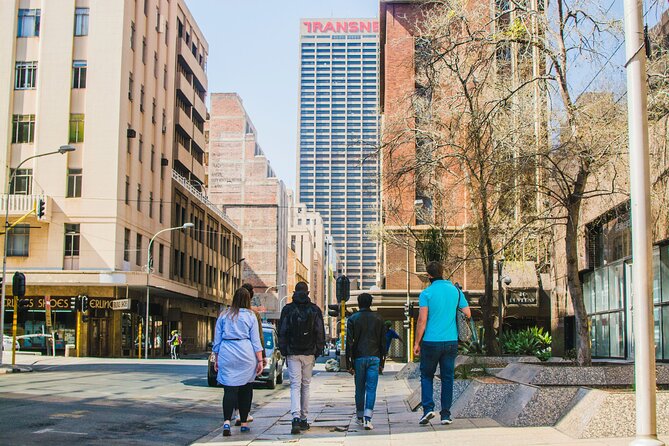
The route continues past the High Court of South Africa, Gauteng Local Division, with about 20 minutes for explanation and photographs. This stop gives the tour a chance to connect architecture with the country’s legal and political life.
You then pass the Marshalltown Post Office, a shorter 10-minute stop. It may sound ordinary, but that is part of the appeal. A city is not made only of famous statues. Public buildings show how people communicate, work, pay bills, seek justice, and move through daily life.
The walk through Marshalltown lasts around 30 minutes and includes sightseeing and photographs. Here, you get a clearer feel for the CBD as a lived-in district rather than a collection of heritage sites. The guide discusses current conditions and politics, including the pressures affecting central Johannesburg.
Expect direct conversation. The tour does not treat urban decline as scenery or pretend every street is carefree. At the same time, the purpose is not to frighten you. Several guides have been praised for choosing routes carefully and helping people feel comfortable as they walk.
That balance is one of the tour’s best features. You receive practical awareness without being pushed into a sensational crime story. Keep your usual city sense: stay with the guide, pay attention to your belongings, and follow local advice.
Ferreirasdorp and the first Johannesburg settlements
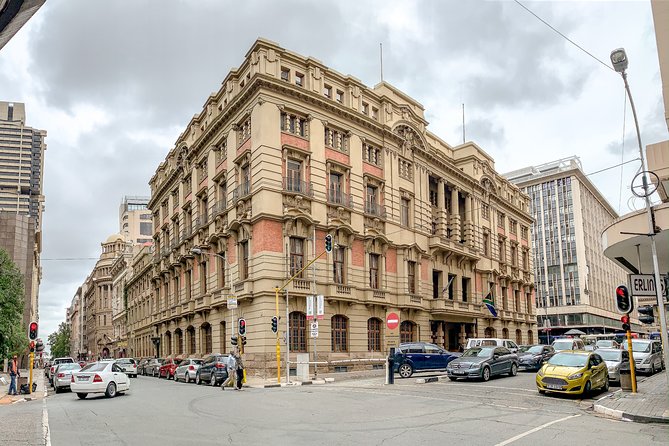
Ferreirasdorp is often called the cradle of Johannesburg because the first gold diggings began here and early diggers settled in the area. This is one of the places where the city’s origin story becomes more concrete.
The area helps correct a common misunderstanding. Johannesburg was not simply created by wealthy mining companies and tall office towers. It was also shaped by rough camps, temporary settlements, labor, migration, and the hard physical work needed to extract gold.
Your guide can connect these early beginnings with later changes in the city. The result is a more useful picture of Johannesburg: a place built through competing interests, where wealth and hardship developed side by side.
The walk also takes in the Johannesburg Central Magistrate’s Court. This is another short architectural and civic stop, with roughly 20 minutes for a visit, photographs, and explanation. You may find the courts less immediately exciting than a bridge or museum, but they help show how public institutions fit into the city centre.
A different side of Johannesburg altogether:
- From Johannesburg: Pilanesberg Nature Reserve Game Safari
★ 4.8 · 1,327 reviews - Johannesburg: Hop-On Hop-Off Bus with Optional Soweto Tour
★ 4.6 · 985 reviews - Soweto /Johannesburg and Apartheid Museum Guided Full Day Tour
★ 5.0 · 932 reviews - Johannesburg Hop-On Hop-Off City Tour with Soweto Option
★ 4.5 · 768 reviews
Chancellor House and Mandela’s legal work
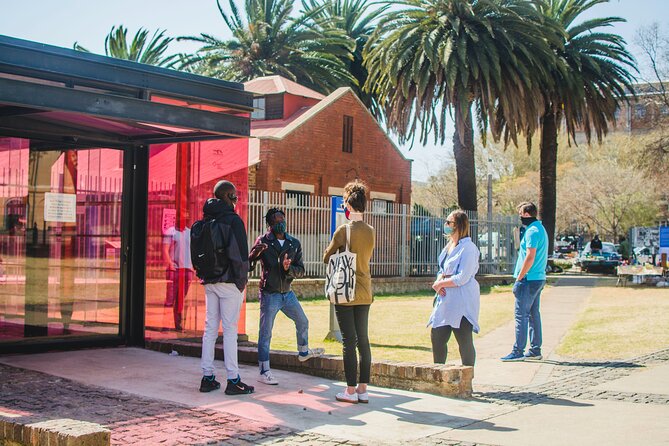
Chancellor House is one of the most meaningful stops. Nelson Mandela and Oliver Tambo established their first black-owned law firm here, making the building a direct link to their professional lives and to the political struggles of apartheid-era South Africa.
The value of this stop is its scale. You are not only hearing about Mandela as a president or global symbol. You are learning about him as a working lawyer, sharing an office and serving clients in a society built around racial discrimination.
That detail makes the history more human. It also places Mandela’s political work within a wider effort to use law, organization, and public action against an unjust system.
The guide’s role is especially important here. The best explanations move beyond dates and famous names, showing how legal work affected ordinary people. Mathapelo, for example, has been praised for discussing both major historical figures and the lives of young South Africans today. That wider view keeps the tour from becoming a simple procession of monuments.
Beyers Naude Square and the corporate side of Joburg
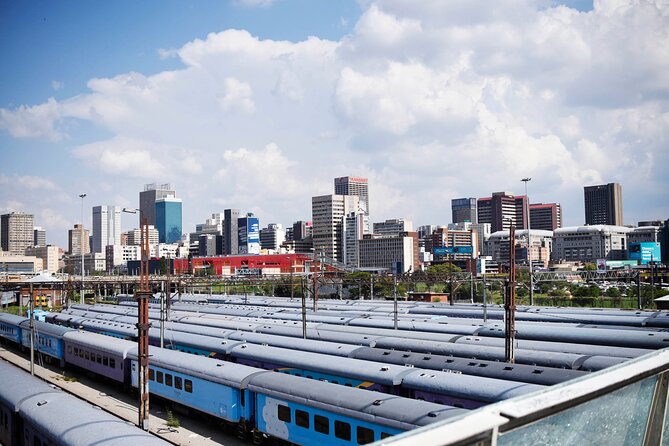
Beyers Naude Square provides another photo and sightseeing stop, planned for about 20 minutes. It is a useful pause in the route and a chance to take in the changing feel of the centre.
You also pass the Anglo American corporate office for roughly 10 minutes. This stop ties the street back to mining wealth and corporate power. The city’s grand buildings were not accidental decorations. They grew from the companies and industries that made Johannesburg an economic force.
I like this part because it lets you read the city through its buildings. Look up at the façades, notice the gaps between older structures and newer development, and listen as the guide explains how the centre has changed.
Do not expect every building to be open for a formal interior visit. Much of the experience is an outdoor walking tour, with exterior architecture, public spaces, and guided interpretation carrying the story.
The Workers Museum and Newtown’s labor story
Newtown shifts the focus from mine owners, lawyers, and corporations to workers. The Workers Museum is scheduled as a 15-minute stop, with time for photographs and a guided visit.
Its subject is migrant labor, one of the key forces behind Johannesburg’s growth. Workers came from across southern Africa to labor in the mines, often under harsh conditions and separated from their families and communities. Understanding this system is essential if you want to understand the city’s social structure and the wider history of South Africa.
The museum may be closed when you visit. Monday closures have caused problems, and one recent walk had to rely on the guide’s explanation instead. That is a real limitation, but the stop can still work if your guide explains the subject clearly.
I would check the opening status before booking if the museum is your main reason for choosing this tour. If it is closed, you will lose the interior exhibits, though you still gain the surrounding Newtown context and the guide’s account.
Mary Fitzgerald Square and the Market Theatre
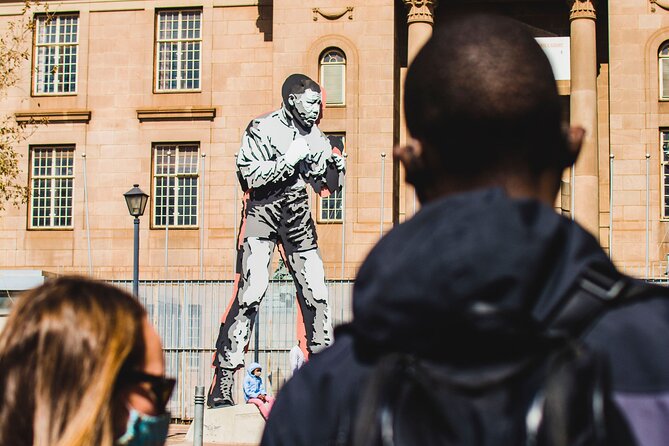
Mary Fitzgerald Square offers about 15 minutes for a visit, photographs, and sightseeing. The square is part of Newtown’s public and cultural identity, and it gives you room to pause after the denser historical stops.
The Market Theatre follows, with a shorter five-minute pass-by. That may sound brief, but the theatre’s importance is large. It became associated with cultural work during apartheid and helped create a space where theatre could address political and social issues.
Newtown is also known for street art, galleries, and other cultural spaces. The tour does not promise a long gallery visit, so think of this portion as an introduction rather than a full arts crawl. If you want more time with art, you may need a separate tour or extra time in the neighbourhood.
This is where the walk becomes less about Johannesburg’s origin and more about how people use the city to tell stories now. Art, public squares, music, and performance give Newtown a different mood from the financial streets around Marshalltown.
Nelson Mandela Bridge and the route into Braamfontein
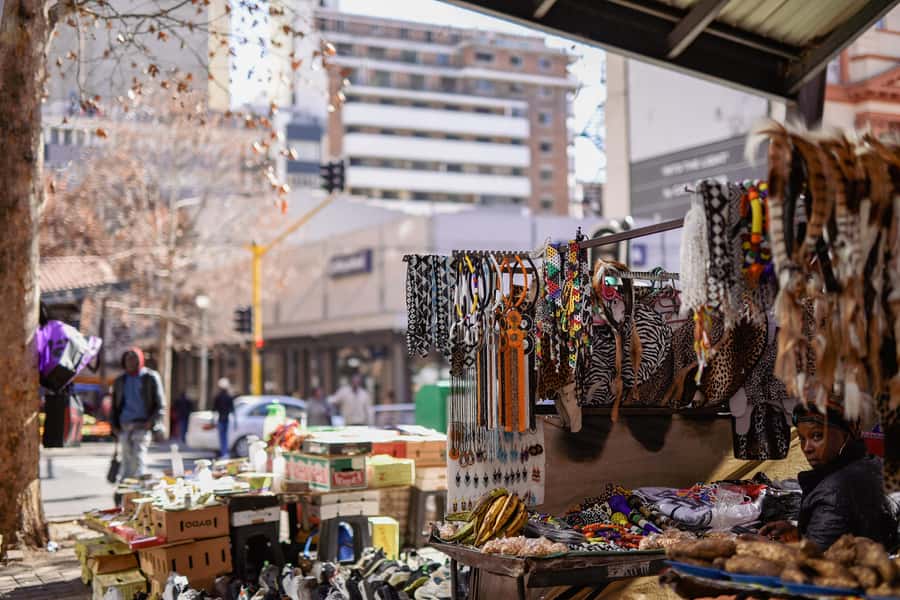
Nelson Mandela Bridge is the visual payoff. The walk passes along the bridge for about 10 minutes, with scenic views and a good chance for photographs.
The bridge connects parts of the city that can feel separate when you see them from ground level. From here, you can look back at the central districts and forward toward the creative and youthful areas around Braamfontein.
It is not simply a photo stop. After hearing about gold, law, labor, courts, and urban pressure, the bridge gives you a moment to see the city as one connected place. Bring a phone or camera, but do not let the photo opportunity distract you from the guide’s explanation.
The tour finishes at Sha’p Braai, a shisanyama restaurant. Lunch is not included in the $40 price, but ending with a South African meal is a fitting choice. If you are hungry after three hours on foot, plan to buy food here or arrange your next meal accordingly.
The final setting also helps move the experience from history into daily culture. You finish not at a hotel or coach park, but around food and local city life.
What $40 buys you in practical terms
At $40 per person, this is a fair price if you want a guided introduction to Johannesburg’s CBD rather than a quick drive past it. The fee includes the guide, walking tour, bottled water, and entrance fees.
The value comes from access and interpretation. You could walk some of these streets alone, but you would not know the significance of Ferreirasdorp, Chancellor House, the Workers Museum, or the mining-company offices. You would also miss the connections between apartheid, migrant labor, architecture, and today’s CBD.
The tour lasts three hours, though a private booking may run longer. Alastair’s walk with Refiloe extended to four hours because the guide wanted to cover more of the city. That can be generous, but it may affect plans afterward, so avoid scheduling a tight airport transfer or fixed lunch immediately after the tour.
Private or very small groups can make a major difference. Several bookings became effectively private when no one else joined. That gives you more time for questions and photos. Group size is not specified, so ask ahead if personal attention is important to you.
Hotel pickup and drop-off are not included. You must reach Gandhi Square on your own, and you finish at Sha’p Braai. The tour is offered in English with a live guide.
Free cancellation is available up to 24 hours ahead for a full refund, and you can reserve now and pay later. These policies are useful if your Johannesburg plans are still moving, but they do not remove the need to confirm the starting time and meeting point.
Who will enjoy this city-centre walk
I would choose this tour if you want history tied to real places, enjoy asking questions, and prefer walking to looking through a bus window. It is a good fit for first-time visitors who want to understand the CBD, as well as returning visitors who have spent most of their time in Sandton.
It also suits you if you want a frank account of Johannesburg’s current condition. The tour discusses politics, safety, housing problems, and the challenges facing the centre. That can be more useful than a carefully polished sightseeing route.
You should reconsider if you dislike urban walking, want a museum-heavy experience, or need every advertised stop to be open. The Workers Museum and Carlton Centre viewpoint may not be available, and the walk includes public streets rather than controlled attractions.
The supplied information says all ages are welcome, but also marks the activity as not suitable for pregnant women. It gives conflicting accessibility notes: one section says wheelchair accessible, while another says not suitable for wheelchair users. If you use a wheelchair, contact the provider before paying and ask about the exact route, surfaces, and access on the day.
Final verdict: book it for context, not polish
Book this walk if you want Johannesburg to make sense. The gold rush, mining companies, courts, Mandela’s law office, migrant labor, Newtown culture, and Braamfontein’s youthful energy all appear within one compact route.
I would not book it for a guaranteed Carlton Centre panorama or a long museum visit. I would book it for the guides, the street-level context, and the chance to see a part of Johannesburg that many visitors avoid without ever understanding.
Refiloe receives especially strong praise for his warmth, humor, and command of local history, while Thabo, Mulalo, Mathapelo, Tebogo, and Clement have also led highly regarded walks. Ask who is guiding your date if that matters to you, then bring water, comfortable shoes, curiosity, and a little flexibility. For $40, this is one of the better ways to meet the real city centre.
FAQ
Where does the Johannesburg city-centre walking tour begin?
The meeting point is outside Nando’s at Gandhi Square, in the Metropolitan Building area.
How long does the walking tour last?
The scheduled duration is three hours. A private walk may last longer, depending on the guide and the amount of time spent at each stop.
Where does the tour finish?
The walk finishes at Sha’p Braai, a shisanyama restaurant.
Is food included in the tour price?
No. Lunch is not included, though the tour ends at Sha’p Braai, where you can arrange your own meal.
Is the Workers Museum always open during the tour?
No. The museum can be closed, including on Mondays. If it is unavailable, the guide may explain the migrant-labor history without an interior visit.
What language is the tour offered in?
The live guided tour is offered in English.
Just listed around Johannesburg
- Constitutional Hill and Soweto 5 hours tour.★ 5.0 · 5 reviews
- 5 Day Kruger Glamping Safari and Panorama Tour★ 5.0 · 5 reviews
- Cradle of Humankind and Maropeng Day Tour from Johannesburg★ 4.0 · 5 reviews
- Johannesburg: Hot Air Balloon Flight★ 5.0 · 5 reviews
- Half Day Soweto and Apartheid Museum Guided Tour★ 5.0 · 5 reviews
- Lion park★ 4.5 · 5 reviews
- 5 Day Kruger National Park and Panorama Route Safari★ 4.5 · 5 reviews
- Pretoria Historical Tour★ 4.0 · 5 reviews
City Tours, compared.

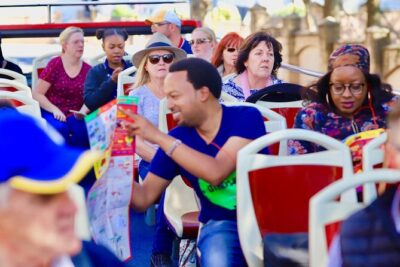
Cape Town Hop-On Hop-Off City Tour with Optional Cruise
Read our review →
Johannesburg Hop-On Hop-Off City Tour with Soweto Option
Read our review →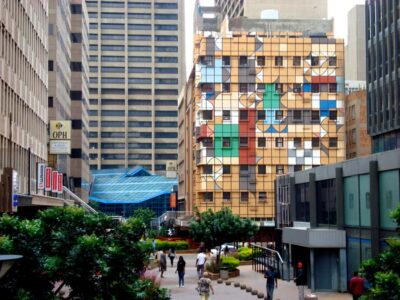
Jo’berg in 1 Day: Soweto, Apartheid Museum & City Tour
Read our review →
Cape Town City Pass: Save Over 50% on 80+ Top Attractions
Read our review →
Hop-On Hop-Off Bus, City Tour and Apartheid Museum
Read our review →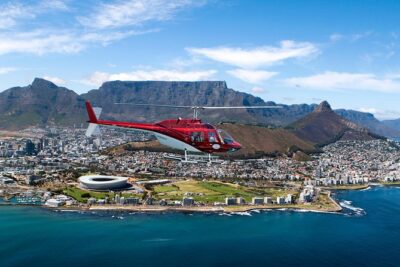

From Sun City: Pilanesberg National Park 3-Hour Game Drive
Read our review →Browse the lists this tour appears in