

Reviewed · SOWETO & APARTHEID MUSEUM TOURS
Johannesburg and Soweto: Half-Day Tour
Johannesburg makes the most sense when you see its sharp contrasts side by side: tall city buildings, wide freeways, wealthy suburbs, modest homes, and Soweto, where the struggle against apartheid shaped modern South Africa. This five-hour tour connects those places in a single, guided route.
I like the hotel pickup and drop-off, which removes the worry of finding your way around a spread-out city. I also like the human focus: Mandela House and the Hector Pieterson Memorial give the drive a clear purpose, while the guide explains what you are seeing instead of leaving you to guess.
The main drawback is time. Five hours can give you a strong introduction, but it cannot cover every museum or neighborhood in depth. At the Hector Pieterson Memorial, you may want more time than the schedule allows, and lunch is not included.
Key points at a glance
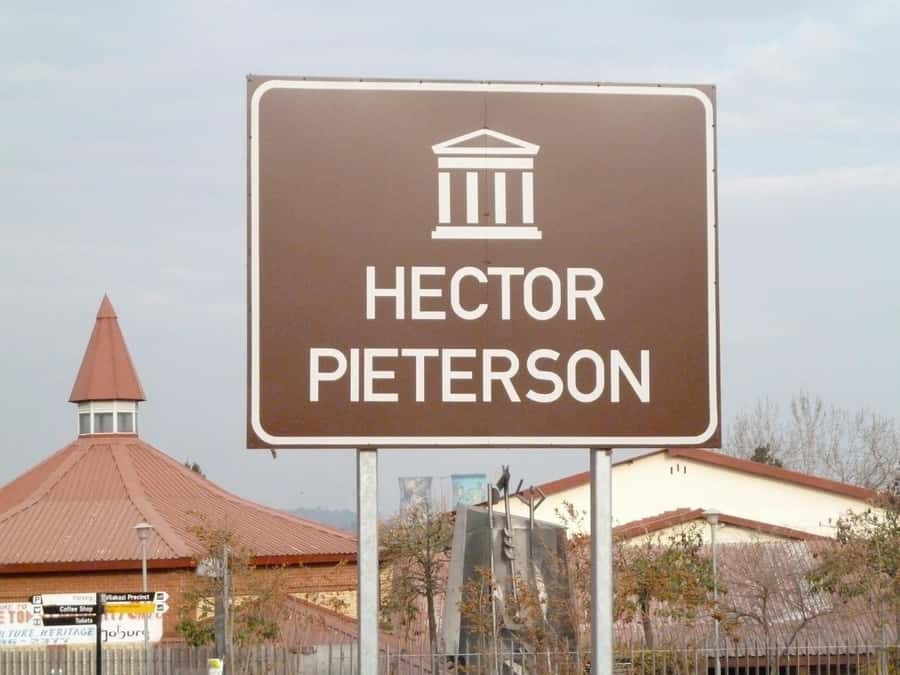
- Mandela House on Vilakazi Street: Enter the former home of Nelson Mandela and see the place where personal life and national history meet.
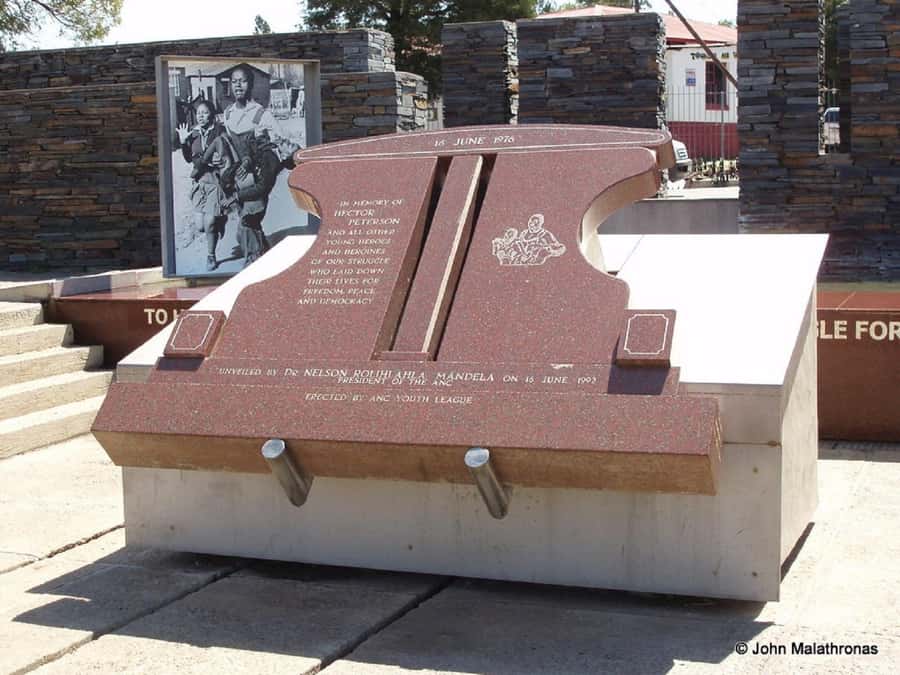
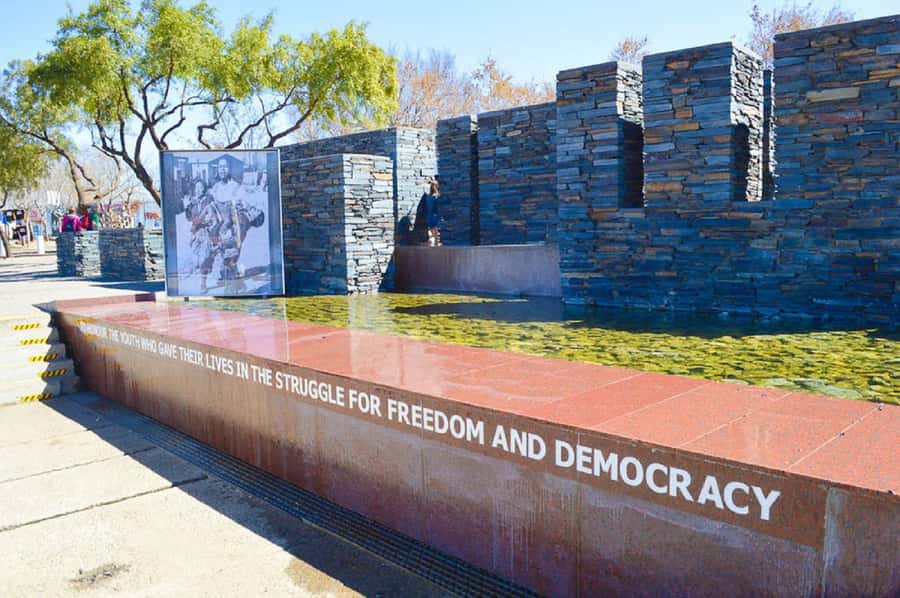
- Hector Pieterson Memorial: Learn about the 1976 youth uprising through one of Soweto’s most serious and moving sites.
- Johannesburg’s sharp contrasts: Travel from spacious southern suburbs and skyscrapers to informal settlements and township streets.
- A guide-led experience: Guides including James, Samuel, Pascal, Vincent, and others are praised for clear explanations, local knowledge, patience, and care.
- Iconic Soweto cooling towers: See two former power-station towers now used for bungee jumping.
- Soccer City on the return route: Pass FNB Stadium, also called Soccer City or The Calabash, a major site from the 2010 World Cup.
Why this Johannesburg and Soweto route works
Johannesburg is not a city that reveals itself from one central square. Its important places are spread across a large urban area, and the story changes quickly from one district to the next. That makes a guided vehicle tour useful, especially if you have only a short stay or a long airport stopover.
This route begins with Johannesburg’s southern suburbs before moving through the city center and on to Soweto. You see the physical contrast, but the guide supplies the connection: gold mining, apartheid-era planning, forced separation, protest, democratic change, and the daily life of a modern South African city.
The experience is primarily a sightseeing and history tour. You will spend much of the time in the vehicle, with stops at the main memorial and Mandela House. That is a good setup if you want context and a broad overview rather than a long walking tour.
The guides are central to the experience. James is repeatedly praised for detailed explanations, patience, and a calm approach. Samuel, Pascal, Vincent, Patrick, Marc, Laureen, Adama, and others are also noted for their warmth and strong command of Johannesburg’s past and present. Guide assignments can vary, so you cannot book a specific person unless the operator confirms it.
More Soweto and Apartheid Museum visits:
- Johannesburg: Hop-On Hop-Off Bus with Optional Soweto Tour
★ 4.6 · 985 reviews - Soweto /Johannesburg and Apartheid Museum Guided Full Day Tour
★ 5.0 · 932 reviews - Johannesburg Hop-On Hop-Off City Tour with Soweto Option
★ 4.5 · 768 reviews
From southern suburbs to Johannesburg’s high-rise center
Pickup is available from Johannesburg hotels and surrounding areas, in a comfortable vehicle with bottled water provided. The exact starting time depends on availability, so check the schedule before booking, particularly if you are fitting the tour around a flight or another activity.
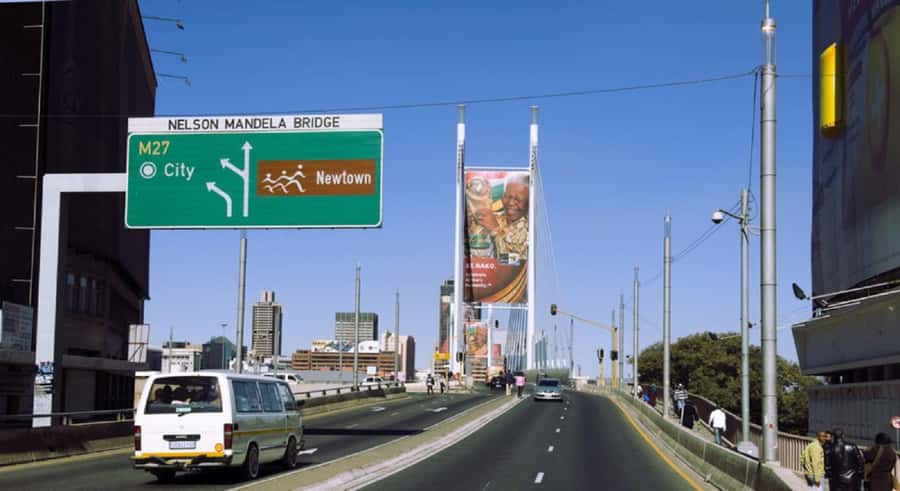
The first section takes you through Johannesburg’s southern suburbs. The route includes spacious freeways and sleek cars, offering an early look at the city’s more affluent side. This is not simply a transfer. Your guide uses the drive to show how wealth, housing, roads, and urban planning differ across Johannesburg.
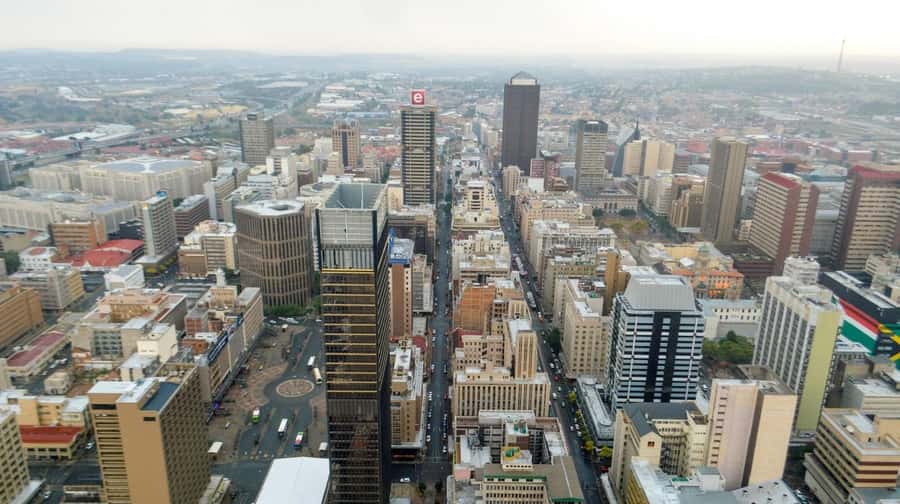
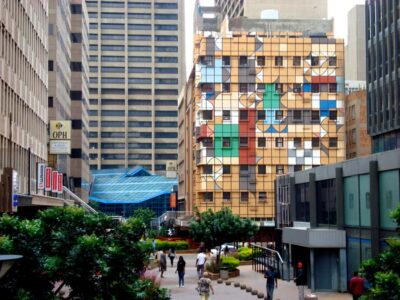
The city center then brings a different mood. Tall buildings rise above the streets, many dating from the apartheid era. Their geometric layout and concentrated skyscrapers can remind you of Manhattan, although the comparison only goes so far. Johannesburg has its own history, shaped by gold mining, segregation, political power, and rapid urban growth.
A good guide turns these buildings into evidence rather than scenery. You may hear about the role of gold in Johannesburg’s rise, the former office connected with Mandela, and the way apartheid shaped where people could live and work. The city center is best understood as a place with layers. Modern streets and towers sit on top of older political and economic decisions.
You should expect to view many sights from the vehicle rather than stop at each one. That keeps the tour moving, but it also means you will not have much free time for photographs or independent exploration in the central business district.
Crossing into Soweto
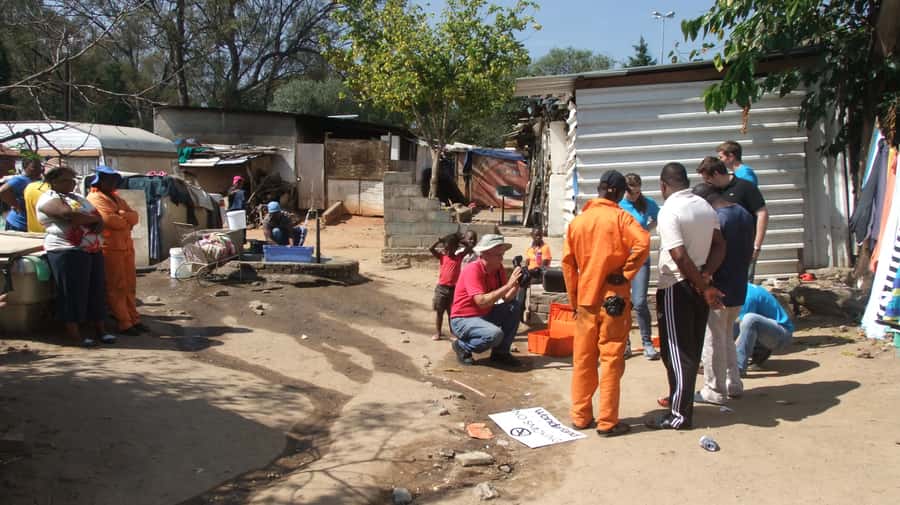
As the route leaves the polished streets behind, the visual change is clear. The tour enters Soweto, a large township southwest of central Johannesburg and one of the most important places for understanding South Africa’s fight against apartheid.
Soweto is not a single type of neighborhood. The route takes you through areas with different levels of housing and income, and includes a view of an informal settlement. You also pass Baragwanath Hospital, one of the township’s major landmarks. These views help you see Soweto as a living community, not just a backdrop for political history.
The tour includes sightseeing from the vehicle, so you are not expected to walk through every area. That is practical, but it can feel brief if you want close contact with local life. The value comes from having a guide explain what you are passing and how the township developed.
The changing scenery also brings an important responsibility. Soweto is home to people going about ordinary routines, not an open-air museum. A respectful guide matters here. The best approach is to listen, avoid treating poverty as entertainment, and take photographs only when appropriate.
The Soweto cooling towers and the township’s changing image
Two large cooling towers are among Soweto’s most recognizable landmarks. They once served a power station and now are commonly used for bungee jumping. Their painted surfaces and huge scale make them an easy point of reference during the drive.
The towers offer a useful contrast. Industrial structures linked to the township’s past have been given a newer recreational role. You are not bungee jumping as part of this tour, but you get to see the site and hear how it has become associated with Soweto’s present-day identity.
This is one of the lighter moments in an itinerary that soon turns to painful history. It also shows why a tour limited to memorials would give you only part of the picture. Soweto includes hardship and political struggle, but also work, families, business, humor, and ordinary urban life.
More half day trips in Johannesburg:
- Half-Day Tour of Soweto Tour
★ 4.5 · 712 reviews - From Johannesburg: Lion & Safari Park Half-Day Tour
★ 4.6 · 384 reviews - Johannesburg: Soweto Half-Day Tour
★ 4.7 · 196 reviews - Johannesburg: Half-Day Soweto Tour with a Local Guide
★ 4.8 · 110 reviews
Hector Pieterson Memorial and the 1976 uprising
The visit to the Hector Pieterson Memorial is the emotional center of the tour. It recalls the youth uprising of 1976, when students protested against the apartheid government’s education policies and the use of Afrikaans in schools. The events became a major turning point in the international understanding of apartheid.
The memorial is not a quick photo stop in the usual sense. Its subject demands attention, and your guide helps place the events in a wider story of resistance and state violence. The name Hector Pieterson became known around the world after a photograph showed his body being carried during the uprising.
Allow enough mental space for this stop. The tour covers several major sights in five hours, and one practical criticism is that you may wish for more free time at the Hector Pieterson site. If you prefer museums at your own pace, you may find the visit too short. If you want a guided introduction, the explanation can make the memorial much easier to understand.
I value this part of the tour because it avoids reducing apartheid to a few dates and famous names. The story becomes connected to schoolchildren, families, streets, and the choices people faced under an unjust system. It also helps explain why Soweto remains central to South Africa’s national memory.
Mandela House on Vilakazi Street
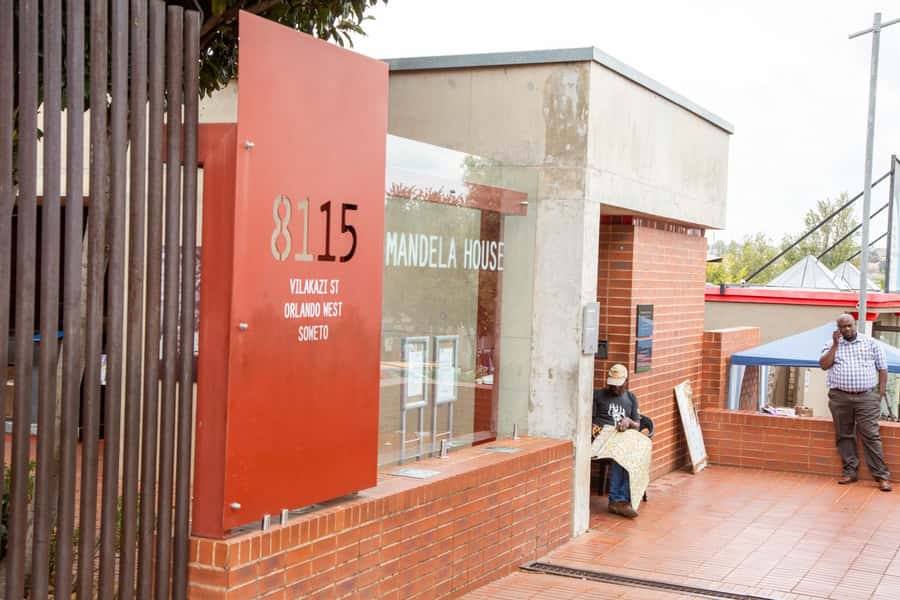
From the memorial, the route continues to Vilakazi Street and Mandela House. This is the tour’s included museum visit, so entrance is covered in the price.
Nelson Rolihlahla Mandela lived at this house, and the museum focuses on his personal connection to the property and his role in South Africa’s political story. You see a more intimate side of the man who became a global symbol of resistance, reconciliation, and democratic government.
Vilakazi Street adds another layer. It is closely linked with major figures from South Africa’s struggle, and the tour includes views of Desmond Tutu’s house and Winnie Mandela’s house. Seeing these places together helps explain why this street carries unusual political weight.
The museum has its own guide, separate from the vehicle guide. That can improve the visit because the local museum explanation adds detail at the exact place where the events unfolded. You may also encounter street performers or a student guide, and cash can be useful for tips. Tips are not part of the tour price, so bring some local currency if you want to show appreciation.
Mandela House is popular and can feel more structured than the drive through Soweto. You should not expect a long private visit or a quiet, empty museum. Its importance lies in the setting and the direct link to Mandela’s life, not in a large collection of objects.
The return route past Soccer City
The return to your hotel includes a view of FNB Stadium, also known as Soccer City or The Calabash. It hosted the opening and closing matches of the 2010 World Cup finals, making it one of Johannesburg’s best-known modern landmarks.
The stadium provides a neat closing note. The tour begins with the city’s economic and architectural power, moves through the history of apartheid and resistance, and ends with a symbol of South Africa’s place on the world stage. You see the stadium from the vehicle rather than attend an event, but it is still a worthwhile landmark to identify.
Depending on traffic and the day’s pace, the tour may take longer than the stated five hours. One recent experience ran beyond the allocated time, which can be helpful if you are not on a tight schedule. It can be a problem if you have a fixed dinner, flight, or meeting afterward. Leave a buffer.
How much value do you get for $71?
At $71 per person, the tour is not the cheapest way to see Johannesburg, but the price includes several useful pieces: hotel pickup and drop-off, a driver-guide, transport, bottled water, a map, and admission to Mandela House.
The strongest value is the time saved. Johannesburg and Soweto are large areas, and arranging these sights independently would require careful transport planning. You also receive an explanation of the places as you pass them, which is especially useful in the city center and in neighborhoods where the meaning of a building or street is not obvious.
The price is easier to justify for a first visit, a short stay, or anyone who does not want to manage transport between scattered sights. It is less compelling if you prefer to spend hours inside museums, stop often for photography, or explore one neighborhood slowly.
Lunch and personal expenses are not included. Bring water if you need more than the provided bottle, and plan a meal before or after the tour. Do not bring luggage. The instructions specifically ask you to leave bags behind, so this is not a convenient option for sightseeing between hotel checkout and an airport transfer.
Safety, comfort, and the role of the guide
Safety is a practical concern for many people considering Johannesburg and Soweto. The tour provides pickup in a comfortable vehicle and keeps the group with a driver-guide, rather than asking you to navigate unfamiliar areas alone.
The guides are often praised for making people feel safe, comfortable, and well looked after. James in particular is described as attentive and careful, with a willingness to answer questions and adjust the route when possible. That does not mean you should ignore normal city precautions. Keep valuables secure, follow the guide’s advice, and stay with the group at stops.
The vehicle format also reduces walking in areas where you may not feel confident on your own. The tradeoff is that you get less independent time. This is a guided overview, not a free-form township exploration.
Tours are offered in English, French, and Portuguese. If language is important to you, confirm the available guide language when you check the starting times.
Who should book this half-day tour?
I would choose this tour if you want a clear introduction to Johannesburg and Soweto in one morning or afternoon. It suits first-time visitors, people staying only briefly, and anyone who wants history explained in plain language while moving between major sites.
It is also a strong choice if you feel unsure about local transport or want hotel pickup included. The combination of city views, township sightseeing, Mandela House, and the Hector Pieterson Memorial gives you more range than a tour focused only on central Johannesburg.
You may want a different format if your priority is shopping, food, nightlife, or long museum visits. The schedule is full, and most stops are designed to give you an overview rather than several hours of unhurried exploration.
Families and older visitors may appreciate the vehicle-based route, though the memorial subject is serious and may not suit very young children. History students, first-time visitors, and people interested in South Africa’s democratic transition will get the most from the guide’s explanations.
Should you book it?
Book this tour if you want to understand how Johannesburg’s city center and Soweto fit together, rather than seeing isolated landmarks. The strongest reasons are the practical pickup service, the included Mandela House entrance, and the guides’ clear explanations of apartheid, the 1976 uprising, and present-day Johannesburg.
Skip it if you need a flexible schedule or want to explore museums at length. For most first visits, though, $71 buys a useful five-hour orientation with meaningful stops and less transport stress. Bring a little cash for optional tips, leave your luggage at the hotel, and keep extra time free after the tour.
FAQ
How long does the Johannesburg and Soweto tour last?
The tour lasts five hours. Some tours may run longer, so leave extra time if you have another fixed commitment afterward.
What is the price of the tour?
The price is $71 per person. It includes hotel pickup and drop-off, a driver-guide, bottled water, a map, and entrance to Mandela House.
Is hotel pickup included?
Yes. Pickup and drop-off are included from Johannesburg hotels and surrounding areas.
Which languages are available?
The tour is available with a live guide in English, French, or Portuguese.
Does the tour visit Mandela House?
Yes. Entry to Mandela House in Soweto is included in the tour price, and the visit takes place on Vilakazi Street.
Does the tour visit the Hector Pieterson Memorial?
Yes. The itinerary includes a visit to the Hector Pieterson Memorial, which focuses on the 1976 youth uprising.
Is lunch included?
No. Lunch is not included, so plan to eat before or after the tour.
Can I bring luggage?
No. The tour information specifically asks you not to carry luggage.
Can I cancel the booking?
Yes. You can cancel up to 24 hours in advance for a full refund. You can also reserve now and pay later, keeping your plans flexible.
Just listed around Johannesburg
- Constitutional Hill and Soweto 5 hours tour.★ 5.0 · 5 reviews
- 5 Day Kruger Glamping Safari and Panorama Tour★ 5.0 · 5 reviews
- Cradle of Humankind and Maropeng Day Tour from Johannesburg★ 4.0 · 5 reviews
- Johannesburg: Hot Air Balloon Flight★ 5.0 · 5 reviews
- Half Day Soweto and Apartheid Museum Guided Tour★ 5.0 · 5 reviews
- Lion park★ 4.5 · 5 reviews
- 5 Day Kruger National Park and Panorama Route Safari★ 4.5 · 5 reviews
- Pretoria Historical Tour★ 4.0 · 5 reviews
Soweto & Apartheid Museum Tours, compared.

Soweto /Johannesburg and Apartheid Museum Guided Full Day Tour
Read our review →
Johannesburg Hop-On Hop-Off City Tour with Soweto Option
Read our review →

Jo’berg in 1 Day: Soweto, Apartheid Museum & City Tour
Read our review →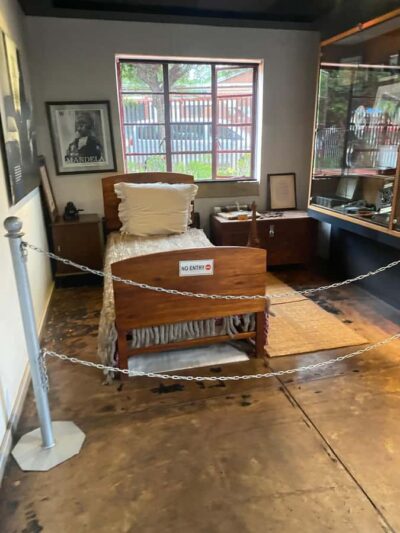
Full-Day Tour with Soweto and Apartheid Museum
Read our review →
Full-Day Soweto, Apartheid Museum and Lunch Tour
Read our review →Browse the lists this tour appears in