
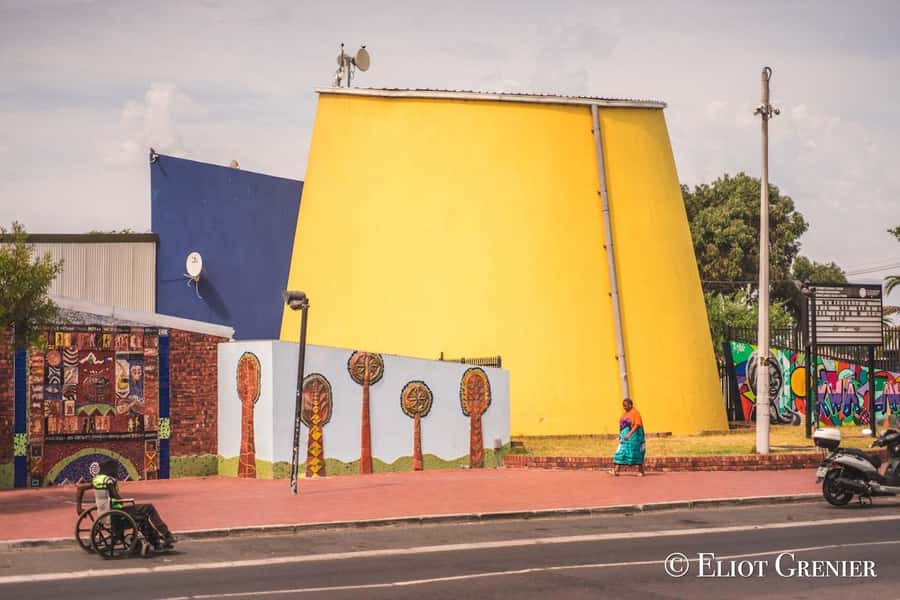
Reviewed · TOWNSHIP TOURS
Cape Town: Langa Township Walking Tour
Langa is not a backdrop for a quick photo. It is a living Cape Town community, and this local-led walking tour gives you time to hear its story from people who know the area personally. You move from apartheid-era history to present-day businesses, art projects, homes, and community work.
I like the direct connection to Langa residents, and I like the way the tour balances hardship with humor, creativity, and local pride. Guides such as Wanda, Thando, Mike, Mzukisi, and Luvuyo have been praised for making the walk feel personal and safe. The main drawback is simple: this is a real walking tour, not a bus ride, and some stops may be emotionally difficult.
Key points to know before you go

- Local guides lead the walk: Guides from Langa explain the area through personal experience and community connections.
- Guga S’thebe is the meeting point: Expect an arts and crafts setting, with possible drumming, music, or a traditional dance presentation.
- The tour mixes past and present: You learn about apartheid, the dompas system, housing, education, local businesses, and current community projects.
- A local home is included: This offers a more personal look at daily life, but you should follow your guide’s lead and ask before taking photographs.
- Bring small cash: Art, crafts, food, and donations to community projects are not included in the $37 price.
- Plan for comfortable walking: The tour lasts 150 minutes and includes a photo stop, street walking, and several community visits.
Why Langa adds an important layer to Cape Town
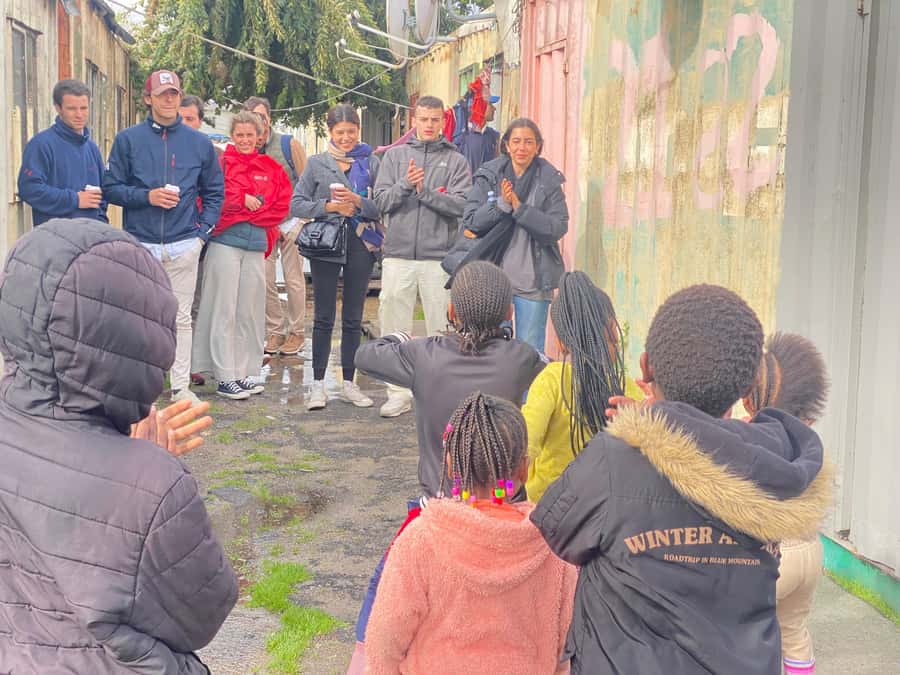
Cape Town is often sold through Table Mountain, beaches, vineyards, and handsome old neighborhoods. Those places deserve your time, but they do not tell the whole story of the city.
Langa, one of South Africa’s oldest townships, was established in the 1920s. Its name means sun in Xhosa. During apartheid, townships such as Langa were shaped by laws that controlled where Black South Africans could live, work, and travel.
A walk here gives you context that is hard to pick up from a conventional museum alone. You hear how policy affected families and neighborhoods, then see how residents have built businesses, cultural spaces, schools, and support networks in the years since.
I appreciate that the tour does not present Langa as either a tragic place or a feel-good success story. You see poverty and difficult living conditions, but you also see initiative, humor, art, music, and people working to improve life for their neighbors.
That balance matters. If you only want polished attractions, this may not be your kind of outing. If you want to understand how Cape Town’s past still shapes its present, two and a half hours here can be among the most useful parts of your trip.
More Township Tours in Cape Town
- Half-Day Tour Through Cape Town’s Townships
★ 4.8 · 979 reviews - Cape Town: Guided Township Tour with Hotel Pickup
★ 4.4 · 536 reviews - Cape Town: Nathi Langa Township Walking Tour
★ 4.9 · 493 reviews
Meeting at Guga S’thebe Arts & Cultural Centre
The tour begins at Guga S’thebe Arts & Cultural Centre, at 42 King Langalibalele Drive. This is more than a place to gather. It is a working cultural space linked to art, crafts, performance, and local enterprise.
The first part usually sets the tone with an introduction to Langa’s past and present. Depending on the day, you might see local arts and crafts, hear music, or take part in a short drumming activity. One visitor described starting with drum lessons from local performers, while the stated schedule includes a 15-minute traditional dance show.
Do not assume every departure will look exactly the same. Performances and community activities can depend on timing and availability. The useful point is that you begin in a place where local culture is being made and shared, rather than in a distant visitor facility created only for sightseeing.
The arts center also gives you a chance to ask questions before the walking begins. Use it. The guides are there to explain the route, and several have been praised for adjusting the discussion to match what people want to understand.
Langa’s past, explained on foot

The history section is one of the strongest reasons to book this tour. Your guide explains how Langa developed, how apartheid shaped its streets and housing, and how residents lived under restrictions such as the dompas pass system.
The tour can include the former dompas office and courtroom, places tied to the machinery of racial control. Seeing these locations in the neighborhood gives the history physical scale. Instead of treating apartheid as a closed chapter in a textbook, you begin to understand how rules affected movement, employment, housing, and family life.
Guides also explain the meaning of Langa’s name and the role of Xhosa culture in the community. You may learn local words, hear about traditional dress, and discuss music and dance. This is a good place to ask respectful questions about identity and daily life.
The best guides, including Wanda, Mazo, Thando, and Mzukisi, have been praised for giving clear explanations while adding personal stories. That personal element is important, but remember that one guide cannot speak for every resident or every township in South Africa. Treat Langa as one community with its own story, not as a shortcut to understanding the entire country.
The Langa Heritage Museum and community stories
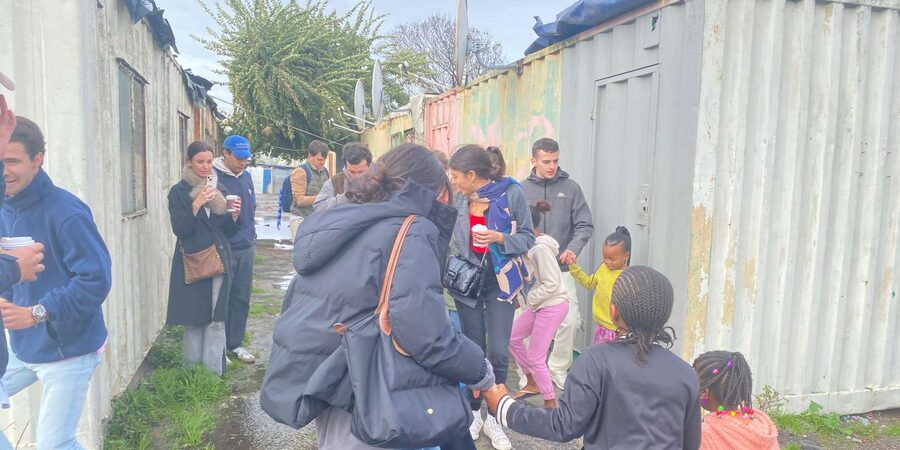
The Langa Heritage Museum helps anchor the historical discussion. Its exhibits focus on the township’s past and culture, giving you a compact introduction before or during the wider walk.
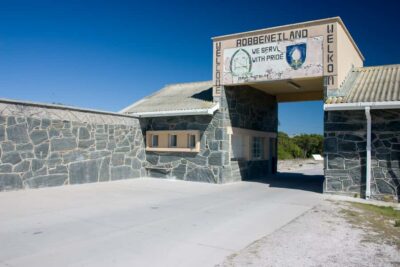
A museum visit can be especially useful if you have already seen Cape Town’s major apartheid-related sites, such as District Six Museum or Robben Island. Langa adds a different setting. You are learning inside the community itself, then stepping outside to see how history connects to homes, streets, and local institutions.
The tour also includes conversations with residents and people involved in community projects. These might include educational programs, youth work, cooperatives, social enterprises, or small businesses.
This part can feel less predictable than a standard sightseeing route. A soup kitchen, homework center, nursery, or workshop may be operating differently depending on the time of day. One family hoped to see a soup kitchen and homework station in use but arrived at a time when those activities were not taking place.
That is not necessarily a flaw. It is a reminder that you are visiting a working neighborhood, not a staged attraction with performances on a fixed timetable.
More Walking Tours in Cape Town
- Cape Town: Art, Culture & History Walking Tour
★ 4.9 · 392 reviews - Cape Town: Street Art Walking Tour in Woodstock
★ 4.8 · 293 reviews - Cape Town: Private Walking Tour with a Local
★ 4.6 · 243 reviews - The 10 Tastings of Cape Town With Locals: Private Food Walking Tour
★ 4.5 · 169 reviews
Art, murals, and Langa Art Gallery on 16
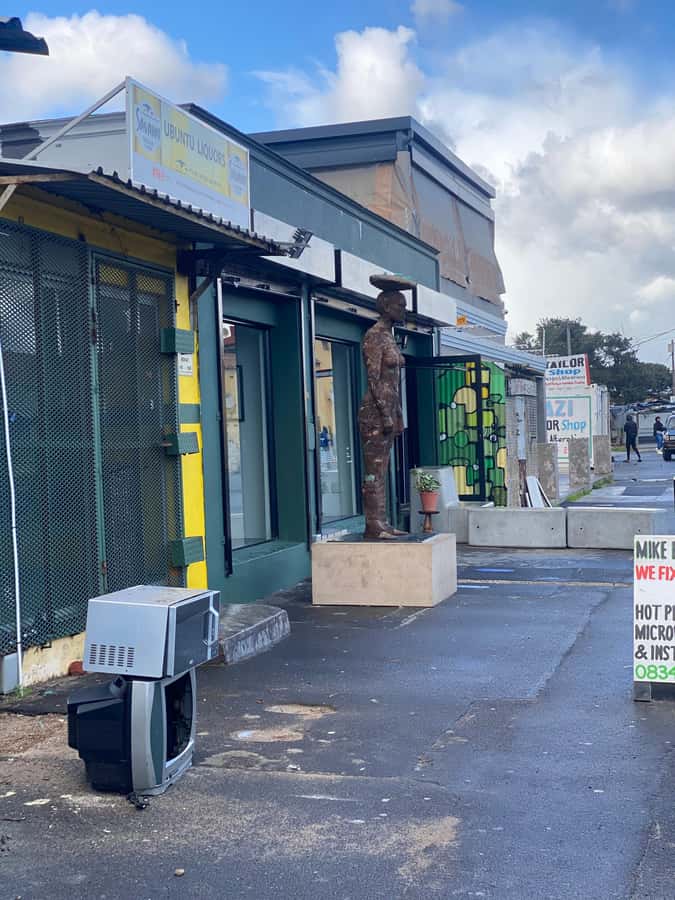
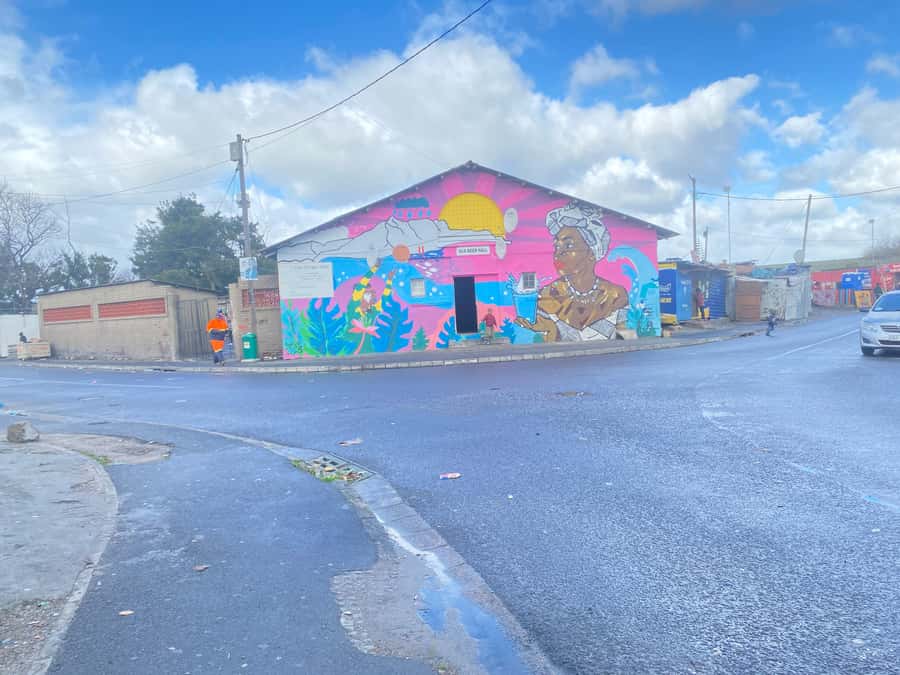
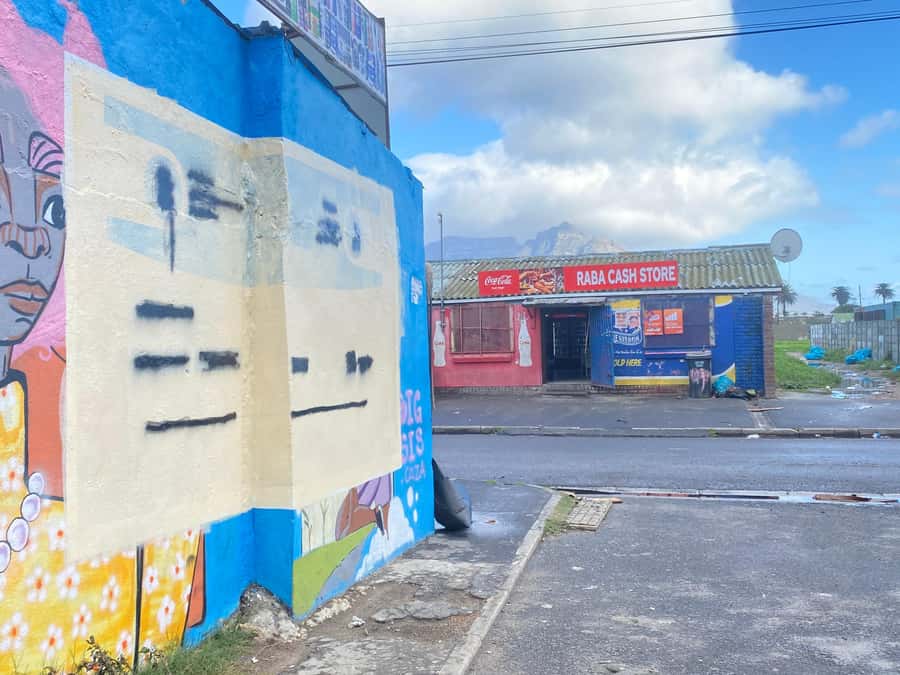
Art gives the tour a welcome change of pace. Streets and community spaces feature murals and other works that reflect social concerns, hopes, humor, and local identity.
Your guide can explain what the images mean and how art is used to speak about the community. That context makes the work more than colorful decoration. It becomes part of the conversation about history, politics, youth, and change.
Langa Art Gallery on 16 is included. It offers another look at local talent and gives you a chance to support artists directly if you find something you want to buy.
Art and crafts are not included in the tour price, so bring cash if you plan to purchase anything. Avoid assuming that every display is free to photograph or that every artist wants a picture. Ask first, and let your guide help you handle these encounters politely.
I like this part of the walk because it shifts the focus from what Langa lacks to what residents create. The art center, gallery, murals, and craft stalls show practical ways culture can support income, pride, and skills.
Meeting residents and visiting a local home
A visit to one local home is included, making this one of the more personal parts of the route. Your guide explains how the visit works and introduces you to the resident.
This is also where good manners matter most. Keep your voice low, ask before taking photos, and do not treat someone’s home as a display. You are entering a private space because someone has agreed to share it, not because it is automatically part of the public tour.
The walk may show very different housing conditions within Langa. Past participants have described seeing shacks, container homes, more established houses, and an area informally compared with Beverly Hills. These contrasts help you understand that a township is not one uniform block of housing.
Living conditions vary, and so do income, access to services, and family circumstances. A guide can help explain those differences without reducing people to statistics.
Some routes have included a nursery, daycare, or orphanage. This deserves care. Do not bring books, pencils, sweets, or toys unless your guide specifically advises you to do so. Unplanned gifts can create arguments or repeated requests. If you want to help, ask about an appropriate donation to a local project.
Most important, do not photograph children without clear permission. You can ask your guide about child-protection rules and choose to skip a stop involving vulnerable children if it makes you uncomfortable.
Community projects, entrepreneurs, and everyday work
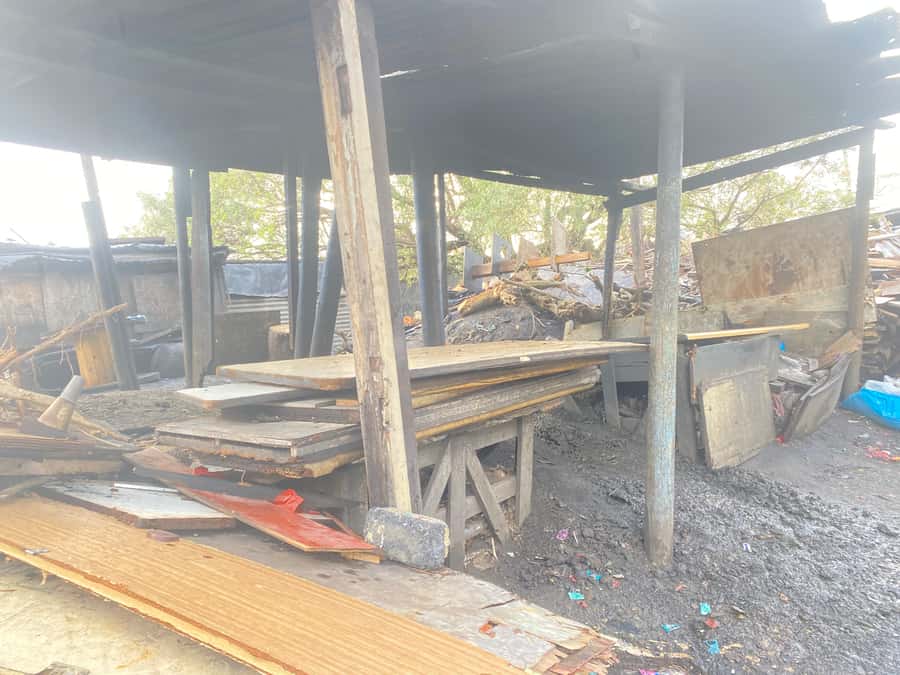
One of the tour’s most useful features is the attention given to local work. You may meet people involved in cooperatives, craft workshops, delivery services, educational programs, or environmentally focused projects.
A visit to a social enterprise shows how community development works at street level. Job creation is not an abstract goal here. It can mean a craftsperson earning an income, a youth program offering support, or a small business giving someone a practical way to build a future.
Past routes have included Cloudy Deliveries, a homework center, community workspaces, and local businesses. The exact stops can change, but the theme remains clear: Langa is shaped not only by government policy or outside aid, but also by residents building solutions themselves.
You may also stop at a local market or eatery. Food options can include South African dishes such as bunny chow, braai, koeksisters, samp, chakalaka, or a fried liver sandwich. The food is an optional purchase, not part of the $37 fee.
I would carry some small notes for food, crafts, and tips. One person found it difficult to make several small payments without enough change. A meal or snack can turn the walk into a more relaxed social experience, but you should never feel pressured to buy.
Safety, respect, and the question of township tourism
Safety is a fair concern when you visit an unfamiliar area. The strongest practical advice is to stay with your guide, follow local instructions, keep valuables discreet, and ask before taking photographs.
The guides are local or closely connected to Langa, and many have been praised for making people feel safe throughout the walk. One guide waited with a participant until a car arrived for the return trip. If you drive yourself, parking near the meeting point has been described as next to a police station, under CCTV, and monitored by a parking attendant.
That does not mean you should switch off your common sense. Conditions can change, and no tour can remove every risk. Listen to your guide, especially when walking through residential areas or discussing photographs.
The ethical question is just as important as the safety question. Township tourism can become voyeuristic if visitors come only to photograph poverty and leave without listening or contributing.
This tour makes a stronger case for itself because it is operated by local guides and directs benefit to the Langa community. You meet people through community spaces, learn about local projects, and can support businesses, artists, food sellers, or charitable work.
Still, your behavior matters. Ask questions rather than making assumptions. Do not hand out items to children. Do not photograph people in vulnerable situations. Spend money thoughtfully, tip your guide, and remember that the people you meet are neighbors, workers, parents, artists, and entrepreneurs, not scenery.
Is $37 a fair price for 150 minutes?

At $37 per person, this is a reasonable price for a guided experience lasting 150 minutes. You are paying for an English-speaking guide, local access, the museum and cultural visits, a local home visit, the art gallery, and the time needed to explain what you are seeing.
The value is strongest if you want conversation and context. A short drive through Langa would show you very little. Walking with someone who can explain the history, introduce you to residents, and answer questions gives the area meaning.
The price does not cover food, art, crafts, or donations. Budget extra for those only if you want them. The tour itself remains affordable compared with many Cape Town excursions, and one family described it as the least expensive major outing of its trip.
You can cancel up to 24 hours before the start for a full refund, and the reserve-now, pay-later option helps if your schedule is still changing. Check the available starting times before booking, since the duration is fixed but the departure time is not stated here.
Who will enjoy this walk most?
I would recommend it to first-time Cape Town visitors who want more than the city’s polished highlights. It also suits people interested in South African history, Xhosa culture, community development, street art, food, and small businesses.
Families can manage the length, particularly with older children. A family with children aged 12 and 15 found the 2.5-hour format suitable. You should still prepare younger walkers for a serious subject and uneven or ordinary neighborhood conditions rather than an entertainment-only outing.
It is also a good choice if you prefer private-feeling conversation. When one person booked alone, the guide tailored the walk to that person’s interests. That suggests you should tell your guide what you most want to see, whether that is history, housing, art, food, business, or youth projects.
This is not the right pick if you want a tightly timed attraction with guaranteed performances at every stop. It is also not suitable for anyone who cannot manage substantial walking. The information is inconsistent about mobility access: the activity details call it wheelchair accessible, while the suitability notes say it is not suitable for wheelchair users. Contact the operator before booking if this affects your plans.
Practical ways to make the experience better
Wear comfortable shoes and clothes. You will be outside and on foot for most of the 150 minutes.
Bring small cash for tips, food, art, crafts, and possible donations. Tipping the guide is specifically encouraged, and community projects may welcome support through proper channels.
Ask questions. Guides are used to discussing history, culture, local conditions, and hopes for the future. The walk becomes much more useful when you explain what interests you.
Keep your camera away until you have permission. This is especially important around homes, children, food preparation, and people dealing with difficult circumstances.
Do not arrive expecting a single polished message. You may see painful conditions alongside warmth, music, humor, ambition, and mutual support. Give yourself time afterward to think about the contrasts.
Should you book the Langa walking tour?
Book it if you want to understand Cape Town beyond its postcard views. The strongest parts are the local guides, the clear history lesson, the arts center, the community projects, and the chance to meet people in places where daily life is actually happening.
Choose your expectations carefully. This is not poverty sightseeing, and it should not be treated that way. It is a serious, human visit that asks you to listen, respect privacy, and accept that the route may change with community schedules.
At $37, the tour offers strong value for anyone seeking local context and direct conversation. I would especially look for a guide such as Wanda, Thando, Mike, Mzukisi, or Luvuyo if a choice is available, while remembering that guide assignments may vary. Bring good shoes, small cash, and an open mind. If you do, Langa can become one of the most meaningful parts of your time in Cape Town.
FAQ
How long is the Langa Township Walking Tour?
The tour lasts 150 minutes, or two and a half hours.
How much does the tour cost?
The listed price is $37 per person.
Where does the tour meet?
The meeting point is Guga S’thebe Arts & Cultural Centre at 42 King Langalibalele Drive.
What language is the tour conducted in?
The live tour guide speaks English.
What places are included?
The experience includes a guided walk in Langa, Guga S’thebe Arts & Cultural Centre, a local home visit, Langa Art Gallery on 16, community projects, and a photo stop. The route may also include the Langa Heritage Museum and local cultural activities.
Is food included?
No. Food is not included, so you should pay separately if you choose to eat at a local restaurant or food stall.
Are art and crafts included?
No. Art and crafts are not included in the tour price. Bring cash if you want to buy something.
Can I cancel for a refund?
Yes. You can cancel up to 24 hours in advance for a full refund.
Is the tour suitable for wheelchair users?
The activity information gives conflicting details. One section says it is wheelchair accessible, while another says it is not suitable for wheelchair users. Contact the provider before booking to confirm current conditions.
Just listed around Cape Town
- Cape Town: Inspiring sustainable change through Street Art★ 4.9 · 5 reviews
- Cape Town Tandem Paragliding Square 1 Paragliding★ 5.0 · 5 reviews
- SandBoarding in Capetown + PhotoShoot★ 4.0 · 5 reviews
- Cape Town: Full-Day Private Peninsula Tour★ 3.6 · 5 reviews
- Private FULL DAY Tour: Cape of Good Hope & Boulders Beach★ 5.0 · 5 reviews
- Cape Town Full Day Family Fun With Kids Private Tour★ 4.0 · 5 reviews
- Private Tour to Aquila Game Reserve in Cape Town – see the Big5★ 5.0 · 5 reviews
- Peninsula Tour Cape Town★ 5.0 · 5 reviews
Township Tours, compared.

Half Day Township Tour in Cape Town South Africa
Read our review →

Browse the lists this tour appears in