
Reviewed · TOWNSHIP TOURS
Cape Town: Authentic 3–4 Hour Cultural Township Experience
Cape Town’s townships tell the part of the city’s story that Table Mountain and the waterfront cannot. This three-hour private tour moves from District Six to Langa, Bonteheuwel, Gugulethu, and Khayelitsha, linking forced removals and apartheid laws with the way people live today. You may meet a healer, see homemade beer being made, and walk past hostels, shacks, schools, and memorials.
I like the mix of serious history and direct local contact, especially the stop at Langa’s Old Pass Office and the walking tour with a local guide. I also like the small-group format: at $261 for up to three people, it is not cheap for one person, but it can be fair value when shared by a couple or small family. The main consideration is that poverty and painful history are part of the experience, so this tour asks for attention and respect rather than casual sightseeing.
Key points to know before you book

- District Six begins the story: Learn how about 60,000 people were forcibly removed during the 1970s.
- Langa brings history down to street level: See the Old Pass Office, the Robert Sobukwe monument, hostels, shacks, and local housing.
- Local encounters are built into the route: Meet a traditional healer and visit a shebeen where homemade beer is made.
- The memorials carry difficult stories: The Gugulethu 7 Memorial and Amy Biehl Memorial show different chapters of the anti-apartheid struggle.
- The tour reaches Khayelitsha: Hear about the Philani Center and its work with mothers and children.
- Small groups make questions easier: The private format suits visitors who want an open conversation with the guide.
Why Cape Town’s townships belong on your itinerary
Cape Town can be easy to misunderstand. A few miles can separate expensive hotels, polished restaurants, and postcard views from communities shaped by racial zoning, forced removals, unemployment, and overcrowding. This tour helps you connect those places rather than treating township life as a distant footnote.
The experience is not simply a drive past poor neighborhoods. You leave the minivan for a walking tour in Langa, hear how apartheid controlled movement, visit historic sites, and meet people linked to local life. That combination matters. You get a political history lesson, but you also see that townships are lived-in communities, not museum displays.
I would choose this tour early in a Cape Town visit if you want context for the rest of the city. Afterward, the contrast between central Cape Town and the townships will make more sense, and places such as District Six will carry more weight.
The tour is conducted in English and is arranged as a private group. That gives you room to ask direct questions without worrying about holding up a large coach party. The duration is listed as three hours, although the experience title describes it as three to four hours, so I would keep a little extra space in your schedule.
More Township Tours in Cape Town
- Half-Day Tour Through Cape Town’s Townships
★ 4.8 · 979 reviews - Cape Town: Guided Township Tour with Hotel Pickup
★ 4.4 · 536 reviews - Cape Town: Nathi Langa Township Walking Tour
★ 4.9 · 493 reviews
District Six and the cost of forced removal
The first major stop is District Six, one of the clearest places to understand apartheid’s human cost. During the 1970s, the apartheid government forcibly removed around 60,000 residents from this area. Families were pushed away from the city center, and the community that had grown there was broken apart.
Your guide uses District Six to explain more than a single event. You begin to see how apartheid divided people by race and then used those divisions to control where they could live, work, and travel. This is an important start because it shows that township separation was not accidental or simply the result of economic hardship.
District Six can feel quieter and less visually dramatic than Cape Town’s famous attractions. That is part of the point. The absence of a former community can be difficult to read from a vehicle window, so listen closely to the explanation and ask questions.
I especially value this stop for first-time visitors who know apartheid mainly through broad dates and famous names. Here, the policy becomes a story about homes, streets, neighbors, and daily routines. It gives the rest of the morning a clear purpose.
Langa’s Old Pass Office and the apartheid pass system
From District Six, the route continues to Langa, Cape Town’s oldest township. The Old Pass Office helps explain the pass system, including the notorious document often called the Dumb Card. Black South Africans were required to carry this identification document, which was used to control movement and employment.
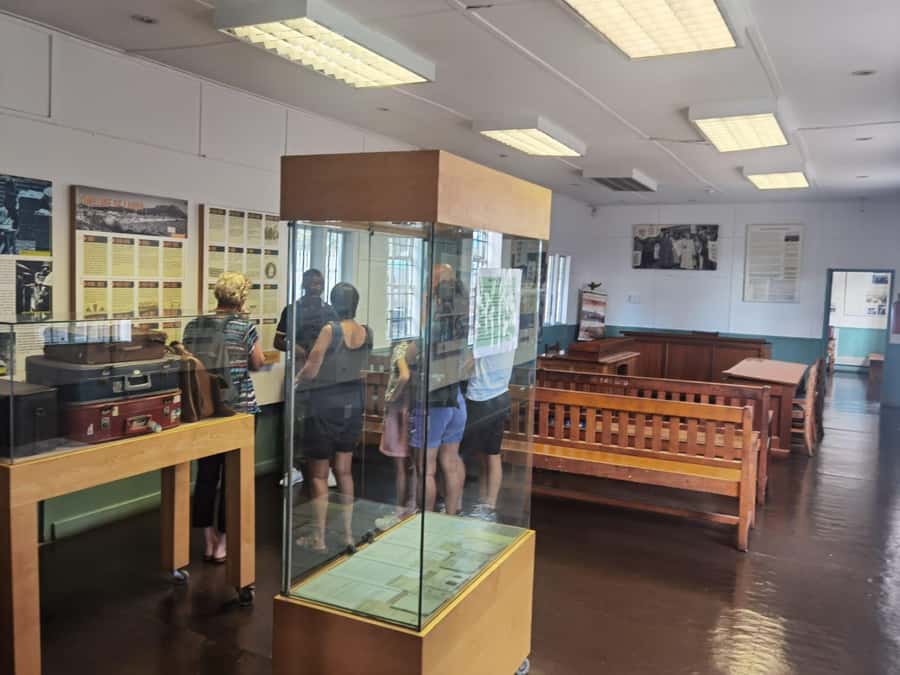
A visit to a small museum in Langa may add useful detail before the walk. The museum explains township development and the pass system in a way that can be easier to grasp than a quick guidebook paragraph. You will want to pay attention here, because the rules affected where people could go, how long they could stay, and whether they could legally be in a particular place.
The route also includes a monument to Robert Sobukwe, a major anti-apartheid figure. You do not need to arrive with a full knowledge of every organization and political split. The guide can place these names within the wider struggle against racial control.
This is where the tour’s strength becomes clear: it moves between national history and local landmarks. You are not only hearing what the government did in Pretoria. You are seeing the offices, monuments, and streets where those policies shaped ordinary lives.
Walking through Langa’s hostels and homes
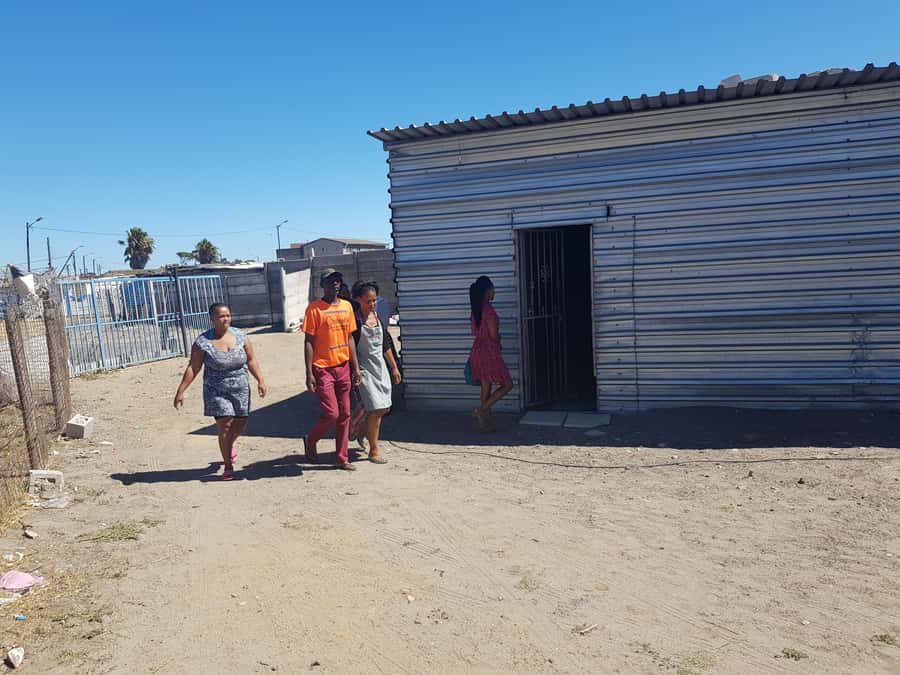
The walking portion in Langa is likely to be the most direct part of the tour. You may see different forms of housing, including hostels and shacks, and learn about daily life during apartheid. Some tours also include a visit to a township home, giving you a closer look at domestic space and community life.
A walk changes your perspective. From a minivan, you can observe. On foot, you have time to notice the layout of the streets and listen to a local guide explain what you are seeing. The local Langa guide is separate from the driver on some departures, and the combination can work well: one person handles the wider Cape Town story, while the local guide adds personal knowledge of the area.
The subject can be uncomfortable. You may see poverty, limited housing, and the results of policies that forced people into segregated areas. Do not expect a polished heritage attraction with neat displays at every turn. The value is in the honest explanation and the chance to ask questions.
Bring comfortable shoes, as requested. The walking section is not described as a strenuous hike, but ordinary footwear will make the experience easier. Keep your belongings manageable too, since oversize luggage is not allowed.
A different side of Cape Town altogether:
- Wine Tour: Paarl, Franschhoek & Stellenbosch incl 3 wineries
★ 5.0 · 3,940 reviews - Cape Town: Hop-On Hop-Off Bus Tour with Optional Cruise
★ 4.8 · 3,929 reviews - Cape Town: Cape of Good Hope & Penguins Day Tour with Pickup
★ 4.7 · 3,362 reviews - Zipline Cape Town – From Foot of Table Mountain Reserve
★ 5.0 · 3,179 reviews
A shebeen, homemade beer, and a traditional healer
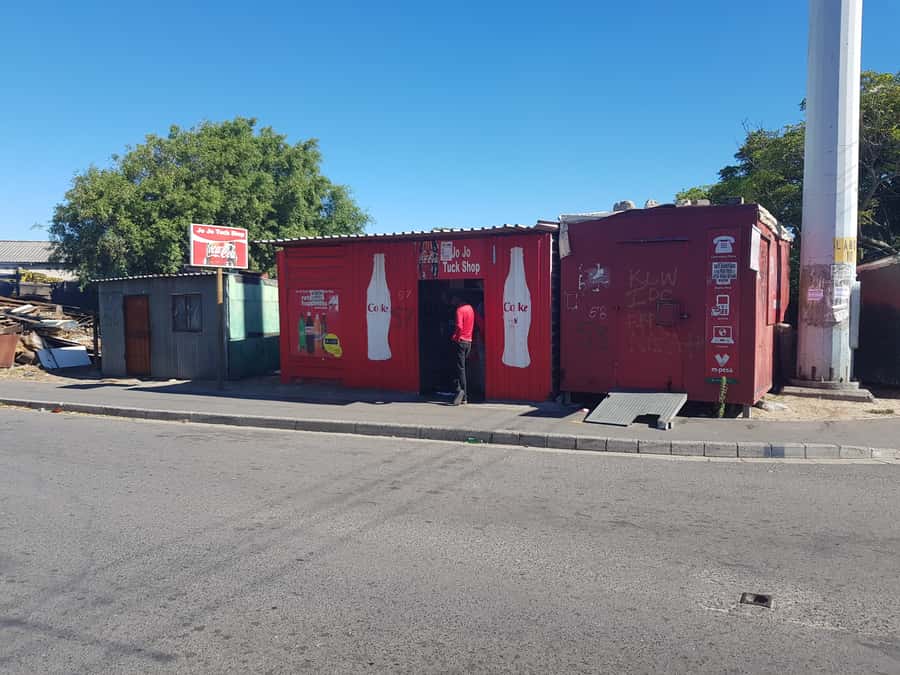
The tour includes a visit to a shebeen, or local pub, where you may see homemade beer being made and possibly try it. Food and drinks are not included unless specifically stated, so do not assume that refreshments are part of the price. If you do not drink alcohol, the visit still has value as a look at an important social setting.
The traditional healer visit offers another view of local culture. You may see a healer in action and learn how this practice fits into community life. The experience is more meaningful if you treat it as a cultural encounter rather than a staged performance.
This part of the itinerary can feel more personal than the memorials and museums. It also needs a thoughtful approach. Listen to the guide, follow local instructions, and avoid treating people’s homes, work, or beliefs as scenery. The tour’s purpose is to help you understand township life, not to collect dramatic photographs.
I like that the itinerary includes ordinary community spaces alongside political history. Apartheid shaped laws and borders, but people still built social networks, businesses, traditions, and places to gather. The shebeen and healer visit help show that life is not defined only by hardship.
Bonteheuwel and the machinery of racial division
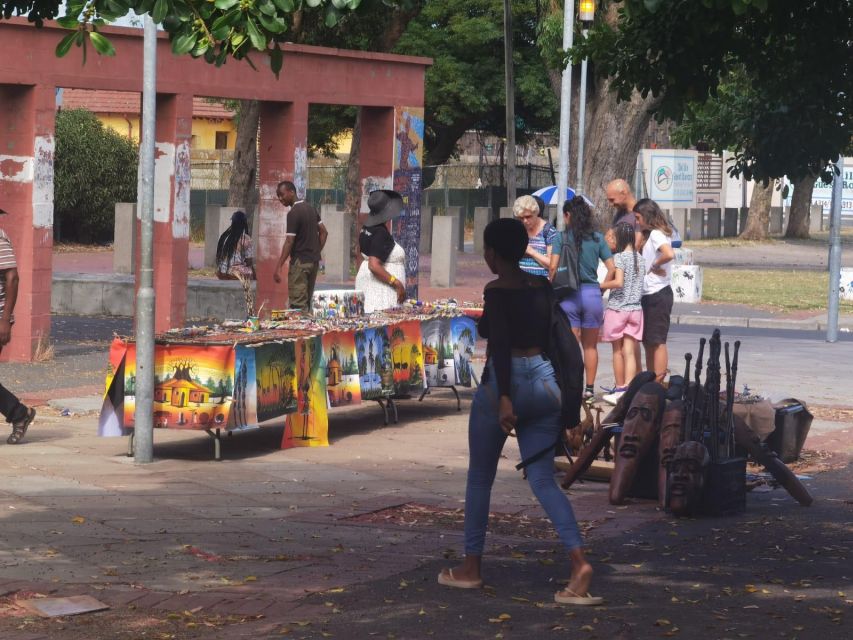
The drive through Bonteheuwel adds another piece to the story. Under apartheid, this township was reserved for the colored community. The stop helps you understand that the government’s racial categories affected more than Black South Africans. Different groups were assigned different areas, with separation enforced through law.
This is useful context because visitors sometimes reduce apartheid to a simple division between white and Black. The system was more complicated, though no less damaging. Classification shaped housing, education, work, movement, and access to the city.
You will see more from the vehicle here than on foot. That makes the guide’s explanation especially important. Ask how the racial zoning system affected families and why communities were moved or divided. The tour is short, so a clear question can help you get beyond a list of place names.
Bonteheuwel also helps you read Cape Town’s modern geography. The townships are not random areas far from the sights. They are part of a city deliberately organized around separation. Once you understand that, distances on a map begin to tell a political story.
The Gugulethu 7 and Amy Biehl memorials
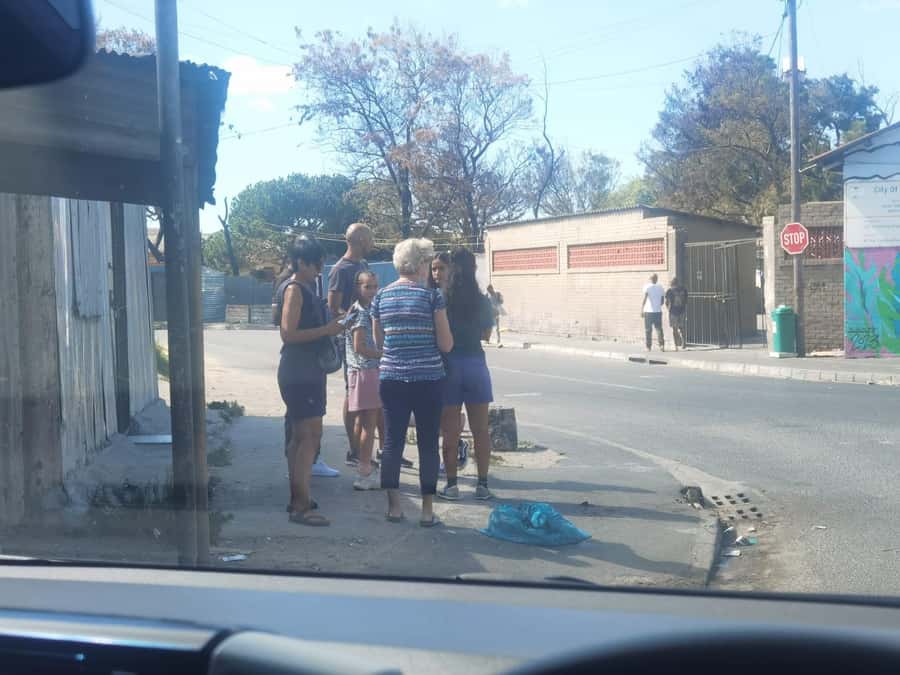
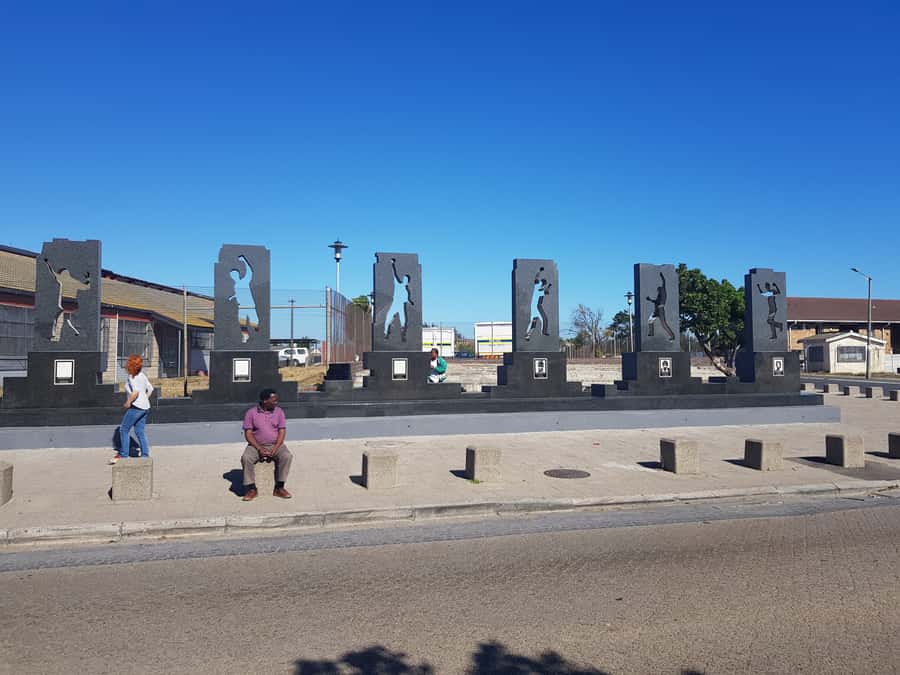
The Gugulethu 7 Memorial honors seven members of an anti-apartheid group killed by the South African Police in 1986. It is one of the tour’s most serious stops, and it deserves time for reflection rather than a hurried photograph.
The memorial to American student Amy Biehl presents a different and complicated episode. She was murdered by PAC supporters in 1993. Including this site shows that the final years of apartheid were not a simple march toward freedom. Political violence affected people in painful and conflicting ways.
These two memorials make the tour more balanced. You hear about state violence, resistance, and community struggle, but you also confront the damage caused by political extremism. I appreciate that the route does not flatten the past into heroes and villains with no difficult edges.
If you have limited knowledge of South African politics, some of the names and organizations may be hard to follow in a short tour. Still, the guide can explain the basic connections, and the sites give you a reason to continue learning after you leave Cape Town.
Khayelitsha and the Philani Center
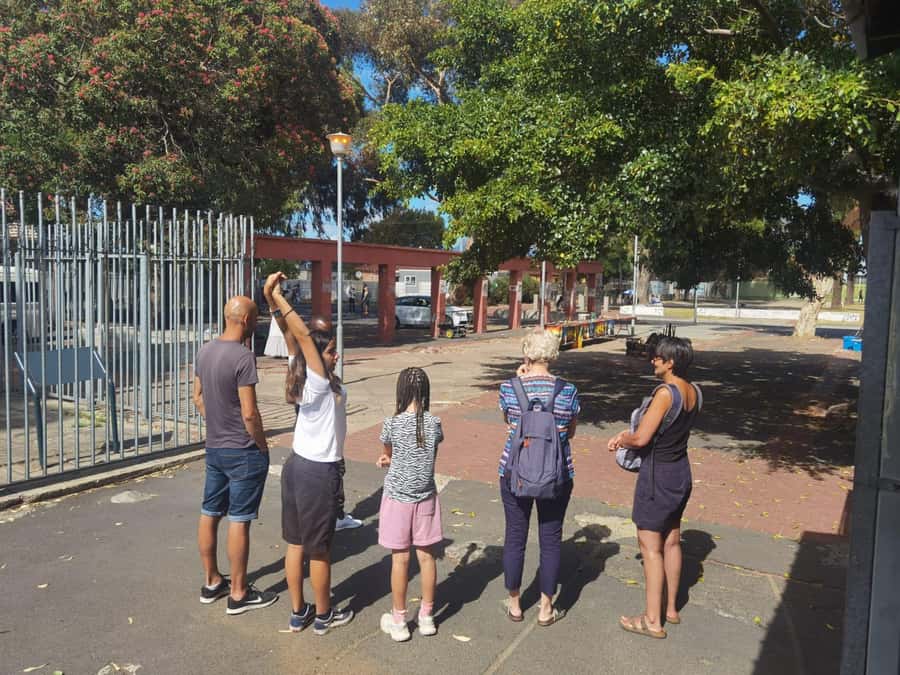
The final township area is Khayelitsha, where you hear about the Philani Center and its work with local mothers and children. This gives the tour a present-day focus after several stops centered on apartheid history and political violence.
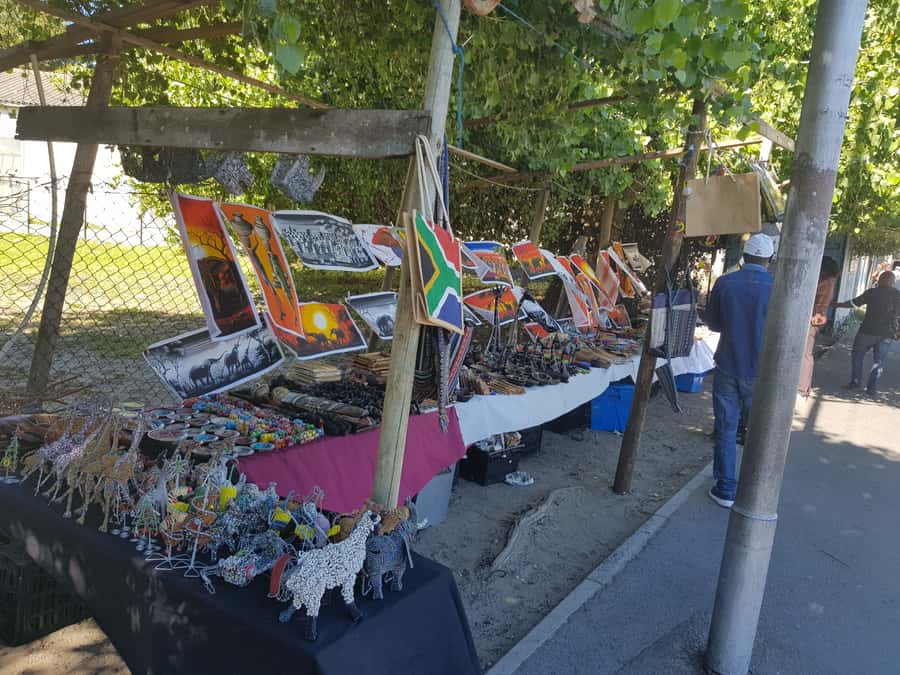
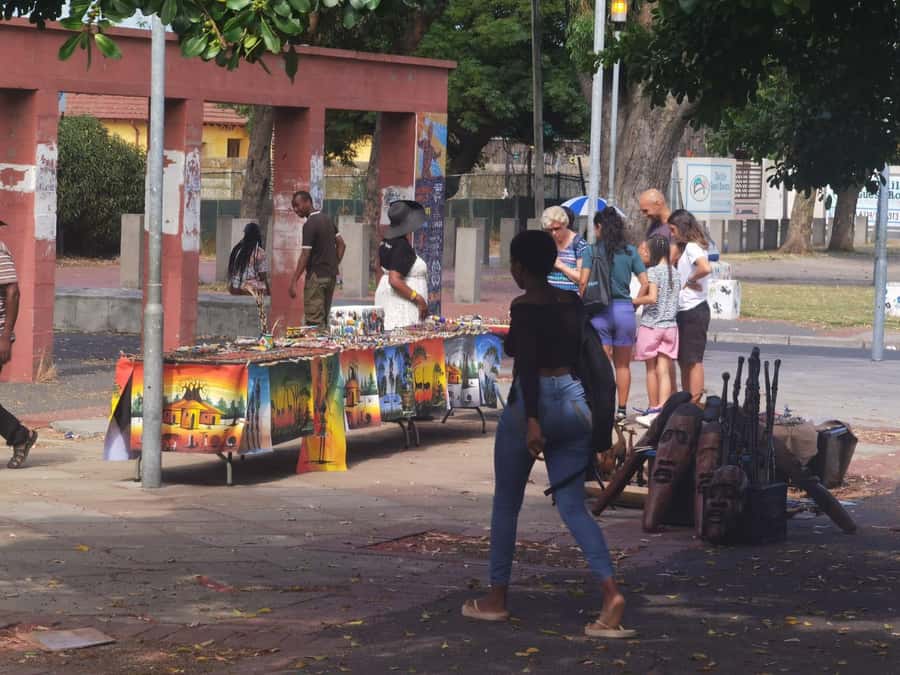
The center’s work matters because it points to practical community support rather than treating township hardship as an unchangeable fact. You learn about efforts aimed at mothers and children, and you may choose to support local communities and markets during the visit.
The tour does not promise a complete picture of Khayelitsha in a few minutes. No three-hour trip could explain every part of a large township. What it can do is introduce you to one local organization and show how community-based work responds to ongoing needs.
This is also a useful moment to consider your spending. The $261 price covers the private group, hotel pickup and drop-off, air-conditioned minivan transport, and the township tour itself. Food, drinks, lunch, and optional tips cost extra. For one person, the price is high. For three people sharing the booking, it works out to $87 each before extras, which is more reasonable for a private half-day-style experience with several areas and a local walking guide.
What the guide and vehicle add
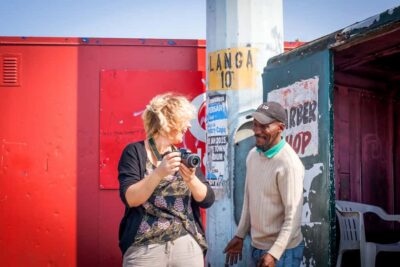
The guide can make or break a township visit. According to the booking information, Sam leads some tours and has also handled driving and guiding. Loyola is another named guide associated with the experience, and the tour may include a separate Langa guide for the walking section.
You should expect an English-speaking guide who explains the history, answers questions, and manages the transport between townships. The strongest part of this setup is the chance to ask about details that catch your attention. Several written accounts describe the guides as patient, clear, and willing to answer almost any question, which is exactly what this subject requires.
Pickup and drop-off at your hotel remove some of the practical hassle. The air-conditioned minivan is also useful because the route covers several separated areas rather than one compact neighborhood. A private group means you are not sharing the vehicle with a large crowd, though the price is tied to the group rather than the individual.
The tour is listed as wheelchair accessible. Still, the walking segment, township surfaces, and access to specific sites can vary, so anyone with mobility concerns should confirm the details when booking.
Who will get the most from this tour
I would recommend this experience to you if you want to understand Cape Town beyond its scenic center. It suits adults, older children, students, and anyone interested in South African history, civil rights, urban planning, or community development.
It is particularly helpful for first-time visitors who want a guide to connect District Six, Langa, Bonteheuwel, Gugulethu, and Khayelitsha. The private format also suits couples or families who prefer to ask questions at their own pace.
You may want to skip it if you are looking only for light sightseeing, shopping, or a relaxed scenic drive. The subject includes forced removals, poverty, police killings, political violence, and ongoing social challenges. That can be heavy, especially when combined with close contact with ordinary homes and neighborhoods.
Come with comfortable shoes, modest expectations, and a willingness to listen. You do not need to know every political detail beforehand. You do need to understand that the communities you visit are real homes and workplaces, not a theme park.
Is this Cape Town township tour worth booking?
Yes, if you want a serious, compact introduction to apartheid’s effect on Cape Town and prefer a private experience with local contact. The itinerary covers a lot in three hours: District Six, Langa, Bonteheuwel, Gugulethu, and Khayelitsha, plus memorials, a shebeen, a healer, and the Philani Center.
The value is strongest when three people share the $261 group price. Solo visitors pay a steep amount, but hotel transfers, private transport, and the local walking guide make the arrangement convenient.
Book it if you want history explained in the places where it happened, not just in a museum. Pass if you are uncomfortable with difficult social subjects or expect a polished sightseeing route. For the right audience, this is one of the more useful ways to see the many sides of Cape Town.
FAQ
How long does the township experience last?
The activity duration is three hours. The experience title describes it as a three to four-hour tour, so allow a little flexibility in your schedule.
What areas of Cape Town does the tour visit?
The route includes District Six, Langa, Bonteheuwel, Gugulethu, and Khayelitsha.
Is hotel pickup and drop-off included?
Yes. Hotel pickup and drop-off are included in the experience.
Is transportation provided?
Yes. Transport is provided in an air-conditioned minivan.
What language is the tour conducted in?
The live tour guide speaks English.
Is this a private tour?
Yes. It is offered for a private group of up to three people.
Does the tour include food and drinks?
No. Food, drinks, and lunch are not included unless specifically stated. Optional tips are also separate.
Is the tour wheelchair accessible?
Yes. The activity is listed as wheelchair accessible.
Can I cancel for a refund?
Yes. You can cancel up to 24 hours in advance for a full refund. The reserve now and pay later option allows you to book without paying immediately.
Just listed around Cape Town
- Cape Town: Inspiring sustainable change through Street Art★ 4.9 · 5 reviews
- Cape Town Tandem Paragliding Square 1 Paragliding★ 5.0 · 5 reviews
- SandBoarding in Capetown + PhotoShoot★ 4.0 · 5 reviews
- Cape Town: Full-Day Private Peninsula Tour★ 3.6 · 5 reviews
- Private FULL DAY Tour: Cape of Good Hope & Boulders Beach★ 5.0 · 5 reviews
- Cape Town Full Day Family Fun With Kids Private Tour★ 4.0 · 5 reviews
- Private Tour to Aquila Game Reserve in Cape Town – see the Big5★ 5.0 · 5 reviews
- Peninsula Tour Cape Town★ 5.0 · 5 reviews
Township Tours, compared.

Half Day Township Tour in Cape Town South Africa
Read our review →

Browse the lists this tour appears in