
Reviewed · CAPE TOWN TOURS
Cape Town: Malay Cooking Class and Lunch in Bo-Kaap
Cape Town’s Bo-Kaap is best understood from inside a home kitchen. In this 150-minute class, Faldela welcomes you into her home, explains the Cape Malay food tradition, and guides you through dishes built around turmeric, ginger, fennel, star anise, and tamarind. You cook, eat, talk, and get a close look at one of the city’s most distinctive neighborhoods.
I like the personal setting, where Faldela and her family make the class feel more like a shared meal than a formal demonstration. I also like the useful takeaway: recipes are shared after the class, so you can try the curry, rotis, or samosas again at home. The main consideration is that a larger group can mean less hands-on cooking for each person, so do not expect a private lesson.
Key points to know before booking
- Faldela leads a warm, funny class that combines cooking instruction with stories about Cape Malay food, family, and community.
- The class takes place in a local Bo-Kaap home, not a restaurant or hotel kitchen.
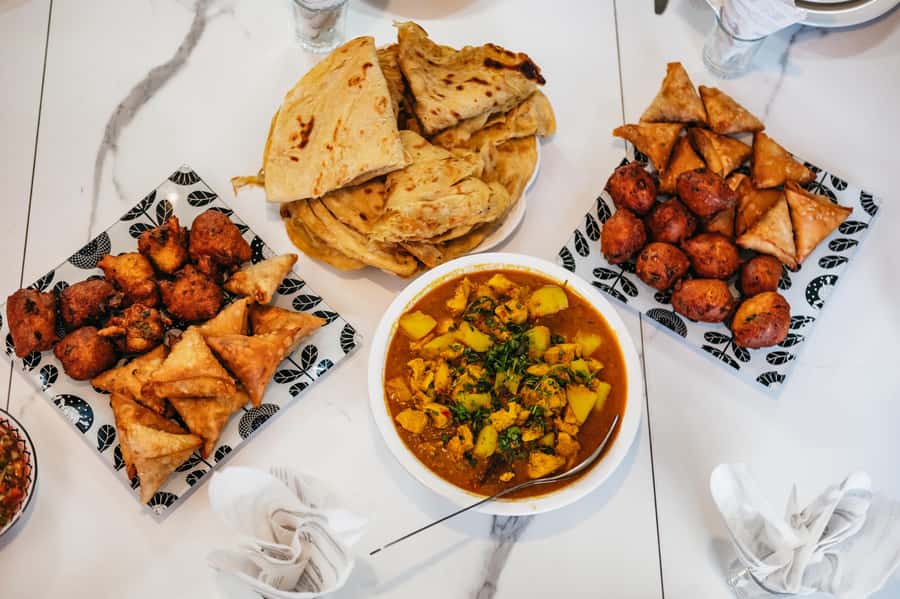
- You may prepare curry, stews, roasts, rotis, samosas, salads, juice, or dessert, depending on the day’s menu.
- The meal is the food you help prepare, served with soft drinks and enough variety to make it feel like a proper lunch.
- The colorful Bo-Kaap streets are part of the experience, with time to explore and take photographs near the painted houses.
- The $49 price includes the chef, ingredients, equipment, lunch, soft drinks, and recipes, but not alcohol or transport.
Why Bo-Kaap is the right place for this class
Bo-Kaap climbs the lower slopes of Signal Hill, with rows of brightly painted homes in shades such as hot pink and burnt orange. The colors make for easy photographs, but the neighborhood is more than a backdrop. It is closely tied to Cape Town’s Cape Malay community and its food traditions.
You meet at 109 Wale Street in Schotsche Kloof. From there, the class gives you a small but useful introduction to the area before the cooking begins. You have the chance to see the colorful houses and take photographs, then move into the more meaningful part of the visit: sharing food and conversation in a resident’s home.
I appreciate this order. You are not simply shown a few painted buildings and sent on your way. The neighborhood gives context to the meal, while the kitchen gives context to the neighborhood. You learn that food traditions can carry family stories, migration, faith, and memory in a way that a quick sightseeing stop usually cannot.
More cooking classes in Cape Town:
- Authentic African Cuisine Cooking Experience
★ 5.0 · 236 reviews - Cape Town: Cape Malay Cooking Class in Bo-Kaap
★ 4.8 · 120 reviews - Cape Town: Bo-Kapp Walking Tour and Malay Cooking Class
★ 4.7 · 105 reviews
Meeting Faldela at 109 Wale Street
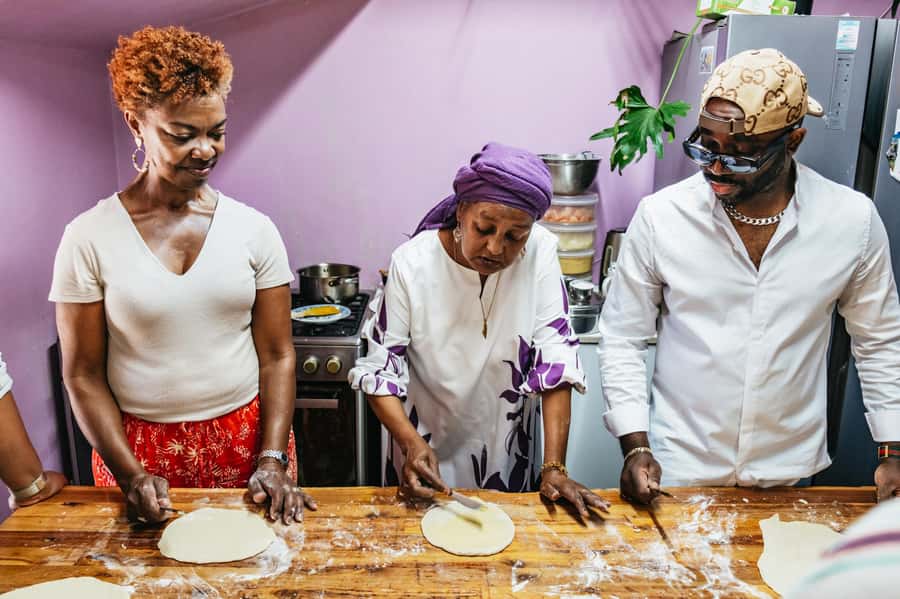
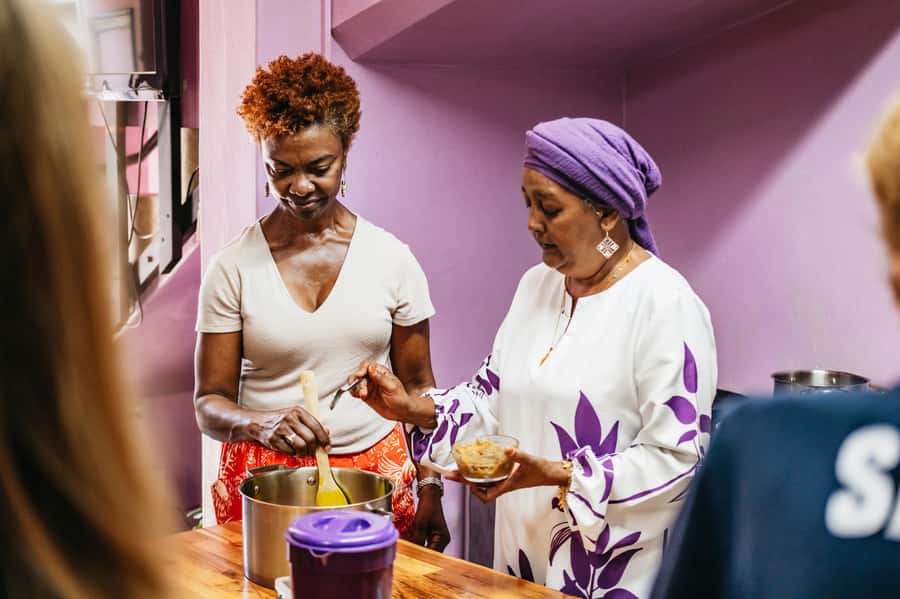
Faldela is the heart of the experience. Her teaching style comes across as relaxed, humorous, and personal. She is described as a warm host who remembers names, asks about people’s backgrounds, and folds stories about daily life into the cooking lesson.
That matters if you are new to cooking classes. You do not need prior experience, and there is no sense that you are being tested. The class is designed for ordinary home cooks, curious beginners, and people who simply enjoy eating. Faldela explains what to do, why it matters, and how the ingredients work together.
Her humor is a major part of the afternoon. Several guests specifically appreciated her dry wit and easy manner, while others enjoyed learning from Faldela and her daughter or sister. The result is a social class where the conversation is nearly as important as the food.
This is also a good choice for solo visitors. You are placed in a shared setting with people from different countries and age groups, which gives the meal a friendly, communal feel. If you prefer a quiet, highly structured class with one instructor and a small private group, this may feel less controlled.
What Cape Malay cooking brings to the table
Cape Malay cuisine reflects African traditions alongside influences from Malaysian and Indonesian people brought to the Cape by the Dutch during the 17th and 18th centuries. The cooking is known for fragrant spice blends, hearty stews, curries with plenty of sauce, roasts, and breads such as roti.
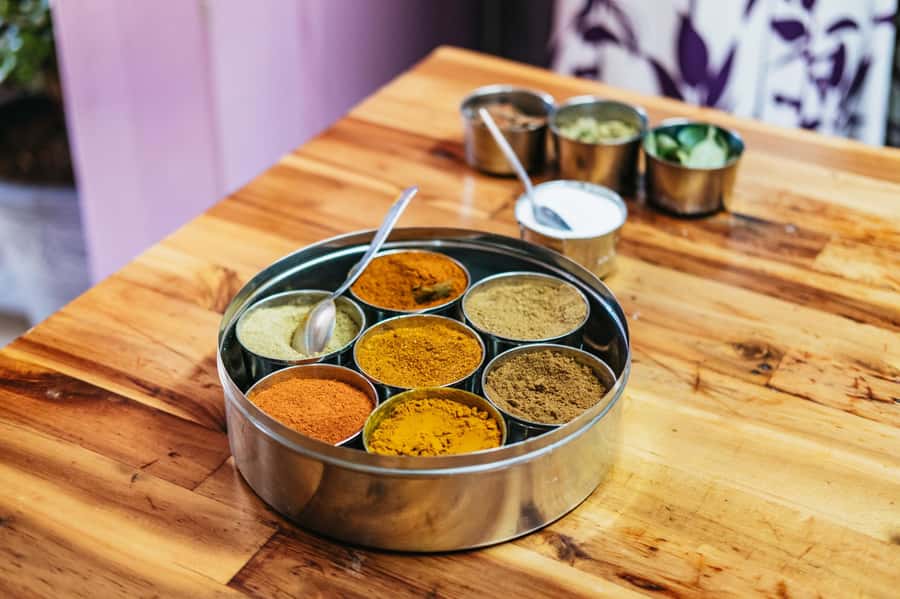
The spice lesson is one of the most useful parts of the class. You work with ingredients that may include:
- Turmeric, which gives many dishes their golden color and earthy aroma
- Ginger, for heat and freshness
- Fennel, with a sweet, lightly anise-like note
- Star anise, which adds depth to sauces and stews
- Tamarind, for a sharp, fruity sourness
The class also gives you a better sense of balance. Spices are not added simply to make food hot. They build aroma, sweetness, warmth, acidity, and color. Faldela also talks about the traditional uses and perceived health benefits of different spices, which adds another layer to the lesson.
The exact menu can vary, so you should not book expecting one guaranteed dish. The supplied details point to stews, roasts, and sauce-heavy curries, while individual classes have included Cape Malay curry, rotis, samosas, salad, juice, and dessert. That variety is a plus, but anyone with a single must-try recipe should confirm the day’s menu in advance.
The cooking lesson: from spice bowl to shared meal
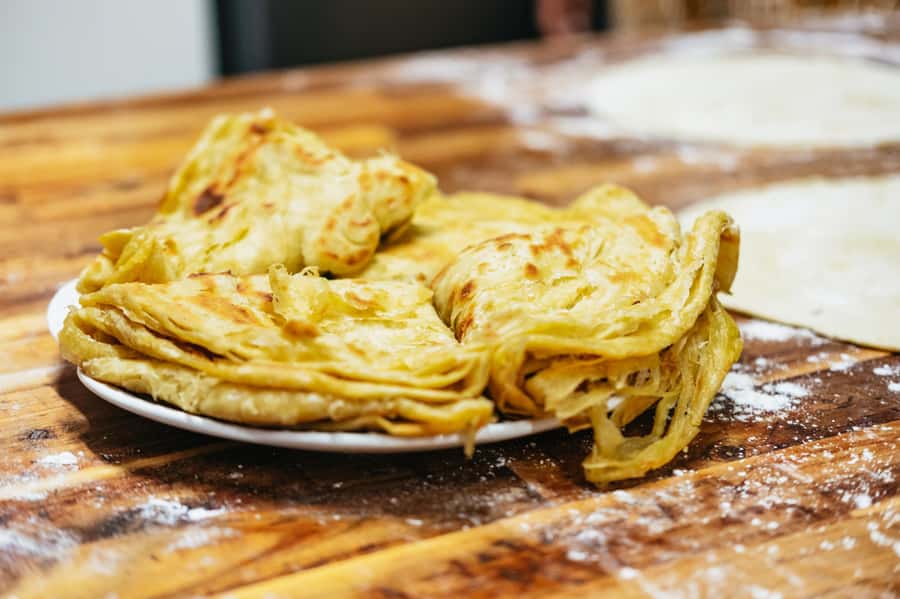
After the introduction, you take part in preparing the food. The class is interactive, but the amount of individual cooking depends on the group size. In a smaller group, you may get more direct time with particular tasks. In a larger group, you may watch some steps or work as part of a team.
That is the main practical drawback. One person who attended a large class enjoyed the lesson but noted that there was not much individual cooking. You should think of this as a shared cooking workshop rather than a private chef lesson. You will participate, but you may not personally prepare every component from start to finish.
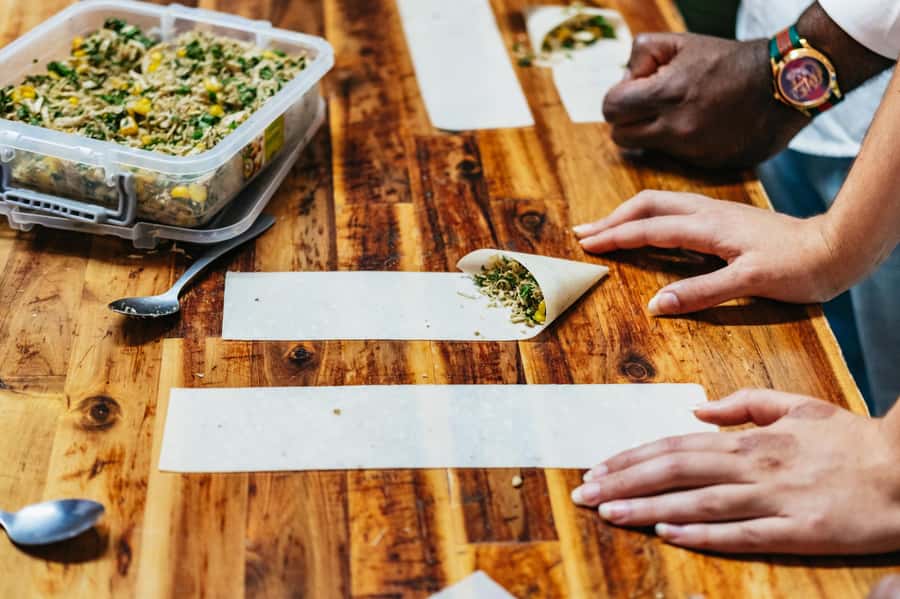
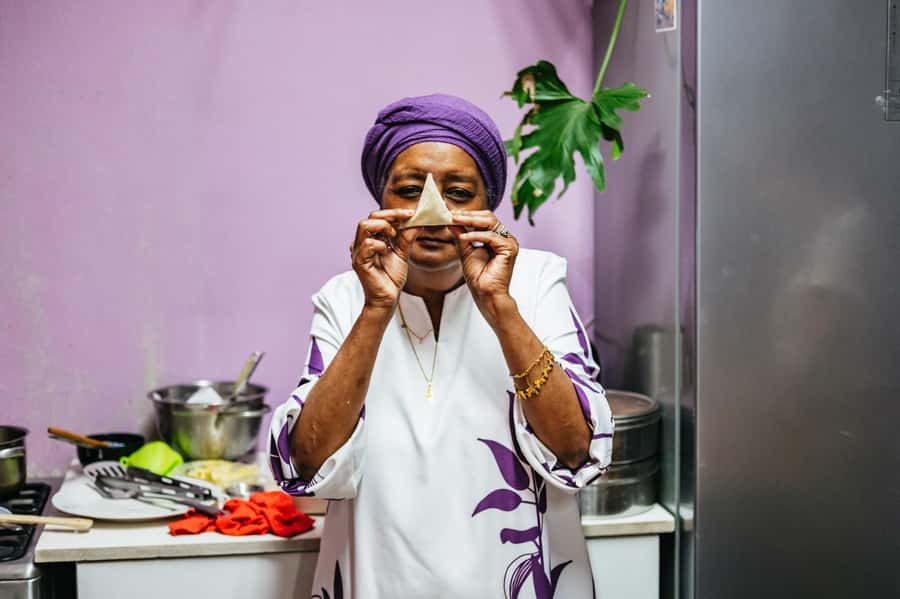
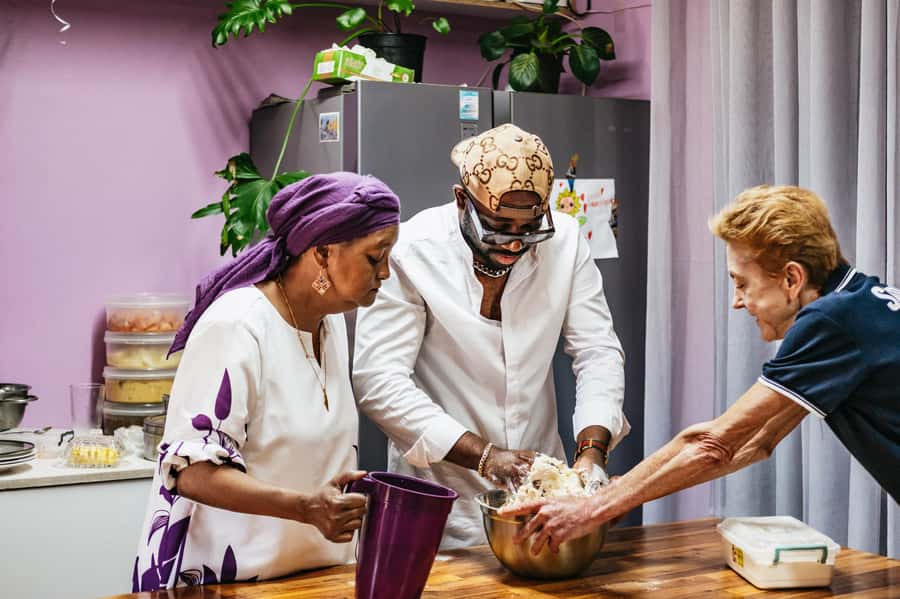
The upside is that the shared format keeps the mood light. Everyone has a role, and the class does not demand technical skill. You might help with spice preparation, shaping dough, assembling samosas, or working through the stages of a curry. Faldela explains the process patiently and connects each step to the final flavor.
The pacing also seems suited to a relaxed afternoon. The full activity lasts two and a half hours, including the cooking and lunch. You are not rushing from one station to the next, but you still have a clear finish and return to 109 Wale Street.
One small timing tip is worth noting: arrive close to the scheduled start rather than very early. The meeting point is a private home, and one person who arrived 30 minutes early had to wait outside. That is easy to avoid. Check the exact start time and plan to arrive promptly.
More lunch stops in Cape Town:
- From Cape Town: Big Five Game Reserve with Lunch
★ 4.6 · 2,409 reviews - Wine Tour to Stellenbosch & Franschhoek with Tastings & Lunch
★ 5.0 · 828 reviews - Stellenbosch & Franschhoek 20 Wine Tasting + Lunch Shared Tour
★ 4.5 · 290 reviews - Cape Town: Coastal Cruise & 2-Course Lunch Combo
★ 4.8 · 253 reviews
Eating the food you helped prepare
The reward comes when the cooking stops and everyone sits down together. Lunch is included, as are soft drinks, so you can taste the finished dishes without having to arrange another meal afterward.
This is more than a quick sample. The food is prepared in quantity for the group, and several people found there was more than enough to eat. Dishes such as curry, roti, and samosas create a hearty spread, while salad, juice, and dessert may add lighter or sweeter elements.
I like the shared table because it closes the loop on the lesson. You are not handed a plate of food with no idea how it was made. You have seen the ingredients, handled the components, and learned the logic behind the recipes. That makes the final meal more satisfying and gives you a better chance of recreating it later.
Come hungry. The generous portions are part of the value, and this is not the place for a small tasting menu. Soft drinks are included, but alcoholic drinks are not. Alcohol and drugs are not allowed during the activity, and smoking and pets are also prohibited.
How much value do you get for $49?
At $49 per person, this is a strong value if you want more than a standard restaurant meal. The price covers the 150-minute class, chef instructor, ingredients, cooking equipment, lunch, soft drinks, and recipes. You are also paying for access to a private home and a local host, which is difficult to reproduce through ordinary sightseeing.
The value is strongest for people who would otherwise pay separately for a neighborhood tour and lunch. Here, those elements are joined together. You see Bo-Kaap, learn about Cape Malay food and traditions, take part in preparation, and eat the result.
It is less compelling if your main goal is advanced culinary training. The class is intended to be welcoming and accessible, not a professional course. You may learn useful techniques and spice combinations, but you should not expect detailed knife-skills training, a long theory session, or one-on-one coaching throughout.
The price also does not include transportation. That is not a major issue if you can reach 109 Wale Street on your own, but you should factor in a taxi or other transport if your accommodation is farther away.
Who will enjoy this experience most?
I would choose this class for:
- First-time visitors who want a personal introduction to Bo-Kaap
- Food lovers who prefer eating in a home to dining in a formal restaurant
- Solo visitors who enjoy meeting an international group
- Couples, friends, and families looking for a relaxed shared activity
- Beginners who want recipes they can use after returning home
- Anyone interested in the cultural background behind a dish, not just its ingredients
The class also suits people with dietary needs better than many food tours may. Faldela has accommodated dietary requirements with ease, though you should tell the provider about your needs before attending rather than assume every menu can be changed.
You may want to skip it if you dislike group activities, cannot eat spice-heavy food, or want a private class with constant personal instruction. You should also check the accessibility details that matter to you. The activity is listed as wheelchair accessible, but the supplied information does not explain the layout of the home or the exact route from the meeting point.
Practical details for a smooth afternoon
The meeting point is 109 Wale Street, Schotsche Kloof, Cape Town. The tour begins and ends there, and transportation is not included. English is the stated language, with a live English-speaking guide.
The class lasts 150 minutes, so allow roughly half a day once you include getting to Bo-Kaap and continuing to your next activity. Since lunch is part of the class, you do not need to schedule a separate midday meal.
Wear something comfortable and practical for a kitchen setting. The supplied information does not specify a dress code, but you should expect to work around food and spices. If you are concerned about stains, avoid clothing that you would regret marking with turmeric.
The activity is wheelchair accessible. Pets, smoking, alcohol, and drugs are not allowed. You can cancel up to 24 hours before the start for a full refund, and the reserve now, pay later option can help if your Cape Town plans are still shifting.
Should you book the Bo-Kaap cooking class?
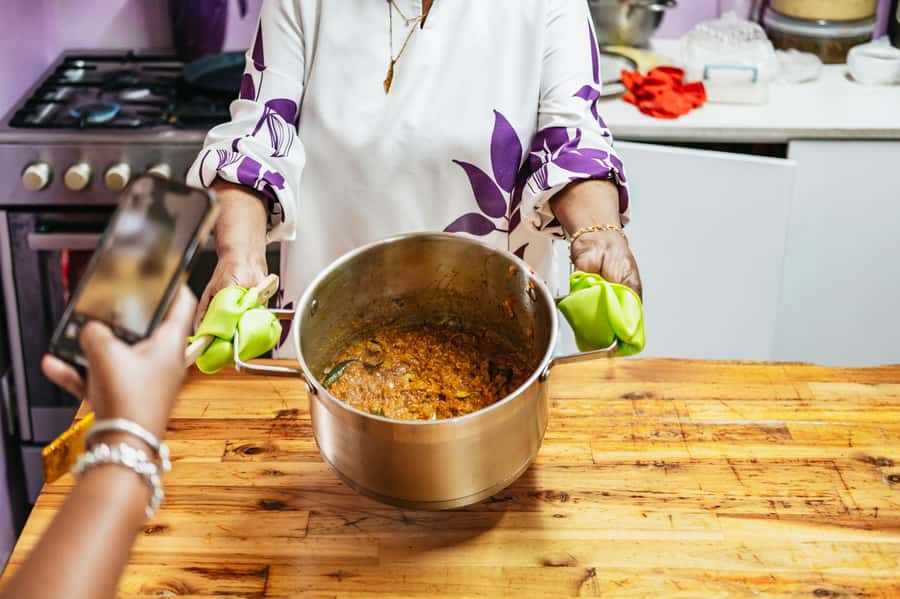
Yes, if you want a friendly, food-centered way to understand Cape Town. The best parts are Faldela’s personality, the home setting, the spice lessons, and the generous lunch. The recipes give the experience a useful afterlife, letting you carry the meal into your own kitchen.
Book with realistic expectations. This is a communal class, not a private culinary apprenticeship, and a large group may limit your hands-on time. Still, for $49, the mix of Bo-Kaap, local food, conversation, instruction, and lunch is hard to beat.
I would place it high on a Cape Town itinerary, especially after you have seen the city’s major sights and want an afternoon that feels more personal. Arrive on time, tell the host about dietary needs, and come hungry.
FAQ
Where does the cooking class begin?
The meeting point is 109 Wale Street in Schotsche Kloof, Cape Town. The activity also ends back at 109 Wale Street.
How long does the experience last?
The cooking class and lunch last 150 minutes, or two and a half hours.
What language is the class conducted in?
The live tour guide and instruction are in English.
Who teaches the cooking class?
The class is taught by Faldela, a local chef and host. Depending on the session, her daughter, sister, or other family members may also help host the experience.
What food will I prepare?
The menu can include Cape Malay curry, stews, roasts, rotis, samosas, and sauce-based dishes. Salad, juice, and dessert may also be included, but the exact menu can vary.
Is lunch included?
Yes. You eat the food prepared during the class, and soft drinks are included. Alcoholic drinks are not included.
Are ingredients and cooking equipment provided?
Yes. The activity includes the ingredients, cooking equipment, and chef instructor.
Do I need previous cooking experience?
No. The class is suitable for beginners, and previous cooking experience is not required.
Is the activity wheelchair accessible?
Yes, the activity is listed as wheelchair accessible. You may wish to confirm any specific access requirements before booking, since the available details do not describe the home’s layout.
Can I cancel the booking?
Yes. You can cancel up to 24 hours in advance for a full refund. A reserve now, pay later option is also available.
More workshops and classes in Cape Town
- Private Surf Lesson
★ 5.0 · 53 reviews - Private Surf Lesson in Cape Town – Transport & Photos Included
★ 5.0 · 50 reviews - Muizenberg Cape Town: Private Surf Lesson
★ 5.0 · 37 reviews - Private Cape Malay Cooking Class in Cape Town with a Local Family
★ 5.0 · 24 reviews
Just listed around Cape Town
- Cape Town: Inspiring sustainable change through Street Art★ 4.9 · 5 reviews
- Cape Town Tandem Paragliding Square 1 Paragliding★ 5.0 · 5 reviews
- SandBoarding in Capetown + PhotoShoot★ 4.0 · 5 reviews
- Cape Town: Full-Day Private Peninsula Tour★ 3.6 · 5 reviews
- Private FULL DAY Tour: Cape of Good Hope & Boulders Beach★ 5.0 · 5 reviews
- Private Tour to Aquila Game Reserve in Cape Town – see the Big5★ 5.0 · 5 reviews
- Cape Town Full Day Family Fun With Kids Private Tour★ 4.0 · 5 reviews
- Peninsula Tour Cape Town★ 5.0 · 5 reviews
Cape Town Tours, compared.

Wine Tour: Paarl, Franschhoek & Stellenbosch incl 3 wineries
Read our review →

Cape of Good Hope & Penguins Day Tour with Pickup
Read our review →
Zipline Cape Town – From Foot of Table Mountain Reserve
Read our review →
Table Mountain Cable Car, Hop-On Hop-Off Bus Tour
Read our review →
Cape Point and Boulder’s Penguins Full Day Tour
Read our review →

Browse the lists this tour appears in