
Reviewed · CAPE TOWN TOURS
Authentic African Cuisine Cooking Experience
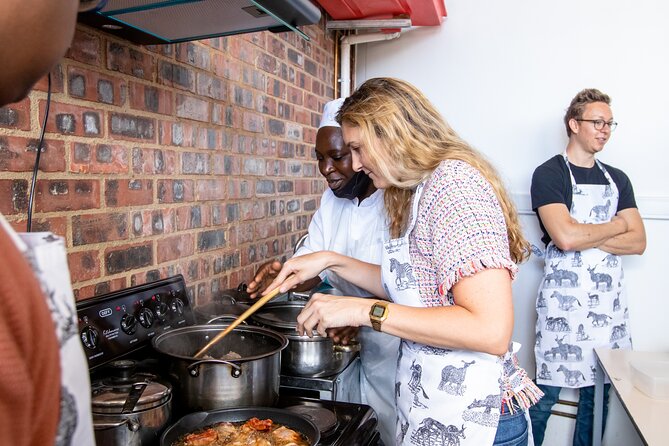
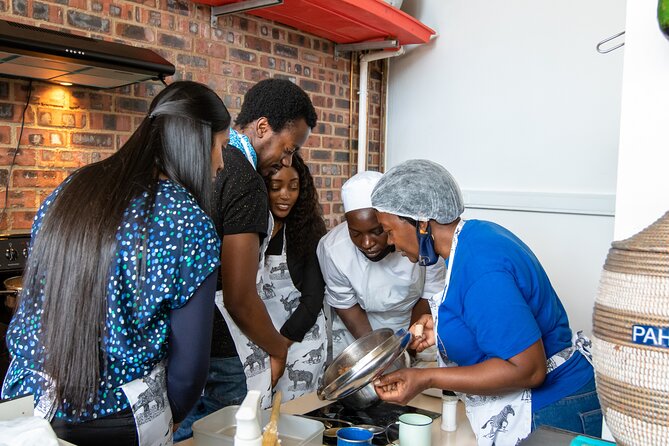
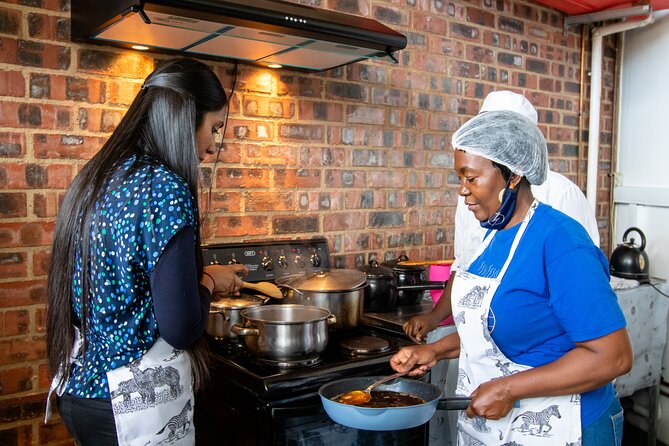
The best part of this Cape Town experience is that you do not simply sit down to eat African food. You help make it, from Sadza and chicken stew to chakalaka and sugar beans, then share the finished meal in the style of an African home. Caleb leads the food and cultural talk, while Florence guides the cooking.
I like the small maximum of 10 people, which gives the lesson a personal feel, and I like the warm welcome of African drinks and starter snacks before the work begins. You also get a meal, hot tea or coffee, and a chance to learn recipes you can take home.
The main consideration is that this is aimed at basic cooks. If you want a highly technical class with knife skills, precise measurements, or advanced restaurant methods, this may feel simple. It is better suited to people who want food, stories, and shared time around a table.
Key points to know before you book
- Cook a full Southern African-style meal: Make Sadza, chicken stew, beef bones with green vegetables, peanut-butter vegetables, chakalaka, and sugar beans.
- Meet Caleb and Florence: Caleb handles much of the food history and explanation, while Florence leads the practical cooking.
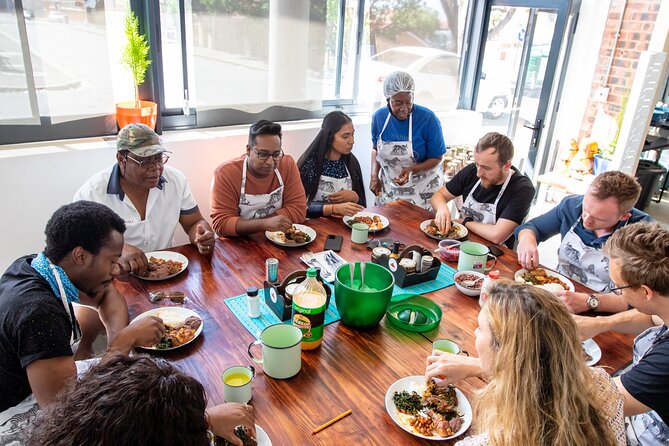
- Share the meal communally: Everyone contributes, then eats together in a way modeled on an African home.
- Vegetarian and vegan choices are available: Tell the host your needs as part of arranging the experience.
- Expect a small group: The maximum is 10 people, and some sessions may feel especially intimate.
- Allow two and a half hours: The experience includes drinks, snacks, cooking, the meal, and a final tea or coffee.
Why this cooking class feels different from a restaurant meal
Cape Town has no shortage of places to eat, but a restaurant usually gives you the finished dish without explaining how it fits into family life and regional food traditions. Here, the food is the subject and the activity at the same time.
The experience begins at Pahari African Restaurant on Cecil Road in Salt River. That setting matters. You are not being dropped into a staged cooking show with a long list of tourist stops. You are meeting the hosts at their restaurant and spending time with them around food.
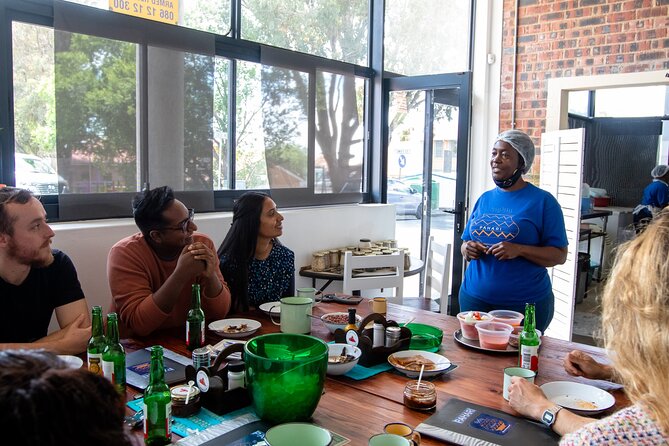
Caleb gives an introduction to African cuisine, its ingredients, and the way recipes have changed as they passed from one generation to the next. This talk is not just filler while pots heat. It gives you a reason to pay attention to ingredients such as maize meal, peanuts, beans, greens, and spices.
I especially like this approach for a first visit to Cape Town. You get a practical introduction to Southern African food without needing to know the difference between every regional cooking tradition before you arrive.
More cooking classes in Cape Town:
- Cape Town: Malay Cooking Class and Lunch in Bo-Kaap
★ 4.8 · 515 reviews - Cape Town: Cape Malay Cooking Class in Bo-Kaap
★ 4.8 · 120 reviews - Cape Town: Bo-Kapp Walking Tour and Malay Cooking Class
★ 4.7 · 105 reviews
Welcome drinks and snacks set the tone
You are welcomed with a selection of African drinks and starter snacks. The exact choices are not specified, so you should think of this as a tasting welcome rather than a fixed menu you can plan around.
This early part of the experience gives everyone time to settle in. It also helps break the stiffness that can come with joining a cooking class alongside people you have just met. The atmosphere is meant to be social, and the hosts place a clear emphasis on hospitality.
The included food and drink add real value to the $57.51 price. You are not paying only for a demonstration. You receive snacks, alcoholic beverages, lunch and dinner as listed, coffee or tea, the cooking lesson, and the meal you help prepare.
The meal labels may reflect different booking times rather than two separate full meals. I would still treat the package as substantial, not as a short tasting with one small plate.
Sadza gives you the foundation
One of the main dishes is Sadza, also called mealie pap. This maize-based staple is important across parts of Southern Africa and often acts as the base for stews, vegetables, and meat.
Making it helps you understand the meal’s structure. Sadza is not meant to be a decorative side dish. It is a filling foundation that works with sauces and savory dishes. You will see how a simple ingredient becomes central to a shared meal.
The hands-on nature matters here. You are encouraged to get involved rather than only watch Florence cook. The supplied information does not promise that each person prepares an entire dish alone, but it does say that everyone has an opportunity to contribute.
That makes the class suitable for families and mixed groups. You can take part even if you are not an experienced cook.
Stews, greens, and peanut butter show the range
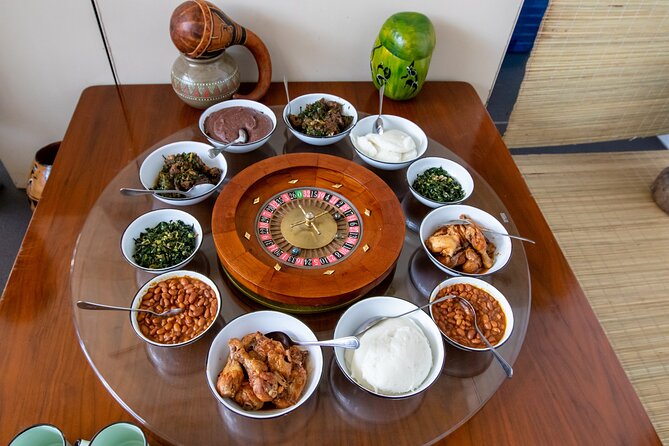
The menu moves beyond one staple. You help prepare chicken stew and meaty beef bones mixed with green vegetables, giving the meal two hearty options with different textures and flavors.
There are also green vegetables with peanut butter, a useful reminder that African cooking is not simply about grilled meat or hot spice. Peanuts can add body and flavor to vegetables, turning a familiar ingredient into something more filling.
A traditional method of making peanut butter is also demonstrated. That detail is one of the more unusual parts of the session because it connects the finished dish with the ingredient’s preparation.
You also make chakalaka, a spicy vegetable relish, and sugar beans. Together, the dishes create a broad meal rather than a single recipe lesson. You can compare stewed meat, maize, beans, greens, and vegetable relish at the same table.
The menu is described as a collection of best-selling dishes from Pahari African Restaurant. That gives the lesson a practical angle. You are not learning obscure food made only for a demonstration. You are working with dishes the restaurant serves and that its customers enjoy.
A few more Cape Town days worth comparing
- Wine Tour: Paarl, Franschhoek & Stellenbosch incl 3 wineries
★ 5.0 · 3,940 reviews - Cape Town: Hop-On Hop-Off Bus Tour with Optional Cruise
★ 4.8 · 3,929 reviews - Cape Town: Cape of Good Hope & Penguins Day Tour with Pickup
★ 4.7 · 3,362 reviews - Zipline Cape Town – From Foot of Table Mountain Reserve
★ 5.0 · 3,179 reviews
Florence turns the cooking into a shared task
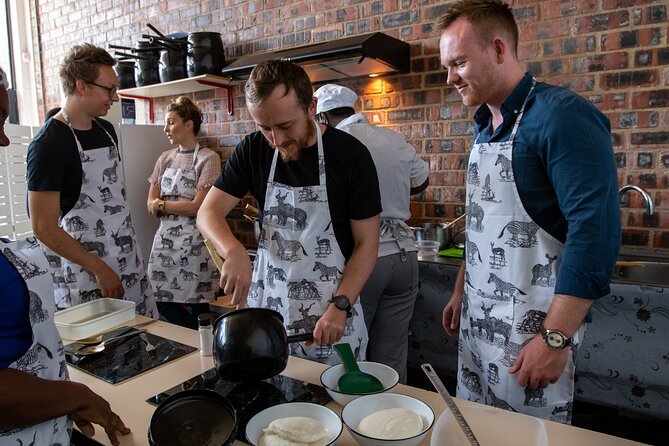
Caleb’s opening explanation is paired with Florence’s practical instruction. The two roles make sense: one person gives the cultural and historical frame, while the other keeps the cooking moving.
The strongest praise centers on how welcoming the hosts are. The tone is repeatedly described as warm, friendly, and home-like. That is important because cooking requires participation. You may be stirring, preparing ingredients, or helping with a dish alongside people you have not met before.
The class is not built around formal competition or culinary performance. It is built around contributing to the meal. If you prefer to stand back and take notes, you can learn from the demonstrations. If you want to handle the ingredients, there is room to do that too.
One point to keep in mind: a person looking for an advanced cooking course may find the instruction too basic. The strongest fit is for curious beginners, families, couples, and people who want a cultural lesson with food attached.
The communal meal is the real payoff
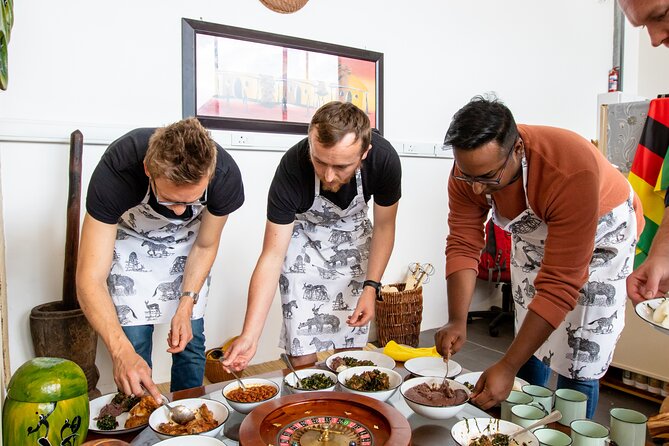
After the dishes are ready, you eat together. This is presented as the way food is typically enjoyed in an African home, and it changes the mood of the experience.
You are not rushed out after the final demonstration. The cooking becomes a shared meal, with the hosts and participants sitting down together. That gives you time to talk, taste the dishes side by side, and ask questions that may not arise during the preparation.
There is also an emphasis on eating communally. Depending on the group, this may feel intimate and relaxed, especially when only a few people attend. One small group of two found the lesson especially personal, while another group of four divided the dishes among themselves.
The food itself receives consistent praise for flavor. Still, taste is personal, and the experience is about more than getting a perfect restaurant plate. You are learning how the dishes relate to one another and how they are served as part of a shared occasion.
Some children have also taken part successfully. The activity can work well for families with older children who are willing to try unfamiliar foods and enjoy a hands-on setting. The supplied experience specifically notes children aged 11 and 14 enjoying the cooking, eating with their hands, and trying challenging dishes.
Tea or coffee closes the evening gently
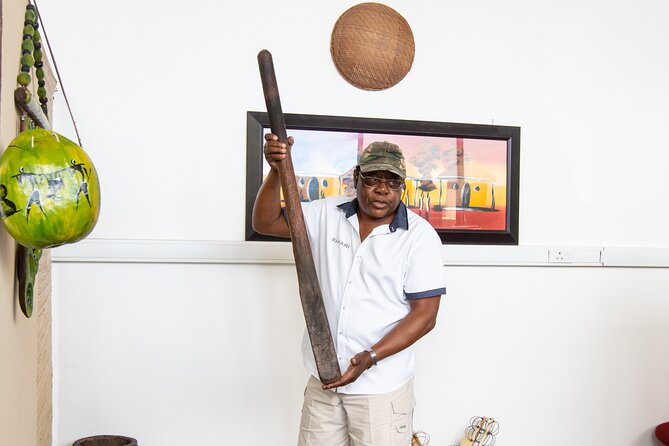
The final course is an African hot beverage, either tea or coffee. It is a small detail, but it gives the session a proper ending rather than stopping when the plates are cleared.
After a meal with several dishes, a hot drink also provides a natural time to sit and talk. You might use this moment to ask about the recipes, ingredients, or traditions that came up earlier.
Some groups have received recipes and photos or videos after the session. That is not presented as a guaranteed inclusion in the formal details, so you should not book on the assumption that you will receive them. Still, it may be worth asking the host if take-home recipes are available.
What the $57.51 price really buys you
At $57.51 per person, this is not the cheapest way to eat in Cape Town. You could certainly find a less expensive meal. The value comes from combining food, instruction, cultural background, drinks, snacks, and time with the hosts.
The two-and-a-half-hour length is also important. You have enough time for the history of the cuisine, the welcome drinks and snacks, preparation, cooking, the communal meal, and tea or coffee. A shorter class might teach one dish, but this menu gives you a wider view of African home cooking.
The small group limit improves the value. With no more than 10 people, you are less likely to feel like one person in a crowd. In a very small booking, the session can become almost private in feel, although the formal maximum is still 10.
Alcoholic beverages are included, along with lunch and dinner as listed. If you do not drink alcohol, that should not reduce the usefulness of the experience, since nonalcoholic African drinks, tea, coffee, snacks, and a full meal are also part of the offering.
Getting to Pahari African Restaurant in Salt River
The meeting point is Pahari African Restaurant, 121 Cecil Road, Salt River, Cape Town, postal code 7925. The experience begins and ends there, and private transportation is not included.
The restaurant is near public transportation. If you use a ride-hailing service, enter the restaurant name and full address carefully. It is also wise to tell your driver that you are going to Pahari African Restaurant in Salt River. This small step matters because several people have found that drivers recognize the restaurant name more readily than a vague neighborhood reference.
You receive confirmation at booking, and the experience is offered with a mobile ticket. That keeps arrival simple. You do not need to print a paper voucher.
The duration is approximately two hours and 30 minutes. Since the activity ends back at the starting point, you can plan another Cape Town activity afterward, but leave some breathing room rather than scheduling a timed attraction immediately after the class.
Who will enjoy this most
I would choose this experience if you want a human-scale introduction to African food and do not mind taking part. It is a good match for:
- Couples looking for a social meal with a cultural focus
- Families with older children
- Small groups of friends or colleagues
- First-time visitors to Cape Town who want food outside the usual tourist circuit
- Beginners who enjoy cooking without needing advanced instruction
- Vegetarians and vegans, since alternatives are available
It may be less suitable if you want a polished chef-led masterclass, a private car from your hotel, or a class devoted to one technically demanding recipe.
The relaxed format also suits someone who wants conversation. The hosts are central to the experience, and the warm welcome is repeatedly part of what makes the class memorable.
A few practical points before arrival
Tell the host about vegetarian or vegan needs when you book or as early as possible. The experience provides those options, but advance notice helps the cooking run smoothly.
Wear something comfortable that you do not mind getting a little messy. The description directly encourages hands-on participation, so this is not a sit-and-watch demonstration.
Because drinks and snacks come first, you do not need to arrive expecting an empty stomach. At the same time, the main meal is a major part of the experience, so avoid booking another full dinner at the same time.
The cancellation rule is straightforward: you can cancel for a full refund up to 24 hours before the local start time. Cancellations or changes made inside that 24-hour window are not refunded or accepted.
Should you book the Authentic African Cuisine Cooking Experience?
Yes, if your priority is authentic contact with food and people, rather than advanced culinary training. Caleb’s explanations, Florence’s cooking guidance, the broad menu, and the communal meal make this a useful way to learn about African cuisine in Cape Town.
I would be more cautious if you already cook at a high level and want demanding technique. The class is deliberately accessible, and one aspect of it may feel too basic for an experienced home chef.
For most visitors, the strongest reason to book is the combination of food and hospitality. You leave with a better sense of how Sadza, stews, greens, beans, peanut butter, and chakalaka fit into a shared meal. You may also leave with new recipes, new food memories, and a warmer connection to Cape Town than a restaurant reservation alone can provide.
FAQ
Where does the cooking experience take place?
It takes place at Pahari African Restaurant, 121 Cecil Road, Salt River, Cape Town, 7925, South Africa.
How long does the experience last?
The experience lasts approximately two hours and 30 minutes.
What dishes will I learn to make?
The menu includes Sadza, also called mealie pap, meaty beef bones with green vegetables, chicken stew, green vegetables with peanut butter, chakalaka, and sugar beans.
Are vegetarian or vegan options available?
Yes. Vegetarian and vegan options are available.
Are drinks and food included?
Yes. The inclusions list coffee or tea, alcoholic beverages, lunch, dinner, and snacks.
How many people can join the activity?
The experience has a maximum of 10 participants.
Is transportation included?
No. Private transportation is not included. The experience begins and ends at Pahari African Restaurant, which is near public transportation.
Can I cancel for a refund?
Yes. You can cancel at least 24 hours before the local start time for a full refund. Cancellations or changes made less than 24 hours before the start time are not accepted or refunded.
Just listed around Cape Town
- Cape Town: Inspiring sustainable change through Street Art★ 4.9 · 5 reviews
- Cape Town Tandem Paragliding Square 1 Paragliding★ 5.0 · 5 reviews
- SandBoarding in Capetown + PhotoShoot★ 4.0 · 5 reviews
- Cape Town: Full-Day Private Peninsula Tour★ 3.6 · 5 reviews
- Private FULL DAY Tour: Cape of Good Hope & Boulders Beach★ 5.0 · 5 reviews
- Cape Town Full Day Family Fun With Kids Private Tour★ 4.0 · 5 reviews
- Private Tour to Aquila Game Reserve in Cape Town – see the Big5★ 5.0 · 5 reviews
- Peninsula Tour Cape Town★ 5.0 · 5 reviews
Cape Town Tours, compared.

Wine Tour: Paarl, Franschhoek & Stellenbosch incl 3 wineries
Read our review →

Cape of Good Hope & Penguins Day Tour with Pickup
Read our review →
Zipline Cape Town – From Foot of Table Mountain Reserve
Read our review →
Table Mountain Cable Car, Hop-On Hop-Off Bus Tour
Read our review →
Cape Point and Boulder’s Penguins Full Day Tour
Read our review →

Browse the lists this tour appears in