
Reviewed · WALKING TOURS
Bo-Kaap: Walk with a local
Bo-Kaap is more than a row of brightly painted houses. It is a living Cape Malay neighborhood shaped by enslaved people, artisans, political exiles, and families whose roots reach across Africa, India, Sri Lanka, Indonesia, and Malaysia. This walk gives you that context through a guide with a personal connection to the area, rather than leaving you with a stack of colorful photos and little else.
I especially like the local guide’s family stories and the stop at Atlas Trading Company, where the smell of cardamom, cinnamon, and other cooking spices helps bring Cape Malay food traditions to life. The homemade snack, tea, and coffee are small extras, but they make the walk feel more personal. The main consideration is the terrain: you will walk uphill and downhill over uneven cobblestones, so solid shoes matter.
Key points to know before you book
- A local voice leads the walk: Guides including Ilyas, Rafiq, Siddiq, and Sedick have shared family ties and everyday connections to Bo-Kaap.
- The colorful houses come with serious history: The neighborhood’s story reaches back to slavery, Islam, forced movement, and cultural survival.
- Auwal Mosque adds depth: You go beyond the famous facades to one of South Africa’s oldest mosques.
- Atlas Trading Company engages your nose: The spice stop shows how Cape Malay cooking grew from many cultures.
- A homemade treat is part of the hour: You receive rooibos tea or coffee and a snack, sometimes including a koesister made in a local home.
- Keep the practical details in mind: The tour starts and ends at 71 Wale Street, uses a mobile ticket, and allows up to 20 people.
Bo-Kaap is a neighborhood, not a photo backdrop
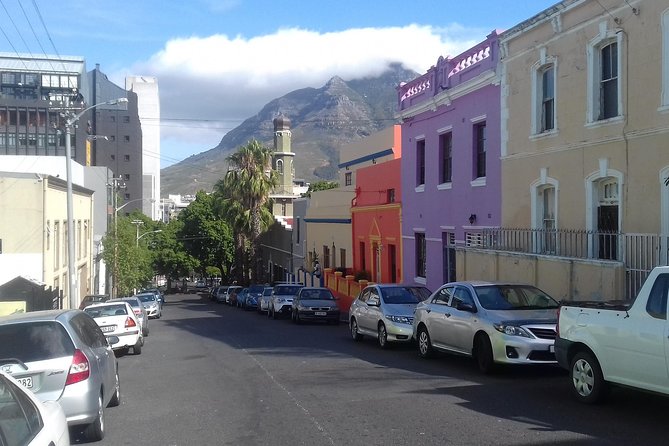
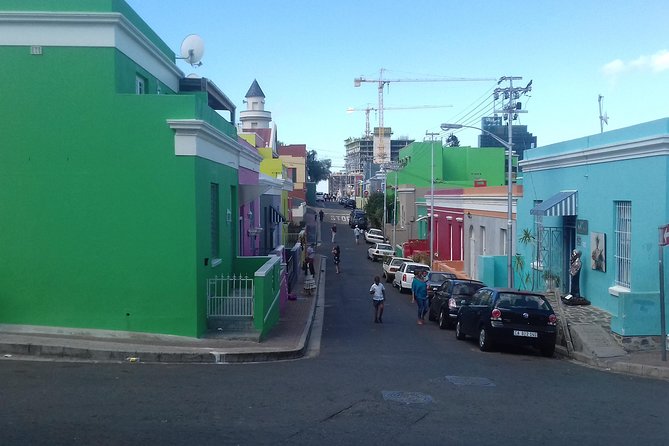
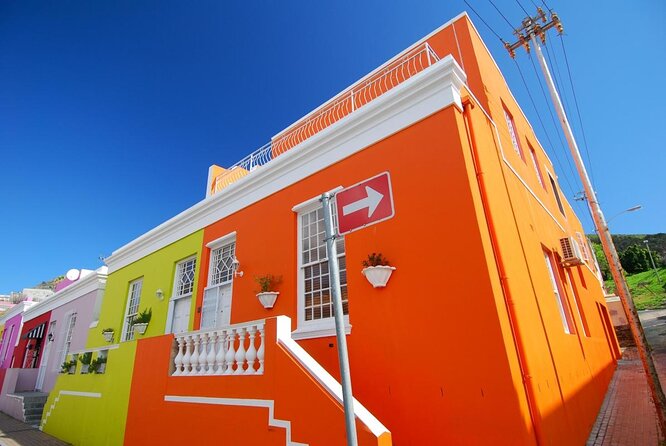
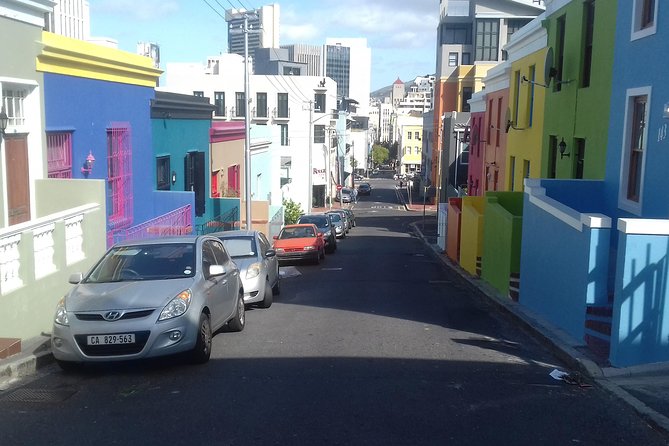
The first thing you notice is color. Houses in shades of pink, blue, yellow, green, and turquoise line the slopes below Signal Hill, creating one of Cape Town’s most photographed streetscapes.
The guide helps you look past the paint. Bo-Kaap is also known as the Malay Quarter and is closely linked with the early Muslim community in the Cape. Enslaved people and political exiles were brought here by Dutch settlers from several parts of Africa and Asia. Their faith, food, language, music, and family traditions helped shape the neighborhood.
That is why I think this walk works better than a quick self-guided stroll. You can take your own photos at any time, but the guide gives the houses a human story. Guides such as Ilyas, Rafiq, Siddiq, and Sedick have described growing up in Bo-Kaap, keeping family connections there, and watching the area change.
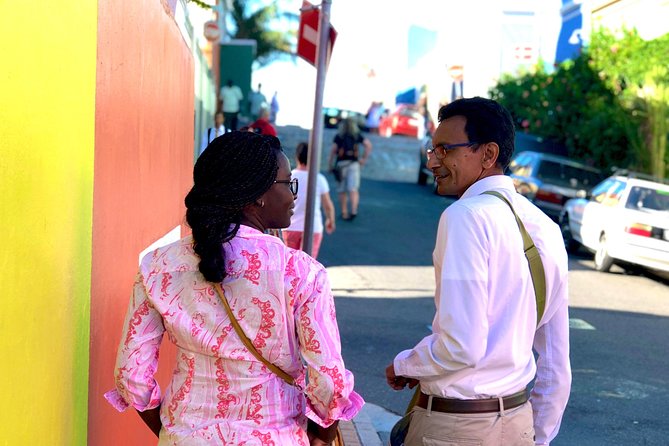
You may also meet local residents along the way. Several guides have been greeted by friends and neighbors during the walk, which gives you a sense that you are moving through someone’s home area, not simply along a sightseeing route. That personal connection is the strongest reason to choose this experience.
More Walking Tours in Cape Town
- Cape Town: Nathi Langa Township Walking Tour
★ 4.9 · 493 reviews - Cape Town: Art, Culture & History Walking Tour
★ 4.9 · 392 reviews - Cape Town: Street Art Walking Tour in Woodstock
★ 4.8 · 293 reviews
Meeting at 71 Wale Street
The walk begins at 71 Wale Street in Schotsche Kloof, at the foot of the Bo-Kaap slopes. The same place serves as the end point, so you do not need to arrange a second pickup location after the tour.
The opening talk sets out the broad story of Cape Town and Bo-Kaap. This is useful because the neighborhood’s past is tied to larger events: Dutch settlement, slavery, the arrival of people from distant regions, and the growth of Islam at the Cape.
The tour lasts about one hour, which makes it easy to fit into a morning or afternoon in the City Bowl. It is also short enough for a first look, though you should not expect a full food tour or an exhaustive visit to every historic building.
The group can reach 20 people. That is still a manageable size for a short neighborhood walk, but it is not a private tour. If you want to ask many questions, move at a slower pace, or take repeated photo stops, stay close to the guide and use the opening moments well.
The activity uses a mobile ticket and is near public transportation. Confirmation is provided when you book. You should arrive ready to walk rather than expecting a vehicle between stops.
Auwal Mosque and the birthplace of Islam at the Cape
Auwal Mosque is one of the most important stops because it shifts your attention from architecture to faith and community. It is described as one of the oldest mosques in South Africa, and its presence helps explain why Bo-Kaap is often linked with the birthplace of Islam at the Cape.
The mosque gives the neighborhood a living center. Here, the guide can connect the story of Islam with the people brought to the Cape from Africa and Asia, many of whom carried religious traditions that survived despite slavery and displacement.
The exact amount of time spent inside a place of worship can depend on access and the group’s pace, so you should treat this as part of the walk rather than a long formal mosque visit. Dress and behave respectfully, and follow the guide’s directions.
This stop also helps correct a common mistake. Bo-Kaap is not simply a colorful district built for tourism. The religious and family life of the area came first. The painted houses are now famous, but the community’s identity goes much deeper.
Atlas Trading Company turns history into scent
At Atlas Trading Company, the tour pauses at a well-known Cape Town spice shop. You smell the spices used in Cape Malay cooking, including the warm, layered aromas associated with everyday meals.
This is a smart stop because smell can explain culture faster than a long speech. The spices link the neighborhood to kitchens, family recipes, and the people who used cooking as one expression of freedom within their masters’ homes.
You are not just being shown a shop. You are given a sensory clue to the movement of ingredients and cooking customs across continents. That matters in Bo-Kaap, where food traditions reflect the many places from which people were brought to the Cape.
You may have time to shop at Atlas after the walk, but shopping is not the main purpose of the experience. The useful part is hearing how Cape Malay food developed and why spices matter to the neighborhood’s story.
A different side of Cape Town altogether:
- Wine Tour: Paarl, Franschhoek & Stellenbosch incl 3 wineries
★ 5.0 · 3,940 reviews - Cape Town: Hop-On Hop-Off Bus Tour with Optional Cruise
★ 4.8 · 3,929 reviews - Cape Town: Cape of Good Hope & Penguins Day Tour with Pickup
★ 4.7 · 3,362 reviews - Zipline Cape Town – From Foot of Table Mountain Reserve
★ 5.0 · 3,179 reviews
Tea, coffee, and a homemade Cape Malay snack
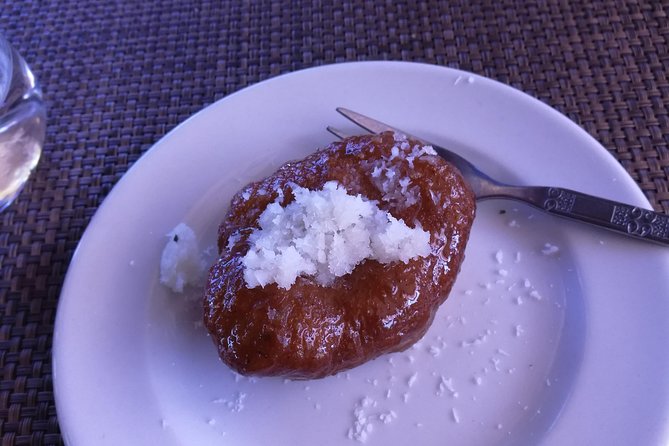
A cup of rooibos tea or coffee and a snack are included. Rooibos is strongly associated with South Africa, while the sweet Cape Malay treat adds a local food note to a walk that otherwise focuses on history and daily life.
The snack may be a koesister, a spiced, syrupy Cape Malay pastry. On some outings, the guide has taken the group to a relative’s home for a freshly made version. A warm koesister served in a local house is a very different experience from buying a packaged snack at a sightseeing stop.
You should not book this tour expecting a large tasting menu. The food is a brief refreshment, not a full meal. Still, it adds welcome character to a one-hour walk and gives you a taste of the neighborhood’s cooking traditions.
If you have food allergies or dietary restrictions, ask about the snack before eating it. The supplied details do not specify ingredients or substitutions.
The best streets for photographs
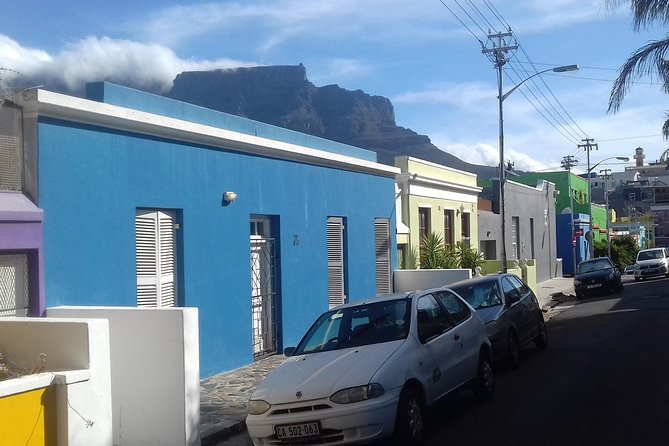
Bo-Kaap is a natural choice for photography. The painted facades, sloping streets, and views toward Signal Hill give you plenty to frame, especially if you enjoy architectural details and street scenes.
The guide can point out quieter corners as well as the famous streets. That balance is valuable. You still see the main colorful sections, but you may also walk through less familiar lanes where the area feels more like a residential neighborhood.
Be considerate when taking pictures. People live here, and the houses are not just props. Ask before photographing residents, particularly when the guide introduces you to friends or family members.
The surface underfoot deserves attention. The walk includes uneven cobblestones, changes in elevation, and hills that are not extreme but can slow you down. Wear comfortable shoes with a firm sole. Bring water, even though the tour includes a drink, and consider a light jacket in cool or overcast weather.
What the local connection adds
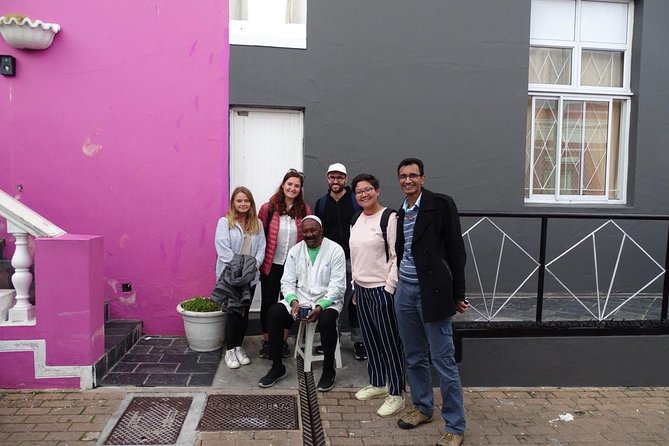
The strongest part of this experience is the guide’s connection to Bo-Kaap. Past guides have included Ilyas, who was born and raised in the neighborhood, along with Rafiq, Siddiq, and Sedick, who have shared both family stories and present-day concerns.
That can change the tone of the walk. Instead of hearing only fixed dates and prepared facts, you may hear about relatives, community gardens, friends in the area, and the pressures facing the neighborhood today.
A guide who knows local residents can also take you through back streets that large groups may skip. You might stop to greet someone, hear about a building from a personal angle, or visit a family home for a homemade treat. These moments are not guaranteed in a rigid, identical form, but they are central to the experience’s design.
I also appreciate that the guides discuss the future, not just the past. Bo-Kaap is a place people want to preserve for future generations, and your walk can help you understand why preservation matters to residents.
Safety, pace, and comfort
The walk is designed for most people who can manage a short urban outing, but the hills and cobbles deserve an honest warning. If you have trouble with uneven ground or elevation, this may not be the best choice.
The pace is generally manageable, with time for questions and photographs. One guide was praised for setting a comfortable speed, which is important in a neighborhood where rushing would defeat the purpose.
The area felt safe to the people who took the walk, but one person reported encountering a panhandler. That is a normal possibility in a city neighborhood and not a reason to avoid Bo-Kaap, but you should keep valuables secure and remain aware of your surroundings.
Solo women can consider booking a morning departure and arranging transport to and from the meeting point in advance. The tour is near public transportation, and the activity ends where it begins at Wale Street.
Is $25.31 good value for one hour?
At $25.31 per person, this is not the cheapest way to see a few colorful houses. You can walk through Bo-Kaap independently and take photographs without paying an admission fee.
The fee becomes easier to justify if you want the story behind the streets. It covers a local guide, a structured route, cultural context, a visit connected with Auwal Mosque, a spice-shop stop, and a drink with a snack. The small group limit of 20 also gives it more value than a large bus-style outing.
The best value comes from the guide’s personal connection. A map can show you Wale Street, but it cannot introduce you to the community, explain family links, or describe how the neighborhood feels to someone who lives there.
At only about an hour, this is an easy add-on to a Cape Town day. You can combine it with other City Bowl sights without giving up half a day. The tradeoff is that the short format leaves limited time for long visits, extensive food sampling, or detailed museum-style interpretation.
Who should book this Bo-Kaap walk?
I would choose this tour if you want history tied to real people and daily life. It suits first-time visitors, photographers who want more context, and anyone curious about Cape Malay food and Muslim heritage.
It is also a good fit if you prefer a small, conversational walk to a polished sightseeing circuit. The personal stories from guides such as Ilyas, Rafiq, Siddiq, and Sedick are the main attraction.
You may want another type of activity if you mainly want a long food tour, private photography session, or extended mosque visit. The route is short, and the included snack is a taste rather than a meal.
Book with enough notice if your dates are fixed. This experience is commonly reserved about three weeks ahead, with an average booking lead time of 21 days. Free cancellation is available up to 24 hours before the start time. Bad weather or failure to reach the minimum group size can also lead to a rescheduled experience or full refund.
Should you book it?
Yes, if you want Bo-Kaap to mean more than colorful walls. The price is fair for a short guided walk, especially when you value a local voice, a spice stop, and a homemade Cape Malay snack.
Choose a morning if you prefer cooler conditions and a quieter start. Wear firm walking shoes, carry water, keep a light layer handy, and arrive at 71 Wale Street ready to listen as much as you photograph. If your main goal is an Instagram stop, you can do that alone. If you want to understand why the neighborhood matters, book the walk.
FAQ
Where does the Bo-Kaap walking tour start?
The tour starts at 71 Wale Street, Schotsche Kloof, Cape Town, 8001, South Africa.
Where does the experience end?
The walk ends back at the meeting point on Wale Street.
How long does the tour last?
The experience lasts about one hour.
How much does the tour cost?
The listed price is $25.31 per person.
What is included with the tour?
A cup of rooibos tea or coffee and a snack are included.
Will the tour visit Auwal Mosque?
Auwal Mosque is included among the experience highlights. It is described as one of the oldest mosques in South Africa.
Does the tour stop at a spice shop?
Yes. The route includes a stop at Atlas Trading Company to smell spices used in Cape Malay cooking.
How many people can join the tour?
The activity has a maximum group size of 20 people.
Is the tour close to public transportation?
Yes. The meeting point is near public transportation.
Can I cancel for a full refund?
You can cancel at least 24 hours before the experience start time for a full refund. Cancellations or changes made less than 24 hours before the start time are not accepted for a refund.
Just listed around Cape Town
- Cape Town: Inspiring sustainable change through Street Art★ 4.9 · 5 reviews
- Cape Town Tandem Paragliding Square 1 Paragliding★ 5.0 · 5 reviews
- SandBoarding in Capetown + PhotoShoot★ 4.0 · 5 reviews
- Cape Town: Full-Day Private Peninsula Tour★ 3.6 · 5 reviews
- Private FULL DAY Tour: Cape of Good Hope & Boulders Beach★ 5.0 · 5 reviews
- Private Tour to Aquila Game Reserve in Cape Town – see the Big5★ 5.0 · 5 reviews
- Cape Town Full Day Family Fun With Kids Private Tour★ 4.0 · 5 reviews
- Peninsula Tour Cape Town★ 5.0 · 5 reviews
Walking Tours, compared.





Browse the lists this tour appears in