
Reviewed · SOWETO & APARTHEID MUSEUM TOURS
Township – Langa – Apartheid Museum Plus Arts and Culture Tour
Langa is not a polished postcard stop. It is Cape Town’s oldest township, a living community shaped by forced removals, racial separation, crowded housing, art, music, and long waits for better homes. This tour gives you a short but serious introduction, with time for local creativity rather than only a drive past.
I like the small group of no more than 13 people, which makes it easier to hear the guide and ask questions. I also like the Guga S’thebe Cultural Centre, where a brief African drum lesson, local pottery, performing arts, and community work give the visit a human focus.
The main consideration is that four hours can only sketch a difficult and complicated subject. You will see important places, but this is not a full study of apartheid or township life. The tour also does not include lunch, and the listed meeting point is at The Silo Hotel rather than an unspecified hotel pickup.
Key points about the Langa tour

- Guga S’thebe gives the visit a creative center, with art, pottery, performing arts, and a short djembe lesson.
- The apartheid story is tied to real communities, including forced removals in 1968 and racial groupings that shaped the townships.
- You visit more than one kind of township site, including an apartheid hostel, art and craft market, and Langa Taxi Rank.
- The small group is capped at 13 people, a useful size for a sensitive subject and personal questions.
- Round-trip transport is included, along with an air-conditioned vehicle and bottled water.
- The $86.58 price buys a focused half-day, but you should decide if the cultural access and transport justify the cost for your plans.
Why Langa deserves more than a quick drive-by
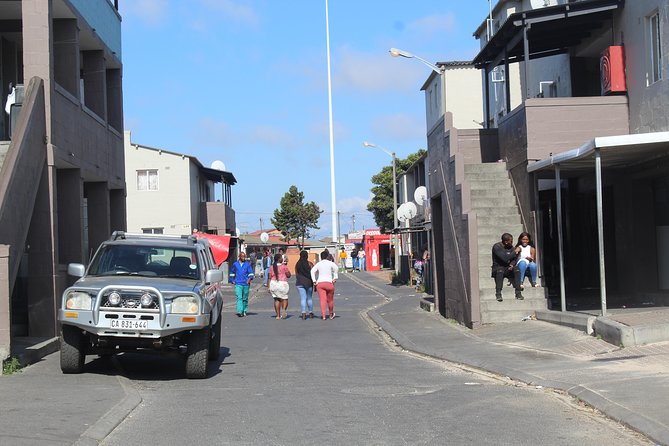
Many Cape Town visitors spend their time around the mountain, waterfront, and historic center. Langa offers a different view of the city, one shaped by government policy and everyday resilience rather than scenic viewpoints.
The township was created within the system of racial separation that controlled where people could live, work, and move. The tour places that past beside the present. You are not only hearing about apartheid in a museum room. You are visiting community spaces, transport points, art venues, and places connected to housing and forced removal.
That mix matters. A history talk can leave apartheid feeling distant. Seeing where community life continues, and where people still wait for housing, makes the subject more immediate. At the same time, you should approach the visit with respect. Langa is a home, not a stage set built for sightseeing.
I appreciate that the tour includes local art and music rather than treating the township only as a place of hardship. The cultural center helps you see people as artists, teachers, performers, and community members, not just as subjects of a painful chapter in South African history.
More Museum Tours in Cape Town
- Museum of Contemporary African Art: Fast-Track Zeitz MOCAA
★ 4.4 · 204 reviews - Cape Town: Private Guided Tour of Cape Town Diamond Museum
★ 4.7 · 156 reviews - ROBBEN ISLAND MUSEUM TOUR, WITH OPTIONAL LAST MINUTE TICKETS
★ 3.4 · 85 reviews
Starting from The Silo Hotel at 8:30 am
The stated meeting point is The Silo Hotel at Silo Square in the Victoria and Alfred Waterfront. The tour starts at 8:30 am and returns to the same meeting point after about four hours.
That arrangement is useful if you are staying near the Waterfront or can reach it easily. An air-conditioned vehicle takes care of the transfer between Cape Town and Langa, so you do not need to arrange separate transport for the main part of the morning. Pickup is offered, but the published starting point is specific, so check the exact pickup arrangement when booking.
A morning departure leaves the rest of your day open. You might pair the tour with a relaxed afternoon at the Waterfront, though I would avoid planning another tightly timed activity immediately afterward. Township visits can run at a human pace, and the return time is approximate.
The group maximum is 13 people. That is large enough to provide a social feel, but small enough for the guide to keep the group together and explain details without shouting across a bus. For a subject that invites questions, this is a real advantage.
Guga S’thebe and the power of local art
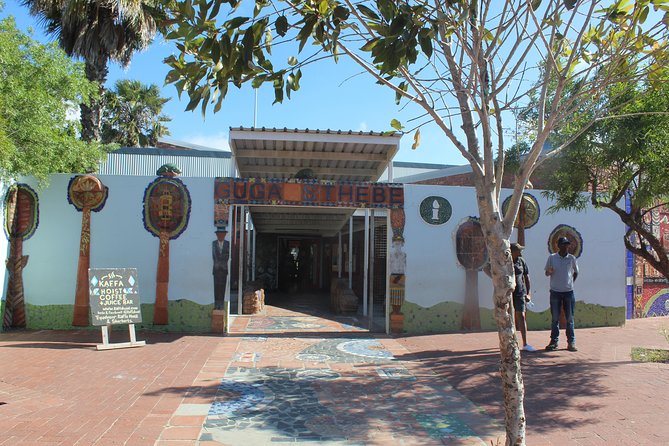
Guga S’thebe Arts and Culture Centre is the heart of the visit. It is a place where local people meet to display their talents, take part in performing arts, and discuss community concerns.
The center also gives you a chance to see how culture works as practical community activity. Art is not presented only for visitors. Children may be learning pottery, artists may be working on pieces, and local performers use the space to develop their skills. You might find opportunities to buy handmade work, including pottery connected with African wildlife such as the Big Five.
The visit includes admission to the arts, crafts, and community center. That included entry adds value because you are not simply viewing the building from outside. You get time inside a working cultural space, where the emphasis is on participation and local talent.
The short African drum lesson is one of the most memorable parts for many people. You get about 10 minutes to learn basic djembe rhythms. Do not expect a full music workshop. Think of it as a lively introduction that lets you feel the shared rhythm and understand why music plays such a large role in community gatherings.
I like this activity because it breaks down the formal distance between guide and visitor. You listen, then you try something yourself. Still, it is brief, so anyone hoping for serious musical instruction should keep expectations modest.
Forced removals and the District Six connection
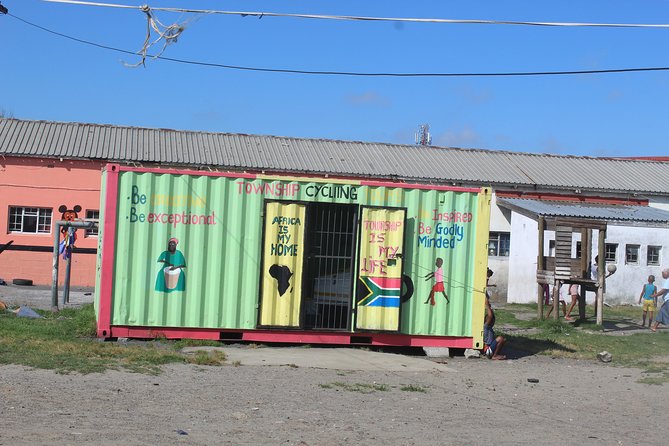
A central part of the visit deals with forced removals in 1968 and the treatment of people under apartheid’s racial groupings. The historical material explains how residents were removed from established areas and sent to townships, where the poorest communities often ended up.
The reference to District Six is important. District Six became one of the best-known examples of forced removal in Cape Town, and its story helps explain the wider system behind township planning. You will hear about the human effects of people being pushed away from their homes, work, neighbors, and familiar streets.
This is the part of the tour that requires the most attention. The subject is painful, and the short format means the explanation cannot cover every political decision or personal story. I would treat the visit as an introduction that gives you the questions and context to explore further, not as your only source on apartheid.
The most useful detail is the connection between past policy and present housing problems. The community is still divided in ways that reflect earlier racial planning, and some people continue to wait for housing. That link keeps the story from ending in 1994, when apartheid formally ended. You are shown how a legal system can leave physical and social effects behind for decades.
More Township Tours in Cape Town
- Half-Day Tour Through Cape Town’s Townships
★ 4.8 · 979 reviews - Cape Town: Guided Township Tour with Hotel Pickup
★ 4.4 · 536 reviews - Cape Town: Nathi Langa Township Walking Tour
★ 4.9 · 493 reviews - Cape Town: Robben Island Ferry Ticket and Townships Tour
★ 4.5 · 400 reviews
The apartheid hostel and life shaped by separation

The apartheid hostel offers another way to understand how government policy affected daily life. Hostels were tied to the movement and housing systems imposed on Black South Africans, and seeing this type of site gives the history a physical setting.
You should expect the stop to be more sobering than the drum lesson or craft market. It helps explain how families and workers were housed and controlled, and why township living cannot be reduced to a simple story of poverty or culture.
The value here is context. The tour places the hostel alongside a community center and transport rank, showing that history is not isolated from ordinary routines. Housing, commuting, work, family life, and access to opportunity all connect.
Because the tour lasts only half a day, ask questions if the guide allows time. The more you understand about the link between apartheid housing and present-day waiting lists, the more meaningful the rest of the visit becomes.
Walking through the art and craft market

The art and craft market adds a lighter, more direct part of the morning. You have the chance to browse locally made handicrafts and buy something from the people who make them.
I like markets when they are treated as places of exchange rather than compulsory shopping stops. Here, purchasing is optional. You can look, ask about the work, and decide for yourself if a piece is worth carrying home. Handmade pottery and other local crafts can also give you a physical reminder of the cultural side of the visit.
Bring a little patience. A market visit is not only about finding the cheapest souvenir. It is a chance to see what local artists choose to make and how craft fits into community life. The supplied details do not specify payment methods, prices, or the range of goods, so do not arrive with a fixed shopping list.
You should also remember that buying something does not replace listening. The strongest part of the market is the chance to connect the earlier history with present-day creativity.
Seeing how Langa moves at the taxi rank
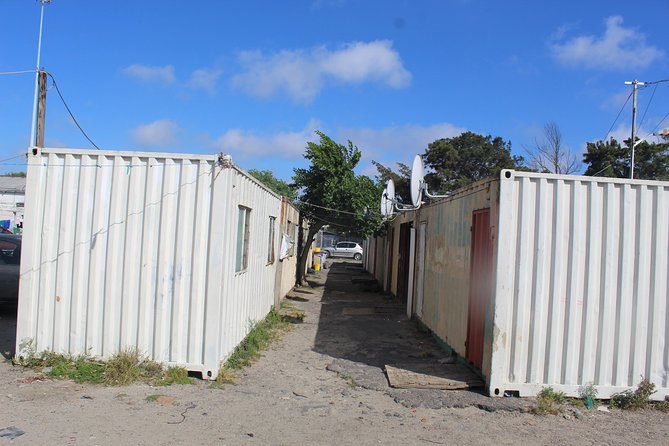
The Langa Taxi Rank shows the practical side of township life. Minibus taxis are a major part of public transportation in South African townships, and the rank is where you can see how people get to work, shops, and other parts of Cape Town.
This stop helps you understand distance in a way a vehicle transfer cannot. You may arrive in an air-conditioned tour vehicle, but residents rely on transport systems that shape their schedules and access to jobs. A taxi rank can look ordinary, yet it tells you a great deal about how a community functions.
The visit is also a useful reminder that Langa is not frozen in the past. People are commuting, trading, working, and going about their day. The tour combines historical explanation with these present-day routines, which gives the morning a wider frame.
As always, follow the guide’s instructions and stay with the group. The tour is designed to show you the area responsibly, not to turn independent wandering into part of the program.
What the $86.58 price covers
At $86.58 per person, this is not the cheapest way to spend a morning in Cape Town. The value depends on what you want from a township visit.
The price includes round-trip transport in an air-conditioned vehicle, bottled water, admission to Guga S’thebe Arts and Craft Centre and Community Centre, and the djembe lesson. You are also getting a guide-led visit that connects several locations and explains their meaning.
If you tried to arrange transport, cultural entry, and a structured visit on your own, you might save money, but you would lose the convenience and local interpretation. For a first visit to Langa, those two things matter. The guide helps you approach sensitive places with some context rather than guessing what you are seeing.
The price is harder to justify if you mainly want casual sightseeing or shopping. Four hours is a compact introduction, not a full-day cultural program. Lunch is not included, so plan to eat before or after the tour.
The tour has a 4.9 rating from 19 submitted ratings, with 100 percent recommending it. That is a strong signal, though the sample is small. I would give the high marks most weight for the tour’s informative, eye-opening approach and the community center visit, rather than assuming every departure will feel identical.
Who will get the most from this morning
I would choose this tour if you want a respectful introduction to Cape Town’s township history but do not have time for a full-day visit. It suits first-time visitors who want more than the Waterfront and Table Mountain, and it works well for people interested in art, music, social history, and current community life.
The tour is also a good fit if you prefer a small group to a large coach. A maximum of 13 people allows more room for questions and makes the drum lesson easier to follow.
Families may appreciate the hands-on music and pottery elements, though the apartheid history is serious. Parents should decide if younger children are ready for discussion of forced removals, racial separation, and poor housing conditions.
I would be less likely to book it if you want a long, academic treatment of apartheid, an extended market visit, or a meal included. You may also want to check the meeting point carefully if you are not staying near the Waterfront.
The activity is described as accessible to most people, near public transportation, and suitable for service animals. Confirmation arrives at booking, and the tour requires good weather and a minimum number of participants. If weather or numbers force cancellation, you are offered another date or a full refund.
Should you book the Langa Township tour?
Book it if you want a compact, guided look at the history and culture of Langa, especially if the Guga S’thebe visit and short drum lesson appeal to you. The strongest reason to go is the balance between difficult history and living creativity.
You should book with realistic expectations. This is not a complete account of apartheid, and four hours cannot show every side of township life. It is a focused starting point that connects forced removals, housing, community art, local crafts, and transport.
For many Cape Town itineraries, that is enough to make the morning worthwhile. You leave with a better sense of how the city’s past continues to affect its present, and with a reminder that Langa is a real community first and a sightseeing stop second.
FAQ
How long is the Langa Township tour?
The tour lasts approximately four hours.
Where does the tour start?
The stated meeting point is The Silo Hotel, Silo Square, at the Victoria and Alfred Waterfront in Cape Town.
What time does the tour begin?
The scheduled start time is 8:30 am.
Does the tour return to the starting point?
Yes. The activity ends back at the meeting point.
How many people can join the tour?
The maximum group size is 13 people.
Is transportation included?
Yes. Round-trip transfers in an air-conditioned vehicle are included, and pickup is offered.
Is lunch included?
No. Lunch is not included in the tour price.
What is included at Guga S’thebe?
Entry to Guga S’thebe Arts and Craft Centre and Community Centre is included. You also have the opportunity to buy local art and crafts and take a short African djembe drum lesson.
Can I cancel for a refund?
You can cancel at least 24 hours before the start time for a full refund. Cancellations or changes made less than 24 hours before the start time are not refunded or accepted. If poor weather or an insufficient number of participants cancels the tour, you are offered another date or a full refund.
More Soweto and Apartheid Museum visits
- Johannesburg: Hop-On Hop-Off Bus with Optional Soweto Tour
★ 4.6 · 985 reviews - Soweto /Johannesburg and Apartheid Museum Guided Full Day Tour
★ 5.0 · 932 reviews - Johannesburg Hop-On Hop-Off City Tour with Soweto Option
★ 4.5 · 768 reviews - Half-Day Tour of Soweto Tour
★ 4.5 · 712 reviews
Just listed around Cape Town
- Cape Town: Inspiring sustainable change through Street Art★ 4.9 · 5 reviews
- Cape Town Tandem Paragliding Square 1 Paragliding★ 5.0 · 5 reviews
- SandBoarding in Capetown + PhotoShoot★ 4.0 · 5 reviews
- Cape Town: Full-Day Private Peninsula Tour★ 3.6 · 5 reviews
- Private FULL DAY Tour: Cape of Good Hope & Boulders Beach★ 5.0 · 5 reviews
- Cape Town Full Day Family Fun With Kids Private Tour★ 4.0 · 5 reviews
- Private Tour to Aquila Game Reserve in Cape Town – see the Big5★ 5.0 · 5 reviews
- Peninsula Tour Cape Town★ 5.0 · 5 reviews
Soweto & Apartheid Museum Tours, compared.


Soweto /Johannesburg and Apartheid Museum Guided Full Day Tour
Read our review →
Johannesburg Hop-On Hop-Off City Tour with Soweto Option
Read our review →


Jo’berg in 1 Day: Soweto, Apartheid Museum & City Tour
Read our review →
Full-Day Tour with Soweto and Apartheid Museum
Read our review →
Browse the lists this tour appears in