
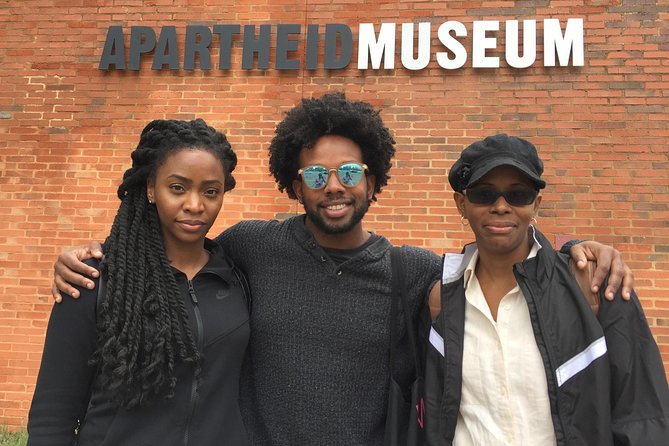
Reviewed · SOWETO & APARTHEID MUSEUM TOURS
Soweto, Apartheid Museum & Constitution Hill Day Tour
The most powerful part of this tour is the way it links apartheid-era prisons and courtrooms with ordinary Soweto streets. You move from Constitution Hill and the Apartheid Museum to Mandela House, Hector Pieterson Memorial, and an informal settlement, so the past never feels sealed away in a display case.
I like the private vehicle and hotel pickup, which make a packed Johannesburg day easier to manage. I also like the local perspective from guides such as Jacob, Kevin, and Life, who add context between stops and help explain daily life in Soweto. The main drawback is time: two hours at the Apartheid Museum can feel rushed, and the full route covers a lot in roughly five to six hours.
Key points to know before booking
- Constitution Hill puts famous names in real prison surroundings: Gandhi, Robert Sobukwe, Nelson Mandela, and Winnie Mandela were held here.
- The Apartheid Museum needs focused attention: Allow two hours, but know that the museum can feel confusingly arranged and deserves longer if you have the choice.
- Soweto is presented through several viewpoints: You see Mandela House, Hector Pieterson Memorial, FNB Stadium, an informal settlement, and Chris Hani Baragwanath Hospital.
- The private format gives you room to ask questions: Jacob, Kevin, and Life have been praised for clear communication and personal conversation between stops.
- The Nomzamo visit is direct and sensitive: Local residents explain how unemployment affects daily life, with time for questions.
- The price reflects convenience more than luxury: At $110 per person, hotel transport, entry to two major sites, a private guide, and bottled water are bundled together, but lunch and Mandela House entry cost extra.
Why this Johannesburg tour carries real weight
This is not a sightseeing loop built around quick photographs. It is a concentrated introduction to the people, laws, prisons, protests, and neighborhoods shaped by apartheid.
The route works because the stops speak to different parts of the story. Constitution Hill shows state power at close range. The Apartheid Museum lays out the broader political system. Soweto brings the story into homes, schools, memorials, streets, and working communities.
That range matters. You can read about apartheid in a book, but it is harder to grasp the human scale of the system until you see where people were jailed, where children were killed during the 1976 uprising, and where Nelson Mandela lived.
You should also know what this tour is not. It is not a leisurely city tour with long lunch breaks. The schedule is tight, and some stops are short. You spend much of the day moving between places, listening, looking, and asking questions.
More Museum Tours in Pretoria
- Johannesburg Full-Day Tour(Soweto/Jo-Burg & Apartheid Museum)
★ 5.0 · 110 reviews - Soweto and Apartheid Museum Guided Tour
★ 5.0 · 38 reviews - Soweto & Apartheid Museum Tour
★ 5.0 · 20 reviews
Constitution Hill, from fortress to court precinct
The day begins with about an hour at Constitution Hill Human Rights Precinct. The Old Fort and prison buildings were built under Paul Kruger in the late 1800s, and the site later held political prisoners and ordinary inmates under harsh conditions.
Gandhi and Robert Sobukwe were detained here. Nelson and Winnie Mandela were also held at the prison complex. Those names give the site immediate force, but the visit is not only about famous prisoners. The guide explains the humiliations and unfair treatment imposed on inmates, along with the way the prison changed over time.
The short highlights tour is useful if this is your first visit. You get the basic structure of the place, its prison sections, and the reason South Africa’s Constitutional Court is located here. That court connection is important. A site once used to control and punish people now houses the country’s highest court and its human rights ideals.
I would pay close attention to the contrast between the prison buildings and the court. The physical setting helps you understand that South Africa’s democratic system was built in response to very real abuse, not as an abstract political exercise.
One hour is enough for an introduction, but not for every exhibit or story. If you are especially interested in prison history, law, or the constitutional transition, you may want to return independently.
A moving drive through Johannesburg’s inner city
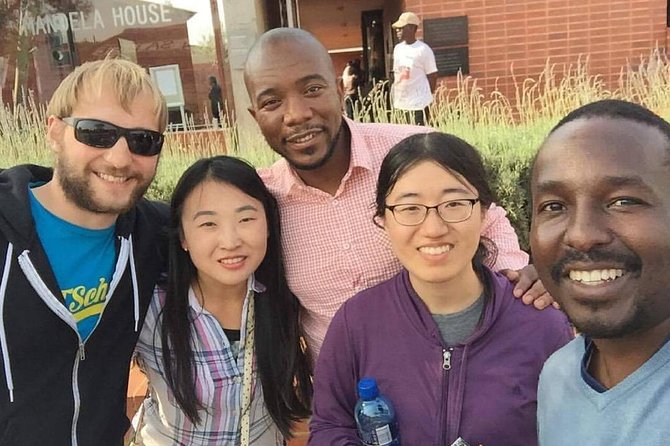
The next part is a roughly 20-minute drive through central Johannesburg. You pass Braamfontein, known as a student neighborhood and home to the University of the Witwatersrand, then cross Nelson Mandela Bridge.
You also pass Bree Taxi Rank and Newtown, two useful reminders that Johannesburg is a working city as much as a tourist destination. On Saturdays, the route may include a walk through The Playground craft and arts market in Braamfontein.
At Chancellor House, you can read a short timeline on the window panels of the building once associated with Nelson Mandela and Oliver Tambo’s law practice. This is a quick stop rather than a full visit, but it adds an important detail: Mandela and Tambo were not only political leaders. They also used the law to defend Black South Africans facing an unjust legal system.
The driving section is brief, yet it helps connect the major attractions. Instead of treating Constitution Hill, the museum, and Soweto as isolated sights, you see how they sit within the larger Johannesburg area.
Two hours inside the Apartheid Museum
The Apartheid Museum is the central indoor stop, with about two hours set aside for self-guided reading and viewing. Historians, journalists, filmmakers, and other organizations contributed material, including documents, photographs, film, and physical objects.
You should expect an emotionally demanding visit. The museum explains racial classification, segregation, forced separation, political resistance, imprisonment, and the eventual move toward democracy. It is designed to show both the machinery of apartheid and the human consequences.
The tour gives you the freedom to move at your own pace inside the museum. That is helpful because people respond to this material differently. You may want to spend several minutes with a photograph or film that another person passes quickly.
Two hours is useful, but it is not generous. I would suggest reading the displays carefully at first, then accepting that you cannot see every section in detail. A previous visitor found the museum’s arrangement confusing and felt that two hours was not enough. That is fair advice. The exhibits can demand concentration, and the visit may feel rushed if you try to absorb every panel.
The operator notes that the Apartheid Museum can close without notice and is not responsible for unexpected operational closures. If that happens, Constitution Hill may serve as the alternative two-hour museum experience, including the Constitutional Court, Men’s Prison Number 4, and the Women’s Jail.
This possibility is worth understanding before you book. The alternative still fits the theme, but it is not the same visit as the Apartheid Museum. If the museum is your main reason for booking, confirm its operating status close to your travel date.
More Soweto and Apartheid Museum visits:
- Soweto Half Day Tour
★ 5.0 · 231 reviews - Johannesburg and Soweto tour
★ 5.0 · 231 reviews - Soweto walking tour with a taxi ride
★ 4.5 · 42 reviews - Soweto, Kliptown, Eldorado Park Tour
★ 5.0 · 41 reviews
FNB Stadium and a quick Johannesburg photo stop
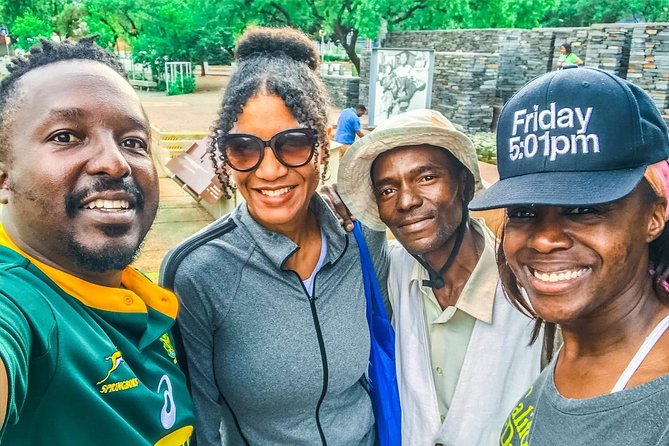
The route includes a five-minute outside stop at FNB Stadium, also known as Soccer City. The stadium has seating for about 95,000 people and hosted matches during the 2010 FIFA World Cup.
This is a photo opportunity, not a stadium tour. You will not have a long interior visit, so keep your expectations simple. The stop works as a visual pause and gives you a sense of the scale of one of Johannesburg’s major sports venues.
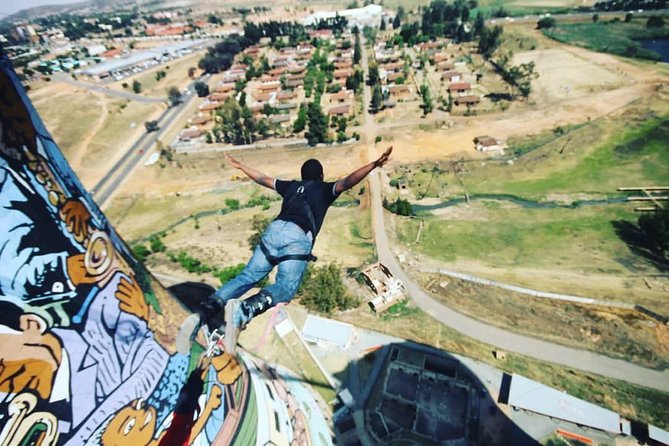
The route also passes an old electricity power station that was converted into a bungee-jumping and entertainment facility with a restaurant. The supplied schedule gives no formal duration or admission details for this part, so treat it as a drive-by sight rather than a guaranteed activity.
Hector Pieterson Memorial and the Soweto uprising
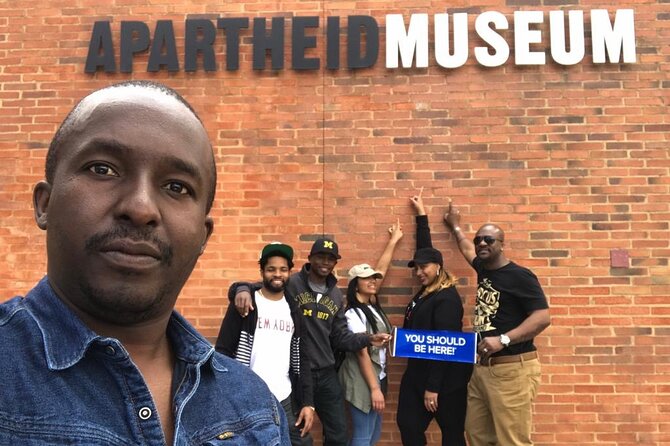
At Hector Pieterson Memorial, you receive a short briefing from a local Sowetan site guide. The visit lasts about 15 minutes, so it is focused rather than expansive.
The memorial recalls the 1976 Soweto uprising, when students protested against the forced use of Afrikaans in schools. Hector Pieterson, a 13-year-old student, became one of the best-known symbols of the violence after a photograph of his body being carried away spread around the world.
Your guide explains the meaning of the memorial’s structures and places the event within present-day Soweto. This is an important detail. You are not only shown a monument to a historic tragedy. You are also given a quick explanation of how the area functions now and what daily life is like for residents.
The short stop means you should listen closely. There may not be time for a long, unhurried museum-style visit. Still, the memorial is one of the most important points on the route because it connects national political change to the courage of schoolchildren.
Mandela House and a smaller, more personal story
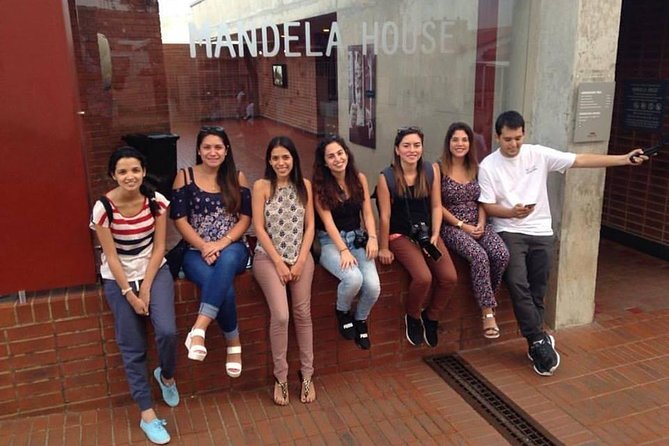
Mandela House is on Vilakazi Street, the Soweto home linked with Nelson Mandela and his family. The house holds stories from the struggle years and from Mandela’s domestic life with his first wife, Evelyn, and later Winnie.
Site guides take you through the different parts of the house and explain its connection to Mandela’s life. The scheduled visit is only about 10 minutes, and admission is not included in the tour price. You should allow for that extra cost and recognize that the stop may feel brief.
The limited time is the clearest weakness here. A house filled with personal and political meaning deserves careful attention, yet the wider route has many stops competing for the clock. If Mandela House matters most to you, ask the guide at the start how much time can realistically be spent there.
Even a short visit adds something the Apartheid Museum cannot. The museum explains national systems and events. Mandela House brings the story down to rooms, family relationships, and the practical life of a man who later became president.
Nomzamo Shanty Town, with a local viewpoint
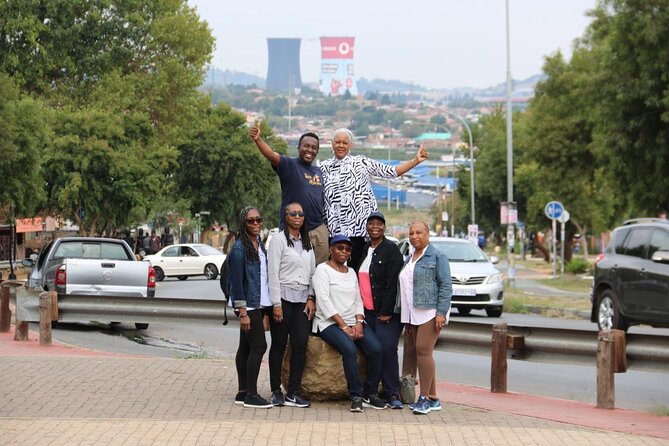
The visit to Nomzamo informal settlement lasts about 10 minutes and is guided by local residents. The presentation explains unemployment, how people make ends meet, and the challenges faced in the community. There is also time for questions.
This can be one of the most eye-opening parts of the day because it shifts your attention from historic landmarks to current economic hardship. You are asked to look at how apartheid’s effects continue through inequality and limited work opportunities, rather than treating 1994 as a neat ending.
You should approach this stop with care. It is not a stage set or a place for careless photography. Listen, ask respectful questions, and follow the guidance of the local residents.
The tour information says you may bring a gift to assist residents directly. That is optional, and no particular gift is specified. I would not treat a donation as an obligation. The important point is to visit respectfully and avoid turning other people’s homes into a spectacle.
The hospital and the scale of Soweto
The route includes a view of Chris Hani Baragwanath Hospital, described as the third-largest hospital in the world. The guide gives a short explanation of its role for Soweto residents and its importance to international medical research academics.
There is no extended hospital visit. It is a passing view with narration, but it helps show the scale of the community. Soweto is not only a collection of memorials and famous addresses. It is home to large numbers of people who depend on schools, hospitals, transport, shops, and local employment.
That broader view is one of the tour’s strengths. You are shown political history, but you also get a glimpse of ordinary infrastructure and daily needs.
How the private format changes the day
This is a private experience for your group alone. That makes a real difference on a subject where questions often arise naturally and where a fixed group pace can be frustrating.
The guide drives, provides live commentary, and handles the movement between stops. Jacob has been praised for clear communication, flexible pickup timing, and creating easy conversation. Kevin has been singled out for adding a local perspective and making the visitor feel safe and prepared. Life has also helped provide attentive care during the day.
Those particular guides may not be assigned to you, so do not book on the assumption that one named person is guaranteed. Still, the feedback gives you a useful picture of the style to expect: conversation between sites, practical explanations, and room to ask about Soweto beyond the standard facts.
Hotel pickup and drop-off remove the need to arrange separate transport across Pretoria, Johannesburg, and Soweto. Bottled water is included. You can buy lunch at noon, but lunch itself is not included, and alcoholic drinks cost extra.
The listed meeting hours are Monday and Tuesday from 8:30 AM to 12:30 PM for the stated operating period of March 1, 2025 through February 28, 2026. Because the itinerary refers to a morning museum visit beginning at 9 AM, check the exact pickup details when booking.
Is $110 a fair price?
At $110 per person, this is not the cheapest way to see Soweto. It is also not simply a transfer service. The fee includes a private vehicle, hotel pickup and drop-off, a driver-guide, live commentary, bottled water, Constitution Hill admission, and Apartheid Museum admission.
The value improves if you are traveling with two or more people who want a private experience. You avoid arranging separate taxis, working out the order of the sights, and navigating unfamiliar parts of Johannesburg on your own.
The price is less attractive if you want to spend most of the day inside the Apartheid Museum or Mandela House. Time is spread across many places, and Mandela House admission is extra. Lunch is also separate.
I see the cost as reasonable for a first introduction to Johannesburg’s apartheid sites, especially if convenience and a private guide matter to you. It is less suitable for a specialist who wants long, quiet hours at each museum.
Timing, comfort, and who should book
The experience lasts about five to six hours, although the stops and driving make it feel full. Start early if possible. Johannesburg can become hot, and one honeymoon couple arranged an extra hour of sleep but was advised not to wait too long because of the heat.
Children must be accompanied by an adult. Most people can participate, and the tour is near public transportation, though the main benefit is the included hotel transfer. A vegetarian meal option is available if you request it in advance.
I would recommend this tour to first-time visitors who want historical context without planning a complicated day themselves. It also suits couples, families with older children, and solo visitors who prefer a private guide and vehicle.
You may want something else if you prefer long museum visits, a slow photography day, or a purely academic presentation. The route is active, emotional, and packed with short stops.
Should you book the Soweto, Apartheid Museum and Constitution Hill tour?
Book it if you want one carefully arranged day that connects South Africa’s political past with present-day Soweto. The combination of Constitution Hill, the Apartheid Museum, Hector Pieterson Memorial, Mandela House, and Nomzamo Shanty Town gives you more range than a museum-only visit.
Before booking, decide what matters most. If it is the Apartheid Museum, accept that two hours may not be enough. If it is Mandela House, ask about the short scheduled visit and the extra admission charge. If you want a personal, flexible day with plenty of conversation, the private format is the main reason to choose this tour.
The strongest guides make this experience more than a list of stops. They help you connect the prison cells, court, museum displays, memorials, and Soweto homes into one difficult but necessary story.
FAQ
Where does the tour take place?
The tour is listed in Pretoria but visits Constitution Hill, Johannesburg, the Apartheid Museum, FNB Stadium, and Soweto.
How long does the experience last?
The tour lasts approximately five to six hours.
Is hotel pickup included?
Yes. Hotel pickup and drop-off are included.
Is this a private tour?
Yes. Only your group participates in the activity.
Are entrance fees included?
Admission to Constitution Hill and the Apartheid Museum is included. Mandela House admission is not included.
Is lunch included?
No. Lunch is available to purchase at noon.
Is the Apartheid Museum visit guided?
The museum visit is scheduled as a detailed two-hour self-reading experience. Your driver-guide provides commentary around the wider route.
What happens if the Apartheid Museum closes?
The operator says Constitution Hill may be used as an alternative two-hour museum experience if the Apartheid Museum closes without notice.
Can I cancel for a full refund?
Yes, if you cancel at least 24 hours before the experience start time. Cancellations or changes made less than 24 hours before the start time are not refunded or accepted.
Just listed around Pretoria
- Kruger National Park 2 Days 1 Night Magical Safari from Johannesburg Private★ 5.0 · 5 reviews
- Pretoria Capital City Tour from Pretoria, every TUESDAY★ 4.5 · 5 reviews
- Constitutional Hill,Johannesburg City and Apartheid Museum with Soweto Day Tour★ 5.0 · 5 reviews
- Apartheid museum, Soweto and Joburg highlights tour★ 5.0 · 6 reviews
- From Pretoria: E-Bike in the wild with game near Jo’burg★ 5.0 · 6 reviews
- Pretoria: Half-Day City Tour with Hotel Pickup★ 4.2 · 6 reviews
- Traditional Tribal Village Tour★ 5.0 · 6 reviews
- Full-Day Cradle of Humankind Guided Tour from Johannesburg or Pretoria★ 4.5 · 6 reviews
Soweto & Apartheid Museum Tours, compared.


Soweto /Johannesburg and Apartheid Museum Guided Full Day Tour
Read our review →
Johannesburg Hop-On Hop-Off City Tour with Soweto Option
Read our review →


Jo’berg in 1 Day: Soweto, Apartheid Museum & City Tour
Read our review →
Full-Day Tour with Soweto and Apartheid Museum
Read our review →
Browse the lists this tour appears in