
Reviewed · SOWETO & APARTHEID MUSEUM TOURS
Soweto and Apartheid Museum Guided Tour
Johannesburg makes the most sense when you connect its gold-mining beginnings with the scars left by apartheid. This tour does that in one busy day, moving from the city to Soweto, then giving you time at the Apartheid Museum, Mandela House, and the Hector Pieterson Museum.
I like two things here: the guide does the driving while you focus on the story, and the price includes entrance fees, lunch, snacks, water, and hotel transport. The main drawback is pace. Six hours is enough for a strong introduction, but not enough for long museum visits or a slow look at every neighborhood.
Key points to know before booking
- Soweto is more than a photo stop: You drive through its streets and learn how apartheid shaped homes, schools, hospitals, and public life.
- The Apartheid Museum gets two hours: This is the tour’s main museum visit, with admission included.
- Mandela House is on Vilakazi Street: You receive about 30 minutes at the former home, in one of Soweto’s best-known areas.
- Hector Pieterson adds the youth perspective: Its 30-minute visit focuses on the student uprising and the young people caught up in it.
- Named guides receive strong praise: Emmah, Nic or Nick, Robert, Sylvan, Lambert, and John Mashala are all singled out for patience, warmth, or strong local knowledge.
- The group can reach 30 people: Smaller departures may feel more personal, but you should not assume a private tour.
Why this Johannesburg tour works in six hours
Johannesburg is spread out, and its important places are not arranged in a neat walking route. You can spend much of a day simply trying to connect the city center, Soweto, and the Apartheid Museum by taxi or rental car.
This tour solves that problem with round-trip pickup and drop-off at your Johannesburg hotel. You get a guided introduction without worrying about directions or parking, and the driver can explain what you are seeing as you move between stops.
The day is built around three ideas: Johannesburg as the City of Gold, Soweto as a center of political resistance and daily life, and apartheid as a system that affected every part of South African society. That structure gives you useful context instead of a string of disconnected sights.
The advertised duration is about six hours. Traffic can change the timing, and the transfer periods are only estimates. The route is full, so I would treat this as a focused orientation rather than a relaxed museum day.
More Museum Tours in Pretoria
- Johannesburg Full-Day Tour(Soweto/Jo-Burg & Apartheid Museum)
★ 5.0 · 110 reviews - Soweto & Apartheid Museum Tour
★ 5.0 · 20 reviews - Soweto & Apartheid Museum Guided Tour
★ 5.0 · 18 reviews
Starting with Johannesburg and the City of Gold
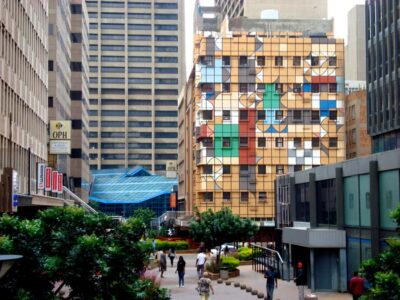
The city tour helps explain why Johannesburg exists where it does. Its growth followed the discovery of gold, which brought workers, businesses, wealth, and strict racial control into one fast-growing urban center.
Your guide points out important city areas and explains how Johannesburg developed. Some departures have also included views of Constitution Hill, the old prison complex, the 2010 World Cup Stadium, major hospitals, and parts of downtown Johannesburg. The exact sights can vary with traffic and timing, so think of this as a moving city lesson rather than a fixed walking tour.
That driving format has a real advantage. You see more ground than you could on foot, and you can ask questions as the city passes by. Guides such as Nic, Nick, Robert, and John Mashala are praised for explaining local events and adding personal knowledge about Johannesburg and South Africa.
The city portion may feel brief if you want architecture, markets, or long stops at individual landmarks. Its purpose is to give you the framework for the rest of the day.
Entering Soweto through its streets and towers
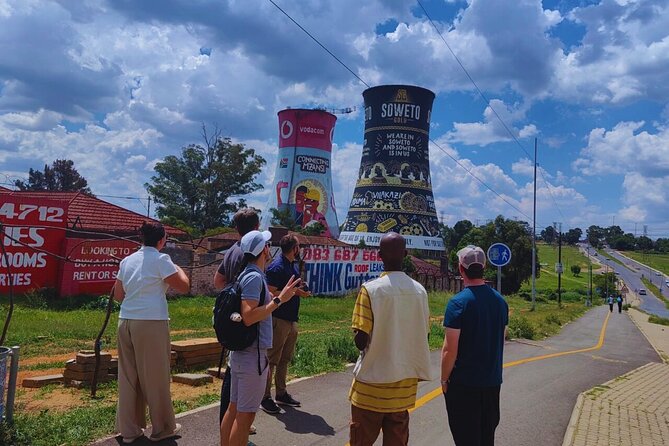
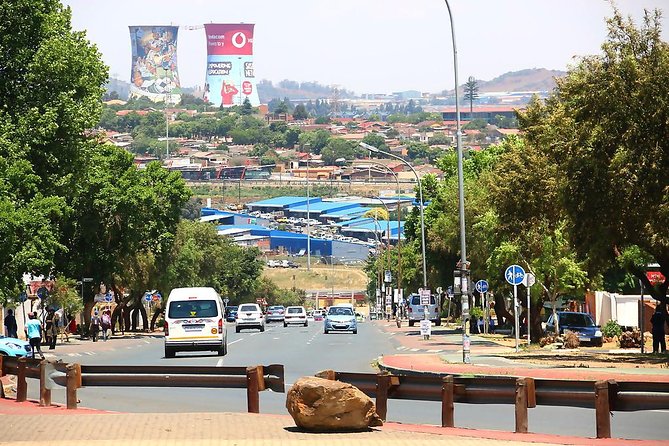
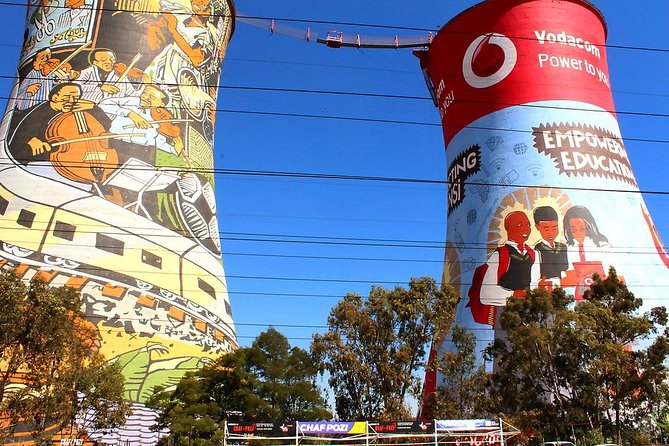
Soweto is not a single attraction. It is a large urban area with its own communities, landmarks, and complicated present-day reality. The tour takes you through its streets, past famous towers, and near places connected with public services and apartheid-era restrictions.
The towers are among the most recognizable sights in Soweto. Your guide explains their place in the area’s story, while the drive helps you see more than one polished historic address. You may also hear about the hospitals and other institutions that shaped life in South Africa.
This is one of the most valuable parts of the day because you are not only looking at a museum display. You are seeing neighborhoods where the effects of past policies remain visible. The experience can be sobering, particularly when the guide discusses continued hardship and uneven living conditions.
I would approach this part with respect. Soweto is a living community, not a theme park. Listen carefully, avoid treating ordinary streets as a spectacle, and let the guide set the tone.
Vilakazi Street and Nelson Mandela House
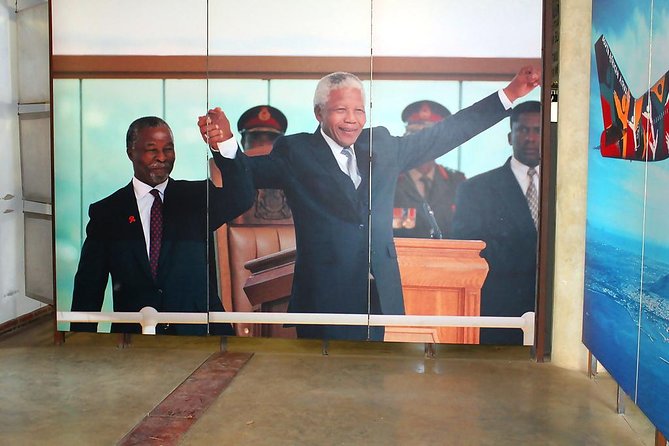
Vilakazi Street is one of Soweto’s best-known addresses. Nelson Mandela House is located here, and the street is also closely linked with Archbishop Desmond Tutu, making it an important place for understanding the area’s political role.
The tour allows about 30 minutes on Vilakazi Street and another 30 minutes inside Mandela House. That is enough to get a clear sense of the place and see the modest home where Mandela once lived, but it is not an extended house museum visit.
The house is moving because of its scale and ordinary details. Mandela’s public life became enormous, yet the residence remains tied to a much more personal chapter. I find that contrast more useful than treating the stop as a simple celebrity address.
There is also a tourist side to Vilakazi Street. Shops, visitors, and photo opportunities make the area feel more managed than the surrounding streets. That does not erase its importance, but you should expect a popular landmark rather than a quiet residential visit.
If Mandela is the main reason you want this tour, remember that the house is only one part of a much broader day. The tour’s real strength is the way the home is placed within Soweto and the country’s political story.
More Soweto and Apartheid Museum visits:
- Soweto Half Day Tour
★ 5.0 · 231 reviews - Johannesburg and Soweto tour
★ 5.0 · 231 reviews - Soweto walking tour with a taxi ride
★ 4.5 · 42 reviews - Soweto, Kliptown, Eldorado Park Tour
★ 5.0 · 41 reviews
Hector Pieterson Museum and the 1976 student uprising
The Hector Pieterson Museum focuses on the youth uprising and the role of students in opposing apartheid education policies. The museum is named for Hector Pieterson, whose death became one of the most powerful symbols of the 1976 protests.
The scheduled visit lasts about 30 minutes, with admission included. That is a short window for a subject of such weight. You can expect an important introduction, but you may need to move steadily and select what to read.
This stop adds a necessary youth perspective. Mandela House shows one person’s life, while Hector Pieterson helps you understand how schoolchildren became central to a national struggle. The two visits work well together, even though the timing is tight.
The subject matter is emotional. Give yourself a little quiet time afterward if you need it, and do not expect the tour to keep every moment light. The guide’s explanation matters here, especially when connecting the museum to the streets of Soweto around it.
Two hours at the Apartheid Museum
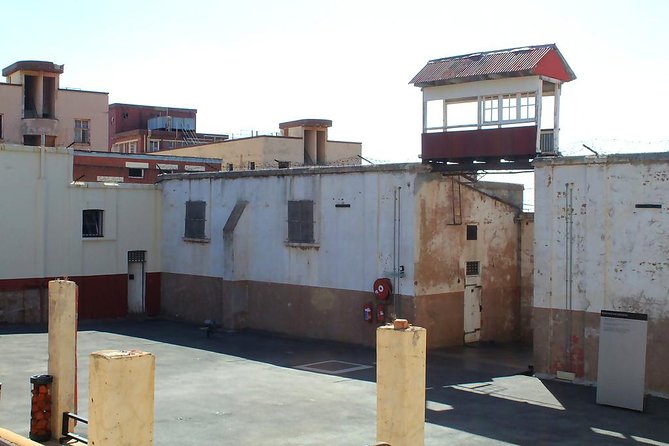
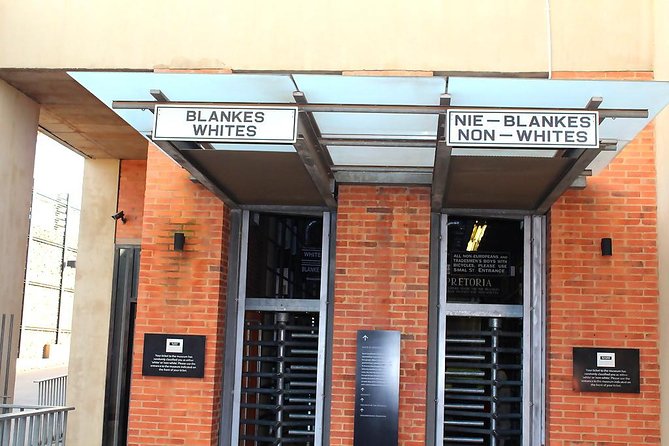
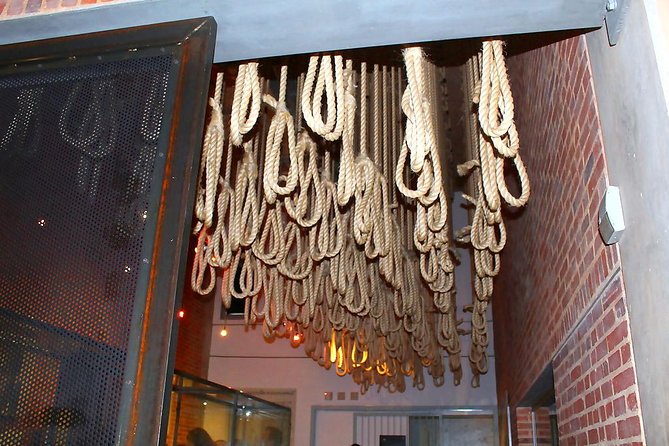
The Apartheid Museum is the longest scheduled stop, with about two hours and admission included. That extra time is important because the museum covers apartheid through documents, photographs, displays, and personal accounts rather than one short exhibit.
This is where the day’s separate threads come together. The city’s development, forced separation, political resistance, and the experiences of Soweto all gain a wider national context.
The museum can be emotionally demanding. I would not place it at the end of a packed day if you are hoping for a casual attraction, but here its position gives the tour a strong finish. After seeing Johannesburg and Soweto, you have places and streets in mind when the museum explains the policies behind them.
Two hours is useful, but still not unlimited. If you read every panel slowly, you may want more time. On this tour, you will need to balance careful reading with the group schedule.
The museum is also one reason the included admission has value. Buying separate tickets and arranging transport between several widely spaced sights would take planning. Here, the guide handles the route and gives you context along the way.
Lunch, water, and what is really included
The price is $187.48 per person. That is not a cheap city sightseeing ticket, but it includes hotel pickup and drop-off, a driver-guide, entrance fees, lunch, snacks, and bottled water.
For a six-hour route covering Johannesburg, Soweto, Mandela House, Hector Pieterson Museum, and the Apartheid Museum, those inclusions make the cost easier to justify. You are paying for transport across a large city, several admissions, and a full day of guiding rather than only a bus ride.
Drinks beyond bottled water are not included. Bring extra money if you want a soft drink or another beverage with lunch.
Lunch is the one part I would keep in perspective. The meal is included, but the food may be basic rather than a highlight. One account specifically found lunch disappointing relative to the tour price, so food should be viewed as practical fuel, not a major culinary stop.
The tour is generally booked about 28 days ahead. That suggests planning early if your Johannesburg schedule is tight, although availability can change.
The guide can shape the whole day
A strong guide matters more here than on a simple sightseeing loop. The places carry difficult political and personal stories, and a good explanation can help you understand what you are seeing without reducing it to slogans.
The guides praised most warmly include Emmah, Nic or Nick, Robert, Sylvan, Lambert, and John Mashala. Emmah is described as friendly, patient, and easy to talk with. Nic and Nick are noted for local knowledge and clear explanations. Robert is associated with a comfortable newer vehicle and strong information about the country.
Lambert is praised for patience with a group, while John Mashala is described as efficient, friendly, and detailed. One solo participant also appreciated a guide who repeated information patiently when English was difficult to follow.
You cannot guarantee a particular guide unless the operator confirms it. Still, these names help you understand the kind of service the company aims to provide: personal, explanatory, and flexible when the group has questions.
The group limit is 30 people. That is large enough for a standard shared tour, but the actual group may be much smaller. Some departures have operated with only one person or a small group, which changes the feel of the day considerably.
Who should book this experience
I would recommend this tour to a first-time Johannesburg visitor who wants the major historical sights without handling the transport alone. It is especially useful if you have limited time and want Soweto and the Apartheid Museum on the same day.
It also suits solo visitors who would rather have a structured day than explore unfamiliar parts of the city independently. Hotel pickup, a driver-guide, and a set route reduce the practical work.
Families can participate, but children must be accompanied by an adult. The subject matter is serious, and parents should decide if the museums and apartheid history suit their children.
This is less suitable if you want:
- A slow, highly detailed museum visit
- A food-focused tour
- A small private group guaranteed in advance
- Long walks or free time at each stop
- A tour focused only on present-day Johannesburg rather than political history
The pace favors breadth. You will see and learn about several major places, but you will not have unlimited time at any one of them.
Practical tips for getting more from the day
Wear comfortable clothes for a day that combines vehicle time with walking through museums and historic sites. The tour includes bottled water, but bring anything else you personally need during six hours out.
Ask questions early. Guides have been praised for responding to questions about sites beyond the basic route, and a short drive can become one of the best teaching moments of the day.
Keep your expectations clear at pickup. The published location is Pretoria, while the tour provides pickup and drop-off at your Johannesburg hotel. Confirm the exact pickup area before booking so there is no confusion.
Allow for traffic. Transfer times are approximate, and Johannesburg traffic can affect how long you spend at each stop. Do not schedule an important flight or fixed appointment immediately after the tour.
Free cancellation is available when you cancel at least 24 hours before the start time. Cancellations or changes made less than 24 hours ahead are not refunded or accepted.
Should you book the Soweto and Apartheid Museum tour?
Book it if you want a practical, history-focused introduction to Johannesburg and have about six hours to spare. The strongest reasons are the wide route, included admissions, hotel transport, and guides who can connect the sights to South Africa’s past and present.
The price is high for a shared excursion, and lunch may not impress you. The schedule is also brisk, especially at Mandela House and the Hector Pieterson Museum.
Still, I think the combination earns its place on a first Johannesburg visit. You see the city, enter Soweto, visit Mandela’s former home, learn about the student uprising, and spend serious time at the Apartheid Museum. For a single day, that is a useful and meaningful introduction.
FAQ
How long does the tour last?
The tour lasts approximately six hours. Transfer times can change based on traffic and the time of day.
Does the tour include hotel pickup and drop-off?
Yes. Pickup and drop-off at your Johannesburg hotel are included.
Are entrance fees included?
Yes. Entrance fees for the included attractions are covered in the tour price.
Is lunch included?
Yes. Lunch, snacks, and bottled water are included. Other drinks are not included.
What places are visited?
The route includes the Apartheid Museum, Soweto, Vilakazi Street, Mandela House, and the Hector Pieterson Museum. The city drive also covers Johannesburg landmarks and areas explained by the guide.
How large can the group be?
The maximum group size is 30 people. Smaller departures are possible, but a private tour is not guaranteed.
Just listed around Pretoria
- Kruger National Park 2 Days 1 Night Magical Safari from Johannesburg Private★ 5.0 · 5 reviews
- Pretoria Capital City Tour from Pretoria, every TUESDAY★ 4.5 · 5 reviews
- Constitutional Hill,Johannesburg City and Apartheid Museum with Soweto Day Tour★ 5.0 · 5 reviews
- Apartheid museum, Soweto and Joburg highlights tour★ 5.0 · 6 reviews
- From Pretoria: E-Bike in the wild with game near Jo’burg★ 5.0 · 6 reviews
- Pretoria: Half-Day City Tour with Hotel Pickup★ 4.2 · 6 reviews
- Traditional Tribal Village Tour★ 5.0 · 6 reviews
- Full-Day Cradle of Humankind Guided Tour from Johannesburg or Pretoria★ 4.5 · 6 reviews
Soweto & Apartheid Museum Tours, compared.

Soweto /Johannesburg and Apartheid Museum Guided Full Day Tour
Read our review →
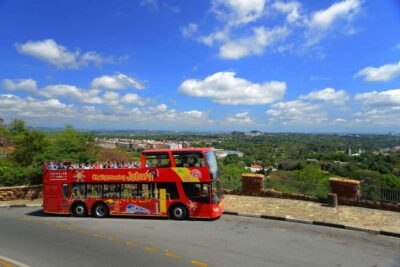
Johannesburg Hop-On Hop-Off City Tour with Soweto Option
Read our review →

Jo’berg in 1 Day: Soweto, Apartheid Museum & City Tour
Read our review →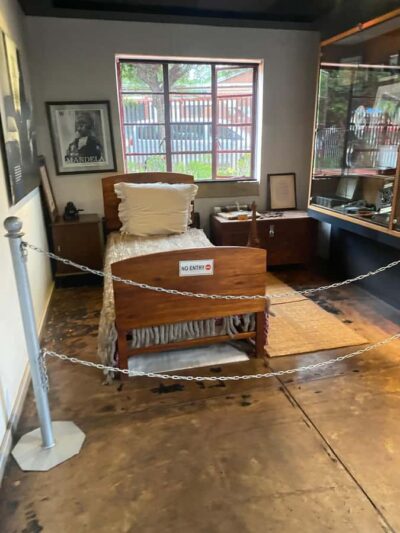
Full-Day Tour with Soweto and Apartheid Museum
Read our review →
Browse the lists this tour appears in