
Reviewed · SOWETO & APARTHEID MUSEUM TOURS
History Bicycle Tour of Soweto
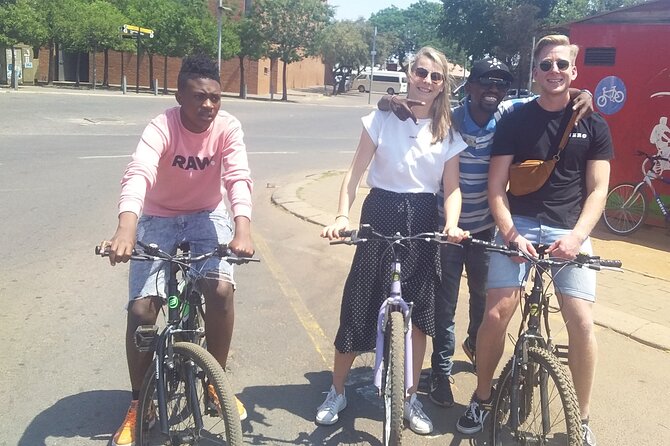
Soweto’s story is best understood at street level, and this four-hour bicycle tour puts you right in the middle of it. You ride from the Hector Pieterson Memorial through Orlando West, past homes, churches, a mineworkers’ hostel, an orphanage, and a squatter camp while your local guide explains how this township took shape and fought Apartheid.
I like the direct look at ordinary neighborhood life, not just the famous landmarks. I also like the small group limit of 10, which should make it easier to ask questions and keep pace with the guide. The main caution is practical: bicycles may be basic, the route includes hills, and strong sun can make four hours of riding feel demanding.
Key points to know before booking
- Start at the Hector Pieterson Memorial: The tour begins in Orlando West, not at your hotel, and ends at Coffee and Cream before returning to the meeting area.
- See important resistance sites: The route covers the 1976 student uprising, Orlando West High School, Regina Mundi church, and places linked to Nelson Mandela and Archbishop Desmond Tutu.
- Expect a real workout: Previous ride conditions included heat, uphill sections, and basic bicycles, so bring sun protection and check the bike before setting off.
- Small groups help: A maximum of 10 people gives the guide room to explain sensitive history and respond to questions.
- Plan extra time for the museum: The Hector Pieterson Museum is visited independently after the ride, not as part of the guided cycling portion.
- Budget about $40.91 per person: That includes the guide, bicycle, and helmet, but not hotel transport or food.
Starting at the Hector Pieterson Memorial in Orlando West
You meet at the Hector Pieterson Memorial, at 8287 Khumalo Road in Orlando West. This is an important starting point because the tour begins with the history of the area itself, rather than treating Soweto as a collection of sightseeing stops.
Soweto was first established in 1904. As you begin cycling, your guide sets out how the township developed and explains the forces that shaped daily life there. The route is not simply a ride between famous addresses. You hear about the good, bad, ugly, and sad parts of Soweto as you pass through working neighborhoods.
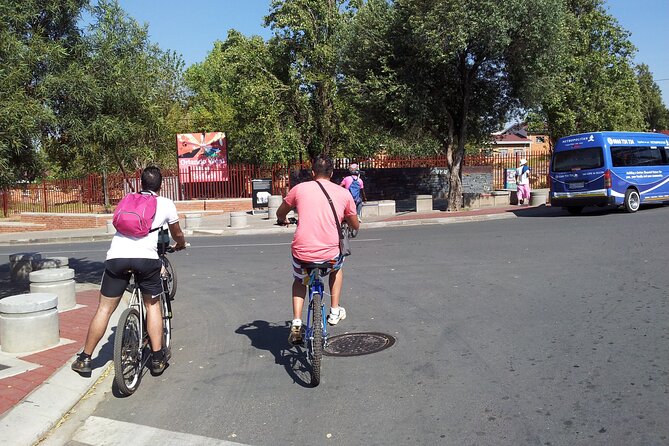
That approach matters. A bus can show you a great deal in a short time, but a bicycle gives you more time to notice the streets, homes, churches, and small businesses around you. You move at a human pace, with enough contact with the area to understand that Soweto is a lived-in community, not an open-air museum.
You should also arrive ready for a basic cycling setup. The bicycle and helmet are supplied, but one account describes older bikes with bent wheels, weak or missing brakes, and no working gears. That may not describe every bike on every departure, but it is enough reason to inspect your bicycle before leaving. If something feels unsafe, tell the guide immediately.
More Soweto and Apartheid Museum visits:
- Soweto Half Day Tour
★ 5.0 · 231 reviews - Johannesburg and Soweto tour
★ 5.0 · 231 reviews - Johannesburg Full-Day Tour(Soweto/Jo-Burg & Apartheid Museum)
★ 5.0 · 110 reviews
Orlando West and the foundations of Soweto
The first part of the ride introduces Orlando West and the early development of Soweto. The guide connects the streets you see with the township’s wider history, including the long struggle of black South Africans against Apartheid.
This is where the tour’s local format has real value. Instead of receiving a short set of dates, you can ask about the places directly in front of you. The supplied information does not name the guides, but it does make clear that local guides lead the ride and explain the neighborhood as you go.
The route includes several kinds of sites:
- A mineworkers’ hostel
- An orphanage
- Churches, including Regina Mundi
- A squatter camp
- Homes associated with Nelson Mandela and Archbishop Desmond Tutu
These stops give you a broader picture than a tour focused only on Mandela. You see how work, housing, religion, education, and political resistance fit into Soweto’s story.
The squatter camp may be especially useful for understanding housing pressures and inequality, while the mineworkers’ hostel points to the labor system that drew people into Johannesburg. The churches provide another angle, showing how religious places became part of community and political life.
Do not expect each stop to feel like a formal museum visit. The appeal is the setting and the explanation from the guide. Some stops may be brief, and the main value comes from seeing the places in relation to one another.
Mandela’s former home and Tutu’s neighborhood
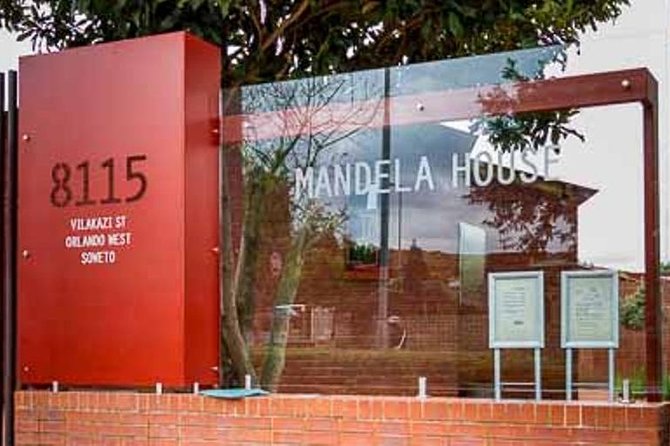
The tour includes homes once lived in by Nelson Mandela and Archbishop Desmond Tutu. These addresses are among Soweto’s best-known points of interest, but the bicycle format helps place them within the wider neighborhood.
Mandela’s former home is not presented as an isolated monument. You reach it while riding through the community, after seeing other homes and local sites. That context helps you understand that political history unfolded in ordinary streets and houses, not only in grand government buildings.
The connection with Archbishop Tutu adds another important layer. Mandela and Tutu represent different parts of the struggle against Apartheid, and seeing both homes on the same ride makes the neighborhood’s political importance clear.
The tour data does not say that you enter either home, so plan to view them from the route rather than expect a full interior visit. If you want a more detailed museum-style visit to Mandela’s home, check the arrangements before booking. This ride is mainly about the wider story of Soweto and the streets that connect these landmarks.
The 1976 student uprising at Orlando West High School
The most serious historical stop is Orlando West High School. Here, the guide explains the 1976 student uprising against Apartheid and the death of Hector Pieterson.
This part of the tour gives the ride its strongest emotional weight. The subject is difficult, but it is central to understanding Soweto and South Africa’s political history. The student uprising was not a small local incident. It became a major moment in the fight against Apartheid, and the death of Hector Pieterson became one of the best-known images of that struggle.
You should expect the guide to discuss painful events plainly. This is not a light sightseeing ride, even though cycling and neighborhood stops make the format informal. The balance between movement and serious history can work well, but you need to be comfortable giving the subject your attention.
The tour does not include a guided museum visit. After the ride, you can visit the Hector Pieterson Museum on your own. That is a useful arrangement because the outdoor ride and the museum serve different purposes. On the bike, you see the school and the surrounding streets. At the museum, you can spend more time with the photographs and exhibits connected to the uprising.
Allow extra time if the museum is important to you. The four-hour cycling period does not include a full independent visit there.
More History Tours in Pretoria:
- Apartheid History of South Africa (Full day Experience with lunch
★ 4.5 · 24 reviews - Cape Town: Art, Culture & History Walking Tour
★ 4.9 · 392 reviews - Stellenbosch: Guided Historical Walking Tour
★ 4.7 · 283 reviews - Stellenbosch: Historical Bike Tour & Wine Tasting
★ 4.9 · 248 reviews
Regina Mundi, churches, hostels, and everyday Soweto
Regina Mundi church is one of the named highlights, and the route also includes several other churches. Religious buildings matter here not only for their architecture or worship, but also for their role in community life during Apartheid.
The ride also passes a mineworkers’ hostel and an orphanage. These are the kinds of places that help you look beyond headline events. Soweto’s history includes political leaders and uprisings, but it also includes workers, families, children, and institutions that supported people through hard years.
A bicycle makes these transitions easy to follow. One moment you are hearing about a major political event, and soon you are riding through a residential area or past a local business. That contrast is useful. It keeps the experience grounded in present-day life rather than making the township seem frozen in the past.
The tour ends at the Coffee and Cream cafe. Food is not included, but the finish gives you a clear place to pause after several hours on a bike. The supplied details do not specify a meal or tasting, so consider the cafe a stopping point rather than a promised food tour.
What four hours on basic bikes feels like
You receive a bicycle and helmet, but not a high-end cycling machine. One account described the bikes as very basic and noted several uphill sections. Another raised concerns about bent wheels, poor brakes, and missing gear changes.
I would treat the bicycle condition as the biggest practical question. Ask to test the brakes, look at the tires, and check that the seat is secure before you leave. If you are not comfortable with the bike, speak up at the start rather than trying to manage a problem halfway through the route.
The hills may surprise you. Soweto is not a flat, effortless ride, and four hours outside can be tiring even for people who cycle regularly. You do not need to approach this as a race, but you should be ready for sustained riding and some effort.
Heat is another serious concern. One account specifically warns about intense sun and recommends a full hat and strong sunscreen. A baseball cap offers limited protection for your neck and ears, so a broad-brimmed hat for before and after the ride, plus sunscreen, is sensible. You should also dress for warm weather and bring water if permitted, since the supplied information does not promise refreshments.
The helmet is included, which is important, but a helmet does not solve every equipment problem. The report of a difficult child-seat adjustment is especially relevant to families. A child rate applies only when sharing with two paying adults, and the booking requires at least two people. Since the child-seat setup may be hard to adapt, confirm the arrangement before booking for a young child.
The value of $40.91 for a half-day in Soweto
At about $40.91 per person, the price covers the local guide, bicycle, and helmet. Hotel pickup, hotel drop-off, and food are not included.
I think the value depends on what you want from Soweto. If you want a quick list of photo stops, a shorter sightseeing option may be enough. If you want four hours of local explanation, time on neighborhood streets, and a closer look at places tied to Apartheid resistance, the price is reasonable.
The guide is the main part of what you are paying for. The bicycle itself is functional equipment, not a luxury feature. Because bike quality may vary, the tour’s value rests less on the machine and more on the route, the personal explanation, and the chance to connect major events with the places where they happened.
The small group limit helps support that value. With no more than 10 people, the guide should have more room to answer questions than on a large coach tour. It also keeps the ride from becoming a long line of bicycles, though the supplied information does not promise a private tour.
You must arrange your own way to Orlando West. The meeting point is near public transportation, but no hotel pickup is provided. Build that transport time into your plans, especially since the advertised location is Soweto in Johannesburg even though the general location field lists Pretoria.
Who should book this bicycle tour?
This ride suits you if you want history explained outdoors and prefer local streets to a sealed vehicle. It is a good match for adults and older children who can manage several hours of cycling, sun, hills, and a simple bicycle.
It also suits anyone who wants more than Mandela’s address. The route brings together Mandela, Tutu, Hector Pieterson, Regina Mundi, a hostel, an orphanage, and a squatter camp. That range gives you a fuller picture of Soweto.
You may want to choose another format if you have limited mobility, dislike heat, or are uncomfortable riding in traffic and on uneven roads. The supplied information says most people can participate, but it does not give a detailed accessibility description. Families with young children should be especially careful because the child-seat arrangement may not fit easily on the available bikes.
The tour also requires at least two people per booking. Solo visitors cannot assume they can reserve one place by themselves. The maximum group size is 10, so booking well ahead is sensible, especially since this activity is often reserved about 126 days before the date.
Free cancellation is available if you cancel at least 24 hours before the start time. Changes or cancellations inside that period are not accepted for a refund.
My call: book it if the bike matters less than the story
I would book the History Bicycle Tour of Soweto if you are comfortable with a basic bicycle and want a personal look at the township’s history. The route covers meaningful places, and the guide’s explanations are the reason to choose it.
Go prepared: wear strong sun protection, expect hills, check the brakes and tires, and leave time for the Hector Pieterson Museum after the ride. If a poorly maintained bike would ruin your day, confirm equipment conditions first or choose a vehicle-based tour instead.
For the right rider, this is a memorable and grounded way to see Soweto. Just do not mistake a four-hour community ride for an easy cycle or a polished sightseeing product.
FAQ
Where does the History Bicycle Tour of Soweto start?
It starts at the Hector Pieterson Memorial, 8287 Khumalo Road, Orlando West, Johannesburg, 1804, South Africa.
Where does the tour end?
The activity ends back at the meeting point. The route itself concludes at the Coffee and Cream cafe.
How long does the tour last?
The cycling tour lasts approximately four hours.
Is hotel pickup included?
No. Hotel pickup and drop-off are not included. The meeting point is near public transportation.
What is included in the price?
The price includes a local guide, use of a bicycle, and use of a helmet. Food and hotel transportation are not included.
Can I visit the Hector Pieterson Museum during the tour?
The museum is visited independently after the cycling tour. The guided ride stops at Orlando West High School and discusses the 1976 student uprising connected to Hector Pieterson.
Just listed around Pretoria
- Kruger National Park 2 Days 1 Night Magical Safari from Johannesburg Private★ 5.0 · 5 reviews
- Pretoria Capital City Tour from Pretoria, every TUESDAY★ 4.5 · 5 reviews
- Constitutional Hill,Johannesburg City and Apartheid Museum with Soweto Day Tour★ 5.0 · 5 reviews
- Apartheid museum, Soweto and Joburg highlights tour★ 5.0 · 6 reviews
- From Pretoria: E-Bike in the wild with game near Jo’burg★ 5.0 · 6 reviews
- Pretoria: Half-Day City Tour with Hotel Pickup★ 4.2 · 6 reviews
- Traditional Tribal Village Tour★ 5.0 · 6 reviews
- Full-Day Cradle of Humankind Guided Tour from Johannesburg or Pretoria★ 4.5 · 6 reviews
Soweto & Apartheid Museum Tours, compared.


Soweto /Johannesburg and Apartheid Museum Guided Full Day Tour
Read our review →
Johannesburg Hop-On Hop-Off City Tour with Soweto Option
Read our review →


Jo’berg in 1 Day: Soweto, Apartheid Museum & City Tour
Read our review →
Full-Day Tour with Soweto and Apartheid Museum
Read our review →
Browse the lists this tour appears in