
Reviewed · SOWETO & APARTHEID MUSEUM TOURS
Half-Day Walking Tour in Soweto
Soweto’s story is best understood on foot, where Freedom Charter history meets soccer clubs, fruit markets, street art, local businesses, and ordinary homes. This tour connects major landmarks with everyday township life, guided by someone who lives in Soweto rather than by a guide passing through.
I like the chance to meet local people and the unusually broad route, from Walter Sisulu Square to a working community project. I also like that the tour includes local beer and snacks, giving the day a relaxed social side. The main consideration is pace: eight stops in about five hours, with a group of up to 60, leaves limited time at some places.
Key points at a glance
- A local Soweto guide leads the walk: You get context from someone who lives in the township and can speak about daily life as well as major events.
- Eight stops cover several eras: The route links the 1955 Freedom Charter, the 1976 uprising, Mandela’s home, township soccer, local business, and youth programs.
- Vilakazi Street gets the longest visit: Plan on about an hour for restaurants, crafts, music, traditional dancing, and time near two Nobel Peace Prize winners’ former homes.
- Mandela House costs extra: Admission is not included, so bring a little room in your budget if you want to enter.
- The group can reach 60 people: That is a sizeable maximum for a walking tour, so ask about the expected group size when personal interaction matters to you.
- The tour begins and ends in Kliptown: Meet at the Soweto Hotel & Conference Centre, near public transportation, and return there at the end.
Why this Soweto walk feels different

Many Johannesburg visitors see Soweto from a vehicle window. This tour tries to slow things down. Its purpose is not only to point out famous names, but to connect those names with places where people shop, worship, play soccer, make art, run small businesses, and support children.
That local focus matters. Your guide lives in Soweto, and the tour is designed around conversation with local people. You should expect history, but not a museum-only version of history. The route places political milestones beside fruit stalls, original township houses, murals, and a brewery.
The published rating is 4.9 from 38 ratings, with a 100 percent recommendation rate. That is a strong signal for a relatively small tour, though it does not remove practical questions about walking pace, group size, or how much time you will have inside each attraction.
At $32 per person, the tour is priced as an affordable introduction to Soweto. You are paying for roughly five hours, a local guide, snacks, and access to a wide range of places. The value is strongest if you want a first look at the township with historical explanation and local contact in the same outing.
More Walking Tours in Johannesburg
- Soweto: Walking Tour with a Local Guide and Lunch
★ 4.9 · 648 reviews - Soweto Walking Tour with Lunch
★ 5.0 · 288 reviews - Johannesburg: Local Food Tasting Guided Walking Tour
★ 4.7 · 192 reviews
Walter Sisulu Square and the Freedom Charter
The tour begins at Walter Sisulu Square in Kliptown, one of the key political places on the route. In 1955, the Congress of the People adopted the Freedom Charter here, setting out a vision for a democratic South Africa.
The square also has a daily fruit and vegetable market. That gives your visit a useful contrast. You can hear about a major political gathering, then look at the practical trade and social life that continues in the same area.
About 40 minutes is scheduled here, and admission is free. I would use this opening stop to ask your guide for the basic timeline of the Freedom Charter and how it relates to the later anti-apartheid struggle. The square is more than a photo stop, but the market activity may compete for your attention in a pleasant way.
Because this is the starting point, it also helps you understand the tour’s approach. Soweto is presented as a living community, not only as a collection of historic sites.
Orlando Towers, murals, and the power station

The Orlando Towers are among Soweto’s most recognizable landmarks. Known locally as the Power Park, the towers are former industrial structures covered with tall murals. The artwork advertises companies and depicts aspects of township life, turning a large utility site into a highly visible public canvas.
The towers are also linked with bungee jumping and free fall. You are not told that these activities are included, so treat them as something you may see rather than part of your package.
The stop lasts about 40 minutes and has no admission charge. It should suit you if you like bold urban photography and local art with a practical history behind it. The towers are not simply decorative. Their size makes them easy to recognize across Soweto, while the painted surfaces show how commercial advertising and local imagery share public space.
A little caution is useful here. The stop is built around viewing the towers and learning their significance, not around a long art tour. If the murals interest you most, use your time to ask which images reflect local life and which serve corporate advertising.
Orlando East and the original matchbox homes
Orlando East offers a different kind of landmark. The area retains some of Soweto’s early brick houses, commonly called matchbox houses because of their small, simple form.
These homes help explain the physical reality behind township history. Political movements are often taught through speeches and dates, but a neighborhood of modest houses shows how families lived within the systems created by apartheid-era planning.
The stop lasts about 30 minutes. It also connects Soweto with soccer culture through Orlando Pirates, one of the area’s best-known clubs. If you follow South African football, this is a useful chance to ask about the club’s place in local identity. If you do not follow soccer, the stop still gives you a look at how sport can become a major part of neighborhood pride.
This is not a formal house museum visit. Expect to view the area and hear its story rather than spend a long time inside individual homes. That makes the guide’s explanation especially important.
More Soweto and Apartheid Museum visits:
- Johannesburg: Hop-On Hop-Off Bus with Optional Soweto Tour
★ 4.6 · 985 reviews - Soweto /Johannesburg and Apartheid Museum Guided Full Day Tour
★ 5.0 · 932 reviews - Johannesburg Hop-On Hop-Off City Tour with Soweto Option
★ 4.5 · 768 reviews - Half-Day Tour of Soweto Tour
★ 4.5 · 712 reviews
Hector Pieterson Memorial and the 1976 uprising
The Hector Pieterson Memorial covers the 1976 Soweto uprising, when students protested the introduction of Afrikaans as a language of instruction. The protest became a major turning point in the struggle against apartheid and helped bring wider international pressure on South Africa.
The tour allows about 40 minutes here. That is enough for a focused explanation and a look at the memorial, but you may want extra time if you prefer to read every display at length. The description confirms the historical subject, but it does not promise a full museum admission or extended museum visit, so ask your guide what portion of the memorial is included.
This is likely to be one of the more serious stops. The history is difficult, and the memorial asks you to connect student action with the eventual weakening of apartheid. I appreciate that the tour places this site after Orlando East. You first see homes and local identity, then confront the political conflict that shaped the community.
Vilakazi Street, Mandela House, and local culture
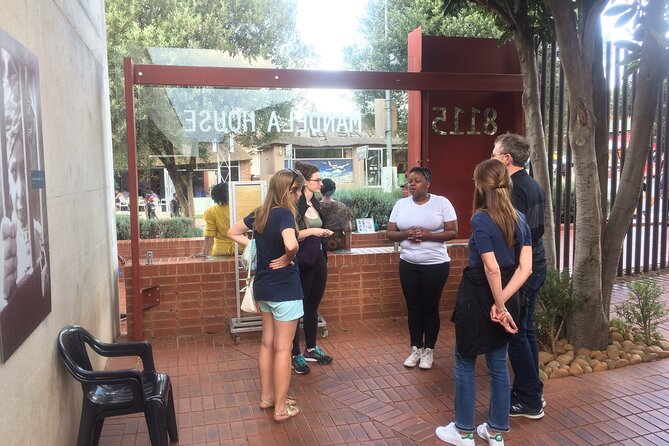
Vilakazi Street receives about an hour, the longest single stop. It is known as the only street associated with two Nobel Peace Prize winners, Nelson Mandela and Archbishop Desmond Tutu. Mandela’s former home is here, and Tutu’s house is also on the street.
The street includes restaurants, an arts and crafts market, musicians, and traditional dancers. This is your best chance to pause, get a refreshment, and shop for something local instead of moving constantly from one historic marker to the next.
You should think of this hour as flexible time. You may want food, local crafts, photographs, or a closer look at the street’s public life. The tour includes snacks, but it does not say that a full meal is included, so budget for anything else you want to eat or drink.
Mandela House is listed as a separate 30-minute stop. Admission is not included in the $32 price. That matters when you compare this tour with other Soweto visits. The overall price is modest, but the final cost rises if you choose to enter the house.
The house is one of South Africa’s most important political sites. It connects the public story of Mandela’s struggle with a specific domestic place. I would make room for the admission fee if you want the tour to include more than an exterior view. If you are mainly interested in street life and local shopping, you can still gain plenty from Vilakazi Street itself.
Soweto Brewing Company and a local taste
The Soweto Brewing Company adds a lighter stop after the memorial and historic streets. You get a chance to taste local Soweto beer and receive a special tour of the brewery.
About 30 minutes is allowed here. That is enough for a short introduction and tasting, though not a long production visit. The supplied details do not specify how many beers are included or whether nonalcoholic options are available, so ask before booking if that affects your plans.
I like this stop because it treats Soweto as a place of present-day enterprise, not only a place defined by past hardship. A local brewery gives you a direct taste of small business and community branding. It also breaks up a day that otherwise carries a lot of political weight.
If you do not drink alcohol, confirm what alternatives are available. The tour promises a local beer tasting, not a full meal or broad beverage menu.
The Shalk community project in Kliptown
At 58 Beacon Road, the tour visits The Shalk, a community project serving young people and children in Kliptown. It offers daycare and afternoon programs, and the visit gives you a chance to meet children while learning about work led by community members.
This is a valuable part of the route because it shifts attention from famous leaders to local solutions. You see how community members support children and young people in practical ways.
The planned visit lasts about 30 minutes. That is a short introduction, so approach it with respect. The details do not describe a formal volunteer activity, donation program, or hands-on class. You are there to learn about the project and interact with people, not to assume a role in its daily work.
I would ask the guide how the visit is arranged and what is appropriate when photographing or speaking with children. The aim should be a respectful exchange, with the project’s work presented on its own terms.
Timing, walking, and group size
The experience lasts about five hours and is described as a half-day walking tour. The scheduled stop times add up to about four hours and 40 minutes, leaving only a small amount of time for walking between places, introductions, pauses, and any delays.
That tight schedule is worth noting. You cover a lot of ground in one morning or afternoon, but several stops may feel like introductions rather than long visits. If you want a slow museum experience, this may not be the right format. If you want a broad overview of Soweto, the pace is useful.
The maximum group size is 60 people. Sixty is large for a walking tour, especially when the goal is personal interaction with local people. The actual group may be smaller, but you should ask when booking if a close conversation with the guide is important to you.
The meeting point is the Soweto Hotel & Conference Centre on Union Avenue in Kliptown. The tour returns to the same point. Public transportation is nearby, and most people can participate. Service animals are allowed. The activity requires good weather, so poor conditions can lead to a new date or a full refund.
No WiFi is included, which is not a serious issue for a walking tour, but you should plan to rely on your own phone connection. A mobile ticket is used, and confirmation arrives when you book.
Who should book this Soweto experience
I would choose this tour if you want a strong first introduction to Soweto and prefer local explanation over a purely sightseeing-focused outing. It suits solo visitors, couples, families, and mixed-age groups because the route combines history, markets, public art, sport, food, and community work.
It is also a good fit if you want to see beyond gated suburbs and major city attractions while still having a planned route and a local guide. The independent participant who joined alone found the experience friendly, informative, and safe, which supports the tour’s appeal for solo visitors.
I would hesitate if you need a slow pace, dislike walking, or want a small private group. The listing says most people can participate, but it does not provide a detailed accessibility assessment, walking distance, or transport plan between all eight stops. Ask those questions before paying if mobility is a concern.
Free cancellation is available up to 24 hours before the start time. Inside that window, refunds are not provided, and changes are not accepted. Since bad weather can affect the outing, check the forecast and keep your schedule flexible.
Should you book it?
Book this Soweto walking tour if you want history tied to daily life, a local guide who lives in the township, and many different viewpoints in a single half-day. Walter Sisulu Square, Hector Pieterson Memorial, and Mandela House give the route political weight, while Orlando Towers, Vilakazi Street, the brewery, and The Shalk keep it connected to present-day Soweto.
The $32 price is good for the time and range of stops, though Mandela House admission costs extra and the group may be large. My practical advice is simple: book it for breadth, local contact, and value. Skip it only if you want a quiet, unhurried museum visit or a small-group walking experience.
FAQ
How long does the Soweto walking tour last?
The tour lasts approximately five hours.
Where does the tour start?
It starts at the Soweto Hotel & Conference Centre on Union Avenue in Kliptown, Soweto.
Where does the tour end?
The activity ends back at the same meeting point.
Is admission to Mandela House included?
No. Admission to Mandela House is not included in the tour price.
Are snacks included?
Yes. Snacks are included.
What is the maximum group size?
The tour can have a maximum of 60 people.
Can I cancel for a full refund?
Yes, if you cancel at least 24 hours before the experience start time. Cancellations made less than 24 hours in advance are not refunded.
More half day trips in Johannesburg
- Johannesburg and Soweto: Half-Day Tour
★ 4.8 · 439 reviews - From Johannesburg: Lion & Safari Park Half-Day Tour
★ 4.6 · 384 reviews - Johannesburg: Soweto Half-Day Tour
★ 4.7 · 196 reviews - Johannesburg: Half-Day Soweto Tour with a Local Guide
★ 4.8 · 110 reviews
Just listed around Johannesburg
- Constitutional Hill and Soweto 5 hours tour.★ 5.0 · 5 reviews
- 5 Day Kruger Glamping Safari and Panorama Tour★ 5.0 · 5 reviews
- Cradle of Humankind and Maropeng Day Tour from Johannesburg★ 4.0 · 5 reviews
- Johannesburg: Hot Air Balloon Flight★ 5.0 · 5 reviews
- Half Day Soweto and Apartheid Museum Guided Tour★ 5.0 · 5 reviews
- Lion park★ 4.5 · 5 reviews
- 5 Day Kruger National Park and Panorama Route Safari★ 4.5 · 5 reviews
- Pretoria Historical Tour★ 4.0 · 5 reviews
Soweto & Apartheid Museum Tours, compared.


Soweto /Johannesburg and Apartheid Museum Guided Full Day Tour
Read our review →
Johannesburg Hop-On Hop-Off City Tour with Soweto Option
Read our review →


Jo’berg in 1 Day: Soweto, Apartheid Museum & City Tour
Read our review →
Full-Day Tour with Soweto and Apartheid Museum
Read our review →
Browse the lists this tour appears in