
Reviewed · TOWNSHIP TOURS
Cape Town: Nathi Langa Township Walking Tour
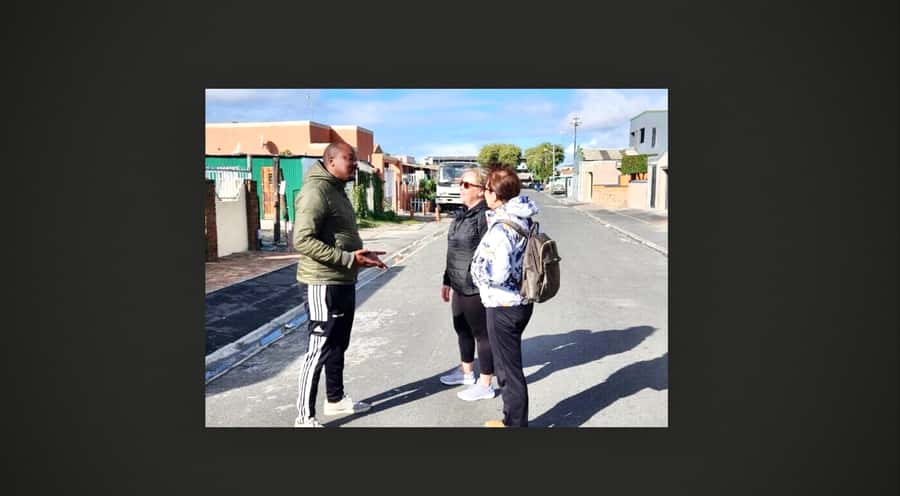
Langa is not a staged attraction. It is a working neighborhood where people live, shop, raise children, make art, and get on with the day. That is the most important thing to understand before you arrive. Your guide, often Nathi or Zuzie, helps you read the streets with respect and gives context that you would miss on your own.
I like the local connection. Nathi grew up in Langa and appears to know people across the community, while Zuzie has also lived there and can explain its past and present from personal experience. I also like the visit to Guga S’thebe, where arts, training, and community work give the walk a constructive focus. The main consideration is that you will see real hardship, including poor housing and sharp inequality. This is not light sightseeing, though the guides bring warmth and humor to difficult subjects.
Key points at a glance
- A guide from Langa: Nathi, Zuzie, and other local guides explain the township through lived experience.
- Guga S’thebe cultural center: See local crafts, community projects, and a marketplace, with optional purchases that support local makers.
- A 150-minute walk: The pace allows time for questions, conversations, landmarks, and ordinary street life.
- History with a present-day focus: Learn about colonialism, apartheid, housing, work, education, and current social needs.
- A respectful local welcome: Guides know many residents, helping you enter the neighborhood in a more comfortable and considerate way.
- Practical booking terms: The tour costs $31 per person, offers free cancellation up to 24 hours ahead, and allows you to reserve before paying.
Why Langa adds something important to Cape Town

Cape Town can be easy to experience through its postcard views, polished waterfront, wine estates, and mountain cableway. Those places are worth your time, but they do not tell the whole story of the city.
Langa gives you a direct look at a community shaped by South Africa’s past and still working through its effects. The tour explains why townships exist, how apartheid shaped movement and housing, and what daily life looks like now. That context matters. Without it, Cape Town’s beauty can seem detached from the inequality visible across the city.
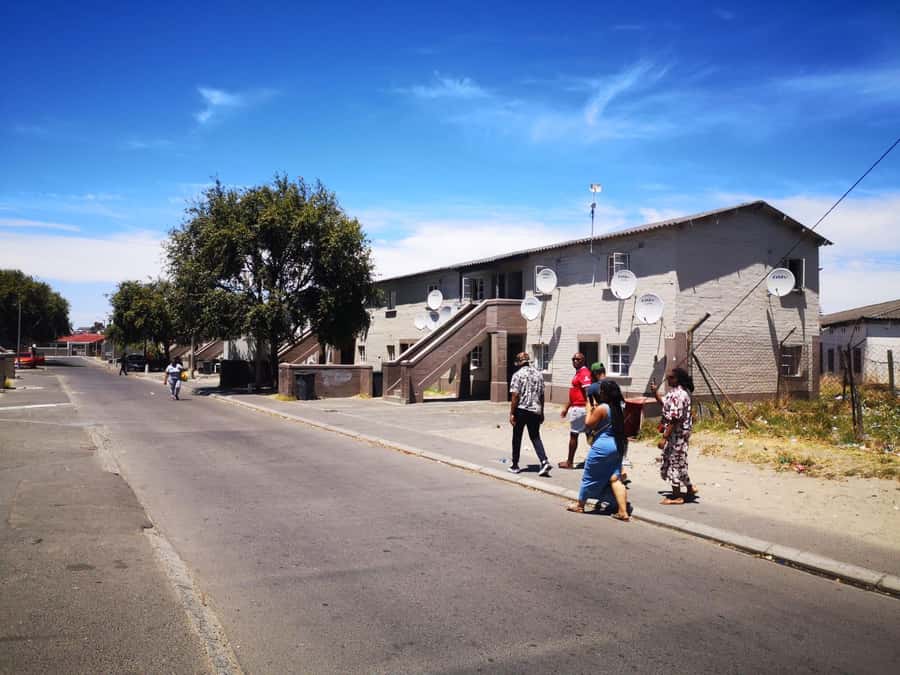
I would not treat this walk as a poverty display. Its best quality is that it presents Langa as a place of people and relationships, not just statistics or difficult images. You see challenges, but you also see pride, humor, creativity, local businesses, children at play, and neighbors who know one another.
That balance is central to the experience. The tour is educational, but it is not a lecture. You walk, stop, ask questions, greet people, and see how the area functions.
More Township Tours in Cape Town
- Half-Day Tour Through Cape Town’s Townships
★ 4.8 · 979 reviews - Cape Town: Guided Township Tour with Hotel Pickup
★ 4.4 · 536 reviews - Cape Town: Robben Island Ferry Ticket and Townships Tour
★ 4.5 · 400 reviews
Meeting Nathi or Zuzie at Guga S’thebe
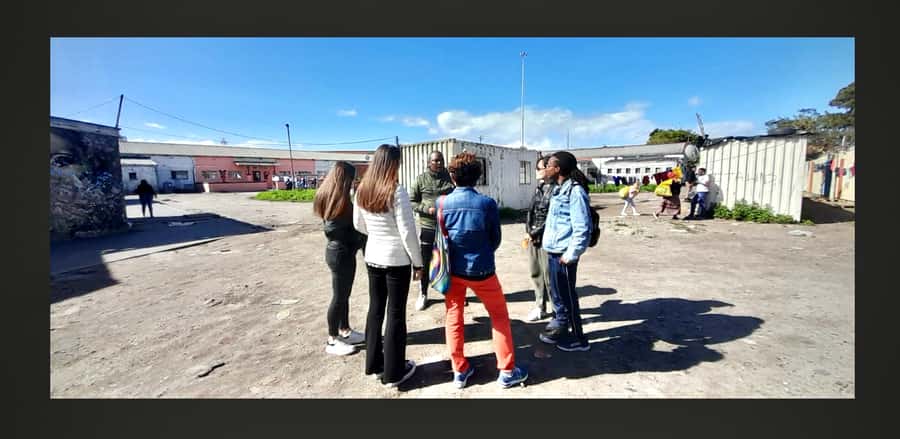
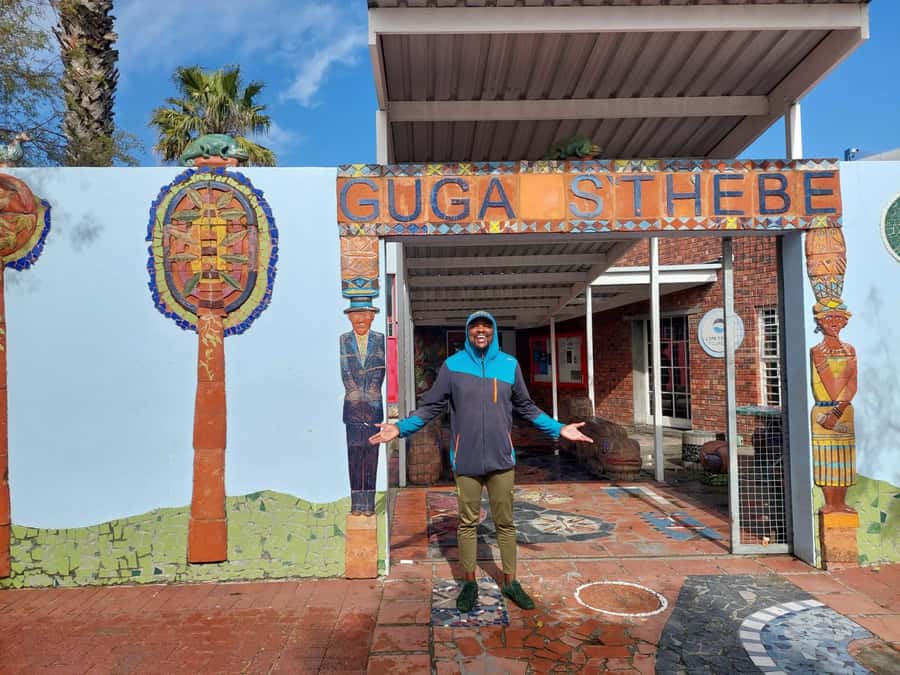
The meeting point is the main entrance of Guga S’thebe Cultural and Arts Centre at 36 Washington Street in Langa. You are asked to arrive 15 minutes before the start.
Guga S’thebe is a useful place to begin because it gives you a way into Langa beyond simply walking through residential streets. The center includes local art, handmade goods, and projects that help unemployed people and school leavers learn practical skills. You might see pottery, crafts, or other work made in the area.
There is also a marketplace, and you may have the chance to buy something. I like this part because it gives you a direct way to spend money locally without turning the entire visit into a shopping trip. There is no need to buy anything, but a small purchase can support artists and community work.
Depending on your guide, you may meet Nathi, Zuzie, or another member of the guiding team. Nathi is known for his humor, easy manner, and close ties to the neighborhood. Zuzie, also referred to as Zuzi, Xuzie, or Suze in tour information, has led walks that focus closely on Langa’s history and present-day life.
The exact guide is not guaranteed, but the important feature is that the team includes people with a personal connection to Langa. That makes a major difference. A local guide can explain details in the moment, answer questions plainly, and help you understand how visitors should behave.
Walking the streets with a local guide
The main part of the tour takes place on foot through Langa’s streets, homes, shops, and neighborhood areas. You are not simply driven past the township behind a vehicle window. You move at walking pace, which gives you time to notice ordinary details and speak with your guide.
Nathi’s connection to the area is one of the tour’s strongest advantages. He has been described as greeting people by name and being greeted in return by both young and old. That familiarity helps create a more relaxed setting for you, and it shows that the guide is not presenting a neighborhood he only visits for work.
You may meet local residents, see small businesses, pass homes, and observe the rhythms of daily life. Some visitors have encountered local barbers, artists, children, families, and community workers along the way. The exact stops can vary, so do not expect a fixed museum-style route with every moment scripted.
That flexibility is part of the appeal. A child’s game, a conversation with a resident, or a new community activity can become part of the walk. It also means the experience may feel less polished than a standard city tour. If you want a tightly timed list of attractions, this may not be the right choice.
The guide provides the structure. You provide the attention and respect. Ask questions, listen carefully, and remember that the homes and streets are not exhibits. The most considerate approach is to avoid treating residents as photo subjects unless you have clear permission.
History that connects directly to daily life

The tour places Langa within the wider story of South Africa. You learn about colonization, apartheid, the origins of townships, and changes that have taken place over recent decades.
The value is not just in memorizing dates. The guide explains how past policies continue to affect housing, employment, education, transport, and opportunity. You can then connect what you see on the walk with the larger forces that shaped it.
Several stops may include historical buildings and cultural landmarks. The details available for each departure can differ, but the focus remains on how Langa developed and what life is like for residents today.
I appreciate that the discussion is not limited to past injustice. It also covers the advantages of strong local ties, the problems that still need attention, and ideas for improving social conditions. That gives the tour a forward-looking side instead of leaving you with a simple story of hardship.
The setting can be sobering. You may see cramped housing or a home made from a shipping container. You may also notice how sharply living conditions differ from Cape Town’s Waterfront and more affluent districts. The guide does not make those contrasts disappear, and you should not expect the tour to soften them.
At the same time, Langa is presented as more than poverty. Bright colors, artwork, social gatherings, and close neighborhood ties are all part of the picture. The point is not to decide that everything is either bleak or cheerful. The point is to see both realities at once.
More Walking Tours in Cape Town
- Cape Town: Art, Culture & History Walking Tour
★ 4.9 · 392 reviews - Cape Town: Street Art Walking Tour in Woodstock
★ 4.8 · 293 reviews - Cape Town: Langa Township Walking Tour
★ 4.8 · 272 reviews - Cape Town: Private Walking Tour with a Local
★ 4.6 · 243 reviews
Guga S’thebe’s crafts, training, and drumming
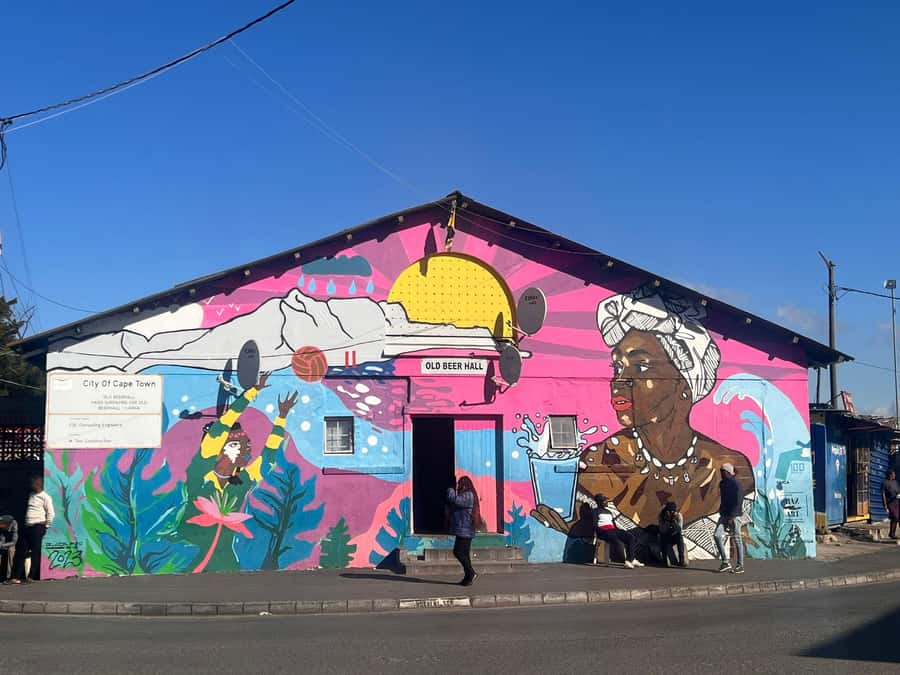
The cultural center is more than a starting point. It can be one of the most engaging stops on the walk.
You may see pottery and other handcrafted work, learn about creative training, and browse items made by local artists. This helps explain how community programs can offer skills and possible income to people who have limited access to formal employment.
Some tours include a short djembe drumming session. It is a simple activity, but it adds a hands-on moment to a tour that otherwise deals with serious history and social issues. Families in particular may enjoy this part, and children have responded well to the friendly, practical style of the guides.
The center also provides a useful contrast with the street walk. Outside, you see the pressures facing the neighborhood. Inside, you see people building skills, making things, and creating places for expression. The two experiences belong together.
You can buy crafts if you wish, but there is no requirement to spend more. Some people also choose to bring cash for donations to a local preschool or the cultural center. The tour price itself is $31, and optional spending is up to you.
Food, shops, and ordinary encounters
The tour description includes opportunities to sample food from street vendors and local eateries. The exact food depends on what is available during your visit, so you should not book this as a formal food tour with a guaranteed tasting menu.
Past experiences have included unusual local foods such as chicken feet, along with visits to local cooking spots. If you are curious about South African township food, ask your guide what is available and explain any dietary needs before accepting a sample.
You may also pass shops, hair salons, artists, and small businesses. One visitor even received a haircut from local barbers Moses and Juju. That is not a promised part of the itinerary, but it shows how the walk can open into ordinary local interactions rather than a string of prepared presentations.
Some visitors have also played football with children or exchanged greetings with people in the neighborhood. Again, these moments depend on the day and should never be expected from residents. They are welcome possibilities, not scheduled performances.
For children, the tour can be memorable because it is active and social. Guides have played football, answered questions, and connected well with young participants. Families should still prepare children for the fact that they may see poverty and unequal living conditions.
Safety, respect, and the right mindset

Safety is a reasonable concern when visiting a township, especially if you have never been in one before. The tour is conducted with a local guide, and the guides’ relationships in Langa are an important part of the experience. Many people have felt comfortable walking with Nathi or Zuzie because they know the area and are recognized by residents.
That does not mean you should ignore normal city precautions. Stay with the guide, listen to instructions, keep valuables discreet, and do not wander away to explore alone. Use common sense with phones and cameras.
Transport arrangements also deserve attention. The stated meeting point is Guga S’thebe, but pickup may be available from Cape Town’s city center, the Waterfront, and Atlantic seaboard areas including Camps Bay. Contact the provider to confirm pickup from your hotel.
One practical point is worth noting: not every ride-hailing driver will feel comfortable stopping in the area. Arrange your arrival clearly and confirm the meeting instructions. If you use an Uber or taxi, ask to be dropped at the cultural center rather than assuming the driver knows the exact entrance.
Your conduct matters as much as your safety. This is a residential community, not a film set. Ask before photographing people, avoid intrusive pictures of homes, and do not hand out sweets or money to children unless the guide advises you on an appropriate way to help. Some families have brought crayons, books, or art supplies, but donations should be handled carefully and respectfully.
The strongest experience comes when you listen more than you perform. A friendly greeting, a thoughtful question, and attention to the guide’s explanation go a long way.
Is 150 minutes enough?
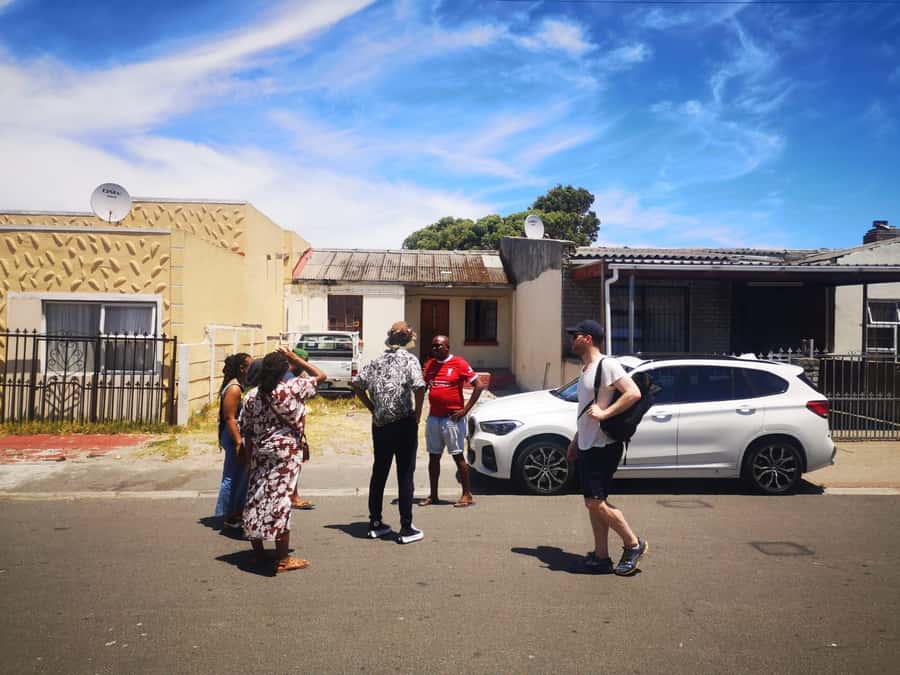
The tour lasts 150 minutes, or about two and a half hours. That is long enough to combine the cultural center, walking route, historical explanation, local encounters, and time for questions without taking up an entire day.
I see this as a useful half-day activity. You can schedule it alongside other Cape Town plans, but leave enough time to reach Langa and return without rushing. If pickup is available from your accommodation, that may simplify the day.
The pace is likely to be moderate, but you should be ready to walk on ordinary neighborhood streets rather than carefully finished tourist paths. Comfortable shoes are sensible. The experience is listed as wheelchair accessible, though you may want to confirm the details of the route and vehicle pickup when booking.
English and Xhosa are offered. If you want the fullest explanation and interaction, make sure you select or request the language that suits you best.
What the $31 price includes
At $31 per person, the tour offers a local guide and a 150-minute walking experience. The value is strongest if you want interpretation and human contact, not just transport to a photo stop.
You are paying for access that would be difficult to create responsibly on your own. A guide can introduce the area, explain sensitive subjects, translate cultural details, and help you move through the community in a considerate way. The local economic benefit is also part of the appeal, especially when you buy a craft or make a suitable donation at the cultural center.
The price does not include every possible food purchase, craft, haircut, donation, or hotel transfer. Think of $31 as the cost of the guided experience, then carry some extra cash if you want to support local projects or purchase something.
The booking terms are friendly. You can cancel up to 24 hours before the start for a full refund, and reserve now while paying later. That is useful if your Cape Town schedule depends on weather, flights, or other fixed plans.
Who should book this Langa walk?
I would recommend it to you if you want to understand Cape Town beyond its famous sights. It suits curious adults, families with older children, and anyone interested in South African history, community projects, local art, and present-day social issues.
It is especially worthwhile if you have been hesitant about visiting a township. Going with a guide who lives in or grew up in Langa gives you a much more grounded introduction than arriving alone and trying to interpret the area from the outside.
This is not the best fit if you want a purely cheerful activity, a guaranteed food itinerary, or a polished attraction with fixed displays. The subject matter can be emotional, and the route may include scenes of hardship. You need to be comfortable with a real neighborhood and willing to behave as a respectful guest.
Should you book the Nathi Langa Township Walking Tour?
Yes, if you want a thoughtful and personal view of Cape Town. The $31 price is fair for two and a half hours with a local guide, a visit to Guga S’thebe, historical context, and a chance to support community work.
Book it knowing that Langa is not a museum. You may see poverty, but you will also see humor, creativity, pride, and people looking after one another. Nathi’s local ties and Zuzie’s personal perspective give the experience its strongest quality: you are not just looking at Langa, you are being helped to understand it.
Bring an open mind, comfortable shoes, and a little extra cash if you want to buy local crafts or donate. Stay close to the guide, ask before taking photographs, and allow the community to be itself. If that sounds like the kind of Cape Town experience you want, this tour earns a place on your itinerary.
FAQ
Where does the Nathi Langa Township Walking Tour meet?
The meeting point is at the main entrance of Guga S’thebe Cultural and Arts Centre, 36 Washington Street, Langa. You should arrive 15 minutes before the tour begins.
Is hotel pickup available?
Pickup may be available from hotels in Cape Town city center, the Waterfront, and Atlantic seaboard areas including Camps Bay. Contact the provider to confirm the exact pickup options for your accommodation.
How long does the tour last?
The tour lasts 150 minutes, or approximately two and a half hours.
What languages are available?
The tour is offered with live guides speaking English or Xhosa.
Is the tour wheelchair accessible?
The activity is listed as wheelchair accessible. Confirm the route and any pickup details when booking if you have specific accessibility needs.
Can I cancel for a refund?
You can cancel up to 24 hours in advance for a full refund. The tour also allows you to reserve now and pay later.
Just listed around Cape Town
- Cape Town: Inspiring sustainable change through Street Art★ 4.9 · 5 reviews
- Cape Town Tandem Paragliding Square 1 Paragliding★ 5.0 · 5 reviews
- SandBoarding in Capetown + PhotoShoot★ 4.0 · 5 reviews
- Cape Town: Full-Day Private Peninsula Tour★ 3.6 · 5 reviews
- Private FULL DAY Tour: Cape of Good Hope & Boulders Beach★ 5.0 · 5 reviews
- Cape Town Full Day Family Fun With Kids Private Tour★ 4.0 · 5 reviews
- Private Tour to Aquila Game Reserve in Cape Town – see the Big5★ 5.0 · 5 reviews
- Peninsula Tour Cape Town★ 5.0 · 5 reviews
Township Tours, compared.

Half Day Township Tour in Cape Town South Africa
Read our review →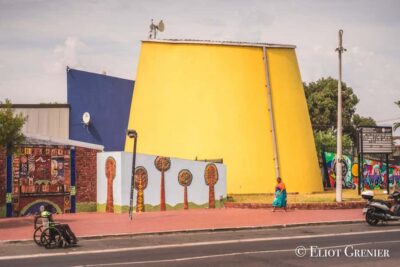


Browse the lists this tour appears in