
Reviewed · MUSEUMS
Johannesburg City Evolution, Arts and Museums Walking Tour
Johannesburg’s story comes into focus on this small-group route from Constitution Hill to Newtown. You move through former prison grounds, university art collections, labor history, shopping streets, public squares, and the Market Theatre, seeing how the city’s past still shapes daily life.
I like the mix of serious history and street-level culture, and I like that local transport is part of the plan rather than hiding the city behind a tour vehicle. Guide Sean is especially good at linking major sites to present-day Johannesburg, while another guide named K is praised for explaining the meaning behind street art.
The main drawback is the pace. Three hours covers eight stops, so several visits are short, and Constitution Hill receives only about 25 minutes. If you want long museum visits or a slow look at every exhibit, you may find this tour brisk.
Key points at a glance
- A direct route through Johannesburg’s past: Begin at Constitution Hill, a former prison complex now home to the Constitutional Court.
- Local transport is part of the experience: You do not simply watch the inner city through a vehicle window.
- Art gets real attention: The route includes Wits Art Museum, Museum Africa, street art, and the Market Theatre.
- A maximum of seven people: The small group should make it easier to ask questions and keep moving through busy city areas.
- The guide shapes the day: Sean is praised for clear historical context, while K is noted for explaining street art and its purpose.
- A useful ending in Newtown: Finish at the Market Theatre, a major cultural site linked to artistic resistance during apartheid.
Why this route makes sense for a first day in Johannesburg
This is not a sightseeing loop built around postcard views. It is a city lesson told through places that carry political, social, and artistic weight.
You start at Constitution Hill, move through Braamfontein, cross Nelson Mandela Bridge, visit the Oriental Plaza, and end around Newtown. The route gives you a sense of how different parts of Johannesburg connect, both physically and historically.
The tour also asks you to look at the city as it is now. You see a university, a labor headquarters, a public square, shops, museums, and a theater. That mix matters. Johannesburg cannot be understood through apartheid history alone, and it cannot be understood through new street art alone. The value here is in seeing both in one morning.
At $37.02 per person, the price is reasonable if you want several admissions and a guide who supplies context. Constitution Hill, Wits Art Museum, and Museum Africa include admission, while other stops are free. You are also paying for route planning and local transportation, not just for someone to point at buildings.
More Museum Tours in Johannesburg
- Soweto /Johannesburg and Apartheid Museum Guided Full Day Tour
★ 5.0 · 932 reviews - Jo’berg in 1 Day: Soweto, Apartheid Museum & City Tour
★ 4.8 · 524 reviews - Johannesburg: Full-Day Tour with Soweto and Apartheid Museum
★ 4.8 · 478 reviews
Constitution Hill: a powerful beginning in 25 minutes
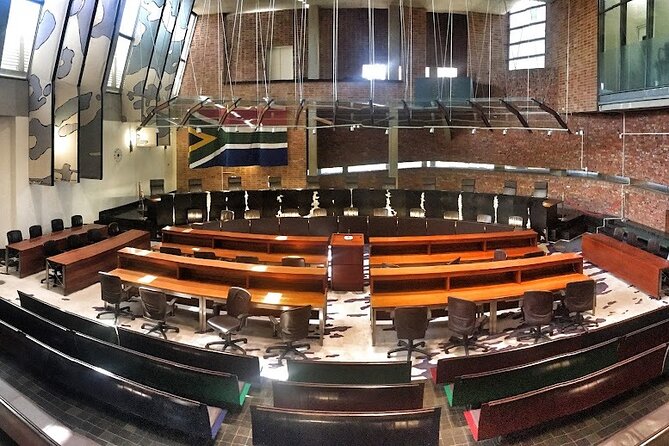
Constitution Hill Human Rights Precinct is the emotional anchor of the morning. The site was once a prison complex and has since been transformed into a human rights center that houses South Africa’s Constitutional Court.
That change gives the stop unusual force. You are not only hearing about injustice and democracy in abstract terms. You are standing at a place linked to imprisonment and then seeing how the site now represents constitutional rights.
Still, 25 minutes is a short visit. I would treat this as an introduction rather than a full exploration. If Constitution Hill is high on your personal list, plan to return on your own for more time.
The meeting point is at 11 Kotze Street, with a 10:00 am start. Arrive ready to begin promptly. The tour’s later stops depend on a steady rhythm, and a late start could make the museum and theater visits feel even shorter.
Braamfontein connects labor, students, and public life
The next section brings you into Braamfontein, one of the tour’s most useful parts for understanding present-day city life.
At COSATU House, you make a brief five-minute stop. COSATU, the Congress of South African Trade Unions, is one of South Africa’s largest labor federations, and its headquarters offers a link to organized workers and the country’s political struggles.
Five minutes does not allow for a detailed visit. Think of it as a signpost in the city story. Your guide can explain why the building matters, then the group moves on.
You also visit Wits University, formally the University of the Witwatersrand. It is a leading public research university, known for work in science, engineering, and the humanities. The campus adds another angle to the morning: universities are places of learning, but they are also places where social and political debates take shape.
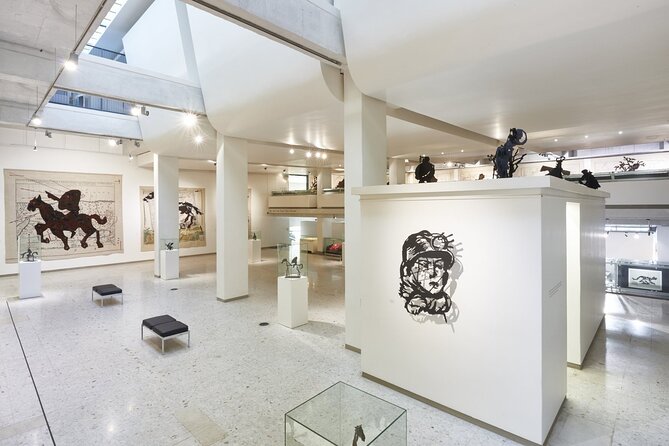
The Wits Art Museum gives the stop more substance. Its collection includes South African and international art, making it one of the tour’s clearest opportunities to see art inside a formal museum setting.
You have about 25 minutes here. That is enough for a focused introduction, but not enough to see every gallery properly. If you care most about art, ask the guide how to use the available time. You may prefer to spend it on a few selected works rather than trying to cover the whole museum.
Braam Square and Nelson Mandela Bridge
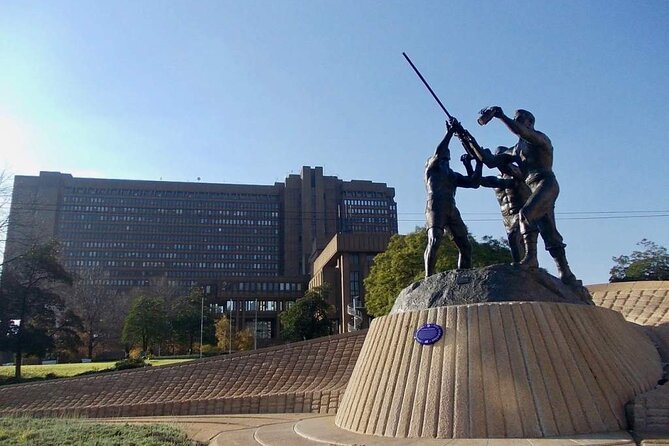
Braam Square is a 15-minute stop in the center of Braamfontein. It is a public square that has undergone major renewal, and it gives you a chance to see the district as a functioning part of the city rather than only as a collection of historical sites.
This is also a good place to notice the contrast between formal redevelopment and everyday public use. The tour description presents the square as an area with a long past and a newer public role. Your guide can help connect those two sides.
From there, you cross Nelson Mandela Bridge on the way to Newtown. The crossing takes about 10 minutes and is free.
The bridge is less about a long stop than about movement. You walk across a named piece of modern Johannesburg infrastructure while shifting from Braamfontein toward the cultural district of Newtown. It is a small but useful pause between museums and the next set of city sites.
More Walking Tours in Johannesburg
- Soweto: Walking Tour with a Local Guide and Lunch
★ 4.9 · 648 reviews - Soweto Walking Tour with Lunch
★ 5.0 · 288 reviews - Johannesburg: Local Food Tasting Guided Walking Tour
★ 4.7 · 192 reviews - Johannesburg: City Centre Walking Tour
★ 4.8 · 152 reviews
Oriental Plaza: shopping history in the inner city
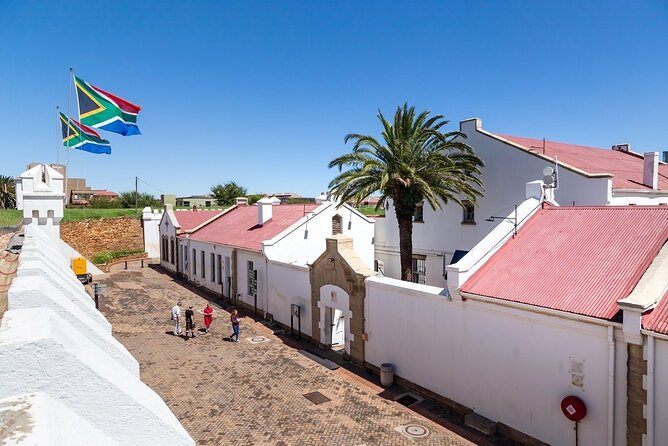
The Oriental Plaza occupies a historic complex in Johannesburg’s inner city. It began as warehouses and shops in the late 19th century and later developed into a shopping center serving the city’s growing population.
The tour allows about 20 minutes here. That gives you time to see the setting and hear how the area changed over time, but it is not a shopping expedition with hours to browse.
I like this stop because it adds business and community life to a route otherwise weighted toward courts, museums, and theaters. Historic change is not found only in official buildings. It also appears in shops, markets, working districts, and the ways people use old spaces for new needs.
Keep your expectations practical. The information provided does not promise shopping time, specific purchases, or a food stop at this exact location. If you want to buy something, ask your guide what the schedule allows before wandering off.
Museum Africa in 35 minutes
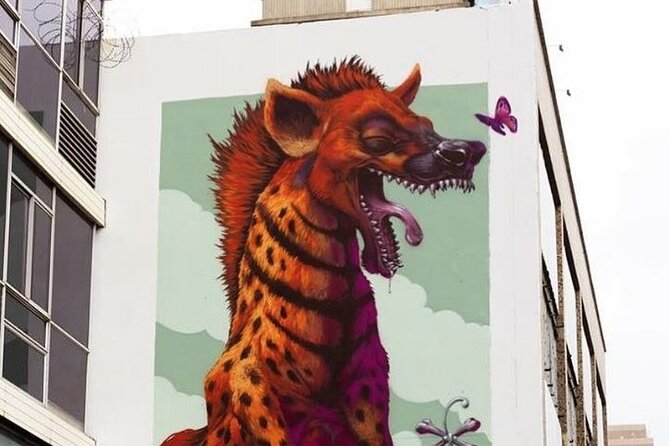
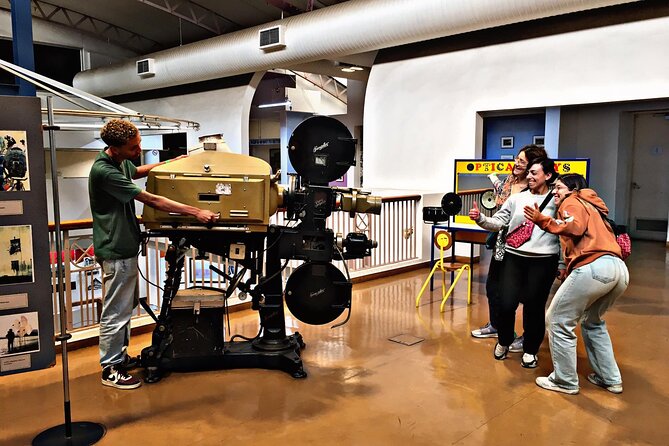
Museum Africa receives the longest single visit, at about 35 minutes. The museum presents African history through artifacts, exhibits, and interactive displays, with attention to the continent’s past, present, and future.
That broader focus helps balance the earlier Johannesburg-centered stops. You are not looking at one city in isolation. You are placing Johannesburg within a larger African story.
The museum visit is still timed. Thirty-five minutes can give you a useful overview, especially with a guide pointing out what deserves attention, but it is not a full museum day. I would listen closely at the start and follow the route’s main themes instead of trying to read every panel.
The museum admission is included. That makes the price easier to justify, especially for visitors who want more than an outdoor walking tour.
The Market Theatre gives the morning its cultural finish
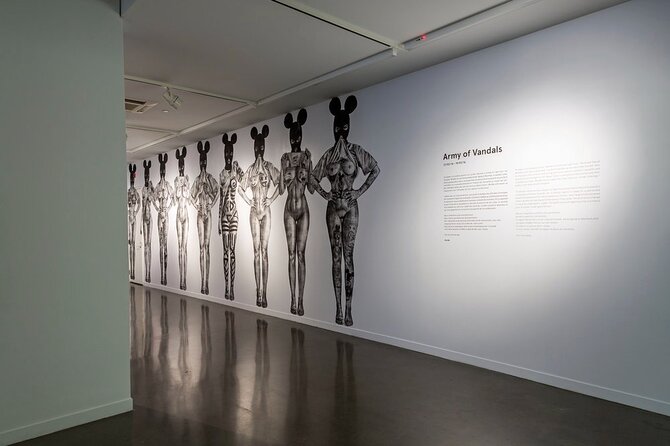
The final stop is the Market Theatre in Newtown, where the tour ends at 56 Margaret Mcingana Street.
The theater played an important role during apartheid by giving artists a place to work freely and challenge the ruling system. That makes it a fitting endpoint. The morning begins with a former prison transformed into a human rights precinct and ends at a theater where performance helped question oppression.
You have about 20 minutes at the Market Theatre. Admission is listed as free, and the tour ends here rather than returning you to Constitution Hill.
This ending affects your planning. If you have a hotel appointment, another tour, or a train to catch, allow extra time after the scheduled finish. You will be in Newtown, not back at the morning meeting point.
The tour also includes a local food option according to the experience details from past outings. A platter has been described as large enough for lunch and dinner, and braai has received especially warm praise. Because the regular itinerary lists the Market Theatre as the end point and does not guarantee a meal, confirm the food plan when booking or at the start.
Street art and the value of a sharp guide
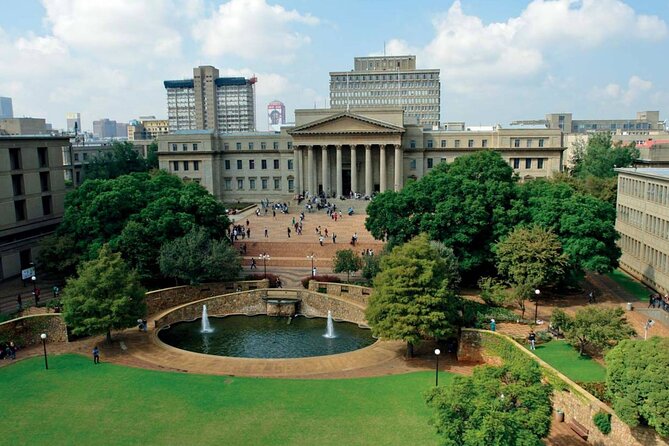
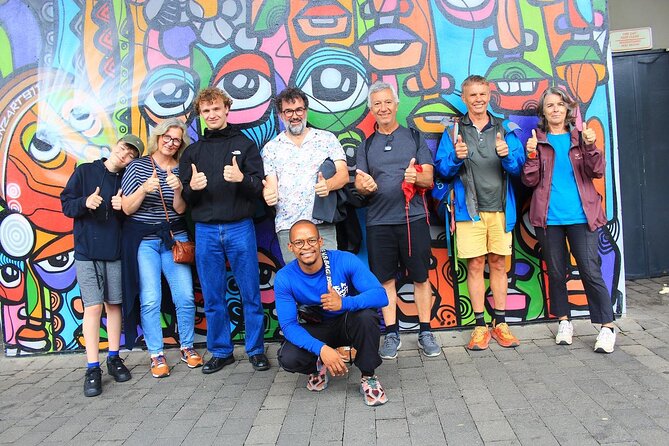
Although the listed stops focus on museums, public buildings, and landmarks, the experience also presents South African art on the streets.
This is where the guide can make a major difference. Guide K is specifically praised for explaining the purposes behind street art, while Sean is praised for placing downtown sites in historical and present-day context. Those comments point to the tour’s strongest feature: interpretation.
A mural can be easy to photograph and easy to misunderstand. A good explanation can show you why an image appears in a particular district, what issue it addresses, or how it fits local artistic practice. The supplied details do not identify particular murals, so do not book this expecting a fixed street-art checklist. Expect the guide to respond to what you encounter along the route.
The group limit of seven helps here. A small group gives you a better chance to ask a question without holding up a coachload of people. It also makes walking and using local transport less cumbersome.
Local transport makes the route more honest
The experience uses local transportation, which is one of its most distinctive features. You are not only transferred between attractions in a private vehicle. You get a more direct sense of how people move around Johannesburg.
That can be useful and slightly less polished. Local transport takes attention, timing, and flexibility. The tour information says the sites have been renovated for comfort and accessibility, and most participants can take part. It does not provide a detailed accessibility plan for every vehicle, pavement, or museum entrance, so contact the operator if you need specific assistance.
The route is near public transportation, and pickup is offered. Since the stated meeting point is Constitution Hill and the finish is the Market Theatre, check the pickup arrangement rather than assuming it applies to every hotel.
Timing, group size, and who will enjoy it most
The tour lasts about three hours and accepts no more than seven people. That format suits you if you want a guided introduction without spending a full day on one museum or district.
I would recommend it most strongly to:
- First-time visitors who want historical context before exploring alone
- People interested in democracy, human rights, labor, and apartheid-era cultural resistance
- Museum lovers who also want street art and city walking
- Visitors who prefer small groups to large coach tours
- Anyone curious about using local transportation in Johannesburg
- Travelers who want a guide-led route through places they might not find independently
You may want something else if your priority is shopping, nightlife, a long museum visit, or a relaxed pace. The stop at COSATU House lasts only five minutes, and the schedule gives most museums less than an hour. This is a broad introduction, not a specialist tour of one subject.
The tour is also not built around Maboneng, despite some enthusiastic comments referring to Maboneng. The route details provided here name Braamfontein, Newtown, Oriental Plaza, Museum Africa, and the Market Theatre. If Maboneng is your main goal, verify the exact route before booking.
What the $37.02 price buys you
The price is fair for a three-hour guided experience with several included admissions and a maximum group of seven.
You receive more than a walk between landmarks. The guide provides the historical links, the route includes local transportation, and the tour covers several different kinds of site. Constitution Hill, Wits Art Museum, and Museum Africa are listed with admission included, which adds useful value.
The strongest return comes if you make use of the guide. Ask questions about the court, the labor movement, the university, art in public spaces, and the theater’s role during apartheid. A quiet passenger who simply follows along will still see a lot, but an engaged passenger will get much more from the morning.
The price does not appear to include a guaranteed meal, and it does not promise extended time at any individual museum. Treat any food stop as something to confirm, not as the central reason to book.
How the experience feels according to the guide style
The tone described by the feedback is friendly, committed, and informal. Sean is presented as someone who can explain difficult subjects without making the morning feel stiff. One particularly useful detail is the balance between historical context and current life in downtown Johannesburg.
That balance matters. You need the past to understand the sites, but you also need to see the city as more than a memorial. The route moves through working districts, public spaces, shops, campuses, and cultural venues. It gives you room to notice change without pretending every problem has been solved.
The guide may also adapt the route on special occasions. One outing included extra sites connected to Civil Rights Day. That suggests some flexibility, but extra stops should not be treated as guaranteed. The published eight-stop structure is the safer basis for planning.
Practical details before you book
You receive confirmation at booking, and free cancellation is available if you cancel at least 24 hours before the 10:00 am start. Changes made inside that 24-hour window are not accepted, and the local time applies.
Wear shoes suitable for walking and keep your schedule open for the full three hours. The tour begins at Constitution Hill Human Rights Precinct, 11 Kotze Street, Braamfontein, and ends at the Market Theatre, 56 Margaret Mcingana Street, Newtown.
Pickup is offered, but the information does not specify the pickup zone or timing. Confirm that detail with SKY Travel ZA. Also confirm the food arrangement if lunch matters to your plans.
Should you book the Johannesburg City Evolution, Arts and Museums Walking Tour?
Book it if you want a compact, thoughtful introduction to Johannesburg that joins human rights history, museums, public art, and everyday city life. The small group, local transportation, included admissions, and strong guide reports give it a clear advantage over a basic landmark walk.
Skip it if you want a slow museum day or a route devoted entirely to Maboneng, shopping, or street art. The schedule is full, and some stops are short.
For most first-time visitors with three hours to spare, I would choose this tour early in a Johannesburg stay. It can give you the context to explore the city more confidently afterward, and the walk from Constitution Hill to the Market Theatre leaves you in a useful cultural district rather than simply returning you to where you started.
FAQ
How long is the Johannesburg City Evolution, Arts and Museums Walking Tour?
The tour lasts approximately three hours.
What time does the tour start?
The stated start time is 10:00 am.
Where does the tour begin?
It begins at Constitution Hill Human Rights Precinct, 11 Kotze Street, Braamfontein, Johannesburg.
Where does the tour end?
It ends at the Market Theatre, 56 Margaret Mcingana Street, Newtown, Johannesburg.
How many people can join the tour?
The tour has a maximum of seven participants.
Is hotel pickup available?
Pickup is offered, but the provided details do not specify the pickup area or exact pickup time. Confirm this with SKY Travel ZA.
Does the tour use public transportation?
Yes. Local transportation is used as part of the experience.
Are admission tickets included?
Admission is included for Constitution Hill, Wits Art Museum, and Museum Africa. COSATU House, Braam Square, Nelson Mandela Bridge, Oriental Plaza, and the Market Theatre are listed as free stops.
Is the tour suitable for most people?
The tour information says most people can participate. The locations have been renovated for comfort and accessibility, but specific transport and access requirements should be confirmed with the operator.
Can I cancel for a full refund?
Yes, if you cancel at least 24 hours before the experience start time. Cancellations made less than 24 hours before the start are not refunded, and changes inside that period are not accepted.
Just listed around Johannesburg
- Constitutional Hill and Soweto 5 hours tour.★ 5.0 · 5 reviews
- 5 Day Kruger Glamping Safari and Panorama Tour★ 5.0 · 5 reviews
- Cradle of Humankind and Maropeng Day Tour from Johannesburg★ 4.0 · 5 reviews
- Johannesburg: Hot Air Balloon Flight★ 5.0 · 5 reviews
- Half Day Soweto and Apartheid Museum Guided Tour★ 5.0 · 5 reviews
- Lion park★ 4.5 · 5 reviews
- 5 Day Kruger National Park and Panorama Route Safari★ 4.5 · 5 reviews
- Pretoria Historical Tour★ 4.0 · 5 reviews
Museums, compared.

Soweto /Johannesburg and Apartheid Museum Guided Full Day Tour
Read our review →
Jo’berg in 1 Day: Soweto, Apartheid Museum & City Tour
Read our review →
Full-Day Tour with Soweto and Apartheid Museum
Read our review →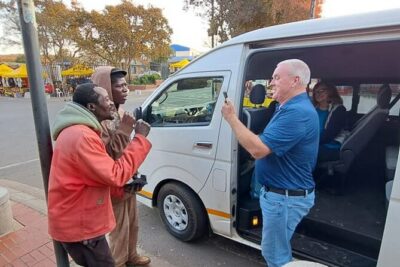
Full-Day Soweto, Apartheid Museum and Lunch Tour
Read our review →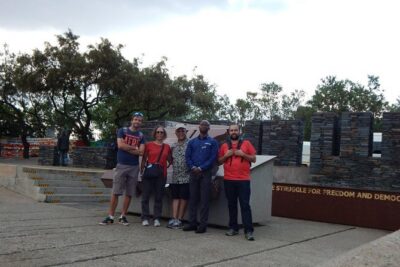
Half Guided Day Tour of Soweto And Apartheid Museum
Read our review →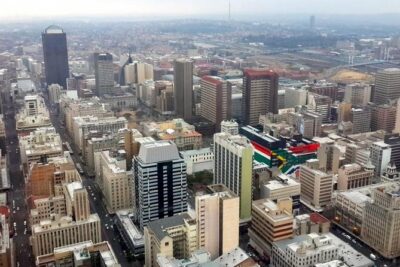
Ultimate Johannesburg Soweto Experience with Apartheid Museum
Read our review →
Hop-On Hop-Off Bus, City Tour and Apartheid Museum
Read our review →
Museum of Contemporary African Art: Fast-Track Zeitz MOCAA
Read our review →Browse the lists this tour appears in