
Reviewed · CAPE TOWN TOURS
Cape Town: Authentic African Cuisine Cooking Experience
The best part of this Cape Town experience is that you do not simply sit down to eat African food. You help make it, from stirring sadza, or ground mealie meal, to preparing stews, vegetables, and beans. Florence, a co-owner of Pahari African Restaurant, shares recipes learned from her mother, while the meal becomes a lesson in family, history, and hospitality.
I like the small group limit of 10, which gives you a real chance to chop, stir, ask questions, and take part. I also like the communal meal at the end, eaten in the typical home-style way, with your hands rather than cutlery. The main drawback is that the menu is set around a substantial savory meal, so you should not expect dessert.
- Cook five popular dishes: Prepare sadza, beef bones with greens, chicken stew, chakalaka, and sugar beans.
- Meet Florence and her cooking team: Learn recipes passed through her family and hear how the food has changed over time.
- Taste distinctive African snacks: Starter foods may include unusual treats such as caterpillars and termites.
- Share the meal communally: Sit down together and enjoy what you helped prepare, as you might in an African home.
- Choose a meat-free version: Vegetarian and vegan options are available.
- Keep the group intimate: No more than 10 people take part, with English instruction.
Arriving at Pahari African Restaurant
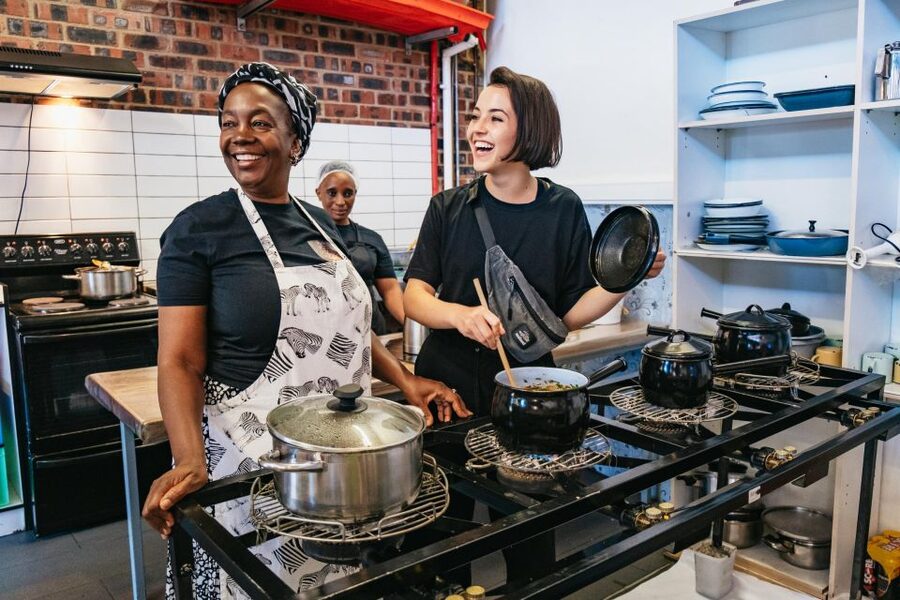
You meet at Pahari African Restaurant and ask for Florence. The cooking session takes place in a separate room next to the restaurant, giving the class its own space rather than placing you in the middle of ordinary restaurant service.
That arrangement matters. A cooking lesson needs room for explanation, preparation, and conversation. You are not just being handed a plate and sent on your way. The setting is described as peaceful, and the small group size should make it easier for everyone to take a turn.
The class lasts 150 minutes, or two and a half hours. That is enough time for a proper meal and a meaningful introduction to the food, but it is not an all-day culinary course. If you want a quick tasting, this may feel long. If you want to understand what you are eating and learn how to make it at home, the pace makes sense.
Hotel pickup and drop-off are not included. Plan to make your own way to the restaurant and allow enough time to arrive before the scheduled start.
Florence’s Family Recipes and African Food Traditions
Florence learned to cook from her mother at an early age. Her family recipes were passed from one generation to the next, and that personal link gives the class more weight than a simple demonstration by an unknown instructor.
You also hear about ingredients, cooking customs, and how recipes have changed over time. This is useful context because African cuisine is not one single menu. The class presents a particular food tradition through the dishes served at Pahari African Restaurant, while showing how food connects to family and daily life.
Caleb has also helped explain the background of traditional African cooking, including where ingredients come from. Some ingredients are sourced locally and organically, according to the experience details shared by past participants. The point is not to memorize a list of facts. It is to understand why these ingredients belong together and how recipes survive through repeated home cooking.
I especially like this part because it gives the meal a human frame. You learn not only what to stir into a pot, but why these dishes matter to the people preparing them.
More cooking classes in Cape Town:
- Cape Town: Malay Cooking Class and Lunch in Bo-Kaap
★ 4.8 · 515 reviews - Authentic African Cuisine Cooking Experience
★ 5.0 · 236 reviews - Cape Town: Cape Malay Cooking Class in Bo-Kaap
★ 4.8 · 120 reviews
African Drinks and Starter Snacks
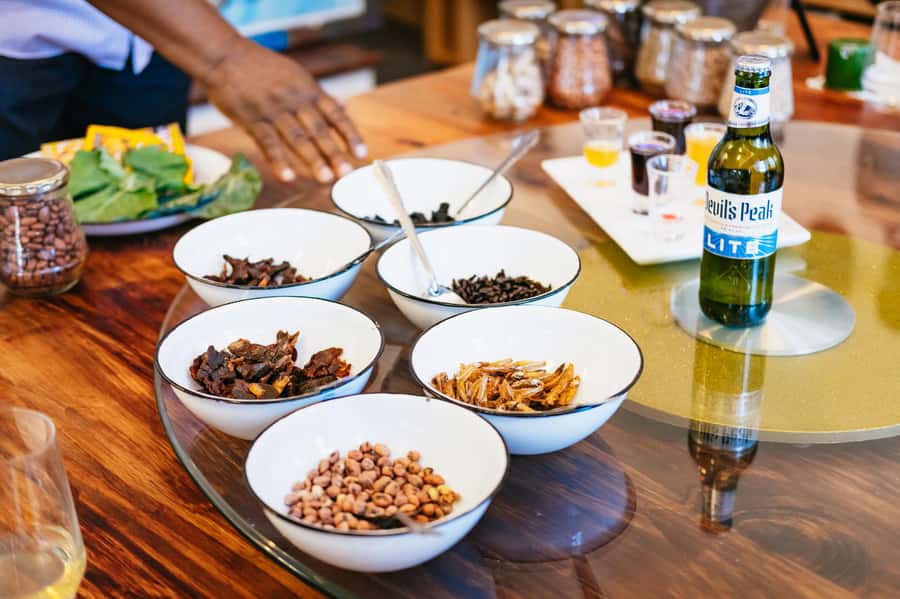
The class begins with a choice of African drinks. Included options are African juice, African beer, and African tea or coffee. You can expect the drinks to play a supporting role rather than serve as a separate tasting session.
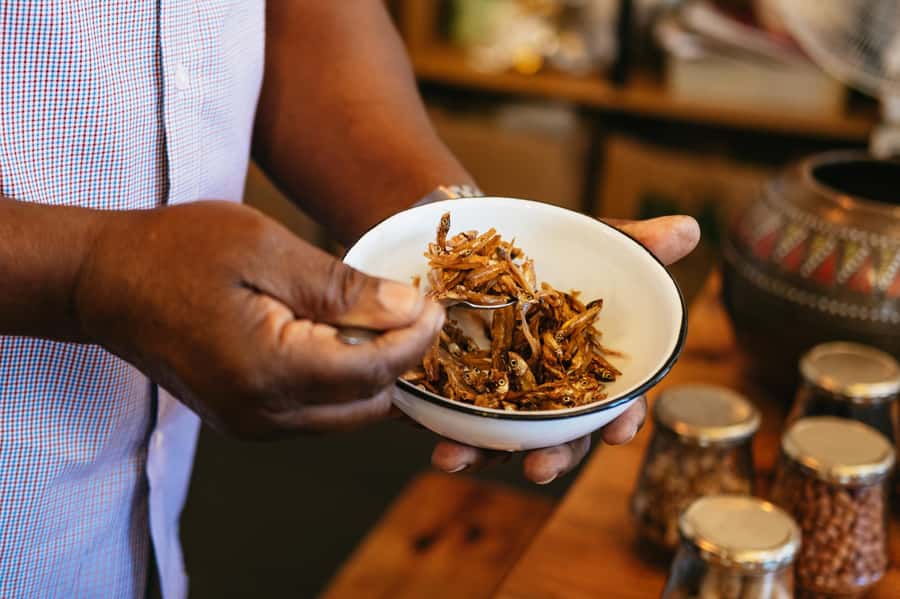
There are also starter snacks before the main cooking begins. The selection can include more unusual foods, including caterpillars and termites. These are not presented as a stunt. They are part of the broader introduction to African food, and one account describes them as surprisingly tasty.
If you are adventurous with food, this is a chance to try something you are unlikely to encounter in a standard Cape Town cooking class. If you are cautious, you can approach the snacks at your own pace. The main meal includes more familiar forms of meat, vegetables, beans, and ground maize, so the entire experience does not depend on eating insects.
The drinks and starters also give you something to enjoy while the hosts explain the cooking traditions. You are not standing around waiting for the main dishes to be ready.
Making Sadza, the Foundation of the Meal
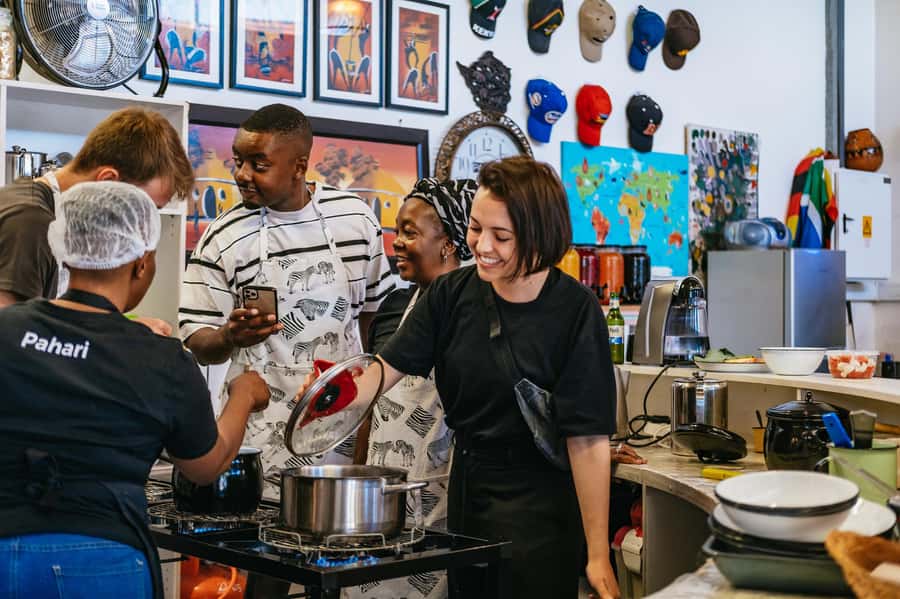
Sadza is made from ground mealie meal and serves as the base of the meal. It is the dish that gives the cooking session a clear center, since you learn how to prepare a staple rather than only assembling side dishes.
The texture and timing matter. The class is hands-on, so you should expect to stir and follow instructions closely. This is one of the places where you may get your hands dirty, as the hosts show you each step rather than asking you to watch from a distance.
Sadza also changes how you eat the meal. It can be used to scoop up stews and vegetables, which helps explain why the final meal is served communally and often eaten by hand. That method may feel awkward at first, especially if you are used to a knife and fork. It is part of the experience, though, and connects the cooking lesson to the way the food is enjoyed in an African home.
You receive an easy-to-follow recipe on request. That is an important value point. Many cooking classes are memorable but hard to repeat because measurements and steps are vague. Here, you have the option to take the method home and try it in your own kitchen.
Preparing Beef Bones, Greens, and Chicken Stew
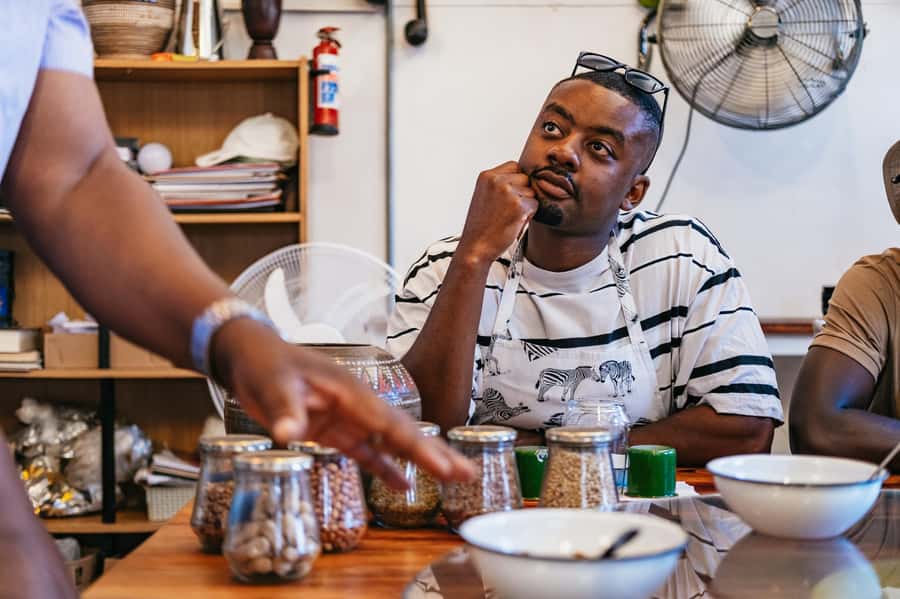
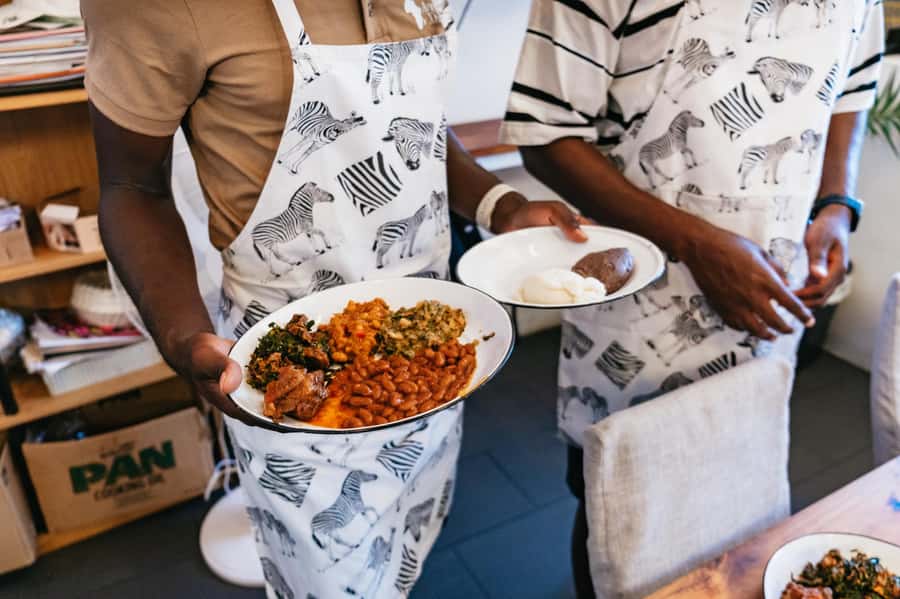
The main dishes include meaty beef bones mixed with green vegetables and a separate chicken stew. These provide two different ways of cooking meat and help make the meal feel like a full home-style spread rather than one large pot.
The beef bones bring a hearty element to the table. The green vegetables keep the meal from becoming only meat and starch. The chicken stew adds another familiar, comforting dish, while the seasoning and preparation give it an African character.
You are not promised a restaurant-style cooking demonstration where one person does all the work. Each person has an opportunity to contribute. Depending on the group, that may mean stirring, helping with ingredients, or assisting with a particular dish. With a maximum of 10 participants, the format should be more personal than a large class, though the exact division of tasks can vary.
The menu is also practical for a shared meal. It includes different textures and flavors, and the dishes are served together so you can combine them with sadza.
A few more Cape Town days worth comparing
- Wine Tour: Paarl, Franschhoek & Stellenbosch incl 3 wineries
★ 5.0 · 3,940 reviews - Cape Town: Hop-On Hop-Off Bus Tour with Optional Cruise
★ 4.8 · 3,929 reviews - Cape Town: Cape of Good Hope & Penguins Day Tour with Pickup
★ 4.7 · 3,362 reviews - Zipline Cape Town – From Foot of Table Mountain Reserve
★ 5.0 · 3,179 reviews
Chakalaka and Sugar Beans
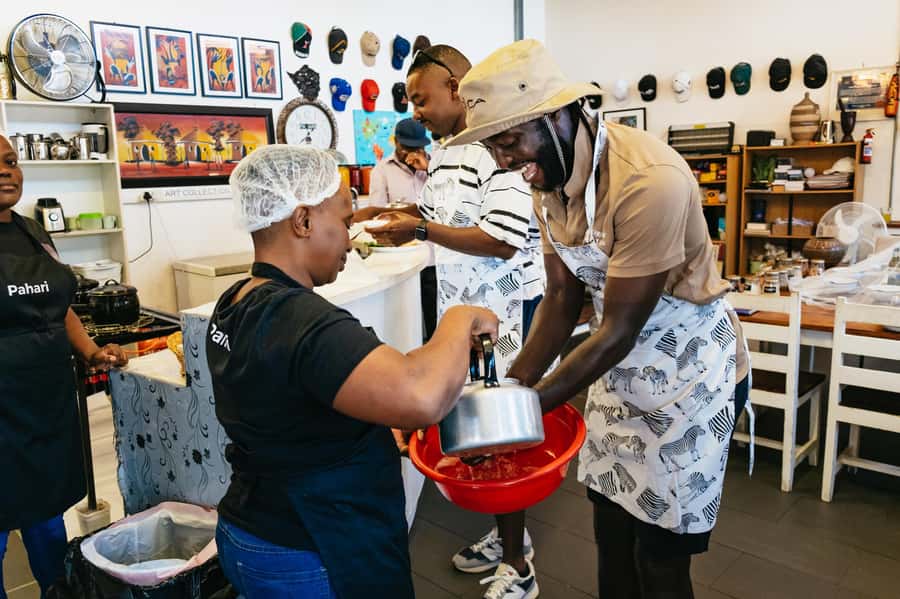
Chakalaka adds a vegetable-based dish with a stronger seasoning profile, while sugar beans provide a filling, earthy component. Together with the greens, these dishes keep the meal from being too meat-heavy.
The class includes both vegetarian and vegan options. You should mention your dietary needs when booking or before the session begins, since the standard menu includes beef bones and chicken stew. The supplied information confirms that meat-free versions are available, but it does not give a separate vegan menu or list every substitution.
I like that the cooking experience is not built around meat alone. Beans, vegetables, and sadza are treated as central parts of the meal. That gives you a better sense of how a complete plate comes together and makes the class workable for a mixed group of meat eaters, vegetarians, and vegans.
Do not expect each dish to be finished as a separate restaurant course. The idea is to prepare a spread and eat it together. That is more social and more faithful to the stated home-style approach, but less suited to anyone seeking a highly technical, chef-school lesson.
Eating Together, African-Style
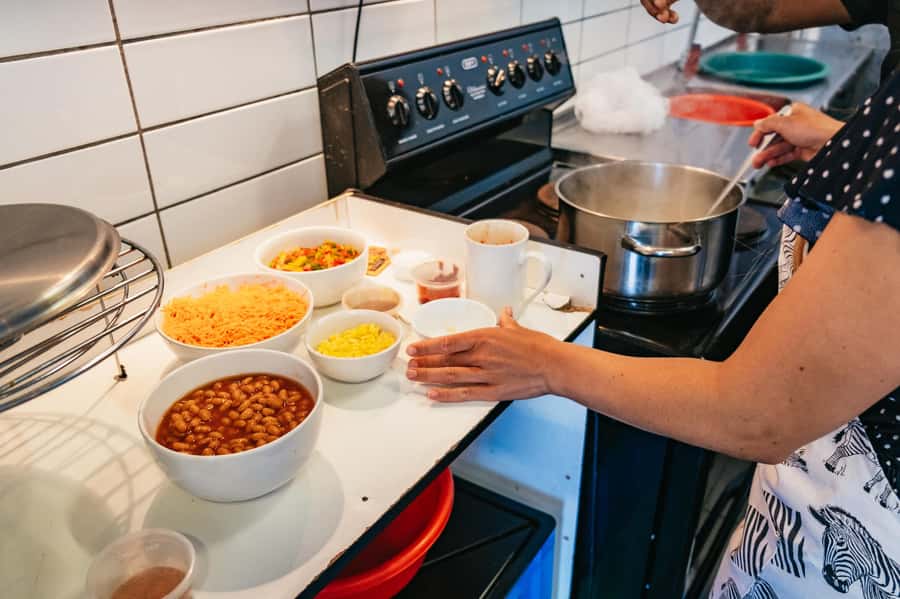
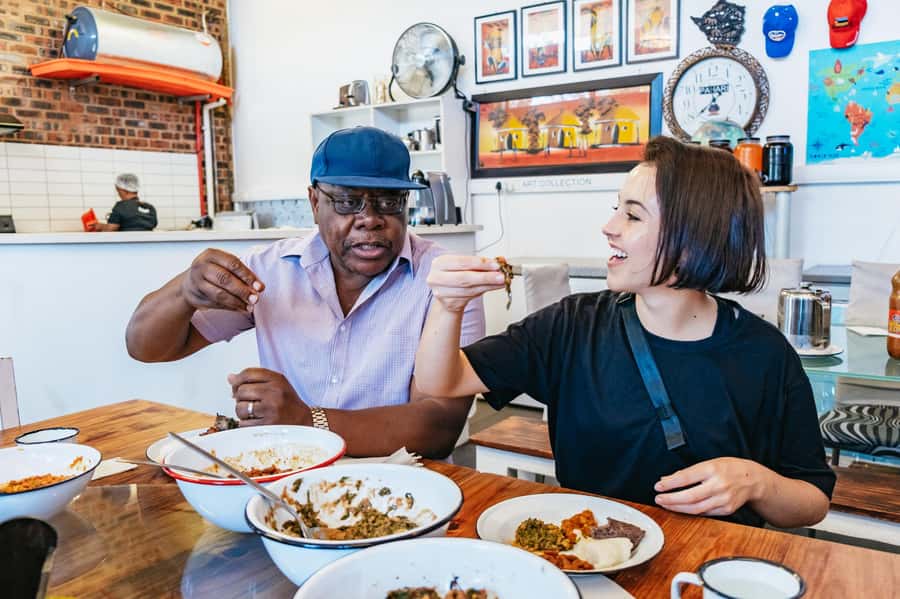
Once the cooking is done, you sit down with the hosts and the other participants to eat the meal. The communal format is one of the strongest parts of the experience because it turns the class into a shared evening rather than a series of kitchen tasks.
You may be encouraged to eat with your hands. That can be a small challenge if you have never eaten sadza this way, and one participant found giving up a knife and fork less easy than expected. Still, it is a useful part of the cultural lesson. The way food is served and eaten can tell you as much as the ingredients.
The meal is also a chance to talk about food and culture beyond the recipes. Florence and her husband have spent two decades in food service and enjoy exchanging stories about what people like to eat. The tone is warm and social, with the hosts taking an active role rather than disappearing once the cooking is finished.
The experience ends with African tea or coffee. There is no dessert included. If you need a sweet finish after dinner, plan accordingly, but the absence of dessert is not a surprise once you understand that the focus is on a traditional savory meal.
What the $71 Price Includes
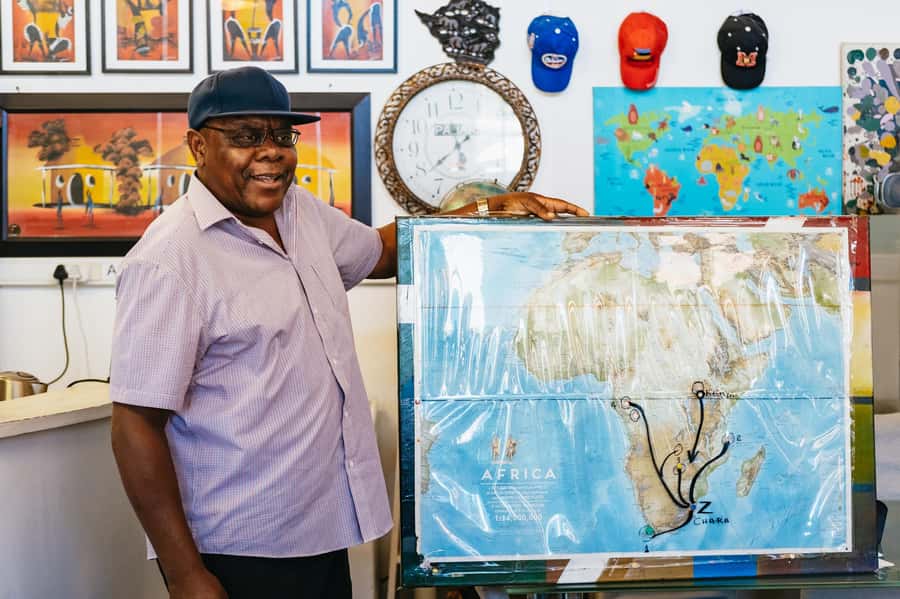
At $71 per person, this is not the cheapest way to get a meal in Cape Town. You are paying for more than food, though. The price includes 150 minutes of instruction, drinks, starter snacks, the full cooked meal, and the chance to take home a recipe.
The small group limit improves the value. A class capped at 10 gives you a better chance to participate than a large demonstration, and the hosts’ family connection adds a personal layer that a standard restaurant meal cannot provide.
You also receive several dishes for the price: sadza, beef bones with greens, chicken stew, chakalaka, and sugar beans. African juice, African beer, and African tea or coffee are included as well. If you tried to order a similar spread at a restaurant, you would get the meal, but not the instruction or conversation about its origins.
The experience is best value for you if you want food, culture, and participation in one outing. It is less compelling if you only want to eat, or if you already have extensive cooking experience and are looking for advanced technique.
Who Will Enjoy This Cooking Class Most?
I would choose this class for you if you want a personal introduction to African food without spending a full day in a kitchen. It suits couples, families, work groups, and independent visitors who enjoy sharing a table with people from different places.
It is also a good pick for curious eaters. The unusual snacks, communal eating style, and family recipes give the session more character than a generic cooking lesson. You do not need to know African cooking before you arrive. The instruction is in English, and the hosts guide you step by step.
Families should note that the experience involves food preparation and eating by hand. The provided information does not set a minimum age, so check before booking if you are traveling with young children.
Vegetarians and vegans can take part, but tell the provider about your needs in advance. The standard dishes include meat, so do not assume the class will automatically adjust every item without notice.
Timing, Group Size, and Booking Flexibility
The two-and-a-half-hour duration works well as an evening activity or as a planned meal during a day in Cape Town. Starting times vary, so you need to check availability for the date you want.
The group limit is 10 people. On a quiet day, the session may feel almost private, as happened for one couple who found themselves with a small personal class. You cannot count on that, but the limited size still keeps the format manageable.
English is the teaching language. Cancellation is free up to 24 hours before the experience for a full refund, and you can reserve now and pay later. Those terms are useful if your Cape Town schedule is still changing.
My Take: Should You Book It?
Book this experience if you want to do more than sample African food. You will learn how sadza and several savory dishes come together, hear family stories from Florence and her team, try African drinks and distinctive snacks, and share the finished meal in a social setting.
I would skip it only if you want a quick restaurant dinner, a dessert-centered menu, or a highly technical cooking course. For everyone else, the $71 price is fair because it combines a full meal, hands-on instruction, cultural background, and a small-group welcome in one 150-minute visit.
FAQ
Where does the cooking experience take place?
It takes place in a separate room adjacent to Pahari African Restaurant in Cape Town, Western Cape, South Africa.
Who should I ask for when I arrive?
Ask for Florence at Pahari African Restaurant.
How long does the experience last?
The cooking experience lasts 150 minutes, or two and a half hours.
How much does the experience cost?
The listed price is $71 per person.
What food will I cook?
You will learn to prepare sadza, meaty beef bones mixed with green vegetables, chicken stew, chakalaka, and sugar beans.
Are drinks included?
Yes. African juice, African beer, and African tea or coffee are included.
Are vegetarian and vegan options available?
Yes. Vegetarian and vegan options are available.
Is hotel pickup included?
No. Hotel pickup and drop-off are not included.
What language is the class taught in?
The instructor teaches in English.
How large is the group?
The group is limited to 10 participants.
Just listed around Cape Town
- Cape Town: Inspiring sustainable change through Street Art★ 4.9 · 5 reviews
- Cape Town Tandem Paragliding Square 1 Paragliding★ 5.0 · 5 reviews
- SandBoarding in Capetown + PhotoShoot★ 4.0 · 5 reviews
- Cape Town: Full-Day Private Peninsula Tour★ 3.6 · 5 reviews
- Private FULL DAY Tour: Cape of Good Hope & Boulders Beach★ 5.0 · 5 reviews
- Private Tour to Aquila Game Reserve in Cape Town – see the Big5★ 5.0 · 5 reviews
- Cape Town Full Day Family Fun With Kids Private Tour★ 4.0 · 5 reviews
- Peninsula Tour Cape Town★ 5.0 · 5 reviews
Cape Town Tours, compared.

Wine Tour: Paarl, Franschhoek & Stellenbosch incl 3 wineries
Read our review →

Cape of Good Hope & Penguins Day Tour with Pickup
Read our review →
Zipline Cape Town – From Foot of Table Mountain Reserve
Read our review →
Table Mountain Cable Car, Hop-On Hop-Off Bus Tour
Read our review →
Cape Point and Boulder’s Penguins Full Day Tour
Read our review →

Browse the lists this tour appears in