
Reviewed · SOWETO & APARTHEID MUSEUM TOURS
Soweto: Guided Bicycle Tour with Lunch
Soweto is best understood from street level, and this four-hour bicycle tour gets you there at a useful pace. You ride through Orlando West, Orlando East, Mzimhlophe, and Vilakazi Street while your local guide connects famous names with ordinary homes, community spaces, stadiums, and the daily life of the township.
I like two things in particular: the route covers a lot of ground, and the history comes from guides who know Soweto as home, not simply as a sightseeing stop. I also like the local lunch, a kota sandwich, which gives the tour a tasty break from museums and memorials.
The main consideration is physical. The ride is roughly 11 kilometers, with several uphill sections, and the bicycles do not appear to be electric. You should be comfortable cycling on hills, especially at Johannesburg’s altitude.
Key points before you book
- Hector Pieterson Museum: A focused stop at the site tied to the 1976 Soweto uprising and its lasting importance.
- Four distinct parts of Soweto: The route takes you beyond Vilakazi Street into Mzimhlophe and Orlando East.
- Local guides: Thabo, Teboho, and Themba have been especially praised for clear explanations, humor, local insight, and careful riding support.
- About 11 kilometers by bicycle: A manageable outing for reasonably fit riders, but not a flat sightseeing spin.
- Kota lunch on Vilakazi Street: You finish the food stop with a South African township favorite rather than a standard tourist meal.
- No hotel transfer: You meet at Vilakazi Espresso, so you need to arrange your own way to Orlando West.
Why a bicycle is a smart way to see Soweto
Soweto is too large to understand from a single museum or a quick drive between landmarks. A bicycle lets you connect the famous sites with the neighborhoods around them. You see how the area changes as you ride, and you have time to notice the streets, homes, community buildings, and public spaces between the headline attractions.
The cycling also keeps the experience active without turning it into an extreme sports outing. One guide adjusts the pace to different fitness levels, and the tour has worked for groups ranging from younger adults to parents in their sixties and seventies. Still, that does not mean you can coast through it. Uphill stretches are part of the route, and some bicycles may have limited gearing.
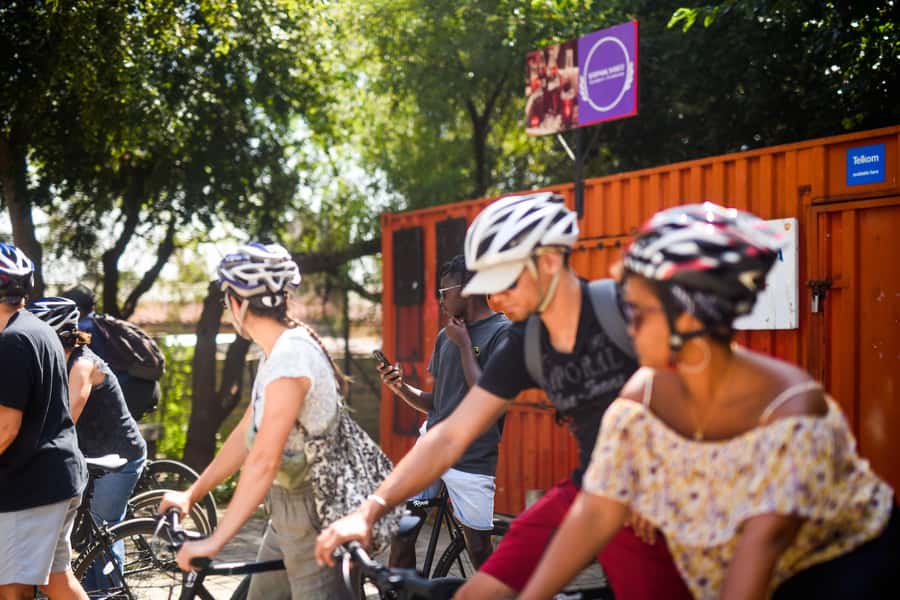
The bikes have received strong marks for being in good condition, comfortable, and well maintained. You get a short period to become familiar with the bicycle and receive group instructions before setting off. A past participant did report a flat tire being fixed quickly, which is a useful sign of practical support on the road.
I would choose this tour if you want more than a drive-by introduction. You cover enough territory to get a sense of Soweto’s different communities, while the guide provides the context that turns streets and buildings into meaningful places.
More Soweto and Apartheid Museum visits:
- Johannesburg: Hop-On Hop-Off Bus with Optional Soweto Tour
★ 4.6 · 985 reviews - Soweto /Johannesburg and Apartheid Museum Guided Full Day Tour
★ 5.0 · 932 reviews - Johannesburg Hop-On Hop-Off City Tour with Soweto Option
★ 4.5 · 768 reviews
Meeting at Vilakazi Espresso in Orlando West
The tour begins and ends at Vilakazi Espresso, a convenient base on Vilakazi Street. This is one of Soweto’s best-known streets because both Nelson Mandela and Archbishop Desmond Tutu lived here at different times.
Starting here puts you near the most visited sights, but the route does not stay in the tourist center. That is important. You begin with familiar landmarks, then ride into areas that give a broader picture of Soweto’s past and present.
You should arrive ready to cycle rather than dressed only for museum visits. Wear comfortable clothing, apply sunscreen, and bring rain gear in unsettled weather. Cash is also useful, especially if you wish to offer a gratuity during the informal settlement visit. A suggested amount is R20 to R50, or more if you choose.
Hotel pickup and drop-off are not included. You need to reach Vilakazi Espresso on your own and return from there after the final stop.
Mzimhlophe and the township beyond the famous names
One of the tour’s strengths is that it moves past the best-known political addresses. The ride heads toward Mzimhlophe, including a stop near the Mzimhlophe Women’s Hostel and the Mzimhlophe Internet Cafe.
The women’s hostel provides a way to discuss how township neighborhoods were formed and how people lived under the old system. The area’s creation dates back to 1904, so the guide can place modern Soweto in a much longer story than the apartheid era alone.
The Mzimhlophe section is also where the tour can feel more like a neighborhood visit than a standard sightseeing circuit. You may take photographs, listen to local explanations, and see everyday community life. An informal settlement visit is typically part of the outing, with a local guide involved. This is an area where respect matters. Follow your guide’s direction about photographs and conversation, and treat any gratuity as a voluntary thank-you rather than an admission fee.
The tour’s best approach is its effort to show more than one side of Soweto. You pass through areas with different levels of housing and infrastructure, rather than seeing only the polished heritage stops. That broader view helps you avoid reducing Soweto to a single chapter of South African history.
Orlando East, the stadium, and community spaces
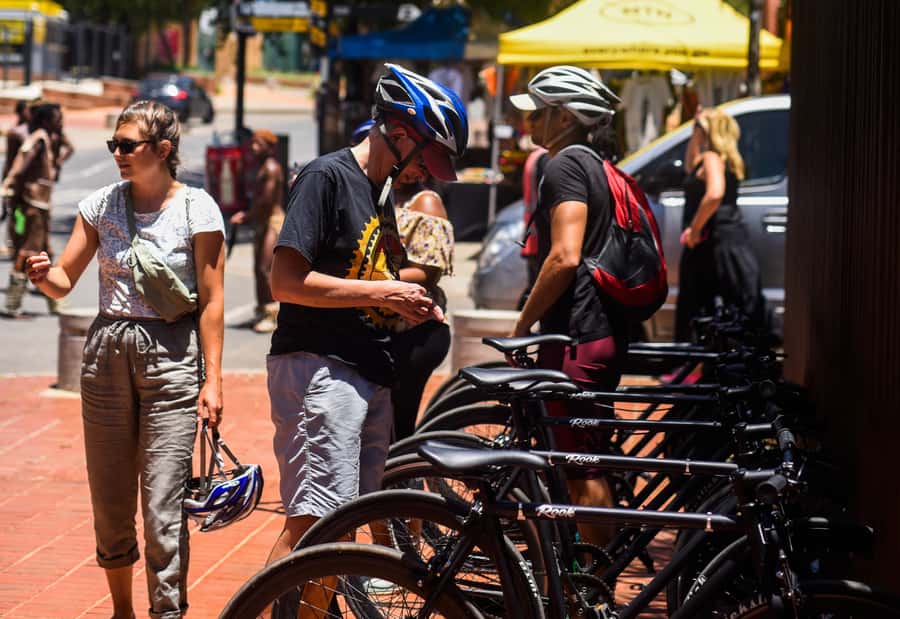
The bicycle route continues through Orlando East, with short stops at Orlando Stadium and the Orlando Community Centre. These pauses are brief, but they widen the story beyond political leaders and protest history.
Orlando Stadium is a useful reminder that Soweto is not only a memorial destination. Sport and public events are part of the area’s identity, and the stadium gives the guide a natural point for explaining contemporary community life.
The Orlando Community Centre adds another local reference point. You stop, hear more about the neighborhood, and continue by bicycle. Do not expect a long formal tour at each location. The value comes from the sequence: you ride, pause, ask questions, and then see how the next district differs from the last.
This is also where the route may test your legs. Several people found the ride reasonably easy, while others specifically warned about the hills and the need for decent fitness. If you regularly cycle on city streets, you should find the outing approachable. If you rarely ride a bicycle, this may feel more demanding than the four-hour duration suggests.
More lunch stops in Johannesburg:
- Soweto: Walking Tour with a Local Guide and Lunch
★ 4.9 · 648 reviews - Full-Day Soweto, Apartheid Museum and Lunch Tour
★ 5.0 · 410 reviews - Soweto Walking Tour with Lunch
★ 5.0 · 288 reviews - Johannesburg and Soweto Apartheid Full Day Tour w/Lunch
★ 4.9 · 219 reviews
Hector Pieterson Museum and the 1976 uprising
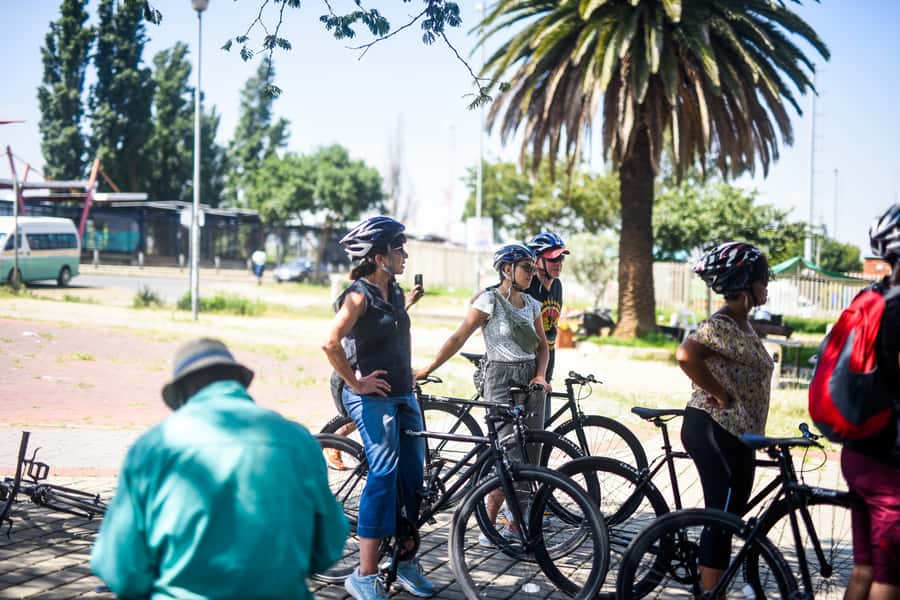
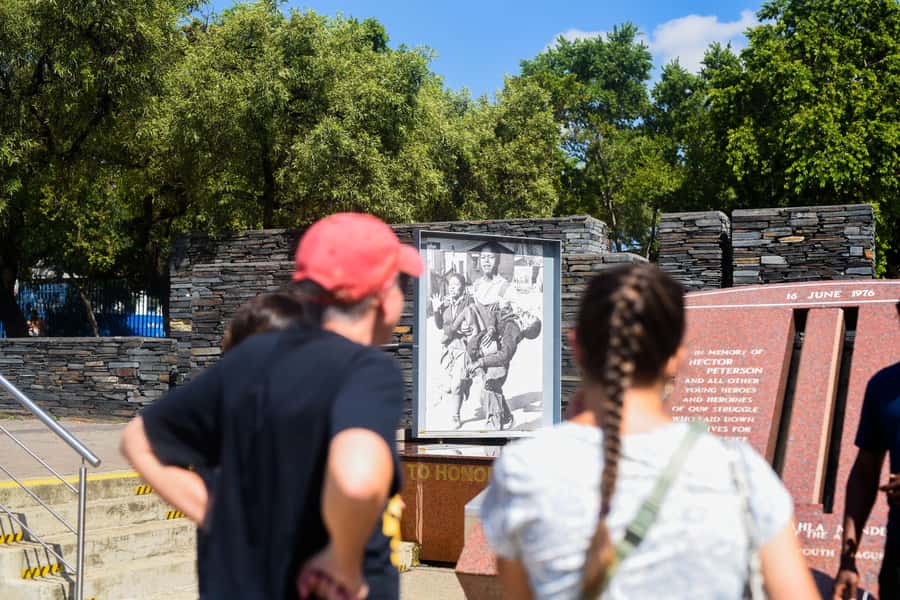
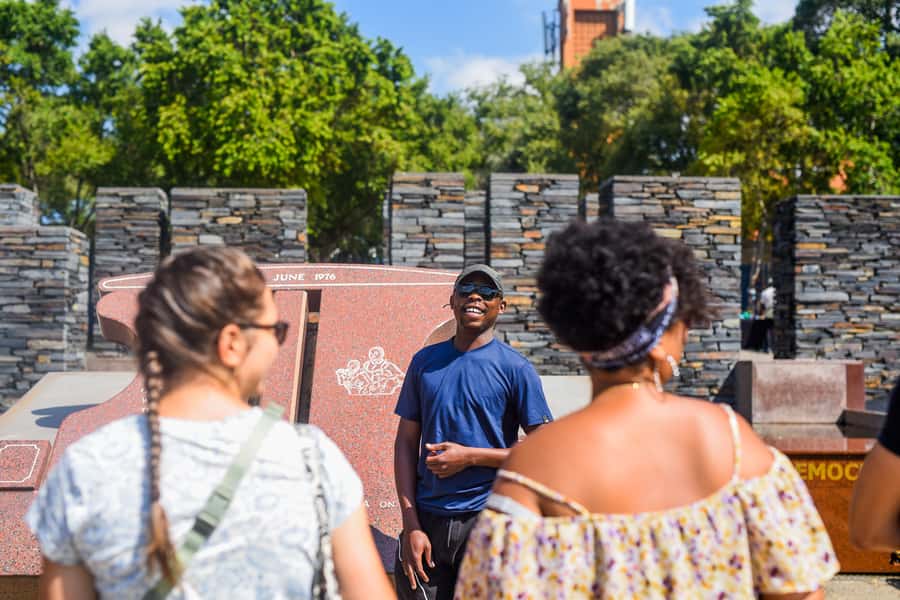
The stop at Hector Pieterson Museum is the most important historical section of the tour. You have about 20 minutes for a visit, guided explanation, sightseeing, walking, and photographs.
The museum commemorates the Soweto uprising of 1976, when students protested against the forced use of Afrikaans in schools. The death of Hector Pieterson became one of the defining images of the struggle against apartheid, and the museum helps explain why the uprising became such a major turning point.
Give this stop your full attention. It can be easy to rush through a museum when you are eager to get back on the bike, but the guide’s explanation adds local meaning to the exhibits and memorial space. The conversation here is often one of the strongest parts of the tour because it links a widely known historical event to the streets where it unfolded.
You should also expect a serious tone. This is not only a fun cycling outing, and the subject matter is painful. The tour balances that weight with movement and conversation, but the museum deserves respect and quiet attention.
Vilakazi Street, Tutu House, and Mandela House
The route returns to Vilakazi Street, where you stop for lunch and visit two of Soweto’s best-known addresses.
Tutu House is associated with Archbishop Desmond Tutu, a Nobel Peace Prize winner and an important opponent of apartheid. The guide explains his role in the country’s political change and points out the house where he and his family once lived.
At Mandela House, you see the home where Nelson Mandela lived from 1946 to 1962. The stop adds a personal scale to Mandela’s public life. Instead of thinking only about the statesman and former prisoner, you are looking at the place connected to his earlier years as an activist, lawyer, husband, and father.
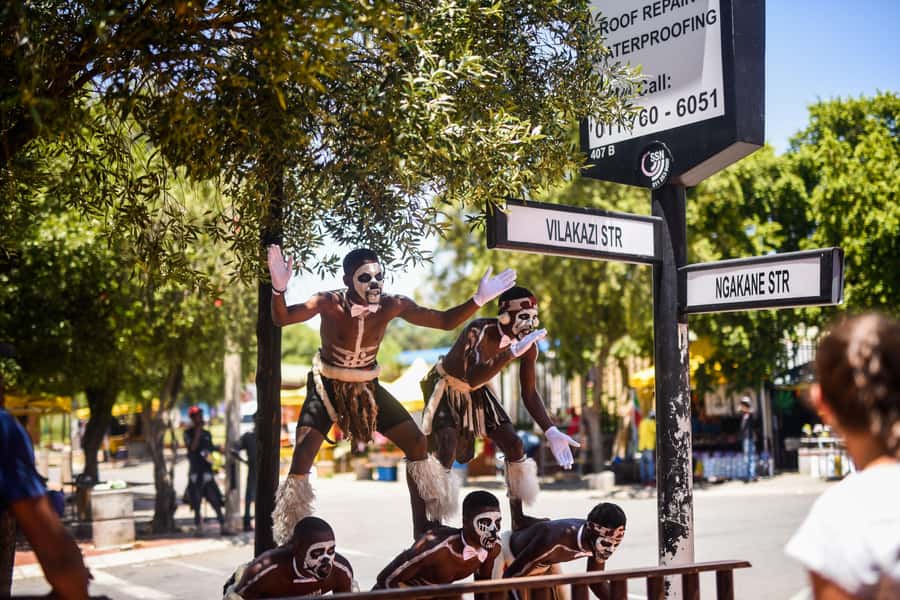
The itinerary allows about 15 minutes at Mandela House, including a guided explanation, bicycle time, photographs, and a traditional dance show. That is enough for an introduction, though it is not a long museum visit. If you want to study every room and display at length, you may prefer to return separately.
The two houses are close enough to form a natural heritage pair, but their importance is not identical. Tutu House helps explain a religious and moral voice in the anti-apartheid movement. Mandela House connects the political struggle to the life of the man who later became South Africa’s first democratically elected president.
Kota lunch on Vilakazi Street
Lunch is included, and the meal is a kota, a South African township sandwich. It is usually a substantial, informal meal, and here it serves as more than a quick bite. You stop at a local restaurant on Vilakazi Street, take a break from the bicycle, and taste something tied to everyday township food culture.
The lunch stop lasts about 25 minutes. That is not a leisurely restaurant session, but it gives you time to eat and talk with the guide. Several people singled out the kota as a highlight, calling it delicious and a fitting way to end the active part of the outing.
Food and drinks are included, although it is sensible to bring extra water. One past participant specifically wished a bottle of water had been provided. Johannesburg can be sunny, and cycling for several hours makes hydration important.
The meal is also one reason the $52 price feels fair. You are paying for the bicycle, guide, food, drinks, several historical stops, and a route that covers far more ground than a short walking tour. The cost may look higher than a basic museum visit, but it includes both transport within Soweto and a local food experience.
The guide makes the difference
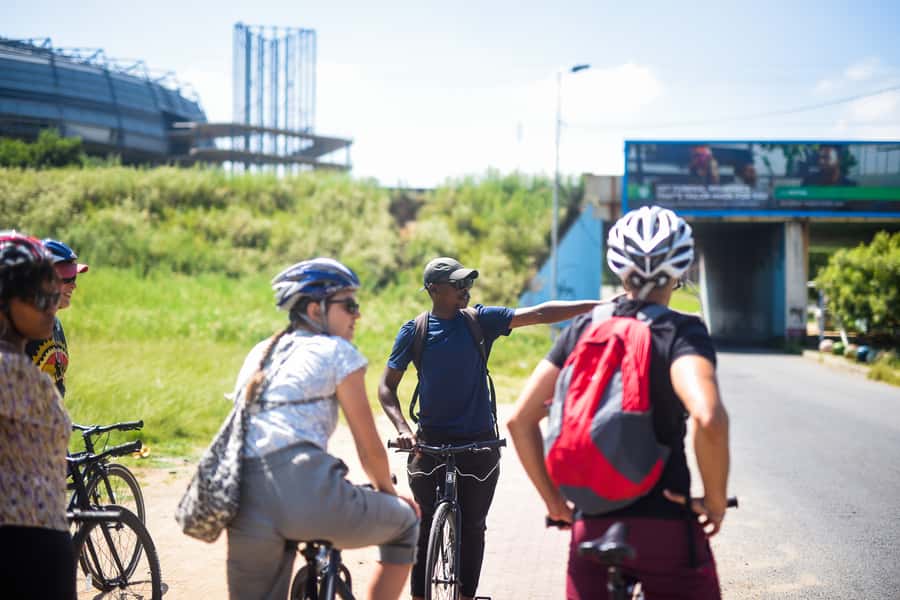
The guide is central to this experience. Thabo, also referred to as Teboho in some bookings, has been praised for his clear storytelling, humor, warmth, and strong grasp of Soweto’s history and current life. One person nicknamed him the Soweto Wiki, a playful description of how readily he answers questions.
The guides do more than recite dates. They explain the political background, point out social differences between neighborhoods, and discuss how Soweto functions today. They also help you feel secure while cycling, which matters when you are riding through unfamiliar streets in a group.
The tour has also been led by Themba. He has been praised for friendliness, practical bike help, and his ability to explain the area’s different communities. Experiences can vary by departure date and guide, but the repeated emphasis on local insight is a strong reason to book this experience rather than simply hire a bicycle.
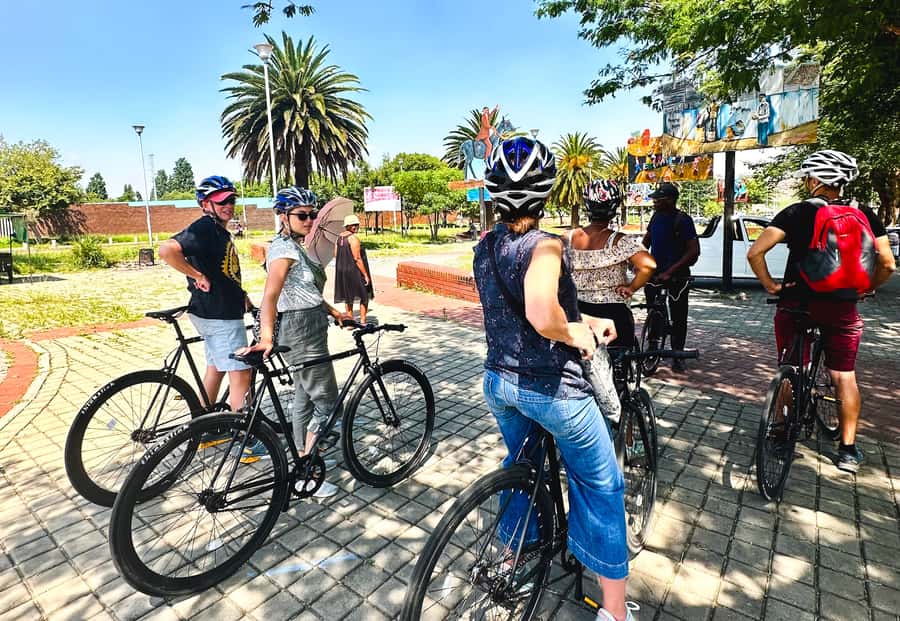
Small groups are possible, and sometimes a booking becomes a private ride if nobody else signs up. That can give you more time for questions and a pace tailored to your ability, but you should not assume every departure will be private.
Fitness, safety, and what to bring
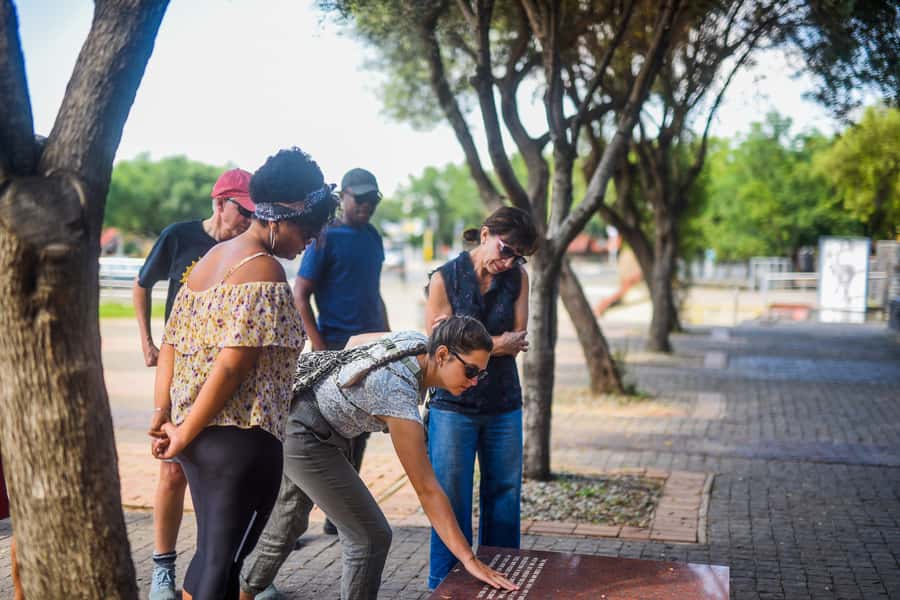
You do not need to be a serious cyclist, but you should be able to ride confidently for several hours. The route includes hills, and the altitude can make ordinary exertion feel harder than expected. One person described the ride as suitable for a fairly fit group over 50, while another advised booking only if you are used to uphill cycling on a bicycle without gears.
The tour is not suitable for people who cannot ride a bike, pregnant women, or wheelchair users. If you have concerns about balance, hills, or riding in traffic, ask the provider before booking.
Bring:
- Sunscreen
- Rain gear
- Cash
- Water, if possible
- Comfortable clothes and closed footwear
The guide gives group instructions and helps you get used to the bike. You should still ride at a pace that feels safe and speak up if you need a short pause. The guide’s role is to manage the group, but your own comfort and road awareness matter too.
Is the $52 price good value?
At $52 per person, this is good value if you want an active half-day with a local guide. The fee includes the bicycle, guide, food, and drinks. You also get a route linking major political landmarks with less familiar parts of Soweto.
The price is less attractive if you only want to see Mandela House and Hector Pieterson Museum. In that case, a shorter visit may suit you better. But the bicycle is the point here. It gives you access to more neighborhoods and reduces the time lost moving between stops.
The lack of hotel transfer is the main practical extra cost. You must arrange your own transport to Vilakazi Espresso. Once there, the tour itself is organized around the meeting point, so you do not need to arrange separate transport between the sights.
Free cancellation is available up to 24 hours before the start for a full refund, and you can reserve now and pay later. Those terms help if your Johannesburg schedule is still changing.
Who should book this Soweto bicycle tour?
I would recommend it to active visitors who want history, local conversation, and a wider view of Soweto than the famous street alone can provide. It works particularly well for couples, small groups, and families with older children or adults who are comfortable on a bicycle.
It is also a good match for repeat visitors to Johannesburg. The route has enough local and historical detail to reward someone who has already seen the standard city sights.
I would hesitate if you dislike hills, need an accessible vehicle, or want a slow museum-focused morning. The tour moves at a practical pace, and the 20-minute Hector Pieterson stop and 15-minute Mandela House stop are introductions rather than long study visits.
Final verdict
Book this tour if you want to connect Soweto’s major political landmarks with the neighborhoods between them. The combination of local guiding, serious history, active travel, and kota lunch gives you a fuller picture than a quick photo stop.
Go in prepared for hills, sun, and an emotionally weighty museum visit. If you can manage the cycling, this is a thoughtful and well-priced way to spend four hours in Soweto.
FAQ
Where does the bicycle tour start?
The tour starts at Vilakazi Espresso in Soweto and returns there at the end.
How long does the tour last?
The experience lasts four hours. Check the available start times when booking.
What places does the tour visit?
The route includes Hector Pieterson Museum, Mzimhlophe, Orlando East, Orlando Stadium, Orlando Community Centre, Vilakazi Street, Tutu House, and Mandela House.
Is lunch included?
Yes. Food and drinks are included, with a kota, a South African township sandwich, served during the Vilakazi Street stop.
Do I need to be fit to join?
You need to be able to ride a bicycle and should have a reasonable level of fitness. The route is about 11 kilometers and includes uphill sections.
Is hotel pickup included?
No. Hotel pickup and drop-off are not included, so you must make your own way to Vilakazi Espresso.
Just listed around Johannesburg
- Constitutional Hill and Soweto 5 hours tour.★ 5.0 · 5 reviews
- 5 Day Kruger Glamping Safari and Panorama Tour★ 5.0 · 5 reviews
- Cradle of Humankind and Maropeng Day Tour from Johannesburg★ 4.0 · 5 reviews
- Johannesburg: Hot Air Balloon Flight★ 5.0 · 5 reviews
- Half Day Soweto and Apartheid Museum Guided Tour★ 5.0 · 5 reviews
- Lion park★ 4.5 · 5 reviews
- Pretoria Historical Tour★ 4.0 · 5 reviews
- 5 Day Kruger National Park and Panorama Route Safari★ 4.5 · 5 reviews
Soweto & Apartheid Museum Tours, compared.

Soweto /Johannesburg and Apartheid Museum Guided Full Day Tour
Read our review →
Johannesburg Hop-On Hop-Off City Tour with Soweto Option
Read our review →

Jo’berg in 1 Day: Soweto, Apartheid Museum & City Tour
Read our review →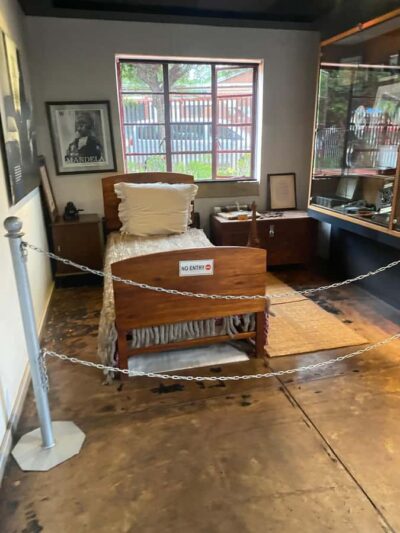
Full-Day Tour with Soweto and Apartheid Museum
Read our review →
Browse the lists this tour appears in