
Reviewed · SOWETO & APARTHEID MUSEUM TOURS
SOWETO: Ethical, bespoke, authentic, community driven small group
Soweto is far more than a collection of famous addresses. This full-day outing links the major sights with local streets, community projects, family encounters, and personal stories that help you understand how Soweto lives today. Guides such as Gilda, Gabriel, and Mlungisi bring different parts of that story to life.
I like the small maximum group of 15, which makes it easier to ask questions and hear the guide. I also like the community focus: the tour pays its local guides and supports projects through nonprofit work rather than treating Soweto as a backdrop for sightseeing. The main consideration is the pace. Six to seven hours is a long day, and some stops involve walking, informal encounters, and extra costs for lunch, coffee, or drinks beyond the included traditional beer.
Key points at a glance

- Local voices shape the day: Gabriel was born and raised in Soweto, while Mlungisi offers a personal account of the June 16, 1976 uprising.
- The tour goes beyond the standard circuit: You visit major landmarks but also spend time in Kliptown, Orlando, and community areas not usually included in a short sightseeing trip.
- Mandela’s House admission is included: This small museum gives you a direct look at Nelson Mandela’s years in Soweto.
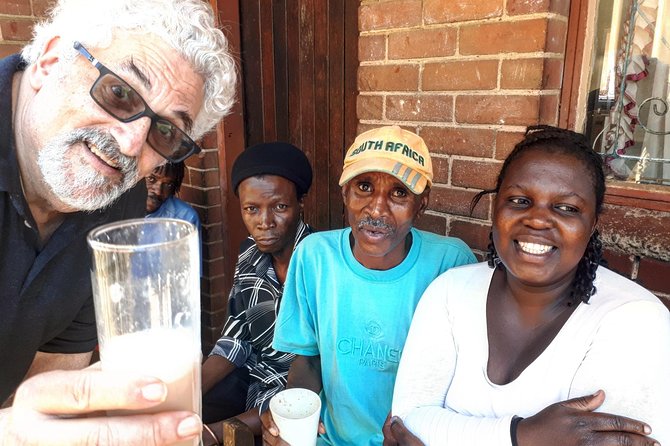
- A glass of traditional beer is included: Lunch, coffee, tea, and additional drinks cost extra.
- Transport is simple: Round-trip travel from the Holiday Inn Johannesburg-Rosebank takes place in an air-conditioned vehicle.
- Allow most of your day: The tour runs about six to seven hours, with a maximum group size of 15 people.
Why this Soweto tour feels different
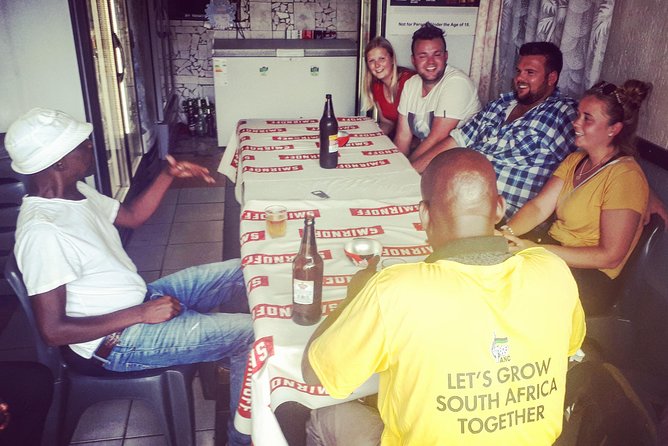
Many Soweto outings are built around a quick drive past famous sites. This one takes more time and tries to connect those landmarks with the people and neighborhoods around them.
That difference matters. You can learn the names of Mandela and Hector Pieterson in a museum, but a local guide can add the human scale: where people walked, how families experienced political change, and what daily life looks like beyond the headline events.
Gilda’s role is especially important. The experience is community-driven, and she has built relationships with people in Soweto and supports local projects through an NGO. The tour also states that all guides working with Eenblond TOURS are paid. That gives the community angle more substance than simply bringing visitors into a neighborhood and asking them to spend money.
Gabriel has been described as a Soweto native who knows the area well. Mlungisi leads the Hector Pieterson portion and shares the story of the uprising in an emotional, personal way. You may have different guides on your date, but these names help show the kind of local involvement the operator aims for.
More Soweto and Apartheid Museum visits:
- Johannesburg: Hop-On Hop-Off Bus with Optional Soweto Tour
★ 4.6 · 985 reviews - Soweto /Johannesburg and Apartheid Museum Guided Full Day Tour
★ 5.0 · 932 reviews - Johannesburg Hop-On Hop-Off City Tour with Soweto Option
★ 4.5 · 768 reviews
Starting at the Soweto Towers
The first stop is the Soweto Towers, a pair of former cooling towers decorated with huge murals. You have about 30 minutes here, enough to look at the artwork, take photographs, and get your first sense of Soweto’s visual energy.
The towers are also used for adventure activities, including bungee jumping. You are not required to jump. For most people, the appeal is the scale of the murals and the chance to see one of Soweto’s most recognizable modern landmarks.
This is a short stop, so do not expect a long art lesson or an extended visit. It works well as an opening photo stop before the tour moves into places tied more directly to politics and community life.
Walking Vilakazi Street
Vilakazi Street is one of the best-known addresses in Soweto. It is famous for once being home to two Nobel Peace Prize winners, Nelson Mandela and Archbishop Desmond Tutu.
The planned visit lasts about 30 minutes. You can browse street stalls, look around the shops, and take in the atmosphere. The street is more commercial than some of the residential areas later in the day, so it is a good place to buy a small souvenir or simply watch the flow of local life.
The itinerary returns to Vilakazi Street after the Hector Pieterson Museum for a short walk through Orlando. That repeat visit is useful rather than redundant. The first stop gives you time to explore the street, while the later walk ties it to the nearby events and neighborhoods discussed by Mlungisi.
Keep your schedule flexible here. A local conversation, a shop, or a short walk may take more or less time than planned.
Inside Mandela’s House
Mandela’s House is a small museum in the home where Nelson Mandela lived in Soweto. Admission is included, and the visit generally lasts around 30 minutes.
Do not expect a grand presidential museum. The strength of this stop is its intimacy. The house helps place Mandela’s life in an ordinary residential setting, before he became a global symbol.
For first-time visitors, this is one of the essential stops. It gives context to Vilakazi Street and helps explain why this particular corner of Soweto carries such political weight.
The limited time means you will get an introduction rather than a full study of Mandela’s life. If you want to read every display carefully, you may find the pace quick. The guide’s explanation helps you focus on the most important details.
A few more Johannesburg days worth comparing
- From Johannesburg: Pilanesberg Nature Reserve Game Safari
★ 4.8 · 1,327 reviews - Full Day Ultimate Pilanesberg National Park Safari from Johannesburg or Pretoria
★ 4.5 · 718 reviews - Half-Day Tour of Soweto Tour
★ 4.5 · 712 reviews - Soweto: Walking Tour with a Local Guide and Lunch
★ 4.9 · 648 reviews
Remembering June 16 at Hector Pieterson Museum

The Hector Pieterson Museum and Memorial covers the 1976 Soweto uprising, when students protested against the compulsory use of Afrikaans in schools. Hector Pieterson, a 13-year-old student, became an international symbol after being carried from the scene of the shooting.
This is the most emotionally serious part of the day. Mlungisi shares Hector’s story and the events of June 16 in a personal way, then leads a short walk through Orlando toward Vilakazi Street.
Give this stop your full attention. It is not simply another photo opportunity, and the subject matter can be difficult. The value is in hearing the history connected to a local guide and then walking through the nearby area instead of leaving the museum in a vehicle.
The museum visit is listed as free, while the tour includes the guide and transport. Plan for some walking, and wear shoes that are comfortable on ordinary streets.
Seeing Kliptown beyond the postcard view
Kliptown receives about an hour, making it one of the longest stops. The tour presents it as a historic neighborhood with street art and local residents, accompanied by a local guide.
This is where the outing moves furthest from a standard checklist. You are not only being shown a famous building or memorial. You are being introduced to a lived-in area, with all the complexity that brings.
Kliptown can challenge simple ideas about Soweto. You may see creativity, warmth, hardship, and local pride in the same visit. That mix is important. A responsible tour should not hide difficult conditions, but it should also avoid presenting the community only through poverty.
The operator’s community connections matter here. Local encounters can be rewarding, but you should behave respectfully. Ask before taking photographs, listen carefully, and do not treat homes or residents as attractions.
The FNB Stadium and Walter Sisulu Square
The FNB Stadium stop is brief, about 10 minutes. It is Soweto’s major soccer stadium and a useful landmark for understanding the scale of the area.
Because the visit is short and admission is not included as a separate attraction, think of it as a roadside orientation stop rather than a stadium tour. You will have time for a quick look and photographs, not an extended behind-the-scenes visit.
Walter Sisulu Square receives only about five minutes. The itinerary connects it to the Freedom Charter, an important document adopted at Kliptown in 1955 that set out democratic principles for South Africa.
Five minutes is enough for a guide to point out the square and explain why it matters, but not enough for a full visit. If political history is your main interest, ask questions while you are there and during the drive. The short stop works best as part of the day’s larger story rather than as a separate attraction.
Coffee, greetings, and cultural conversation
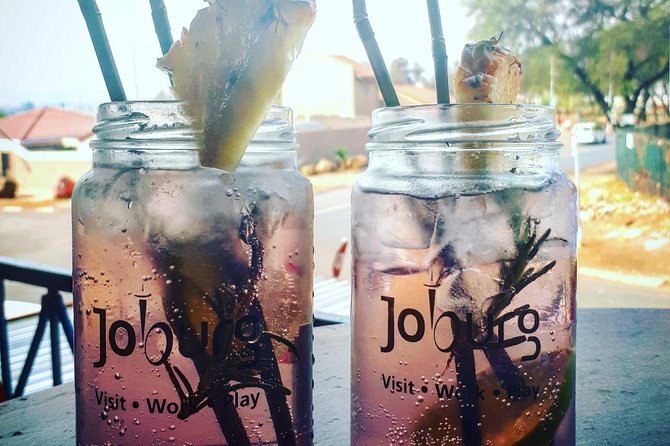
At Vilakazi Espresso, the tour spends about 30 minutes discussing greetings, culture, and history over coffee. Coffee and tea are not included, so budget for your own drink.
This is a useful pause after the museums and walking. It gives you a relaxed setting to ask about customs and everyday communication. Learning how to greet people appropriately can make later encounters feel more natural and respectful.
The coffee stop also adds a personal rhythm to the day. You are not being moved from one historical site to another without a break. Still, the experience is not a café tour, and the quality of the visit will depend partly on the conversation with your guide and the group.
Lunch at Sakhumzi Restaurant
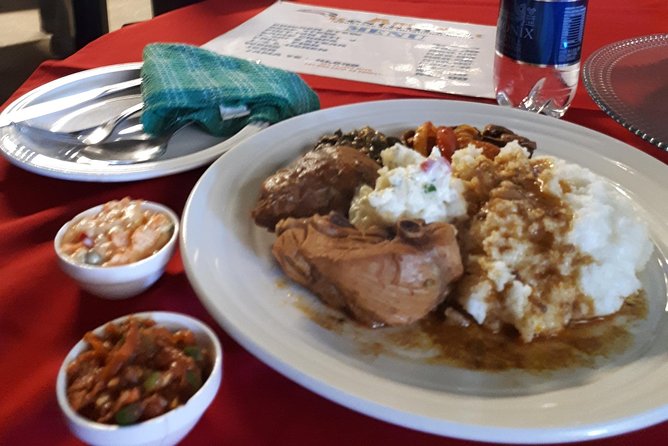
Lunch is scheduled for about an hour at Sakhumzi Restaurant, described as a popular place to eat in Soweto. The restaurant stop is included in the route, but lunch itself is not included in the price.
That distinction is worth noting when you compare tours. The $103.52 price covers transport, guides, Mandela’s House admission, bottled water, and a glass of traditional beer. You will need extra money for your meal, coffee or tea, and any additional beer or soft drinks.
A full hour gives you time to eat rather than rush through a quick roadside meal. The restaurant setting also lets you sample local food, though the exact menu and meal cost are not provided, so check current prices when you arrive.
If you have dietary needs, tell the operator when booking. The available information does not specify vegetarian, vegan, allergy, or religious-diet arrangements.
What the community promise means in practice
The word ethical can be used loosely in tourism. Here, the clearest details are that Eenblond TOURS pays its local guides and supports community initiatives through nonprofit work.
One particularly practical example involves seeds for local gardens. The operator has described bringing seeds to people working on community growing projects. You are not required to donate, and the tour does not present direct handouts as the main way to help.
You may meet local residents, see street art, and possibly be invited into a home or yard. Those moments can be meaningful, but they also require good judgment. Listen to your guide, respect privacy, and ask permission before photographs or personal questions.
The tour is strongest when you approach it as an exchange, not a performance. You are there to learn, spend time respectfully, and support local work where appropriate.
Small-group size, transport, and daily comfort
The vehicle is air-conditioned, and round-trip transport is provided from the Holiday Inn Johannesburg-Rosebank at The Zone on Oxford Road. The tour ends back at the same meeting point.
That arrangement is useful if you are staying in Rosebank or can reach it easily. The pickup information provided names this meeting point, so do not assume hotel pickup elsewhere in Johannesburg unless the operator confirms it.
The maximum group size is 15. That is not a private tour, but it is far more manageable than a large coach. You should be able to hear the guide, ask questions, and take part in conversations without feeling anonymous.
The day lasts roughly six to seven hours and runs from about 9:30 a.m. to 4 p.m. The schedule includes several short stops, a one-hour Kliptown visit, coffee, and lunch. Expect a full program rather than a leisurely day with long stretches of free time.
Most people can participate, and service animals are allowed. The details do not describe the amount of walking or vehicle accessibility, so contact the provider if you have mobility concerns.
Is the $103.52 price good value?
At $103.52 per person, this is not the cheapest way to see Soweto. The value comes from the range of services and the length of the day.
You receive air-conditioned transport from Johannesburg, bottled water, a small-group format, local guides, admission to Mandela’s House, and a glass of traditional beer. The itinerary also includes several places that are free to enter, such as the Hector Pieterson Museum and the FNB Stadium viewing stop.
Lunch is extra, as are coffee, tea, and additional drinks. Tips for local performers, dancers, and guides are optional. The operator says its guides are paid, which is useful to know if you prefer a tour where tipping is not the only form of local compensation.
I see this as good value if you want history and community contact in one day and do not want to arrange transport between widely separated places yourself. It is less attractive if you only want Mandela’s House, Vilakazi Street, and a quick look at the towers. For that, a shorter and cheaper outing may be enough.
Who should book this experience?
I would choose this tour if you want to understand Soweto rather than simply photograph its most famous sites. It suits first-time visitors to Johannesburg, people interested in South African political history, and anyone who prefers local guides and small groups.
It is also a good fit if you want a structured day but still value informal conversation. The combination of museums, streets, Kliptown, coffee, and lunch gives you several ways to connect with the place.
You may want another option if you dislike emotionally heavy subjects, long touring days, or unscripted local encounters. This is not a polished theme-park presentation. The most memorable parts may also be the least predictable.
Book at least a day ahead if your plans are fixed. You can cancel for a full refund up to 24 hours before the start time. Poor weather or failure to meet the minimum group size can lead to a rescheduled experience or full refund.
Should you book the Soweto small-group tour?
Book it if you want a full-day, locally guided look at Soweto that combines major landmarks with neighborhoods and community contact. The strongest reasons are the local connections, the time given to Kliptown, the personal account at Hector Pieterson Museum, and the chance to ask questions in a small group.
Go in with realistic expectations. Lunch and drinks cost extra, the schedule is full, and some encounters may be moving or uncomfortable. If you are ready to listen, walk, and see Soweto as a living community rather than a sightseeing stop, this tour offers a thoughtful use of your Johannesburg day.
FAQ
Where does the Soweto tour start?
It starts at the Holiday Inn Johannesburg-Rosebank by IHG, at The Zone on Oxford Road in Rosebank, Johannesburg.
Where does the tour end?
The activity ends back at the same meeting point in Rosebank.
How long does the tour last?
The tour takes approximately six to seven hours, generally running from about 9:30 a.m. to 4 p.m.
How many people can join the tour?
The maximum group size is 15 travelers.
Is transportation included?
Yes. Round-trip transportation from the Rosebank meeting point is provided in an air-conditioned vehicle.
Is admission to Mandela’s House included?
Yes. The entrance fee to Mandela’s House is included in the tour price.
Is lunch included?
No. Lunch at Sakhumzi Restaurant is not included, so you will pay for your own meal.
Are coffee and tea included?
No. Coffee and tea at Vilakazi Espresso are excluded from the price.
Is any alcohol included?
Yes. The tour includes one glass of traditional beer. Additional beer or other drinks cost extra.
Can I cancel for a full refund?
Yes, if you cancel at least 24 hours before the experience starts. Cancellations or changes made less than 24 hours before the start time are not accepted for a refund. If bad weather or an insufficient number of participants cancels the tour, you will be offered another date or experience, or a full refund.
Just listed around Johannesburg
- Constitutional Hill and Soweto 5 hours tour.★ 5.0 · 5 reviews
- 5 Day Kruger Glamping Safari and Panorama Tour★ 5.0 · 5 reviews
- Cradle of Humankind and Maropeng Day Tour from Johannesburg★ 4.0 · 5 reviews
- Johannesburg: Hot Air Balloon Flight★ 5.0 · 5 reviews
- Half Day Soweto and Apartheid Museum Guided Tour★ 5.0 · 5 reviews
- Lion park★ 4.5 · 5 reviews
- 5 Day Kruger National Park and Panorama Route Safari★ 4.5 · 5 reviews
- Pretoria Historical Tour★ 4.0 · 5 reviews
Soweto & Apartheid Museum Tours, compared.

Soweto /Johannesburg and Apartheid Museum Guided Full Day Tour
Read our review →
Johannesburg Hop-On Hop-Off City Tour with Soweto Option
Read our review →

Jo’berg in 1 Day: Soweto, Apartheid Museum & City Tour
Read our review →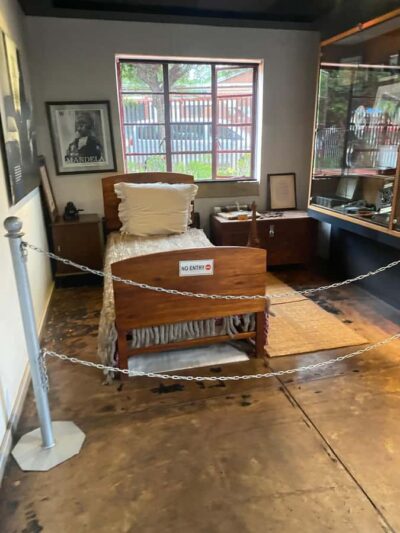
Full-Day Tour with Soweto and Apartheid Museum
Read our review →
Browse the lists this tour appears in