
Reviewed · SOWETO & APARTHEID MUSEUM TOURS
Soweto: Bike Tour with a Local Tour Guide
Soweto’s story comes into sharper focus when you move through it by bicycle. In two hours, you pass the homes of Nelson Mandela and Archbishop Desmond Tutu, pedal along Vilakazi Street, and hear why 16 June 1976 remains such a powerful date in South African history.
I like the small groups of up to 10 and the chance to meet people in the township rather than simply look at it from a tour vehicle. I also like the practical, eco-friendly format: your bicycle gets you close to Orlando West while adding just enough exercise to make the outing feel active.
The main caution is equipment. Several highly positive ratings still point out that the bicycles may need better maintenance. You must be comfortable riding a bike, and this is not the best choice if you want a fully passive sightseeing trip.
Key points to know before you book
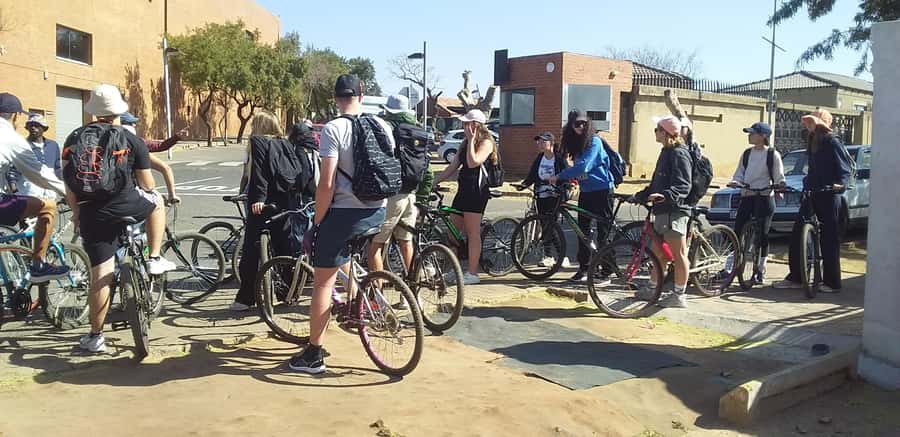
- Hector Peterson Memorial: Learn about the 1976 student uprising and the death of Hector Peterson during the protests.
- Vilakazi Street by bicycle: Ride along one of the best-known streets in Africa, associated with both Nelson Mandela and Archbishop Desmond Tutu.
- Local guide Pule: The guide is also listed as Puli in some booking details, and recent feedback repeatedly singles him out for clear, informative guidance.
- A close look at daily life: The route includes local neighborhoods, public places, famous homes, and opportunities to support small businesses.
- Two hours with light exercise: The tour is short enough to fit into a Johannesburg day, but active enough that comfortable clothing matters.
- Bring small change or useful items: You may have chances to support local businesses or make a small donation along the way.
Starting behind the Hector Peterson Museum

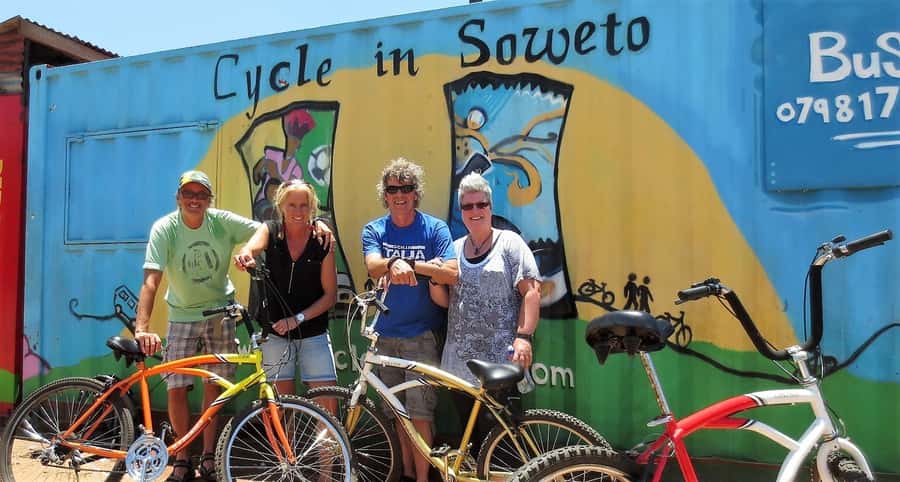
You meet your guide at the Cycle in Soweto shop, located behind the Hector Peterson Museum beside the bus parking area. This is a useful meeting point because it puts you close to one of the tour’s most important stops from the start.
The exact departure time is not fixed in the information provided, so check availability when booking. You can also ask about arranging a different start time. The tour has two listed start and end options, both described as Cycle in Soweto, so the practical plan is simple: arrive at the shop, collect your bicycle and helmet, and finish back in the same general area.
The group is limited to 10 people. That matters here. A bicycle group needs room to move, and a small group makes it easier to hear the guide when stopping on busy streets or around memorial sites. It also gives you more room to ask about the places you pass.
You do not need to bring a bicycle or helmet. Both are included, as is an English-speaking guide. Wear clothes you can pedal in, use sunscreen, and bring a hat for the time when you are off the bike.
More Soweto and Apartheid Museum visits:
- Johannesburg: Hop-On Hop-Off Bus with Optional Soweto Tour
★ 4.6 · 985 reviews - Soweto /Johannesburg and Apartheid Museum Guided Full Day Tour
★ 5.0 · 932 reviews - Johannesburg Hop-On Hop-Off City Tour with Soweto Option
★ 4.5 · 768 reviews
Why cycling changes the view of Soweto
A vehicle can cover more ground, but a bicycle gives you a slower, more immediate look at the area. You move at street level, stop without much fuss, and have time to notice the difference between major landmarks and ordinary residential streets.
That does not mean the ride gives you a complete picture of Soweto. Two hours is a compact introduction, not a full township tour. Still, the format connects the famous names with the neighborhoods where people live and work today.
The guide provides the local context as you go. Recent ratings praise Pule, sometimes shown as Puli, for giving detailed explanations and planning the route well. One highly positive rating also notes that two guides were present, with one riding at the back of the group. That arrangement can be helpful on a bicycle tour, though it may not be offered on every departure.
The pace should suit anyone who can comfortably ride a bicycle, but you should not expect a strenuous cycling workout. The main point is access and contact, not speed. You are riding between stops, listening, looking around, and occasionally meeting people along the way.
Orlando West and the homes of Mandela and Tutu
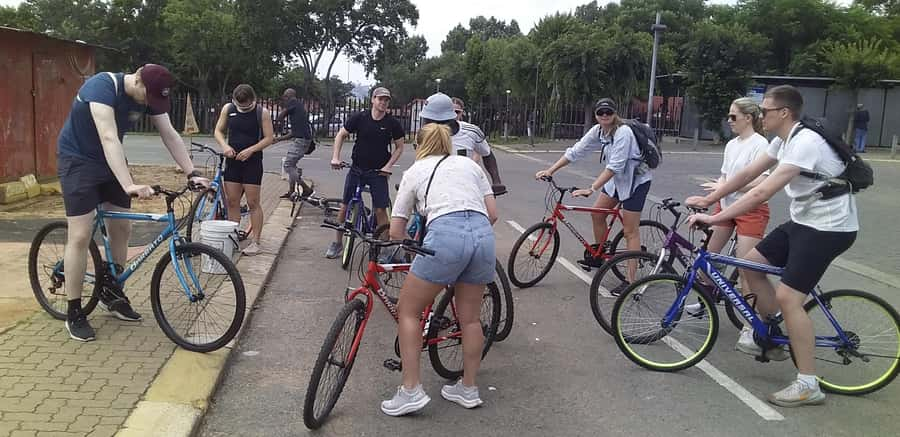
The ride takes place in Orlando West, an area closely linked with South Africa’s political past. Two of the most important addresses are the former homes of Nelson Mandela and Archbishop Desmond Tutu.
Seeing these homes from the street gives you a strong sense of how extraordinary it is for two Nobel Peace Prize winners to have lived in the same neighborhood. The stop is about location and context rather than a long indoor museum visit. If you want to enter museums, entrance fees are not included, so plan for that separately.
Mandela’s home connects the neighborhood to the long struggle against apartheid and to the country’s later democratic transition. Tutu’s home adds another layer, linking the same street to religious leadership, human rights, and public opposition to apartheid.
The value of having a guide here is clear. Without local explanation, you might simply take a photograph and move on. With context, the homes become part of a larger story about people, protest, leadership, and the way history is tied to ordinary streets.
Do not expect a long stop at each address. The tour includes several major locations within two hours, so the guide must keep the ride moving. If one particular home matters most to you, ask your guide how much time is available there.
Vilakazi Street by bike
Vilakazi Street is one of the tour’s most memorable stretches. It is known as the only street associated with the homes of two Nobel Peace Prize winners, Nelson Mandela and Desmond Tutu. Cycling along it lets you experience the street as a place rather than treating it as a distant landmark viewed through a window.
You will have time to take in the setting and hear why this street matters. It is also a place where local businesses operate, so you may have an opportunity to buy something or offer support. Bring small change if you would like to make modest purchases along the way.
The tour does not include food or drinks. That keeps the basic price down, but it also means you should not assume that refreshments are part of the outing. Any food, drink, or optional purchase is your responsibility.
Vilakazi Street can be an especially good part of the ride for first-time visitors who want an accessible introduction to Soweto. It combines famous names, local commerce, and a route that is easy to understand. The tradeoff is that it is also one of the better-known parts of the township, so the tour does not focus only on lesser-seen areas.
More Bike Tours in Johannesburg:
- Soweto Food & Beer Bike Tour
★ 4.9 · 40 reviews - Cycling The Cradle of Humankind in Game Reserve
★ 5.0 · 18 reviews - Johannesburg: Inner City Guided Cycling Tour
★ 4.6 · 15 reviews - Full-day Johannesburg Bike Or Walking tour – With Transport
★ 5.0 · 10 reviews
Orlando Stadium and everyday township life

The route also includes Orlando Stadium. Even if you are not attending a match, the stadium helps place Soweto’s public life in view. It is one of the stops that broadens the tour beyond political memorials and famous houses.
The larger purpose of the ride is to show day-to-day life in the township. That phrase can sound vague, so it is useful to set expectations. You will cycle through local areas, see homes and public spaces, and have chances to interact with residents. You are not signing up for a staged cultural performance or a long list of formal attractions.
Interaction depends partly on the moment and on the people you meet. Your guide can help create respectful contact, but no short tour can guarantee a particular conversation. Go with an open attitude, ask questions politely, and remember that you are visiting a living community, not an outdoor museum.
The opportunity to support small businesses is a worthwhile part of the outing. You can bring small change or items you would like to donate. Keep this modest and practical. The information provided does not specify which businesses you will visit or what donations are needed, so ask your guide before handing over goods.
The Hector Peterson Memorial and 16 June 1976
The Hector Peterson Memorial gives the tour its strongest historical focus. Here you learn about the student uprising of 16 June 1976, when students protested against the use of Afrikaans in education and police responded with force. Hector Peterson was shot and killed during the protests.
The memorial is not simply another photo stop. It helps explain why Soweto became known around the world and why the events of that day still carry such weight in South Africa. Your guide connects the location to the students, the police response, and the wider struggle against apartheid.
The story is difficult, and it should be. A good visit here requires a little time for listening and reflection. The two-hour schedule means the explanation will be focused rather than a full museum study.
Museum entrance fees are not included. The tour meets behind the museum, and the memorial is part of the route, but you should confirm with your guide what is covered as an outdoor visit and what would require a separate ticket. If you want a longer indoor museum visit, budget extra time and money beyond the bicycle tour.
This stop is one reason the tour offers more than sightseeing. The bicycle ride makes the route approachable, but the memorial gives it meaning. You leave with a clearer understanding of a date that shaped the country’s modern history.
What the $34 price covers
At $34 per person, the price is reasonable if you want a guided introduction rather than simply hiring a bicycle. You are paying for the bike, helmet, English-speaking guide, route planning, and local context across several important Soweto locations.
The value is strongest for people who would otherwise need to arrange several visits themselves. The guide links Vilakazi Street, the Mandela and Tutu homes, Orlando Stadium, and the Hector Peterson Memorial into one short outing. That saves planning time and helps you understand how the sites relate to one another.
The price does not include museum entrance, food, drinks, or the bungee jump at Orlando Towers. Those exclusions are easy to understand, but they matter if you are building a full day around the tour. Treat the $34 as the cost of the guided bicycle route, not an all-inclusive Soweto package.
You can reserve now and pay later, which helps if your Johannesburg schedule is still shifting. Cancellation is free up to 24 hours before the start time for a full refund. Those terms make the booking fairly flexible, but always check the selected departure time and cancellation deadline when you reserve.
Bicycle condition and practical comfort
The bicycle is the one area where I would keep expectations realistic. The overall score is 4.7 from 114 ratings, and the positive comments often praise the guide and the content. At the same time, more than one rating points to bicycles that were not in ideal condition.
That does not mean your ride will be unsafe or unusable. It does mean you should inspect the bike before setting off. Check the brakes, tires, saddle, and gears, and tell the guide immediately if something feels wrong. A quick adjustment at the start is easier than coping with a poor fit halfway through the route.
You must be at least 8 years old and able to ride a bicycle. No special cycling skill is listed, but comfortable riding is essential. Families should consider the child’s confidence around a group and on township streets before booking.
Use sunscreen and bring a hat. Comfortable clothing is more important than dressing for a formal sightseeing tour. Water is not listed as included, so bring or buy what you need, keeping in mind that food and drink are separate costs.
Who will enjoy this two-hour ride
I would choose this tour if you want history, local contact, and a little exercise in one compact outing. It suits first-time visitors who want a guided introduction to Soweto without committing to a full-day program.
It is also a good fit for people who prefer active sightseeing. The bicycle gives you a different way to move between famous sites, and the group size keeps the experience more personal than a large coach tour.
Families with children aged 8 and up may find the format appealing if everyone can ride comfortably. Couples and solo visitors can also benefit from the small group, especially if they want to ask questions and hear local stories.
I would choose another format if you have limited mobility, dislike cycling, or want a long museum visit at the Hector Peterson Memorial. You should also reconsider if your main goal is the Orlando Towers bungee jump, since that is not included.
My advice for making the booking
Check the bicycle at the start, ask how the route will run, and confirm whether your departure is being led by Pule, Puli, or another guide. The available feedback gives Pule particularly strong credit for detailed explanations, but guide assignment can vary.
Bring small change if you want to support local businesses, and ask before donating goods. Keep your schedule flexible enough to allow for the two-hour ride itself plus the time needed to reach the Cycle in Soweto shop behind the museum.
The tour has earned a 4.7 rating from 114 ratings, with the clearest praise aimed at the guides, the information, and the route planning. The bicycle condition is the one recurring concern worth taking seriously.
Should you book the Soweto Bike Tour?
Book it if you want a short, active, locally guided introduction to Soweto. The combination of Vilakazi Street, the Mandela and Tutu homes, Orlando Stadium, and the Hector Peterson Memorial gives you both famous sights and a meaningful historical thread.
At $34, it offers good value for a two-hour small-group tour with equipment included. Just remember that museum tickets, food, drinks, and the Orlando Towers bungee jump cost extra, and inspect your bicycle before riding. If you can pedal comfortably and want to see Soweto at street level, this is a practical choice.
FAQ
Where does the Soweto bike tour meet?
Meet your guide at the Cycle in Soweto shop behind the Hector Peterson Museum, next to the bus parking area.
How long does the tour last?
The bicycle tour lasts two hours.
What language is the tour offered in?
The tour is conducted in English by a live English-speaking guide.
What is included in the price?
The price includes a bicycle, helmet, and English-speaking guide.
Are museum entrance fees included?
No. Museum entrance fees are not included.
Is food or drink included?
No. Food and drink are not included.
Is the Orlando Towers bungee jump included?
No. The Orlando Towers bungee jump is an additional activity and is not included.
How old must children be to join?
Participants must be at least 8 years old and able to ride a bicycle.
Can I cancel for a refund?
Yes. You can cancel up to 24 hours in advance for a full refund.
Just listed around Johannesburg
- Constitutional Hill and Soweto 5 hours tour.★ 5.0 · 5 reviews
- 5 Day Kruger Glamping Safari and Panorama Tour★ 5.0 · 5 reviews
- Cradle of Humankind and Maropeng Day Tour from Johannesburg★ 4.0 · 5 reviews
- Johannesburg: Hot Air Balloon Flight★ 5.0 · 5 reviews
- Half Day Soweto and Apartheid Museum Guided Tour★ 5.0 · 5 reviews
- Lion park★ 4.5 · 5 reviews
- Pretoria Historical Tour★ 4.0 · 5 reviews
- 5 Day Kruger National Park and Panorama Route Safari★ 4.5 · 5 reviews
Soweto & Apartheid Museum Tours, compared.

Soweto /Johannesburg and Apartheid Museum Guided Full Day Tour
Read our review →
Johannesburg Hop-On Hop-Off City Tour with Soweto Option
Read our review →

Jo’berg in 1 Day: Soweto, Apartheid Museum & City Tour
Read our review →
Full-Day Tour with Soweto and Apartheid Museum
Read our review →
Browse the lists this tour appears in