
Reviewed · SOWETO & APARTHEID MUSEUM TOURS
Soweto and Johannesburg Exclusive Full Day Guided Tour
Johannesburg makes the most sense when you connect its gold-mining past, apartheid-era struggle, and modern city life in one sweep. This full-day tour does just that, moving from Nelson Mandela Square and Constitution Hill to Soweto’s Vilakazi Street, Mandela’s House, Regina Mundi Church, and the Hector Pieterson Museum. The contrast between wealthy northern suburbs, the city center, and township life is the heart of the day.
I like the private air-conditioned transport with hotel pickup and drop-off, especially since Johannesburg and Soweto are spread out. I also like the human touch: guides such as Mo, John, Banele, Tsholo, Tsolo, and Thabang are praised for explaining difficult history clearly, keeping the day lively, and, in Mo’s case, sharing personal ties to Soweto.
The main drawback is pace. You cover a lot in 7 to 8 hours, with many short photo stops and only about an hour at Constitution Hill. Lunch, coffee, soft drinks, and onboard WiFi are not included, so plan for a busy day rather than a slow, leisurely exploration.
Key points to know before booking

- Johannesburg and Soweto in one day: You see major city sights, former prisons, mining landmarks, and township sites without arranging separate transport.
- Hotel pickup from Johannesburg or Pretoria: The tour begins at about 8:30 a.m. and includes return transport from hotels in either city.
- A history-led experience: Constitution Hill, Vilakazi Street, Mandela’s House, the Hector Pieterson Museum, and Regina Mundi Church give the day real substance.
- Private attention for your group: The experience is described as a private tour for larger families and groups, with a stated maximum of 13 participants in the additional information.
- Local guides matter here: Mo, John, Banele, Tsholo, Tsolo, and Thabang are specifically praised for clear explanations, warmth, and a personal connection to Johannesburg or Soweto.
- Optional Kliptown visit: A 15-minute squatter camp visit is listed as optional, so ask the guide how it fits into your day.
Why this full-day Johannesburg tour works
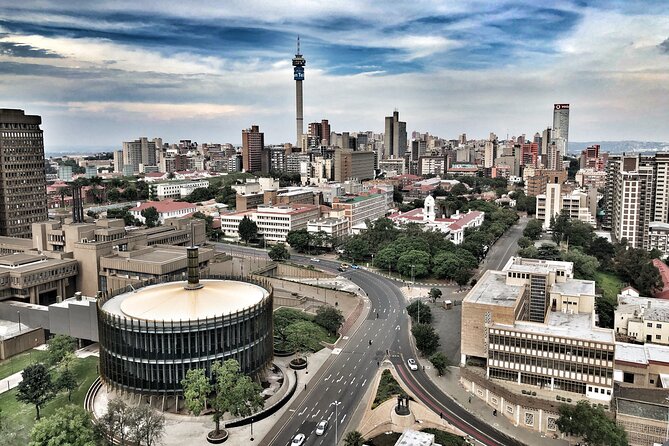
Johannesburg is not a city that reveals itself through one central old quarter. Its major sights are spread across a wide area, and the meaning of one district often becomes clearer after you have seen another. A private vehicle helps you cover that ground without piecing together taxis, buses, and separate admissions.
I see this as a useful first-day experience if you want context before exploring on your own. The route gives you a broad introduction to Johannesburg’s political history, urban growth, gold-mining origins, art districts, and Soweto’s role in the struggle against apartheid.
The tour costs $100.65 per person. That is not the cheapest way to see Johannesburg, but the price includes private transport, bottled water, hotel pickup and drop-off, and admission to several paid sites. For a family or group, the value improves because one guide and one vehicle can serve the whole party.
The trade-off is that the tour tries to do a great deal. You will often stop for 10 to 20 minutes, take in a viewpoint or landmark, and move on. That format is useful for orientation and photographs, but it is not designed for long museum visits or extended time in cafés and galleries.
More Soweto and Apartheid Museum visits:
- Johannesburg: Hop-On Hop-Off Bus with Optional Soweto Tour
★ 4.6 · 985 reviews - Soweto /Johannesburg and Apartheid Museum Guided Full Day Tour
★ 5.0 · 932 reviews - Johannesburg Hop-On Hop-Off City Tour with Soweto Option
★ 4.5 · 768 reviews
From Nelson Mandela Square to Houghton Estate
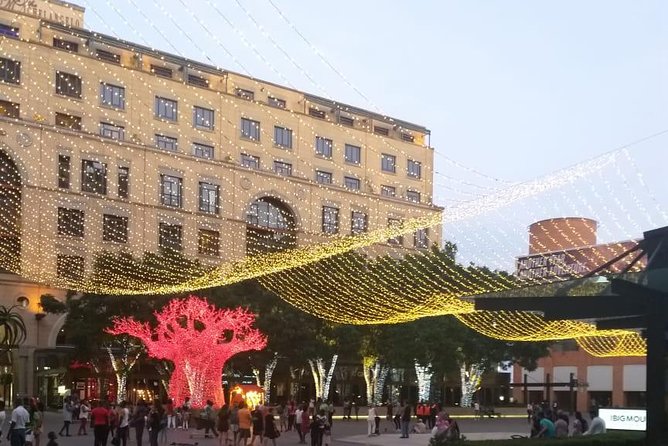
The day begins at Nelson Mandela Square, where an iconic statue of Mandela provides an easy opening point. The stop lasts about 20 minutes and admission is free. It is a polished public space, so you get an introduction to the city’s modern, commercial side before the tour moves into more difficult subjects.
Next comes Houghton Estate, a leafy northern suburb associated with Mandela’s later years. The stop focuses on the house where he moved with his wife toward the end of his presidency. You spend about 15 minutes here, so expect an exterior or area overview rather than an extended house visit.
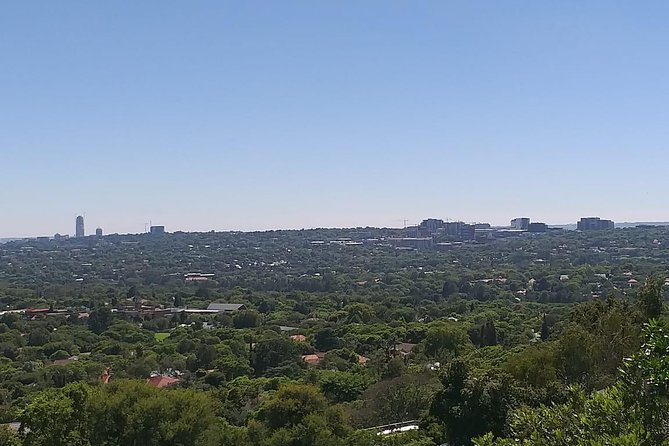
Munro Drive offers a short scenic viewpoint over northern Johannesburg. Ten minutes is enough for a quick look and photographs. The timing may feel tight if you enjoy views, but it gives you a useful sense of the city’s size and its greener northern districts.
You also pass the Hillbrow Tower, one of the best-known features of the Johannesburg skyline. The tower helps orient you as the route shifts toward the inner city. It is a passing sight rather than a scheduled long stop, so keep your camera ready.
Constitution Hill and the road to democracy
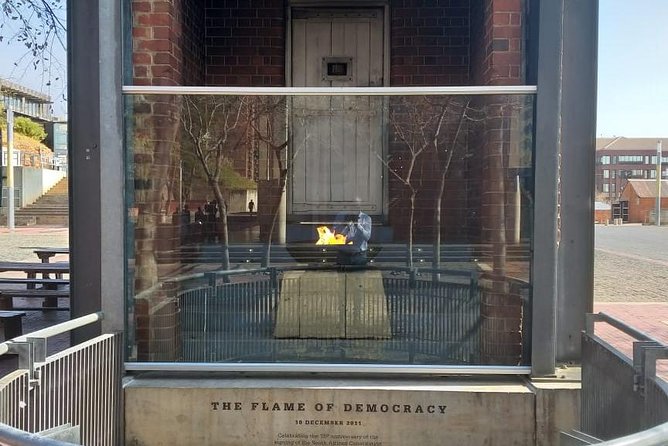
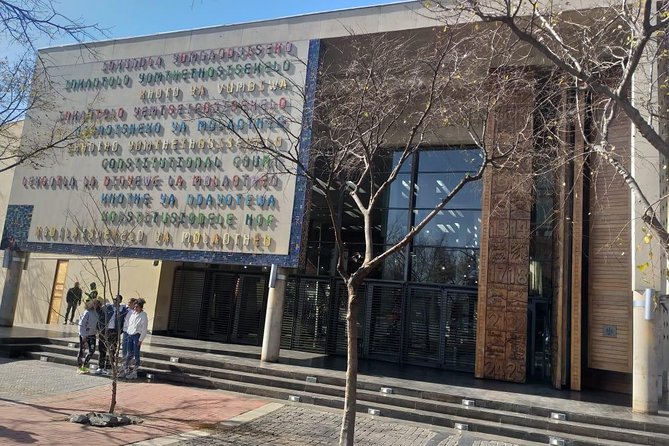
Constitution Hill is the day’s first major visit, with about an hour set aside and admission included. This former prison and military fort now houses South Africa’s Constitutional Court. Its power comes from the combination of place and purpose: you are seeing a site linked to repression while also learning about the democratic legal system that replaced it.
For me, this is one of the most valuable stops because it gives structure to the rest of the day. The tour is not simply a collection of Mandela landmarks. At Constitution Hill, you begin to understand how the country moved from prison cells and state control toward a constitution built around the rights of all citizens.
One hour allows for a meaningful introduction, but not every corner of the complex. If you want to read every panel or take a very detailed museum visit, you may wish for more time. Still, including admission here makes the tour more than a drive-by city sightseeing trip.
The route then passes Braamfontein, a district associated with museums, theatres, restaurants, coffee shops, art galleries, design stores, and nightlife. You do not receive a long scheduled visit here, but the drive shows another side of Johannesburg, one shaped by students, artists, food, and city renewal.
Mandela Bridge, Newtown, and Johannesburg’s gold origins
The Nelson Mandela Bridge is a quick four-minute stop. It is a striking modern landmark and a good photograph, though the short timing means you should not expect a walk across the bridge or a detailed architectural visit.
Newtown gets about 15 minutes. The precinct reaches back to the 1880s and now includes cultural venues, galleries, museums, and theatres. This is a useful transition between the political story and the city’s creative present. The stop is brief, but your guide can help explain why Newtown matters within Johannesburg’s changing center.
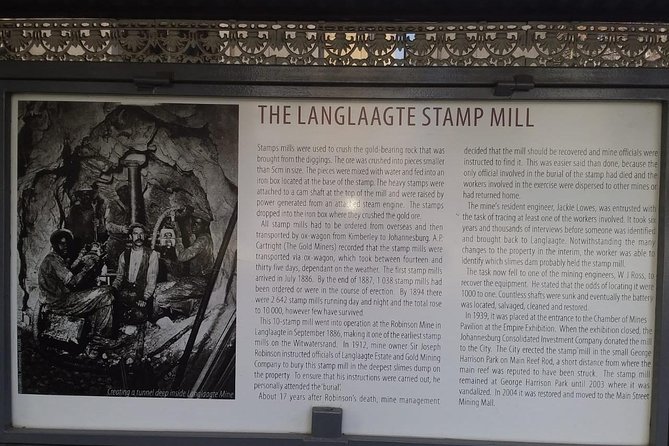
The Mining District adds another piece of the city’s story. Old mining headgear, stamp presses, and carts recall the gold rush, while information boards explain the early industry. You spend about 15 minutes here. The visit is short, yet it helps answer a basic question: why did Johannesburg grow where it did, and why did the city become such a major economic center?
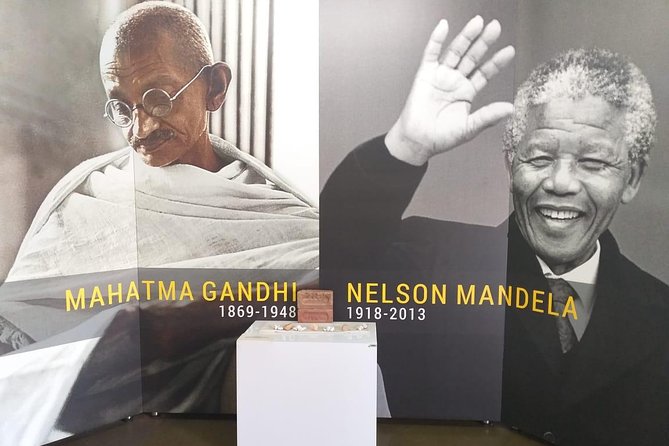
You also pass Gandhi Square, where a statue depicts Mahatma Gandhi as a young man. The Central Business District follows, with its dense collection of skyscrapers. These sights are mostly viewed along the route rather than explored at length, so think of them as moving lessons in the city’s public life and built environment.
More full day trips in Johannesburg:
- Full Day Ultimate Pilanesberg National Park Safari from Johannesburg or Pretoria
★ 4.5 · 718 reviews - Johannesburg: Full-Day Tour with Soweto and Apartheid Museum
★ 4.8 · 478 reviews - Full Day Pilanesberg Experience in Open Vehicle
★ 4.5 · 414 reviews - Full-Day Soweto, Apartheid Museum and Lunch Tour
★ 5.0 · 410 reviews
Maboneng, the Place of Light
Maboneng Precinct receives about 30 minutes, the longest inner-city stop apart from Constitution Hill. Its name means Place of Light, and the area brings together restaurants, coffee shops, clothing boutiques, galleries, retail spaces, and studios.
This is where you get a break from monuments and formal museums. You can look around, take photographs, and get a feel for the city’s contemporary arts and food scene. Half an hour is enough to sample the atmosphere, though not enough to visit several galleries or settle in for a full meal.
The timing also makes lunch planning important. Lunch is not included, and the listed inclusions do not cover coffee, tea, soda, or other drinks. Ask your guide about the practical meal plan early in the morning, especially if you have children or dietary needs. The tour includes bottled water, but you should not assume a restaurant stop is built into the schedule.
FNB Stadium and the entrance to Soweto
On the way to Soweto, you pass FNB Stadium, also known as Soccer City. It hosted the opening and closing ceremonies of the 2010 FIFA World Cup and has been linked to other major events in South African public life. The stop lasts about 10 minutes and admission is free.
The stadium’s distinctive design makes it easy to recognize, but the bigger value is its place in the transition from political struggle to modern national celebration. After a morning focused on apartheid and democracy, seeing this major sporting venue adds a different layer to the country’s recent story.
Diepkloof Park follows, with about 15 minutes devoted to the origins of Soweto and present-day kasi life. The term refers to township culture and daily life. This is an important point in the route because Soweto is not only a backdrop for famous political figures. It is also a living community where ordinary life continues alongside major historic sites.
Orlando Towers and the heart of Soweto
Orlando Towers are among Soweto’s most recognizable landmarks. The former cooling towers are now easy to spot and receive about 20 minutes. This is another good photo stop, but the guide’s explanation gives it more meaning than a quick view from a car window.
The tour then reaches Vilakazi Street for about 45 minutes, with admission included for the scheduled sites. This is one of Soweto’s most important streets because it is associated with both Nelson Mandela and Archbishop Desmond Tutu, two Nobel Peace Prize winners. Seeing both homes in the same area helps you understand how concentrated the political story can be here.
Mandela’s House receives about 20 minutes and admission is included. No. 8115 has become a major heritage site, presented through sound, film, interpretive panels, and guided material. The house matters because it brings Mandela’s public story down to a personal scale. Instead of only seeing statues and government buildings, you encounter the place where he lived.
Twenty minutes is enough for an introduction, but it may feel short if you want to study every display. The guide’s role is especially important here. John is praised for explaining the history clearly, while Mo is praised for making the information easy to follow and personal. Banele is also singled out for his strong connection to his country and people. Guide assignments can vary, so you cannot count on a particular person, but these names give you a sense of the style the operator aims for.
Hector Pieterson Museum and Regina Mundi Church
The Hector Pieterson Museum and Memorial receives about 20 minutes and admission is included. The site is near where 13-year-old Hector Pieterson was shot on June 16, 1976, during the Soweto Uprising. His death became a symbol of resistance to the apartheid government.
This is a serious stop, and the short visit can feel emotionally concentrated. The museum helps explain why the uprising mattered and why images from that day remain so powerful. I would approach this part of the tour with patience and respect. It is not a quick attraction to tick off.
Regina Mundi Catholic Church also receives 20 minutes with admission included. Known as the people’s church, it played an important role in resistance during apartheid. Its significance comes from the role a religious building took on in public life, giving people a place connected to protest, debate, and community action.
Taken together, the museum and church make Soweto more than a celebrity-focused visit. Mandela’s House draws you in through one famous life, while Hector Pieterson and Regina Mundi point toward the wider community and the cost paid by many people.
The optional Kliptown Youth Program visit
The final listed stop is a 15-minute optional visit connected with the Kliptown Youth Program and a squatter camp tour. Because it is optional, ask the guide what is planned on your specific date and how it affects the timing.
This is an area where your approach matters. A short visit can offer useful context about present-day township conditions, but it should be handled with respect and without treating people’s homes as scenery. If you choose to include it, listen to the guide, follow local instructions, and keep your focus on learning rather than taking intrusive photographs.
Guides, vehicles, and the pace of the day
The strongest feature of this experience is the guide. The praised guides include Mo, John, Banele, Tsholo, Tsolo, and Thabang. They are described as clear, courteous, entertaining, and well informed about South African history. One guide grew up in Soweto, adding a personal connection to the final part of the route.
That does not mean every guide will have the same personality. It does mean the tour depends on live explanation, not just a printed route. Ask questions. The history covers pre-apartheid Johannesburg, the apartheid years, the Soweto Uprising, Mandela’s presidency, and the country’s democratic future.
Private transport is air-conditioned and includes bottled water. One account describes a roomy, clean van, while another unexpectedly received a sedan on a private booking. Vehicle type may vary, so larger groups should confirm the arrangement and seating before departure.
The experience is advertised for groups of up to 14, while the additional information gives a maximum of 13 participants. If you are booking a large family or group, confirm the exact capacity. The private format is especially useful for families because the guide can focus on your questions and adjust explanations for different ages.
Who should book this experience
I would recommend this tour if you have one full day in Johannesburg and want a strong first introduction. It is also a practical choice if you are staying in Pretoria, since pickup and drop-off are offered from hotels in both cities.
The tour suits you best if you value context, political history, and local explanation over independent wandering. It works well for families, first-time visitors, and anyone who wants to see both the city center and Soweto without managing complicated transport.
You may want another option if you prefer a slow museum day, extended shopping time, or a relaxed lunch. The route is full, and several stops last only 10 to 20 minutes. You will see many places, but you will not have hours to explore any single district.
The tour is generally accessible to most participants according to the supplied information, but no detailed accessibility notes are provided. Ask about mobility needs before booking, particularly because the day includes several historic and museum sites.
Free cancellation is available if you cancel at least 24 hours before the 8:30 a.m. start time. Changes or cancellations made later are not accepted for a refund.
Should you book the Johannesburg and Soweto tour?
Book it if you want maximum historical coverage in one day, private transport, and a guide who can connect famous landmarks with the wider story of South Africa. The combination of Constitution Hill, Maboneng, FNB Stadium, Vilakazi Street, Mandela’s House, Hector Pieterson Museum, and Regina Mundi Church gives you far more than a standard city drive.
At $100.65 per person, the price makes the most sense when you share the vehicle with family or friends and take advantage of the included pickup, transport, water, and admissions. Just plan for a fast pace, bring money for lunch and drinks, and confirm the vehicle size and group capacity if you are traveling with a large party.
FAQ
How long does the Soweto and Johannesburg tour last?
The experience lasts approximately 7 to 8 hours. The listed start time is 8:30 a.m.
Where can pickup and drop-off take place?
Pickup and drop-off are offered at hotels around Johannesburg or Pretoria.
Is lunch included?
No. Lunch, coffee, tea, soda, and other soft drinks are not included. Bottled water is provided.
What is the maximum group size?
The additional tour information states a maximum of 13 participants. The tour description also presents it as a private experience for groups of up to 14, so larger parties should confirm the exact capacity when booking.
Are admission fees included?
Admission is included for Constitution Hill, Vilakazi Street, Mandela’s House, the Hector Pieterson Museum and Memorial, and Regina Mundi Catholic Church. Several outdoor stops are free.
Can I cancel for a full refund?
Yes, if you cancel at least 24 hours before the experience’s start time. Cancellations or changes made less than 24 hours before the start are not accepted for a refund.
Just listed around Johannesburg
- Constitutional Hill and Soweto 5 hours tour.★ 5.0 · 5 reviews
- 5 Day Kruger Glamping Safari and Panorama Tour★ 5.0 · 5 reviews
- Cradle of Humankind and Maropeng Day Tour from Johannesburg★ 4.0 · 5 reviews
- Johannesburg: Hot Air Balloon Flight★ 5.0 · 5 reviews
- Half Day Soweto and Apartheid Museum Guided Tour★ 5.0 · 5 reviews
- Lion park★ 4.5 · 5 reviews
- 5 Day Kruger National Park and Panorama Route Safari★ 4.5 · 5 reviews
- Pretoria Historical Tour★ 4.0 · 5 reviews
Soweto & Apartheid Museum Tours, compared.

Soweto /Johannesburg and Apartheid Museum Guided Full Day Tour
Read our review →
Johannesburg Hop-On Hop-Off City Tour with Soweto Option
Read our review →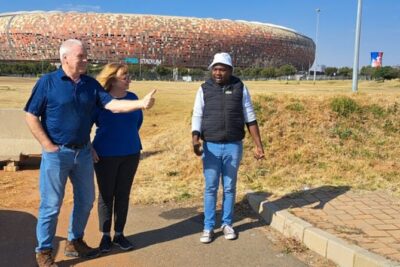

Jo’berg in 1 Day: Soweto, Apartheid Museum & City Tour
Read our review →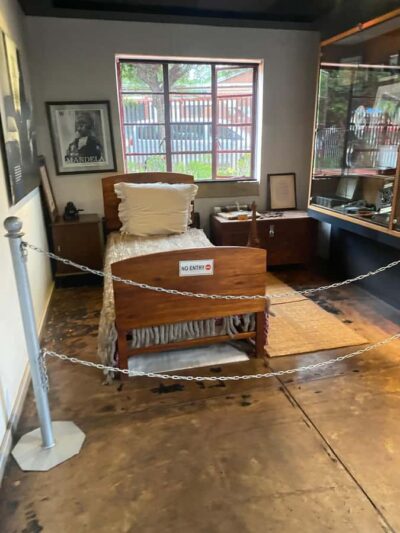
Full-Day Tour with Soweto and Apartheid Museum
Read our review →
Browse the lists this tour appears in