
Reviewed · SOWETO & APARTHEID MUSEUM TOURS
Private Tour of Johannesburg, Soweto and Apartheid Museum
Johannesburg’s past comes into sharp focus on this private day tour, which links the old prison at Constitution Hill, the Apartheid Museum, and Soweto’s Vilakazi Street. You’ll see the places connected to Gandhi, Nelson Mandela, the 1976 student uprising, and South Africa’s road to democracy.
I like the private vehicle and flexible feel, since your group can ask questions and move through a major city with a guide rather than piece the day together alone. I also like the strong Spanish-language guiding, especially with guides such as Irma and Daniela, who bring years of local experience and explain how Johannesburg has changed.
The main consideration is pace. Eight hours covers a lot, but several stops are brief, and lunch is not included. The Apartheid Museum alone deserves careful attention, so you may need to accept a broad overview rather than a leisurely visit at every stop.
Key points to know before booking
- Constitution Hill connects a former prison to South Africa’s Constitutional Court, giving you both the painful past and the democratic present in one visit.
- The Apartheid Museum receives about 90 minutes, enough for a serious introduction but not enough to read every display.
- Soweto includes Vilakazi Street and Mandela House, two stops closely tied to Nelson Mandela and the anti-apartheid struggle.
- FNB Stadium is an outside photo stop, not a stadium tour, and its admission is not included.
- Hotel pickup, private transport, entrance fees, and taxes are included, while lunch is your responsibility.
- The tour is conducted in Spanish, with guides such as Irma and Daniela praised for clear explanations, planning, and attention to individual needs.
Why this Johannesburg tour works as a first look
Johannesburg can feel hard to read at first. Its districts are spread out, its past is politically charged, and the city’s landmarks do not always explain themselves from the pavement. This tour gives you a clear thread: gold mining and urban growth, segregation and repression, prison and protest, then democracy and Mandela’s public legacy.
You start at about 9:00 a.m. with pickup from your hotel. From there, the day combines driving with short walks and museum visits. That mix matters in Johannesburg. You cover more ground than you could on foot, while still getting time to step out and see key places up close.
The private format is a real advantage for this subject. A guide can slow down when you have questions about apartheid, the 1976 events, or Mandela’s role, then keep the day moving when a stop has reached its natural limit. You are not tied to the pace of a large group.
The tour is especially suited to a first visit, a short stay, or anyone who wants a structured introduction rather than a collection of disconnected sights. If you already know Johannesburg well, you may find the broad overview less satisfying than a specialist visit focused only on apartheid, Soweto, or architecture.
More Museum Tours in Johannesburg
- Soweto /Johannesburg and Apartheid Museum Guided Full Day Tour
★ 5.0 · 932 reviews - Jo’berg in 1 Day: Soweto, Apartheid Museum & City Tour
★ 4.8 · 524 reviews - Johannesburg: Full-Day Tour with Soweto and Apartheid Museum
★ 4.8 · 478 reviews
Nelson Mandela Square and Johannesburg’s changing suburbs
Nelson Mandela Square is a short opening stop of about 20 minutes. The main purpose is simple: you can take a photograph beside the large Mandela statue in Sandton, South Africa’s financial center.
It is not the most personal or historically intimate part of the day. The square is a polished commercial area, and the statue is a modern public symbol rather than the home or prison site you will see later. Still, it gives you a quick orientation to Mandela’s place in the national story and offers an easy first photo.
The drive also passes through some of Johannesburg’s more stylish suburbs, including areas linked to Mandela. This contrast is worth noticing. Johannesburg is not one uniform city. Wealth, business, older urban districts, and township life sit within the same metropolitan area, and the guide helps connect those contrasts to the city’s past.
You then head toward central Johannesburg, where the city grew around gold discoveries. The route passes the building known as the Top of Africa, described as the tallest building in South Africa and on the continent. You will see it from outside rather than visit an observation deck, but the drive helps place Johannesburg’s growth in its mining and business context.
Constitution Hill, from prison walls to a constitutional court
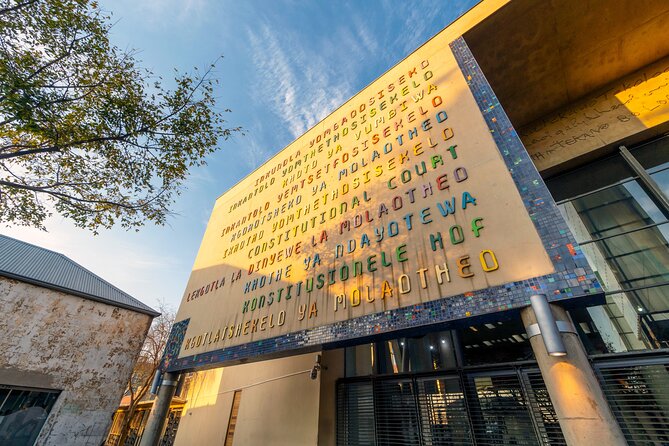
Constitution Hill is one of the day’s most important stops, and you have about an hour there. The site began as a prison and military fort. Today it is home to South Africa’s Constitutional Court, which protects the rights of citizens under the country’s democratic constitution.
The setting gives the visit its force. The court’s design is distinctive, and its modern role is tied directly to the old prison site. Bricks from the former prison were used in the new building, making the change from detention and state control to constitutional rights visible in the structure itself.
The prison also held well-known political prisoners, including Nelson Mandela and Gandhi. That detail makes this more than an architectural stop. You are looking at a place where the state once enforced racial rule, then standing in a court created to defend equal rights.
An hour is enough to understand the site and hear the main story, but it is not a full research visit. If you like museums and legal history, you may want more time than the schedule allows. Listen closely to your guide’s explanations, since the value of this stop comes from linking the buildings and events rather than simply taking photographs.
The Apartheid Museum in a focused 90 minutes
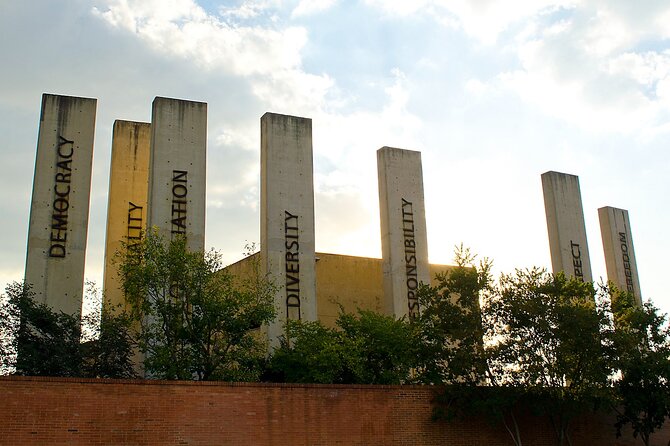
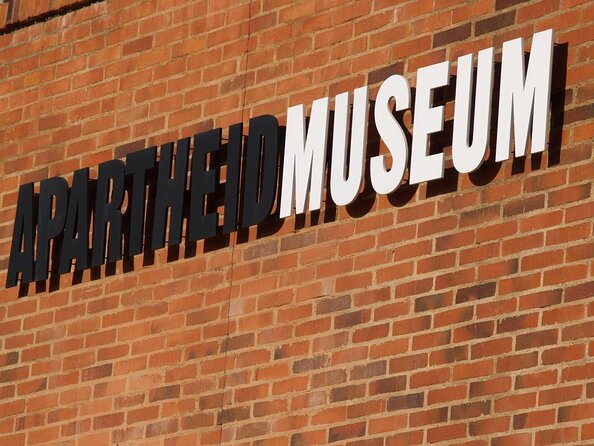
The Apartheid Museum is the central historical stop, with about an hour and a half inside. It opened in 2001 and traces the rise and fall of apartheid, the system of racial separation and political control that shaped daily life in South Africa for decades.
The museum is designed to confront rather than soften the subject. Its walls and displays address destruction, brutality, forced separation, resistance, and the struggle for democracy. You should expect serious material and give yourself time to absorb it.
Ninety minutes gives you a useful foundation. You can see the main sections and follow the broad sequence of events, but you probably will not read every panel or examine every object closely. That is the chief tradeoff in this packed day. If the museum is your main reason for booking, note that a longer standalone visit would allow more breathing room.
The guide adds value before and after your time inside. Spanish-speaking guides such as Irma and Daniela are praised for making the subject understandable and for explaining how apartheid affected Johannesburg and the country. Their role is not just to point out buildings. They help you connect the museum’s material with the places you see later in Soweto.
You should not expect the museum to be light entertainment. It is emotionally demanding by design. Yet it is also essential preparation for the afternoon, because Soweto makes more sense once you understand the policies and resistance that shaped it.
More Soweto and Apartheid Museum visits:
- Johannesburg: Hop-On Hop-Off Bus with Optional Soweto Tour
★ 4.6 · 985 reviews - Johannesburg Hop-On Hop-Off City Tour with Soweto Option
★ 4.5 · 768 reviews - Half-Day Tour of Soweto Tour
★ 4.5 · 712 reviews - Soweto: Walking Tour with a Local Guide and Lunch
★ 4.9 · 648 reviews
FNB Stadium and the public story of Soweto
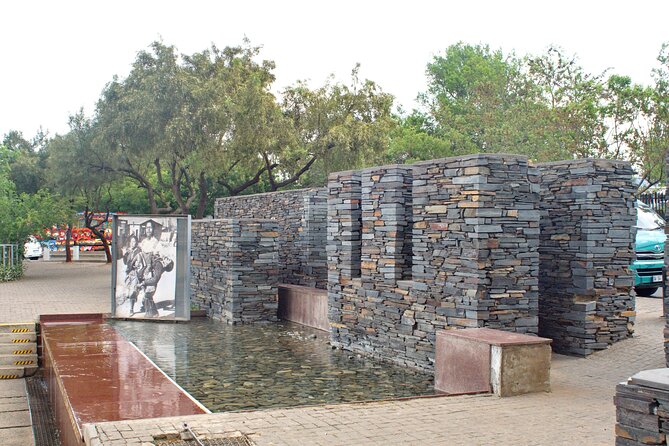
After the museum, the route continues toward Soweto, with a 15-minute photo stop at FNB Stadium. You see the stadium from outside, and admission is not included.
FNB Stadium was built as the main football venue for the 2010 World Cup and holds 94,736 people, making it the largest stadium in Africa. Its nickname, The Gourd, comes from its resemblance to an African pot gourd.
The stadium also carries political meaning. Nelson Mandela made his first Johannesburg speech there after leaving prison in 1990, and the venue hosted the 2010 World Cup final between the Netherlands and Spain. Those events show how the site moved from national celebration and political transition to international sport.
The stop is brief, so treat it as a visual landmark and a chance for a photograph. It is not a behind-the-scenes stadium visit, and you should not book this tour expecting access to the interior.
Walking Vilakazi Street and understanding the 1976 uprising
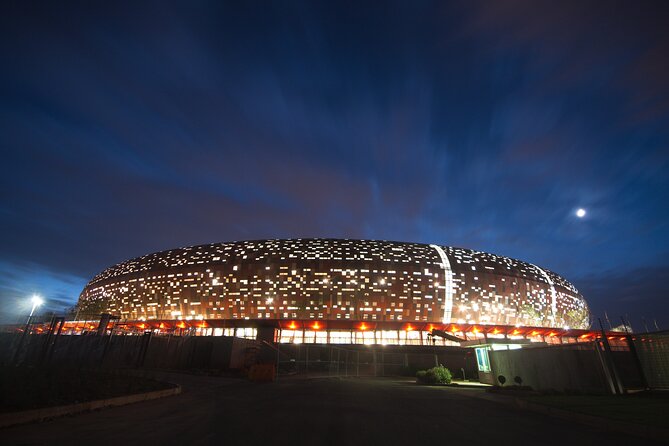
Vilakazi Street gives you the most direct street-level experience of Soweto. You spend about an hour walking along the road, seeing craft stalls, and having time for lunch.
This street is unusual in world history because two Nobel Peace Prize winners, Nelson Mandela and Desmond Tutu, once lived there. That fact alone makes the street worth seeing, but the guide’s explanation gives it greater meaning. You will hear about the events of 1976, when student protests in Soweto became a major turning point in the fight against apartheid.
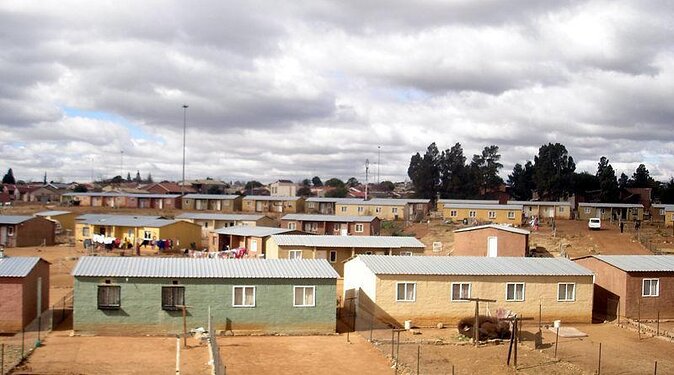
The walking portion is valuable because it shifts the focus from national leaders and official buildings to an ordinary neighborhood shaped by extraordinary events. You can look at the street, local stalls, and surrounding homes while learning how Soweto fits into the wider struggle for freedom.
Lunch is not included, so plan to pay separately. The schedule allows time for it, but the tour information does not specify a restaurant or a set meal. You may find the stop more useful if you ask your guide how much time is available before ordering or shopping.
Vilakazi Street is also one of the places where the private setup helps. You can ask about Mandela, Tutu, the student protests, or present-day Soweto without worrying about holding up a large group. The walk is not long, but wear comfortable shoes because you will be out of the vehicle.
Mandela House and the personal side of history
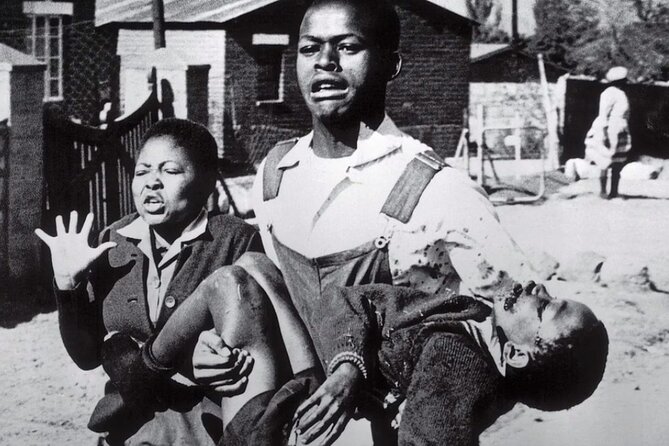
Mandela House is a short visit of about 20 minutes. It is the former home of Nelson Mandela and his family on Vilakazi Street, and it gives you a personal setting after the larger political story told at Constitution Hill and the Apartheid Museum.
Do not expect a large museum complex or a long guided tour here. The scheduled time is brief. Instead, think of Mandela House as a compact, memorable stop that places a national figure in a domestic setting.
The house also sits on the same street associated with Desmond Tutu. Seeing both the street and Mandela’s home helps you understand why Vilakazi Street has such a powerful place in South African public memory.
The short timing may leave you wanting more. That is not a flaw unique to this stop, but it is part of the day’s overall design. This is a survey of Johannesburg’s key sites, not an intensive study of one neighborhood.
What the $131.53 price includes
At $131.53 per person, the tour costs more than joining a large group, but the comparison is not quite like for like. You are paying for a private vehicle, hotel pickup, a full-day schedule, a Spanish-speaking guide, and entrance fees for Constitution Hill, the Apartheid Museum, and Mandela House.
The value is strongest for couples, families, or small groups who want control over the conversation and timing. Group discounts may also improve the per-person cost when several people book together. A private tour can be particularly useful when your time in Johannesburg is limited and you want the city’s major apartheid-related sites arranged in a sensible order.
Lunch is extra, and the FNB Stadium photo stop does not include admission. Since there is no stadium interior visit listed, you should factor in only your meal and any personal purchases at Vilakazi Street.
The tour is booked on average about six days before departure, so it is sensible to reserve ahead if you need a particular date or Spanish-speaking guide. Confirmation is provided at booking, and free cancellation is available until 24 hours before the 9:00 a.m. start. Changes or cancellations inside that 24-hour window are not refunded, and poor weather can lead to a different date or a full refund.
Who will get the most from this private day
You are a good match for this tour if you want:
- A structured first introduction to Johannesburg
- A Spanish-speaking guide
- Hotel pickup and private transportation
- Clear explanations of apartheid and Mandela’s role
- A full day that combines museums, city driving, and Soweto
- Help understanding the contrast between central Johannesburg, wealthy suburbs, and Soweto
It is also a sound choice if you feel uncertain about arranging visits across a large city on your own. The guide handles the route while you focus on the places and the stories.
You may want a different plan if you prefer long museum visits, extensive free time, or a tour focused on contemporary food, art, or nightlife. The schedule is full, and several stops are measured in minutes rather than hours. The experience prioritizes range and context.
The supplied information says most people can participate, but it does not provide detailed accessibility information. If you have specific mobility needs, ask the operator before booking. The tour requires good weather, and the vehicle is air-conditioned.
Should you book this Johannesburg tour?
Book it if you want one efficient day centered on apartheid, Mandela, Soweto, and the city’s transformation. The strongest part is the sequence: Constitution Hill shows the former prison and the new court, the Apartheid Museum supplies the national context, and Soweto brings the story back to streets, homes, and protest.
I would especially consider it for Spanish-speaking visitors, first-time visitors, and small groups who value direct questions and a guide who can adjust explanations. Irma and Daniela are both named as guides associated with warm service, careful planning, and strong historical explanations.
Skip it if your priority is a slow, highly detailed museum day or an inside tour of FNB Stadium. The schedule gives you a broad and meaningful introduction, but it asks you to keep moving. For most people with only one day for Johannesburg, that is a fair trade.
FAQ
What is the price of the private Johannesburg tour?
The listed price is $131.53 per person. Group discounts are offered.
How long does the experience last?
The tour lasts approximately eight hours.
What time does the tour start?
The start time is 9:00 a.m.
Is hotel pickup available?
Yes. Pickup is offered, and the tour begins at your hotel.
What language is the tour conducted in?
The included guide service is in Spanish. Guides associated with the experience include Irma and Daniela.
Is this a private tour?
Yes. Only your group participates in the private activity.
Is lunch included?
No. Lunch is excluded from the price. Time is provided for lunch during the Vilakazi Street visit.
Which entrance fees are included?
All fees and taxes are included, along with admission to Constitution Hill, the Apartheid Museum, and Mandela House. The FNB Stadium stop is for an outside photograph, and admission is not included.
Can I cancel for a full refund?
Yes. You can cancel at least 24 hours before the local start time for a full refund. Cancellations or changes made less than 24 hours before the start are not accepted for a refund. If poor weather causes the tour to be canceled, you will be offered another date or a full refund.
Just listed around Johannesburg
- Constitutional Hill and Soweto 5 hours tour.★ 5.0 · 5 reviews
- 5 Day Kruger Glamping Safari and Panorama Tour★ 5.0 · 5 reviews
- Cradle of Humankind and Maropeng Day Tour from Johannesburg★ 4.0 · 5 reviews
- Johannesburg: Hot Air Balloon Flight★ 5.0 · 5 reviews
- Half Day Soweto and Apartheid Museum Guided Tour★ 5.0 · 5 reviews
- Lion park★ 4.5 · 5 reviews
- Pretoria Historical Tour★ 4.0 · 5 reviews
- 5 Day Kruger National Park and Panorama Route Safari★ 4.5 · 5 reviews
Soweto & Apartheid Museum Tours, compared.


Soweto /Johannesburg and Apartheid Museum Guided Full Day Tour
Read our review →
Johannesburg Hop-On Hop-Off City Tour with Soweto Option
Read our review →


Jo’berg in 1 Day: Soweto, Apartheid Museum & City Tour
Read our review →
Full-Day Tour with Soweto and Apartheid Museum
Read our review →
Browse the lists this tour appears in