
Reviewed · SOWETO & APARTHEID MUSEUM TOURS
Johannesburg Apartheid Museum and Soweto
Johannesburg’s past comes into sharp focus on this full-day route, which links the city center, the Apartheid Museum, and Soweto. You move from Mandela-related sites and old gold-mining landmarks to the streets where major events in South Africa’s struggle unfolded. The guide-led storytelling is the heart of the day.
I like the private format, since only your group takes part, and I like the efficient mix of museum time and neighborhood visits. Guides Martin, Albert, and Mark are all praised for clear explanations, safety, and friendly service. The main drawback is that the advertised lunch may not always happen, and the stated eight-hour schedule has been five hours for at least one booking, so confirm the day’s plan in advance.
Key points to know before booking
- Three major stops in one day: Visit central Johannesburg, the Apartheid Museum, and key Soweto sites.
- Private touring: Only your group participates, making it easier to ask questions and adjust the pace.
- Guides shape the experience: Martin, Albert, and Mark are specifically praised for their explanations and calm, helpful manner.
- Museum admission is included: The Apartheid Museum is the only listed stop with an admission charge included.
- A useful Mandela focus: The route includes Mandela’s office, Mandela’s Bridge, and places connected with his story.
- Check the schedule and lunch: Confirm pickup, timing, and whether lunch is included before setting out.
Why this Johannesburg route matters
Johannesburg can feel hard to read at first. Its important places are spread across different parts of the city, and the story of apartheid is tied to buildings, neighborhoods, courtrooms, memorials, and ordinary streets. This tour gives you a guide to connect those places instead of seeing them as isolated stops.
The day is built around three subjects: Johannesburg’s development, the apartheid era, and Soweto’s role in South Africa’s modern story. That makes it a serious outing, but not a dry one. The route gives you time to ask questions, and the private format means your guide can spend more time on the subjects that matter most to you.
At about $60.42 per person, the price is reasonable if you want transport, a guide, and museum admission bundled into one day. The value is strongest for first-time visitors who want a broad introduction without arranging separate rides between the city center, museum, and Soweto.
The price is less attractive if you only want a quick drive past landmarks. This is an eight-hour commitment, and the subject matter deserves attention. You should also confirm the schedule, since one booking described the outing as five hours rather than eight.
More Museum Tours in Johannesburg
- Soweto /Johannesburg and Apartheid Museum Guided Full Day Tour
★ 5.0 · 932 reviews - Jo’berg in 1 Day: Soweto, Apartheid Museum & City Tour
★ 4.8 · 524 reviews - Johannesburg: Full-Day Tour with Soweto and Apartheid Museum
★ 4.8 · 478 reviews
Starting in Johannesburg’s city center
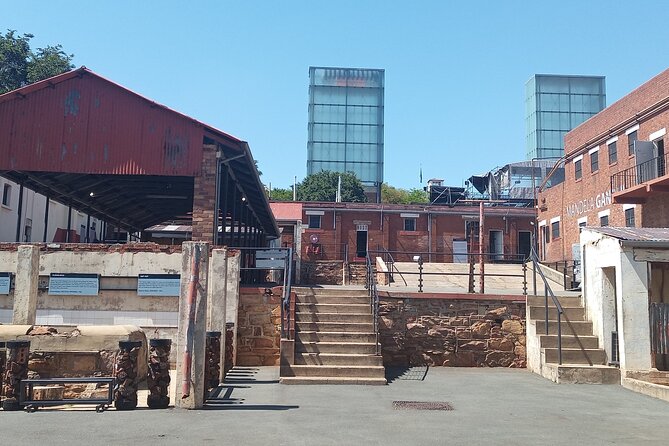
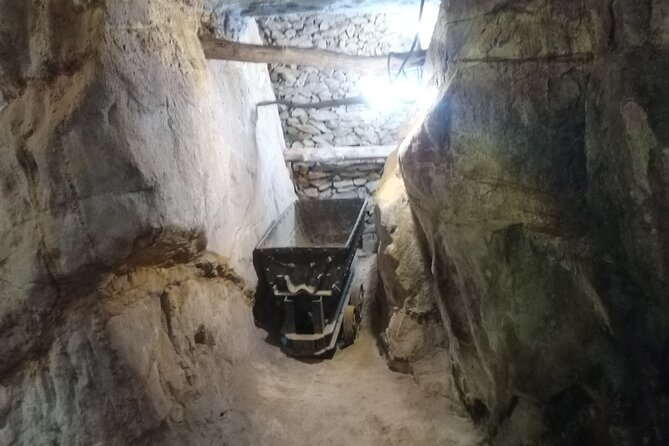
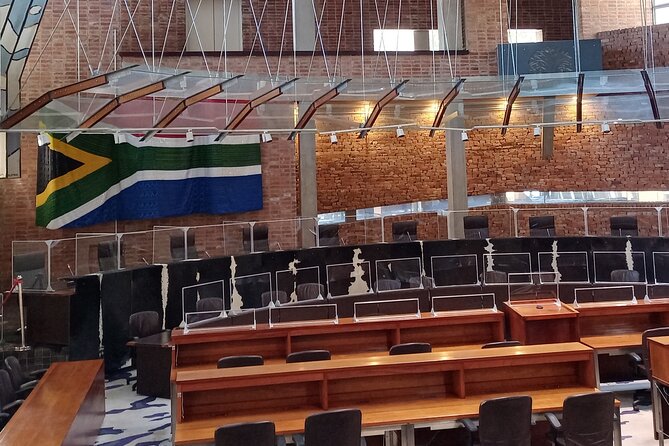
The first portion covers central Johannesburg for about two hours. The route includes Constitution Hill, an old Ferreira gold mine, Mandela’s office, Mandela’s Bridge, and parts of the central business district.
Each site gives you a different way into the city’s story. The old gold mine points to the economic force that helped shape Johannesburg. Mandela-related locations shift the focus toward political change and the people who challenged apartheid. The city center ties these themes together through the buildings and streets of modern Johannesburg.
The details provided do not specify individual entry tickets for these stops, and the listed admission is free. That suggests the emphasis is on seeing the places and hearing the explanation rather than spending long periods inside paid attractions. Your guide matters here because a landmark can mean little without context.
I would use this part of the day to ask direct questions. Ask how the gold-mining era affected Johannesburg, how Mandela’s office fits into his wider story, and what role the bridge has in the city today. The private format gives you room to do that without worrying about holding up a large group.
Two hours is enough for an introduction, but it is not a full study of central Johannesburg. You should expect a moving overview rather than a detailed architectural tour. If you prefer to linger at every stop, the pace may feel brisk.
Spending two hours at the Apartheid Museum
The Apartheid Museum is the most focused stop of the day, with about two hours set aside and admission included. The visit covers the apartheid era, Mandela’s life, and Johannesburg’s development.
This is the point where the separate threads of the morning come together. The museum gives structure to the political and social story, while the guide can help you place that material alongside the streets and sites you have already seen. I value that order. Seeing the city first can make the museum material feel less abstract.
Two hours is a useful amount of time, though you may need to choose what deserves the closest attention. The experience is not designed as a short photo stop. You should be ready for serious material and allow yourself time to think between displays.
The description does not promise a guided tour inside every museum section, so clarify how your guide handles the visit. The guide may provide explanations before or after your museum time, but the exact arrangement is not stated. Admission is included, which removes one small cost and makes the day easier to plan.
Mandela’s story receives particular attention, but the museum portion is not only about one person. The route is intended to explain the wider apartheid period and Johannesburg’s place in South Africa’s story. I would not book this expecting a light sightseeing stop. It is the most demanding part of the day in subject and concentration.
Seeing Soweto through six specific stops
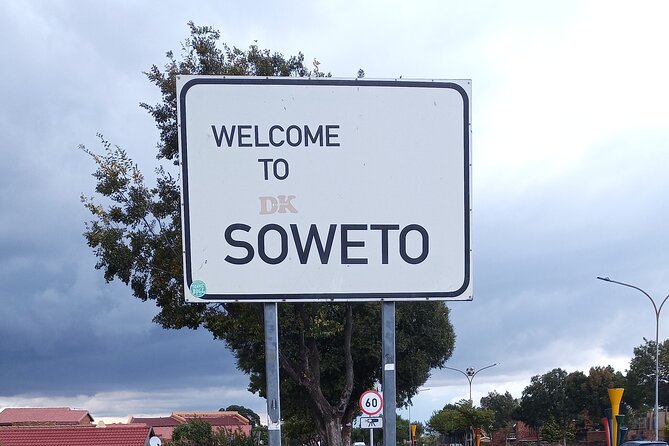
The Soweto portion lasts about two hours and includes Deepkloof, the Orlando Towers, Vilakazi Street, Hector Pieterson Square, and lunch. These are not interchangeable sights. Together, they move from neighborhood life and major landmarks to places linked with protest and public memory.
Deepkloof gives you a chance to see part of Soweto beyond the most familiar headline locations. The information provided does not specify a particular attraction there, so expect a guided look at the area rather than a named museum visit.
The Orlando Towers are a strong visual marker on the route. They are one of the places that help you understand Soweto geographically and give the drive a clear sense of place. The details supplied do not state whether you go inside or simply view the towers, so ask your guide what the stop involves.
Vilakazi Street adds a more personal dimension. The route connects it with Mandela’s story, making it an important stop for understanding how national history is tied to a local street. The schedule does not say how much time you spend there, so you should expect a short visit within the wider two-hour Soweto section.
Hector Pieterson Square brings the focus toward the struggle against apartheid and the people affected by it. This stop can be emotionally heavy, but it is central to understanding why Soweto matters in South Africa’s modern history. Give yourself time to listen rather than treating it as another quick photo stop.
Lunch is listed as part of the Soweto visit, but there is an important caution. One booking specifically reported that the advertised lunch did not occur. I would ask before the day begins whether lunch is included, where it will take place, and whether you should budget separately for food.
More Soweto and Apartheid Museum visits:
- Johannesburg: Hop-On Hop-Off Bus with Optional Soweto Tour
★ 4.6 · 985 reviews - Johannesburg Hop-On Hop-Off City Tour with Soweto Option
★ 4.5 · 768 reviews - Half-Day Tour of Soweto Tour
★ 4.5 · 712 reviews - Soweto: Walking Tour with a Local Guide and Lunch
★ 4.9 · 648 reviews
The guides make the difference
A private tour rises or falls on the person behind the wheel and the quality of the explanation. This experience has several named guides associated with strong feedback.
Martin is praised for making the history easy to follow, keeping the question-and-answer exchange lively, and taking care of comfort and safety from pickup through drop-off. That is valuable on a subject with many dates, names, and political terms.
Albert is described as cordial and deeply engaged with his country. He is also flexible about changing plans, but that flexibility comes with a practical warning: message him and arrange a call well before the tour so the details are clear.
Mark is described as soft-spoken, well informed, and careful with timing. His role in keeping arrivals smooth matters because the day has three major sections and several Soweto stops. A late start or a long delay at one site could reduce your museum or neighborhood time.
You may not receive one of these exact guides, so treat the names as useful examples rather than a guarantee. The wider pattern is clear: the tour depends heavily on the guide’s ability to explain, adapt, and keep the day moving.
What the private format changes
The activity is private, meaning only your group participates. That is a major advantage for a history-focused day. You can ask about apartheid, Mandela, Soweto, or Johannesburg without waiting for a large group to finish taking photos.
Private touring also helps with comfort. One guide is specifically praised for making sure the group felt safe and comfortable throughout the day. That does not remove the need to stay aware of your surroundings, but it does mean you have one person responsible for your group rather than a guide managing a crowd.
The tradeoff is that a private tour does not guarantee unlimited flexibility. The route contains several planned stops, museum time, and a return to the starting point. Albert is described as adaptable, but you should still settle major changes before the morning begins.
The meeting point is listed at 1217 Olifantsfontein Road in Thembisa, and the activity ends back there. Pickup is offered, but the supplied details do not state the full pickup area or whether pickup from your accommodation is guaranteed. Confirm the exact pickup arrangement before booking if you are staying elsewhere in Johannesburg.
Timing, transport, and physical demands
The advertised duration is about eight hours. That is long enough to make the route feel substantial, but it also means you should plan for a full day rather than a casual half-day outing.
The route is transport-based, with stops in central Johannesburg, at the museum, and in Soweto. The tour description emphasizes saving time and money by combining the sites. I agree with that logic, since arranging separate transport for this sequence could be inconvenient, especially if you are unfamiliar with the city.
Allow for some variation in the pace. The information states that one booking lasted five hours, while the main description gives eight hours. That may reflect different plans or timing, but it is still worth clarifying. Ask for the expected pickup time, the approximate duration at each stop, and the planned return time.
You should have a moderate level of physical fitness. The data does not specify the exact distances or number of stairs, so do not assume the day is entirely vehicle-based. You will likely need to walk between some points and remain on your feet during parts of the museum and neighborhood visits.
The activity is near public transportation, though the tour itself is designed around pickup and return. If you are using public transport to reach the meeting point, check the route carefully and leave enough time for the start.
What the $60.42 price includes
At $60.42 per person, this is priced as an accessible full-day introduction rather than a luxury excursion. The strongest value comes from combining a guide, transport between three parts of Johannesburg, private participation, and Apartheid Museum admission.
The cost also buys convenience. You do not have to work out how to connect the city center, museum, and Soweto in one day. A good guide adds value by explaining why each location matters, especially at sites that might otherwise look like ordinary streets or buildings.
The price does not guarantee every possible expense. Lunch is the clearest uncertainty because one booking found that it was not provided despite being advertised. Confirm this point and carry a separate food budget.
You should also consider group size. Since the activity is private, the per-person price may make more sense for a small group sharing the experience. For a solo visitor, it may be worth comparing the cost with a larger group option, but the private setting offers better control over questions and pace.
The high overall rating and full recommendation rate suggest that most people who choose this format find the day worthwhile. Still, price alone should not make the decision. This is best value when you want context and conversation, not just transport to photo stops.
Who will get the most from this day
I would recommend this tour to a first-time visitor who wants a clear introduction to Johannesburg and Soweto in one outing. It suits you especially well if you want someone to explain the connections between the city’s gold-mining past, apartheid, Mandela, and Soweto.
It is also a good fit for families or small groups with different interests. The private format lets you pause for questions, and the route combines museum time with outdoor sightseeing. The subject matter is serious, so younger visitors may need preparation, but the guide can adjust the discussion to your group.
History-minded visitors will appreciate the focus on Mandela’s office, Mandela’s Bridge, the Apartheid Museum, Vilakazi Street, and Hector Pieterson Square. You will get more from the day if you read a little about apartheid and Mandela before arriving, then use the guide to fill in the gaps.
I would be more cautious if you dislike scheduled touring or want long, unhurried time at each site. Two hours per major section is useful but limited. The tour covers a lot, and the broad reach comes at the cost of depth.
Practical questions to settle before departure
Message the provider ahead of time, especially if you want a specific plan. Albert’s flexibility is useful, but clear communication before the date will help avoid confusion about the route and timing.
Confirm these points:
- Your exact pickup location and start time
- Whether the day will last closer to five hours or eight
- How much time is planned inside the Apartheid Museum
- Whether lunch is included and where it will happen
- Which guide will lead the tour
- Whether any changes are possible on the day
The tour requires good weather. If poor weather causes cancellation, you will be offered another date or a full refund. You can cancel for a full refund if you do so at least 24 hours before the start time. Cancellations or changes inside that window are not refunded or accepted.
Should you book Johannesburg Apartheid Museum and Soweto?
Book it if you want a private, guide-led introduction to Johannesburg’s most important apartheid and Mandela-related sites. The combination of central Johannesburg, the Apartheid Museum, and Soweto gives you a useful first look at a complicated city, while the named guides are praised for clear explanations, friendly service, safety, and good timing.
Before paying, confirm the pickup details, the actual duration, and lunch. If those points are settled, the $60.42 price offers solid value for a full day of transport, admission, and personal guidance. If you want a slow museum visit or a highly flexible itinerary, ask for a tailored plan or choose a longer private arrangement.
FAQ
How long does the tour last?
The advertised duration is approximately eight hours. One booking described the experience as five hours, so confirm the expected schedule before departure.
Where does the tour start and end?
The listed meeting point is 1217 Olifantsfontein Road, Olifantsfontein 410-JR, Thembisa, 1683, South Africa. The activity ends back at the meeting point.
Is pickup available?
Pickup is offered. The supplied information does not specify the full pickup area, so confirm whether pickup from your location is included.
Is the tour private?
Yes. Only your group participates in the activity.
Is admission to the Apartheid Museum included?
Yes. Admission to the Apartheid Museum is included.
What places are visited in Johannesburg?
The Johannesburg section includes Constitution Hill, an old Ferreira gold mine, Mandela’s office, Mandela’s Bridge, and parts of the central business district.
What places are visited in Soweto?
The Soweto section includes Deepkloof, the Orlando Towers, Vilakazi Street, Hector Pieterson Square, and lunch.
What is the cancellation policy?
You can receive a full refund if you cancel at least 24 hours before the experience starts. Cancellations or changes made less than 24 hours before the start time are not accepted or refunded. If poor weather cancels the activity, you will be offered another date or a full refund.
Just listed around Johannesburg
- Constitutional Hill and Soweto 5 hours tour.★ 5.0 · 5 reviews
- 5 Day Kruger Glamping Safari and Panorama Tour★ 5.0 · 5 reviews
- Cradle of Humankind and Maropeng Day Tour from Johannesburg★ 4.0 · 5 reviews
- Johannesburg: Hot Air Balloon Flight★ 5.0 · 5 reviews
- Half Day Soweto and Apartheid Museum Guided Tour★ 5.0 · 5 reviews
- Lion park★ 4.5 · 5 reviews
- 5 Day Kruger National Park and Panorama Route Safari★ 4.5 · 5 reviews
- Pretoria Historical Tour★ 4.0 · 5 reviews
Soweto & Apartheid Museum Tours, compared.


Soweto /Johannesburg and Apartheid Museum Guided Full Day Tour
Read our review →
Johannesburg Hop-On Hop-Off City Tour with Soweto Option
Read our review →


Jo’berg in 1 Day: Soweto, Apartheid Museum & City Tour
Read our review →
Full-Day Tour with Soweto and Apartheid Museum
Read our review →
Browse the lists this tour appears in