
Reviewed · SOWETO & APARTHEID MUSEUM TOURS
Half Day Private Tour of Johannesburg and Soweto
Johannesburg and Soweto carry enough history for several days, yet this private half-day tour fits the essential places into about four and a half hours. You move from Nelson Mandela Square and city viewpoints to the Hector Pieterson Museum and Mandela House, with a guide beside you rather than a recorded commentary.
I like the freedom of a private vehicle and the chance to ask direct questions. I also like the clear focus on modern South African history, especially the links between Mandela, Gandhi, the 2010 World Cup, and the Soweto uprising. The main caution is pace: with so many stops, some visits may feel brief, and one poor guide experience reportedly missed stops and offered little explanation. The guide you receive matters.
Key points to know before booking
- Mandela Square begins the tour with an easy photo stop beside the large Nelson Mandela statue.
- Munro Drive gives you a broad view of Johannesburg, while the city center adds context about the gold discoveries that shaped the city.
- Soweto receives the strongest historical focus, with visits to the Hector Pieterson Museum and Mandela House.
- FNB Stadium connects the tour to sport and national celebration, as the Calabash hosted the 2010 World Cup.
- Private transport saves time, since you are not collecting other groups from several hotels.
- The $102.34 price includes transport, taxes, and museum admission, but lunch is extra.
Why this private Johannesburg tour works in a short visit
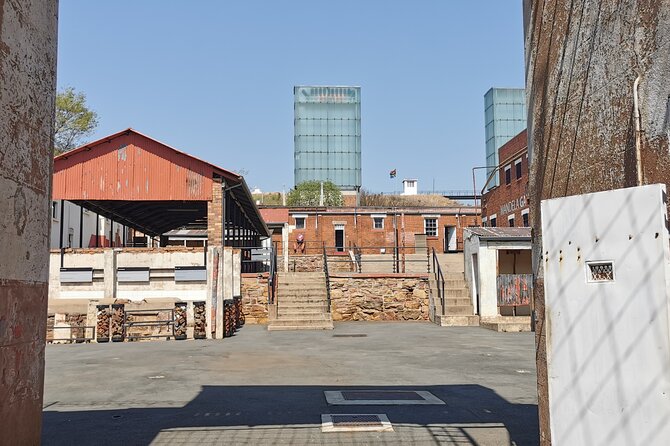
Johannesburg is not a city you understand from one central square. Its story is spread across suburban viewpoints, old neighborhoods, downtown streets, and Soweto. That makes a car-based tour useful, especially if you have only one morning or afternoon.
This experience is designed for your own group, so you avoid the usual tour-bus routine of waiting for people at several hotels. Your guide can also spend more time on the subjects you care about. If you want to ask about Mandela, apartheid, Johannesburg’s gold rush, Soweto, or the 2010 World Cup, a private format gives you room to do so.
The tour begins in the Pretoria area according to the supplied location information, with pickup offered. Because Johannesburg, Soweto, and Pretoria are separate urban areas, confirm the exact pickup address and timing before you pay. The value depends partly on how well the pickup fits your plans.
At $102.34 per person, this is not the cheapest way to see the city. It becomes easier to justify when two or more people share the experience and when you value a private vehicle, a flexible schedule, and museum admission. You are paying for time saved as much as for sightseeing.
More Soweto and Apartheid Museum visits:
- Soweto Half Day Tour
★ 5.0 · 231 reviews - Johannesburg and Soweto tour
★ 5.0 · 231 reviews - Johannesburg Full-Day Tour(Soweto/Jo-Burg & Apartheid Museum)
★ 5.0 · 110 reviews
Nelson Mandela Square and the first photo
Nelson Mandela Square is a gentle start. The main purpose here is simple: you can take a photo beside the statue of Mandela. The stop lasts about 15 minutes and has no admission charge.
That short visit suits anyone who wants a recognizable Johannesburg image without spending a long time at the start of the tour. It also gives your guide a natural opening to explain Mandela’s place in the country’s public life.
Do not expect a full museum visit here. This is a quick orientation stop, not a major historical presentation. If you want a slower look at the square, shops, or restaurants, you would need to ask whether the schedule allows it. With a packed half-day, the answer may be no.
Johannesburg from suburbs to city center
The route then passes through several of Johannesburg’s more picturesque and modern suburbs. You also pass the suburb where Nelson Mandela lived during his presidency. These drives help you see that Johannesburg is not one uniform place. The city changes from polished residential areas to older districts and then to its central core.
The Munro Drive overlook is one of the best visual pauses. From here, you can take a wide photo of Johannesburg. A view from above is useful because the city can otherwise feel like a long sequence of roads and buildings viewed through a car window.
The tour also reaches central Johannesburg, where the great gold deposits were discovered. This is a key piece of context. Gold brought rapid growth and helped shape the city’s economy, population, and political story. Your guide’s explanation will make this stop far more useful than simply driving past downtown buildings.
The central-city portion lasts about 45 minutes, though the exact time at each point can vary. I would pay close attention here and ask questions. A short explanation about gold and urban growth can connect the later visits in Soweto to the wider story of Johannesburg.
Parktown, the Supreme Court, and old places of confinement
Parktown is an older neighborhood with its own history. The tour includes a stop at The View, described as a place with an important past. The visit lasts about 15 minutes, so expect an introduction and a chance to take in the setting rather than a long walk through the area.
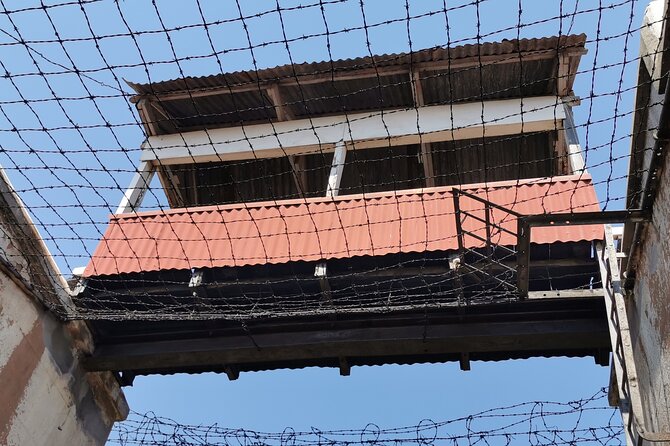
You also pass the Supreme Court of Justice and the prison where major figures including Nelson Mandela and Gandhi were imprisoned. These are powerful references, but the supplied details do not promise entry into the court or prison. Treat this part as a drive-by explanation unless your guide tells you otherwise.
This is one place where a good guide makes a large difference. Buildings connected to legal power and imprisonment can look ordinary from the road. Their meaning comes from the people held there and the political system around them. Ask your guide to explain what happened at the prison and which figures are connected to it.
The route contains several brief stops, so you should not expect every site to receive the same amount of attention. The private setup lets you ask for a little more context, but it does not create extra hours. If a particular place matters greatly to you, say so early.
A few more Pretoria days worth comparing
- Ultimate Johannesburg Tour
★ 5.0 · 200 reviews - Johannesburg: Pretoria and Cullinan Diamond Mine Tour
★ 4.7 · 165 reviews - Taste of Africa Food tasting Experience
★ 4.5 · 138 reviews - Harties Cableway Experience Ticket
★ 4.5 · 119 reviews
FNB Stadium and the Calabash
FNB Stadium is the tour’s clearest link to recent national celebration. Known as the Calabash, it hosted the 2010 World Cup. The stop lasts about 15 minutes and admission is free.
For football fans, this may be one of the most enjoyable photo stops. For others, it still helps explain how sport became part of South Africa’s public image after the end of apartheid. The stadium is also a useful change of subject after the heavier material connected to prisons, courts, and political struggle.
Again, this is an exterior stop rather than a stadium event or match. The tour information does not promise entry inside, a stadium tour, or access to seating areas. You should plan on seeing the building, hearing its significance, and taking photographs.
Hector Pieterson Museum and the Soweto uprising
The Hector Pieterson Museum is the most substantial museum visit on the route, with about 35 minutes set aside and admission included. The museum and memorial commemorate Hector Pieterson and the 1976 Soweto uprising, a major event in South Africa’s fight against apartheid.
This is the point where the tour’s earlier references to law, prisons, and political leadership come together. You are not only seeing a famous name. You are learning about young people, education, protest, and the government response that drew international attention.
Thirty-five minutes is enough for a focused visit, but it is not a leisurely museum afternoon. Read the key displays, listen closely to the guide, and decide in advance what you most want to understand. If you have strong interest in the uprising, ask whether the guide can adjust the schedule slightly.
The museum can be emotionally difficult. That is not a reason to skip it, but you should leave room to process what you see. The memorial outside gives the visit a direct human focus rather than treating the event as a distant political date.
Because the museum admission is included, you do not need to budget a separate entry fee for this stop. The guide is also expected to accompany you inside museums and explain the material, which is one of the main reasons to choose this tour over simply hiring a driver.
Mandela House in Soweto
Mandela House is the final listed stop and allows about 20 minutes inside the museum. This is the former home of Nelson Mandela in Soweto, now presented as a museum.
The house gives the story a domestic scale. After seeing statues, courts, prisons, stadiums, and large public institutions, you reach a place connected to Mandela’s daily life. It is a more personal way to finish the political history portion of the tour.
Twenty minutes is short, so you will need to keep moving. Admission is included. The tour description does not promise extra time for nearby shops, cafés, or an extended walk through Soweto, so ask your guide before assuming there will be time beyond the museum visit.
I like the order of the two Soweto stops. The Hector Pieterson Museum explains a wider national conflict, while Mandela House brings the story back to one person and one home. Taken together, they give you two different ways to understand Soweto.
What the guide can add to the experience
The guide is the heart of this tour. The vehicle gets you from place to place, but the explanations turn a series of stops into a connected story. Guide names praised in the available feedback include Irma Rodriguez and Daniela. You may not receive either person, so confirm guide details if that matters to you.
Irma was described as explaining the history of each place throughout the visit, with particular care and enthusiasm. Another account described Daniela as working hard to make the most of a tight schedule after a mid-morning flight arrival. Those details suggest the tour can work well when time is limited.
Still, private tours are not automatically excellent. One reported experience described a guide who explained very little and skipped several advertised stops. That is the clearest warning here. At pickup, confirm the main stops and tell the guide which subjects matter most. A private tour gives you a better chance to correct the plan early.
You should also ask questions instead of waiting for a lecture. Try asking how the gold discoveries changed Johannesburg, what happened at the prison, why Hector Pieterson became such a powerful symbol, and how the 2010 World Cup affected South Africa’s image. Specific questions usually produce a better visit than passive sightseeing.
Timing, transport, and the value of four and a half hours
The tour lasts approximately four hours and 30 minutes. An air-conditioned private vehicle is included, along with private transport, taxes, and all listed fees. Pickup is offered, but the exact pickup area and time should be confirmed because the tour is associated with Pretoria while the main sightseeing takes place in Johannesburg and Soweto.
The private vehicle is especially useful for a route with several separated stops. You do not have to arrange separate transport between Mandela Square, central Johannesburg, Parktown, the stadium, and Soweto. You also avoid waiting for other people to appear at each hotel.
The tradeoff is a tight schedule. The listed visits total only short blocks at many locations, and driving time takes part of the four and a half hours. You will see a lot, but you will not have long, quiet periods at each site.
Lunch is not included. Since the tour lasts less than five hours, many people may prefer to eat before or after, but the supplied information does not specify a meal stop. Ask about the plan if food is important to you.
The experience is described as suitable for most participants, and only your group takes part. No special mobility details are provided, so ask the provider directly if you have specific access needs at the museums or memorial.
Who should book this experience
I would choose this tour if you have one free morning or afternoon and want both Johannesburg and Soweto without planning several transfers. It also suits families and small groups who prefer a vehicle to a large coach and want the freedom to ask questions.
It is a good match for first-time visitors who want a broad introduction rather than a single museum. The route covers Mandela, Gandhi, gold, law, imprisonment, the 1976 uprising, football, and Soweto in one compact outing.
It may be less suitable if you prefer slow museum visits or long walks. The schedule is built for coverage. You will get a useful first look at many important places, but you may leave wishing for more time at Hector Pieterson Museum or Mandela House.
The price is most reasonable for a private group that values convenience. Solo visitors should weigh the $102.34 per-person cost against the time saved and the included transport and admissions. Group discounts are offered, though the exact reduction is not specified.
Should you book the Johannesburg and Soweto tour?
Book it if you want an efficient private introduction to Johannesburg and Soweto, especially when your time is limited. The strongest parts are the private vehicle, the two included museums, the Munro Drive view, and the chance to connect major historical sites with a live guide.
Before confirming, check the pickup location, ask who your guide will be, and confirm that the main stops are still planned. If you want detailed explanations, say so at the beginning. With a strong guide, this can be a thoughtful and practical way to see far more than you could manage alone in half a day. If you want an unhurried museum experience, choose a longer tour instead.
FAQ
How long does the tour last?
The tour lasts approximately 4 hours and 30 minutes.
Is this a private tour?
Yes. Only you, your friends, or your family will participate in the activity.
Is hotel pickup available?
Pickup is offered. The exact pickup point and timing should be confirmed before the tour, particularly because the listed location is Pretoria while the sightseeing route includes Johannesburg and Soweto.
What is included in the price?
The price includes an air-conditioned vehicle, private transport, all fees and taxes, and admission to Hector Pieterson Museum and Mandela House.
Is lunch included?
No. Lunch is not included in the tour price.
Can I cancel for a full refund?
Yes, if you cancel at least 24 hours before the experience start time. Cancellations or changes made less than 24 hours in advance are not accepted for a refund.
Just listed around Pretoria
- Kruger National Park 2 Days 1 Night Magical Safari from Johannesburg Private★ 5.0 · 5 reviews
- Pretoria Capital City Tour from Pretoria, every TUESDAY★ 4.5 · 5 reviews
- Constitutional Hill,Johannesburg City and Apartheid Museum with Soweto Day Tour★ 5.0 · 5 reviews
- Apartheid museum, Soweto and Joburg highlights tour★ 5.0 · 6 reviews
- From Pretoria: E-Bike in the wild with game near Jo’burg★ 5.0 · 6 reviews
- Pretoria: Half-Day City Tour with Hotel Pickup★ 4.2 · 6 reviews
- Traditional Tribal Village Tour★ 5.0 · 6 reviews
- Full-Day Cradle of Humankind Guided Tour from Johannesburg or Pretoria★ 4.5 · 6 reviews
Soweto & Apartheid Museum Tours, compared.


Soweto /Johannesburg and Apartheid Museum Guided Full Day Tour
Read our review →
Johannesburg Hop-On Hop-Off City Tour with Soweto Option
Read our review →


Jo’berg in 1 Day: Soweto, Apartheid Museum & City Tour
Read our review →
Full-Day Tour with Soweto and Apartheid Museum
Read our review →
Browse the lists this tour appears in