
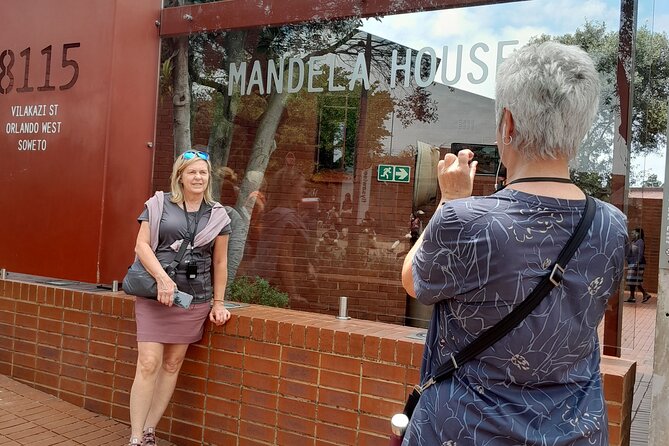
Reviewed · SOWETO & APARTHEID MUSEUM TOURS
Half Day Johannesurg and Soweto Guided Tour
Johannesburg’s story makes the strongest impression here: a gold-rush city shaped by segregation, resistance, migration, and democracy. In about five hours, you move from Constitution Hill and the old mining center to Soweto’s Vilakazi Street, once home to Nelson Mandela and Desmond Tutu.
I like the private vehicle and hotel pickup, which save time in a spread-out city. I also like the chance to pair major political sites with everyday Soweto, including a meal stop at Sakhumzi Restaurant and a look at local neighborhoods. The main drawback is pace. With many stops packed into five hours, some visits are brief, and lunch and the Hector Pieterson Museum entry cost extra.
Key points to know before booking
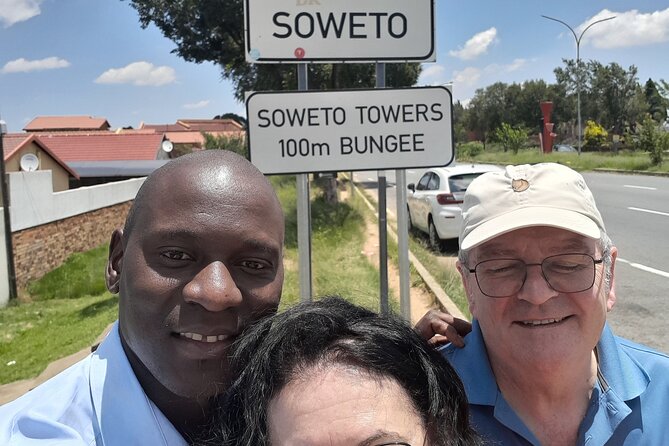
- Two cities in one short outing: The route covers central and northern Johannesburg, then continues into Soweto.
- A private tour: Only your group takes part, making it easier to ask questions or request a little flexibility.
- Strong historical focus: Constitution Hill, Mandela’s House, and the Hector Pieterson Museum explain different chapters of South Africa’s past.
- A guide-led city orientation: Nhlanhla, often called Lucky, is praised for safe driving, humor, clear explanations, and adapting the route to guests’ needs.
- Lunch is your choice and your cost: Sakhumzi Restaurant offers Soweto-style food, but the meal is not included in the tour price.
- Admission varies by stop: Constitution Hill and Mandela’s House are included. Hector Pieterson Museum admission is not.
Why this five-hour route works

Johannesburg can feel hard to read from a car window. The city spreads across hills and districts, and its neighborhoods change quickly. This tour gives you a guide to those changes, rather than simply dropping you at a few famous addresses.
You begin with a general introduction after pickup at your hotel. The route then connects affluent Houghton Estate, the crowded inner city, restored cultural districts, and several parts of Soweto. That broad sweep is useful if you have limited time or are visiting Johannesburg for the first time.
This is not a slow, single-neighborhood walking tour. It is a compact overview with short visits and plenty of driving. You will see more ground than you could manage alone in half a day, but you will not have long to linger at every site.
The private format helps. You can ask why one neighborhood looks so different from the next, request clarification on apartheid-era terms, and make the most of the available time. The guide is also responsible for the driving, so you can watch the city rather than worry about finding each stop.
More Soweto and Apartheid Museum visits:
- Soweto Half Day Tour
★ 5.0 · 231 reviews - Johannesburg and Soweto tour
★ 5.0 · 231 reviews - Johannesburg Full-Day Tour(Soweto/Jo-Burg & Apartheid Museum)
★ 5.0 · 110 reviews
Houghton Estate and Johannesburg’s northern views
Houghton Estate introduces you to one of Johannesburg’s wealthier suburbs. Nelson Mandela lived here during his presidency and died at his Houghton home in December 2013. The stop is brief, about 20 minutes, and centers on the neighborhood and the house associated with him.
Do not expect a full museum visit here. The value is in seeing the setting and hearing how Mandela’s public life continued into a private residential area. It adds a useful contrast to the later Soweto stops, where his name carries a different meaning.
Munro Drive provides another change of viewpoint. The road is a national monument built by Italian prisoners of war during the Second World War, and it looks across Johannesburg’s northern suburbs and the city’s large man-made subtropical forest.
The viewpoint lasts about 10 minutes. Bring your camera, but keep your expectations practical. This is a quick orientation stop, not a long scenic break. Its main purpose is to help you understand Johannesburg’s hills, scale, and spread before the tour heads toward denser districts.
Hillbrow and the city of contrasts
The drive through Hillbrow offers one of the clearest looks at Johannesburg’s changing population. The area is associated with migration from other parts of South Africa and from across the African continent. As you pass through different neighborhoods, the city can seem to shift from one country to another.
This part of the tour is mainly viewed from the vehicle. That is important because it means your guide’s explanation carries much of the experience. Ask questions as you go, especially if you want more context about segregation, population movement, and the way Johannesburg developed after apartheid.
The route then crosses Nelson Mandela Bridge toward Newtown. The bridge is a modern Johannesburg landmark, and the drive gives you a broad orientation to the central city, its heritage buildings, and places tied to the gold rush era of the late 1800s.
You may see old mining headgear, stamp mills, and carts along the route. These remnants help explain why the city grew where it did. Johannesburg’s early prosperity came from gold, but the wealth was built through systems that controlled where people lived and worked. The tour’s value lies in linking those physical remains to the later political story.
Constitution Hill, the tour’s most important visit
Constitution Hill is the most substantial stop, with about one hour set aside. The site was once a prison and military fort. It now functions as a living museum, with exhibitions and tours about South Africa’s path to democracy, as well as the country’s highest court.
Political figures including Nelson Mandela, Mahatma Gandhi, and Winnie Madikizela-Mandela were held at the prison. That makes this more than a standard city attraction. The buildings give physical shape to laws and institutions that can otherwise feel abstract when explained from a moving car.
The included admission is a real advantage. You have enough time for a meaningful introduction, though the exact balance between guided explanation and independent viewing may depend on the day’s schedule. Since the full itinerary is busy, do not expect to examine every display in detail.
I would pay close attention here. Constitution Hill supplies the framework for the rest of the day: the prison system, resistance, political leadership, and the transition toward constitutional government. Without this stop, the later visits to Mandela’s House and the Hector Pieterson Museum would carry less context.
A few more Pretoria days worth comparing
- Ultimate Johannesburg Tour
★ 5.0 · 200 reviews - Johannesburg: Pretoria and Cullinan Diamond Mine Tour
★ 4.7 · 165 reviews - Taste of Africa Food tasting Experience
★ 4.5 · 138 reviews - Harties Cableway Experience Ticket
★ 4.5 · 119 reviews
Ferreira Mine Stope and Maboneng Precinct
The Standard Bank Ferreira Mine Stope is a small but unusual stop. A forgotten mine entrance was found during construction of the Standard Bank headquarters in downtown Johannesburg and preserved in the basement as a museum.
You get about 20 minutes here. It is not a large mining attraction, but it connects directly to the city’s earliest prospecting activity. For anyone interested in how Johannesburg began, this modest site is more revealing than a generic city drive.
Maboneng Precinct provides a very different picture. Once neglected, the area was brought back to life with restaurants, coffee shops, clothing boutiques, art galleries, retail space, and studios. The tour allows about 20 minutes, usually enough for a quick look and perhaps a coffee or photograph if timing permits.
The short stop gives you a glimpse of inner-city renewal, but it is not enough for a relaxed meal or gallery visit. If Maboneng is your main interest, you would need a separate visit. On this tour, it works as a useful counterpoint to the older mining and prison sites.
The route also passes Soccer City, currently the largest football stadium in Africa. It hosted the opening ceremony, matches, and final of the 2010 FIFA World Cup. This is a drive-by landmark rather than a stadium tour, but football fans will appreciate the connection.
Entering Soweto through Diepkloof
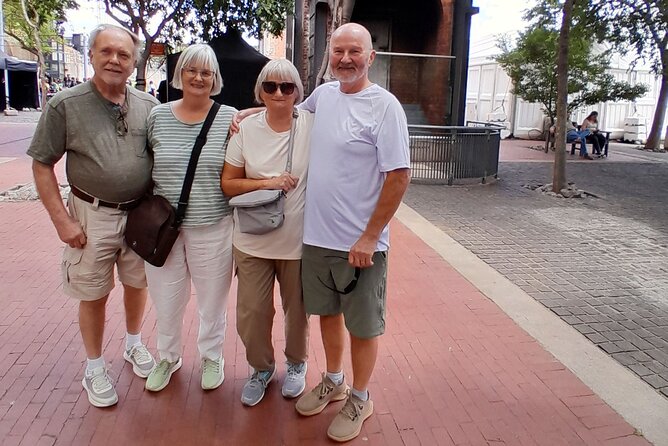
The transition into Soweto is one of the day’s most useful features. Instead of treating the township as one uniform place, the route introduces different sections, including Diepkloof Park and Diepkloof Extension.
Diepkloof Extension is described as an upmarket part of Soweto, with large, formally built homes owned by Black lower and upper middle-class residents. Housing prices there are higher than in some other Soweto suburbs. This detail matters because it challenges the simple picture many first-time visitors carry of Soweto.
You spend about 20 minutes in the area, mostly seeing it from the vehicle and listening to the guide. The experience is strongest when you compare the homes, roads, and local setting with the neighborhoods visited earlier in Johannesburg.
The tour also passes Chris Hani Baragwanath Hospital. It occupies about 173 acres, has approximately 3,200 beds, and employs around 6,760 staff. The hospital is widely described as the third-largest in the world, and the guide shares stories as you view it from the road.
Two cooling towers form another recognizable Soweto landmark. They now house entertainment facilities, including a bungee jump and a barbecue restaurant. Again, this is a drive-by view, not a dedicated activity stop, but it shows how old industrial structures have been given new uses.
Vilakazi Street and a Soweto-style meal
Vilakazi Street is the emotional center of the Soweto portion. It is famous for having been home to two Nobel Prize winners, Nelson Mandela and Archbishop Desmond Tutu. The street also has restaurants, music, dance, and local businesses, so it feels like a lived-in place rather than a memorial strip alone.
The stop at Sakhumzi Restaurant lasts about 40 minutes. Its buffet features South African dishes such as umngqusho, made with samp and beans, and mogodu, or tripe. The meal is not included, so you should budget separately if you want to eat here.
Forty minutes is enough for a quick meal, but not a leisurely one if the restaurant is busy. You may prefer to use the time for food rather than shopping or extended conversation. The stop gives you a practical way to sample local cooking without having to choose a restaurant on your own.
Vilakazi Street is also where the tour connects national history with ordinary daily life. You can hear about Mandela and Tutu, but you also see the people and businesses that keep the street active today. Music and dance here reflect both traditional rhythms and newer South African styles.
Mandela’s House and the story behind the address
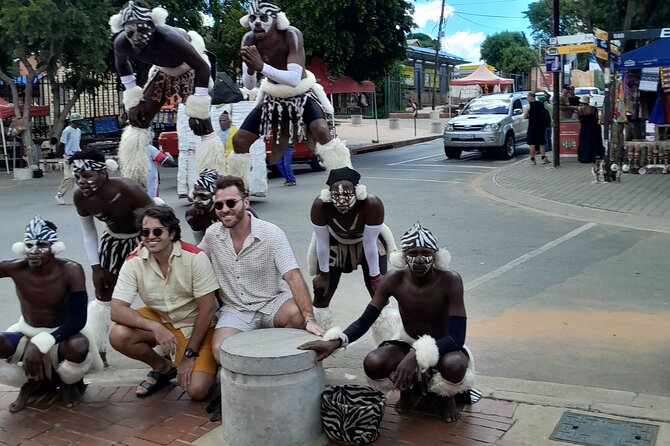
Mandela’s House is a separate visit with about 20 minutes allotted. The former home is now a heritage site with exhibits, sound, film, interpretive panels, and guided tours.
The short time limit is the main consideration. If you want to read every panel or spend time with each artefact, you may feel rushed. Still, the visit is worthwhile because it puts Mandela’s personal life in a small domestic setting after you have already seen the more formal prison and government-related sites.
Taken together, Houghton Estate and Mandela’s House show two different sides of Mandela’s public story. Houghton points to his later years and presidential residence. Soweto connects him to the struggle against apartheid and to the community where his political life became deeply rooted.
Hector Pieterson Museum and the 1976 uprising
The Hector Pieterson Museum and Memorial covers the 1976 Soweto student uprising. It is named for Hector Pieterson, a 13-year-old killed during the protest, and explains the uprising as an act of resistance against apartheid rule.
The museum visit is self-guided and lasts about 30 minutes. Admission is not included, so check the extra cost when planning your budget. The visit may be especially important for you if you want a clearer understanding of student resistance and the human cost of the apartheid system.
The museum is not simply another stop on a sightseeing loop. It adds a younger generation’s experience to the political story introduced at Constitution Hill and continued at Mandela’s House. Allow yourself time to think about what you are seeing, even though the overall schedule is tight.
What the guide adds to the experience
The guide is central to this tour because several stops are viewed from the vehicle. The feedback attached to this experience repeatedly identifies Nhlanhla, known as Lucky, as a friendly, courteous guide with a good sense of humor and strong command of Johannesburg’s past.
You can expect the guide to handle the driving, provide a general introduction, and explain the different districts as the route unfolds. Nhlanhla is also described as attentive and flexible, which matters when a five-hour schedule includes both major museums and quick neighborhood views.
The strongest praise focuses on clear explanations, safe driving, energy, and passion for Johannesburg and South Africa. Those qualities matter more here than a polished script. The city’s past is complex, and a guide who can explain it in plain language makes the difference between a meaningful visit and a string of disconnected sights.
The assigned guide can vary, so Nhlanhla or Lucky should not be treated as a guaranteed name. If that guide is assigned to your group, you can reasonably expect a personal, history-focused approach based on the information available for this experience.
Is $85.06 good value?
At $85.06 per person, the tour is not the cheapest way to see Johannesburg and Soweto. But it includes private transportation, an air-conditioned vehicle, bottled water, hotel pickup, and an English-speaking guide. Constitution Hill and Mandela’s House admission are included as well.
The price makes the most sense for you if time is limited, you want door-to-door transport, or you prefer a private guide to explain the city as you go. Organizing this many districts and sites independently in five hours would be difficult.
You should add money for lunch at Sakhumzi Restaurant and entry to the Hector Pieterson Museum. Personal purchases are also excluded. The price is therefore best viewed as a transport and guiding fee with selected admissions, not as an all-inclusive day out.
The 39-day average advance booking time suggests this is an experience people often arrange well before their visit. If your schedule is fixed, booking early is sensible. Free cancellation is available up to 24 hours before the start time, but changes or cancellations inside that window are not accepted for a refund.
Who should book this Johannesburg and Soweto tour?
I would recommend it to first-time visitors, history-minded travelers, couples, families, and anyone with only half a day in the city. It is especially useful if you want a private setting and a guide who can adjust explanations to your questions.
It also suits people who prefer seeing a broad range of Johannesburg rather than spending five hours in one museum. You will visit wealthy suburbs, inner-city districts, former prison grounds, mining sites, renovated cultural areas, and several parts of Soweto.
I would hesitate if your priority is long museum visits, extended photography, or a relaxed meal. The schedule includes many stops, and several are short drive-bys. You may leave with a strong overview but a desire to return for Constitution Hill, Maboneng, Vilakazi Street, or the Hector Pieterson Museum at greater length.
Final verdict: book it for context and convenience
Book this tour if you want an efficient, private introduction to Johannesburg and Soweto with history at its center. Constitution Hill, Mandela’s House, Vilakazi Street, and the Hector Pieterson Museum create a strong sequence, while the city views and neighborhood drives show how varied Johannesburg is.
The five-hour format requires sensible expectations. You are buying a well-guided overview, not a slow local walking day. With lunch and one museum admission extra, the $85.06 price is fair for the private vehicle, pickup, included entries, and guide-led context, especially when your time is short.
FAQ
How long is the Johannesburg and Soweto tour?
The tour lasts approximately five hours, including pickup, sightseeing, the visits in Johannesburg and Soweto, and return to your starting point or accommodation in Johannesburg.
Is hotel pickup available?
Yes. Pickup is offered from your hotel, and you are returned to the starting point or your accommodation in Johannesburg at the end.
Is this a private tour?
Yes. Only your group participates in the private tour or activity.
Which admissions are included?
Admission to Constitution Hill and Mandela’s House is included. Hector Pieterson Museum admission is not included. The other listed stops do not require an admission ticket according to the tour details.
Is lunch included?
No. Lunch is not included. The itinerary allows about 40 minutes at Sakhumzi Restaurant on Vilakazi Street, where you can purchase Soweto-style buffet food.
What happens if I need to cancel?
You can cancel for a full refund up to 24 hours before the experience start time. Cancellations or changes made less than 24 hours before the start time are not accepted for a refund.
Just listed around Pretoria
- Kruger National Park 2 Days 1 Night Magical Safari from Johannesburg Private★ 5.0 · 5 reviews
- Pretoria Capital City Tour from Pretoria, every TUESDAY★ 4.5 · 5 reviews
- Constitutional Hill,Johannesburg City and Apartheid Museum with Soweto Day Tour★ 5.0 · 5 reviews
- Apartheid museum, Soweto and Joburg highlights tour★ 5.0 · 6 reviews
- From Pretoria: E-Bike in the wild with game near Jo’burg★ 5.0 · 6 reviews
- Pretoria: Half-Day City Tour with Hotel Pickup★ 4.2 · 6 reviews
- Traditional Tribal Village Tour★ 5.0 · 6 reviews
- Full-Day Cradle of Humankind Guided Tour from Johannesburg or Pretoria★ 4.5 · 6 reviews
Soweto & Apartheid Museum Tours, compared.


Soweto /Johannesburg and Apartheid Museum Guided Full Day Tour
Read our review →
Johannesburg Hop-On Hop-Off City Tour with Soweto Option
Read our review →


Jo’berg in 1 Day: Soweto, Apartheid Museum & City Tour
Read our review →
Full-Day Tour with Soweto and Apartheid Museum
Read our review →
Browse the lists this tour appears in