
Reviewed · SOWETO & APARTHEID MUSEUM TOURS
Constitutional Hill and Soweto 5 hours tour.
Johannesburg’s story comes into sharp focus when you visit the Old Jail, a place where apartheid-era racial separation was enforced, then cross the city toward Soweto, where resistance and community life shaped modern South Africa. The contrast between a former prison and a living township gives this tour real weight.
I like the efficient route and the chance to see major sites in one morning or afternoon. I also like the personal touch available in a small or private group, especially if your guide is Thabelo or a guide from Soweto who can explain the area from personal experience. The main drawback is pace: five hours is enough for an introduction, not a full study of Johannesburg or Soweto.
Key points at a glance
- The Old Jail explains apartheid through the building itself, with separate sections once used for white and Black prisoners.
- The Constitutional Court adds a powerful contrast, showing how a former place of punishment became part of South Africa’s democratic legal system.
- Soweto’s key landmarks come quickly, including Mandela House, Hector Pieterson Memorial, Tutu House, and the Soweto Towers.
- The route connects gold mining to modern Johannesburg, with views of mine sand piles, Braamfontein, downtown, and Nelson Mandela Bridge.
- Small groups make questions easier, and a private booking may give you more time with the guide.
- The $62 price covers transport, guide services, pickup, drop-off, and Constitutional Court entry, but not the Mandela museum, Hector Pieterson Memorial, food, or drinks.
Why this five-hour route tells Johannesburg’s story well
Johannesburg can feel hard to read at first. It is a large Gauteng city shaped by gold, migration, racial control, protest, and rapid change. This tour gives you a useful framework by moving from the city’s early growth to its apartheid past and then into Soweto’s role in the fight for democracy.
You are not simply checking off landmarks. The route helps you connect physical places with larger events. Mine sand piles point to the gold rush that created Johannesburg. The Old Jail shows how the state controlled people by race. Soweto brings the story into neighborhoods where activists lived, families built communities, and young people challenged apartheid.
I would treat this as a strong first look rather than a complete Johannesburg tour. The stops are short, and several are drive-bys or photo stops. That is useful if you have only part of a day, but anyone wanting long museum visits, extended walks, or a slow look at local food will need more time elsewhere.
More Soweto and Apartheid Museum visits:
- Johannesburg: Hop-On Hop-Off Bus with Optional Soweto Tour
★ 4.6 · 985 reviews - Soweto /Johannesburg and Apartheid Museum Guided Full Day Tour
★ 5.0 · 932 reviews - Johannesburg Hop-On Hop-Off City Tour with Soweto Option
★ 4.5 · 768 reviews
The Old Jail and the Constitutional Court

The Old Jail is the emotional center of the city portion. Once regarded as a notorious prison, it is now connected with the Constitutional Court of South Africa. That change in purpose gives the visit a clear historical arc: a building associated with unequal treatment now linked to the country’s highest constitutional principles.
Inside the jail, you learn how prisoners were separated according to race. The white and Black sections were not treated as equal spaces, and the division helps make apartheid policy concrete. Instead of hearing only about laws and dates, you see how racial classification affected daily life inside an institution.
The tour includes entry fees to the Constitutional Court, which adds value to the $62 cost. The exact amount of time at this stop can depend on the day’s schedule, but you should expect the guide to explain the building and the system it replaced. Ask questions here. This is one of the places where a small group makes a real difference.
The Old Jail is not a light or cheerful stop, and that is part of its purpose. You may find the material difficult. Still, it gives the rest of the tour more meaning, since Soweto’s streets and memorials are easier to understand after you have seen the machinery of racial rule.
Braamfontein, mine sand, and Nelson Mandela Bridge
After the Old Jail, the vehicle passes through Braamfontein and crosses Nelson Mandela Bridge. You get only a brief look, but the drive gives you a sense of how central Johannesburg’s districts fit together.
The bridge is a five-minute pass-by rather than a walking stop. It is best viewed as a moving introduction to downtown, not a photo session with lots of free time. Keep your camera ready, but listen to the guide as the city changes outside the windows.
The large piles of sand from the gold mines are another useful sight. They are a reminder that Johannesburg grew from mining rather than from an old pre-colonial settlement. The pale, artificial hills are easy to overlook if you do not know what they represent. Your guide can connect them to the city’s birth, rise, decline, and later renewal.
This part of the tour is especially helpful if you have arrived in Johannesburg without much background. You begin to see the city as a place built around work, extraction, movement, and political change. The short drive cannot explain every district, but it gives you the broad outline.
Entering Soweto through Diepkloof

Soweto is the second major part of the tour. The name refers to a large township area southwest of Johannesburg, and its importance comes from both its role in apartheid-era urban planning and its place in the struggle against apartheid.
The first Soweto stop is Diepkloof, where you have a short photo stop. Ten minutes is not long, so do not expect a long walk or an extended neighborhood visit. Instead, use the stop to notice the scale of the township and to ask your guide how the area fits into Soweto’s wider story.
The route also passes Chris Hani Baragwanath Academic Hospital. It is listed as a drive-by, so you may not stop to enter or explore it. The hospital is part of the Soweto setting and helps you see that this is a functioning urban area, not a museum district built only for sightseeing.
That distinction matters. Soweto is a lived-in community. You will see major historical places, but the tour also moves through ordinary streets and active neighborhoods. You should approach the visit with respect, listen carefully, and avoid treating homes or residents as scenery.
A few more Johannesburg days worth comparing
- From Johannesburg: Pilanesberg Nature Reserve Game Safari
★ 4.8 · 1,327 reviews - Full Day Ultimate Pilanesberg National Park Safari from Johannesburg or Pretoria
★ 4.5 · 718 reviews - Half-Day Tour of Soweto Tour
★ 4.5 · 712 reviews - Soweto: Walking Tour with a Local Guide and Lunch
★ 4.9 · 648 reviews
Soweto Towers and the city’s changing identity
The Soweto Towers provide a five-minute photo stop. Their size and location make them easy to recognize, and they give the route a more modern visual marker after the heavy history of the Old Jail and the political memory of Soweto.
Because the stop is short, this is a quick view rather than an activity-based visit. You may want to use the time for photographs and then return your attention to the guide. The towers also help show that Soweto has more than one story. It is linked to protest and apartheid history, but it is also part of present-day Johannesburg.
The tour’s balance between old and new is one of its strengths. You move from mining remnants to a city bridge, then from a former prison to township landmarks and modern structures. The experience does not reduce Johannesburg to one period.
Tutu House and the Mandela family home
Tutu House is a short walking stop. The itinerary allows about five minutes, so expect an exterior look and a brief explanation rather than a long museum visit. The stop links Soweto with Desmond Tutu, one of South Africa’s best-known religious and political figures.
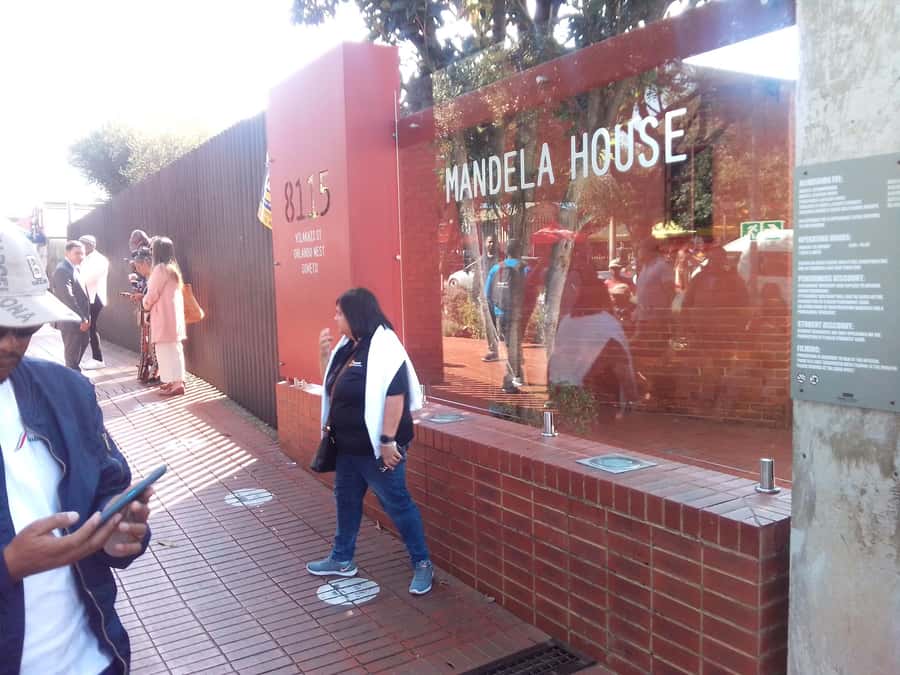
Mandela’s House receives a guided visit of about 15 minutes. The tour includes the house as a stop, but the entry fee to the Mandela museum is not included. Check the current arrangements when booking so you know if you will pay separately for admission.
The short visit is useful for a first look at Nelson Mandela’s connection to Soweto. It is not enough time to study every room, object, or display in detail. If Mandela’s life is your main reason for booking, you may want to return for a longer visit.
Still, the location matters. The house brings national history down to a residential scale. You are not just hearing about a political leader in an abstract way. You are seeing the place connected with his life in Soweto, within the community that helped shape South Africa’s political story.
The guide can make a big difference here. One guide named in the tour information is Thabelo, who has led private tours and is praised for making it easy to ask questions. A Soweto-born guide is another strong possibility, since local experience can add useful context to places that might otherwise become quick photo stops.
Hector Pieterson Memorial and the student uprising
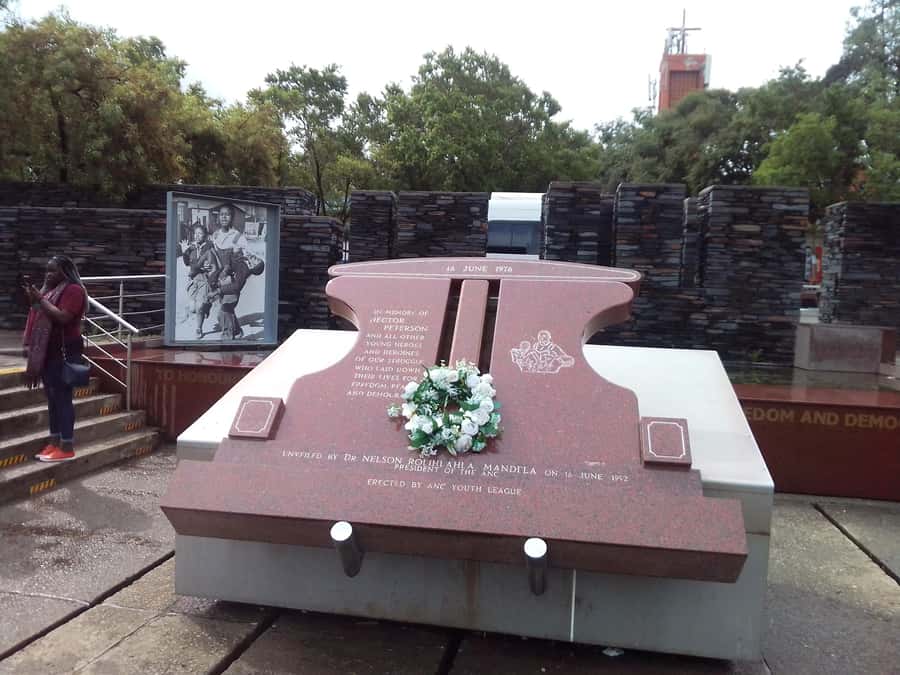
The Hector Pieterson Memorial is one of the most important stops in Soweto. It commemorates the schoolchildren involved in the 1976 Soweto uprising, a turning point in the fight against apartheid.
The visit is guided and listed at about 15 minutes, with a separate entry fee that you pay yourself. That fee is worth planning for, since the memorial gives the tour’s history a specific human focus. The name Hector Pieterson is closely tied to the image of a child being carried after being shot during the uprising, an image that helped show the world what was happening in South Africa.
This is another serious stop. The memorial asks you to think about young people, education, language, and state violence. You may want to keep questions for the guide rather than rushing through for photographs.
The timing is the main limitation. Fifteen minutes can introduce the memorial, but it will not allow a slow museum visit. If you need more time at each exhibit, a longer Soweto program would suit you better. For a first tour, though, this stop gives the day a clear historical focus.
Culture, heritage, and local food
The experience promises an introduction to Soweto’s culture, heritage, history, and local food. Food is not included, and the schedule does not specify a meal or a particular restaurant, so you should not book this expecting a dedicated tasting tour.
You may hear about local dishes and food traditions from the guide, but bring money if you hope to buy something during the outing. Food, drinks, and the separate entrance fees for Mandela’s House and the Hector Pieterson Memorial are all extra.
The cultural value comes mainly through the guide and the setting. In a small group, you can ask about daily life, family history, local customs, and the way Soweto has changed. A guide who grew up in Soweto can give you a more personal account than a fixed audio presentation.
You should also keep your expectations sensible. Five hours cannot cover every part of Soweto or provide a complete picture of its communities. What it can do is give you an informed starting point and show why this township is central to South African history.
What the $62 price includes
At $62 per person, the tour offers good value if you need transport from Johannesburg and want several major places linked in one route. Pickup and drop-off are included, along with the vehicle, English-speaking guide, and Constitutional Court entry.
The main extra costs are easy to identify:
- Admission to Mandela’s House or museum
- Admission to the Hector Pieterson Memorial
- Food
- Drinks
That makes the real cost slightly higher than the advertised price, especially if you choose to enter both museums. Even so, arranging separate transport to the Old Jail, downtown, and several Soweto sites could be less convenient and harder to coordinate.
I especially like the included pickup options. You can request collection in Melrose, Rosebank, O.R. Tambo, Sandton, or Fourways, with drop-off in the same areas. This is practical if you are staying in one of those parts of Gauteng or using Johannesburg as a stopover.
The five-hour format also has value. You see a lot without giving up an entire day, though the activity is described as valid for one day and starting times depend on availability. Confirm the pickup time carefully and wait in your hotel lobby with your passport or a copy, charged phone, and medication if needed.
Group size, comfort, and practical planning
Private and small-group options are available. I would choose a small group if you want a balance between price and conversation, or private touring if you have very specific questions and want the guide’s full attention.
The tour is wheelchair accessible, but the short walking stops and museum arrangements may still be worth confirming when you book. Comfortable shoes are sensible, along with sunscreen, a sun hat, a camera, cash, and a credit card. The supplied guidance also asks you to tell the guide when you need to take medication.
English is the listed tour language. Pickup instructions are simple: wait in the lobby at the agreed time and look for a guide with a name tag and badge. The guide carries the tour information, so bring a charged smartphone if you need to contact the operator.
The activity is not suitable for people over 95. Free cancellation is available up to 24 hours before departure, and you can reserve now and pay later. Those terms are useful if your Johannesburg plans may change, but they do not replace checking the exact pickup time and available start time.
Who should book this Johannesburg tour?
I would recommend it to you if this is your first visit to Johannesburg, you have only five hours free, or you want a guided introduction before exploring more on your own. It suits history-minded visitors who want apartheid history explained at actual sites rather than only in a classroom or museum.
It is also a good fit if you prefer not to arrange transport between Johannesburg and Soweto yourself. The route covers a lot of ground, and the guide provides the links between places that might otherwise feel disconnected.
I would hesitate if you want long visits at Mandela’s House or the Hector Pieterson Memorial, a full meal, extensive walking, or time to explore Soweto independently. The tour moves briskly, and the key landmarks receive short visits.
Should you book Constitutional Hill and Soweto?
Book it if you want a well-packed introduction to Johannesburg’s origins, apartheid, and Soweto in one half-day outing. The strongest features are the Old Jail, the Constitutional Court connection, the carefully chosen Soweto landmarks, and the chance to ask questions in a small or private group.
Before paying, budget for the two separate museum fees and any food or drinks. If you do that, the $62 price is fair for included transport, pickup, drop-off, guiding, and Constitutional Court entry. Choose this experience for context and convenience, not for a slow, in-depth museum day.
FAQ
How long does the Constitutional Hill and Soweto tour last?
The tour lasts five hours. It is described as a one-day activity, with starting times depending on availability.
Where can pickup and drop-off take place?
Pickup and drop-off are available in Melrose, Rosebank, O.R. Tambo, Fourways, and Sandton.
Is transport included?
Yes. Transport, a guide, pickup, and drop-off are included in the tour price.
Is entry to the Constitutional Court included?
Yes. Entry fees to the Constitutional Court are included.
Are Mandela’s House and Hector Pieterson Memorial entry fees included?
No. Entry fees to the Mandela museum and Hector Pieterson Memorial are not included.
Is food included?
No. Food and drinks are not included.
What language does the guide speak?
The live tour guide speaks English.
Is the tour wheelchair accessible?
Yes. The activity is listed as wheelchair accessible.
Can I cancel the booking for a full refund?
Yes. You can cancel up to 24 hours in advance for a full refund. You can also reserve now and pay later.
Just listed around Johannesburg
- 5 Day Kruger Glamping Safari and Panorama Tour★ 5.0 · 5 reviews
- Cradle of Humankind and Maropeng Day Tour from Johannesburg★ 4.0 · 5 reviews
- Johannesburg: Hot Air Balloon Flight★ 5.0 · 5 reviews
- Lion park★ 4.5 · 5 reviews
- Half Day Soweto and Apartheid Museum Guided Tour★ 5.0 · 5 reviews
- 5 Day Kruger National Park and Panorama Route Safari★ 4.5 · 5 reviews
- Pretoria Historical Tour★ 4.0 · 5 reviews
- Luxury Car Johannesburg Airport Private Transfer★ 5.0 · 5 reviews
Soweto & Apartheid Museum Tours, compared.


Soweto /Johannesburg and Apartheid Museum Guided Full Day Tour
Read our review →
Johannesburg Hop-On Hop-Off City Tour with Soweto Option
Read our review →


Jo’berg in 1 Day: Soweto, Apartheid Museum & City Tour
Read our review →
Full-Day Tour with Soweto and Apartheid Museum
Read our review →
Browse the lists this tour appears in