

Reviewed · SOWETO & APARTHEID MUSEUM TOURS
Half-Day Tour of Soweto Tour
Soweto is best understood from the ground, not through a car window. This five-hour tour combines major landmarks with a guided walk through Motsoaledi informal settlement, where you can meet residents and visit a community day care supported by the tour company. Guides such as Tshepo, Prince, Cpho, and Erick have been praised for bringing local knowledge, humor, and personal feeling to the story.
I like the local guide approach and the chance to see more than famous names and monuments. I also like the useful mix of history and present-day life: the Hector Pieterson Museum explains the 1976 student uprising, while Motsoaledi shows how some residents live today. The main consideration is emotional weight. This is not a light sightseeing trip, and the informal settlement visit may feel uncomfortable if you prefer to avoid poverty-focused tourism.
Key points to know before you book

- A local perspective: Your guide comes from the Johannesburg or Soweto area and adds personal context to apartheid, township life, and current challenges.
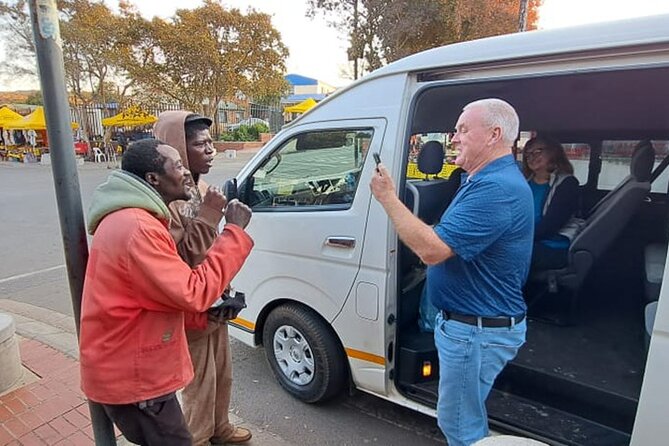
- Motsoaledi walk: You leave the minivan and walk sandy streets, meet residents, and visit a day care supported through the tour.
- Hector Pieterson Museum included: Allow about 45 minutes for one of Soweto’s most important historical sites.
- Mandela House is optional: A stop may be possible, but admission costs extra and time may not allow it.
- Pickup makes the day simple: Hotel pickup and drop-off, air-conditioned transport, and onboard uncapped Wi-Fi are included.
- Small-group format: The maximum group size is 15, though the actual number can vary.
Why a guide matters in Soweto
Soweto is a large township with many layers. You can see grand stadiums, established residential streets, informal settlements, memorials, churches, museums, cafés, and craft stalls within the same half-day. That mix is difficult to interpret on your own, especially if your time in Johannesburg is short.
The guide is the heart of this experience. Tshepo is repeatedly praised for being punctual, passionate, and focused on safety while still showing the real Soweto. Prince is described as funny and engaging, while Cpho is a good name to request if you want a guide who can talk with solo visitors and encourage thoughtful discussion. Other guides, including Erick, Patience, Khutsu, Carson, Deneko, and Makhubela Thapelo, have also led this tour.
You should expect more than a memorized speech. The strongest guides explain how apartheid shaped Johannesburg, then connect that past to the township you see today. They can also give you a more personal sense of Soweto’s culture and daily life. The exact guide is assigned by the operator, so requesting a particular person may not be guaranteed, but the range of strong guide feedback is encouraging.
More Soweto and Apartheid Museum visits:
- Johannesburg: Hop-On Hop-Off Bus with Optional Soweto Tour
★ 4.6 · 985 reviews - Soweto /Johannesburg and Apartheid Museum Guided Full Day Tour
★ 5.0 · 932 reviews - Johannesburg Hop-On Hop-Off City Tour with Soweto Option
★ 4.5 · 768 reviews
From FNB Stadium to Diepkloof
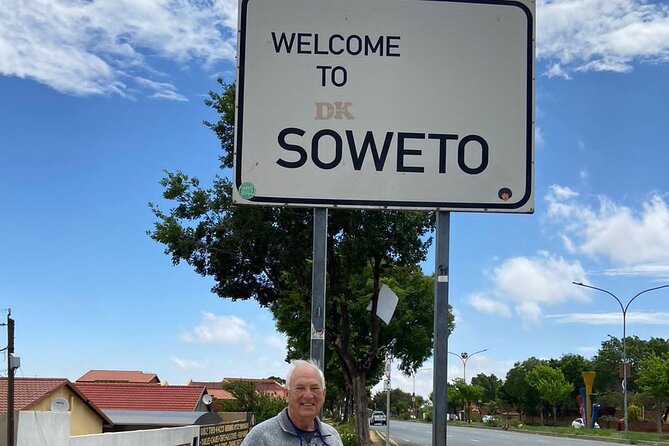
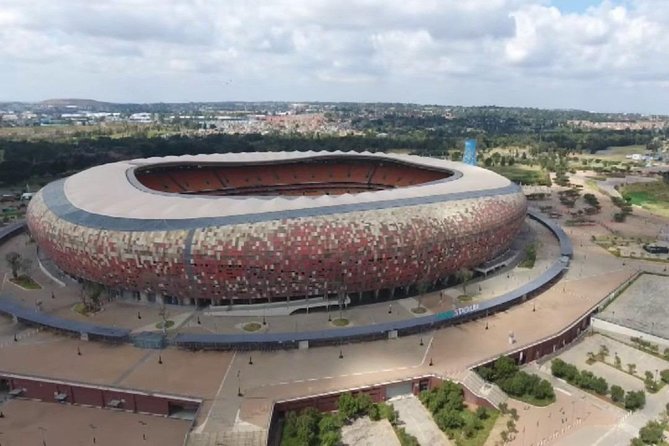
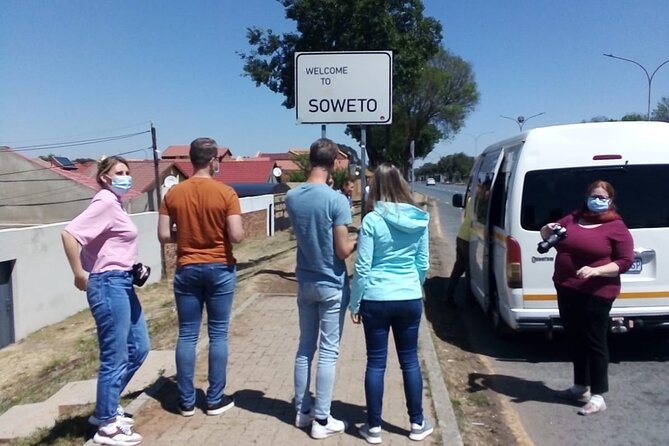
The tour begins with hotel pickup in Johannesburg and a drive toward Soweto in an air-conditioned minivan. FNB Stadium is the first major landmark, seen on the way in. It hosted the opening and closing ceremonies of the 2010 World Cup, so it offers a quick reminder that Soweto is connected to major international events as well as local struggles.
The stop in Diepkloof brings you closer to ordinary township commerce. You may walk past vendors selling a wide range of goods, an easy way to see how public streets double as places to shop, meet, and work. This part lasts around 15 minutes, so do not expect a long market visit or time for serious shopping.
The route continues past Baragwanath Hospital, a huge taxi rank, and the historic Diepkloof area. These are mostly drive-by sights, but they help you understand the size and movement of Soweto. The taxi rank and hospital are especially useful landmarks because they show the township as a working urban center, not simply a place preserved for its past.
Motsoaledi and the difficult question of township visits
The most distinctive part of the morning is the walk through Motsoaledi informal settlement. You leave the vehicle and follow your guide along sandy streets past local dwellings. You may greet residents, see a typical informal settlement day care, and learn about daily life in an area with limited resources.
The tour company says it supports the day care through visits and donations. Some people have chosen to contribute money for school supplies or other resources. That support can give the visit a practical purpose, but you should decide in advance how you feel about this kind of community tourism.
The experience can be humbling. One account describes seeing a very small room occupied by a mother and eight children, without electricity or running water. That detail makes the economic gap very real, but it also points to the need for respectful behavior. Listen to your guide, ask before taking photographs, and remember that residents are people going about their lives, not scenery.
The walk lasts about 30 minutes. Wear comfortable shoes that can handle sand and uneven ground. This is not a polished attraction, and that is precisely why it can teach you something, but it may not suit children or adults who find poverty-focused visits distressing.
Regina Mundi and Walter Sisulu Square
After Motsoaledi, the minivan continues through Orlando West toward central Soweto. The route includes Regina Mundi Church and Freedom Square, also known as Walter Sisulu Square of Dedication in Kliptown.
The church is presented as a quick overview rather than a full interior visit. Freedom Square is also a short stop, but the guide can place it within the wider political story of Soweto. Keep your expectations sensible here. You are getting orientation and context, not a long guided museum session.
These brief pauses work well because the tour does not stay in one narrow part of Soweto. You see different types of neighborhoods and public spaces, then move on before the day becomes repetitive. The tradeoff is that the schedule can feel brisk if you want to linger at each location.
More half day trips in Johannesburg:
- Johannesburg and Soweto: Half-Day Tour
★ 4.8 · 439 reviews - From Johannesburg: Lion & Safari Park Half-Day Tour
★ 4.6 · 384 reviews - Johannesburg: Soweto Half-Day Tour
★ 4.7 · 196 reviews - Johannesburg: Half-Day Soweto Tour with a Local Guide
★ 4.8 · 110 reviews
Hector Pieterson Museum: the tour’s central history lesson
The Hector Pieterson Museum and Memorial is the most substantial historical stop, with about 45 minutes set aside and admission included. It is in Orlando West, close to where Hector Pieterson was killed on June 16, 1976, during the student uprising against the apartheid government’s education policies.
The museum gives the date and events a human scale. Instead of hearing only broad facts about apartheid, you encounter the story through a site tied to a young student and the photographs that carried the violence of that day around the world. The museum has been singled out as especially powerful and well presented, and it is likely to be the emotional center of your visit.
Forty-five minutes is enough for an introduction, but not for a slow, detailed study of every display. If this subject matters greatly to you, you may want a longer museum visit on another day. For a half-day overview, though, the stop provides a strong foundation for understanding why Soweto became a worldwide symbol of resistance.
Vilakazi Street and the Mandela connection
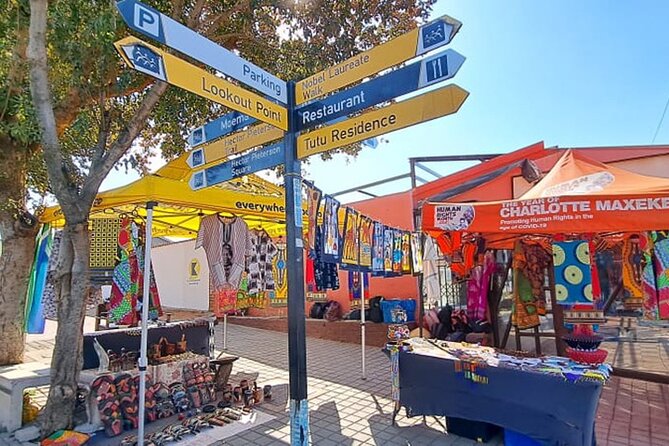
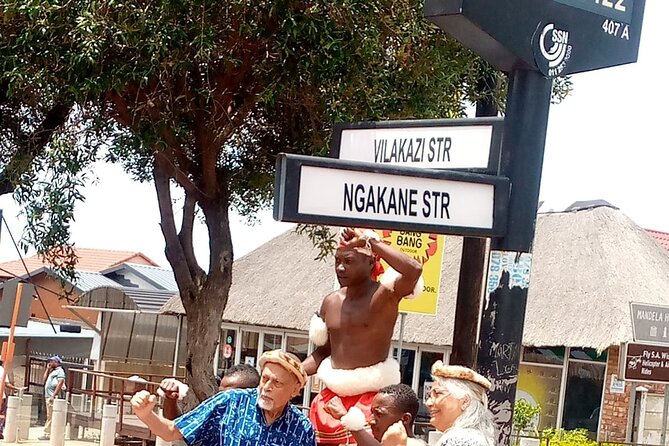
The tour then reaches Vilakazi Street, one of Soweto’s best-known streets. You pass monuments and the former homes of Nelson and Winnie Mandela and Archbishop Desmond Tutu. Seeing two Nobel Peace Prize figures associated with the same street gives the place unusual symbolic weight.
The description promises the homes as part of the route, but you should distinguish between passing them and entering them. A few people were not offered a visit to Desmond Tutu’s house, so treat that part as a view from the street rather than a guaranteed interior tour.
Nelson Mandela House may be available as an optional stop if time permits. Entry is not included, and you pay the admission cost yourself. The planned visit is around 20 minutes, which gives you a taste of the museum but not an extended look. If Mandela House is a top priority, ask your guide early in the tour whether the timing allows it.
This is one of the tour’s practical strengths: you can see the setting without committing to a full museum visit. The weakness is that a busy day, traffic, or the needs of the group may reduce the time available.
Ending at the Soweto Towers
The final stop is the Soweto Towers, a pair of large cooling towers that have become a well-known local landmark. The tour ends here, giving you time to look around the craft market, watch people, or buy food and drinks at a nearby café.
Lunch is not included. Plan to bring money for a meal, snacks, and drinks. Alcoholic drinks may also be purchased, but food and drinks are otherwise listed as extra.
Bungee jumping from the towers is available at your own cost and only if time allows. Do not book this tour expecting a guaranteed jump. It is an optional add-on at the end, and the schedule may not leave enough time.
Ending here gives the half-day a more relaxed final note after the museum and settlement walk. It also lets you choose your own pace for a short while. If you have a connecting flight or a fixed afternoon appointment, allow extra time beyond the advertised five hours.
What the $63.26 price buys you
At $63.26 per person, the tour is priced as a convenient, guided introduction rather than a bare transport service. You get hotel pickup and drop-off, an air-conditioned minivan, a local guide, onboard uncapped Wi-Fi, and admission to the Hector Pieterson Museum.
The value comes from combining several kinds of experience in one morning. A private taxi or self-directed visit might let you spend longer at one museum, but it would not necessarily provide the same local explanation or an organized walk through Motsoaledi. You also avoid having to plan the route between distant parts of Soweto.
The price does not cover lunch, drinks, Mandela House admission, or bungee jumping. Those extras are easy to overlook, so budget for them if you want a fuller day. The tour is also not designed for travelers who want complete control over timing. You trade flexibility for structure and local guidance.
The maximum group size is 15. That is small enough for questions and conversation, though it is not a private tour. If you are hoping for a quiet, highly personal outing, ask about private options. If you want a practical introduction during a short Johannesburg stay, the group format keeps the cost more reasonable.
Safety, comfort, and the right mindset
Pickup and drop-off remove much of the transport worry. The guide is responsible for keeping the group together and helping you move through the township safely. One solo visitor who had been especially concerned about safety found the experience comfortable, and punctual pickup is a repeated practical strength.
Still, use ordinary urban-travel judgment. Stay with the group, follow the guide’s advice, and ask before photographing people or homes. The Motsoaledi section involves walking on sand and through modest residential areas, so sturdy shoes and modest, comfortable clothing make sense.
Most people can participate, and service animals are allowed. Children must be accompanied by an adult, and the child rate applies only when a child shares with two paying adults. The tour is near public transportation, though the main convenience is the included hotel transfer.
The emotional side matters as much as the physical side. You will move from football stadiums and street vendors to apartheid memorials and homes with very few basic services. That contrast can bring sadness, anger, gratitude, and compassion in the same morning. A good guide helps you process those shifts without turning the visit into a performance.
Who will get the most from this tour?
I would choose this experience if you are visiting Johannesburg for the first time, have only half a day, or want help making sense of Soweto’s past and present. It also suits solo visitors who want an organized outing, since the minivan and guide provide structure without requiring you to assemble a group.
It is a strong choice for anyone interested in apartheid-era history, community life, Nelson Mandela, Desmond Tutu, or South Africa’s modern identity. The combination of the Hector Pieterson Museum and Motsoaledi gives you both formal interpretation and direct observation.
I would think twice if you dislike group schedules, want long museum visits, or feel uneasy about visiting an informal settlement. The community walk is handled as part of the tour’s social purpose, but no poverty visit can be entirely comfortable. Go only if you can approach it with respect and curiosity rather than as a photo opportunity.
Free cancellation is available up to 24 hours before the start time. Cancellations within 24 hours are not refunded, and changes inside that window are not accepted, so keep your Johannesburg plans firm before the cutoff.
Should you book it?
Book this tour if you want a clear, five-hour introduction to Soweto with hotel transport and a guide who can connect the landmarks to real life. The best parts are the personal guiding, the Hector Pieterson Museum, and the chance to walk through Motsoaledi rather than seeing Soweto only from a vehicle.
Do not book it as a casual sightseeing loop. It deals with apartheid, poverty, political violence, and unequal living conditions. If you are ready for that honest mix, the tour offers solid value at $63.26 and gives you a meaningful first look at one of Johannesburg’s most important communities.
FAQ
How long does the Soweto tour last?
The tour lasts approximately five hours.
Is hotel pickup included?
Yes. Hotel pickup and hotel drop-off are included.
Is transportation provided?
Yes. Transport is provided in an air-conditioned minivan, with free onboard uncapped Wi-Fi.
Is the Hector Pieterson Museum admission included?
Yes. Admission to the Hector Pieterson Museum and Memorial is included.
Is admission to Mandela House included?
No. A visit to Mandela House may be offered if time permits, but admission is at your own cost.
Is lunch included?
No. Food and drinks are not included. You can buy food and drinks at the café area near the Soweto Towers.
What happens if I need to cancel?
You can receive a full refund if you cancel at least 24 hours before the experience begins. Cancellations or changes made less than 24 hours before the start time are not accepted and are not refunded.
Just listed around Johannesburg
- Constitutional Hill and Soweto 5 hours tour.★ 5.0 · 5 reviews
- 5 Day Kruger Glamping Safari and Panorama Tour★ 5.0 · 5 reviews
- Cradle of Humankind and Maropeng Day Tour from Johannesburg★ 4.0 · 5 reviews
- Johannesburg: Hot Air Balloon Flight★ 5.0 · 5 reviews
- Half Day Soweto and Apartheid Museum Guided Tour★ 5.0 · 5 reviews
- Lion park★ 4.5 · 5 reviews
- Pretoria Historical Tour★ 4.0 · 5 reviews
- 5 Day Kruger National Park and Panorama Route Safari★ 4.5 · 5 reviews
Soweto & Apartheid Museum Tours, compared.

Soweto /Johannesburg and Apartheid Museum Guided Full Day Tour
Read our review →
Johannesburg Hop-On Hop-Off City Tour with Soweto Option
Read our review →
Jo’berg in 1 Day: Soweto, Apartheid Museum & City Tour
Read our review →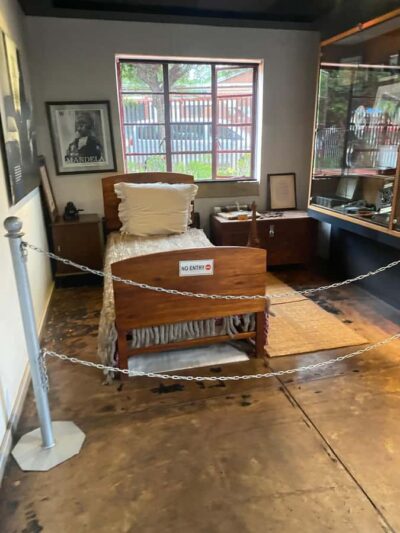
Full-Day Tour with Soweto and Apartheid Museum
Read our review →

Full-Day Soweto, Apartheid Museum and Lunch Tour
Read our review →Browse the lists this tour appears in