
Reviewed · SOWETO & APARTHEID MUSEUM TOURS
Johannesburg Historical, Apartheid Museum & Soweto
Johannesburg makes more sense when you connect its gold-mining beginnings with the struggle against apartheid. This private tour does that in one long sweep, from an old mine stope and the Top of Africa area to Soweto’s Vilakazi Street, Mandela House, and the Apartheid Museum.
I like the private vehicle, which saves time between far-flung sights, and I like the way the route mixes city neighborhoods with serious historical sites. Guide Lesiba is especially useful if you have a flight or tight schedule, since he has adjusted pickup and return plans and can focus the day on your priorities. The main drawback is pace: with so many stops, several are brief photo or orientation visits rather than full tours.
Key points to know before booking
- Gold-mining roots come first: See a preserved mine stope linked to Ignatius Ferreira and Johannesburg’s 1886 gold rush.
- Constitution Hill gives the history weight: Allow about 90 minutes for the former prison complex and Constitutional Court precinct.
- Maboneng adds a modern city contrast: Spend about an hour in the redeveloped inner-city district, with no admission fee listed.
- Soweto is the emotional center: Visit Mandela House, Vilakazi Street, Orlando Towers, and the Hector Pieterson Memorial.
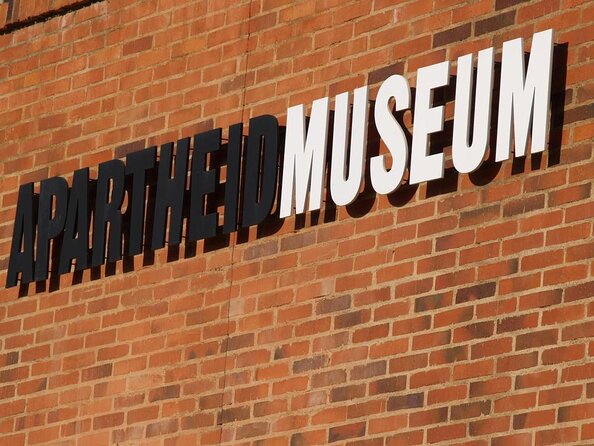
- The Apartheid Museum needs extra attention: The visit lasts about two hours, but admission is not included in the tour price.
- This works best as a private overview: You get your own group, air-conditioning, bottled water, and a guide who can manage a tight schedule.
A city tour built around Johannesburg’s difficult story
At $107.48 per person, this is not the cheapest way to look around Johannesburg. It is, however, a practical price for a private vehicle, a guide, bottled water, and a route covering both central Johannesburg and Soweto.
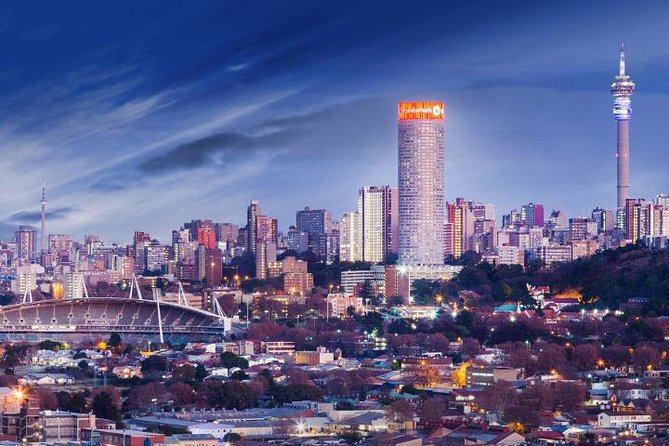
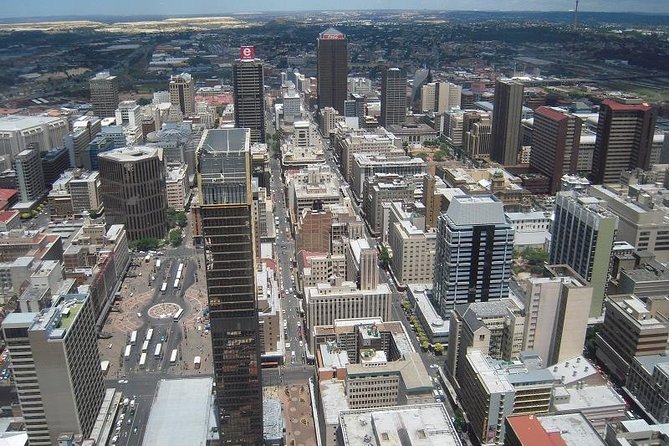
The real value is time. Johannesburg’s sights are spread across a large urban area, and moving from Constitution Hill to Maboneng, the Apartheid Museum, and Soweto is not a simple walk. A private air-conditioned vehicle lets you cover more ground without working out several local transport connections.
The tour is described as lasting from one to seven hours, depending on the selected arrangement and time available. The listed operating window is Monday and Tuesday from 8:30 a.m. to 1:30 p.m. Confirm the exact length when booking, because the full sequence of stops is a substantial day of sightseeing.
This is a private activity, so only your group takes part. That matters here. You can spend more time at a place that matters to you, or move on from a quick photo stop if your schedule is tight. Lesiba has been noted for calling ahead to confirm a convenient pickup time and for adjusting the route around a flight departure.
More History Tours in Johannesburg
- Soweto Township Cultural Tour incl Apartheid Museum and Nelson Mandela House
★ 5.0 · 30 reviews - Cradle of Humankind World Heritage Site
★ 5.0 · 15 reviews - Johannesburg: Soweto History Tour with Hotel Pickup
★ 4.8 · 14 reviews
Starting with gold at Ferreira’s mine stope
One of the most unusual details on the route is an old mine stope preserved beneath the Standard Bank headquarters in central Johannesburg. Builders found the entrance in the 1980s while preparing the foundations for the building.
The stope is linked to Ignatius Phillip Ferreira, a farmer, soldier, and prospector from Grahamstown in the Eastern Cape. He joined the Gauteng gold rush in 1886, founded one of the first mining camps in the area in July, and found gold three months later.
This small stop helps explain why Johannesburg exists where it does. Before the museums and cultural districts, this was a mining town shaped by gold, labor, money, and rapid growth. It is not a long museum visit, but it gives the rest of the day a useful starting point.
Constitution Hill, from prison cells to the Constitutional Court
Allow about 90 minutes at Constitution Hill, with admission included. This is one of the strongest parts of the day because it puts South Africa’s past and present in the same place.
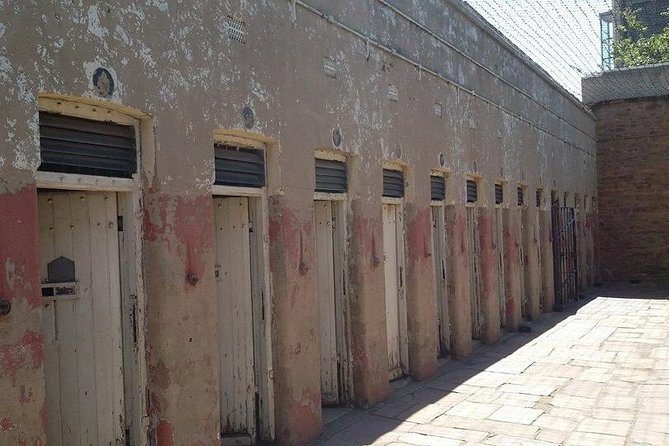
The precinct once held some of Johannesburg’s most notorious prisons. The Old Fort, built in the 1890s, first housed prisoners of war during the Anglo-Boer War. Later, the prison complex held political prisoners and ordinary inmates under a harsh system shaped by race.
Today, the site also houses South Africa’s Constitutional Court. The court represents the country’s post-apartheid democracy, while the old prison buildings preserve the memory of state control and injustice.
You should give this stop your full attention. Constitution Hill is not simply an old building with a few displays. It asks you to consider how a country can preserve painful places while building new political institutions beside them.
The site sits on the ridge between Hillbrow and Braamfontein, overlooking central Johannesburg. That setting adds useful city context, although the visit is primarily about the prison precinct and court rather than a broad city lookout.
Maboneng shows another side of inner-city Johannesburg

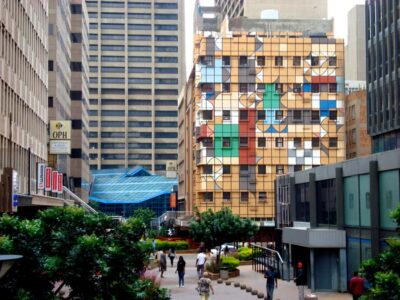
The Maboneng Precinct offers a sharp change of mood after Constitution Hill. Plan for about an hour, with admission listed as free.
Entrepreneur Jonathan Liebmann bought rundown warehouses and factories on the eastern edge of the inner city and worked to turn them into places for living, work, food, art, and small business. The name Maboneng means place of light in Sotho.
The district was created as an attempt to respond to urban decay and crime through redevelopment and new activity. It is often compared with rejuvenated districts in London and New York, though the local setting and South African story are its own.
This stop matters because Johannesburg is not frozen in its apartheid-era past. You will see a city trying to reshape older industrial spaces for new uses. The short visit gives you an orientation rather than a detailed architectural or food tour, so keep your expectations in check.
More Museum Tours in Johannesburg
- Soweto /Johannesburg and Apartheid Museum Guided Full Day Tour
★ 5.0 · 932 reviews - Jo’berg in 1 Day: Soweto, Apartheid Museum & City Tour
★ 4.8 · 524 reviews - Johannesburg: Full-Day Tour with Soweto and Apartheid Museum
★ 4.8 · 478 reviews - Full-Day Soweto, Apartheid Museum and Lunch Tour
★ 5.0 · 410 reviews
Newtown and the bridge across the railway tracks
The route also passes through Newtown, a cultural area in central Johannesburg. Regeneration projects have helped develop it as a place for arts, tourism, homes, and public activity.
A cable-stayed bridge links Newtown and Braamfontein across the railway tracks. Completed in 2003 after 18 months of construction, it is described as the largest cable-stayed bridge in southern Africa.
This is mainly a passing or viewing stop, not a long scheduled visit. Its value is visual and urban. You get another look at how Johannesburg’s central districts connect, and you see a part of the city where artists of different backgrounds gather.
The Apartheid Museum deserves the biggest block of time

The Apartheid Museum is scheduled for about two hours, but admission is not included in the $107.48 price. Budget for the entrance fee separately and confirm the current amount before you go.
This is the central history stop of the tour. The museum explains the rise and fall of apartheid, the system of racial separation and control that shaped South African life for decades. After seeing Constitution Hill, you will have more context for the institutions, laws, and personal stories presented here.
Two hours is enough for a serious visit, but not for reading every display at length. If modern South African history is your main reason for booking, ask your guide to protect this time. The route includes many short stops, and the Apartheid Museum is the place where you most need to slow down.
The museum also gives the day a clear structure. The mine stope explains Johannesburg’s origin. Constitution Hill shows state power and imprisonment. Soweto brings the story into residential streets and memorials. The museum draws these threads together.
A quick look at Johannesburg’s gold-processing past
Another brief stop focuses on a stamp battery, also called a stamp mill. This equipment crushed gold-bearing rock brought up from underground.
You will spend about 20 minutes here, and admission is listed as free. It is a small but useful link to the mining story introduced at the beginning of the tour. Do not expect a long technical presentation, but the machinery helps make the gold rush more tangible.
Entering Soweto through Diepkloof
The Soweto section begins with Diepkloof, including Diepkloof Extension and the area’s former hostels. Diepkloof is also associated with large hostels built to house single male migrant workers.
That detail is important because apartheid-era urban planning was not only about signs, laws, and police. Housing patterns and migrant labor controls shaped where people could live, how families were separated, and how communities developed.
The planned visit here is about 15 minutes, so you will receive an overview rather than a long neighborhood walk. A private guide can make this brief stop more useful by explaining what you are seeing as you pass through.
The route also passes Chris Hani Baragwanath Hospital, described as the largest hospital in Africa and the third-largest hospital in the world. This is a passing point, not a hospital visit, and the supplied details do not indicate a scheduled admission or tour inside.
Orlando Towers and the changing face of Soweto
Orlando Towers are two cooling towers known for an extreme bungee jump. The tour allows about 15 minutes at the site, and admission is not included.
Even if you have no interest in jumping, the towers are an unmistakable Soweto landmark. Their industrial form and painted surfaces make them a natural photo stop. The short visit lets you see one of the area’s most recognizable modern sights without turning the tour into an adventure activity.
This is also a good example of the route’s balance. Soweto is presented not only as a place of protest and mourning, but also as a living community with recreation, enterprise, and bold public landmarks.
Vilakazi Street and Mandela House
Vilakazi Street is one of the most meaningful stops in Soweto. It is known as the only street said to have been home to two Nobel Laureates: Nelson Mandela and Archbishop Emeritus Desmond Tutu.
The tour allows about 15 minutes on the street itself, followed by about 30 minutes at Mandela House. The small face-brick house at 8115 Vilakazi Street was where the Mandela family lived from 1946 into the 1990s. It is now a museum devoted to his life and includes artwork.
Mandela House admission is included, which improves the value of this part of the route. The house is not a grand presidential residence. Its modest size is part of the point. You see a domestic setting tied to one of the most important political figures of the 20th century.
Give yourself time to notice the difference between the street and the museum. Vilakazi Street is a public neighborhood with its own life. Mandela House is a formal heritage site. The tour lets you see both, but the scheduled times are short, so ask your guide if you want to linger.
Hector Pieterson Memorial and the Soweto uprising
The Hector Pieterson Memorial is another 30-minute stop, with admission not included. It commemorates 12-year-old Hector Pieterson, identified here as the first child killed by a police bullet during the June 16, 1976 uprising.
The memorial is one of the most powerful places on the route because it puts a child’s death at the center of the story. The uprising began with student protests against the forced use of Afrikaans in schools and became a major turning point in opposition to apartheid.
The site also connects to Avalon Cemetery, where many victims of apartheid are buried. The tour details do not list a cemetery visit, so treat that as background rather than part of the scheduled route.
After the Apartheid Museum and Constitution Hill, this stop brings the political story into personal focus. It is a place for quiet attention, not a quick backdrop for photographs.
Passing Mzimhlophe and the colored township
The route passes Mzimhlophe station, where demonstrations took place during the period of the Treason Trial and other protests against the South African government. It also includes a township described as colored and known locally as Bulte, meaning hills, a name linked to the mine dumps around it.
These are short orientation points, but they add texture to the Soweto drive. You are not seeing only famous names. You are also moving through communities shaped by mining, forced settlement, protest, and daily life.
The itinerary also notes distinctive elephant houses in the area. Since no visit length or admission detail is provided for this point, think of it as something your guide may identify while driving rather than a separate museum stop.
What the price includes and what it leaves out
The tour includes the vehicle, bottled water, and all fees and taxes listed by the operator. Lunch can be added, but lunch, snacks, and alcoholic drinks are not included in the standard price.
The Apartheid Museum admission is also not included, and several Soweto stops list no admission as part of the tour. Mandela House and Constitution Hill are listed with admission included.
At $107.48 per person, the value improves as your group gets larger because you are paying for a private activity rather than a shared bus. A solo visitor or couple may find the price high compared with public transport, but the savings in planning time and the ability to connect distant sights are significant.
You also avoid spending your day trying to judge local transport connections between central Johannesburg and Soweto. The air-conditioned vehicle is especially useful for a packed route, though the number of stops means you should not expect a slow, leisurely visit at every location.
Who should book this Johannesburg tour?
I would choose this tour if you have limited time in Johannesburg and want a strong first look at the city’s mining origins, apartheid history, and Soweto landmarks. It is also a good fit if you want private transport and the ability to shape the pace around your group.
Families may appreciate the private format and bottled water, while history-focused visitors should protect the time at Constitution Hill, the Apartheid Museum, and Hector Pieterson Memorial. If you are catching a flight, tell the operator early. Lesiba has been able to work around return times and focus the route on the sights most important to the group.
I would hesitate if you want long, unhurried visits at every location. The itinerary is ambitious. Maboneng, Newtown, Orlando Towers, Diepkloof, the mine machinery, and several Soweto points are brief stops. You get breadth, but not a deep visit to every site.
The tour has free cancellation up to 24 hours before the start time. Changes or cancellations made less than 24 hours ahead are not refunded, so keep that cutoff in mind when your schedule is uncertain.
Should you book it?
Book this tour if you want a private Johannesburg overview with real historical weight, especially if your time is short. The best parts are Constitution Hill, the Apartheid Museum, Mandela House, and Hector Pieterson Memorial, while the gold-mining stops explain how the city began.
Before paying, confirm the exact duration, pickup details, and Apartheid Museum entrance cost. Ask how much time your group will have at the museum and Mandela House. If those answers fit your priorities, this is a practical way to connect Johannesburg and Soweto without wasting hours on transport.
FAQ
How much does the tour cost?
The listed price is $107.48 per person. Group discounts are offered, and the activity is private for your group.
How long does the tour last?
The stated duration is approximately one to seven hours. Confirm the exact schedule when booking, since the full route includes many stops and may require a longer arrangement.
Is hotel pickup available?
Pickup is offered. The tour information also indicates that the guide can confirm a convenient pickup time and location before the visit.
Is transportation included?
Yes. You travel between sights in a private, air-conditioned vehicle. Bottled water is included.
Is lunch included?
No. Lunch, snacks, and alcoholic drinks are not included. Lunch can be added as an option.
Is Apartheid Museum admission included?
No. The Apartheid Museum visit is scheduled for about two hours, but its admission ticket is not included.
Which admissions are included?
Admission to Constitution Hill and Mandela House is included. The tour also lists all fees and taxes as included.
Is the tour private?
Yes. Only your group participates in the activity, rather than joining a shared tour group.
What is the cancellation policy?
You can cancel up to 24 hours before the experience begins for a full refund. Cancellations or changes made less than 24 hours before the start time are not refunded or accepted.
More Soweto and Apartheid Museum visits
- Johannesburg: Hop-On Hop-Off Bus with Optional Soweto Tour
★ 4.6 · 985 reviews - Johannesburg Hop-On Hop-Off City Tour with Soweto Option
★ 4.5 · 768 reviews - Half-Day Tour of Soweto Tour
★ 4.5 · 712 reviews - Soweto: Walking Tour with a Local Guide and Lunch
★ 4.9 · 648 reviews
Just listed around Johannesburg
- Constitutional Hill and Soweto 5 hours tour.★ 5.0 · 5 reviews
- 5 Day Kruger Glamping Safari and Panorama Tour★ 5.0 · 5 reviews
- Cradle of Humankind and Maropeng Day Tour from Johannesburg★ 4.0 · 5 reviews
- Johannesburg: Hot Air Balloon Flight★ 5.0 · 5 reviews
- Half Day Soweto and Apartheid Museum Guided Tour★ 5.0 · 5 reviews
- Lion park★ 4.5 · 5 reviews
- 5 Day Kruger National Park and Panorama Route Safari★ 4.5 · 5 reviews
- Pretoria Historical Tour★ 4.0 · 5 reviews
Soweto & Apartheid Museum Tours, compared.

Soweto /Johannesburg and Apartheid Museum Guided Full Day Tour
Read our review →
Johannesburg Hop-On Hop-Off City Tour with Soweto Option
Read our review →

Jo’berg in 1 Day: Soweto, Apartheid Museum & City Tour
Read our review →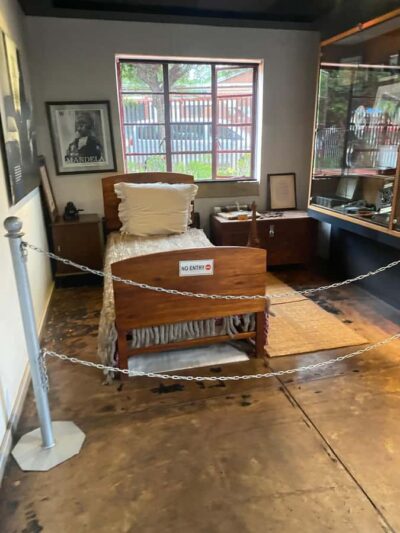
Full-Day Tour with Soweto and Apartheid Museum
Read our review →
Browse the lists this tour appears in