

Reviewed · SOWETO & APARTHEID MUSEUM TOURS
Half Day Soweto Guided Tour
Soweto’s story comes into focus through places tied to South Africa’s fight for freedom. This small-group tour takes you from Mandela House and Vilakazi Street to the Hector Pieterson Museum, then adds FNB Stadium and time with people in an informal settlement. It is a compact way to connect famous names with living communities.
I like the maximum group size of three, which should make conversation easier than on a large bus tour. I also like the mix of major sights and local contact, including a walk and talk in Soweto and a visit to a daycare. The main consideration is that Mandela House admission is not included, and four to five hours leaves little room for a slow, unplanned visit.
Key points to know before booking

- Vilakazi Street brings two Nobel Peace Prize homes together: Nelson Mandela House and the former home of Desmond Tutu are on the same famous street.
- The Hector Pieterson Museum explains June 16, 1976: The visit focuses on the student protest against Afrikaans instruction during apartheid.
- FNB Stadium adds a modern South African landmark: The 94,000-seat venue hosted the 2010 FIFA World Cup.
- The group is limited to three people: That is useful if you want to ask questions or discuss sensitive history.
- Local contact is part of the plan: You may walk and talk with residents and visit a daycare for children aged one to five.
- The price is $55.50 per person: Pickup is offered, and free cancellation applies up to 24 hours before the start time.
Why this half-day Soweto tour matters

Soweto is not simply a place to check off after visiting Johannesburg. Its name is tied to the political and social story of South Africa, especially the apartheid era and the long campaign for equal rights. Nelson Mandela lived here, Desmond Tutu lived on the same famous street, and young people in Soweto helped force the country’s language policy and political injustice into the world’s view.
This tour gives you several ways to approach that story. You see a former home connected to Mandela, study the 1976 student uprising at a museum, pass a huge stadium linked to the 2010 World Cup, and spend time in a current neighborhood. That order matters. It moves from personal history to public protest, then to modern South Africa and everyday life.
The experience lasts about four to five hours. For a first visit to Johannesburg, that is a sensible length. You get a focused morning or afternoon without giving up an entire day. Pickup is offered, which can make the tour easier to fit around a hotel stay or another Johannesburg activity, though the supplied details do not specify the pickup area or exact meeting time.
The group limit is especially useful here. With no more than three participants, you should have a better chance to ask about apartheid, Mandela, the 1976 uprising, or present-day Soweto without waiting behind a coach full of people. The tour also has a personal feel because it includes walking and talking with local residents rather than only looking at sights from a vehicle.
More Soweto and Apartheid Museum visits:
- Johannesburg: Hop-On Hop-Off Bus with Optional Soweto Tour
★ 4.6 · 985 reviews - Soweto /Johannesburg and Apartheid Museum Guided Full Day Tour
★ 5.0 · 932 reviews - Johannesburg Hop-On Hop-Off City Tour with Soweto Option
★ 4.5 · 768 reviews
Walking Vilakazi Street and visiting Mandela House
The tour’s first stop is Nelson Mandela House on Vilakazi Street. This is one of Soweto’s best-known streets, and it has the unusual distinction of being associated with two Nobel Peace Prize winners, Nelson Mandela and Desmond Tutu.
Mandela House is open to the public, but admission is not included in the $55.50 tour price. That small detail matters when you compare this experience with other Soweto options. Ask about the current entry charge before you book or at the start of the tour, so you can budget for it separately.
The visit is scheduled for about 30 minutes. That is enough for a focused look, but it is not a long museum session. I would treat this stop as an introduction to Mandela’s connection with Soweto, then rely on the guide to add context as you move through the neighborhood.
Vilakazi Street is also where the tour shifts from formal sightseeing to local contact. You will have an opportunity to walk and talk with people in the area. That can be more revealing than simply seeing a famous address, since it places Mandela’s former home within a street that still functions as a real community rather than a preserved historical site alone.
The short time here is the chief limitation. If you want to examine every display at Mandela House at an unhurried pace, this tour may feel brisk. If your goal is to understand why the street matters and then continue into wider Soweto, the half-hour stop fits the day well.
Understanding June 16 at the Hector Pieterson Museum
The Hector Pieterson Museum and Memorial gives the tour its strongest historical focus. The museum tells the story of the Soweto student protest on June 16, 1976, when students demonstrated against the use of Afrikaans in education during apartheid.
The stop lasts about 45 minutes, and admission is included. That makes it one of the clearest value points in the tour. You are not only looking at a landmark from outside. You have time inside a museum built around a turning point in South African history.
The subject is difficult. The museum is connected to Hector Pieterson, a schoolboy whose death became a powerful symbol of the uprising. You should expect this portion of the tour to be serious and emotionally demanding. It is also the place where the political background begins to make sense, especially if you know only the broad outline of apartheid.
A guide can help you connect the museum’s account to the streets you have already seen and the communities you visit afterward. With only three people in the group, you can ask questions as they arise instead of trying to catch a guide’s explanation from the back of a crowded vehicle.
Forty-five minutes is a useful middle ground. It gives you time to see the main material, but it may not satisfy visitors who want to read every panel or study every part of the museum. If this is the stop you care about most, tell the guide early so you can use the available time well.
Seeing FNB Stadium and South Africa’s newer image
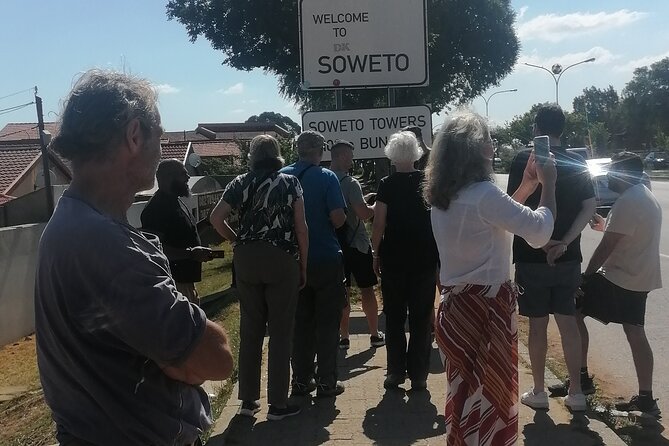
The FNB Stadium stop lasts about 15 minutes and costs nothing extra. The stadium seats about 94,000 people, making it the largest stadium in Africa according to the tour information. It hosted matches during the 2010 FIFA World Cup, the tournament that placed South Africa at the center of the football world.
This is a quick photo and orientation stop, not a stadium tour. The details do not mention entry inside, a match-day experience, or a guided stadium visit. You should expect to see the national stadium and hear about its role in the World Cup rather than spend a long time exploring the venue.
I like this addition because it keeps the tour from presenting Soweto only through suffering and protest. The stadium points to a later chapter in South Africa’s public life, one tied to sport, national pride, and the country’s international image. The reference to the 2010 tournament will mean something even if you are not a serious football fan.
Still, fifteen minutes is short. Consider it a useful stop between the more substantial historical visits, not a reason by itself to book the tour.
A few more Johannesburg days worth comparing
- From Johannesburg: Pilanesberg Nature Reserve Game Safari
★ 4.8 · 1,327 reviews - Full Day Ultimate Pilanesberg National Park Safari from Johannesburg or Pretoria
★ 4.5 · 718 reviews - Half-Day Tour of Soweto Tour
★ 4.5 · 712 reviews - Soweto: Walking Tour with a Local Guide and Lunch
★ 4.9 · 648 reviews
Meeting local residents in an informal settlement
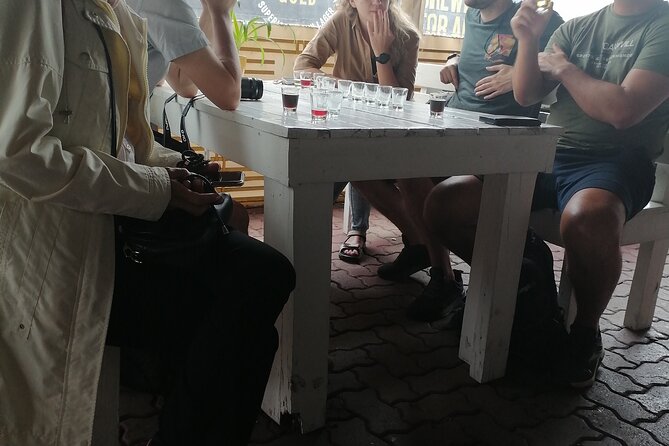
The final Soweto portion includes time walking and talking with residents in an informal settlement. The tour also includes a visit to a daycare with children from one to five years old.
This is the part that requires the most care from you. You are entering a working community, not a staged attraction. Listen to the guide, follow local directions, and keep your manner respectful. Conversation can add a human scale to the history, but it should never become a photo opportunity at someone else’s expense.
The daycare visit is listed as a chance to spend time with the children. You are welcome to bring a small gift for children aged one to five. That is optional, and the provided information does not name a required item, so avoid assuming that a particular donation is expected. If you bring something, keep it small and practical.
This part of the tour may be especially meaningful for visitors who want more than memorials and famous addresses. You get a glimpse of current community life and a chance to speak with local people. At the same time, the experience will depend on the timing, the guide, and the comfort of the people you meet. The details do not promise a particular conversation, performance, meal, or shopping stop.
The contrast with Mandela House and the museum is important. Soweto is not frozen in the apartheid era. People live, work, raise children, and build their futures there now. A responsible visit holds both truths together: the past deserves attention, and the present deserves respect.
What $55.50 buys you

At $55.50 per person, this is priced as a guided introduction rather than a bare transport service. You are paying for roughly half a day, a guide, a structured route through several important Soweto sites, and a small group capped at three people. Pickup is offered, which may save you the trouble of arranging separate transport.
The value is strongest if you want context. Mandela House, the Hector Pieterson Museum, FNB Stadium, and an informal settlement would be harder to connect on your own during a short Johannesburg visit. The guide’s presence also matters at sites where history is sensitive and easy to reduce to a few dates or famous names.
The price is less attractive if you want a long museum visit or lots of free time. Mandela House admission is extra, and the itinerary is tightly timed. You are buying breadth and personal guiding, not an all-day, slow-paced exploration.
Group discounts are available, though the details do not say how many people qualify or how much you save. Ask before booking if you are traveling with friends or family. The maximum group size of three may limit the practical use of a group discount, so confirm the terms rather than assume it applies to any larger party.
A current rating of 5 out of 5 from 14 ratings, with 100 percent recommending the experience, suggests strong satisfaction so far. One detailed account praised guide Thabang for being friendly and well informed, and said the tour remained memorable even during storms and hail. Weather can affect the pace, especially for the walking portions, so sensible clothing and a flexible attitude will help.
Your guide and the small-group advantage

Guide quality can make or break a history tour. The information names Thabang in connection with one recent tour, but it does not promise that he will lead every departure. If you have a strong preference, ask Motleys Tours and Travel when booking.
The small group is a major practical benefit. A three-person group gives you room to ask direct questions about Mandela, Tutu, the student protests, or modern Soweto. It also makes the local walking portion less intrusive than a large group moving through a neighborhood.
A small group does not guarantee a private tour unless the operator states that separately. It does mean the maximum is three participants. Confirmation is provided at booking, and service animals are allowed. The activity is near public transportation, and most people can participate.
The tour is likely best for adults, older children, students, and first-time visitors who want history explained in place. The daycare stop may appeal to families, but parents should decide in advance whether that part suits their children. The supplied details do not give a minimum age or specific mobility information, so ask the operator if you have access needs beyond the stated general participation guidance.
How the schedule fits a Johannesburg visit

Four to five hours is enough to make Soweto a major part of your Johannesburg plans without taking over the whole day. You can use it as a morning activity and keep the afternoon open, or book it later if the pickup schedule works with your plans.
The route includes several stops with different pacing:
- Mandela House and Vilakazi Street: about 30 minutes, with entry to Mandela House extra.
- Hector Pieterson Museum: about 45 minutes, with admission included.
- FNB Stadium: about 15 minutes, free of charge.
- Informal settlement and daycare visit: about 30 minutes, with no admission charge listed.
These stop times total two hours, so the remaining time is likely used for driving, transitions, guiding, and walking. That is normal for a spread-out township tour, but it also means the listed stop durations are not the full experience. Do not expect four or five hours of continuous museum time.
Free cancellation is available when you cancel at least 24 hours before the local start time. Cancellations or changes made inside that window are not accepted for a refund. That policy gives you some flexibility, but weather or schedule problems on the day itself may still affect your plans.
Who should book this Soweto experience?
I would choose this tour if you want a compact first look at Soweto with historical explanation and local contact. It is especially suitable if you are in Johannesburg briefly, prefer a very small group, or do not want to arrange transport between several sites.
It also suits you if you want the 1976 student uprising to be part of the visit, not just a quick mention. The Hector Pieterson Museum receives the longest scheduled stop, and that gives the tour real educational weight.
You may want a different arrangement if your priority is a long visit inside Mandela House, extensive museum study, or a full-day township experience. The schedule is purposeful and fairly tight. It gives you several viewpoints, but not much spare time.
Visitors should also think carefully about the informal settlement and daycare visit. If you can approach that part with humility and respect, it may add important perspective. If you prefer a tour limited to formal historic sites, the local visit may not be the right fit.
Should you book the Half Day Soweto Guided Tour?
Book it if you want an efficient, small-group route through the places that best frame Soweto’s past and present. The combination of Mandela House, Vilakazi Street, Hector Pieterson Museum, FNB Stadium, and local conversation offers more range than a simple drive-by tour.
At $55.50, the value is good for a four to five-hour guided outing with pickup offered and a maximum of three people, though you should add the separate Mandela House admission to your budget. The strongest reasons to choose it are the small group, the included museum entry, and the chance to hear about Soweto from a guide while walking in the community.
If your visit to Johannesburg is brief, this is a practical way to give Soweto the time it deserves. Ask about your guide, pickup details, group discounts, and the current Mandela House admission before confirming.
FAQ
How long does the Half Day Soweto Guided Tour last?
The tour lasts approximately four to five hours, including the visits and time spent moving between stops.
How much does the tour cost?
The listed price is $55.50 per person. Group discounts are offered, but the available information does not state the discount amount.
Is pickup offered?
Yes. Pickup is offered, although the available details do not specify the pickup locations or schedule.
How many people can join the tour?
The activity has a maximum of three travelers.
Is admission to Mandela House included?
No. Admission to Nelson Mandela House is not included in the tour price.
Is admission to the Hector Pieterson Museum included?
Yes. Admission to the Hector Pieterson Museum and Memorial is included.
Can I cancel for a full refund?
Yes, if you cancel at least 24 hours before the experience start time. Cancellations or changes made less than 24 hours before the start time are not eligible for a refund.
Just listed around Johannesburg
- Constitutional Hill and Soweto 5 hours tour.★ 5.0 · 5 reviews
- 5 Day Kruger Glamping Safari and Panorama Tour★ 5.0 · 5 reviews
- Cradle of Humankind and Maropeng Day Tour from Johannesburg★ 4.0 · 5 reviews
- Johannesburg: Hot Air Balloon Flight★ 5.0 · 5 reviews
- Half Day Soweto and Apartheid Museum Guided Tour★ 5.0 · 5 reviews
- Lion park★ 4.5 · 5 reviews
- 5 Day Kruger National Park and Panorama Route Safari★ 4.5 · 5 reviews
- Pretoria Historical Tour★ 4.0 · 5 reviews
Soweto & Apartheid Museum Tours, compared.


Soweto /Johannesburg and Apartheid Museum Guided Full Day Tour
Read our review →
Johannesburg Hop-On Hop-Off City Tour with Soweto Option
Read our review →


Jo’berg in 1 Day: Soweto, Apartheid Museum & City Tour
Read our review →
Full-Day Tour with Soweto and Apartheid Museum
Read our review →
Browse the lists this tour appears in