
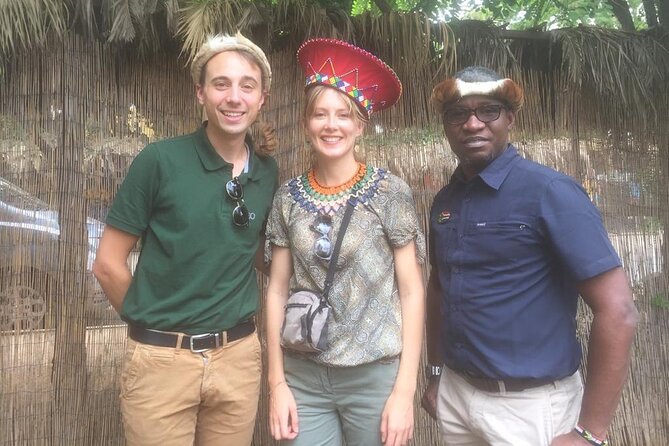
Reviewed · SOWETO & APARTHEID MUSEUM TOURS
Johannesburg and Soweto Tour in French
Soweto is not just a suburb to pass through on the way to another sight. It is where the 1976 student uprising began, where Nelson Mandela once lived, and where churches, squares, stadiums, and memorials tell different parts of South Africa’s story. This private tour puts those places into one long, serious day with a French-speaking guide.
I like the one-to-one format, since you can ask questions without waiting for a large group to catch up. I also like the private vehicle, especially because Johannesburg and Soweto cover a wide area. Guides such as Ibrahim and U have been praised for clear explanations, patience, and humor, while driver Basil has helped adjust the route around traffic and crowds.
The main drawback is the packed schedule. The price of $92.35 per person includes private transportation and admission to Mandela House and the Apartheid Museum, but several other stops charge separately, and lunch is not included. You need to be ready for a full day of history, driving, and emotionally heavy subjects.
Key points to know before booking

- A French-speaking private guide: You get explanations and conversation in French, with the chance to ask direct questions throughout the day.
- Soweto’s 1976 uprising: Hector Pieterson Memorial and Museum provide the clearest focus on the student protests that changed South Africa.
- Mandela’s former home: Mandela House on Vilakazi Street gives you a personal look at the rooms, photographs, and family story behind the public figure.
- A broad Johannesburg route: The day includes Soweto, FNB Stadium, Constitution Hill, and the Apartheid Museum.
- Private transport matters: You are not expected to walk between scattered sites, a useful benefit on a 7 to 8 hour schedule.
- Flexible timing has value: The guide and driver may adjust parts of the day for traffic, crowds, or your requests.
Why this tour works as a first look at Johannesburg
The clever part of this experience is its range. You do not see only one memorial or one museum. You move from Soweto’s streets and political landmarks to the prison buildings of Constitution Hill, then finish with the country’s major museum devoted to apartheid.
That broad view helps you connect personal stories with national events. Mandela House shows one family’s life. Hector Pieterson recalls a child killed during the 1976 uprising. Regina Mundi reveals how a church became a refuge. Constitution Hill shows how imprisonment affected famous activists and ordinary people. The Apartheid Museum then gives the larger political framework.
A private format makes this especially useful if you prefer asking questions as they occur. The supplied experience is offered only to your own group, rather than as a shared coach tour. That can make a real difference when the subject is complex and you want a slower explanation in French.
The listed duration is about 7 to 8 hours. Travel between sites takes a sizable part of that time, but that is not wasted time in Johannesburg. Your guide can use the drive to explain what you are seeing and how each stop fits into the wider story.
More Soweto and Apartheid Museum visits:
- Johannesburg: Hop-On Hop-Off Bus with Optional Soweto Tour
★ 4.6 · 985 reviews - Soweto /Johannesburg and Apartheid Museum Guided Full Day Tour
★ 5.0 · 932 reviews - Johannesburg Hop-On Hop-Off City Tour with Soweto Option
★ 4.5 · 768 reviews
Hector Pieterson Memorial and Museum: starting with 1976
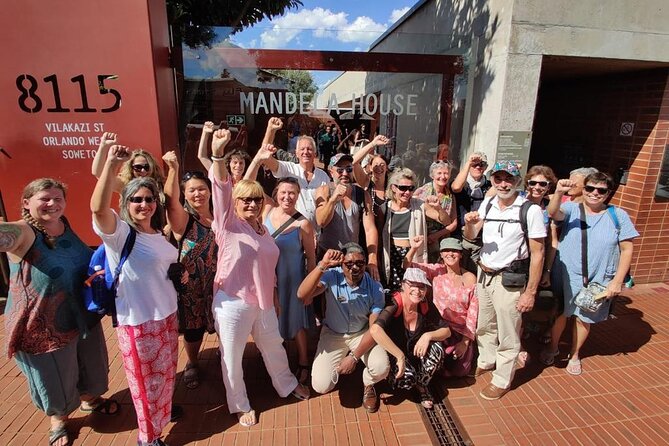
The first stop focuses on the Soweto student uprising of 1976. Students protested against the forced use of Afrikaans in schools, and the demonstrations spread beyond Soweto. The death of Hector Pieterson became one of the defining images of the struggle against apartheid.
You have about 30 minutes here. That is enough for a focused introduction, but it may feel brief if you want to read every display carefully. Admission is not included, so check the extra cost when planning your budget.
This is a serious opening to the day. The memorial is not simply a photo stop. It asks you to consider how young people became involved in political resistance and how one event helped draw international attention to South Africa.
I would listen closely to the guide before entering. A French explanation can help you grasp the sequence of events, particularly if you are not already familiar with South African history. The museum is more useful when you understand why the uprising began and why the police response became such a turning point.
Mandela House on Vilakazi Street
Mandela House offers a more intimate change of mood. Nelson Mandela lived here on Vilakazi Street, first with his first wife, Evelyn, and later with Winnie Mandela. The house contains family photographs and details about the home, giving you a personal setting rather than another large political exhibit.
You receive about 45 minutes here, and admission is included. That inclusion helps the $92.35 price, since one of the day’s best-known sights is already covered.
Do not expect a grand residence. The value is in seeing the place connected to Mandela’s family life and early political career. The house helps make him more than a statue or name in a textbook.
This stop also works well with a private guide. You can ask about the household, Mandela’s marriages, and how the home fits into Vilakazi Street’s place in Soweto. The guide’s role is important because the building itself is relatively small. The explanation gives the visit its depth.
Regina Mundi, Soweto’s great refuge

Regina Mundi is described as the largest Catholic church in South Africa and is often called the parliament of Soweto. During the 1976 uprising, students came here to hide from police. That detail gives the church a role far beyond worship.
The visit lasts about 30 minutes, with admission not included. You might find this stop less visually dramatic than the museums, but its importance is political and human. A church became a place where frightened people could seek shelter, meet, and speak during a period of severe repression.
I like the way Regina Mundi broadens the day. Soweto’s story was not made only in government buildings or prisons. Religious spaces could also become centers of protection and public life.
Ask your guide to explain how the church functioned during the uprising. A short stop can otherwise pass quickly, while the context turns it into one of the more memorable parts of the route.
A few more Johannesburg days worth comparing
- From Johannesburg: Pilanesberg Nature Reserve Game Safari
★ 4.8 · 1,327 reviews - Full Day Ultimate Pilanesberg National Park Safari from Johannesburg or Pretoria
★ 4.5 · 718 reviews - Half-Day Tour of Soweto Tour
★ 4.5 · 712 reviews - Soweto: Walking Tour with a Local Guide and Lunch
★ 4.9 · 648 reviews
Walter Sisulu Square and Kliptown
At Walter Sisulu Square in Kliptown, you reach the site where the Freedom Charter was voted in during 1955. The area is identified as Johannesburg’s oldest multicultural area, adding another layer to the day’s story of political cooperation and resistance.
You have about 30 minutes here, and admission is not included. The stop is likely to be more about orientation and explanation than a long indoor museum visit, so the guide’s commentary matters.
The Freedom Charter is central to the political vision that later shaped South Africa’s democracy. Seeing the square helps you connect the struggle against apartheid with the principles people were trying to establish for the country’s future.
This is a good place to pause and ask questions about the people and groups involved. Since the tour uses a private vehicle, you avoid the strain of walking from one distant Soweto site to another. You can focus on the setting and the story instead.
FNB Stadium and the Soweto Cooling Towers
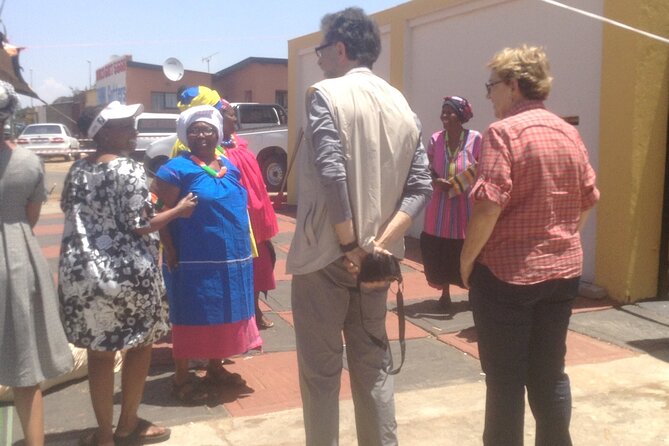
FNB Stadium, also known as Soccer City, is a quick ten-minute stop. It was the home of the 2010 FIFA World Cup, so it adds a modern sporting landmark to a day otherwise centered on political history.
Admission is free, but the visit is short. You should think of it as a view and photo opportunity rather than a stadium tour. If football matters to you, the guide can help place the stadium in Johannesburg’s recent public life.
The two cooling towers are another brief visual stop. Built in 1951 to supply electricity to Johannesburg, they have become a recognizable Soweto landmark. Today, a bungee-jumping platform connects the towers.
The tour does not state that bungee jumping is included, so treat the towers as a sightseeing stop. Their industrial past also offers a reminder that Soweto’s story includes work, infrastructure, and city growth, not only famous political names.
Constitution Hill and the Old Fort
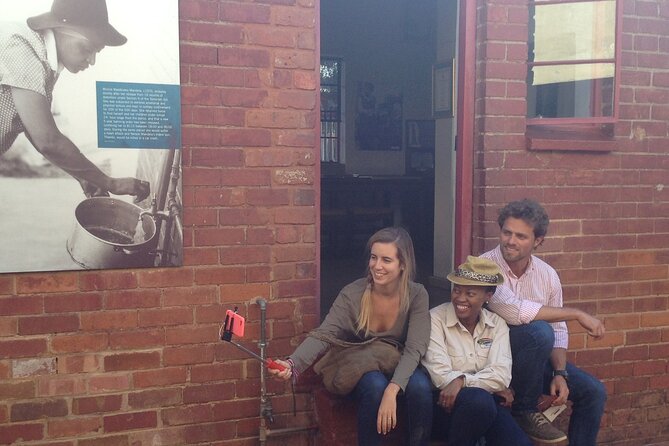
Constitution Hill Human Rights Precinct brings the focus back to imprisonment. Its Old Fort, Women’s Jail, and Number Four prison held a huge range of people over roughly a century, including Nelson Mandela, Mahatma Gandhi, Joe Slovo, Albertina Sisulu, Winnie Madikizela-Mandela, and Fatima Meer.
Just as important, the site held tens of thousands of ordinary people. Men, women, children, and people of different races, beliefs, and political positions passed through its walls. That makes the visit broader than a memorial to well-known leaders.
The scheduled time is about 30 minutes, and admission is not included. This is the biggest timing concern in the itinerary. Constitution Hill is a living museum with several areas, and half an hour may only allow for an introduction or a selected portion.
If you want a long, detailed visit here, ask in advance how the guide plans to divide the time. If the Apartheid Museum is also included for two hours, the operator may be using Constitution Hill to establish the prison story before giving the main museum more time.
Even with a short visit, Constitution Hill adds an important point: apartheid was enforced through everyday systems of arrest, detention, and control. The site connects famous names to the many ordinary people who were caught in the same system.
Two hours at the Apartheid Museum
The Apartheid Museum is the most substantial stop on the route, with two hours set aside. Admission is included, which is helpful because this is the place where you will spend the most time indoors and where a fuller visit is most useful.
The museum was the first of its kind and explains the rise and fall of apartheid. Its design uses buildings, open space, and landscaped grounds to create a carefully planned South African experience. You should allow yourself time to read, look at the displays, and let the material settle.
I see this as the tour’s main anchor. The Soweto stops give you places and people. The Apartheid Museum helps arrange the political timeline and explains the laws, divisions, and resistance that shaped those places.
Two hours is generous compared with the 30-minute stops, but you still may not see everything at an unhurried pace. If you read every panel, the visit could easily fill the full period. Keep an eye on the meeting time, since the vehicle and guide must still get you back through Johannesburg traffic.
The subject matter can be upsetting. You will encounter injustice, violence, forced separation, and the machinery of apartheid. That is not a flaw, but it is worth knowing before you book. This is a serious educational day, not a light sightseeing outing.
What the French-speaking guide adds
The strongest part of the tour is not simply having a driver and a list of stops. It is having a French-speaking guide explain how those places connect.
Past guides have included Ibrahim and U, with Ibrahim described as attentive, friendly, patient, and willing to answer questions. U has been praised for relevant commentary and a good sense of humor, while driver Basil has also been singled out for his humor and flexibility.
Those details matter because a long historical tour can become tiring if the commentary is flat or rushed. A guide who can respond to your questions and adjust the pace gives you more control over the day.
You should still make your own requests clear at the start. Tell the guide which subjects interest you most, and ask how much time will be spent inside each museum. The route has many stops, so a little planning helps prevent the day from feeling like a sequence of quick drop-offs.
Is $92.35 good value?
At $92.35 per person, this tour is not the cheapest way to see Johannesburg and Soweto. It is also not a simple transfer with a few photo stops. You are paying for a private vehicle, a full day of guiding in French, route planning, and entry to Mandela House and the Apartheid Museum.
The value is strongest for two or more people who want a private experience and would otherwise need to arrange separate transport between Soweto and Johannesburg. You save time researching the route, finding each address, and deciding how the sites fit together.
Budget for extra admission charges at Hector Pieterson, Regina Mundi, Walter Sisulu Square, and Constitution Hill. Lunch is also separate, and personal purchases are not covered. The experience does not give a stated lunch stop, so ask the guide early in the day how and when you can eat.
The 94 percent recommendation rate and 4.8 rating from 17 reviews suggest strong overall satisfaction, but one serious service failure is recorded. A confirmed tour did not take place because the operator did not arrive or answer calls, leaving the customer’s final holiday day disrupted. That problem should not be ignored.
Because the tour offers free cancellation up to 24 hours before the start, check the confirmation details carefully and keep the provider’s contact information handy. The stated provider is Uhura Travel & Tours. If poor weather or insufficient numbers causes cancellation, you should be offered another date or experience, or a full refund.
Who should book this Johannesburg tour?
I would recommend it to you if you want the main historical sights in one day and prefer French explanations. It is also a good fit if you value private transport, dislike organizing several separate admissions, or have limited time in Johannesburg.
The tour suits adults and older children who can handle a full schedule and serious subject matter. Most people can participate, and the route is near public transportation, although the experience itself relies on private transport.
I would be more cautious if you want long, quiet visits at every site. Thirty minutes at several stops is enough for an introduction but not necessarily enough for every exhibit. You may also prefer a different plan if your main interest is contemporary food, shopping, or nightlife, since this day is built around history and public landmarks.
The French format is a major reason to choose this particular tour. If you do not need French commentary, compare the price and itinerary with other private options. If you do, the ability to ask questions in your own language can make the historical material much easier to follow.
Final verdict: a useful, serious day with one service caveat
Book this tour if you want a structured introduction to Soweto and Johannesburg, especially if Mandela House, the 1976 uprising, Constitution Hill, and the Apartheid Museum are high on your list. The private vehicle and French-speaking guide make a wide route practical, and the two-hour museum visit gives the day a solid center.
Before paying, confirm the pickup details, the guide language, which admissions are covered, and how the guide plans to divide the short stops. The recorded no-show is a real warning, so keep the confirmation and contact information close.
For the right person, this is a strong value: one private day, several major sites, and a guide who can turn separate landmarks into one understandable story. Just budget for extra admissions and lunch, and expect an intense schedule rather than a leisurely outing.
FAQ
How long does the Johannesburg and Soweto tour last?
The tour lasts approximately 7 to 8 hours.
Is the tour private?
Yes. Only your group participates in the private tour or activity.
Is a French-speaking guide included?
Yes. The experience is designed around a private French-speaking guide. Guides named in the available information include Ibrahim and U, with Basil identified as a driver.
Is transportation included?
Yes. Private transportation is included, so you do not need to walk between the Johannesburg and Soweto stops.
Is lunch included?
No. Lunch and personal extras are not included.
Which admissions are included?
Admission to Mandela House and the Apartheid Museum is included. Admission to the Hector Pieterson Memorial and Museum, Regina Mundi, Walter Sisulu Square, and Constitution Hill is not included. The FNB Stadium stop is free.
Can I cancel for a full refund?
Yes, if you cancel at least 24 hours before the local start time. Cancellations or changes made less than 24 hours before the start are not refunded. If poor weather or an insufficient number of participants cancels the experience, you are offered another date or experience, or a full refund.
Just listed around Johannesburg
- Constitutional Hill and Soweto 5 hours tour.★ 5.0 · 5 reviews
- 5 Day Kruger Glamping Safari and Panorama Tour★ 5.0 · 5 reviews
- Cradle of Humankind and Maropeng Day Tour from Johannesburg★ 4.0 · 5 reviews
- Johannesburg: Hot Air Balloon Flight★ 5.0 · 5 reviews
- Half Day Soweto and Apartheid Museum Guided Tour★ 5.0 · 5 reviews
- Lion park★ 4.5 · 5 reviews
- 5 Day Kruger National Park and Panorama Route Safari★ 4.5 · 5 reviews
- Pretoria Historical Tour★ 4.0 · 5 reviews
Soweto & Apartheid Museum Tours, compared.


Soweto /Johannesburg and Apartheid Museum Guided Full Day Tour
Read our review →
Johannesburg Hop-On Hop-Off City Tour with Soweto Option
Read our review →


Jo’berg in 1 Day: Soweto, Apartheid Museum & City Tour
Read our review →
Full-Day Tour with Soweto and Apartheid Museum
Read our review →
Browse the lists this tour appears in