
Reviewed · HISTORICAL TOURS
Cape Town: Art, Culture & History Walking Tour
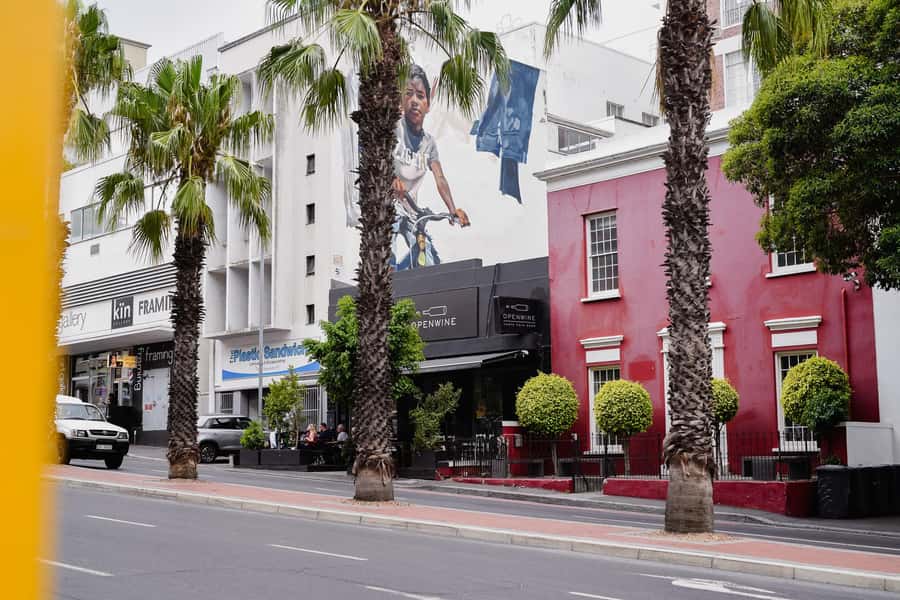
Cape Town’s story is written into its streets, and this walk brings several chapters together in just two hours. You begin among the painted houses and mosques of Bo-Kaap, then move through Long Street, Greenmarket Square, Company’s Garden, and District Six. It is a useful way to connect places you might otherwise see as separate stops.
I like the local storytelling, especially the focus on Cape Malay culture, forced removals, identity, and community life. I also like the mix of art, architecture, markets, and political history, rather than a walk that simply ticks off monuments. The main consideration is pace: two hours covers a lot of ground, so some stops are brief and this is not a museum-heavy tour.
Key points at a glance
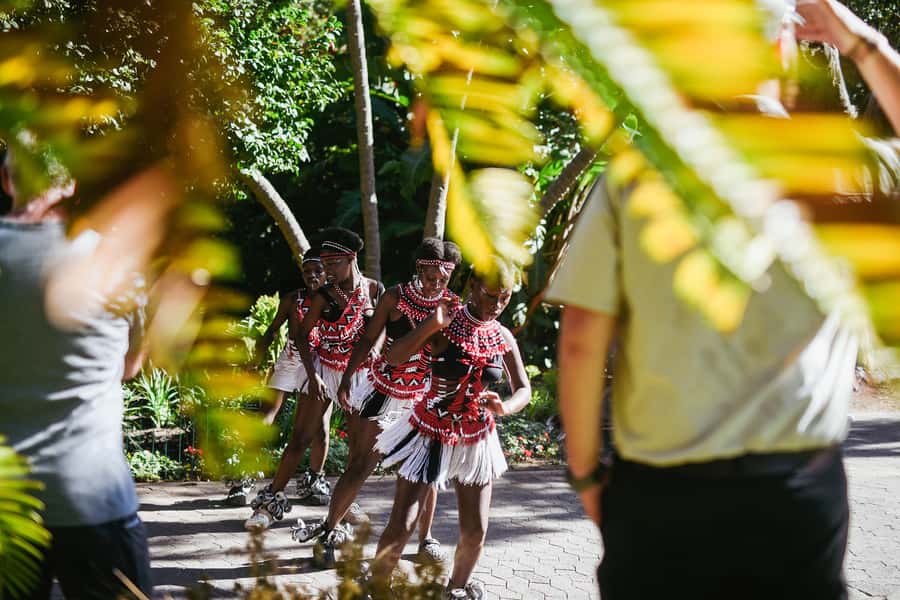
- Bo-Kaap sets the tone: See colorful homes and Auwal Masjid while learning about Cape Malay culture.
- A city-centre story in motion: Walk from Long Street and Greenmarket Square to the Company’s Garden and historic government buildings.
- History is treated honestly: The route addresses slavery, colonial rule, forced removals, and South African identity.
- Art is part of the route: Expect local art, craft stalls, galleries, creative buildings, and a visit connected with Cape Town’s art scene.
- Good first-day choice: The guide can help you understand the city layout and suggest areas to revisit later.
- Practical details matter: Meet at Bo-Kaap Deli, bring water and sun protection, and arrange your own transport to the start.
Why this short Cape Town walk works
At $37 per person, this is not the cheapest way to see Cape Town’s centre. You are paying for a local guide who explains the meaning behind the streets, not just for access to sights. That distinction matters in Bo-Kaap and District Six, where a colorful facade or an empty plot can carry a long and painful story.
The price makes the most sense if this is your first visit or if you want a clear introduction before exploring alone. You get a guided route through several central areas, local context, and suggestions for the rest of your stay. You do not get hotel pickup, lunch, entrance fees listed as included, or a private vehicle.
The walk has earned a 4.9 rating from 392 bookings, and the strongest praise is consistent: guides such as Mandi, Olwethu, and Diego explain clearly, answer questions, and keep the conversation lively. Some guides add local greetings in isiXhosa or isiZulu, help with souvenir shopping, or offer practical advice about where to eat and what to see next.
That personal approach is the tour’s real value. It helps turn a collection of Cape Town landmarks into a story about people, power, memory, and change.
More History Tours in Cape Town
- Cape Town Guided City Cycling Heritage Tour – Private Tour
★ 5.0 · 27 reviews - Robben Island Tour; Pickup, Drop-off; Guided Tour Historic Prison
★ 4.5 · 23 reviews - Robben Island and Long Walk To Freedom Historical Full day Tour.
★ 5.0 · 14 reviews
Meeting at Bo-Kaap Deli
Your starting point is Bo-Kaap Deli at 97 Church Street, Bo-Kaap, Cape Town, 8001. You need to make your own way there, so allow extra time for transport and finding the exact meeting point.
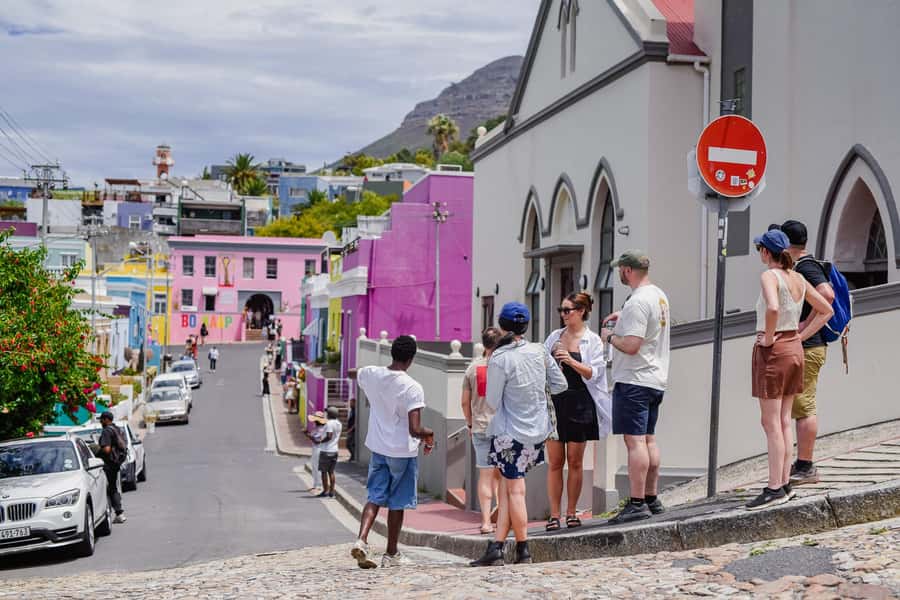
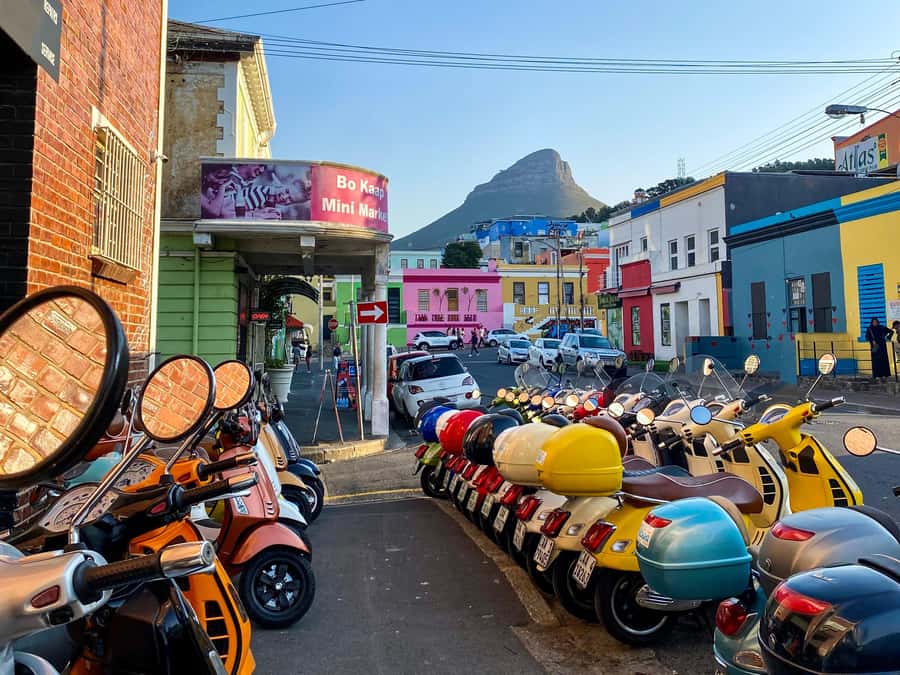
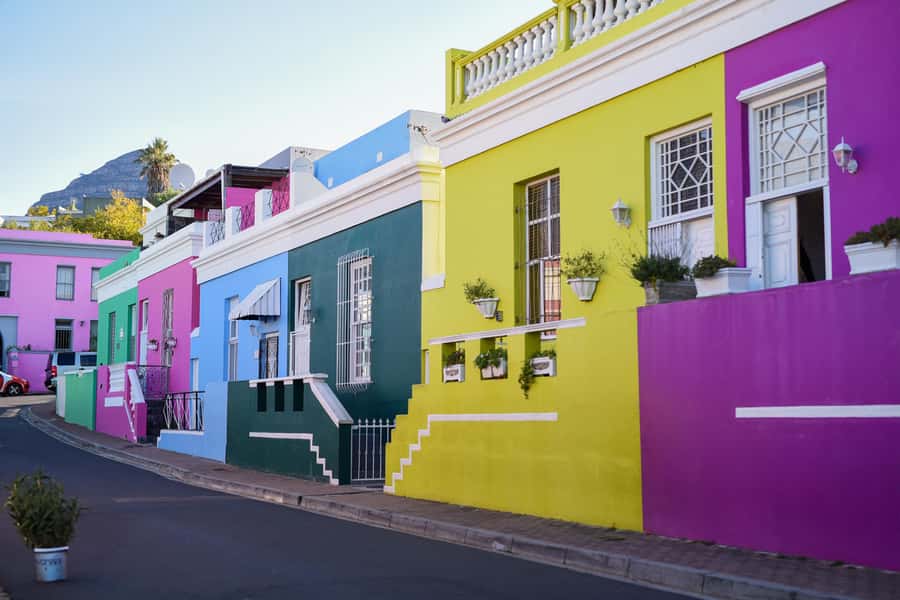
The tour begins in one of Cape Town’s most photographed areas. The painted houses are striking, but the guide should help you look beyond the color. Bo-Kaap is closely tied to Cape Malay culture, Islam, family networks, food traditions, and the preservation of local identity.
This is also where a guide adds the most value. Without context, Bo-Kaap can become a quick photo stop. With context, you start to understand why the neighborhood matters, how its residents protect its character, and how Cape Town’s cultural identity was shaped by people brought to the Cape under colonial rule.
Bring a camera, but do not let it replace attention. The point is not only to photograph the facades. It is to hear what they represent.
Bo-Kaap and Auwal Masjid
The first guided section lasts about 20 minutes in Bo-Kaap, followed by roughly 10 minutes at Auwal Masjid. The mosque is an important part of the neighborhood’s story and gives the walk a stronger cultural focus than a standard architecture tour.
You will have time for photos and sightseeing, but this is not advertised as a long interior visit. Dress and behave respectfully around the mosque and residential streets. Your guide can explain the setting and its place in the community, while you should remain aware that people live and worship here.
This part suits you if you want more than a postcard view. It also gives you a useful introduction to the tour’s main theme: South African identity is not one simple story. It has been shaped by migration, religion, language, race, law, and the survival of communities under pressure.
Wale Street to Long Street
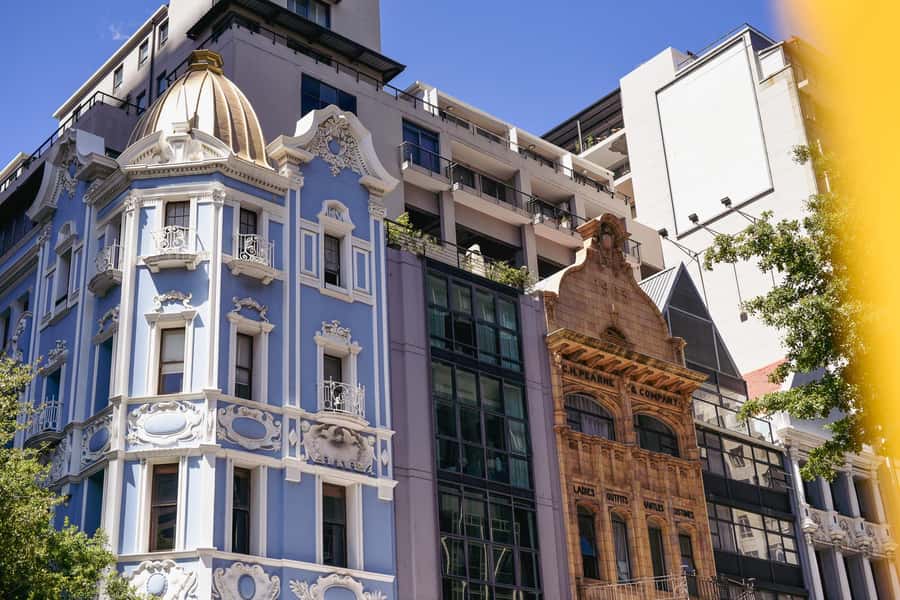
From Bo-Kaap, the route moves down Wale Street and toward Long Street. The Wale Street section takes about 15 minutes, with photos, walking, and commentary along the way.
Long Street changes the mood. Victorian-era buildings sit beside bars, bookshops, and vintage boutiques. The street gives you a quick look at the city’s present-day social life, while the older buildings provide a link to its colonial past.
You should expect a walking overview rather than time to shop. The stop is listed at about 15 minutes, which is enough to orient yourself and notice the mix of old and new, but not enough for a leisurely browse through every shop.
I find this transition useful because it prevents the tour from becoming narrowly historical. Cape Town is not preserved in one period. Its old buildings, creative businesses, nightlife, and changing street life all occupy the same few blocks.
More Walking Tours in Cape Town
- Cape Town: Nathi Langa Township Walking Tour
★ 4.9 · 493 reviews - Cape Town: Street Art Walking Tour in Woodstock
★ 4.8 · 293 reviews - Cape Town: Langa Township Walking Tour
★ 4.8 · 272 reviews - Cape Town: Private Walking Tour with a Local
★ 4.6 · 243 reviews
Greenmarket Square and Cape Town’s creative side
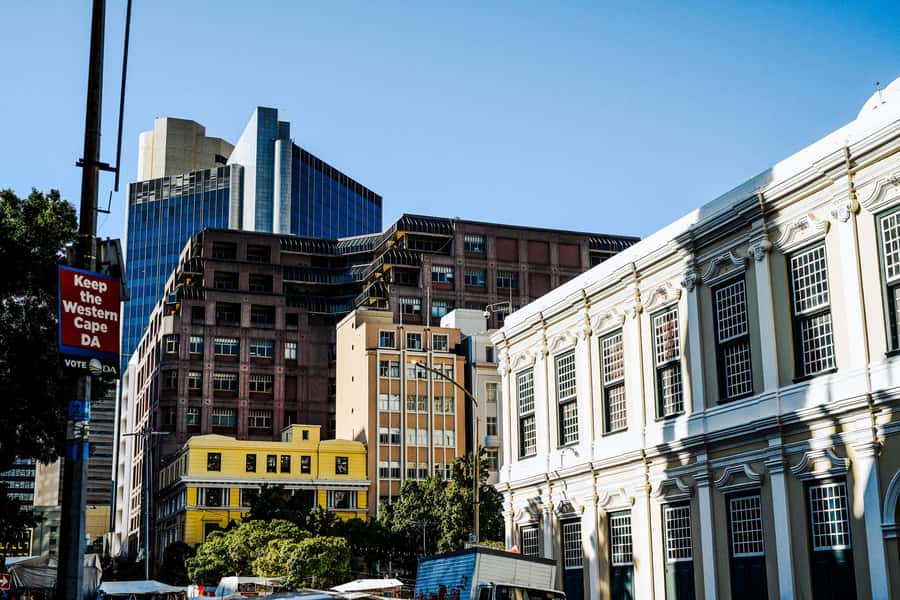
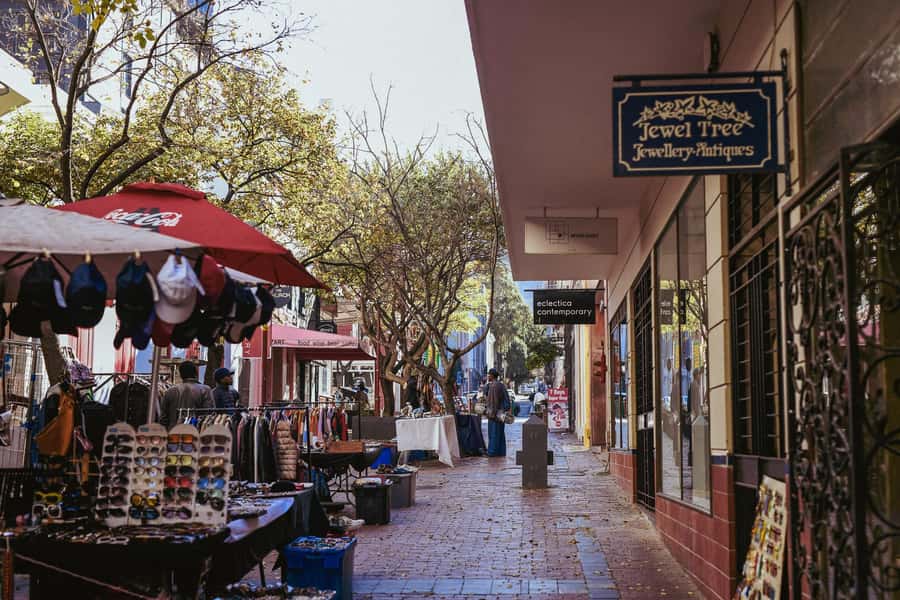
Greenmarket Square gets about 20 minutes, making it one of the longer stops. Here, traders sell handmade goods, local art, textiles, and souvenirs. The square shows the commercial side of Cape Town’s creative culture and gives you a chance to look at objects rather than only buildings.
You can shop, but personal purchases are not included in the tour price. If you see something you like, ask the guide about local context and take your time before buying. One guide, Diego, has even helped people negotiate while shopping, though that should be treated as a helpful extra rather than a guaranteed feature.
The market can also be a test of your attention. It is easy to focus on buying a souvenir and miss the larger story of the square. Listen for how trade, tourism, local craft, and public space fit together.
A short art stop early in the walk may include galleries or creative spaces. One particularly praised detail is a recycling artist’s studio, along with a distinctive box-shaped building discussed by a guide. Exact stops can vary, so think of the art element as a guided look at Cape Town’s creative scene rather than a formal gallery tour.
The Company’s Garden and the colonial chapter
The route then reaches the Company’s Garden, with roughly 15 minutes for walking and guided sightseeing. This green public space offers a calmer pause after the market and busy streets.
The garden also helps explain Cape Town’s colonial development. It was linked to the early settlement and the supply needs of ships, so it is not simply a pleasant park in the middle of town. Your guide uses the surrounding area to connect architecture, government, trade, and the growth of the city.
This is one of the places where a short explanation can change what you see. You may notice paths, trees, and formal buildings first. The guide adds the human and political context that makes the setting more meaningful.
There is also a practical benefit. The tour includes a break during the middle section, with access to toilets, according to the activity details. That makes the walk easier to manage, especially on a hot day.
Slave Lodge and City Hall
The Iziko Slave Lodge appears as a photo stop and guided pass-by of about 10 minutes. You should not assume that a full museum admission is included. The emphasis here is on the building and the story of slavery in Cape Town.
This is a serious part of the walk. The city’s development depended not only on European settlement and maritime trade, but also on the forced movement and labor of enslaved people. A short stop cannot cover everything, but it can give you the framework to visit the museum properly later if you have time.
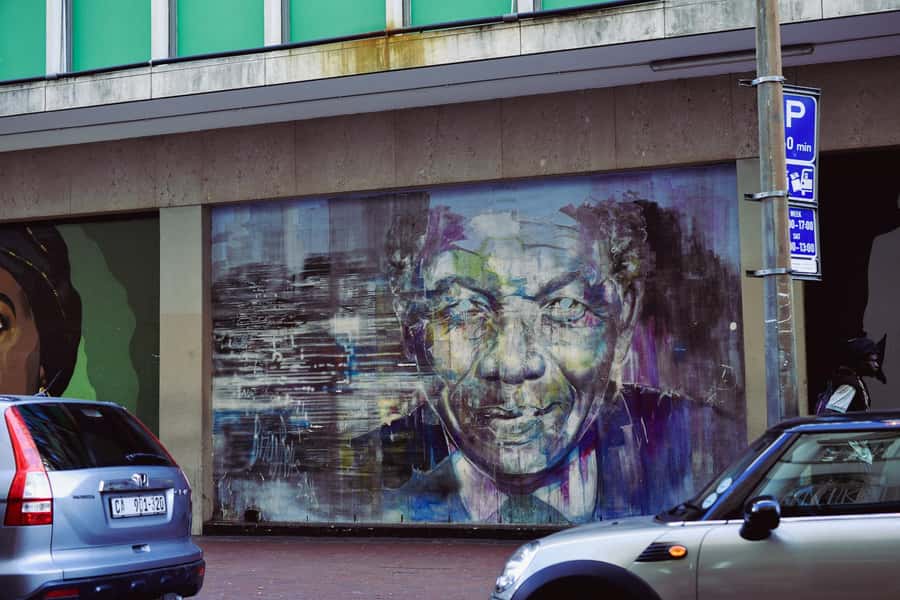
The route continues past City Hall, with about 15 minutes around Parliament and the nearby civic buildings. City Hall is tied to major speeches, public gatherings, and political change. There is also an opportunity to see an exhibition connected with Nelson Mandela, and the tour ends near a Mandela exhibit according to the advertised route.
These landmarks work well together. They show where authority was exercised, where public speeches were made, and how Cape Town’s political story reached beyond its colonial foundations. If political history is your main interest, you may wish to return later for a slower visit to the relevant museums and exhibitions.
District Six and the cost of forced removal
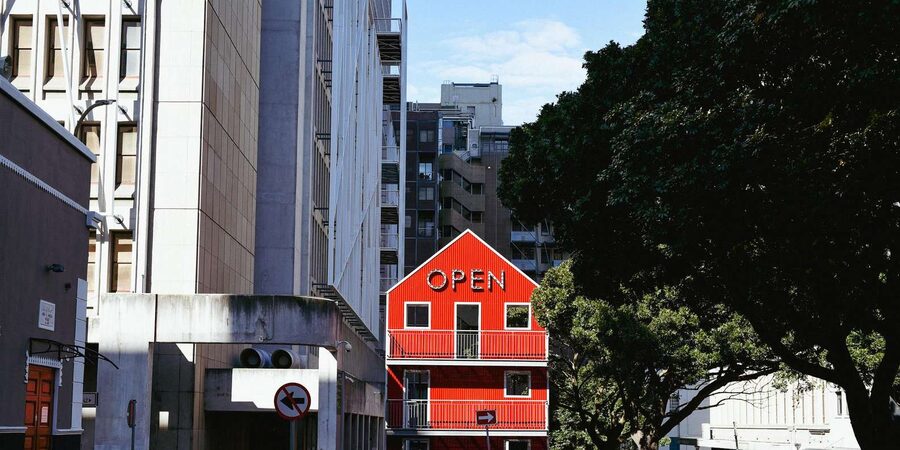
District Six is the emotional center of the walk. The route gives about 10 minutes to the area and the District Six Museum, with guided sightseeing and photos.
The short timing is the main weakness here. District Six deserves more than a quick explanation, and the museum itself cannot be properly explored in a few minutes. Treat this as an introduction that gives you the background needed for a longer independent visit.
The guide explains forced removals and the loss of a mixed community under apartheid-era policy. Families were removed from their homes, and the area was largely cleared. The story is not only about destruction. It is also about memory, cultural resilience, and the continuing effort to preserve connections to the neighborhood.
This is where the tour’s identity focus becomes clear. You are not simply learning dates and names. You are considering who gets to belong in a city, how governments shape urban space, and how communities hold on to place after displacement.
Ending near Truth Coffee Roasting
The final listed stop is Truth Coffee Roasting, with time for a photo, a coffee visit, and sightseeing. It offers a lighter ending after the difficult material in District Six.
Coffee is not included, so plan to pay for anything you order. The stop may also give you a chance to ask final questions and gather suggestions for the rest of your visit.
The walk can finish with a Nelson Mandela exhibit or nearby city sights, depending on the exact route and timing. Since the advertised duration is two hours and the route contains many stops, do not expect long visits at every location. Some sections are formal stops, while others are pass-bys with commentary.
How the guides shape the experience
The guide is the key variable, and the available names include Mandi, Olwethu, Diego, Sipho, Basil, and other One Day Africa hosts. The most praised qualities are clear speech, energy, patience, humor, and the ability to explain painful subjects without turning the walk into a lecture.
Mandi is described as warm, articulate, and willing to answer questions. Olwethu is associated with friendly explanations, local tips, and patient help with timing. Diego is praised for combining history, humor, practical advice, and simple greetings in local languages.
Those details matter because this tour covers difficult ground in a short time. A guide who simply recites facts would make the route tiring. A guide who invites questions and connects past events to modern Cape Town makes the walk easier to follow.
Communication appears to be another strength. In one case, a guide shared a location with a guest who was running late. Another guide waited after the walk until a taxi arrived safely. These are useful signs of care, but I would still aim to arrive on time and keep your own transport plans clear.
Pace, comfort, and safety
Wear comfortable shoes. You will walk through several neighborhoods and city streets, with limited time to sit. Sunglasses, a hat, sunscreen, water, and rain gear are sensible because Cape Town weather can change and much of the experience takes place outdoors.
Bring any personal medication you need, plus hand sanitizer or tissues. Alcohol and drugs are not allowed. The activity is listed as wheelchair accessible, but the route includes city sidewalks and multiple walking sections, so contact the provider in advance if you have specific mobility requirements.
The guide is with you during the walk, but you are responsible for yourself once the tour ends. Keep valuables discreet, stay alert around busy streets, and arrange a taxi or other transport if you are not comfortable continuing alone. One incident involving an attempted necklace theft after a guest left the group is a good reminder not to treat the end of the guided walk as the end of your need for street awareness.
Who should book this walk
I would choose this tour for a first day in Cape Town, especially if you want to understand the city before deciding where to spend more time. It suits adults and older children who can manage a steady two-hour walk and who are interested in culture, social history, architecture, art, and local life.
It is also a good fit if you are uneasy about exploring the city centre without orientation. A guide can show you how the areas connect and help you decide where to return for food, museums, shopping, or more art.
I would not choose it if you want long museum visits, a relaxed café crawl, or a private vehicle. The route is broad rather than slow. District Six, the Slave Lodge, and the Mandela material receive useful introductions, but you will need separate time for a full museum experience.
Book as early as practical if you want a particular guide, since the provider uses several hosts and the guide assigned to your departure may vary. English is the listed language.
Booking value and flexible plans
The $37 price is fair if you use the walk as a city orientation and history lesson. It covers the professional guide and guided route, but not meals, transport to Bo-Kaap Deli, souvenirs, or other personal costs.
The booking terms are helpful for a changing itinerary. You can reserve now and pay later, and cancellation is free up to 24 hours before the start for a full refund. Check the available starting times when booking, since the activity lasts two hours but the schedule is not fixed in the details provided.
Should you book it?
Book this walk if you want Cape Town explained through its communities and conflicts, not just its best-known views. Bo-Kaap, Greenmarket Square, the Company’s Garden, the Slave Lodge, City Hall, and District Six form a strong route, and the local guide gives the connections between them.
I would especially recommend it near the start of your stay. You will leave with a clearer sense of the city’s layout, a better grasp of its past, and useful ideas for what to visit next.
Skip it if you need extensive time inside museums or dislike walking at a steady pace. For everyone else, $37 buys a thoughtful introduction to Cape Town, with enough art, politics, and everyday street life to make the city more than a collection of scenic stops.
FAQ
Where does the Cape Town walking tour start?
The tour starts at Bo-Kaap Deli, 97 Church Street, Bo-Kaap, Cape Town, 8001.
How long is the tour?
The advertised duration is two hours. The route includes several short walking and sightseeing stops.
What language is the tour conducted in?
The live tour guide speaks English.
What places does the tour visit?
The route includes Bo-Kaap, Auwal Masjid, Wale Street, Long Street, Greenmarket Square, the Company’s Garden, the Iziko Slave Lodge, Parliament, District Six Museum, and Truth Coffee Roasting. It also includes an opportunity to see a Nelson Mandela exhibition.
Is transport or lunch included?
No. You arrange your own transport to the meeting point, and hotel pickup, hotel drop-off, lunch, and personal expenses are not included.
Can I cancel or pay later?
Yes. You can reserve now and pay later. Cancellation up to 24 hours in advance qualifies for a full refund.
Just listed around Cape Town
- Cape Town: Inspiring sustainable change through Street Art★ 4.9 · 5 reviews
- Cape Town Tandem Paragliding Square 1 Paragliding★ 5.0 · 5 reviews
- SandBoarding in Capetown + PhotoShoot★ 4.0 · 5 reviews
- Cape Town: Full-Day Private Peninsula Tour★ 3.6 · 5 reviews
- Private FULL DAY Tour: Cape of Good Hope & Boulders Beach★ 5.0 · 5 reviews
- Cape Town Full Day Family Fun With Kids Private Tour★ 4.0 · 5 reviews
- Private Tour to Aquila Game Reserve in Cape Town – see the Big5★ 5.0 · 5 reviews
- Peninsula Tour Cape Town★ 5.0 · 5 reviews
Historical Tours, compared.
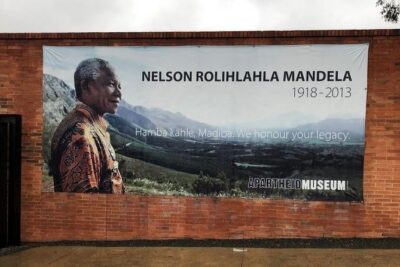
Soweto Township Cultural Tour incl Apartheid Museum and Nelson Mandela House
Read our review →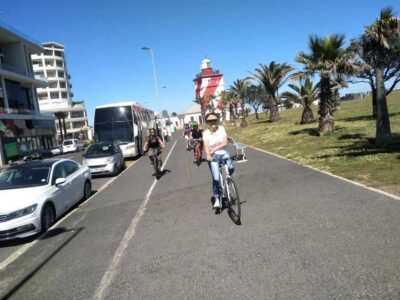
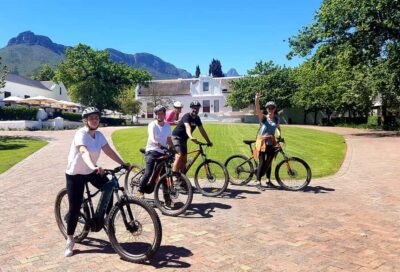
Cape Town Guided City Cycling Heritage Tour – Private Tour
Read our review →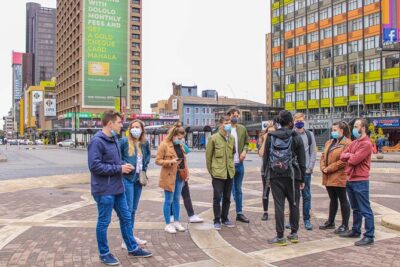
Apartheid History of South Africa (Full day Experience with lunch
Read our review →
Robben Island Tour; Pickup, Drop-off; Guided Tour Historic Prison
Read our review →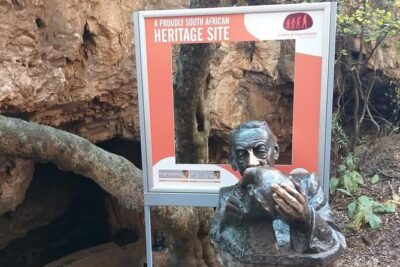
Browse the lists this tour appears in