

Reviewed · SOWETO & APARTHEID MUSEUM TOURS
Soweto: Hector Pieterson Memorial, to Orlando Towers Tour
Soweto tells South Africa’s story block by block, and this tour begins at one of its most important places: the Hector Pieterson Memorial. From the 1976 uprising to Mandela’s former home, you’ll walk through events that shaped the country, then see how Soweto is changing today.
I like the mix of serious history and ordinary local life. You get a kota, the township version of a burger, a taste of Tolokazi beer, and a ride in a minibus taxi. The main consideration is the 5-kilometre walk, plus entry tickets and drinks are extra.
Key points to know before booking
- Begin at the Hector Pieterson Memorial: Spend about an hour learning how the 1976 student uprising became a major turning point in the fight against apartheid.
- Walk historic Vilakazi Street: See Nelson Mandela’s former home and the house linked with Archbishop Desmond Tutu on the same famous street.
- Eat like a local: Lunch is included, with kota or other regional food available during a 40-minute stop.
- Use Soweto’s everyday transport: A minibus taxi takes you from the walking route toward Orlando East and the towers.
- Meet Soweto beyond the monuments: The guide explains post-apartheid life, youth concerns, and the township’s different living areas.
- Finish at Orlando Towers: The painted cooling towers provide a bold final landmark and a good sense of Soweto’s energy.
Starting beside the Hector Pieterson Memorial
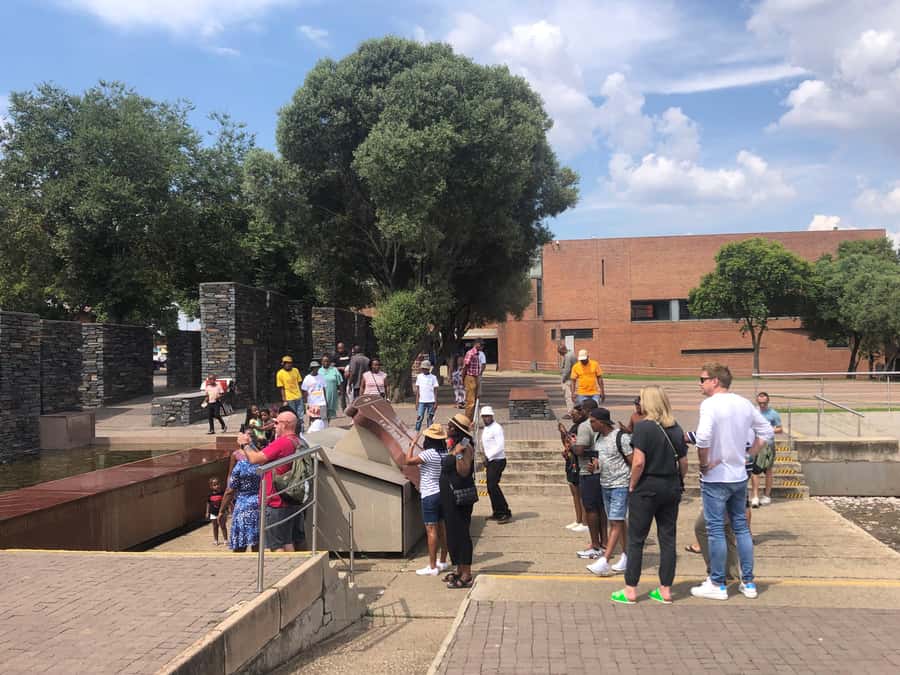
Your meeting point is K & K Soweto Bakery, Coffee Shop, beside the museum and memorial. Look for Vilakazi Espresso in bold lettering. The meeting place is on the right-hand side of the coffee shop, with the Hector Pieterson Museum easy to spot nearby.
That location is more than a convenient landmark. It puts you at the heart of the tour’s central subject from the first minute. You are not beginning with a generic city viewpoint or a long drive from Johannesburg. You begin at the site where young people challenged apartheid in 1976.
The tour is led in English by a local guide. Named guides connected with this experience include Tebogo and Dumi, also referred to as Dumisani or Dumisane in feedback. The strongest praise focuses on their clear storytelling, friendly manner, local connections, and ability to answer questions without making the walk feel like a classroom lecture.
I would arrive a little early. You need comfortable clothes, walking shoes, sun protection, a hat, and a charged phone. A power bank is sensible because four hours of navigation, photos, and translation tools can use a phone battery quickly.
More Soweto and Apartheid Museum visits:
- Johannesburg: Hop-On Hop-Off Bus with Optional Soweto Tour
★ 4.6 · 985 reviews - Soweto /Johannesburg and Apartheid Museum Guided Full Day Tour
★ 5.0 · 932 reviews - Johannesburg Hop-On Hop-Off City Tour with Soweto Option
★ 4.5 · 768 reviews
An hour at Hector Pieterson and the 1976 uprising

The Hector Pieterson Memorial is the emotional center of the morning. Here, your guide explains the 1976 Soweto Uprising, when students protested against the apartheid government’s education policies and the forced use of Afrikaans in schools.
Hector Pieterson became a symbol after being killed during the protest. The famous photograph of his body being carried away helped expose the violence of apartheid to the world. The tour also brings attention to young women such as Antoinette Sithole, whose courage during the uprising is part of the wider story.
Plan to give this stop your full attention. The visit lasts about an hour, which is enough time for historical explanation, sightseeing, and questions. This is not a quick photo stop. The guide’s role matters here because the memorial’s meaning reaches beyond one event. You are also learning how state violence, unequal education, and resistance shaped families and communities.
I appreciate that this opening gives context before the lighter parts of the day. Without it, Vilakazi Street and Orlando Towers could seem like disconnected attractions. With it, the streets become part of a much bigger story about forced separation, political change, and life after 1994.
The subject is difficult, and the tone is appropriately serious. If you want a purely cheerful sightseeing trip, this is not the right tour. If you want to understand why Soweto matters, it is a strong place to begin.
Moema Street and the walk toward Vilakazi Street
After the memorial, the route continues through Moema Street for about 15 minutes with the guide. This short section helps move you from a formal museum setting into the lived township.
You will be walking rather than watching Soweto through a vehicle window. That makes a difference. You can notice the street pattern, homes, shops, and the ordinary rhythm of the area while the guide explains how apartheid shaped where people could live and how Soweto developed.
The tour describes Soweto as a township with different economic levels, including middle-class areas and informal settlements. An informal-settlement visit may be offered as an optional part of the route. Since it is optional, ask the guide how it fits into your particular outing and what you should expect before agreeing.
That flexibility is useful. Some people want a fuller look at housing conditions and inequality. Others may prefer to keep the focus on the memorials, food, and main streets. Either choice can make sense, as long as you approach the visit with respect and listen rather than treating a residential area as a photo backdrop.
Vilakazi Street, Mandela’s House, and Desmond Tutu’s former home
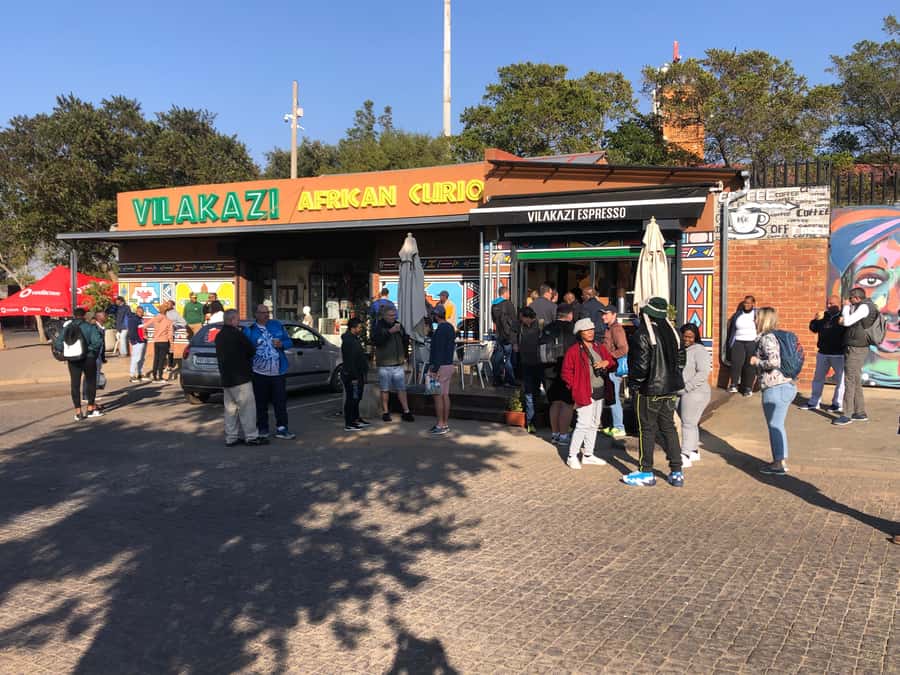
Vilakazi Street is one of Soweto’s best-known roads. It is associated with both Nelson Mandela and Archbishop Desmond Tutu, two figures central to South Africa’s political and moral life.
The walk along the street lasts about 20 minutes, followed by roughly 30 minutes at Mandela’s House. At the house, you have a self-guided visit, so do not expect the guide to narrate every room. Instead, use the time to look around at your own pace and connect the building with Mandela’s years in Soweto.
The former home of Archbishop Desmond Tutu is also pointed out. The significance is unusual: this street is linked with the homes of two Nobel Peace Prize winners. Your guide explains what made Tutu prominent and how his work fitted into the wider struggle against apartheid and the difficult work of reconciliation.
This is one of the tour’s most useful combinations. You see a major political landmark, then hear about another leader who lived close by. The guide can connect the people to the streets, rather than presenting them as isolated names from a textbook.
There is a practical tradeoff. Mandela’s House is listed as a self-guided visit, and entry tickets are not included in the tour price. Check the ticket cost and current opening arrangements before you go if entering the house is important to you. The schedule allows around 30 minutes, so this is a focused stop, not an extended museum visit.
A few more Johannesburg days worth comparing
- From Johannesburg: Pilanesberg Nature Reserve Game Safari
★ 4.8 · 1,327 reviews - Full Day Ultimate Pilanesberg National Park Safari from Johannesburg or Pretoria
★ 4.5 · 718 reviews - Half-Day Tour of Soweto Tour
★ 4.5 · 712 reviews - Soweto: Walking Tour with a Local Guide and Lunch
★ 4.9 · 648 reviews
Kota, braai, and a proper township food break
After the historical stops, the tour gives you about 40 minutes for brunch and regional food on Vilakazi Street. Lunch is included, though drinks are not.
The featured food is the kota, often called a township burger. It is a filling local meal, and it gives the tour a welcome shift from memorials and political history to everyday food culture. Braai, South Africa’s much-loved barbecue tradition, may also be part of the local food experience.
I like this stop because food can explain a place in a way a monument cannot. A kota is not just fuel for the next two hours of walking. It is tied to township life and informal food culture, and it gives you something concrete to discuss with the guide.
The meal is likely to be casual rather than polished. That is part of the point, but it also means you should not expect a long restaurant lunch or a wide menu of dietary choices. The supplied information does not specify vegetarian, vegan, or allergy options, so ask before booking if you have strict dietary needs.
Use the break to ask about modern Soweto. The tour is designed to discuss how people, especially young people, live in post-apartheid South Africa. That makes the meal more than a pause. It is a chance to shift from what happened under apartheid to what daily life looks like now.
Local beer and conversation at a neighborhood bar
The next short stop is a local bar, reached on foot, with around 15 minutes set aside for beer. You may taste Tolokazi, a local beer, at one of the area’s breweries or bars.
Drinks are not included, so budget for this small extra. The tasting is also optional in practical terms if you do not drink alcohol. The tour does not allow alcohol or drugs in the vehicle, but the planned bar stop is part of the route. Non-drinkers should ask the guide what alternatives are available.
This stop works best when you treat it as a social window, not a pub crawl. The point is to spend a little time in a local setting, meet people, and see another side of Soweto. The short length keeps the day moving, but it also means you should not expect a full brewery tour or a long tasting session.
Several highly praised aspects of the tour come together here: the guide’s ease with local people, the chance to ask direct questions, and the contrast between formal historic sites and ordinary gathering places. The guide is not simply reciting dates. He is helping you read the community around you.
Riding a minibus taxi to Orlando East

A minibus taxi ride takes about 10 minutes toward Orlando East. This is one of the tour’s most distinctive features because it uses a normal form of local transport rather than keeping you in a private tour vehicle all day.
The minibus taxi is a common way to get around South Africa. Riding one with the guide gives you a small taste of daily movement in Soweto and helps explain how residents connect different parts of the township.
You should expect basic local transport, not a sightseeing coach. The ride may be close to other passengers, and the vehicle is not designed for wheelchair access. Smoking is not allowed in the vehicle.
The trip ends at Orlando Towers, but the minibus ride helps make the route feel connected. You are not simply ticking off separate stops. You are moving through the township as the tour changes from the historic center around Orlando West to Orlando East.
Orlando East and the first formal housing area
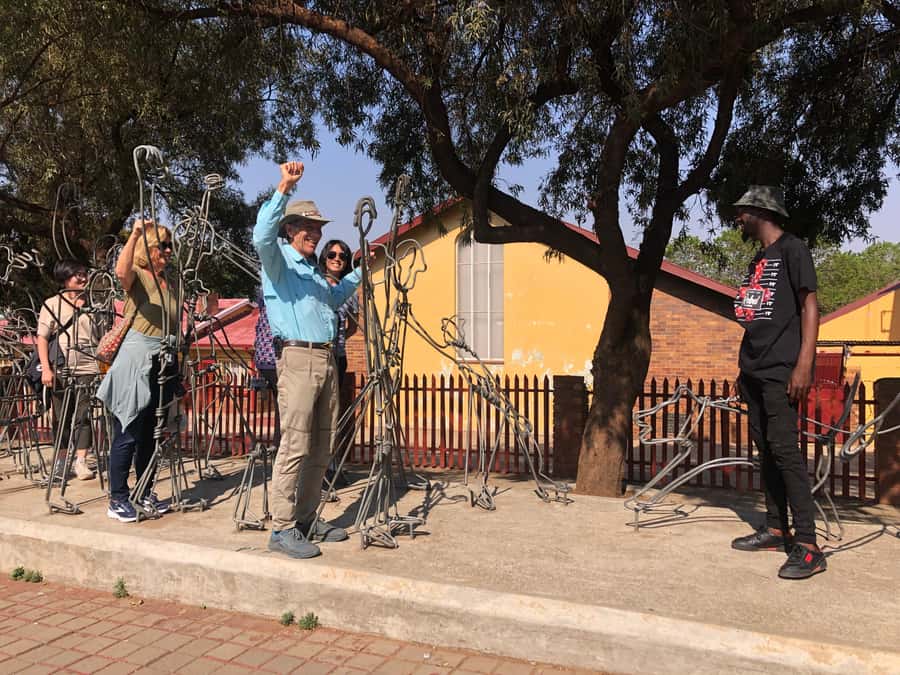
In Orlando East, the guide spends about 15 minutes explaining the area and its place in Soweto’s development. It is described as the first location in Soweto to receive brick houses as a formal settlement.
This stop is brief, but it gives useful housing context. Soweto is often spoken about as if it were one uniform place. It is not. The tour points out the different living classes and the contrast between formal homes and informal settlements.
That context matters because apartheid did not end all inequality in one stroke. The tour looks at the long effects of segregation and the ways housing, income, and opportunity still shape life in African South African communities.
Do not expect a long architectural tour here. The value is in the explanation and the comparison with other parts of Soweto. Listen closely, and ask the guide to clarify anything that is unfamiliar. Guides such as Tebogo and Dumi have been praised for giving clear next steps and answering questions openly, which is especially helpful during a fast-moving route.
Walking to the Orlando Towers

The final walk leads to the Orlando Towers, one of Soweto’s most recognizable landmarks. You spend about 15 minutes sightseeing here, and the tour finishes at the towers.
The painted structures are easy to recognize and make a dramatic end point. After a morning of memorials, homes, streets, food, and local transport, the towers give you a clear visual marker for the area.
The stop is primarily for sightseeing. No tower entry or adventure activity is listed, so do not book this tour expecting a bungee jump or a lengthy tower visit. You are coming to see the landmark, photograph it, and take in the atmosphere around it.
Finishing here also makes practical sense. The group does not need to retrace the whole route to the starting coffee shop. You should arrange your onward transport from the towers, since hotel pickup and drop-off are not included.
What the $34 price really covers
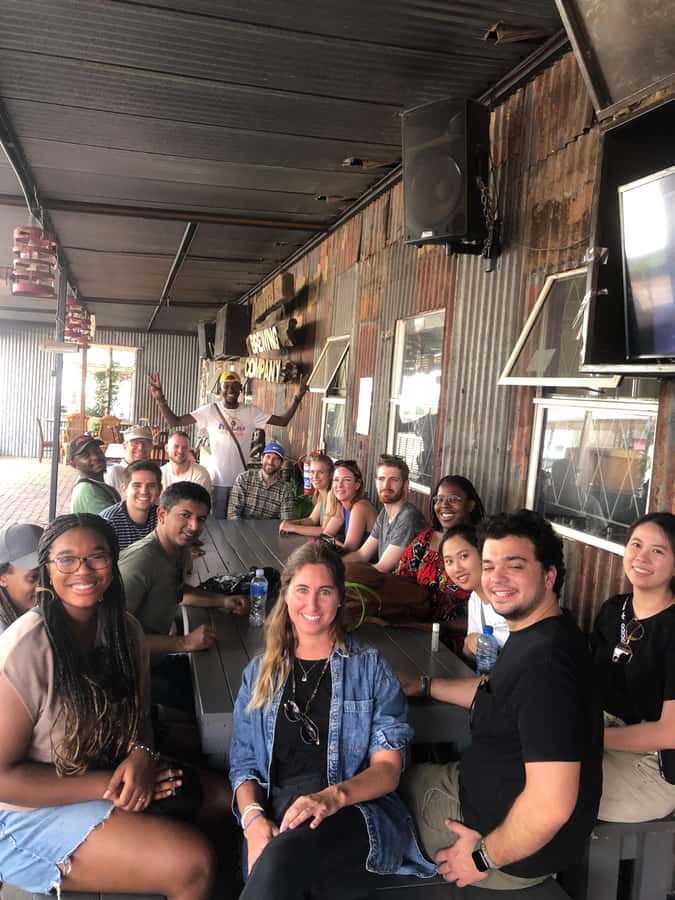
At $34 per person, this is a good-value half-day introduction if you want history, local food, and everyday transport in one outing. Lunch and the minibus taxi ride are included, and the four-hour schedule covers several major Soweto locations without requiring you to organize separate taxis or guides.
The price does not cover drinks or entry tickets. That matters most at Mandela’s House and during the beer stop. Add a little extra money for those costs, and confirm current admission prices if the house visit is a priority.
The value comes mainly from the guide. Soweto’s history is not hard to find in a museum, but it is harder to connect to the streets, homes, transport, and present-day community without local explanation. The strongest part of this tour is the guide’s ability to make those links clear.
The schedule is full but not frantic. You get an hour at the memorial, time at Mandela’s House, a proper food stop, short neighborhood visits, and the taxi ride. Still, the 5-kilometre walk means the outing will feel active. Good shoes matter more than smart clothes.
Who should book this Soweto tour?
I would recommend it to first-time visitors to Johannesburg who want a structured introduction to Soweto and do not want to rely on a quick drive-by tour. It suits people who ask questions, care about South African history, and are open to eating local food and using public transport.
It is also a good choice for solo visitors who want the reassurance of a local guide and a planned route. The guides have been praised for making people feel safe, comfortable, and engaged, including during bad weather and late arrivals.
Families with older children may find the combination of history, food, walking, and towers more memorable than a museum-only visit. The material about the 1976 uprising is serious, so parents should decide if it suits their children.
I would think twice if you use a wheelchair, cannot walk 5 kilometres, or need a slow, fully accessible route. The tour is not suitable for wheelchair users, and the minibus taxi may be challenging for anyone with limited mobility.
Free cancellation is available up to 24 hours before the start, and you can reserve now and pay later. Starting times vary, so check availability when booking.
Should you book it?
Book this Soweto tour if you want more than famous names and photo stops. The Hector Pieterson Memorial gives the day its historical weight, while the kota, local beer, minibus taxi, Orlando East, and conversations with the guide bring you into present-day Soweto.
The main reasons to choose it are excellent guide-led context, a well-balanced route, and the chance to see how history connects with ordinary life. The main reasons to skip it are the 5-kilometre walk, extra costs for drinks and entry tickets, and the lack of wheelchair access.
For $34, it is a sensible way to spend four hours in Soweto, especially if you are fortunate enough to be guided by Tebogo or Dumi. Go ready to listen, walk, eat, and ask direct questions. That is where this tour gives you its real value.
FAQ
How long does the Soweto tour last?
The tour lasts four hours. It includes walking stops, a local minibus taxi ride, food, historic sites, Orlando East, and the Orlando Towers.
Where does the tour begin?
It begins at K & K Soweto Bakery, Coffee Shop, near the Hector Pieterson Museum and Memorial. Look for Vilakazi Espresso in bold lettering. The meeting point is on the right-hand side of the coffee shop.
Where does the tour finish?
The tour finishes at the Orlando Towers, also called Soweto Towers in the route details.
Is lunch included?
Yes. Lunch is included, with local food such as a kota or braai available during the meal stop. Drinks are not included.
Are entrance tickets included?
No. Entry tickets are not included. Mandela’s House is listed as a self-guided visit, so check the current admission arrangements before you go.
How much walking is involved?
You will walk about 5 kilometres in total, with stops along the way. Comfortable shoes, a hat, sunscreen, comfortable clothes, hand sanitizer or tissues, and a power bank are recommended.
Just listed around Johannesburg
- Constitutional Hill and Soweto 5 hours tour.★ 5.0 · 5 reviews
- 5 Day Kruger Glamping Safari and Panorama Tour★ 5.0 · 5 reviews
- Cradle of Humankind and Maropeng Day Tour from Johannesburg★ 4.0 · 5 reviews
- Johannesburg: Hot Air Balloon Flight★ 5.0 · 5 reviews
- Half Day Soweto and Apartheid Museum Guided Tour★ 5.0 · 5 reviews
- Lion park★ 4.5 · 5 reviews
- 5 Day Kruger National Park and Panorama Route Safari★ 4.5 · 5 reviews
- Pretoria Historical Tour★ 4.0 · 5 reviews
Soweto & Apartheid Museum Tours, compared.


Soweto /Johannesburg and Apartheid Museum Guided Full Day Tour
Read our review →
Johannesburg Hop-On Hop-Off City Tour with Soweto Option
Read our review →


Jo’berg in 1 Day: Soweto, Apartheid Museum & City Tour
Read our review →
Full-Day Tour with Soweto and Apartheid Museum
Read our review →
Browse the lists this tour appears in