
Reviewed · SOWETO & APARTHEID MUSEUM TOURS
1 Day: Bus & Soweto Combo
Johannesburg makes much more sense when you connect its city center with Soweto, and this tour does exactly that. You ride the double-decker sightseeing bus at your own pace, then join a Soweto resident guide for places tied to Nelson Mandela, Desmond Tutu, the anti-apartheid struggle, and everyday township life.
I especially like the chance to visit Vilakazi Street, the only street associated with two Nobel Peace Prize winners, and the useful mix of bus commentary and local guiding. The clean bus, professional drivers, and guides such as KG and Vincent also earn this experience strong marks. The catch is time: five to six hours is not enough to explore every listed stop, and major museums cost extra.
Key points to know before booking

- Soweto is the heart of the day: Spend about two hours visiting Vilakazi Street, Hector Pieterson, the Soweto Towers, Orlando Stadium, and other major sites.
- The bus gives you a broad view: Ride through Johannesburg’s historic districts without arranging several separate taxi trips.
- Vilakazi Street carries unusual weight: Nelson Mandela’s former home and Desmond Tutu’s house are close together.
- Museums are optional and extra: The Apartheid Museum costs ZAR 150, while Mandela’s former home costs ZAR 60.
- The group is limited to 20 people: You get a more manageable setting than on a large coach tour.
- Plan around closing days: The Apartheid Museum may not be available on Mondays or Tuesdays, and Mandela’s house can close on public holidays.
Two ways to understand Johannesburg in one day
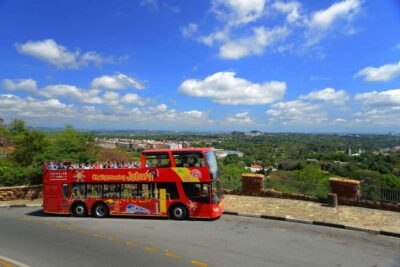
The best idea here is the combination itself. Johannesburg is spread out, and its key sights do not sit in one compact old town. The red sightseeing bus helps you cover ground, while the Soweto portion gives you a local perspective that recorded commentary alone cannot provide.
You begin at the City Sightseeing Johannesburg office on Oxford Road in Rosebank. From there, you can ride the bus and get off at selected stops. The audio commentary provides background as you pass historic neighborhoods and sites connected to apartheid and the country’s move toward democracy.
At Gold Reef City, you leave the bus for the small-group Soweto tour. After that visit, you return to Gold Reef City and rejoin the sightseeing route. The full experience takes about five to six hours, though the exact balance between riding, museum visits, and time in Soweto depends on how many times you hop off.
That flexibility is useful, but do not treat the itinerary as a promise that you can properly visit every attraction in one day. Many stops are listed with only a few minutes of travel time, while Constitution Hill and the Apartheid Museum each deserve around an hour or more. If you stop at both museums, you will have less time for the bus route and Soweto.
More Soweto and Apartheid Museum visits:
- Johannesburg: Hop-On Hop-Off Bus with Optional Soweto Tour
★ 4.6 · 985 reviews - Soweto /Johannesburg and Apartheid Museum Guided Full Day Tour
★ 5.0 · 932 reviews - Johannesburg Hop-On Hop-Off City Tour with Soweto Option
★ 4.5 · 768 reviews
Rosebank to Mandela’s Johannesburg
Melrose Arch is one of the early sights. Its curved streets, piazza-like public spaces, and restaurants create a polished introduction to the city. It is not the most historic stop on the route, but it can work as a pleasant place to begin or finish your day.
The Nelson Mandela Foundation is a more meaningful hop-off point. Open Monday through Saturday from 9 a.m. to 4 p.m., it includes Mandela’s post-presidential office, a permanent exhibition about his life, and temporary displays. The shop sells books and memorabilia.
The foundation is best for visitors who want personal and political context rather than only a quick photo. You can see where Mandela worked after leaving office and consider the later phase of a life often reduced to prison, presidency, and reconciliation.
Admission is not included, so check the current fee before you go. Also note the opening days. If you arrive on a Sunday, this stop will not be available.
Constitution Hill and the work of remembering
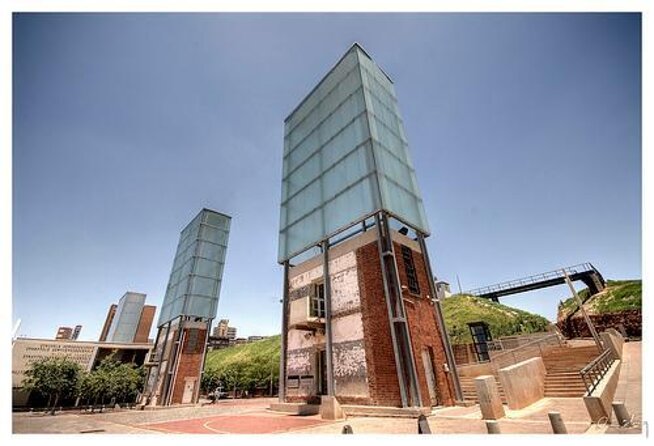
Constitution Hill is one of the strongest stops on the bus route. The site was once a prison and military fort, and it held people from every part of South African society. Nelson Mandela, Mahatma Gandhi, Joe Slovo, Albertina Sisulu, Winnie Madikizela-Mandela, and Fatima Meer were all confined here at different times.
The importance of the place is not limited to famous names. The prison held tens of thousands of ordinary people as well. That makes the site useful for understanding how state power affected daily life, not just political leaders.
Today, the Constitutional Court occupies the precinct. The court’s presence beside the old prison gives the visit a clear shape: repression is part of the story, but so is the country’s effort to build a rights-based democracy.
Allow about an hour if you want more than a quick look. Admission is extra. If you are choosing only one historical stop on the bus route, Constitution Hill is a strong candidate because it combines architecture, personal stories, and national politics in one place.
The Apartheid Museum needs real time

The Apartheid Museum opened in 2001 and focuses on the rise and fall of apartheid. Its building was designed as a major architectural project, with space and outdoor areas arranged to support the museum’s subject.
This is not a quick photo stop. The material is serious, and you will get much more from it if you have enough time to read, pause, and think. The museum helps explain the legal structure of racial separation and the resistance that eventually challenged it.
Admission costs ZAR 150 and is not included. Opening days matter too. The museum is closed on Mondays and Tuesdays, a point that can affect your entire plan. If your visit falls on either of those days, use the extra time for Constitution Hill or stay longer in Soweto.
You can technically combine the museum with the Soweto tour, but the schedule may feel tight. I would not plan a long museum visit, a full bus circuit, and an unhurried Soweto experience all in the same five-hour window.
More day trips in Johannesburg:
- Jo’berg in 1 Day: Soweto, Apartheid Museum & City Tour
★ 4.8 · 524 reviews - One day Safari including a 5 Hour Open Safari Vehicle Drive
★ 5.0 · 43 reviews - 1 Day Safari from Johannesburg
★ 4.0 · 10 reviews - African Safari in Pilanesberg National Park – 1 day adventure
★ 5.0 · 8 reviews
Gold Reef City is the handoff point

Gold Reef City is less important here as an attraction than as the transfer point between the two halves of the experience. You hop off the sightseeing bus and join the small-group Soweto tour, then return to this same area to continue by bus.
The listed tour timing allows about ten minutes at Gold Reef City. That tells you to keep the transfer simple. Have your belongings together, listen for instructions, and avoid planning a separate Gold Reef City visit unless you have arranged extra time outside this experience.
The price includes the hop-on hop-off bus and the Soweto tour. It does not include lunch, so plan for the fact that the day crosses normal meal hours.
Newtown recalls an older Johannesburg

Newtown was once known as the Brickfields. Around 7,000 people lived there in the late 19th century, alongside brick factories, banks, trade firms, a brewery, and other businesses.
The area also connects to Mahatma Gandhi’s early years in South Africa. In 1904, he reported an outbreak of bubonic plague in Brickfields. The local government responded by setting fires in an effort to stop the disease, causing great disruption in the area.
You can hop off here for Sci-Bono or Museum Africa, though admission is not included. The stop is best for visitors who want to add a museum or learn more about the city’s working neighborhoods. With limited time, you may prefer to stay on the bus and save your longer visit for Constitution Hill or the Apartheid Museum.
Braamfontein, the zoo, and military history
Braamfontein is another flexible stop. On Saturdays, you can visit the Playground market. It is not a daily option, so check your day of travel before counting on it.
The Johannesburg Zoo covers 55 hectares and dates to 1904. It houses more than 320 species and about 2,000 animals. The zoo is open 364 days a year, including Christmas, New Year’s, and Easter, according to the supplied details. Admission is extra.
The South African National Museum of Military History traces the country’s military past and grew from efforts during the Second World War to preserve documents and military objects. It can add useful context if you want to understand South Africa’s role in international conflicts, but it is another stop that needs time and a separate ticket.
These attractions are possible additions, not essential parts of the Soweto day. If your main goal is the country’s political past, I would prioritize Constitution Hill, the Apartheid Museum, and Soweto.
FNB Stadium and the road into Soweto

FNB Stadium is a short, worthwhile photo stop. It was built for the opening and closing matches of the 2010 FIFA World Cup, and the visit allows about 20 minutes to admire it.
The stadium gives you a different view of Johannesburg. The tour is not only about prison history and apartheid. It also shows a modern city with major sporting venues and large public events.
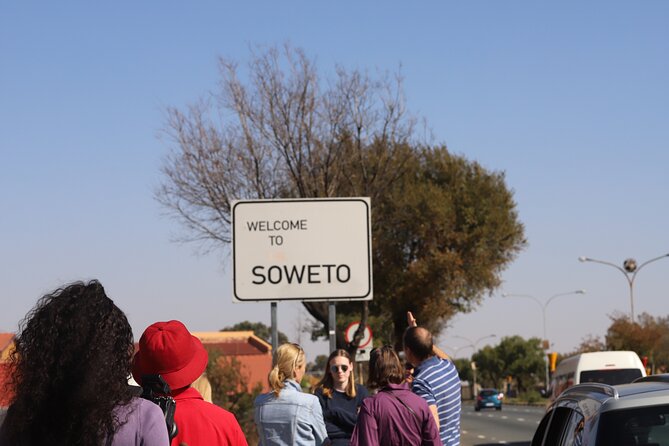
The bus then reaches the Welcome to Soweto sign, another brief stop designed for photos. Do not expect a long walk or a full neighborhood visit here. The real local experience begins afterward, with the smaller guided circuit.
Vilakazi Street and two Nobel Peace Prize stories
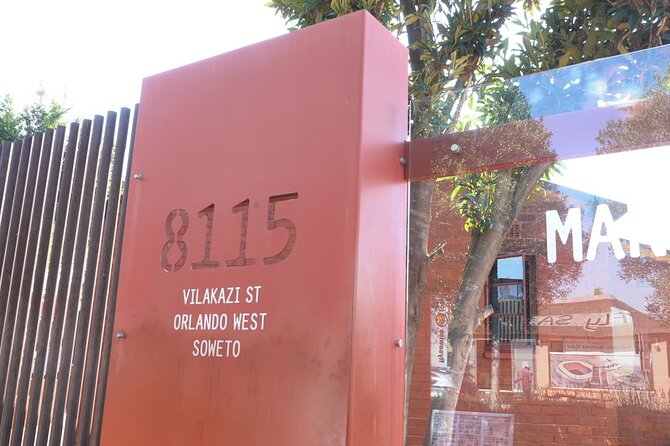
Vilakazi Street is the emotional center of the Soweto portion. Nelson Mandela’s former home is at 8115 Vilakazi Street, and Archbishop Emeritus Desmond Tutu’s home is only a short distance away.
Few city streets carry this much political meaning. Mandela lived here before and after his imprisonment, while Tutu became one of the most important voices against apartheid. Seeing the two homes close together gives you a strong sense of how Soweto shaped national leadership.
Mandela’s home charges a separate ZAR 60 admission fee. The house may not be open on every holiday, so Easter and other public holidays require particular care. Even if the interior is closed, the surrounding street and the guide’s explanation remain part of the visit, but you should not assume the house admission is guaranteed on every date.
The street also offers a chance to pause between major historical sites. You can look beyond the famous names and notice that this is still a lived-in neighborhood, not only a museum district.
Hector Pieterson, the towers, and Orlando Stadium
The Soweto circuit continues to sites that give the township’s past and present more depth. Hector Pieterson is linked to the 1976 student uprising, one of the defining events in the struggle against apartheid. The visit helps you connect national history with the actions of young people and local communities.
The route also includes Chris Hani Baragwanath Hospital, the Soweto Towers, and Orlando Stadium. Each stop adds a different piece to the picture. The hospital points to the scale of the township, the towers are a recognizable part of its modern identity, and Orlando Stadium connects to sport and public life.
The tour describes Soweto as the New York of Africa, but you do not need the nickname to appreciate what you see. The more useful approach is to let the local guide explain how the area works as a home for thousands of South Africans, not simply as a place linked to Mandela.
This is where the small group matters. A maximum of 20 people is manageable for short stops and questions. The local guides are the main strength of this section. Guides named KG and Vincent receive specific praise for making the experience special, and the supplied feedback repeatedly points to professional drivers and clear explanations.
What the price really includes
At $38.82 per person, the tour is good value if you want transport, a city overview, and a guided Soweto visit in one booking. Johannesburg’s attractions are spread out, so the bus component can save you the work of planning separate connections.
The value is strongest for a first visit. You get a broad introduction, then time in one of the city’s most important areas. You also avoid spending the entire day in a vehicle because the hop-on hop-off format lets you choose where to stop.
Still, the headline price is not your full sightseeing budget. You may need to add:
- ZAR 150 for the Apartheid Museum
- ZAR 60 for Mandela’s former home
- Separate admission for Constitution Hill and other museums
- Lunch
The extra charges are reasonable to know in advance. If you want to keep costs down, you can ride the bus, join the Soweto tour, and choose only one paid museum. If you want a museum-heavy day, budget more and accept that you may need to skip some bus stops.
The experience is usually booked about 31 days ahead. That suggests planning is sensible, especially if you have a fixed schedule in Johannesburg, though free cancellation is available until 24 hours before the start time.
Who will get the most from this day
I would recommend this tour to a first-time Johannesburg visitor who wants a structured introduction without booking several separate outings. It suits you if you prefer a mix of recorded commentary, landmark visits, and direct conversation with a local guide.
It is also a good fit if you want to see Soweto but do not feel comfortable trying to arrange the route independently. The small-group format gives you a clear plan and a guide who can place the sights in context.
Families and older visitors may appreciate the limited walking implied by the bus-based format, though the supplied information only says most people can participate. If you have specific mobility needs, confirm details with the operator before booking.
History-focused visitors should choose their stops carefully. Constitution Hill and the Apartheid Museum can fill much of the day on their own. If you want a relaxed museum visit, consider treating the bus route as a flexible framework rather than trying to complete every listed attraction.
Practical timing for a better day
Start by deciding what matters most. If Soweto is your priority, protect the two-hour local tour and avoid spending too long at early stops. If apartheid history is your main interest, choose either Constitution Hill or the Apartheid Museum for a proper visit, then use the other as a shorter stop or save it for another day.
Check museum opening days before setting out. The Nelson Mandela Foundation is open Monday through Saturday, while the Apartheid Museum is closed Mondays and Tuesdays. Mandela’s house can also close on public holidays.
Wear practical clothing and keep your day light. You will be getting on and off a bus, transferring at Gold Reef City, and making several short stops. Bring money for admission and lunch, since neither is included.
The tour begins and ends at the City Sightseeing Johannesburg meeting point on Oxford Road in Rosebank. It is near public transportation, which makes the start and finish fairly straightforward.
Should you book the Bus and Soweto Combo?
Book it if you want the best broad introduction to Johannesburg in half a day, with a particularly strong local section in Soweto. The professional bus team and the Soweto guides, including KG and Vincent, are central to the experience, and the 96 percent recommendation rate reflects a consistently positive response.
Do not book it expecting a full visit to every museum and attraction on the route. The schedule is too short for that, and admission costs add up. You should also check Monday, Tuesday, and holiday closures before committing.
For most first-time visitors, I think the combination makes sense. Protect your time in Soweto, pick one major museum, and use the bus for the rest. That approach gives you both the citywide view and the human scale that makes Johannesburg easier to understand.
FAQ
How long does the Bus and Soweto Combo last?
The experience lasts approximately five to six hours. The exact timing depends on how often you get off the sightseeing bus and how long you spend at museums and other stops.
Where does the tour start and finish?
It starts and ends at City Sightseeing Johannesburg on Oxford Road in Rosebank, Johannesburg. The activity returns to the same meeting point.
Is the Soweto tour included in the price?
Yes. The price includes the hop-on hop-off sightseeing bus and the small-group Soweto tour.
Are museum entrance fees included?
No. The Apartheid Museum costs ZAR 150, and admission to Nelson Mandela’s former home on Vilakazi Street costs ZAR 60. Other attractions on the route also charge separate admission.
Can I visit Nelson Mandela’s home during the Soweto tour?
The itinerary includes a visit to Vilakazi Street and Nelson Mandela’s former home at 8115 Vilakazi Street. The entrance fee is separate, and the house may be closed on public holidays.
Is lunch included?
No. Lunch is not included in the tour price, so you should plan and budget for your own meal.
Just listed around Johannesburg
- Constitutional Hill and Soweto 5 hours tour.★ 5.0 · 5 reviews
- 5 Day Kruger Glamping Safari and Panorama Tour★ 5.0 · 5 reviews
- Cradle of Humankind and Maropeng Day Tour from Johannesburg★ 4.0 · 5 reviews
- Johannesburg: Hot Air Balloon Flight★ 5.0 · 5 reviews
- Lion park★ 4.5 · 5 reviews
- Half Day Soweto and Apartheid Museum Guided Tour★ 5.0 · 5 reviews
- Pretoria Historical Tour★ 4.0 · 5 reviews
- 5 Day Kruger National Park and Panorama Route Safari★ 4.5 · 5 reviews
Soweto & Apartheid Museum Tours, compared.

Soweto /Johannesburg and Apartheid Museum Guided Full Day Tour
Read our review →
Johannesburg Hop-On Hop-Off City Tour with Soweto Option
Read our review →

Jo’berg in 1 Day: Soweto, Apartheid Museum & City Tour
Read our review →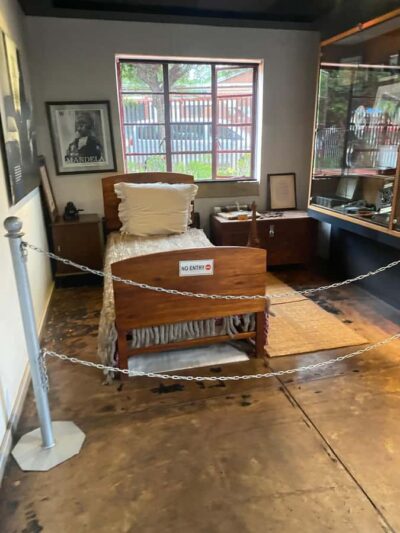
Full-Day Tour with Soweto and Apartheid Museum
Read our review →
Browse the lists this tour appears in