
Reviewed · CITY TOURS
Private Half Day Pretoria City Tour from Johannesburg or pretoria
Pretoria’s Voortrekker Monument is the heart of this outing, a huge stone memorial whose carved interior tells the story of the Great Trek and Afrikaner nationalism. The tour then moves through the capital’s old civic center, Paul Kruger’s former home, and the Union Buildings, giving you several different ways to read South Africa’s past.
I like the ease of private transport and hotel pickup, especially when you are staying in Johannesburg and do not want to arrange a separate trip to Pretoria. I also like the range of sights: you get grand government architecture, a personal house museum, a city square, and one politically charged monument in a single afternoon.
The main drawback is time. A drive of roughly 50 minutes each way from Johannesburg leaves a fairly short window for Pretoria itself, and the Voortrekker Monument takes up about an hour. If you want a slow museum visit or time to wander, this half-day format may feel brisk.
Key points to know
- The Voortrekker Monument takes center stage: Allow about an hour for its imposing structure and Great Trek displays.
- You see Pretoria’s main historic symbols: The route includes Church Square, the Union Buildings, Paul Kruger House, and the old civic buildings around the square.
- Hotel pickup simplifies the day: A private, air-conditioned minivan collects and returns you to your hotel in Johannesburg or Pretoria.
- The 1:30 pm start shapes the outing: This is an afternoon introduction, not a full day of museums and neighborhoods.
- The political story is not one-sided: The monument is important to many Afrikaans-speaking South Africans, but its message can feel polarizing.
- The price buys privacy and convenience: At $108.70 per person, value depends on your group size and how much you prize a private vehicle and guide.
Why Pretoria makes a good half-day outing
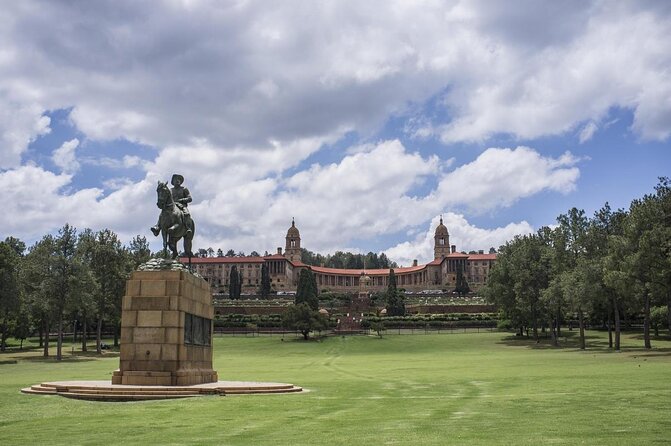
Pretoria is South Africa’s administrative capital, and its center is filled with government buildings, monuments, old civic institutions, and broad tree-lined avenues. The city is also known as the Jakaranda City, a reference to the trees that give many streets their character.
This tour is built around Pretoria’s official and political identity. You are not simply being driven past a collection of buildings. You are moving through places tied to the Boer republics, British rule, apartheid-era politics, and modern government.
The private format matters here. With only your own group in the vehicle, you can ask your guide to explain a building or clarify a point without waiting for a larger party. The tour includes a driver-guide, though no individual guide name is provided, so you should not book this expecting a particular named host.
The start time is 1:30 pm. That makes the tour useful if your morning is already occupied in Johannesburg, or if you want to pair it with another morning activity. The tradeoff is that Pretoria receives only a few hours of attention.
A few more Johannesburg days worth comparing
- From Johannesburg: Pilanesberg Nature Reserve Game Safari
★ 4.8 · 1,327 reviews - Johannesburg: Hop-On Hop-Off Bus with Optional Soweto Tour
★ 4.6 · 985 reviews - Soweto /Johannesburg and Apartheid Museum Guided Full Day Tour
★ 5.0 · 932 reviews
The road from Johannesburg to Pretoria
The trip begins with hotel pickup in Johannesburg or Pretoria. You ride in an air-conditioned private minivan, and onboard uncapped WiFi is included. Food and drinks are not included, so plan to eat before departure or bring what you need if your hotel permits it.
The drive from Johannesburg to Pretoria takes about 50 minutes each way according to the timing noted for the outing. That is not an unreasonable transfer, but it does use a meaningful part of a four to five-hour tour.
I would treat the drive as part of the price of convenience. You avoid navigating, parking, and coordinating public transport, and you can ask questions as you go. Still, if your main goal is to spend long stretches inside Pretoria’s museums, a full-day visit would give you more breathing room.
Voortrekker Monument: the tour’s most striking stop
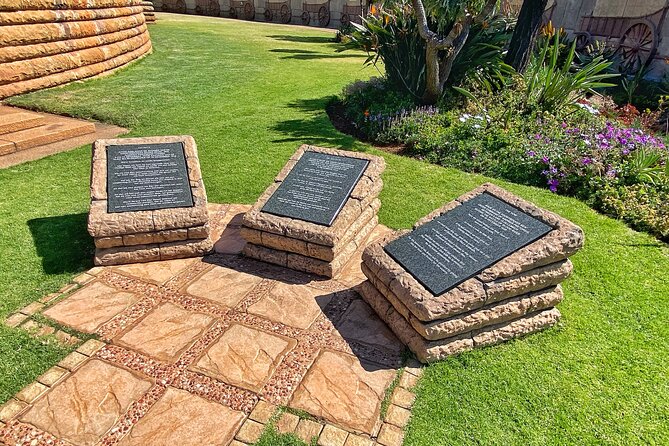
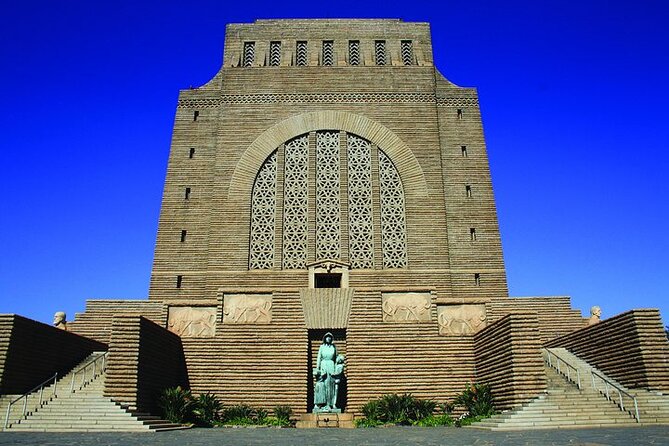
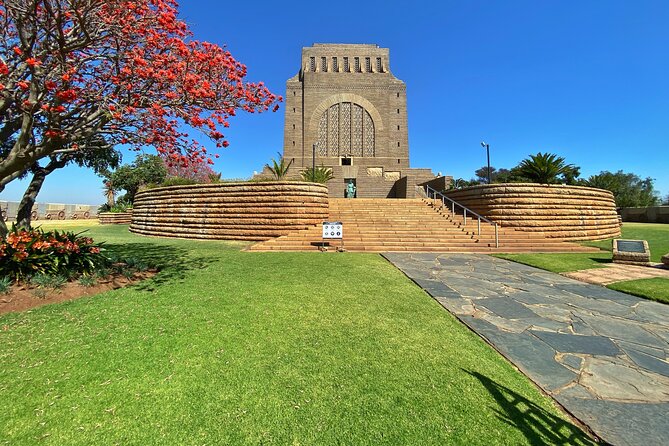
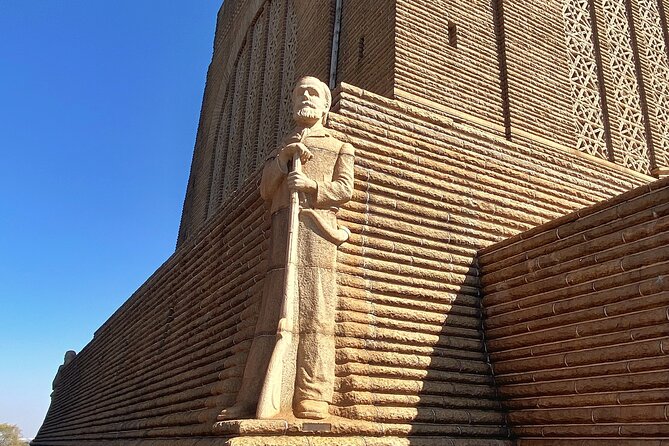
The Voortrekker Monument is the most substantial stop, with about an hour set aside for the visit. Its shape is simple and forceful: a large stone cube created to honor the Voortrekkers, Afrikaner farmers who moved away from British rule during the Great Trek.
Inside, the walls depict episodes from that movement. The monument is closely tied to Afrikaner nationalism, so it is not a neutral piece of civic decoration. Its importance comes partly from its scale and partly from the political ideas it represents.
You should approach this stop with an open but questioning mind. The monument helps explain how many Afrikaans-speaking South Africans viewed their past, their relationship with Britain, and their claim to the country. At the same time, its symbolism can feel polarizing because the Great Trek story does not represent every South African experience.
That tension is exactly why the stop is useful. It gives you a direct way to consider how national stories are built through architecture, ceremony, and public memory. Your guide can add context, and the private setup gives you a chance to ask about the monument’s message rather than simply photograph its exterior.
One practical point: the monument receives the largest block of time in the schedule. If you find it compelling, you may wish you had longer. If political monuments are not your main interest, the hour can feel heavy compared with the shorter city stops.
Church Square and Pretoria’s old civic core
Church Square gives you a different view of Pretoria. Here, the interest comes from the buildings around the square and the way they reflect the city’s political past.
The route includes the Ou Raadsaal, the Palace of Justice, and the Capitol Theatre. These names matter because they point to the institutions that shaped public life: government, courts, and civic entertainment. Your guide is there to explain the buildings and the culture connected with them.
This is not presented as a long architectural walk. The schedule allows time to see the square and ask questions, but you should expect a guided overview rather than a detailed interior tour of every building.
I like this part of the day because it puts the monument and museum visits into an urban setting. Instead of seeing South African history only through memorials, you see it written into public buildings and a central city square.
Bring your attention to the details around you: the formal arrangement of the square, the older façades, and the contrast between court, government, and public spaces. You may find this stop especially useful if you enjoy architecture but do not want a separate architecture tour.
A different side of Johannesburg altogether:
- Johannesburg Hop-On Hop-Off City Tour with Soweto Option
★ 4.5 · 768 reviews - Full Day Ultimate Pilanesberg National Park Safari from Johannesburg or Pretoria
★ 4.5 · 718 reviews - Half-Day Tour of Soweto Tour
★ 4.5 · 712 reviews - Soweto: Walking Tour with a Local Guide and Lunch
★ 4.9 · 648 reviews
Paul Kruger House Museum: a personal look at a political figure
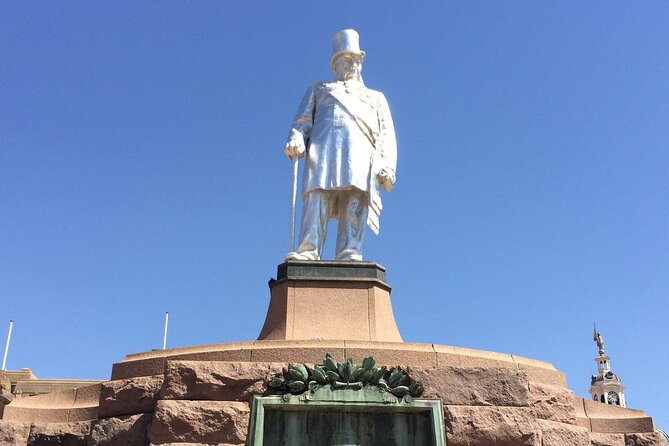
The Paul Kruger House Museum receives about an hour and includes an admission fee. Paul Kruger is the figure after whom Kruger National Park is named, and his former home offers a more personal view than the large public monument.
Inside, you can see furniture and personal items belonging to the Kruger family. That domestic setting changes the scale of the tour. Instead of reading a national story through stone carvings, you are looking at the home life and possessions associated with one of South Africa’s best-known political figures.
The museum is valuable because it puts a person behind the political names and public symbols. It also gives your guide an opening to explain Kruger’s place in the country’s past without reducing the visit to a list of dates.
As with the Voortrekker Monument, context matters. Kruger is an important figure, but the museum is not the whole story of South Africa. I would treat it as one chapter in a broader afternoon that includes competing political memories and different kinds of public institutions.
The one-hour allocation should be enough for a focused visit, though anyone who reads every label slowly may want more time. If you are interested in historic homes and personal objects, this may be one of the most rewarding stops.
Union Buildings and the final view of Pretoria
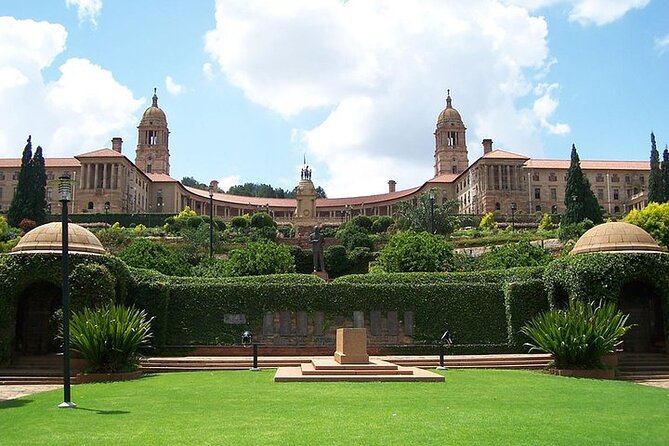
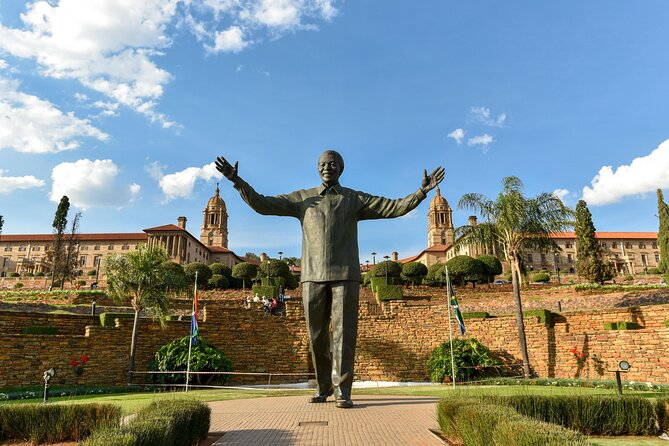
The Union Buildings are the headquarters of South Africa’s government and the final listed stop. The buildings sit above terraced gardens, where you have about 30 minutes for a walk and a look around.
This is a short visit, but it provides an important closing image. After the monument’s Afrikaner symbolism, Church Square’s old civic buildings, and Kruger’s private home, the Union Buildings bring you to the center of present-day national government.
The gardens offer a welcome change of pace. You are not confined to interiors or looking only at stone façades. You can walk through the terraces, enjoy the setting, and take in the formal government complex.
Do not expect a full tour of the government headquarters. The listed visit focuses on the buildings and gardens, and admission is free. Thirty minutes is enough for a brief walk and photographs, but not for an extended visit.
I would save questions for this stop if you want to connect Pretoria’s past with its current role. The Union Buildings work best as a final reminder that the city is still a working capital, not only a collection of monuments.
How much history fits into four to five hours
The tour lasts approximately four to five hours, including pickup, transport, and the visits in Pretoria. The listed stops add up to a compact schedule: about two hours for Pretoria generally, one hour at the Voortrekker Monument, one hour at Kruger House, and 30 minutes at the Union Buildings, with Church Square included in the city portion.
That structure gives you a strong first look, but it does not allow much wandering. You will see the main sights in a logical order, hear the broad story, and return to your hotel without committing an entire day.
The private vehicle helps the schedule work. You are not waiting for other members of a large group, and your guide can move the day along. The downside is that the timetable leaves little room for an unexpected stop, a long conversation, or an extended museum visit.
I would book this for orientation. It works well near the start of a South Africa trip, when you want a useful introduction to Pretoria’s political and cultural past. It also suits anyone with only one free afternoon.
Is $108.70 per person a fair price?
At $108.70 per person, this is not the cheapest way to see Pretoria. The value comes from what is bundled into the price: hotel pickup and drop-off, a private air-conditioned minivan, a driver-guide, WiFi, and entrance fees.
For a solo visitor, the price may feel high for a half-day outing. For two or more people sharing a private vehicle, the convenience becomes easier to justify, especially if your hotel is in Johannesburg and you would otherwise need to arrange transport to Pretoria.
You also avoid the uncertainty of finding each site independently. The route links the city’s major historic places, and the guide provides a thread connecting them. That is useful in a city where buildings and monuments can mean very different things depending on the period and political group involved.
The price does not include food, drinks, or personal purchases. Since the tour begins in the afternoon and lasts only four to five hours, this is not a major issue, but you should plan ahead rather than expect a meal stop to be included.
The high overall rating, 4.9 from 66 ratings, and a 100 percent recommendation figure suggest strong satisfaction with the basic format. Still, one practical criticism is worth keeping in mind: the trip can feel brief because of the Johannesburg to Pretoria drive and the large amount of time devoted to the Voortrekker Monument.
Who will enjoy this Pretoria tour most?
I would choose this tour if you want a private introduction to Pretoria without spending a full day away from Johannesburg. It suits history-minded visitors, first-time visitors to the capital, and anyone who prefers a guide to explain the meaning behind official buildings and monuments.
It is also a good match for small groups. You get hotel transport, a private vehicle, and the freedom to ask questions within your own party. The onboard WiFi is a small but useful extra during the longer road portions.
Families and older visitors may appreciate the simple door-to-door arrangement. The supplied information says most people can participate, but it does not provide detailed mobility information for every stop. If you have specific access needs, ask MoAfrika Tours before booking.
I would hesitate if your priority is shopping, food, nightlife, or a relaxed garden afternoon. Those are not the focus here. This is a serious, history-centered route with several politically important locations and a tightly managed schedule.
Free cancellation is available if you cancel at least 24 hours before the start time. Changes or cancellations inside that window are not accepted for a refund, so keep the local cut-off time in mind.
Should you book it?
Book this private Pretoria tour if you want the capital’s main historic symbols explained in one afternoon, with transport handled from start to finish. The strongest reasons are the private format, the mix of public monuments and personal museum objects, and the chance to ask questions as you go.
Skip it if you want a slow, deep visit to each site. The drive from Johannesburg and the compact schedule mean you will get an informed overview rather than an unhurried examination.
For most visitors with limited time, I see this as a sensible introduction. The Voortrekker Monument may challenge your assumptions, Kruger House adds a human scale, Church Square shows the old civic center, and the Union Buildings bring you back to South Africa’s present government. That range gives the afternoon real value, even if you leave wishing Pretoria had received a few more hours.
FAQ
Where does the Pretoria tour begin?
Pickup is offered from hotels in Johannesburg or Pretoria.
What time does the tour start?
The tour starts at 1:30 pm.
How long does the tour last?
The experience lasts approximately four to five hours.
Is this a private tour?
Yes. Only your group participates in the private activity.
What type of vehicle is used?
Transport is provided in a private, air-conditioned minivan.
Is hotel drop-off included?
Yes. Hotel pickup and drop-off are included.
Are entrance fees included?
Yes. All entrance fees are included in the tour price.
Is WiFi available?
Free onboard uncapped WiFi is included.
Is food included?
No. Food and drinks are not included.
Can I cancel for a full refund?
Yes, if you cancel at least 24 hours before the experience start time. Cancellations or changes made less than 24 hours beforehand are not refunded or accepted.
Just listed around Johannesburg
- Constitutional Hill and Soweto 5 hours tour.★ 5.0 · 5 reviews
- 5 Day Kruger Glamping Safari and Panorama Tour★ 5.0 · 5 reviews
- Cradle of Humankind and Maropeng Day Tour from Johannesburg★ 4.0 · 5 reviews
- Johannesburg: Hot Air Balloon Flight★ 5.0 · 5 reviews
- Half Day Soweto and Apartheid Museum Guided Tour★ 5.0 · 5 reviews
- Lion park★ 4.5 · 5 reviews
- Pretoria Historical Tour★ 4.0 · 5 reviews
- 5 Day Kruger National Park and Panorama Route Safari★ 4.5 · 5 reviews
City Tours, compared.

Cape Town Hop-On Hop-Off City Tour with Optional Cruise
Read our review →
Johannesburg Hop-On Hop-Off City Tour with Soweto Option
Read our review →
Jo’berg in 1 Day: Soweto, Apartheid Museum & City Tour
Read our review →
Cape Town City Pass: Save Over 50% on 80+ Top Attractions
Read our review →
Hop-On Hop-Off Bus, City Tour and Apartheid Museum
Read our review →

From Sun City: Pilanesberg National Park 3-Hour Game Drive
Read our review →Browse the lists this tour appears in