
Reviewed · JOHANNESBURG TOURS
Johannesburg: The Evolution of Maboneng (Place of Light)
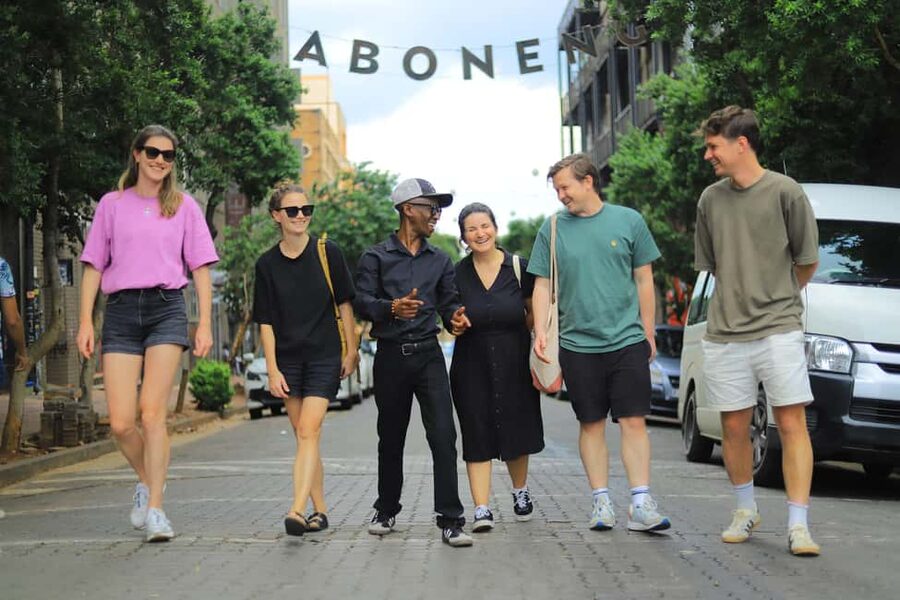
Maboneng is Johannesburg in fast motion: old inner-city buildings sit beside shipping-container housing, giant murals, galleries, food spots, and businesses built by local entrepreneurs. This two-hour walk gives you a useful way into that change, starting at Curiocity Backpackers and moving through the eastern side of downtown.
I like the mix of street art and social history, especially the Nelson Makamo murals and the story behind the district’s name, Place of Light. I also like the stops that feel less polished, such as Kwa Mai-Mai Traditional Healers Market, where you can encounter sangomas, medicines, and traditional clothing. The drawback is value: at $42, this can feel expensive if your guide moves quickly, skips the market, or ends early.
Key points to know before you book
- Maboneng’s name means Place of Light, a fitting label for a district reshaped by art, business, and new development.
- The Cosmopolitan dates to 1899, giving the walk a strong link to Johannesburg’s early suburbs.
- Drive-lines uses upcycled shipping containers as affordable housing in a newer urban project.
- Street art is a major part of the route, including Nelson Makamo’s murals and an open-air public art setting.
- Kwa Mai-Mai Traditional Healers Market may be the most distinctive stop, but the market visit is not guaranteed in every outing.
- Collectors Treasure is described as the southern hemisphere’s largest second-hand bookstore, a good final stop for book lovers.
Why Maboneng makes a worthwhile Johannesburg walk
Maboneng is not a preserved historic quarter. It is a working district in transition, and that is the point. The area has changed quickly over the past two decades through private investment, creative projects, small businesses, public art, and new housing.
You will see the benefits and the tensions of that change in a compact area. A restored heritage building may sit near a rougher street. A striking mural may cover a wall that once felt like a barrier. New developments may promise affordable housing while the older parts of the district continue to serve local residents in more traditional ways.
I like this approach because it gives you more than a collection of attractive photo stops. Your guide explains how entrepreneurship and art can reshape an urban neighborhood, while also showing you the buildings and markets that came before the newer creative scene.
The route is especially useful if this is your first look at Johannesburg’s inner city. You get a local orientation without trying to work out the area on your own. One guide, Tsepho, has been praised for explaining the neighborhood’s past and for finding rooftop views and public art along the way. Eko has also led the walk and focused on Maboneng’s origins and development.
A few more Johannesburg days worth comparing
- From Johannesburg: Pilanesberg Nature Reserve Game Safari
★ 4.8 · 1,327 reviews - Johannesburg: Hop-On Hop-Off Bus with Optional Soweto Tour
★ 4.6 · 985 reviews - Soweto /Johannesburg and Apartheid Museum Guided Full Day Tour
★ 5.0 · 932 reviews
Starting at Curiocity Backpackers on Fox Street
The walk begins at Curiocity Backpackers, at 302 Fox Street in Jeppestown. This is a practical meeting point because the hostel is part of the district’s creative, social identity rather than an anonymous transport stop.
From there, your guide introduces the area and sets up the story of Johannesburg’s first suburbs. The route is on foot for about two hours, so comfortable shoes matter. Wear clothing suited to the weather, since much of the experience takes place outdoors.
Do not expect a large sightseeing bus or a tightly scripted museum tour. This is a neighborhood walk, and its quality depends heavily on the guide. A strong guide can connect the murals, buildings, markets, and housing projects into one clear story. A less engaged guide may leave you feeling that you simply walked from wall to wall.
That difference matters at this price. The best accounts of the experience describe guides who offered plenty of background and made access to creative spaces feel easy. One less successful outing ended about 20 minutes early and included considerable phone use by the guide. I would confirm the meeting details and arrive ready to ask questions if you want more context.
The Cosmopolitan and Johannesburg’s older buildings
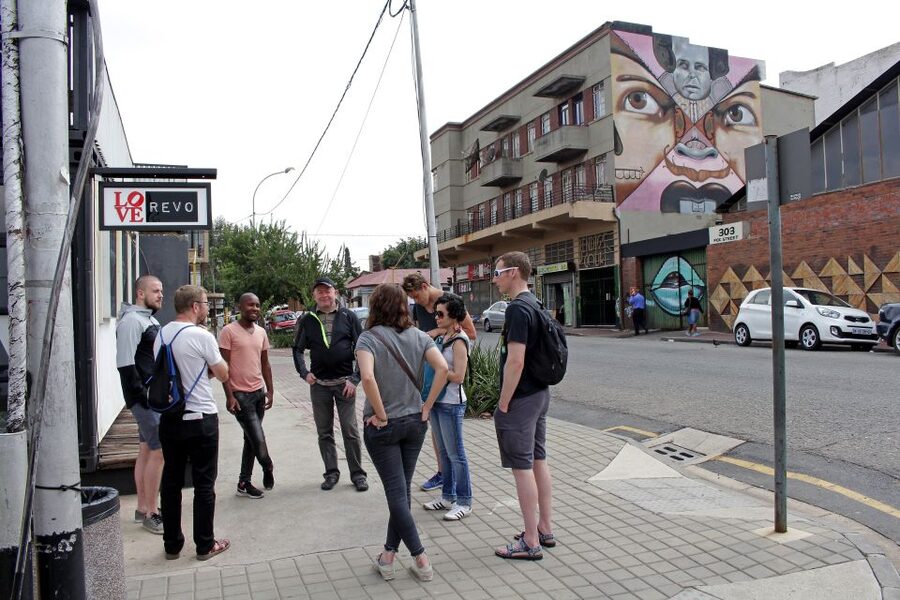
One of the early landmarks is The Cosmopolitan, an elegant heritage building that dates to 1899. It opened as a hotel and bar in 1902, giving it a strong connection to the city’s early commercial life.
This stop helps keep Maboneng’s newer image in proportion. It is easy to think of the area as a recent arts project, but the buildings tell an older story. The Cosmopolitan carries the kind of history that is easiest to understand when you are standing in front of the structure rather than reading a paragraph in a guidebook.
Look closely at the building details and listen for the stories your guide attaches to them. The route does not promise interior access, so treat this as an exterior heritage stop. Its value comes from the setting and explanation, not from a formal building tour.
I like this part because it shows how Johannesburg’s past remains visible inside its renewal projects. The city has not simply replaced the old with the new. It has layered new uses and new hopes over an older urban framework.
Drive-lines and the practical side of regeneration
The walk continues toward Drive-lines Development, a project using upcycled shipping containers as affordable housing. This is one of the clearest examples of Maboneng’s attempt to solve present-day urban needs with unusual design.
The project is worth seeing because it moves the conversation away from murals and stylish venues. You get a glimpse of how regeneration can involve housing as well as art, restaurants, galleries, and nightlife. The use of shipping containers also raises sensible questions about comfort, affordability, and who benefits from redevelopment.
The supplied information does not give details about the housing units or the residents, so your guide’s explanation will be important here. I would ask how the project fits into the wider neighborhood and how affordable housing relates to the area’s newer commercial development.
This stop may not appeal to you if you only want classic sightseeing. For me, it is one of the more useful parts of the walk because it connects Maboneng’s attractive public image with the hard question of how people live in the inner city.
A different side of Johannesburg altogether:
- Johannesburg Hop-On Hop-Off City Tour with Soweto Option
★ 4.5 · 768 reviews - Full Day Ultimate Pilanesberg National Park Safari from Johannesburg or Pretoria
★ 4.5 · 718 reviews - Half-Day Tour of Soweto Tour
★ 4.5 · 712 reviews - Soweto: Walking Tour with a Local Guide and Lunch
★ 4.9 · 648 reviews
Murals, Nelson Makamo, and art on public walls
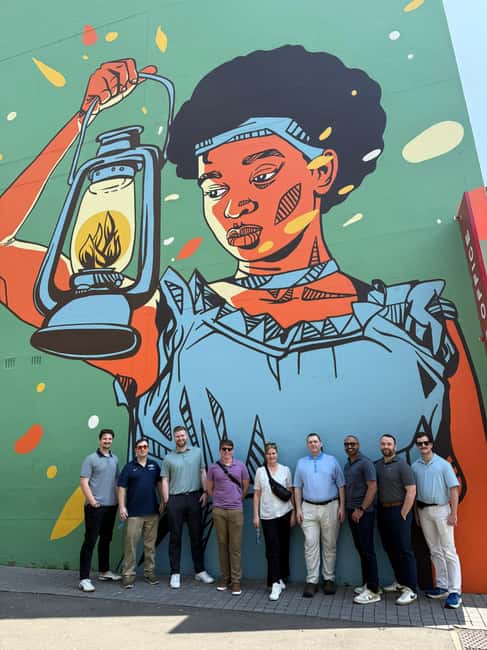
Public art is one of the tour’s main attractions. You will see murals painted by local and international artists, including work connected with Nelson Makamo. The route includes a Nelson Makamo mural and describes the area as an open-air museum.
The art is not just decoration. Your guide explains how walls can create separation, while art can make those same spaces feel more open and shared. That idea is central to Maboneng’s identity. The murals give the neighborhood color, but they also show how public space can carry local stories and creative ambition.
Bring a phone or camera if you like street photography, but do not let the photo stops replace the explanation. A mural can look impressive in isolation, while the story of who made it, where it sits, and how it changed the feel of the street gives it more meaning.
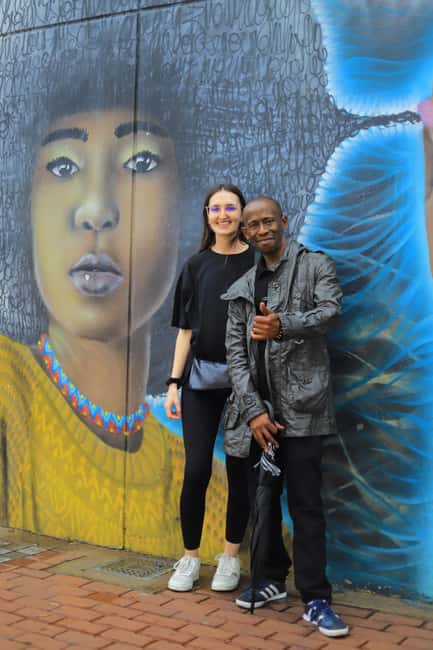
The art portion has drawn the strongest praise from the most enthusiastic accounts of the walk. The murals are described as beautiful, and several guides have been credited with explaining the area in a way that made the art easier to read. If your main goal is photography, this may be the tour’s strongest reason to book.
Arts on Main and the William Kentridge connection
Arts on Main is another important stop. It is linked with William Kentridge, one of South Africa’s best-known artists, and with his foundation, The Centre for the Less Good Idea.
This gives the walk a direct connection to serious contemporary art rather than only informal street painting. You may not receive a full gallery visit or an extended talk about Kentridge’s work, so keep your expectations sensible. The site is valuable as part of the neighborhood story: Maboneng’s creative identity includes major artists, foundations, public murals, and small enterprises working side by side.
I appreciate the contrast between Arts on Main and the street art. One is associated with established artistic work and formal creative projects. The other is encountered directly on the walls and streets. Together, they show why the area attracts people interested in Johannesburg’s changing cultural life.
Because the tour lasts only two hours, time at each location will be limited. If Arts on Main is your main reason for visiting, ask your guide how much time is available there. This experience is a broad introduction, not a dedicated art tour.
Kwa Mai-Mai Traditional Healers Market
Kwa Mai-Mai Traditional Healers Market is described as one of the oldest traditional healers’ markets in Johannesburg. Here you may encounter sangomas, traditional medicines, and clothing.
This is a very different experience from the polished creative venues. It gives you a closer look at a living part of South African culture, though you should approach it with respect. Listen carefully, avoid treating people or practices as curiosities, and follow your guide’s lead about photography and conversation.
For me, this is potentially the most distinctive stop. Many city walks can show you a mural or a renovated building. Fewer connect urban renewal with a traditional market where people still seek medicines, clothing, and spiritual guidance.
There is one important warning. The market visit did not happen on every reported outing. If it is central to your decision, ask before booking whether it is included on the day you plan to go. The route may change because of timing or local conditions, and the description itself says the tour may finish elsewhere if time allows.
Collectors Treasure and the final skyline view
The walk may finish with a stop at Collectors Treasure, described as the largest second-hand bookstore in the southern hemisphere. This is a fine ending for anyone who likes browsing shelves more than buying souvenirs.
The bookstore adds another layer to the tour. Maboneng’s creative scene is not only about large murals and new buildings. It also includes the circulation of old books, ideas, and objects. You can browse if time permits, though the tour does not promise a long shopping period.
Time permitting, the guide may also finish with a sun-downer overlooking the Johannesburg skyline. This is an optional-feeling finale rather than a guaranteed full stop, so do not book the walk solely for a sunset drink or rooftop experience.
Still, the possibility adds a pleasant ending. After seeing older architecture, housing experiments, murals, galleries, and a traditional market, a skyline view gives you a chance to pause and place the neighborhood within the larger city.
Is $42 fair for two hours?
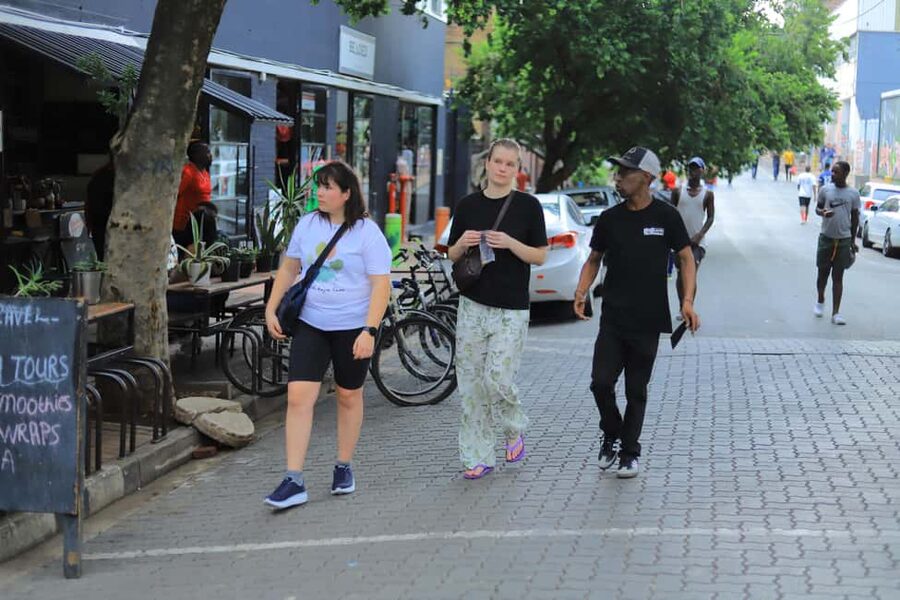
The price is $42 per person for a two-hour guided walking tour. That is not a bargain-priced stroll, so the value depends on what you want from the guide.
If your guide gives strong background, explains the urban projects, takes you to the key art sites, and includes the market or creative venues, the price can make sense as an efficient introduction to Maboneng. You are paying for local interpretation and a planned route, not for transport or a long list of paid admissions.
If the outing becomes mostly a basic walk, skips the market, or ends early, the price feels high. One account specifically judged the activity too expensive for what was delivered, while another described the guide as excellent and the whole outing as worthwhile.
I would book this if you have limited time in Johannesburg and want context as well as photographs. I would skip it if you prefer exploring at your own pace or if $42 feels steep for a short walk with no major admission included.
Who will enjoy this walk most?
This tour suits you if you enjoy cities in transition, public art, architecture, and conversations about how neighborhoods change. It is also a good choice for a first Johannesburg visit because the guide-led format gives you a clear introduction to the eastern inner city.
It is less suitable if you have limited mobility. The walk is not recommended for people with mobility impairments, and it is also not suitable for pregnant women. You should expect to remain on foot for the full two hours.
The experience is in English. If you want a private, slow-paced art tour or guaranteed time inside every venue, this may not be the right fit. If you want a compact look at Maboneng’s mix of old buildings, public art, business, housing, and traditional culture, it offers a useful starting point.
Should you book The Evolution of Maboneng?
I would book this tour for its subject, but I would book it with clear expectations. Maboneng is interesting precisely because it is unfinished and uneven. The best version of the walk shows you how art, business, heritage, and housing meet in one changing part of Johannesburg.
The guide is the deciding factor. Tsepho and Eko have both been praised for strong local explanations, while one outing was shortened and felt under-led. Ask whether the Kwa Mai-Mai market, Arts on Main, and the skyline finish are expected to be included on your date.
Book if you want a guided introduction and enjoy asking questions. Skip it if you mainly want a cheap walk or a guaranteed market visit. For the right audience, this is a thoughtful way to see more than Maboneng’s good-looking walls.
FAQ
How long does The Evolution of Maboneng tour last?
The guided walking tour lasts two hours.
Where does the tour begin?
It begins at Curiocity Backpackers, 302 Fox Street, Jeppestown, Johannesburg, 2043, South Africa.
Where does the tour end?
The activity ends back at the meeting point.
What language is the tour conducted in?
The tour is conducted in English.
What should I bring?
Bring comfortable shoes and clothing suited to the weather.
Is the tour suitable for people with mobility impairments?
No. The tour is not recommended for people with limited mobility or mobility impairments.
Is the tour suitable for pregnant women?
No. The activity is listed as not suitable for pregnant women.
Is a visit to Kwa Mai-Mai Traditional Healers Market guaranteed?
No. The market visit did not take place on every outing, so ask about its inclusion when booking.
Can I cancel for a full refund?
Yes. You can cancel up to 24 hours in advance for a full refund.
Just listed around Johannesburg
- Constitutional Hill and Soweto 5 hours tour.★ 5.0 · 5 reviews
- 5 Day Kruger Glamping Safari and Panorama Tour★ 5.0 · 5 reviews
- Cradle of Humankind and Maropeng Day Tour from Johannesburg★ 4.0 · 5 reviews
- Johannesburg: Hot Air Balloon Flight★ 5.0 · 5 reviews
- Lion park★ 4.5 · 5 reviews
- Half Day Soweto and Apartheid Museum Guided Tour★ 5.0 · 5 reviews
- 5 Day Kruger National Park and Panorama Route Safari★ 4.5 · 5 reviews
- Pretoria Historical Tour★ 4.0 · 5 reviews
Johannesburg Tours, compared.



Soweto /Johannesburg and Apartheid Museum Guided Full Day Tour
Read our review →
Johannesburg Hop-On Hop-Off City Tour with Soweto Option
Read our review →


Jo’berg in 1 Day: Soweto, Apartheid Museum & City Tour
Read our review →