
Reviewed · JOHANNESBURG TOURS
Colours of Johannesburg: A Graffiti & Street Art Tour
Johannesburg’s walls can read like an open-air newspaper. On this 210-minute walk through Braamfontein, Newtown and Maboneng, you’ll learn who painted the work, what a graffiti tag means, and how public art helped reshape parts of the inner city. Guide Ayanda brings personal ties to these streets and explains the art in its local setting.
I like the clear link between art and city change, especially in Braamfontein and Maboneng. I also like the stop at a local graffiti store, where you can see the tools, buy locally designed merchandise and sometimes view an exhibition. The main drawback is that the store may be closed, and an artist may join only if available.
Key points to know before you book
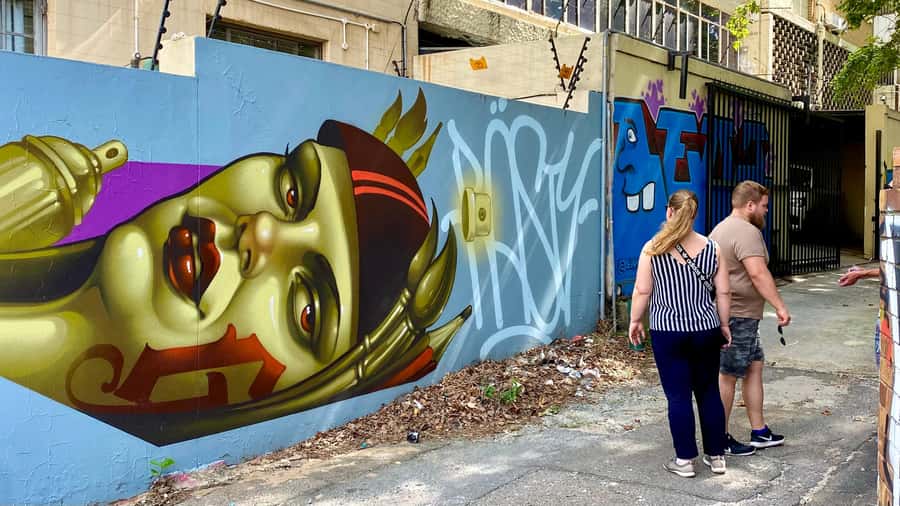
- Three very different districts: Follow the art from student-focused Braamfontein to arts-centered Newtown and the murals of Maboneng.
- Graffiti and street art are explained separately: You’ll learn the difference between a writer’s tag, a larger graffiti piece and a commissioned mural.
- Ayanda leads the experience: He is the founder of the tour company and brings personal knowledge of Johannesburg’s streets, artists and past.
- Transport between areas is included: You walk through each district, then move between neighborhoods during the tour.
- The graffiti store is a useful extra stop: It is open only at certain times, including a closure from December 24 to January 20.
- Bring water and proper shoes: The tour involves several hours on foot, with a 15-minute safety briefing at the start.
Why Johannesburg graffiti makes a good city tour
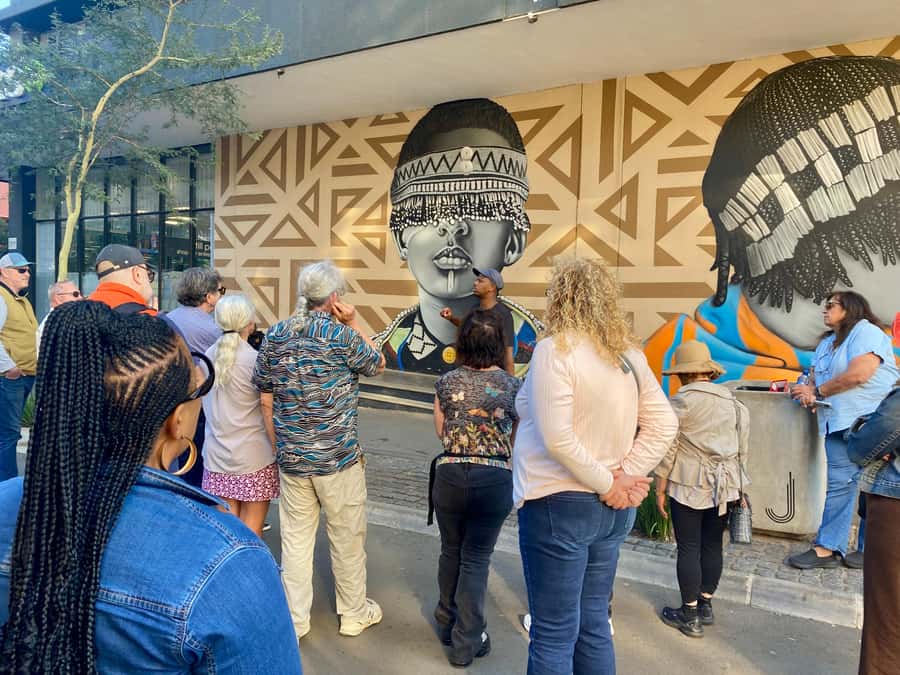
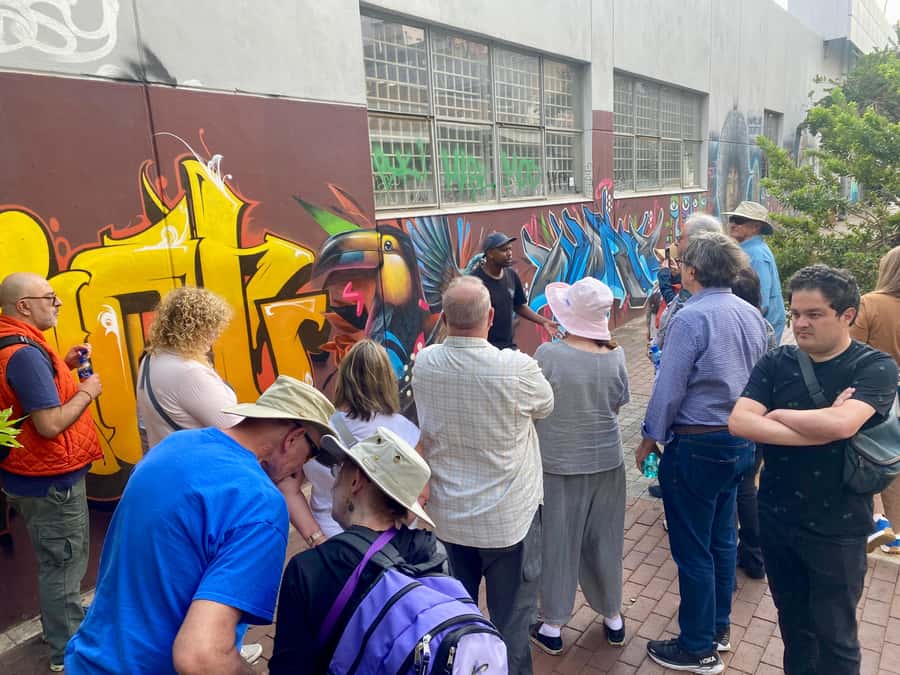
This is not simply a hunt for colorful walls. The point is to understand why the art is there and what it says about Johannesburg.
A tag may be quick, private and aimed at other writers. A mural may be planned, commissioned and made for a broad public audience. Those forms can overlap, but they do not mean the same thing. Ayanda’s job is to help you read that difference instead of treating every painted wall as decoration.
That matters in Johannesburg, where art, identity, business and neighborhood change often meet on the same block. A large mural can draw people to a neglected street. A familiar tag can mark an artist’s presence across the city. A painted wall may also tell you something about local pride, political memory or the relationship between official culture and underground work.
I especially like this approach for a first visit to Johannesburg. You get a closer look at the city’s streets while also learning how South African history and urban life appear through the work of local artists.
The tour is in English only. You should also expect an active outing rather than a vehicle-based sightseeing trip. The walking sections are manageable in separate districts, but comfortable shoes and water are sensible.
More street art walks in Johannesburg:
- Johannesburg: Maboneng Street Art & Culture Tour
★ 4.9 · 257 reviews - Johannesburg: Maboneng Street Art & Culture Tour
★ 5.0 · 140 reviews - Johannesburg: Street Art and Culture in Maboneng!
★ 4.8 · 107 reviews
Starting at Skinner Café on Juta Street
The meeting point is inside Skinner Café at 70 Juta Street. Look for the green café on the corner, with large see-through windows and a small outdoor seating area facing Juta Street.
The tour begins with a 15-minute safety briefing at a local restaurant. That is a useful start for an outing through Johannesburg’s inner city. You can get oriented, meet the guide and understand how the walking and transfers will work before the art stops begin.
The listed schedule adds up to about three and a half hours, including the briefing, neighborhood walks, the store visit and movement between districts. Exact start times depend on availability, so check the time offered for your date.
Hotel pickup and drop-off are not included. If you need that service, the operator asks you to contact them separately. Plan your route to the Juta Street meeting point in advance.
Braamfontein: murals and a neighborhood shaped by art
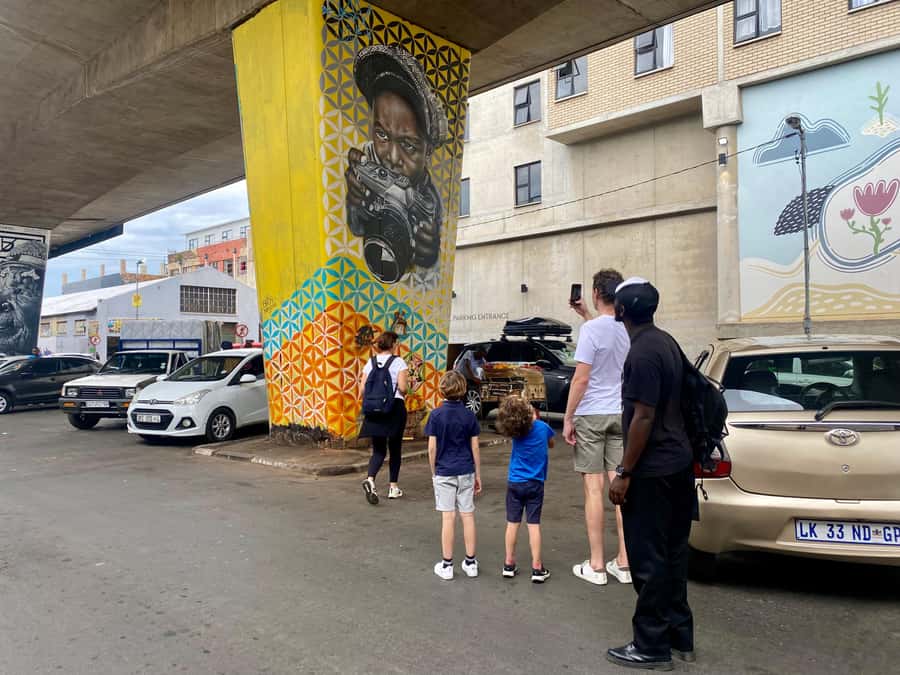
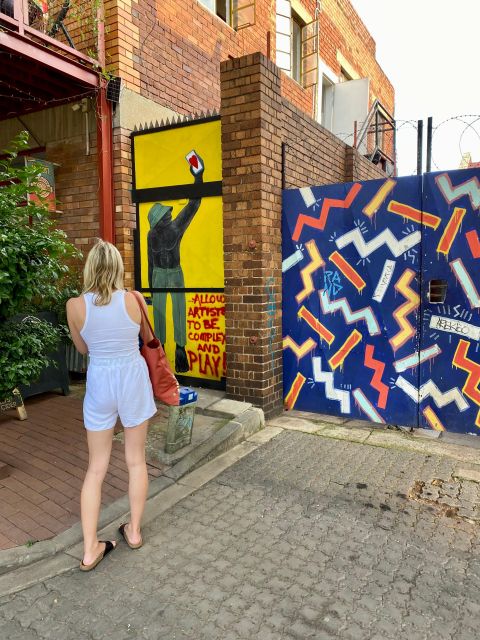
The first major section takes place in Braamfontein, where large murals and smaller works appear across the precinct. You’ll spend about an hour walking, looking closely and hearing how street art played a role in the area’s development from 2003 onward.
This is a strong opening because it gives you both scale and context. You might see a wall-sized mural from a distance, then stop to examine tags, lettering and smaller details nearby. The guide can show you how separate artists and styles share the same streets.
Braamfontein is also a good place to understand the relationship between public art and neighborhood change. Art does not act alone, and a mural does not explain an entire district. Still, the works help show how an area can use creativity to build a new public identity.
Ayanda’s connection to Johannesburg adds value here. Several people who took the tour singled out his passion for the city and his ability to explain South African history alongside the artwork. That wider setting keeps the tour from becoming a list of artist names.
Give yourself time to look up as well as ahead. Some works are large and obvious, while others depend on spotting a recurring tag or a small painted mark. Your guide’s eye is particularly useful for details you would likely miss on your own.
The local graffiti store and the tools behind the walls
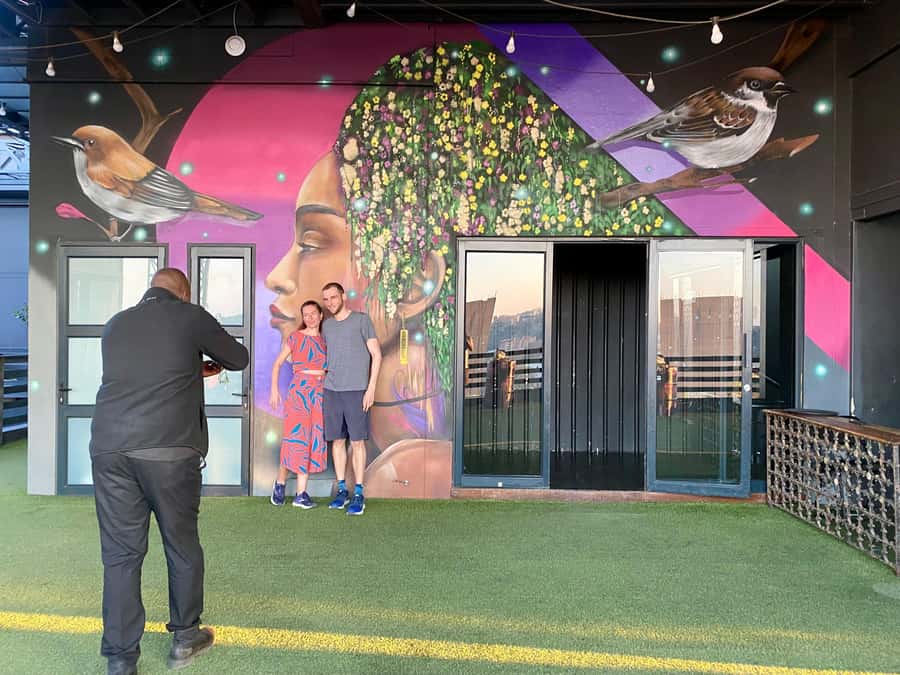
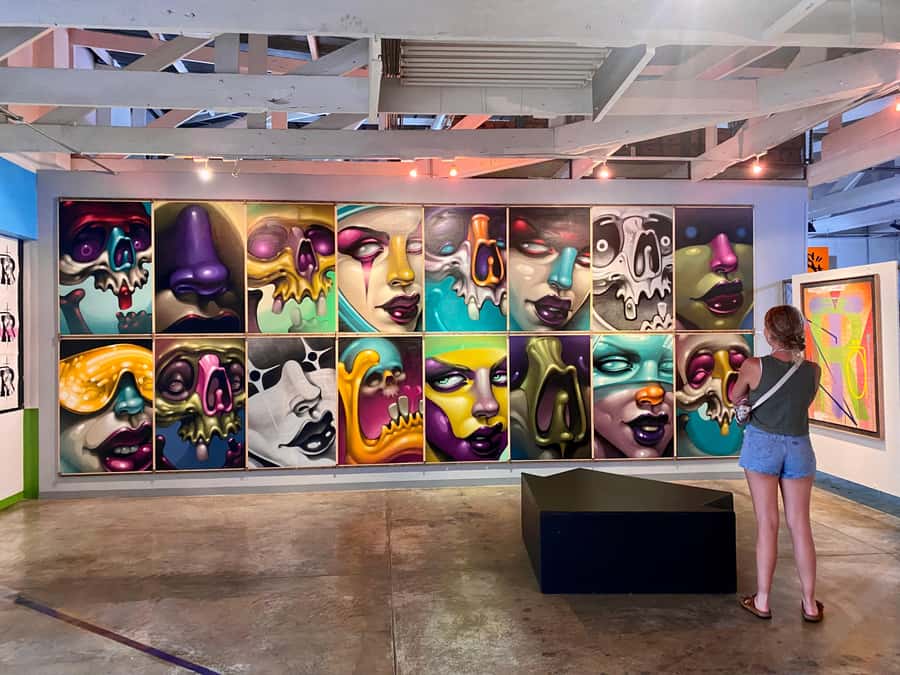
After Braamfontein, the tour includes a 15-minute stop at a local graffiti store, when it is open.
This is one of the most useful details in the experience. You move from looking at finished work to seeing the culture around it. The store supplies local graffiti artists, so it offers a practical link between the paint on the walls and the people who make it.
You may be able to buy merchandise designed by local graffiti artists. There may also be work in an exhibition room, depending on what is showing. A locally designed T-shirt can be a more meaningful souvenir than a generic Johannesburg item, particularly if you want something tied to the artists you’ve just learned about.
The timing is important. The store is closed during the festive period from December 24 to January 20, and the stop is not guaranteed if it is shut. Ask about the store when booking if it is a major reason for choosing the tour.
There is sometimes a graffiti artist joining the group. This depends entirely on that artist’s availability, so treat it as a possible bonus, not a promised part of the booking.
A few more Johannesburg days worth comparing
- From Johannesburg: Pilanesberg Nature Reserve Game Safari
★ 4.8 · 1,327 reviews - Johannesburg: Hop-On Hop-Off Bus with Optional Soweto Tour
★ 4.6 · 985 reviews - Soweto /Johannesburg and Apartheid Museum Guided Full Day Tour
★ 5.0 · 932 reviews - Johannesburg Hop-On Hop-Off City Tour with Soweto Option
★ 4.5 · 768 reviews
Newtown: Johannesburg’s arts center and graffiti heart
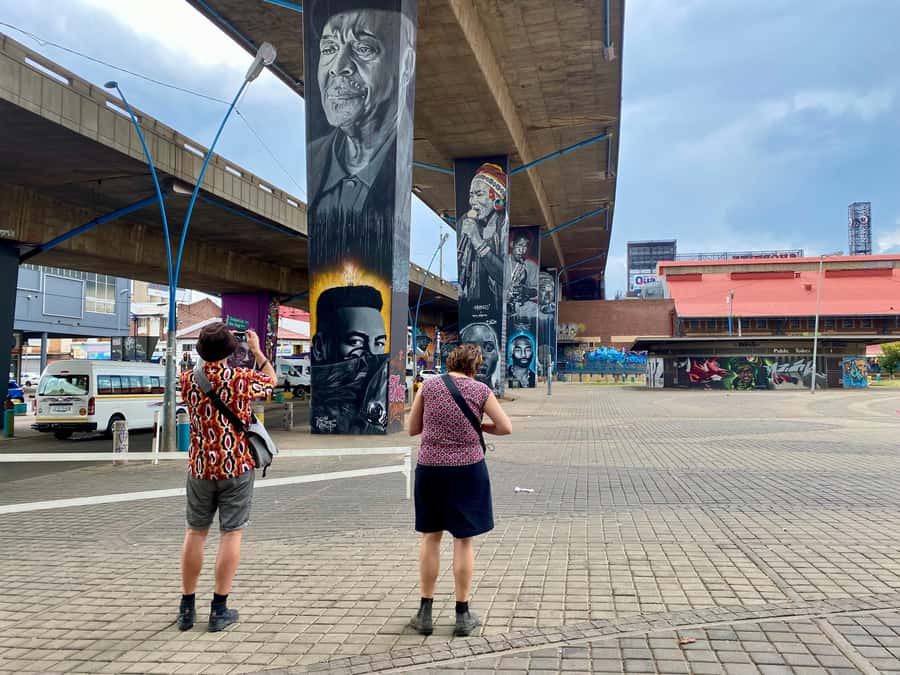
From Braamfontein, you continue to Newtown for about 45 minutes of walking, sightseeing and photo stops.
Newtown is described as the spiritual home of arts and culture in Johannesburg, with roots reaching back to 1886. It has also long been connected with underground movements, making it a natural part of a tour focused on graffiti and street culture.
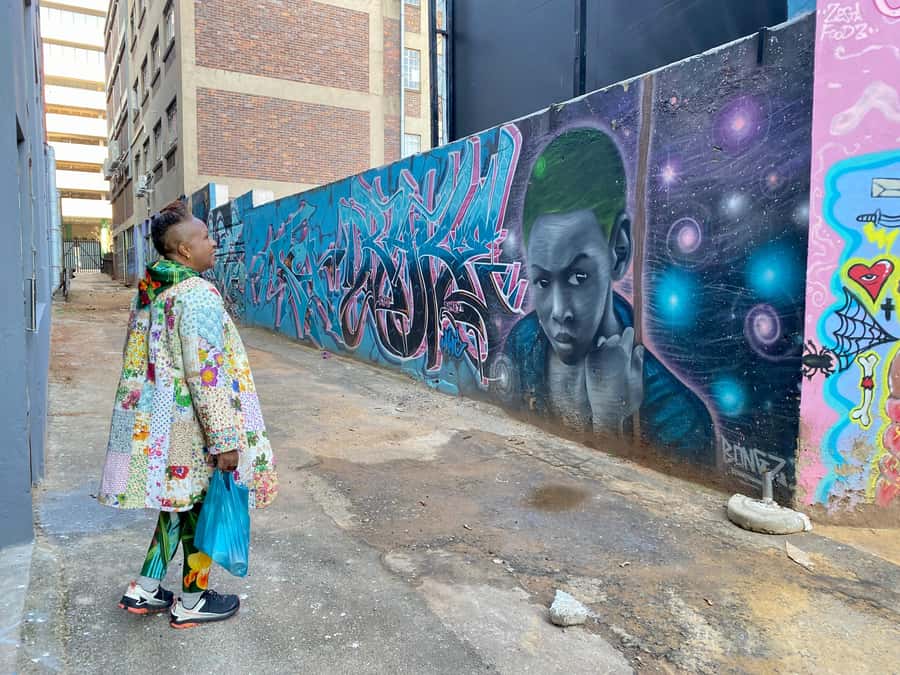
The mood and subject matter shift here. In Braamfontein, you focus heavily on murals and the role of art in a changing precinct. In Newtown, you’ll look for graffiti writers, tags and some of the city’s strongest graffiti pieces.
This section should suit anyone who wants to understand graffiti on its own terms. A quick photograph may capture the color, but it will not necessarily show why a particular tag matters or how an artist’s work can be recognized from one wall to the next. Ayanda can provide the missing background.
There is enough time for photographs, but this is not a dedicated photography tour. The priority is the guided explanation and the walk through the district. If you want careful close-ups of every piece, you may need to choose a few favorites rather than trying to document everything.
Newtown also helps connect the art to Johannesburg’s past and present. The tour is strongest when the walls become a way to discuss the city’s changing neighborhoods, cultural life and social divisions.
Maboneng: murals, tags and the final walk
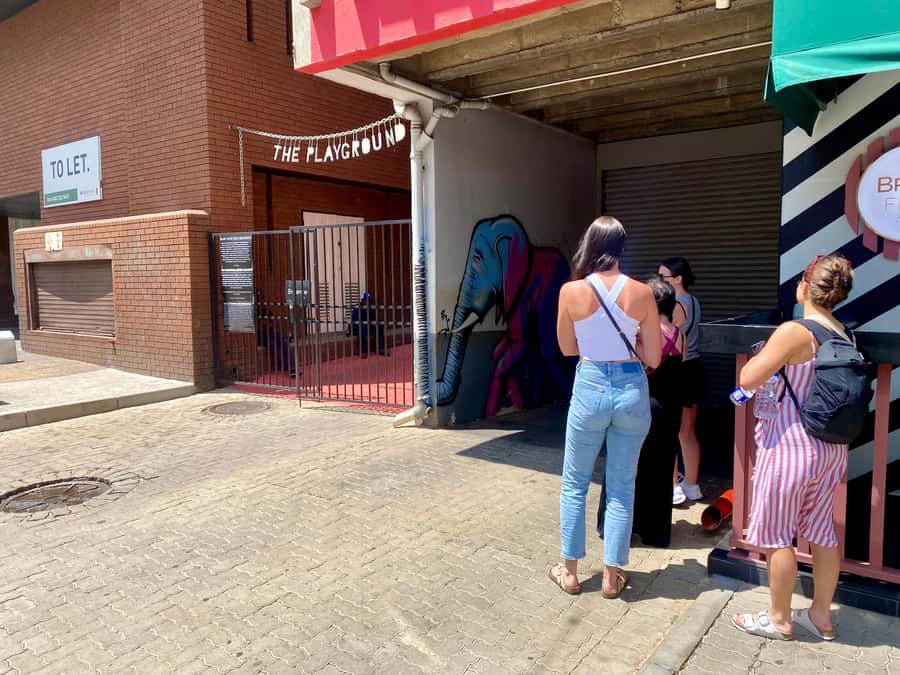
The last district is Maboneng, where the tour finishes after about 45 minutes.
Here you’ll see a mix of intricate work by international artists and recognizable tags from local graffiti writers. That combination makes Maboneng a useful final stop because it brings together the two strands introduced earlier: planned public murals and graffiti made within a writer’s own culture.
The area offers more chances for photographs, shopping and sightseeing. The itinerary also mentions an aerial view, so you may get a higher look at the district and its painted walls, depending on the exact route and conditions on the day.
Maboneng has become strongly associated with art, food, shops and creative businesses. That makes it an appealing place to end, but it also means the area can feel more polished than the rawer graffiti settings elsewhere on the route. I see that contrast as part of the lesson. Street art can help change how people see a district, while graffiti can remain more personal, unofficial and hard to categorize.
The tour ends at Home of the Bean. You can plan a coffee or food stop afterward, but the provided details do not include anything beyond finishing there.
What Ayanda adds to the experience
The guide is a major reason to choose this tour. Ayanda is described as the founder of the tour company and someone who grew up in the areas covered. He knows many of the artists and speaks about Johannesburg with clear personal feeling.
That local connection matters more here than it would on a standard sightseeing route. Graffiti changes. Paint fades, buildings are redeveloped and new pieces replace old ones. A guide who follows the artists and knows the streets can provide context that a printed map cannot.
Ayanda also answers questions beyond graffiti and street art. If you want to ask about Johannesburg’s past, present-day city life or South African culture, the tour allows room for that conversation.
Group size is not specified, so you should not book expecting either a private tour or a large group. One person who took the tour happened to be alone and found that useful for asking questions, but that is not a guaranteed arrangement.
An artist may occasionally join the tour, but availability is up to the artist. The core experience is Ayanda’s guided walk, not a workshop or a guaranteed meeting with a graffiti writer.
The value of $43
At $43 per person, this is reasonably priced for a 210-minute guided outing that covers three inner-city districts and includes transport between them.
You are paying for more than time on foot. The price includes a guide who can explain the artists and the city, plus transport during the tour between Braamfontein, Newtown and Maboneng. Without those transfers, you would need to arrange your own movement between areas and might lose useful time.
The store visit adds value if you enjoy locally made goods or want to understand the working side of graffiti. It is less important if you are interested only in photographing murals, especially if the store is closed.
I would compare this with a shorter two-hour street art option if your schedule is tight. The longer tour costs more time, but it also allows the route to reach three districts and gives the guide space to explain the difference between graffiti and street art.
Free cancellation up to 24 hours before the start and reserve-now, pay-later booking make the financial decision easier. Those terms are helpful when you are still arranging a Johannesburg itinerary.
Who should book this Johannesburg tour?
I would choose this for you if you enjoy urban culture, photography, local history or art that does not hang in a museum. It is also a good fit if you want to see central Johannesburg with a guide who has a personal connection to the neighborhoods and artists.
It suits curious first-time visitors particularly well. You will not just pass through Braamfontein, Newtown and Maboneng. You will learn how to look at the walls and why the same city can feel different from block to block.
You may want another activity instead if you dislike walking, want a quiet museum setting or need a tour in a language other than English. The artist joining is not guaranteed, and the graffiti store may be closed, so do not book on the assumption that either extra will happen.
Bring comfortable shoes and water. Wear clothes that suit several hours of walking and keep your camera ready, but leave room to listen. The best moments may be the small tags and stories that do not look impressive at first glance.
Should you book Colours of Johannesburg?
Book it if you want an active, thoughtful introduction to Johannesburg’s street culture rather than a quick mural checklist. The three-district route, included transfers and Ayanda’s personal knowledge give the $43 price solid value.
I would make this a strong choice during a four-day Johannesburg visit, especially early in your stay. It can help you understand the city before exploring other inner-city areas on your own.
Skip it if the store visit or artist appearance is your main reason for booking, since neither is guaranteed. But if your real goal is to learn how graffiti, murals, artists and neighborhood change fit together, this tour gives you a useful and memorable way to see Johannesburg.
FAQ
Where does the tour start?
Meet inside Skinner Café at 70 Juta Street. It is the green café on the corner, with large see-through windows and a small seating area outside on Juta Street.
Where does the tour finish?
The tour ends at Home of the Bean in the Maboneng Precinct.
How long does the tour last?
The stated duration is 210 minutes, or three and a half hours. The schedule includes a 15-minute safety briefing, walking time in Braamfontein, a 15-minute store visit, 45 minutes in Newtown and 45 minutes in Maboneng.
Is transport included?
Transport between the neighborhoods during the tour is included. Hotel pickup and drop-off are not included, but you can contact the operator if you need pickup.
Is the graffiti store always open?
No. The store visit takes place when the store is open. It is closed during the festive period from December 24 to January 20.
Will a graffiti artist join the tour?
Sometimes, but there is no guarantee. An artist may join only if they are available on your scheduled date.
What language is the tour offered in?
The tour is offered in English only.
Just listed around Johannesburg
- Constitutional Hill and Soweto 5 hours tour.★ 5.0 · 5 reviews
- 5 Day Kruger Glamping Safari and Panorama Tour★ 5.0 · 5 reviews
- Cradle of Humankind and Maropeng Day Tour from Johannesburg★ 4.0 · 5 reviews
- Johannesburg: Hot Air Balloon Flight★ 5.0 · 5 reviews
- Lion park★ 4.5 · 5 reviews
- Half Day Soweto and Apartheid Museum Guided Tour★ 5.0 · 5 reviews
- 5 Day Kruger National Park and Panorama Route Safari★ 4.5 · 5 reviews
- Pretoria Historical Tour★ 4.0 · 5 reviews
Johannesburg Tours, compared.



Soweto /Johannesburg and Apartheid Museum Guided Full Day Tour
Read our review →
Johannesburg Hop-On Hop-Off City Tour with Soweto Option
Read our review →


Jo’berg in 1 Day: Soweto, Apartheid Museum & City Tour
Read our review →
Full-Day Tour with Soweto and Apartheid Museum
Read our review →Browse the lists this tour appears in