
Reviewed · CYCLING TOURS
Cape Town: Cultural Cycling Tour
Masiphumelele is best understood from a bicycle seat. This four-hour tour takes you beyond a quick drive past the township, with a local Xhosa guide leading you to community projects, small businesses, a Sangoma, and a meal with local people. The pace gives you time to look, listen, and ask questions.
I like the small group of no more than eight, which keeps the ride personal. I also like the direct local benefit: 10 percent of the tour proceeds goes to Masicorp, while the tour shares a campus with the Songezo youth cycling academy. The main consideration is that this is not a polished sightseeing circuit. Some visits depend on the day, school calendar, and Sunday schedule, and the contrasts may feel uncomfortable.
Key points to know before booking
- Cycle with a local Xhosa guide: You explore Masiphumelele with someone who can explain local customs and answer questions along the way.
- Meet a Sangoma: The visit to traditional healers adds cultural context that you will not get from a standard city tour.
- Eat African food locally: Lunch may be at an African restaurant or in the home of a local woman who hosts tour groups.
- Visit community projects: The route can include a library, entrepreneurs, small businesses, and a local crèche during school terms.
- Sunday tours may include gospel music: A church visit can be part of the day on Sundays, though the exact stops can vary.
- Your fee has a local purpose: Part of the cost supports Masicorp, and the departure point also houses the Songezo youth cycling academy.
Starting at the Masicorp campus in Masiphumelele
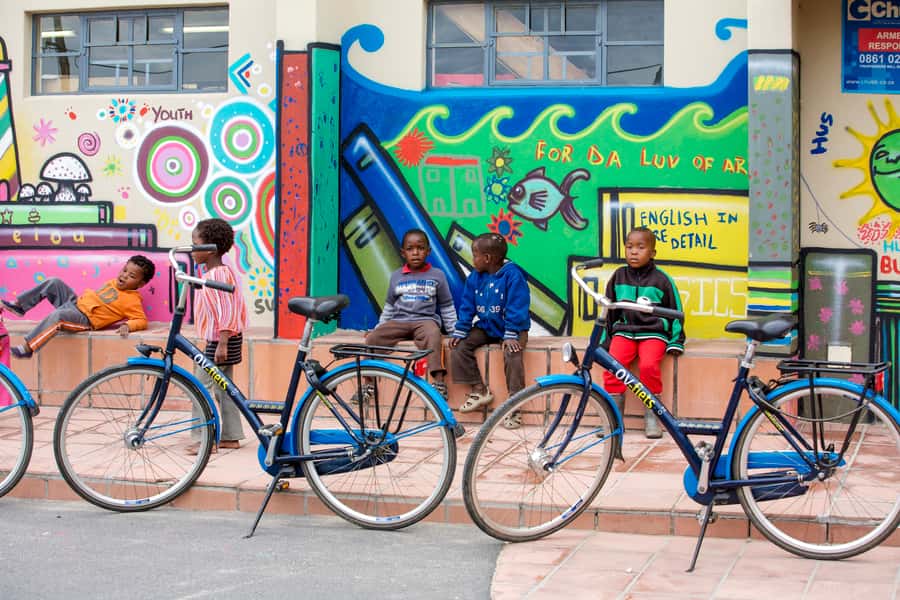
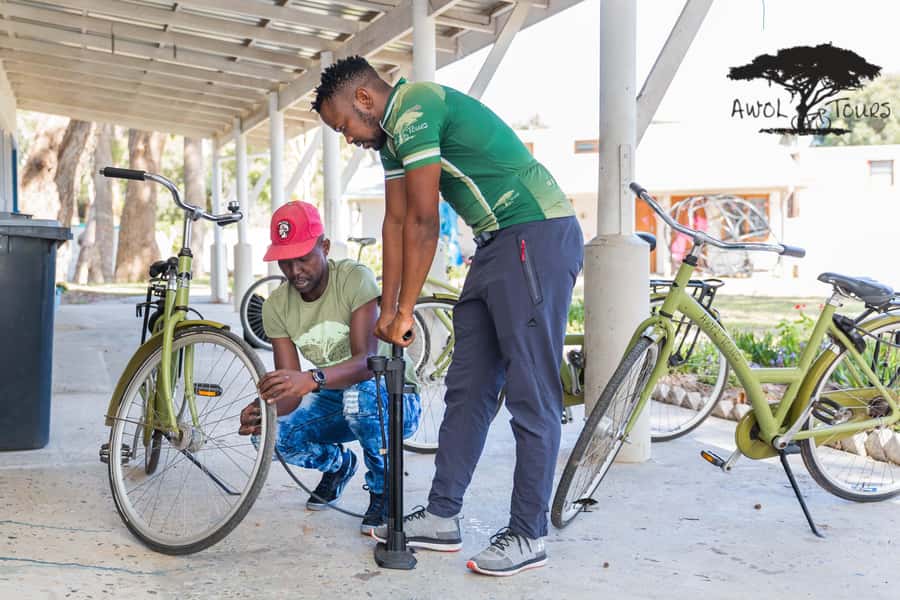
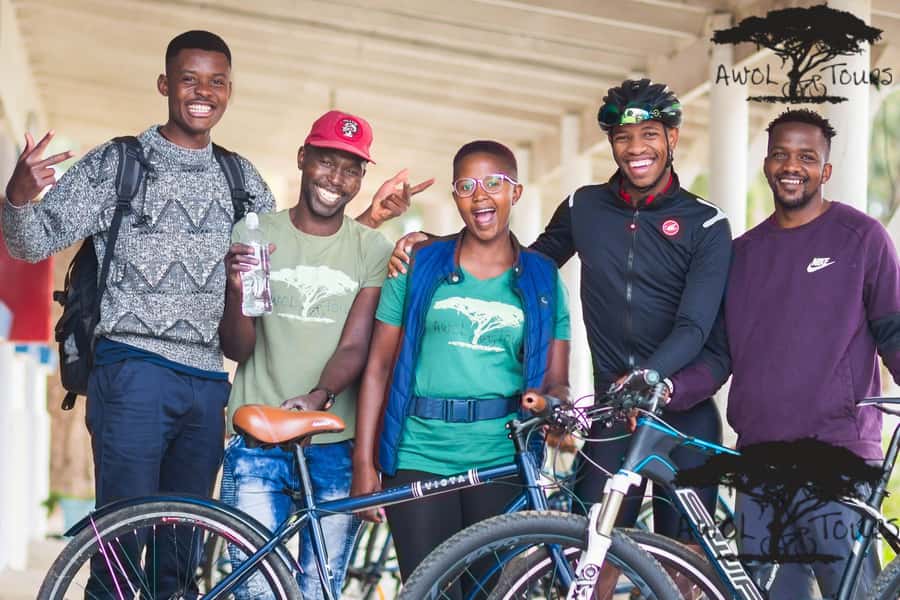
Your tour begins at the Masicorp Chasmay Road Campus, which also serves as the organisation’s head office. This is more than a neutral meeting point. The campus shares a workshop with the Songezo youth cycling academy, so you might see young cyclists from the community training before you set off.
That connection gives the ride a useful frame. Cycling is not simply a way to move between stops. It is also tied to a local youth project led by Songezo Jim, described as South Africa’s first Black South African cyclist. His work encourages young people in the community to take up the sport.
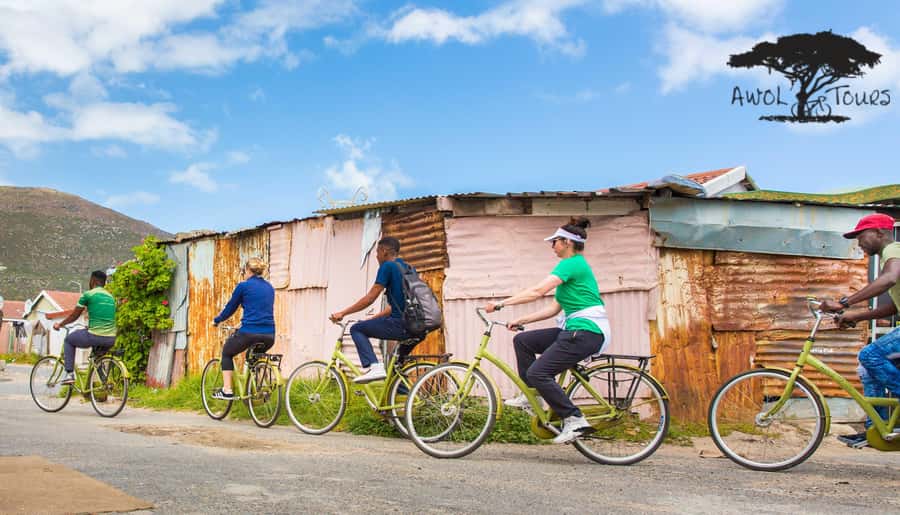
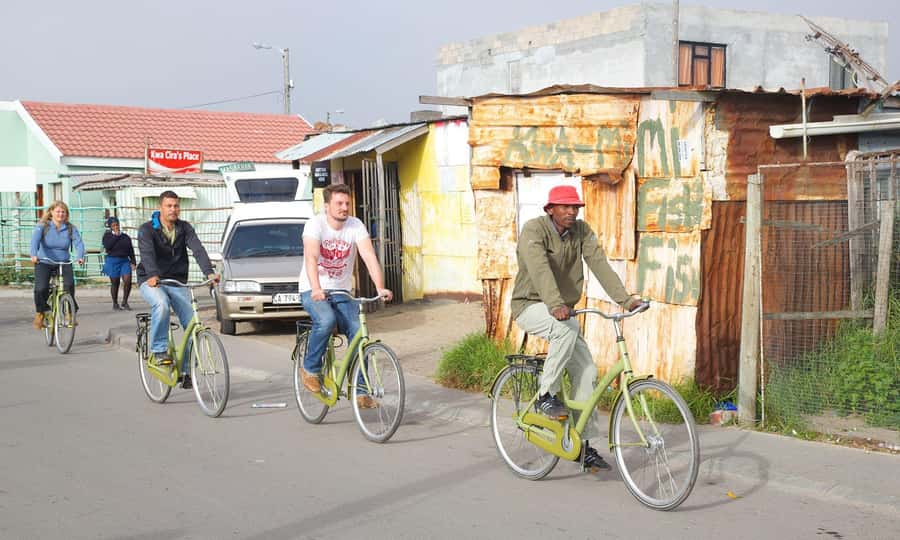
You receive an old-fashioned Dutch bicycle for the tour. Bring comfortable shoes and dress for an active four hours. High heels and jewelry are not allowed, and food should not be brought along. The activity is not suitable for wheelchair users or people with mobility impairments, so you should consider the cycling requirement carefully before booking.
Transport is not included, but it can be arranged on request. If you need a pickup, deal with that before the day rather than assuming it is part of the $106 price.
More Bike Tours in Cape Town
- Cape Town City Cycling Tour
★ 5.0 · 199 reviews - Cape Town: Guided Bike Tour
★ 4.9 · 193 reviews - Cape Town: E-Bike City Tour
★ 4.8 · 76 reviews
Riding with a guide who knows the community
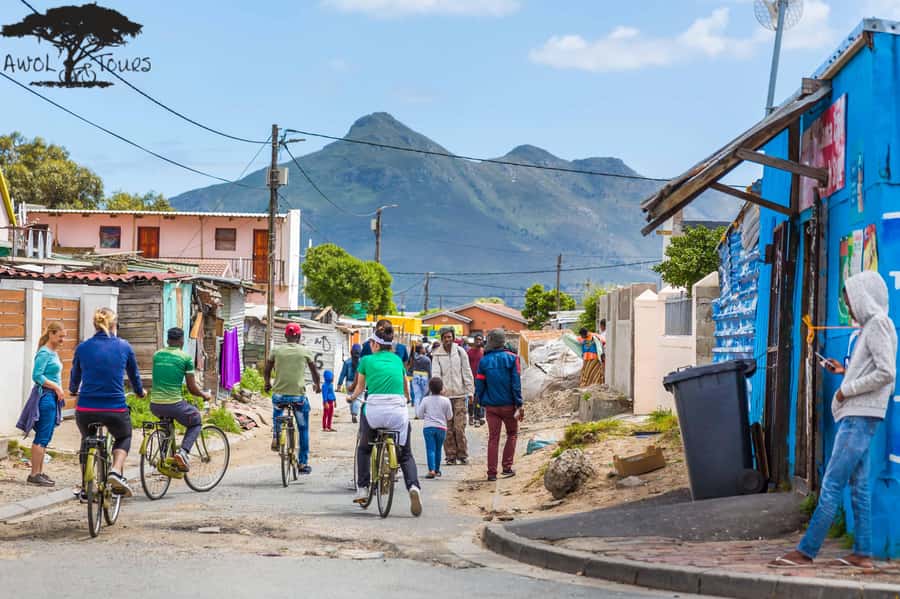
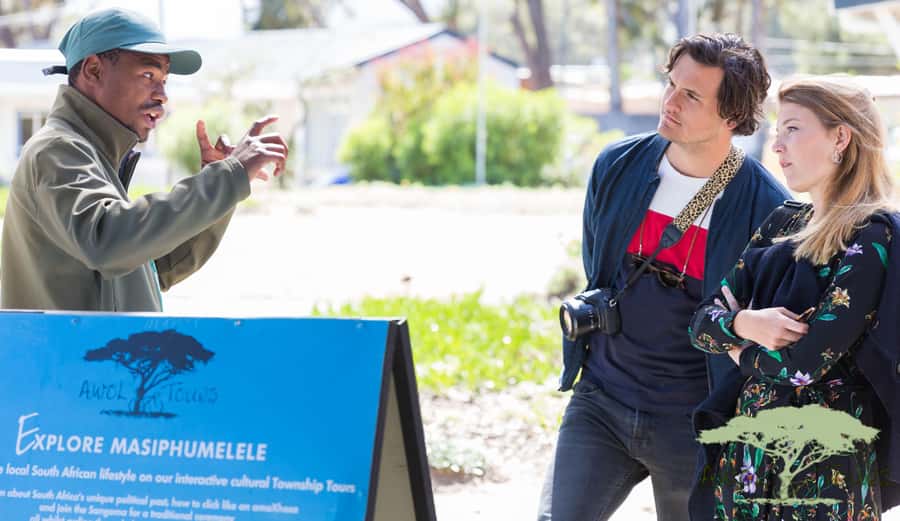
The heart of the tour is the local guide. The guide leads you through Masiphumelele while explaining Xhosa customs and the places you pass. Lutho is one guide praised by name, so you may be lucky enough to ride with him, but the listed language for the tour is English and a particular guide is not guaranteed.
The small group matters here. With eight people or fewer, you can ask questions without holding up a large bus party. You also have a better chance of hearing the answers while riding or standing at a stop.
A township tour can easily become a one-sided look at poverty. This one aims for a broader picture by including local entrepreneurs, a library, small businesses, cultural figures, and youth projects. You still see difficult living conditions, and the contrast between different parts of Cape Town can be stark. Do not expect the guide to soften every subject. Instead, use the chance to ask respectful questions and listen.
I would approach the ride as a meeting with a community, not as a photo hunt. Ask before taking pictures, especially around homes, children, religious gatherings, and traditional healers. The local partner specifically asks you not to hand sweets or treats to children. Donations should go through registered charities rather than directly to children in the street.
Community stops that make the route worthwhile
The stops are designed to show how people work, learn, worship, and organise locally. You may visit a library, meet entrepreneurs, and see small businesses. These visits help you understand Masiphumelele as a lived-in place rather than a backdrop for sightseeing.
The library is an especially useful stop because it points to education and access to information, subjects that are easy to overlook when a tour focuses only on housing conditions. Small businesses offer another angle. They show the effort people make to earn a living and build something of their own.
During school terms, the route can include a local crèche. It is closed on weekends and school holidays, so this part is not available year-round. The teachers work in difficult circumstances, and part of the tour proceeds helps improve the crèche facilities.
That donation gives the stop a practical purpose, but it can still feel sensitive. You are entering a working school environment, not a museum. Follow the guide’s instructions, keep your behavior low-key, and remember that the children are there for school, not to entertain visitors.
The route can change. Some stops may not happen on a particular day, and one German-speaking participant found that several expected points were missing, although the township visit remained interesting. I would book this tour for its general approach and local contact, not for a rigid checklist of every stop.
Meeting a Sangoma and learning about Xhosa customs

The Sangoma visit is one of the tour’s most distinctive elements. A Sangoma is a traditional healer, and the visit offers a look at a form of cultural practice that sits outside the usual Cape Town sightseeing plan.
You may have the chance to dance with the Sangomas. This can be lively and memorable, but it deserves respect. Follow your guide’s lead, ask questions in a polite way, and do not treat the encounter as a costume show. The point is to learn about customs and people, not to collect a dramatic photograph.
This part of the tour also adds balance. You are not only seeing streets and businesses. You are learning how cultural traditions remain part of community life. The guide can explain the local context and help you avoid turning an unfamiliar practice into a joke or a performance.
If you prefer a tightly controlled cultural presentation, this stop may feel less predictable. If you want a direct introduction to local traditions, it is one of the strongest reasons to choose this ride.
A different side of Cape Town altogether:
- Wine Tour: Paarl, Franschhoek & Stellenbosch incl 3 wineries
★ 5.0 · 3,940 reviews - Cape Town: Hop-On Hop-Off Bus Tour with Optional Cruise
★ 4.8 · 3,929 reviews - Cape Town: Cape of Good Hope & Penguins Day Tour with Pickup
★ 4.7 · 3,362 reviews - Zipline Cape Town – From Foot of Table Mountain Reserve
★ 5.0 · 3,179 reviews
Sharing lunch in a home or African restaurant
Lunch is included, and it may take place at an African restaurant or in the home of a local woman who regularly hosts tour groups. She prepares an authentic African tea or lunch, giving you time to sit down and talk rather than simply pass through another stop.
A meal is often where a short tour slows down enough for real conversation. You can ask about ingredients, customs, and daily life, while the meal gives the day a social centre. The home setting may feel more personal than a restaurant, although it can also feel more intimate and less predictable.
The food is part of the tour price, so you do not need to plan a separate lunch during the four-hour outing. The activity information does not specify the exact menu, so do not book expecting a particular dish or a set tasting list.
Food should not be brought on the tour. That rule is straightforward, but it also reflects the design of the day: eat the included meal at the local stop rather than turning the ride into a snack break.
A Sunday church visit and changing tour rhythm
On Sundays, the tour could include a visit to a local gospel church. One German participant described the church service as the best part of the day, which is a useful clue if you enjoy music, worship, and community gatherings.
The wording matters: the church visit is a possibility, not a fixed promise. If it is included, wear and act respectfully. You are entering a religious service, not attending a staged concert, even if the singing is energetic.
The church option also shows why this tour is not identical every day. School visits depend on the academic calendar, and church visits depend on Sunday scheduling. The tour works best when you accept some flexibility.
What $106 buys you
At $106 per person, this is not the cheapest way to see Cape Town. You are paying for four hours, a local English-speaking guide, bicycle use, lunch, the Sangoma visit, a small group, and contributions to local work.
The value depends on what you want from a township visit. If you only want a short overview from a vehicle, the price may feel high. If you want time to cycle, meet people, ask questions, eat locally, and support a community organisation, the cost is easier to justify.
Ten percent of all tour proceeds goes directly to Masicorp, a nonprofit organisation supporting education in the community. The tour also operates from the Songezo cycling academy campus, linking your activity with a youth sports project. Those details do not erase the commercial nature of the tour, but they provide a clearer local benefit than a standard sightseeing stop.
The small group adds value, too. Eight people is enough for a social outing but small enough for questions and conversation. A private tour is not listed, so you should not expect a fully custom route.
The honest limits of a township cycling tour
This tour asks you to look at hard contrasts. One participant described feeling impressed, uncomfortable, privileged, and even ashamed while seeing the differences between communities. That reaction is not a flaw in the tour, but you should be ready for it.
You may see difficult living conditions alongside people working to improve life for themselves and their children. The day includes both hardship and hope. A good guide can help you hold those two facts together without reducing Masiphumelele to either poverty or inspiration.
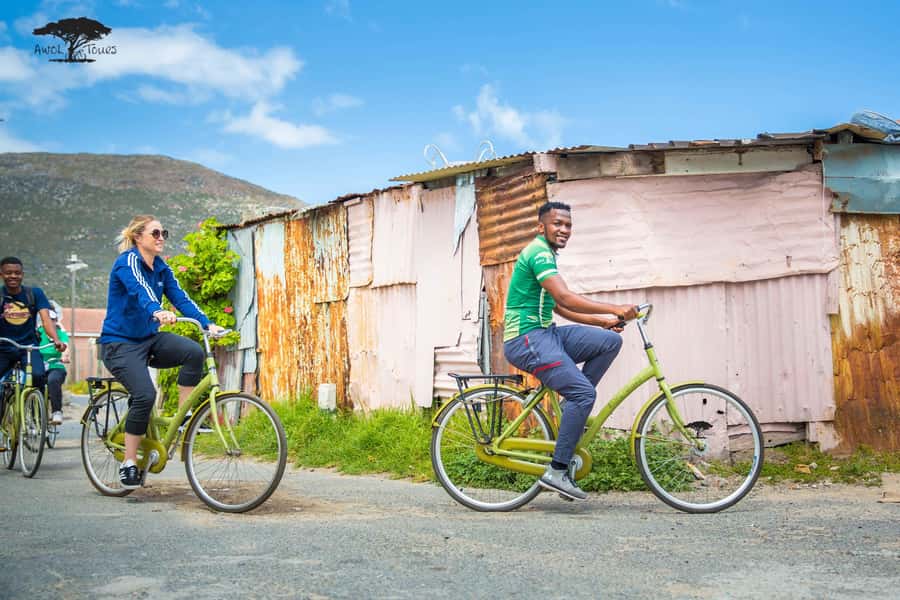
Cycling also changes your position. You are more exposed than you would be in a vehicle, which can make the encounter feel more direct. That can be valuable, but it can also make you feel conspicuous. Keep your camera away unless you have permission, follow the guide’s route, and avoid handing out gifts.
The tour is not suitable for anyone with mobility limits or wheelchair users. Even for confident cyclists, comfortable shoes are essential. The supplied bicycle is an old-fashioned Dutch model, so this is best approached as a relaxed community ride rather than a sporty cycling challenge.
Who should book the Masiphumelele ride?
I would choose this tour if you want a small-group introduction to township life that includes conversation, food, culture, and local projects. It suits curious visitors who are willing to listen and who understand that the route may change.
It is also a good match if you want your sightseeing money to support education and youth cycling. The Masicorp contribution and Songezo academy connection give the tour a practical purpose beyond the ride itself.
I would think twice if you want a polished, predictable itinerary with every advertised stop guaranteed. The crèche is unavailable during weekends and school holidays, and the church is a Sunday possibility. Some participants found that not every planned point appeared, so flexibility is part of the deal.
The tour has a 4.8 rating from 19 reviews, with especially strong praise for the guide’s stories and personal manner. Lutho received specific praise, while another participant called the guide excellent without naming him. The best part of the day will likely depend on the guide and the conversations you choose to have.
Book it if you want a human-scale view of Masiphumelele and can accept a few rough edges. Skip it if you are uncomfortable cycling, entering community spaces, or facing difficult social contrasts directly.
FAQ
How long is the Cape Town Cultural Cycling Tour?
The tour lasts four hours. Starting times vary, so you should check availability when booking.
Where does the tour begin?
The meeting point is the Masicorp Chasmay Road Campus, which is also the Masicorp head office in Chasmay Road.
Is transport included?
No. Transport is not included, but it can be arranged on request.
What does the tour price include?
The $106 price includes a local Xhosa guide, an old-fashioned Dutch bicycle, African lunch, a Sangoma visit, and a donation to Masicorp.
Is lunch included?
Yes. Lunch takes place either at an African restaurant or in the home of a local woman who hosts tour groups. The meal may include authentic African tea or lunch.
Can I visit a crèche on every tour?
No. The crèche visit is available during school time and is closed on weekends and school holidays.
Is a church visit part of the tour?
A visit to a local gospel church may be included on Sundays. It is not listed as a guaranteed stop on every tour.
What should I bring and avoid?
Bring comfortable shoes. High heels and jewelry are not allowed, and you should not bring food. Do not give sweets or treats to children, as the local partner prefers support to go through registered charities.
Just listed around Cape Town
- Cape Town: Inspiring sustainable change through Street Art★ 4.9 · 5 reviews
- Cape Town Tandem Paragliding Square 1 Paragliding★ 5.0 · 5 reviews
- SandBoarding in Capetown + PhotoShoot★ 4.0 · 5 reviews
- Cape Town: Full-Day Private Peninsula Tour★ 3.6 · 5 reviews
- Private FULL DAY Tour: Cape of Good Hope & Boulders Beach★ 5.0 · 5 reviews
- Cape Town Full Day Family Fun With Kids Private Tour★ 4.0 · 5 reviews
- Private Tour to Aquila Game Reserve in Cape Town – see the Big5★ 5.0 · 5 reviews
- Peninsula Tour Cape Town★ 5.0 · 5 reviews
Cycling Tours, compared.

Guided eBike Tour with Signal Hill and Clifton …
Read our review →Browse the lists this tour appears in