
Reviewed · HISTORICAL TOURS
Pretoria Historical Tour
Pretoria’s past comes into focus through five very different stops, from the imposing Voortrekker Monument to the gardens of the Union Buildings. You move between them in an air-conditioned vehicle, so the day is less about finding your way and more about understanding what you are seeing.
I like the mix of political, military, and domestic history. I also like the private format, since your group travels alone and the guide can explain things at a pace that suits you. The main caution is pickup reliability, since one published experience describes a long wait with no reply from the operator.
Key points
- The Voortrekker Monument takes about two hours, making it the main historical stop of the day.
- Kruger House includes period furnishings, presidential gifts, and Paul Kruger’s personal train.
- Church Square connects several major political landmarks, including the Justice House and Kruger’s statue.
- Melrose House marks the end of the Anglo-Boer War, where the Treaty of Vereeniging was signed.
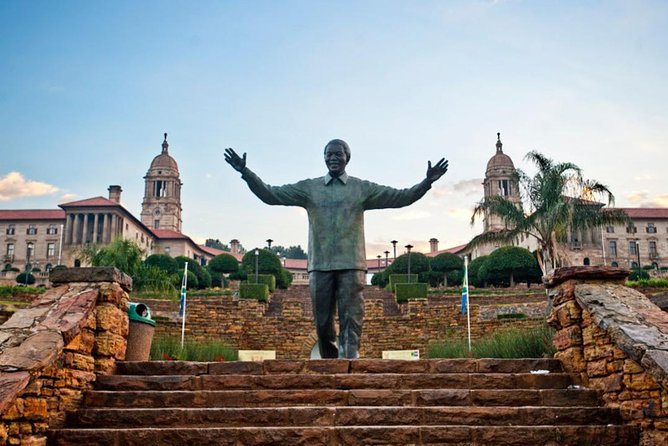
- The Union Buildings offer a direct link to modern South African government and include the Nelson Mandela statue in the gardens.
- The private tour format includes transport and an English-speaking guide, but lunch is not provided.
Pretoria in one half-day
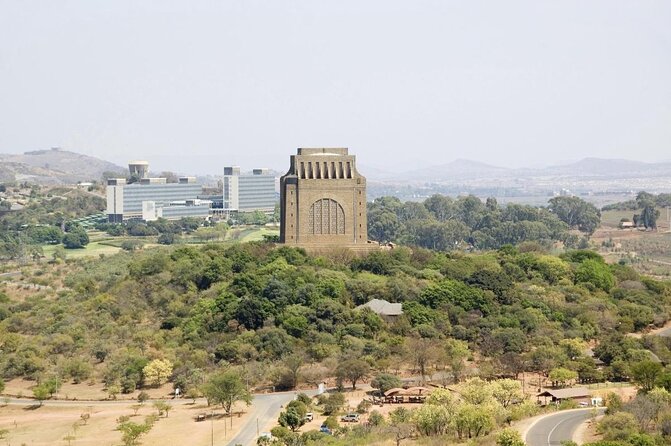
This is a useful introduction to Pretoria if you are staying in Johannesburg and want a guided outing without spending hours planning routes, opening times, and historical background. The listed stops add up to about four and a half hours: two hours at the Voortrekker Monument, one hour at Kruger House, and shorter visits to the remaining three sites.
The $125.31 per-person price needs to be judged as a private experience rather than a simple sightseeing shuttle. Your fee covers an air-conditioned vehicle, an English-speaking guide, and admission to the Voortrekker Monument and Kruger House. The other three stops are listed with no admission charge.
That makes the tour most useful for you if you value convenience and explanation. If you only want quick photographs of Pretoria’s landmarks, you may find the price high. If you want a guide to connect the city’s Afrikaner, colonial, wartime, apartheid-era, and democratic stories, the cost is easier to justify.
The operator offers pickup, and the tour is listed as a private activity for your group alone. Group discounts are also available. Confirm the pickup details carefully before the day, since communication at pickup was a serious problem for one person. Free cancellation is available if you cancel at least 24 hours before the start time.
More History Tours in Johannesburg
- Soweto Township Cultural Tour incl Apartheid Museum and Nelson Mandela House
★ 5.0 · 30 reviews - Cradle of Humankind World Heritage Site
★ 5.0 · 15 reviews - Johannesburg: Soweto History Tour with Hotel Pickup
★ 4.8 · 14 reviews
The Voortrekker Monument: two hours of contested memory
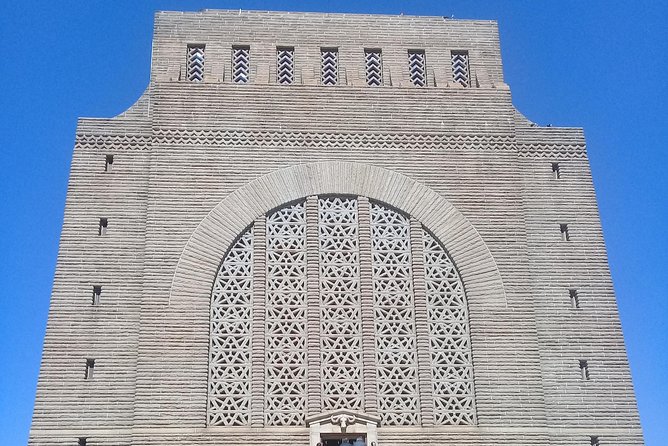
The Voortrekker Monument is the longest stop, and rightly so. It focuses on the Voortrekkers, the European settlers who moved inland during the nineteenth century, and the obstacles and victories they faced during that movement.
You should allow the full two hours here. The visit is not just a quick look at an exterior building. It is the place where the tour asks you to consider how Afrikaner history has been presented, especially the hardships and achievements of the Voortrekkers.
That focus is important, but it also calls for a questioning eye. This is one historical viewpoint, shaped by the people and politics that created the monument. A good guide can help you place the story in a wider South African setting, rather than presenting it as the country’s only past.
This is also the stop most likely to appeal to you if you enjoy monuments, national memory, and political history. If your main interest is modern Pretoria, two hours may feel long. Tell your guide what you want from the visit, since the private format should make that conversation easier.
Admission is included, which removes one small task from your day. The air-conditioned vehicle matters here too, because you are not arranging separate transport between a site outside the central city and the later stops.
Kruger House and the world of Paul Kruger
The Kruger House Museum shifts the focus from a national monument to a former home. This was the house of Johan Paul Kruger, the then president of the South African Republic, also known as the ZAR.
You can see furniture used by Kruger’s family, gifts presented to him in his presidential role, and his personal train. Those details give the visit a more domestic feel than the Voortrekker Monument. Instead of only hearing about a political figure in public life, you get a sense of the objects connected with his household and office.
The ZAR Hall is specifically noted for presidential gifts. That makes it worth listening closely to the guide, since the significance of those objects may not be obvious from a quick walk through the room.
The stop lasts about one hour, with admission included. It is a sensible follow-up to the monument because the two sites look at related eras from different angles. The first presents the movement of the Voortrekkers into the interior. The second brings you closer to a leading political figure associated with that period.
You may find the museum less engaging if you prefer large-scale architecture to interiors and personal possessions. Still, its compact length keeps the day moving and gives the tour some variety.
Church Square: Pretoria’s civic center
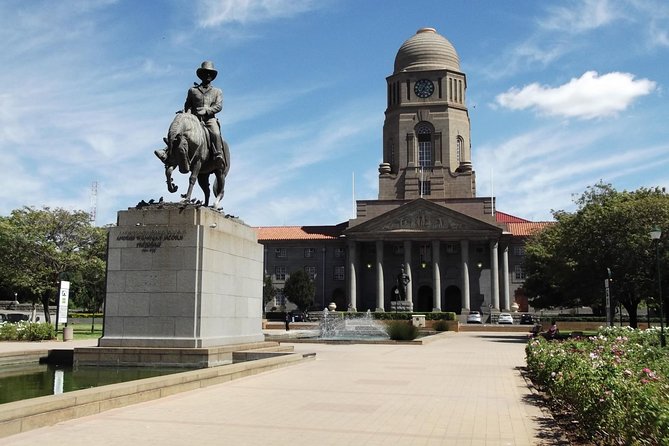
Church Square is the geographical center of Pretoria and the first of the shorter city stops. You have about 30 minutes here, with no admission fee.
The square brings several important buildings and symbols together. The Justice House is particularly significant because Nelson Mandela was sentenced to life imprisonment there during the Rivonia Trial. The statue of Johan Paul Kruger adds another layer, linking the square to the political history introduced at Kruger House.
This is a place where your guide’s explanation matters more than the amount of time spent walking around. Thirty minutes is enough to see the main features and understand why the square matters, but it is not enough for an extended architectural study.
I like this stop because it connects Pretoria’s public space to major national events. You are not simply looking at an old square. You are standing among reminders of government, legal power, Afrikaner politics, and the struggle against apartheid.
The square is also a useful pause between museum visits. After the longer indoor stops, you can step outside, orient yourself in central Pretoria, and take photographs before continuing.
A different side of Johannesburg altogether:
- From Johannesburg: Pilanesberg Nature Reserve Game Safari
★ 4.8 · 1,327 reviews - Johannesburg: Hop-On Hop-Off Bus with Optional Soweto Tour
★ 4.6 · 985 reviews - Soweto /Johannesburg and Apartheid Museum Guided Full Day Tour
★ 5.0 · 932 reviews - Johannesburg Hop-On Hop-Off City Tour with Soweto Option
★ 4.5 · 768 reviews
Melrose House and the Treaty of Vereeniging

Melrose House is another 30-minute stop, and admission is listed as free. Its main claim to importance is political rather than visual: the peace treaty ending the Anglo-Boer War was signed here.
That short visit gives the day a clear chronological thread. The Voortrekker Monument deals with the movement into the interior. Kruger House introduces a major political leader. Church Square brings in civic and legal power. Melrose House then points to the agreement that ended a major conflict between the British and Boer forces.
You should not expect a long museum visit in half an hour. The value here is the setting and the explanation. Your guide can place the treaty within the wider sequence of South African events, helping you see why this house matters even if you do not spend hours inside it.
For you, this stop will work best if you enjoy turning points and political agreements. If you are focused mainly on architecture, it may feel brief. The private format again helps, since you can ask for more context instead of simply following a fixed group from room to room.
The Union Buildings and Mandela’s statue
The final stop is the Union Buildings, the seat of the president’s office since 1913, during the Union of South Africa. The buildings occupy Pretoria’s highest point, and the gardens include a statue of Nelson Mandela.
This is the tour’s strongest link between the past and South Africa today. Earlier stops concentrate on settler movement, the old republic, war, and legal history. Here, you see the setting connected with the country’s national government and a major symbol of democratic South Africa.
You have about 30 minutes. That is enough for the main view, the gardens, and the Mandela statue, but not an exhaustive visit to the grounds. Since the Union Buildings are a working government site, this outing is best understood as an exterior and garden visit rather than a tour of presidential offices.
The high position gives the stop a natural sense of place, even though the visit is short. I would save a little energy for it, since it provides a strong closing image after the more specific museum stops.
What the private format changes
A private tour means only your group participates. That can make a real difference on a history-heavy day. You can ask why the Voortrekker story is presented in a certain way, request more information about Kruger, or move through a shorter stop without waiting for strangers.
The guide is central to the experience. Guides named Ben, Thabang, and Cosmo have led departures, and the available feedback gives a useful picture of what good guiding can add. Ben was praised for being flexible and well informed. Thabang was credited with explaining both the importance of the sights and aspects of life in South Africa today. Cosmo was described as friendly, punctual, attentive, and easy to follow in his explanations.
Those comments point to the right expectation: the quality of the day depends heavily on the person assigned to you. The strongest guides will connect the buildings instead of treating them as unrelated photo stops. Ask questions early, especially if you want more attention to contemporary South Africa rather than only nineteenth-century events.
There is also a practical warning. One poor experience involved a scheduled noon pickup, unanswered messages, and a delay before the guest could establish contact. That does not mean every departure will have the same problem, but you should confirm the pickup time and meeting point in advance. Keep the operator’s contact information handy on the day.
Transport, timing, and what to bring

The air-conditioned vehicle is included and is one of the tour’s most useful features. Pretoria’s sights are spread across different parts of the city, and arranging separate rides would take time and could complicate a half-day plan.
The stop lengths are uneven. You spend two hours at the Voortrekker Monument, one hour at Kruger House, and roughly 30 minutes at each of the final three sites. That structure suits you if you want the main sights without lingering at every location.
Lunch is not included. The tour is scheduled around sightseeing rather than a meal, so plan accordingly. The supplied information does not specify a meal stop, so you should not assume one is built into the route.
Pickup is offered, the tour is near public transportation, and a mobile ticket is available. Most people can participate, according to the supplied tour information. Since exact pickup arrangements are not provided here, confirm the details before departure rather than relying on a last-minute message.
Who should book this Pretoria tour?
I would recommend this outing if you are based in Johannesburg and want a structured introduction to Pretoria’s major historical sites. It is especially suitable for first-time visitors, people interested in South African political history, and anyone who prefers a guide and private vehicle to independent route planning.
It also works well for a small family or group with different interests. The day includes monuments, a historic home, a central square, a treaty site, government buildings, and a public garden. That range gives you more variety than a tour focused on only one museum or one period.
You may want another plan if you want a relaxed day with long meals, detailed museum study, or a strong focus on contemporary culture. The schedule is packed, and the 30-minute visits are designed for orientation rather than exhaustive exploration.
The price is fair when you use the private transport and guide. It is less attractive if you are comfortable using public transportation, researching each site, and visiting at your own pace. Group discounts may improve the value for a larger party, but the exact discount is not stated.
Should you book it?
Book this tour if you want to see Pretoria’s principal landmarks in one private half-day and you value clear historical explanations. The best parts are the range of stops, included transport, and the chance to work with a guide such as Ben, Thabang, or Cosmo, depending on availability.
Before paying, confirm the pickup arrangements and ask who will guide your group. That simple step addresses the main practical risk. If the operator confirms everything clearly, this is a useful way to connect the Voortrekker era, Paul Kruger, the Anglo-Boer War, apartheid-era legal history, and modern democratic South Africa in a single outing.
FAQ
Where does the Pretoria Historical Tour take place?
The tour is based in Johannesburg and visits historical sites in Pretoria, including the Voortrekker Monument, Kruger House Museum, Church Square, Melrose House Museum, and the Union Buildings.
How long does the tour last?
The listed stop times total about four and a half hours: two hours at the Voortrekker Monument, one hour at Kruger House, and 30 minutes at each of the other three stops.
Is hotel pickup available?
Pickup is offered. The available information does not specify the exact pickup locations, so confirm the meeting details when you book.
Is this a private tour?
Yes. Only your group participates in the activity.
Is transport included?
Yes. Transport between the sites is provided in an air-conditioned vehicle.
Is a guide included?
Yes. An English-speaking guide is included.
Are admission fees included?
Admission is included for the Voortrekker Monument and Kruger House Museum. Church Square, Melrose House Museum, and the Union Buildings are listed with free admission.
Is lunch included?
No. Lunch is not included in the tour price.
Can I cancel for a full refund?
Yes, if you cancel at least 24 hours before the experience start time. Cancellations made less than 24 hours in advance are not refunded, and changes within that period are not accepted.
Just listed around Johannesburg
- Constitutional Hill and Soweto 5 hours tour.★ 5.0 · 5 reviews
- 5 Day Kruger Glamping Safari and Panorama Tour★ 5.0 · 5 reviews
- Cradle of Humankind and Maropeng Day Tour from Johannesburg★ 4.0 · 5 reviews
- Johannesburg: Hot Air Balloon Flight★ 5.0 · 5 reviews
- Half Day Soweto and Apartheid Museum Guided Tour★ 5.0 · 5 reviews
- Lion park★ 4.5 · 5 reviews
- 5 Day Kruger National Park and Panorama Route Safari★ 4.5 · 5 reviews
- Luxury Car Johannesburg Airport Private Transfer★ 5.0 · 5 reviews
Historical Tours, compared.
Soweto Township Cultural Tour incl Apartheid Museum and Nelson Mandela House
Read our review →
Cape Town Guided City Cycling Heritage Tour – Private Tour
Read our review →
Apartheid History of South Africa (Full day Experience with lunch
Read our review →
Robben Island Tour; Pickup, Drop-off; Guided Tour Historic Prison
Read our review →
Browse the lists this tour appears in