
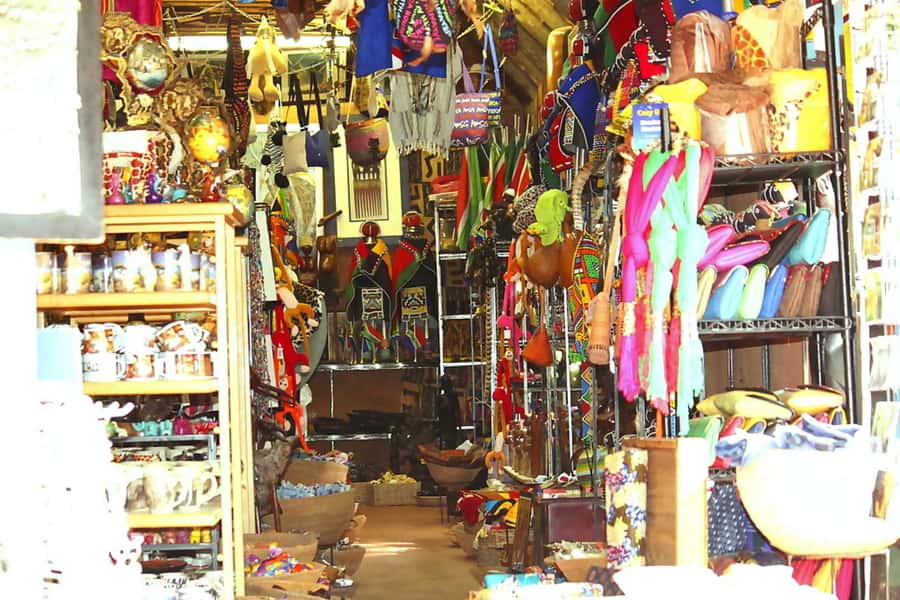
Reviewed · LESEDI CULTURAL VILLAGE TOURS
Johannesburg: Cradle of Human Kind & Lesedi Cultural Village
The most unusual part of this Johannesburg day trip is the pairing of human evolution with living South African culture. In the morning, you’ll visit the Cradle of Humankind, including Wonder Cave and the Maropeng Visitor Center. Later, Lesedi Cultural Village shifts the focus from ancient fossils to the customs, homes, music, and dances of several South African peoples.
I like the efficient private transport, especially if you have only one free day near Johannesburg. I also like the contrast between the two stops: one asks where humans came from, while the other shows how communities shaped life in the region. The main drawback is the pace. Three major activities, long drives, and a short lunch stop make this a full day with little spare time.
Key points at a glance
- Two very different attractions in one day: Pair the Cradle of Humankind with Lesedi Cultural Village instead of visiting either one alone.
- Wonder Cave adds a physical sense of place: The cave visit gives you more than a museum explanation of early human remains.
- Maropeng puts the fossils into context: Its displays and timeline help explain why this part of Gauteng matters to human history.
- Lesedi ends with live performance: Traditional dances provide a lively finish after the village tour.
- Private transport keeps the day simple: Pickup and return are offered in Johannesburg, Sandton, Midrand, and East Rand.
- Guiding makes a real difference: Guides such as Selo and Marvin have been praised for clear explanations, humor, kindness, and thoughtful handling of delays.
From Johannesburg to the Cradle of Humankind
Your day begins with pickup from your accommodation in Johannesburg, Sandton, Midrand, or East Rand. You’re asked to wait in the hotel lobby five minutes before the scheduled time, a sensible rule for a day built around several timed visits.
The first drive takes about an hour. You’ll pass through the northern suburbs of Johannesburg on the way toward the Cradle of Humankind. Since this is a private group, the drive is also a useful time to ask questions and get a basic explanation of the region before arriving.
The Cradle of Humankind is the serious portion of the day. The area is linked to human ancestors who lived here more than three million years ago, and the visit is designed to show why Gauteng is often described as a birthplace of humanity.
That claim needs a little care. The site does not suggest that one modern nation or one single cave explains all human origins. Instead, it brings together fossil discoveries and archaeological evidence from a wider area. You’ll gain a clearer sense of how scientists use bones, cave deposits, and long timelines to study early humans.
More Lesedi cultural village visits:
- Lesedi Cultural Village and Cradle of Humankind Tour
★ 5.0 · 48 reviews - Lesedi Cultural Village Tour
★ 5.0 · 46 reviews - Lesedi Cultural Village
★ 5.0 · 45 reviews
Wonder Cave and the first lesson in human origins
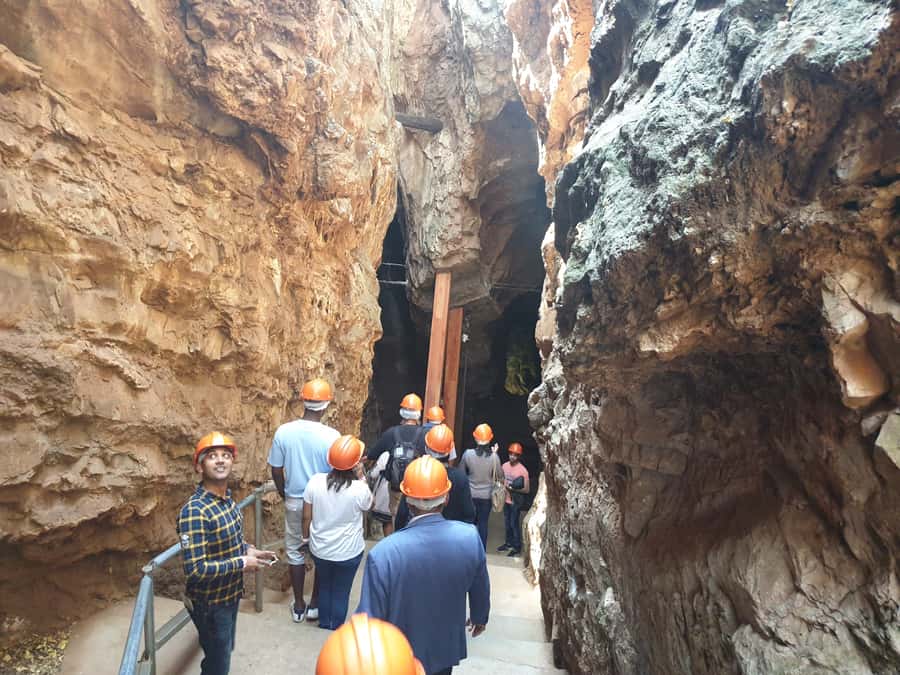
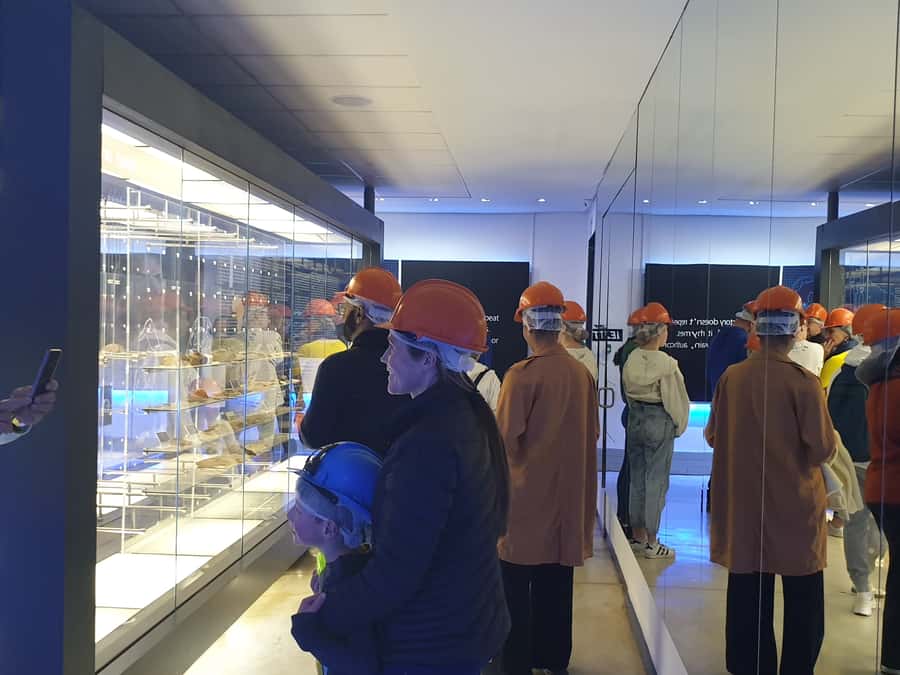
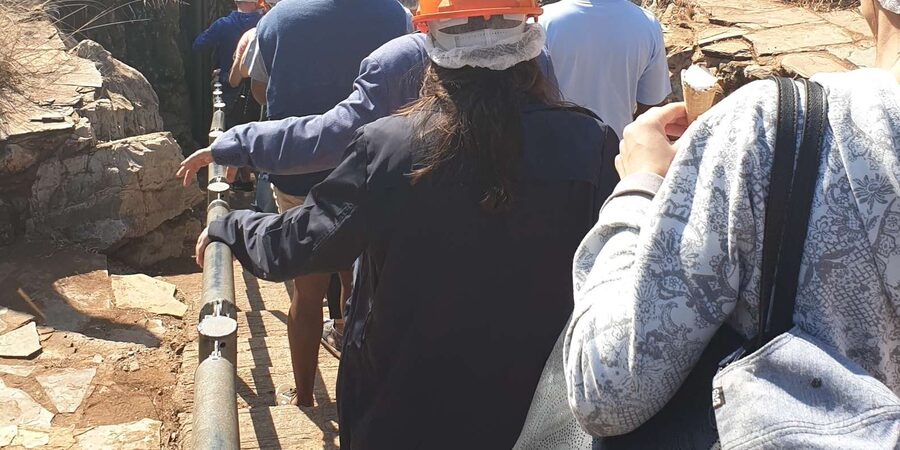
The guided Cradle of Humankind visit lasts about 90 minutes. Wonder Cave gives the stop a strong physical focus. Rather than looking only at museum cases, you’ll enter a cave connected with the underground setting where remains and other evidence have been found in the wider region.
The cave is also the part of the tour where comfortable shoes matter most. The operator does not recommend the experience for people with mobility impairments, back problems, or pregnancy, so take those warnings seriously. This is not the best outing if stairs, uneven ground, or extended walking are difficult for you.
A site guide leads the cave portion, while your tour guide helps connect the visit to the larger story. One useful feature is that explanations can be adjusted for the group. If the cave tour is shared with children or a mixed-age group, your own guide may help fill in details at a pace suited to adults.
The main limitation is that 90 minutes passes quickly. You won’t become an expert in paleoanthropology, but you will leave with a practical understanding of why the caves matter. Ask questions as you go, especially if you want more detail about the fossils, dating methods, or the difference between a fossil site and a museum display.
Maropeng puts the evidence in order
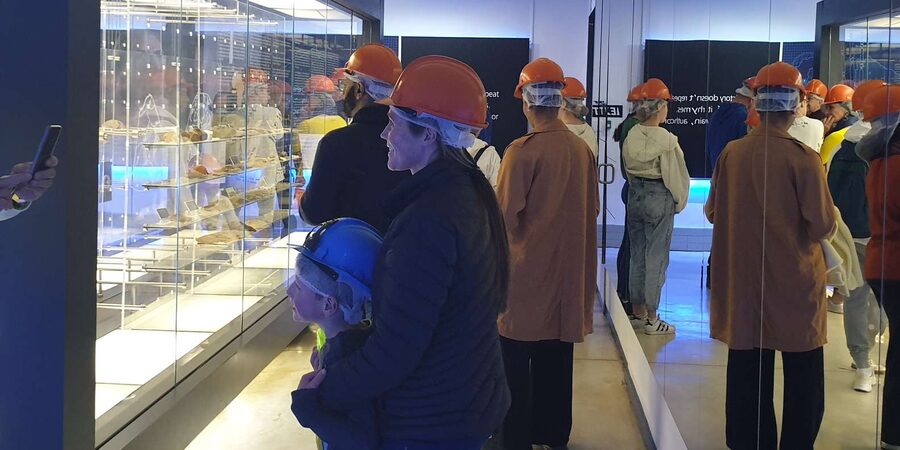
The Maropeng Visitor Center gives the Cradle of Humankind stop its organizing framework. The museum is described as fairly small, but its remains and timeline help arrange the story you began underground.
That timeline is valuable because human evolution is difficult to grasp when it is presented as a list of names and dates. A visual sequence gives you a better feel for the enormous span of time involved. You can connect the fossils to changes in early human life and see how the evidence fits together.
Do not expect a huge national museum. Maropeng works better as a focused introduction than as an all-day institution. The visit is especially useful if this is your first stop connected with human origins, or if you prefer a guide to explain the main ideas without sending you through a large maze of galleries.
You’ll want to pay attention here because the schedule moves on. The full Cradle of Humankind portion is guided, and the combination of Wonder Cave and Maropeng gives you both the physical setting and the educational background. That balance is one of the strongest reasons to choose this excursion instead of arranging a simple transfer to one attraction.
The drive to Lesedi Cultural Village
After the Cradle of Humankind, you’ll spend about 50 minutes in the van before reaching Lesedi Cultural Village. This middle drive creates a natural break, though it also adds to the day’s total sitting time.
Lesedi changes the subject completely. The morning asks questions about human beginnings. The afternoon looks at South Africa’s cultural variety and the ways traditional customs continue to influence modern life.
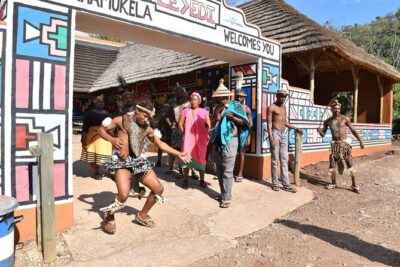
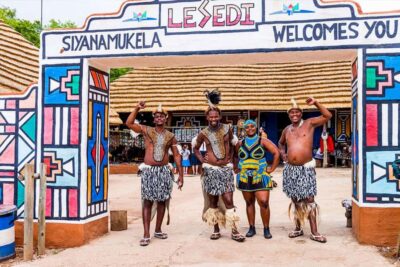
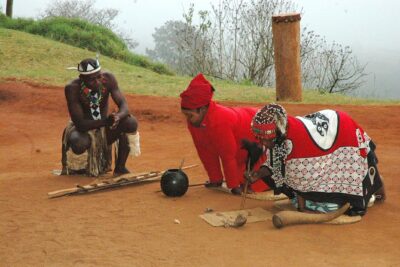
You’ll visit traditional tribal settings and learn about different South African cultures in a setting designed for education and performance. The value here is not just visual. Homes, gathering spaces, clothing, music, and dance can show how communities organize daily life and express identity.
Still, keep the format in mind. Lesedi is a cultural village attraction, not a remote rural community visit. It presents traditions in a planned setting for visitors. That makes it accessible and easy to understand, but it also means the experience is staged and organized. If you want a clear introduction to several cultures in a short time, that is useful. If you want an unplanned encounter with everyday life, this is not that type of outing.
A few more Johannesburg days worth comparing
- From Johannesburg: Pilanesberg Nature Reserve Game Safari
★ 4.8 · 1,327 reviews - Johannesburg: Hop-On Hop-Off Bus with Optional Soweto Tour
★ 4.6 · 985 reviews - Soweto /Johannesburg and Apartheid Museum Guided Full Day Tour
★ 5.0 · 932 reviews - Johannesburg Hop-On Hop-Off City Tour with Soweto Option
★ 4.5 · 768 reviews
Traditional homes, explanations, and cultural variety
The guided Lesedi visit lasts around two hours. You’ll be introduced to different cultural settings and hear explanations about traditional ways of living. This is where a good guide matters most, since the quality of the experience depends on how clearly the customs are explained rather than simply displayed.
The tour is built around South Africa’s multicultural identity. You’ll see how varied traditions are presented within the wider idea of the Rainbow Nation. The best approach is to listen for differences between communities rather than treating all traditional culture as one broad category.
The afternoon works well for first-time visitors because it offers several points of comparison. You may notice differences in household arrangements, dress, music, dance, and social customs. The format also makes it easy to ask questions directly, which is helpful if you are unfamiliar with South African cultural terms.
Guides Selo and Marvin have been singled out for their friendly manner, humor, clear explanations, and care with guests. That personal touch can turn a standard scheduled visit into a more relaxed day. It is worth asking your guide to explain anything that feels simplified or unclear. You’ll get more from the village if you treat it as a place to ask questions, not only a place to take photographs.
Lunch and the energetic final performance
The schedule allows about 30 minutes for lunch at a local restaurant. Food is not included in the listed price, and alcoholic drinks are also excluded, so check the exact meal arrangement before setting out.
A short lunch stop can feel rushed, especially after the morning cave and museum visit. One account describes a tasty buffet with local foods at Lesedi, but the food exclusion means you should not assume the meal is covered in your booking. Confirm whether the buffet is available and what you will pay before choosing what to eat.
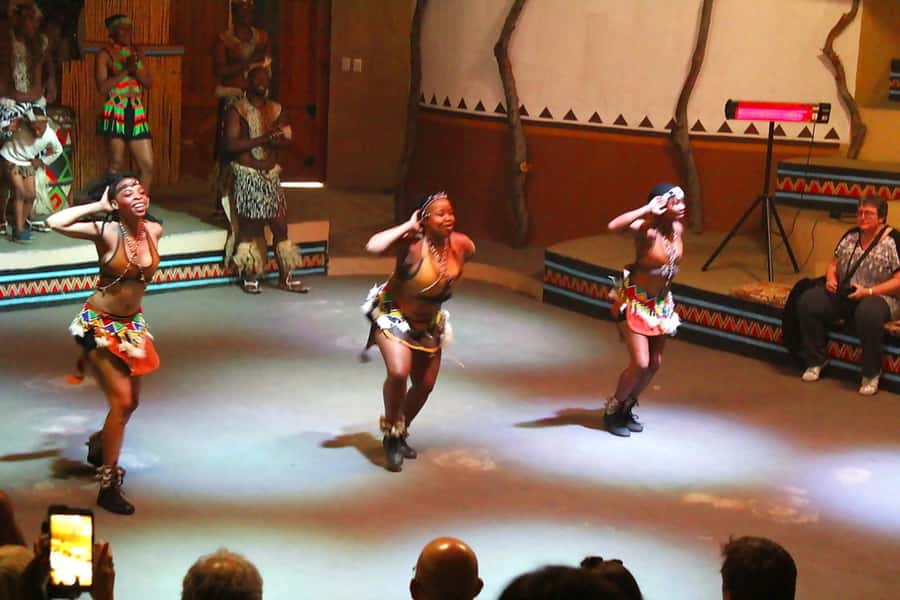
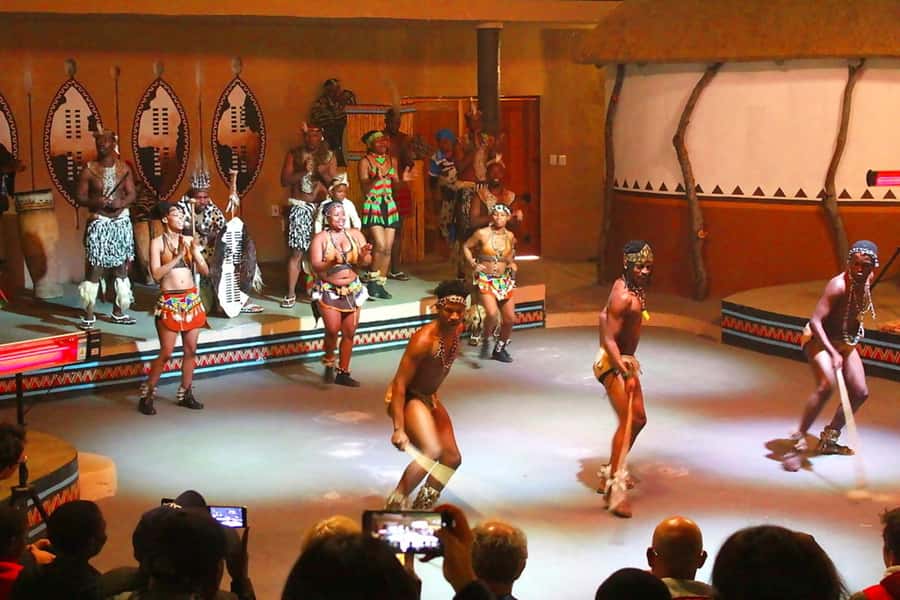
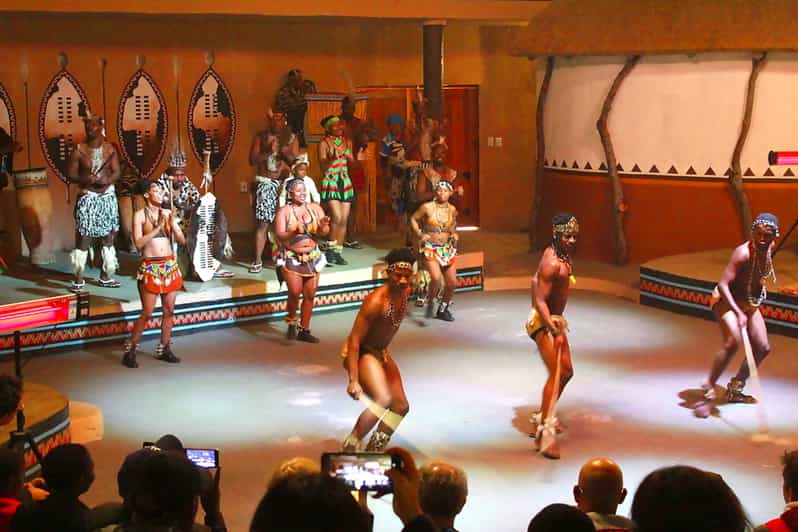
The day ends with a traditional African dance performance. This is the most energetic part of the excursion, with dancers presenting several cultural styles in a lively stage show.
The performance gives the village visit a clear ending and lets you hear and see traditions rather than only reading about them. It is also a reminder that culture is not just a museum subject. Music and dance carry history, identity, celebration, and community memory.
The show is designed for visitors, so it is polished and timed. That does not make it worthless, but you should see it as a cultural presentation rather than an ordinary community event. The enthusiasm of the performers is a major part of its appeal.
Why the private format matters
This is a private-group excursion, with transport between all stops included. That arrangement is particularly useful if you are staying outside central Johannesburg or want to avoid coordinating several separate transfers.
Pickup and drop-off locations include Johannesburg, Sandton, Midrand, and East Rand. Hotel transfers remove much of the day’s practical work, though you still need to allow for city traffic and possible delays.
The guide is available in English or French, and an English audio guide is included. If you need French, confirm that your departure has a French-speaking guide rather than assuming every vehicle offers both languages.
The transport plan is simple: about one hour from Johannesburg to the Cradle of Humankind, roughly 50 minutes to Lesedi, and about one hour back to your drop-off point. Add the 90-minute Cradle visit, two hours at Lesedi, lunch, and transitions, and you can see why the tour lasts eight hours.
That timing is efficient, but not leisurely. A two-hour pickup delay once caused one departure to miss a scheduled Cradle of Humankind visit, although the driver worked to replace the activity. I would not book this day if you need strict timing for an evening flight or another fixed appointment.
Is $218 a fair price?
At $218 per person, this is not a budget outing. The value depends on how much you want handled for you.
You are paying for a full day of private transport, hotel pickup and return, a live English or French-speaking guide, an audio guide in English, and entrance fees. You also get two major attractions in one trip, which can save the effort of arranging separate transport to sites outside Johannesburg.
The price makes more sense for solo visitors, couples, families, or small private groups who value convenience. It is less appealing if you already have a car, prefer to move slowly, or want to spend a full day at only one attraction.
Food is not included, and alcoholic drinks cost extra. Since lunch is limited to about 30 minutes, I would ask in advance what meal options are available and bring enough money for the stop.
The overall rating is 4.6 from 31 bookings, with especially strong praise for the drivers and guides. The repeated strengths are not fancy extras. They are kindness, useful explanations, calm handling of problems, and a good sense of humor. Those qualities matter on a long day with several moving parts.
Who should book this day trip?
I would choose this excursion if you have one open day in Johannesburg and want both archaeology and culture. It suits first-time visitors who prefer an organized introduction rather than finding their own way to several attractions.
Families may appreciate the range of subjects, though the cave and long transport periods may be tiring for younger children. The village dance performance adds movement after the more thoughtful museum section.
It also suits anyone interested in South African cultural variety but unsure where to begin. Lesedi provides a compact introduction, while the Cradle of Humankind gives the day an important scientific and historical anchor.
I would think twice if you have back problems, limited mobility, or are pregnant. The operator specifically lists those conditions as unsuitable. I would also skip it if you dislike fixed schedules, staged cultural performances, or short meal breaks.
Bring comfortable shoes and sunglasses. Keep your schedule flexible, and wait in the hotel lobby five minutes before pickup. The tour offers free cancellation up to 24 hours before departure, and you can reserve now and pay later, which helps if your Johannesburg plans are still changing.
Should you book the Cradle of Humankind and Lesedi tour?
Book it if you want a high-value overview of two major Gauteng experiences without arranging transport yourself. The strongest feature is the contrast: fossils and scientific timelines in the morning, traditional settings and dance in the afternoon.
Do not book it expecting a slow, deeply personal cultural visit or a relaxed museum day. Eight hours is enough to see the highlights, but the pace is brisk, lunch is short, and the day depends on traffic and well-timed departures.
For many visitors, especially those with only one free day, the convenience justifies the price. A warm guide such as Selo or Marvin can make the long schedule feel easy. If you want a focused, practical introduction to Johannesburg’s surrounding attractions, this is a sensible choice.
FAQ
How long does the tour last?
The experience lasts about eight hours, including transport, guided visits, lunch time, and return travel.
Where can pickup and drop-off take place?
Pickup and drop-off are available in Midrand, East Rand, Sandton, and Johannesburg.
What languages are available?
Live guiding is available in English and French. An English audio guide is included.
Are entrance fees included?
Yes. Entrance fees are included in the tour price.
Is lunch included?
No. Food is not included. The schedule allows about 30 minutes for lunch at a local restaurant, and alcoholic drinks are also excluded.
What should I bring?
Bring comfortable shoes and sunglasses. You should also be waiting in your hotel lobby five minutes before the scheduled pickup time.
Can I cancel the booking?
You can cancel up to 24 hours in advance for a full refund. The tour also offers a reserve-now, pay-later option.
Just listed around Johannesburg
- Constitutional Hill and Soweto 5 hours tour.★ 5.0 · 5 reviews
- 5 Day Kruger Glamping Safari and Panorama Tour★ 5.0 · 5 reviews
- Cradle of Humankind and Maropeng Day Tour from Johannesburg★ 4.0 · 5 reviews
- Johannesburg: Hot Air Balloon Flight★ 5.0 · 5 reviews
- Lion park★ 4.5 · 5 reviews
- Half Day Soweto and Apartheid Museum Guided Tour★ 5.0 · 5 reviews
- Pretoria Historical Tour★ 4.0 · 5 reviews
- 5 Day Kruger National Park and Panorama Route Safari★ 4.5 · 5 reviews
Lesedi Cultural Village Tours, compared.

Lesedi Cultural Village and Cradle of Humankind Tour
Read our review →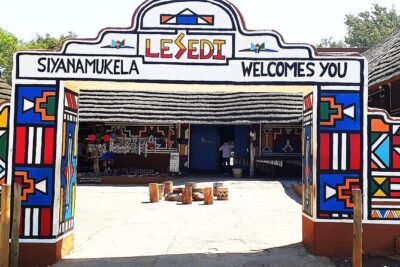

Durban City & PheZulu Cultural Village Day Tour from Durban
Read our review →
Phezulu Cultural Village & Reptile Park Day Tour from Durban
Read our review →
Lesedi Cultural Village & cradle of Humankind Guided Tour
Read our review →Browse the lists this tour appears in