
Reviewed · CITY TOURS
Durban City Sightseeing Tour
Durban’s story is written in several cultures. Zulu traditions, British colonial rule, and the arrival of Indian workers in the 19th century all helped shape the city you see today. This tour brings those threads together while taking you from the Golden Mile beachfront to markets, museums, gardens, and a football stadium with a famous view.
I like the way the tour connects history with everyday life, especially through the African and Indian market at Warwick Triangle and the chance to learn how Indian influence shaped Durban’s food. I also like the small group size, capped at eight, and the hotel pickup, which makes a short visit easy to manage.
The main drawback is time. Three hours gives you a useful introduction, but stops are brief, the Phansi Museum admission costs extra, and the cable car at Moses Mabhida Stadium is also at your own expense. The museum is closed on weekends, so weekday planning matters.
Key Points Before You Book
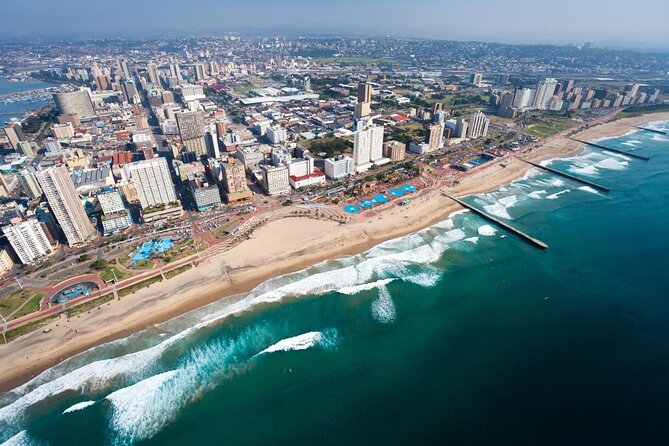
- Durban’s Golden Mile gives you a quick look at the city’s beachfront life, hotels, shops, restaurants, and long public promenade.
- The Phansi Museum presents Zulu jewelry, beadwork, ceramics, headrests, clay pots, and other Southern African artifacts, but admission is not included.
- Durban Botanic Gardens, founded in 1849, feature large trees from Africa, Asia, and the Americas, plus an orchid house.
- Warwick Triangle adds an African and Indian market visit, an important part of understanding Durban’s daily culture.
- Moses Mabhida Stadium’s cable car can add a strong city view, but you pay separately and should allow for the extra time.
- Pickup, drop-off, and a maximum of eight people make this a practical choice for a first look at Durban.
Why This Short Durban Tour Works
At $52.59 per person, this is not the cheapest way to pass through Durban, but it is a reasonable price if you want transport, a guide, and several city sights handled in one morning. You are paying for a compact route rather than a long museum visit or a full food tour.
The value is strongest for a first visit. You get a broad sense of Durban instead of seeing only the waterfront. The guide helps explain why the city feels different from a purely colonial port city, and the route includes places that show both formal history and ordinary urban life.
The group limit of eight is another plus. A small vehicle can usually spend less time gathering people and more time moving between stops. It also gives you a better chance to ask about Durban’s food, religious traditions, markets, and neighborhoods.
The tour begins at 9:00 am, with pickup offered from selected central Durban hotels. The listed meeting point is the Hilton Durban at 12-14 Walnut Road, and the activity ends back there. If you are staying elsewhere, confirm pickup before booking rather than assuming every hotel is covered.
A few more Durban days worth comparing
- Durban: 30-Minute Harbor Boat Cruise
★ 4.7 · 665 reviews - Durban: 1-Hour Boat Cruise from Wilson’s Wharf
★ 4.7 · 496 reviews - Durban Point Waterfront: Luxury Canal Boat Cruise
★ 4.4 · 298 reviews
Starting Along Durban’s Golden Mile
The Golden Mile is the natural opening scene for a city tour. This popular stretch of beachfront is lined with hotels, restaurants, and shops, with a promenade that gives you a sense of how strongly Durban faces the Indian Ocean.
Your guide may point out traditional healers collecting seawater in bottles at the water’s edge. You might also see Indian women in saris walking along the beach. These details matter because they show Durban as a lived-in city, not just a resort strip.
The beachfront stop is not a long guided walk. Think of it as a moving introduction and a chance to observe the city’s public life. If you want a slow beach stroll, time for photographs, or a swim, this tour will not leave much room for those extras.
Still, the Golden Mile works well early in the morning. It gives you a quick visual sense of Durban before the route turns toward civic buildings, museums, gardens, and markets.
Durban City Hall and the Colonial Chapter
The drive past Durban City Hall adds a formal layer to the morning. Built during the colonial period, the building opens a conversation about how British settlers shaped the city’s institutions and public spaces.
The guide’s role is important here. Rather than simply pointing out a grand building, the commentary includes amusing stories about City Hall and its past. This is one of the places where a good guide can turn a passing view into something you remember.
Do not expect a long architectural tour. City Hall is a drive-by part of the route, so the value lies in the explanation and the connection to Durban’s broader past. You see how civic power was displayed, then move on to places that represent African and Indian life more directly.
That balance is useful. Durban’s story is not reduced to colonial buildings, nor is colonial history ignored. You receive a short, joined-up account of the forces that helped form the modern city.
Inside the Phansi Museum
The Phansi Museum is the most focused cultural stop on the route. Its collection includes Southern African artifacts and traditions, with displays of Zulu jewelry, beadwork, headrests, clay pots, ceramics, and other objects.
You have about 30 minutes here. That is enough to see a selection of the collection and ask questions, but not enough for a slow examination of every display. If you enjoy museums, you may wish the stop were longer. If museums can feel tiring during a packed city tour, the short visit keeps the morning moving.
Admission is not included, so you should budget for the extra charge. There is also an important scheduling point: the Phansi Museum is closed on weekends. A weekday booking is essential if this stop is a priority.
The museum adds something the waterfront cannot. At the Golden Mile, you see modern Durban in motion. At Phansi, you encounter objects tied to Southern African craft, identity, and custom. The guide accompanies you through the museum, which helps place the objects in context rather than leaving you to guess at their meaning.
A different side of Durban altogether:
- Durban: Pontoon Boat Harbor Cruise
★ 4.4 · 182 reviews - Durban: Gondola Ride
★ 4.8 · 159 reviews - From Durban: Half-Day Safari Tour
★ 4.1 · 141 reviews - Luxury Canal Boat Cruise – Fun Things Durban Ushaka
★ 4.5 · 125 reviews
Durban Botanic Gardens, Founded in 1849
The Botanic Gardens offer a welcome change of pace. Founded in 1849, they contain large trees from Africa, Asia, and the Americas, along with a notable orchid house.
The stop lasts about 20 minutes, and admission is included. That makes it an easy part of the tour, with no extra ticket to arrange. You will not have time to cover the entire garden, but the brief visit gives you a taste of one of Durban’s oldest public green spaces.
I like this stop because it shows another side of the city’s past. Durban’s history is not only about people, buildings, and trade. Plant collections also reflect the movement of species across continents during the colonial period and beyond.
You should treat the gardens as a short orientation rather than a full botanical visit. If you have a strong interest in orchids or tropical plants, plan a separate visit with more time. On this tour, the garden works as a calm pause between the city’s cultural and market stops.
Warwick Triangle and Durban’s Indian Influence
The visit to the African and Indian market at Warwick Triangle is one of the most useful parts of the experience. This is where the tour moves beyond landmarks and shows you a piece of Durban’s commercial life.
The stop helps explain the influence of Indian immigrants who came to South Africa as indentured servants during the 19th century. That influence can be seen in food, trade, and the mix of cultures that gives Durban its particular character.
The tour also introduces bunny chow, one of South Africa’s best-known Durban dishes. It is a hollowed-out loaf of bread filled with curry. Food and drinks are not included, so check with your guide about what you can buy or sample during the outing. Do not assume the meal is part of the $52.59 price.
Some people find markets more memorable than monuments because they show how a city works day to day. Warwick Triangle provides that kind of contact. At the same time, markets can feel busy or overwhelming if you prefer quiet sightseeing. The guide’s presence helps you understand what you are seeing and keeps the visit tied to the history lesson.
Moses Mabhida Stadium and the Optional Cable Car
Moses Mabhida Stadium is the tour’s high point, both literally and visually. The route includes the chance to take a cable car to the top, where you can look across Durban from above.
The cable car costs extra. It is also an optional add-on, so the total price rises if you choose it. Before booking, decide if the view is worth the added cost for you. If you enjoy seeing a city from above, this can be the most memorable photograph of the morning. If you prefer museums and markets, you may be happy to skip it.
The stadium stop also gives the tour a modern landmark to balance the older City Hall and the 19th-century Botanic Gardens. That mixture keeps the itinerary from feeling like a string of historic buildings.
Because the overall tour lasts only about three hours, ask how much time remains if you want the cable car ride. The experience description includes it, but the supplied schedule does not give a precise cable car duration. A short tour can feel rushed if every optional stop is added without checking the clock.
Guides, Pace, and Group Size
The strongest part of this experience is the human element. The guide is expected to explain the city rather than simply drive between stops, and the feedback connected with the tour repeatedly praises friendly, informed guiding and good driving.
Names associated with the guiding service include Wendy, Thompson, Togo, Leon, and Paul. Togo is identified as a Zulu guide, while Leon and Paul are noted for making the outing interesting and informative. You may not receive one of these specific guides, but their work gives you an idea of the personal approach available.
The small group limit of eight should help keep the pace manageable. It also matters if you become unwell or need a little extra assistance. One person specifically received considerate help after becoming ill during the outing, a useful sign for anyone who worries about managing a busy morning.
This is still a short group tour, so you should be ready to follow the planned route. It is not designed for long independent wandering at each stop. You will get the most from it if you value clear explanations and a well-organized introduction over complete freedom.
What the $52.59 Price Covers
The price includes hotel pickup and drop-off, a professional guide, the planned sightseeing route, the Botanic Gardens admission, and the African and Indian market visit. Those inclusions make the price easier to justify than a simple drive around town.
You should keep money aside for the Phansi Museum admission, food, drinks, and the Moses Mabhida cable car. Bunny chow is part of the food discussion and may be available to sample, but it is not included in the tour price.
The tour is most valuable when you have limited time in Durban. You would spend more effort arranging separate transport to the gardens, museum, market, beachfront, and stadium. Here, the route is joined together and guided.
If you already have a rental car and prefer to set your own pace, the value is less clear. You could spend much longer at the museum or gardens on your own. The trade-off is that you would need to organize parking, directions, and your own historical context.
Who Should Book This Experience
I would choose this tour for a first visit to Durban, especially if you have only a morning or are arriving with limited plans. It suits you if you want the major city sights, cultural background, and a guide who can explain the connections between them.
It is also a good fit for couples, families, and small groups who prefer a vehicle-based route. Most people can participate, and children up to age three must use a car seat. Car seats are subject to availability, so parents may bring their own.
You should look elsewhere if your main goal is a long beach visit, an extended museum session, or a full meal-centered outing. The tour offers samples of several parts of Durban, but it does not spend half a day in any one place.
The experience provider follows South African government-approved TBCSA health and safety protocols. If you show COVID-19 symptoms, testing and quarantine costs are your responsibility, so suitable travel insurance is sensible.
Practical Booking Advice for Weekdays
Book this on a weekday if you want to enter the Phansi Museum. The museum is closed to visitors on weekends, and the tour may need confirmation within 48 hours, subject to availability.
At least two people are required for the tour to operate. The maximum is eight, which keeps the experience smaller than a standard coach excursion but does not guarantee a private tour.
The activity is non-refundable and cannot be changed for any reason. Check your date, hotel, group size, and interest in the extra-cost stops before paying.
Should You Book the Durban City Tour?
Book it if you want a concise, well-guided introduction to Durban that joins the Golden Mile, Zulu and Southern African culture, Indian influence, gardens, markets, and a modern stadium. The friendly guiding, strong city overview, and small group format are the main reasons to choose it.
Skip it if you need a slow, flexible day or want every admission and meal included. For most first-time visitors with only a few hours, $52.59 is fair value, provided you remember the extra costs and choose a weekday for the museum.
FAQ
How long does the Durban City Sightseeing Tour last?
The tour lasts approximately three hours.
What time does the tour begin?
The scheduled start time is 9:00 am.
Where does the tour start and finish?
The listed meeting point is the Hilton Durban at 12-14 Walnut Road, Durban Central. The activity ends back at the meeting point.
Is hotel pickup included?
Yes. Hotel pickup and drop-off are included from selected central Durban hotels. Confirm that your hotel is covered before booking.
How many people can join the tour?
The tour has a maximum group size of eight people. A minimum of two people is required for it to operate.
Is admission to the Phansi Museum included?
No. Admission to the Phansi Museum is not included.
Is the Phansi Museum open on weekends?
No. The Phansi Museum is closed to visitors on weekends, so book a weekday if you want to visit it.
Is food included in the tour price?
No. Food and drinks are not included unless specifically stated. Bunny chow may be available to sample, but you should budget separately for it.
Does the Moses Mabhida Stadium cable car cost extra?
Yes. The cable car ride to the top of Moses Mabhida Stadium is at your own expense.
Just listed around Durban
- Zulu Cultural Experience: Zulu Village + Tribal Markets + Traditional Zulu Food★ 5.0 · 5 reviews
- Durban Shore Excursion: Valley of 1000 Hills and PheZulu Tour★ 5.0 · 5 reviews
- From Durban: Wildlife Lovers Big 5 Safari at 2 Game Reserves★ 5.0 · 5 reviews
- Sani Pass and Lesotho Full Day 4 x 4 Tour From Durban★ 4.5 · 5 reviews
- Full Day Isimangaliso Wetlands Park -Croc & Hippo &Game Fr Durban★ 4.5 · 6 reviews
- Sani Pass 4 x 4 Tour and Lesotho Full Day Tour From Durban★ 5.0 · 6 reviews
- Hluhluwe Safari & Emdoneni Wild Cat Project Day Tour from Durban★ 5.0 · 6 reviews
- Drakensberg Kamberg Cave Art & Mandela Capture Site Day Tour★ 4.1 · 6 reviews
City Tours, compared.

Cape Town Hop-On Hop-Off City Tour with Optional Cruise
Read our review →

Johannesburg Hop-On Hop-Off City Tour with Soweto Option
Read our review →
Jo’berg in 1 Day: Soweto, Apartheid Museum & City Tour
Read our review →
Cape Town City Pass: Save Over 50% on 80+ Top Attractions
Read our review →
Hop-On Hop-Off Bus, City Tour and Apartheid Museum
Read our review →

From Sun City: Pilanesberg National Park 3-Hour Game Drive
Read our review →Browse the lists this tour appears in