Reviewed · CAPE TOWN TOURS
Catch your first waves in Cape Town
Catching your first wave often comes down to one small movement: getting from lying down to standing before the wave passes you by. This 90-minute Big Bay surf lesson focuses hard on that pop-up, then adds wave reading, paddling, safety, and steering so you can do more than simply stand up once.
I like the private group format, which keeps the lesson personal for a solo surfer, family, or group of friends. I also like that the instructor adjusts the coaching if you have surfed before, rather than forcing everyone through the same beginner routine. The main drawback is that you must arrange your own transport to Eden on the Bay, and weekend parking can take extra time.
Key points
- A pop-up lesson with a clear goal: Build the movement that helps beginners catch their first wave.
- Private coaching for one to six people: Ask for one-on-one instruction when booking alone.
- Big Bay meeting point: Meet on the grass in the Eden on the Bay parking lot, near KFC and the lifesaving club.
- Board and 4/3mm wetsuit included: You only need to bring your own towel, water, sunscreen, and dry clothes.
- Beginner-friendly but useful for returners: The instructor checks your current ability and gives you a next step.
- Year-round, sea-dependent surfing: Lessons run in all seasons but stop if the ocean is too rough or lightning makes conditions unsafe.
Why this Big Bay lesson focuses on the first wave
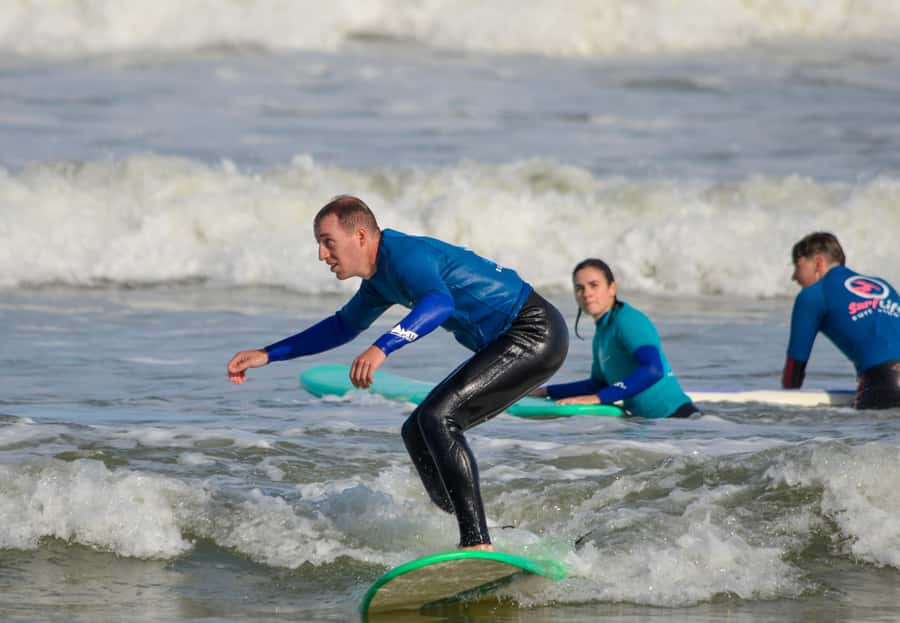
Surf Life Surf School’s Have a Go lesson is built around a common beginner problem: you can paddle, you can balance on the board, and you can see a wave coming, but you cannot quite get to your feet in time.
The lesson teaches a pop-up technique that has already helped many students catch their first wave. That gives the session a useful focus. Instead of treating surfing as a vague mix of balance and bravery, it breaks the task into actions you can practise.
You start with the surfboard itself. The instructor explains how to handle it on land and in the ocean, which matters more than it may sound. A board is long, awkward, and pushed around by waves. Knowing how to carry it, hold it, and move through the water helps you stay safer and use less effort.
From there, the coaching moves to the pop-up. You work on getting your hands, feet, and body into position quickly enough for a moving wave. The exact teaching sequence can vary with your ability and the sea, but the stated aim is clear: improve the movement that gets you standing.
That focus makes the lesson a good choice for a complete beginner who wants a practical first taste of surfing. It also suits someone who has taken a few lessons but still struggles to catch waves without help.
A few more Cape Town days worth comparing
- Wine Tour: Paarl, Franschhoek & Stellenbosch incl 3 wineries
★ 5.0 · 3,940 reviews - Cape Town: Hop-On Hop-Off Bus Tour with Optional Cruise
★ 4.8 · 3,929 reviews - Cape Town: Cape of Good Hope & Penguins Day Tour with Pickup
★ 4.7 · 3,362 reviews
Arriving at Eden on the Bay in Big Bay
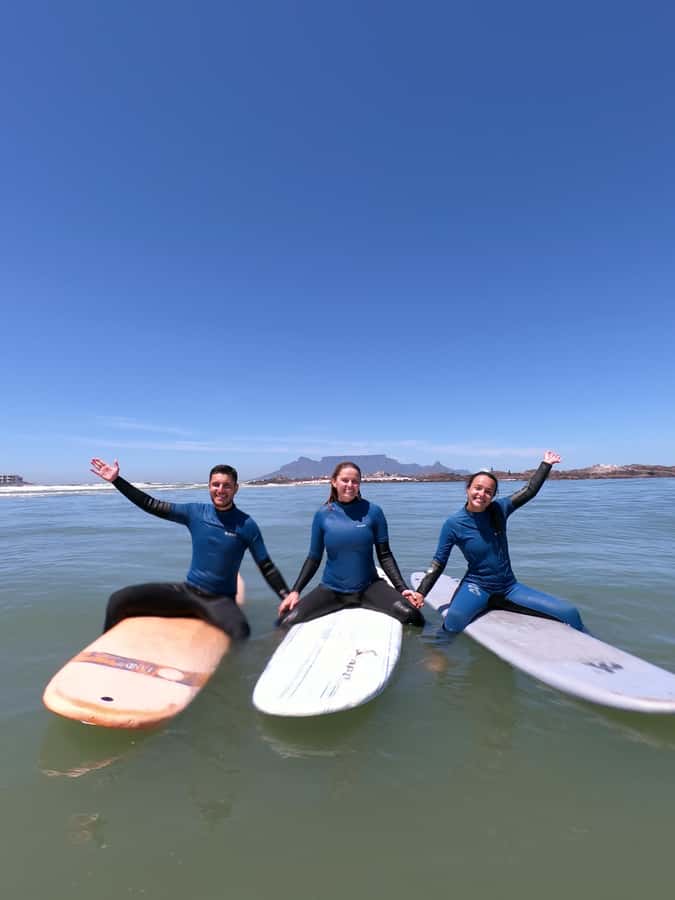
You meet the Surf Life Surf School team at the big parking lot on Hang Ten Drive, Eden on the Bay, in Big Bay. Look for the grass area in the parking lot, with KFC and the lifesaving club nearby, and keep an eye out for the Surf Life Surf School car.
Plan to arrive 15 minutes before the lesson. This is not just a polite suggestion. You need time to find the meeting area, complete the required indemnity form, and deal with parking before the beach work begins.
You are responsible for getting there. An Uber or rental car works, but allow roughly 35 to 45 minutes of travel time, depending on traffic. On weekends, the parking area fills quickly, and finding a space can take another 5 to 15 minutes.
That transport detail affects the real cost and timing of the activity. The advertised price is $52 per person, but your door-to-door outing will take longer than 90 minutes once you add the ride to Big Bay, parking, changing, and the trip back.
The meeting point is practical rather than fancy. You are close to the beach and shops, but you should not expect transport, meals, or a full beach facility package to be part of the lesson.
The first minutes: board handling and surf safety
Once you meet the instructor, the lesson begins with an overview of your board and basic handling. You learn how to manage it both outside and inside the water before the more active coaching begins.
This is a worthwhile part of the session for first-timers. Beginners often concentrate so hard on standing up that they forget the board can be a hazard to themselves or others. Simple handling rules help you enter the water with more control.
Surf safety is also part of the lesson. The activity does not promise a particular wave count or a guaranteed stand-up, since sea conditions change, but it does give you the basic tools for making sensible choices in the water.
If you are new to surfing, do not treat the safety briefing as filler. It helps you understand how to move through waves, how to keep hold of your equipment, and when conditions may be too much for your current skill.
The school cancels only when the ocean is too rough for surfing or when there is lightning. That means lessons can run throughout the year, but the final experience depends on the sea on the day.
Learning the pop-up that beginners need
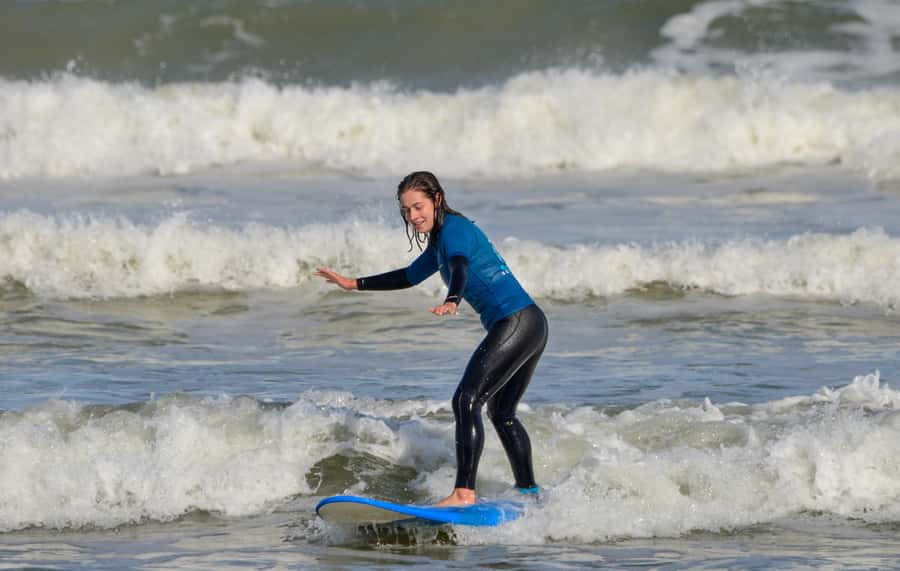
The central coaching point is the pop-up. You learn a method designed to help you move from lying on the board to standing in one quick, controlled action.
For a new surfer, this is the moment when many lessons either click or become frustrating. If you rise too slowly, the wave passes under you. If you place your feet poorly, the board wobbles. If you look down, you lose the direction of the ride.
The instructor works on the movement rather than simply telling you to stand. You can expect attention on body position and timing, with repeated attempts in the water. The aim is not a perfect surfing stance on the first try. It is a repeatable technique you can keep practising after the lesson.
If you have already taken a few lessons, the instructor assesses your current level at the start. That is useful because you may not need a full introduction to the board. Your coaching can instead focus on the part holding you back, such as timing, foot placement, or getting enough speed.
I particularly like this approach for mixed groups. A family or group of friends can book privately for up to six people, while a solo participant can request one-on-one coaching. That avoids the impersonal feel of a large class and gives the instructor more room to spot small problems.
A different side of Cape Town altogether:
- Zipline Cape Town – From Foot of Table Mountain Reserve
★ 5.0 · 3,179 reviews - Cape Town: Table Mountain Cable Car, Hop-On Hop-Off Bus Tour
★ 4.6 · 3,157 reviews - Cape Point and Boulder’s Penguins Full Day Tour
★ 5.0 · 3,118 reviews - From Cape Town: Cape Point & Boulders Beach Full-Day Tour
★ 4.8 · 3,032 reviews
Reading waves and choosing the right moment
Standing on a board is only half the job. You also need to know where and when to catch a wave.
The lesson explains how to read incoming waves and select a better moment to paddle. This can make surfing feel less random. Instead of chasing every swell, you begin to understand when a wave has enough shape and movement to carry you.
Wave reading is especially valuable for beginners because wasted paddling drains energy fast. If you start too early, you may spend effort for nothing. If you start too late, the wave has already passed its best point.
The sea will not behave like a lesson plan, so this part depends on the conditions at Big Bay. Still, learning the decision-making side of surfing gives you something useful beyond this one session. You can practise the same judgment the next time you rent a board or take another lesson.
The instruction also covers steering left and right on a wave. That gives you a first step beyond simply going straight toward the beach. Do not expect advanced turns in 90 minutes, but learning how to guide the board makes the ride feel more active and controlled.
Paddling without wasting your strength
The lesson includes ways to maximise your paddle energy and strengthen your technique. This is a practical focus, since beginners often tire before they have had enough chances to catch a wave.
Good paddling helps you get into position and match the wave’s speed. Poor paddling can leave you exhausted, especially while wearing a wetsuit and handling repeated attempts in the water.
The 4/3mm wetsuit keeps you warmer, but it can also feel restrictive at first. You should expect to work harder than you would while swimming. Bring warm clothing for after the session if you get cold easily, along with a dry set of swimwear.
A bottle of water is important because refreshments are not included. Bring sunscreen as well, ideally biodegradable sunscreen, since sun protection is your responsibility. A towel is also excluded, so pack one along with your dry clothes.
What the private format means for your group
The lesson is for a private group of up to six people. You can book alone, with the option of one-on-one coaching if you state that clearly when reserving, or bring family and friends for a private session.
That format is a real part of the value. At $52 per person, you are paying for instruction, equipment, and the chance to work with a coach in a small setting rather than simply hiring a board. For a first lesson, personal feedback can matter more than a longer period of unsupervised beach time.
It also works well for families, but note the age rules carefully. The stated minimum age is 8, while the activity information also says it is not suitable for children under 6. Parents must sign the indemnity form for anyone aged 18 or younger.
Non-paying spectators may watch from the beach but cannot take part. That is useful if a parent or friend wants to observe, but the surf time is reserved for booked participants.
The activity is offered in Afrikaans and English. Instructor names are not provided in the booking information, so you should not expect to request a named coach in advance.
Equipment, valuables, and what to bring
Your booking includes a surfboard and a 4/3mm wetsuit for the duration of the lesson. You do not need to arrange separate board hire, which makes the $52 price easier to assess.
Wear swimwear under the wetsuit. Bring:
- Towel
- Dry swimwear for changing afterward
- Reusable water bottle
- Sunscreen
- Warm clothes or a jacket if you get cold
- Personal emergency medication, such as an asthma pump or EpiPen
- Hair tie if you have long hair
- Cash or card for your own purchases
The broader packing guidance also includes a hat, sunglasses, beachwear, weather-appropriate clothing, a daypack, and a camera. A waterproof camera is the sensible choice near the water. You should not bring valuables unless you are willing to accept the risk.
There is an option to leave a phone, car keys, or small bags in the Surf Life vehicle. The school does not accept responsibility for loss or damage, so I would leave passports, large amounts of cash, and other important items at your accommodation.
Who should skip this surf lesson
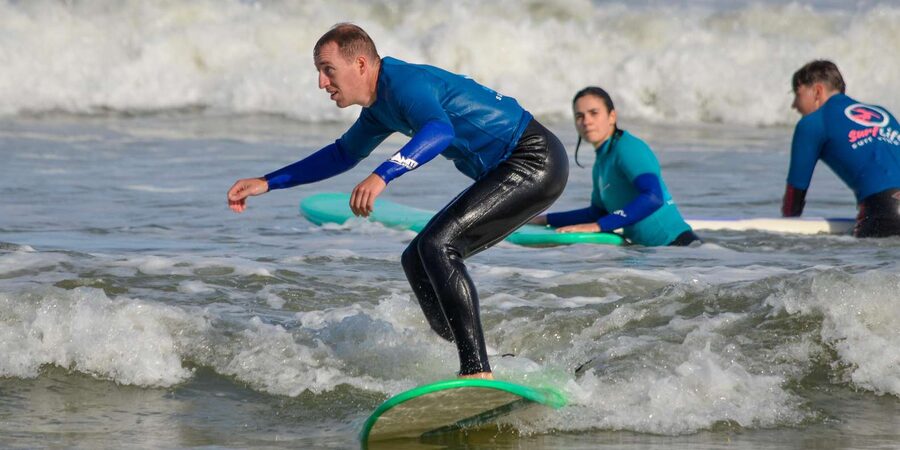
This is a beginner surf lesson, but it is not suitable for everyone. Non-swimmers should not book it. The activity also excludes people with back, heart, respiratory, or motion problems, as well as those with vertigo, high blood pressure, recent surgery, a cold, or a tendency toward seasickness.
Pregnant women should not take part. Alcohol and drugs are prohibited, and you must not arrive intoxicated. These rules are sensible for a water activity where balance, judgment, and physical control matter.
There is no stated fitness requirement, and no prior experience is needed. The maximum listed weight is 120 kg. The activity gives no minimum or maximum height restriction beyond the recorded minimum age of 8.
The sea remains the deciding factor. Even a strong swimmer may find rough conditions tiring, and a calm day may offer fewer useful waves. The lesson can be cancelled if the ocean is too rough or lightning is present.
Is $52 good value for 90 minutes?
At $52 per person, the price is reasonable if you want instruction rather than just beach access. You receive a qualified surf instructor, a board, and a wetsuit, with coaching on several parts of surfing in a private group.
The strongest value comes from the personal format. A solo surfer can request one-on-one attention, and a group of up to six can keep the lesson among friends or family. That is more useful for many beginners than joining a large class where the instructor has less time to correct each person.
The limitations are clear. Transport is not included, and neither are water, food, snacks, sunscreen, or a towel. You also need to factor in parking and travel time, especially on a weekend.
I would consider it good value for a first lesson if catching a wave is your main goal. If you only want to try standing on a board once and do not care about technique, a private lesson may cost more than a casual board rental, but you would also miss the instruction that helps you progress.
Should you book Have a Go at Big Bay?
Book it if you want a focused first surf lesson, value a private group, and are ready to put some work into paddling and the pop-up. It is especially suitable for a solo beginner requesting one-on-one coaching, families with children aged 8 or older, and friends who want to learn together.
I would also choose it if you have taken a few lessons but still cannot catch waves consistently. The initial skill check lets the instructor work on your weak point rather than repeat every basic explanation.
Think twice if you cannot swim, have any of the listed medical concerns, or want a fully packaged outing with transport and refreshments. Also allow plenty of time for the drive and parking at Eden on the Bay.
The clearest sign of the lesson’s appeal is the consistent praise for the instruction and the fun in the water. One participant caught waves and even saw a seal, while a family booked again after their children learned a great deal on their first attempt. Those details fit the experience’s main promise: a practical, friendly introduction that aims to get you moving, not just watching the surf.
FAQ
Where does the surf lesson meet?
Meet on the grass area in the big parking lot at Eden on the Bay, Hang Ten Drive, Big Bay, Bloubergstrand. The nearby landmarks are KFC and the lifesaving club. Look for the Surf Life Surf School car.
How long is the lesson?
The lesson lasts 90 minutes, or one hour and 30 minutes.
What is included in the price?
The price includes surf instruction from a qualified instructor, use of a surfboard, and use of a 4/3mm wetsuit during the lesson.
Is transport to Big Bay included?
No. You need to arrange your own transport by Uber or rental vehicle. Allow about 35 to 45 minutes for the journey, depending on traffic, and extra time for weekend parking.
Can I book private one-on-one coaching?
Yes. Solo participants who want one-on-one coaching should state this when booking. Private group bookings are also available for families and friends.
How many people can join one private group?
A private group can include up to six people.
Do I need previous surfing experience?
No. No previous experience is required. If you have taken lessons before, the instructor assesses your current ability and coaches you toward your next improvement.
What is the minimum age?
The stated minimum age is 8. Parents must sign the required indemnity form for participants aged 18 or younger.
What should I bring?
Bring swimwear, a towel, dry swimwear for afterward, water, sunscreen, warm clothes if you get cold, and any emergency medication. You may also bring weather-appropriate clothing, a hat, sunglasses, a daypack, and a camera.
Can I cancel if the weather changes?
You can cancel up to 24 hours in advance for a full refund. The lesson may also be cancelled if the ocean is too rough for surfing or if there is lightning.
Just listed around Cape Town
- Cape Town: Inspiring sustainable change through Street Art★ 4.9 · 5 reviews
- Cape Town Tandem Paragliding Square 1 Paragliding★ 5.0 · 5 reviews
- SandBoarding in Capetown + PhotoShoot★ 4.0 · 5 reviews
- Cape Town: Full-Day Private Peninsula Tour★ 3.6 · 5 reviews
- Private FULL DAY Tour: Cape of Good Hope & Boulders Beach★ 5.0 · 5 reviews
- Private Tour to Aquila Game Reserve in Cape Town – see the Big5★ 5.0 · 5 reviews
- Cape Town Full Day Family Fun With Kids Private Tour★ 4.0 · 5 reviews
- Peninsula Tour Cape Town★ 5.0 · 5 reviews
Cape Town Tours, compared.

Wine Tour: Paarl, Franschhoek & Stellenbosch incl 3 wineries
Read our review →
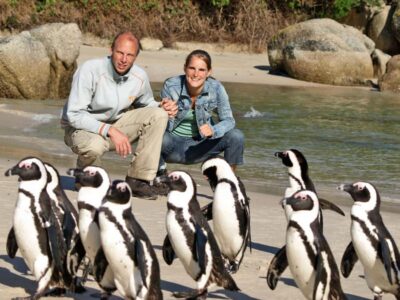
Cape of Good Hope & Penguins Day Tour with Pickup
Read our review →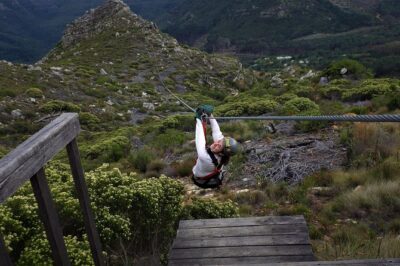
Zipline Cape Town – From Foot of Table Mountain Reserve
Read our review →
Table Mountain Cable Car, Hop-On Hop-Off Bus Tour
Read our review →
Cape Point and Boulder’s Penguins Full Day Tour
Read our review →