
Reviewed · CAPE TOWN TOURS
Cape Town: Woodstock Street Art & Culture Tour
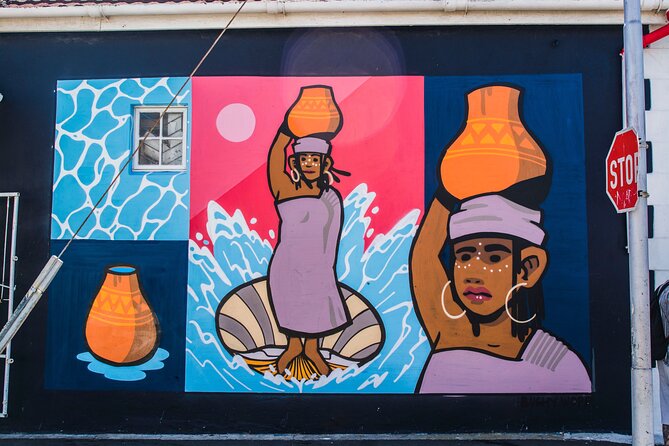
Cape Town’s best street art is not confined to a gallery. It covers walls in Woodstock and Salt River, where murals become a way to talk about identity, politics, money, and the changing face of South Africa. This two-hour walk takes you beyond quick photo stops and into the stories behind the paint.
I like the local angle, especially the fact that guides may know the area firsthand and can explain why a mural exists, not just who painted it. I also like the chance to meet artists themselves, along with the useful mix of art, local life, and social history.
The main thing to consider is that this is not only an art tour. Some of the walk focuses more on South African life and community issues than on painting techniques. Also, one departure began 30 minutes late because the meeting point was unclear, so check your booking details carefully.
Key points to know before booking

- Woodstock and Salt River on foot: Spend about two hours walking through two Cape Town neighborhoods that sit away from the city’s usual sightseeing circuit.
- Art with a purpose: Learn how murals connect to social, economic, and political issues in South Africa.
- Local guides: Guides named in past departures include Chandy, Shandy, Terrence, and Shipo, with some guides living in the area.
- Possible artist encounters: The tour may include meeting artists and learning about their methods and reasons for painting.
- Small enough for conversation, but not tiny: The maximum group size is 30 people.
- Flexible booking: The tour costs $38.65 per person and allows free cancellation up to 24 hours before the start time.
Why Woodstock street art is worth your time
If you have already seen Cape Town’s postcard sights, this walk gives you a different way to understand the city. Woodstock and Salt River are not presented as a polished outdoor museum. Instead, you see art in the streets where local people live and work, with the surrounding neighborhoods forming part of the story.
That setting matters. A mural can look striking in a photograph, but its meaning is easier to grasp when a guide explains the neighborhood, the artist, and the issue behind it. You may hear about economic pressure, social concerns, political change, and the hopes tied to the new South Africa.
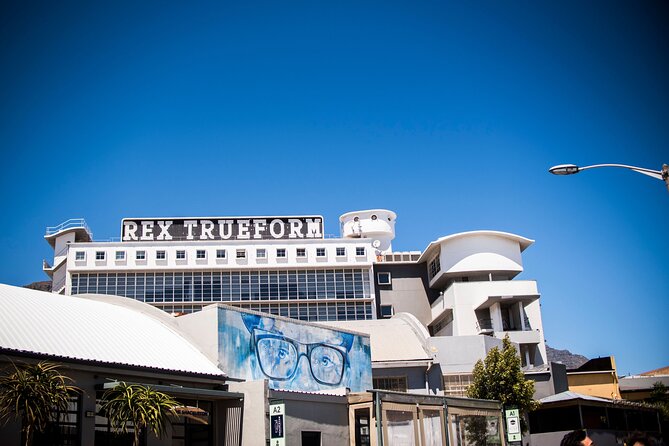
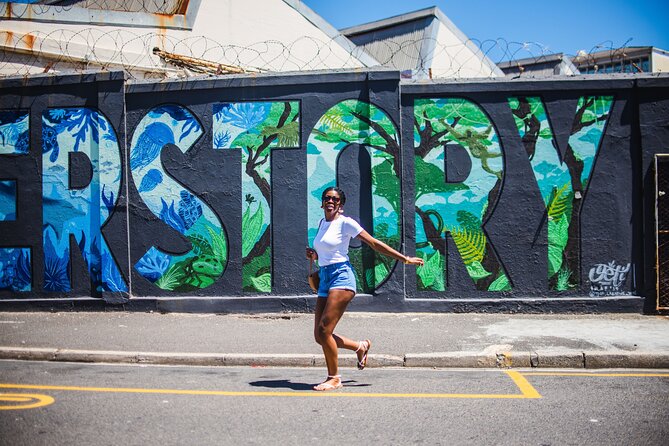
The art itself is varied. The tour covers colorful murals, techniques, individual artists, and the reasons certain walls were chosen. One area, Salt Circle, has several mural pieces connected in part with a festival or exhibition. This gives you a useful comparison between planned public art and work that feels more directly rooted in the streets.
I would not book this expecting a simple graffiti hunt. The focus is broader. You are looking at public art as a conversation between artists, residents, history, and visitors.
More street art walks in Cape Town:
- Cape Town: Street Art Walking Tour in Woodstock
★ 4.8 · 293 reviews - Cape Town Woodstock Street Art Walking Tour
★ 4.5 · 77 reviews - Cape Town: Inspiring sustainable change through Street Art
★ 4.9 · 5 reviews
Walking through Woodstock and Salt River

The route spends roughly two hours in Woodstock and Salt River. The available schedule does not list a series of named stops, so the exact order and number of murals can change. That is not necessarily a weakness. Street art changes, and a local guide can adjust the walk to the work that is most relevant on the day.
The first part of the experience is likely to set the scene. Your guide introduces the neighborhoods and explains how Cape Town’s creative scene fits into the city’s wider story. Rather than treating the art as decoration, the discussion connects it to social and economic questions facing the communities.
As you continue, you stop at individual works and talk through what you are seeing. Expect attention to the artists, their motivations, and the techniques used. A strong part of this format is the chance to ask questions. Several guides are described as patient and open to discussion, which suits a walking tour where the best moments often come from conversation.
Salt Circle is especially useful for seeing several works together. The concentration of mural art makes it easier to compare styles, colors, subjects, and methods. It also helps explain how organized festivals and exhibitions can shape public art, while other works grow from a more local impulse.
The walk is not presented as a fixed bus route or a stop-and-go sightseeing circuit. You explore at street level. That means you get a better sense of the neighborhoods, but it also means the experience depends on the guide’s route and the condition of the art at the time of your visit.
The stories behind the paint
The strongest part of this experience is the explanation behind each piece. A guide can point out an image, but the real value comes from telling you why it was painted and how it relates to the people who see it every day.
Guides named in the feedback include Chandy, Shandy, Terrence, and Shipo. Terrence is noted for encouraging questions and explaining both the artwork and the community. Chandy is described as thoughtful and reflective. Shipo is praised for explaining the background of the paintings. The names suggest that the exact tone may vary by departure, but the intended experience is clearly discussion-led rather than scripted in a hurried way.
You can expect the conversation to reach beyond art history. One version of the walk placed particular emphasis on what it is like to be a young person in South Africa today. Other discussions covered past and present political and social concerns in South Africa and around the world.
That broader focus is important when deciding if this tour suits you. If you want only a list of artists and dates, it may feel less focused than expected. If you want to understand how public art can change the way people see a neighborhood, it adds real value.
The tour also helps challenge the idea that street art is simply graffiti. Much of the work here is organized mural art, including pieces made for festivals and exhibitions. You still get the energy and freedom associated with street art, but the guide puts the work into a social setting.
Meeting artists and seeing the creative process

The experience includes the possibility of meeting some of the artists themselves. That is a strong feature, though it should be understood as a possibility rather than a guaranteed private meeting with a specific artist.
When available, an artist encounter can answer questions that a guide cannot. You may learn how a piece was planned, what materials or techniques were used, and what the artist hoped people would take from it. It also changes the mood of the tour. Instead of viewing a finished wall as an object, you connect it with the person who made it.
Even without meeting an artist, the guide’s local connections matter. The tour is designed around local people, local work, and local explanations. One guide is described as living in the area, which can add detail that is hard to get from a general city sightseeing tour.
I would keep your schedule slightly open around the two-hour estimate. The advertised duration is about two hours, but a conversation with an artist or a particularly interesting mural could affect the pace. The supplied information does not promise a set number of works, so the quality of the stops matters more than counting them.
A few more Cape Town days worth comparing
- Wine Tour: Paarl, Franschhoek & Stellenbosch incl 3 wineries
★ 5.0 · 3,940 reviews - Cape Town: Hop-On Hop-Off Bus Tour with Optional Cruise
★ 4.8 · 3,929 reviews - Cape Town: Cape of Good Hope & Penguins Day Tour with Pickup
★ 4.7 · 3,362 reviews - Zipline Cape Town – From Foot of Table Mountain Reserve
★ 5.0 · 3,179 reviews
What $38.65 buys you
At $38.65 per person, this is not the cheapest way to spend two hours in Cape Town. You are paying for a guided introduction to neighborhoods and art that you could partly see on your own.
The value comes from interpretation. Without a guide, you may notice colorful walls but miss the reasons behind them, the names of the artists, and the connection to South Africa’s social changes. The tour also saves you the work of planning a route through Woodstock and Salt River.
I see the price as fair if you are interested in public art, local culture, or Cape Town beyond its most famous sights. It is less compelling if you are mainly looking for a quick collection of photo backdrops. The walk is built around context, not just coverage.
The group can include up to 30 people. That is a reasonable limit for a walking tour, though a full group may make intimate conversation harder. Guides are reported to welcome questions, but you may need to speak up if the group reaches its maximum.
The mobile ticket keeps the booking simple. Confirmation is provided at booking, and free cancellation is available until 24 hours before the start time. After that deadline, the price is not refunded, and changes are not accepted.
Practical details for the walk
The tour takes place near public transportation, which is useful because Woodstock and Salt River are easy to add to a day of Cape Town sightseeing. The exact meeting point is important, however. One booking problem led to a 30-minute delay because the correct meeting place was not clearly provided.
I would check the final confirmation and map location before setting out. This is especially important if you are unfamiliar with the neighborhoods or have another appointment afterward. The tour is short, but a delayed start can use up much of your planned morning or afternoon.
Most people can participate, and service animals are allowed. The experience is a walking tour through urban streets, so you should be comfortable spending two hours on foot. The provided details do not specify the distance, pavement conditions, or restroom access, so ask the operator if any of those points are important for you.
The guide may be Chandy, Shandy, Terrence, Shipo, or another member of the team. Do not book expecting one named guide unless your confirmation specifically says so. What appears consistent is the local, conversational approach.
Who will enjoy this tour most
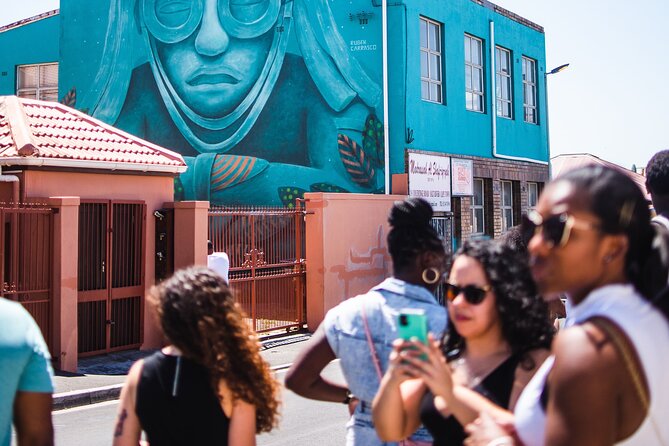
I would recommend it to you if you like art with a story. It suits travelers who want to understand how a neighborhood is changing, how artists respond to social questions, and how public murals affect the way people see a place.
It is also a good choice if you have already visited Cape Town’s major attractions and want a different side of the city. The route reaches neighborhoods that are not usually on a first-time sightseeing list, and the walk gives you direct contact with local streets rather than a distant view from a vehicle.
Photography fans should enjoy it, but the best photographs will come after you understand the work. Take time to listen before rushing to the next wall. The details about artists, motivations, and techniques can make your pictures more meaningful.
This may be less suitable if you dislike walking, need a tightly timed itinerary, or want a tour devoted only to art. The social and political discussions are a major part of the experience, not a side note.
Families and mixed-age groups may find the format approachable because it is short and discussion-based, though the maximum group size can affect how easily everyone participates. Since most people can take part, it has broad appeal, but individual mobility needs should be confirmed in advance.
The main strengths and limits
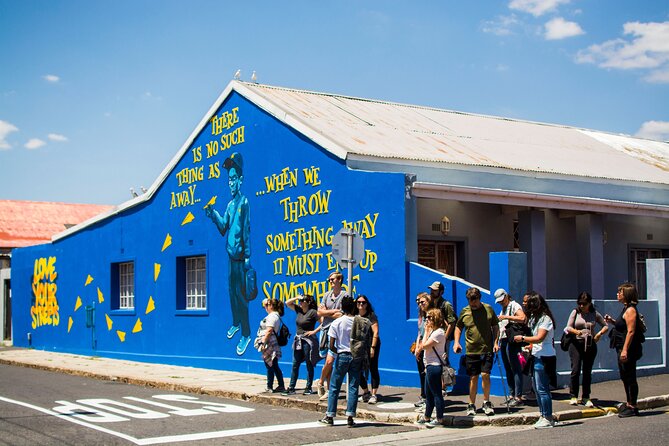
The tour’s clearest strength is the guide. The consistently warm descriptions of Chandy, Terrence, Shipo, Shandy, and other guides point to a style that is personal, patient, and willing to explain. That matters more here than a long printed list of mural locations.
The second strength is its subject. You are not simply looking at paint on a wall. You are considering why the work exists, how it reflects its community, and how Cape Town’s creative scene is changing.
The main limitation is the lack of a detailed fixed itinerary. You are not given a guaranteed list of murals, named artist meetings, or precise stops. For some people, that flexibility is part of the appeal. For others, it makes the $38.65 price harder to judge in advance.
The meeting point issue also deserves attention. A 30-minute delay is not typical information about every departure, but it is enough reason to confirm the location before you leave your accommodation.
Should you book the Woodstock Street Art and Culture Tour?
Book this two-hour walk if you want local stories behind public art, not just colorful photographs. The tour offers a useful look at Woodstock and Salt River, with discussion of artists, techniques, social issues, and South Africa’s changing creative scene.
At $38.65, it is worthwhile for curious visitors who value a guide’s explanation and a neighborhood perspective. I would skip it if you want a fast, tightly programmed attraction tour or have no interest in political and social discussion.
Check the meeting point, allow a little flexibility, and go ready to ask questions. If you do, this can be one of the more thoughtful ways to spend a short stretch of time in Cape Town.
FAQ
How long does the Cape Town street art tour last?
The walking tour lasts approximately two hours.
Which neighborhoods does the tour visit?
The experience takes place in Woodstock and Salt River.
How much does the tour cost?
The listed price is $38.65 per person.
Is the tour guided?
Yes. A guide leads the walk, explains the murals, discusses the artists and their methods, and talks about local social and economic issues.
Can I meet street artists during the tour?
The experience includes the opportunity to meet some of the artists themselves, but a meeting with a particular artist is not guaranteed.
How many people can join the tour?
The maximum group size is 30 participants.
Is the ticket available on a mobile device?
Yes. The experience includes a mobile ticket.
Is the tour close to public transportation?
Yes. The experience is described as being near public transportation.
Are service animals allowed?
Yes. Service animals are allowed.
Can most people participate?
The activity information states that most participants can take part.
Can I cancel for a full refund?
Yes. You can cancel up to 24 hours before the experience start time for a full refund. Cancellations or changes made less than 24 hours before the start time are not accepted and are not refunded.
Just listed around Cape Town
- Cape Town: Inspiring sustainable change through Street Art★ 4.9 · 5 reviews
- Cape Town Tandem Paragliding Square 1 Paragliding★ 5.0 · 5 reviews
- SandBoarding in Capetown + PhotoShoot★ 4.0 · 5 reviews
- Cape Town: Full-Day Private Peninsula Tour★ 3.6 · 5 reviews
- Private FULL DAY Tour: Cape of Good Hope & Boulders Beach★ 5.0 · 5 reviews
- Cape Town Full Day Family Fun With Kids Private Tour★ 4.0 · 5 reviews
- Private Tour to Aquila Game Reserve in Cape Town – see the Big5★ 5.0 · 5 reviews
- Peninsula Tour Cape Town★ 5.0 · 5 reviews
Cape Town Tours, compared.

Wine Tour: Paarl, Franschhoek & Stellenbosch incl 3 wineries
Read our review →

Cape of Good Hope & Penguins Day Tour with Pickup
Read our review →
Zipline Cape Town – From Foot of Table Mountain Reserve
Read our review →
Table Mountain Cable Car, Hop-On Hop-Off Bus Tour
Read our review →
Cape Point and Boulder’s Penguins Full Day Tour
Read our review →

Browse the lists this tour appears in