
Reviewed · KRUGER & PANORAMA TOURS
90-minute Elephant Watching Experience in Hoedspruit
The best part of this early start is the chance to meet two or three Jabulani elephant bulls at close range without stepping into their space. You learn how this unusual rescued herd formed, why elephants matter to the ecosystem, and how their carers help them live in a semi-wild setting.
I like the respectful low-partition setup, which gives you a clear view while keeping a sensible distance. I also like that your fee supports the Hoedspruit Elephant Rehabilitation and Development Trust, rather than paying only for a quick photo opportunity. The catch is practical: you must arrange your own transport, and the meeting point can be a fair distance from Hoedspruit or the reserve entrance.
Key points to know before booking
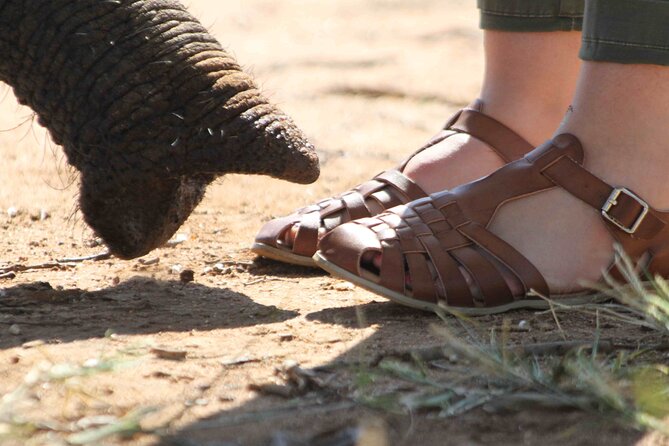
- Meet the Jabulani Herd at 6:30 a.m.: The 90-minute visit begins early at the herd stables in Kapama Private Game Reserve.
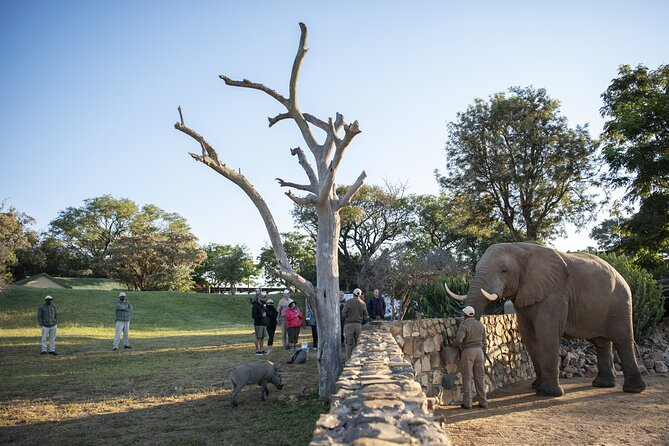
- See two or three elephant bulls: The elephants remain behind a low partition, allowing close observation without direct, unrestricted contact.
- Learn about rescue and family bonds: The herd includes orphaned elephants that accepted one another and continue to take in calves needing a family.
- Support HERD: Proceeds help care for the elephants through the Hoedspruit Elephant Rehabilitation and Development Trust.
- Keep transport in mind: Pickup is not listed, and one visitor had to arrange a ride from Hoedspruit Wildlife Estate.
- Expect a small group: Attendance is limited to 20 people, creating a more manageable setting than a large animal attraction.
Meeting the Jabulani Herd at 6:30 a.m.
This is not a game drive through Kruger National Park. You go directly to the Elephant Moments meeting point at the Jabulani herd stables, located at Kapama Private Game Reserve on the R40 near Hoedspruit.
The early hour matters. You arrive at 6:30 a.m., when the day is just getting going, and the elephants introduced during the visit will later join the rest of the herd to forage in the Kapama reserve. The experience lasts about 90 minutes, so it fits well into a morning that may include other Hoedspruit plans.
At arrival, complimentary coffee, tea, and biscuits are available. This is a small touch, but it helps when you are leaving your accommodation before breakfast. You can keep enjoying them until the experience ends.
The exact route and presentation can vary, but the central format is clear: you stay at the stables, meet a few members of the herd, and listen as the elephant carers explain their lives and individual personalities. The visit is less about covering ground and more about giving you time to pay attention.
A few more Kruger National Park days worth comparing
- Hazyview: Private Full-Day Guided Kruger Safari
★ 4.9 · 69 reviews - Hoedspruit to Johannesburg Transport Shuttle
★ 4.5 · 51 reviews - Full-Day Shared Kruger National Park Safari from Hoedspruit
★ 5.0 · 46 reviews
Why the Jabulani Herd matters
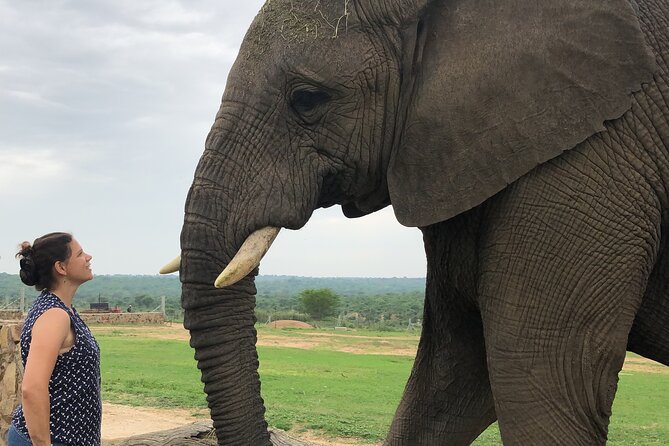
The Jabulani Herd has a difficult beginning. Its elephants were affected by the human-elephant conflict that continues to threaten elephants across parts of Africa. The herd’s story centers on rescue, survival, and the unusual family structure that developed among orphaned animals.
In wild herds, elephants are usually raised within close family groups. Here, orphaned elephants accepted one another as a new family, and the group continues to welcome calves that need protection and companionship. That makes the herd more than a collection of rescued animals. Its social bonds are a key part of what you are learning about.
The elephants live in a semi-wild environment rather than in a small enclosure. The herd browses, swims, and plays in the bush of Kapama Private Game Reserve, then returns to the stables for the parts of the day when they are introduced to people.
That setting gives you a useful point of comparison. You are not seeing an elephant in a cage, but you are also not pretending this is an encounter with an entirely wild herd. The animals have human carers and a long relationship with the people who look after them. The value of the visit comes from understanding that relationship, not from treating the elephants as props.
The low partition and respectful distance
The elephants you meet remain behind a low partition. This creates a boundary between you and the animals while still allowing a close view.
Some animal encounters push physical contact too hard. Here, the arrangement is more restrained. You can watch the elephants, listen to the carers, and appreciate their size and behavior without moving freely among them.
The setup also helps the elephants control the encounter. Two or three bulls are introduced, and they later rejoin the rest of the herd. The number of elephants is small enough for the carers to focus on each one, and the group limit of 20 people keeps the scene from becoming a noisy crowd.
You may be able to feed and interact with the elephants, depending on the activity flow that morning. The supplied experience details specifically describe visitors meeting and learning about the bulls behind the partition, while individual accounts describe feeding and close interaction. The exact contact offered should be confirmed when you book, since the animals’ welfare comes first and the format can change.
Learning the personalities behind the size
Elephants can seem alike at first glance. During this visit, the carers introduce individual animals and explain the differences in their stories and personalities.
That personal focus is one of the strongest reasons to choose this experience. You are not simply told that elephants are intelligent or social. You are given a chance to connect those broad ideas with particular animals in front of you.
The three elephants introduced may each respond in their own way. One may be more eager around food, another more watchful, and another more relaxed. The important point is not to expect a staged performance. The appeal lies in observing natural behavior within a carefully managed setting.
I would pay close attention to the explanations about how the elephants joined the Jabulani Herd. The story of orphaned calves accepting one another, and later welcoming new calves, gives the encounter an emotional weight without needing a dramatic show.
A different side of Kruger National Park altogether:
- Exclusive Sunset Game Drive Safari near Hoedspruit
★ 5.0 · 41 reviews - Exclusive Night Drive Safari near Hoedspruit
★ 5.0 · 35 reviews - Exclusive Morning Game Drive Safari near Hoedspruit
★ 5.0 · 35 reviews - Kruger Park – Full day – Private safari vehicle
★ 5.0 · 23 reviews
A closer look at elephant conservation
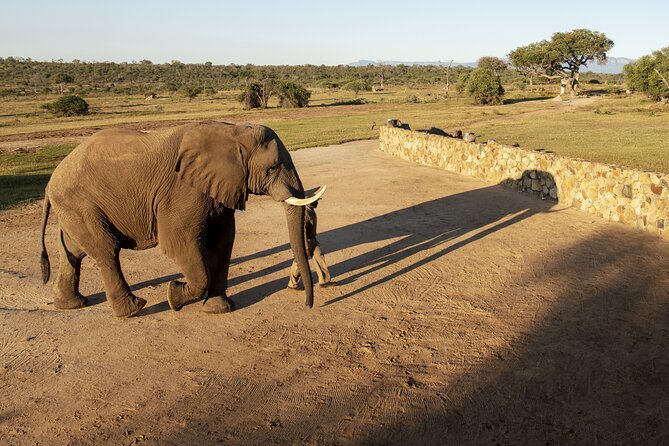
The term keystone species can sound like classroom language, but it has a simple meaning here. Elephants affect the places where they live. Their feeding and movement help shape the ecosystem, and their wellbeing has effects beyond the herd itself.
The experience connects that larger role with the local rescue work of HERD, or Hoedspruit Elephant Rehabilitation and Development. Your visit helps support the care of the Jabulani elephants, so the $76.19 price is not only paying for 90 minutes of instruction and access.
That does not make the fee automatically good value for every budget. You are not getting a full-day safari, a long drive through the reserve, or a broad wildlife itinerary. You are paying for a focused educational encounter and for a conservation organization’s ongoing work.
For someone already staying around Hoedspruit and interested in elephants, the price is easier to justify. For someone comparing it with a standard game drive, the experiences serve different purposes. A game drive offers variety and the chance of seeing several species. Elephant Moments gives you a longer look at a few known animals and a better understanding of their individual histories.
Transport is the main practical issue
You need to plan your route carefully. The starting point is Elephant Moments Jabulani at Kapama Private Game Reserve, R40, Hoedspruit, 1380, South Africa. The activity ends back at the same meeting point.
Transport to and from the experience is not included in the information provided. One person staying at Hoedspruit Wildlife Estate arranged a paid ride with help from their hosts. Another note points out that the site is some distance from the main gate, so do not assume you can simply arrive at the nearest entrance and walk in.
I would confirm the exact access route with your accommodation or the operator before the morning of the visit. This matters more than the short duration suggests. A 6:30 a.m. start leaves little room for a last-minute transport problem.
A mobile ticket is provided, and booking confirmation is issued at the time of reservation. The group can contain up to 20 people, which is a reasonable limit for an animal encounter but still large enough that your position may affect your view. Arrive with enough time to find the stables and settle in.
What to expect from the 90-minute schedule
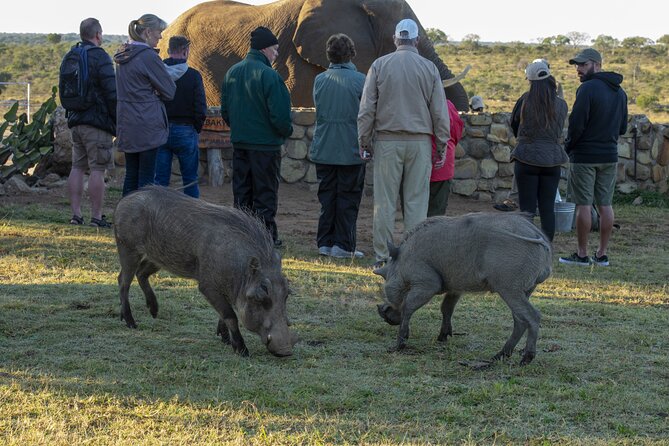
The visit is short, but it has a clear rhythm.
You arrive at the stables, get coffee or tea and biscuits, and meet the staff who care for the herd. The introduction sets the context for the encounter, including the elephants’ rescue stories and the work of HERD.
Next, two or three elephant bulls are brought into the area behind the low partition. This is the main part of the visit. You observe them at close range, learn about their individual traits, and may have an opportunity to feed or interact with them within the rules set by the carers.
The elephants then leave to continue foraging with the larger herd in Kapama. You finish at the same stables, with time to visit the gift shop if you wish. Souvenir sales support the HERD Trust, so this is one of the few optional purchases that has a clear connection to the animals you have just met.
Do not expect a long walk, a reserve drive, or a parade of different wildlife. The value is concentrated in the conversation, the close view, and the chance to understand how this particular herd lives.
Who will get the most from this experience
This is a strong choice for anyone with a special interest in elephants, animal welfare, or conservation. It also suits families and first-time safari visitors who want a direct lesson about one species rather than another general wildlife drive.
Photography can be part of the appeal, but the supplied details do not promise professional photo conditions or unlimited handling. I would bring a phone or camera if permitted, but make listening and watching your main goal.
The experience also suits visitors who appreciate a small, structured activity. With a maximum of 20 people and a fixed 90-minute format, you know roughly what you are signing up for. You are not committing to a full day in the bush.
It may not suit you if you want only wild sightings or if you dislike any form of managed animal encounter. The elephants live in a semi-wild setting and have regular contact with their carers. That is central to the experience, not a minor detail.
Weather, cancellation, and timing
The experience requires good weather. If poor conditions cause a cancellation, you are offered another date or a full refund.
You can cancel for a full refund up to 24 hours before the local start time. Changes or cancellations made less than 24 hours before the start are not accepted, and the amount paid is not refunded.
That 24-hour rule makes it wise to sort out your transport, accommodation, and morning schedule early. The activity is booked well ahead by many people, with an average booking lead time of 39 days, so popular dates may fill before your arrival.
The early start also means you should avoid scheduling a late night immediately before this visit. Coffee and biscuits help, but they do not replace rest. If you are planning a safari later the same day, leave enough time between activities for transport and a proper meal.
Is $76.19 a fair price?
At $76.19 per person, this is not a casual stop you add without thought. It is a dedicated elephant encounter with a conservation component, a small group limit, and a 90-minute program.
I see the value in three parts. First, you get time to focus on a few animals instead of hoping to spot elephants at a distance. Second, the carers explain the herd’s rescue and family story, giving the meeting real context. Third, your visit helps support HERD and the care of the Jabulani elephants.
The price is less appealing if you are mainly seeking a cheap photo opportunity. It is also less useful if your schedule already includes several animal encounters and you want more species variety.
For an elephant-focused morning near Hoedspruit, the cost is reasonable if the conservation work and personal stories matter to you. Add the cost of transport when calculating the full budget, since getting to the stables is your responsibility.
My call: book it if elephants are a priority
I would book this 90-minute experience if you want a thoughtful, close look at rescued elephants and are comfortable with a managed encounter. The most memorable element is not simply seeing a large animal nearby. It is learning how the Jabulani Herd formed a family and watching the bulls as individual animals.
Book it with realistic expectations. Arrange transport in advance, confirm the route to the stables, arrive early, and treat the partition as an important welfare measure rather than an obstacle. If you want a full safari, choose a game drive instead. If you want to understand elephants and support HERD in the process, this is a worthwhile Hoedspruit activity.
FAQ
Where does the Elephant Moments experience start?
It starts at Elephant Moments Jabulani, at the Kapama Private Game Reserve on the R40 in Hoedspruit, South Africa.
What time does the experience begin?
The start time is 6:30 a.m.
How long does the elephant visit last?
The experience lasts approximately 90 minutes.
How many elephants will I meet?
Between two and three elephant bulls are introduced during the visit.
How close can I get to the elephants?
The elephants remain behind a low partition, which creates a respectful distance between the animals and the people attending.
Is food or a drink included?
Complimentary coffee, tea, and biscuits are provided when you arrive and remain available until the experience ends.
Is transportation included?
Transportation is not stated as included. You should arrange your own way to and from the meeting point.
What happens after the elephants leave?
The elephants rejoin the rest of the Jabulani Herd and continue foraging in the Kapama Private Reserve. You return to the meeting point, where you may visit the gift shop.
How many people can join the activity?
The maximum group size is 20 people.
Can I cancel for a refund?
Yes. You can cancel at least 24 hours before the local start time for a full refund. Cancellations or changes made less than 24 hours before the start are not accepted. If poor weather cancels the experience, you are offered another date or a full refund.
Just listed around Kruger National Park
- Sunrise Game Drive in Big5 Reserve★ 5.0 · 6 reviews
- Overnight Trails Camp in Olifants River★ 5.0 · 6 reviews
- Kruger National Park Private Guided Tour★ 5.0 · 6 reviews
- Kruger National Park Full Day Safari Tour★ 5.0 · 6 reviews
- Boat & Safari Combo – Blyde Dam Boat Cruise & Private Safari★ 4.5 · 7 reviews
- Private Guided Panorama Full Day Tour★ 5.0 · 7 reviews
- Panoramic Tour of Drakensberg Mountain – Full day★ 5.0 · 8 reviews
- Kruger National Park: 3-Hour Walking Safari★ 3.0 · 8 reviews
Kruger & Panorama Tours, compared.
Kruger National Park sunrise Morning Private safari
Read our review →
Browse the lists this tour appears in