
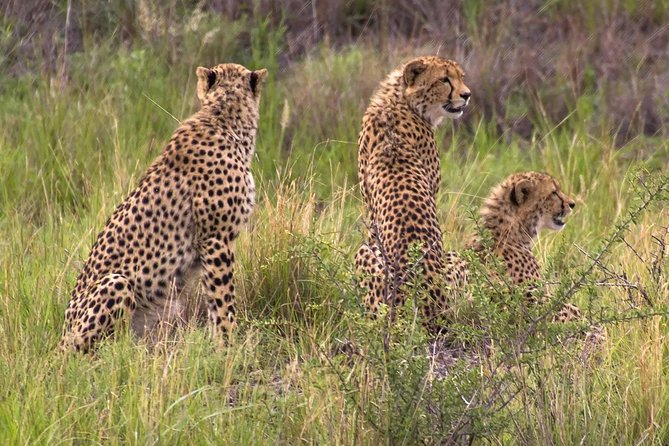
Reviewed · LION & BIG CAT ENCOUNTERS
Ann van Dyk Cheetah Centre
The Ann van Dyk Cheetah Centre gives you a close look at two threatened African species, cheetahs and African wild dogs, while showing why conservation is more than taking pretty pictures. The visit is built around education, research, and protection, not a flashy animal show.
I like the hotel pickup and drop-off from Johannesburg or Pretoria, especially if you do not want to sort out transport to Brits. I also like the chance to see cheetahs in spacious, bush-like surroundings and hear how the centre works to prevent extinction. The main caution is timing: the advertised outing lasts four to five hours, but one account describes the on-site portion as less than an hour, while another reports about two hours in a safari truck.
Key points to know
- Cheetahs and African wild dogs are the focus, with conservation, research, and public education at the heart of the visit.
- Pickup is available from hotels around Johannesburg or Pretoria, with an air-conditioned vehicle provided.
- Named guides have made a strong impression, including Ali, Steve, Samuel, Richard, Benale, and Mo.
- The experience is educational rather than polished for show, which suits visitors who want a working conservation centre.
- The listed price is $96.11 per person, including snacks, bottled water, transport, and a guide.
- The group is capped at 12 people, giving the outing a more personal feel than a large coach trip.
Why this cheetah centre matters
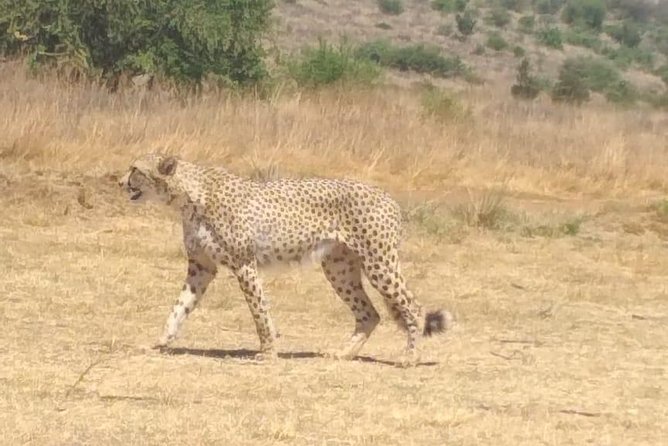
Cheetahs are famous for speed, but their future depends on far more than speed. The Ann van Dyk Cheetah Centre was created to help preserve cheetahs and African wild dogs, support scientific investigation into endangered species, and teach the public how to protect animals before their numbers fall further.
That mission gives the visit more weight than a simple animal attraction. You are not just looking at a cheetah behind a fence and moving on. You are being introduced to the work needed to keep threatened species alive, from research and breeding efforts to public awareness.
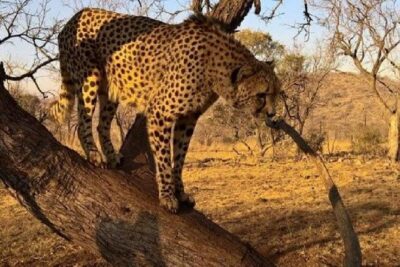
The centre also aims to give you a view of endangered animals in surroundings that feel more natural than a traditional city zoo. One account describes seeing cheetahs in an environment that could almost be mistaken for the bush. That setting matters because it helps you see the animals as wildlife, not as performers.
You should still keep your expectations sensible. This is not a guaranteed big-game safari, and you may not see every animal held at the centre. One disappointed visitor expected to see more of the reported cheetah population and encountered only four cheetahs, along with other animals. Animal sightings can vary, and the visit is guided by the centre’s conservation work rather than by a promise of constant action.
More lion and big cat encounters:
- Half Day Lion Park tour from Johannesburg or Pretoria
★ 5.0 · 274 reviews - Cradle of Humankind, Caves or Maropeng, Rhino and Lion Park
★ 5.0 · 74 reviews - Captivating Safari Lion Park Experience (Half Day Guided Tour)
★ 4.5 · 62 reviews
Leaving Johannesburg or Pretoria by air-conditioned vehicle
For many people, the best part of this booking begins before reaching the centre. Pickup and drop-off are offered from hotels around Johannesburg or Pretoria, and the tour uses an air-conditioned vehicle. That removes one of the day’s less enjoyable chores: arranging your own route to Brits.
The ride also gives your guide time to provide context about the cities and surrounding areas. Benale, for example, was praised for knowing a great deal about Johannesburg, Pretoria, and the townships. Steve was also singled out for sharing history and useful insights during the trip.
You are not booking a bare transfer. A qualified guide accompanies you throughout the outing, and several guides have been praised for making the drive feel safe and comfortable. That can be especially useful if you are visiting South Africa alone or want someone else to handle the road.
The group limit is 12 people. That is small enough to avoid the feel of a huge coach party, though the exact vehicle and pickup order are not specified. Allow some flexibility in your morning, since the total duration is approximate and includes transport as well as time at the centre.
Arriving at the Ann van Dyk Cheetah Centre in Brits
The centre is in Brits, outside Johannesburg and Pretoria, making it a practical half-day outing rather than a quick stop in the city. The main visit is listed as about four hours within an overall experience of roughly four to five hours, though the reports supplied for this tour describe different amounts of time on site.
That difference is worth taking seriously. One person describes less than an hour compared with the promised four hours, while another had about two hours on a truck tour and saw around 10 cheetahs close to the vehicle. These accounts may reflect different schedules, tour formats, or operating days, but you should confirm the current plan before booking if exact timing matters to you.
The centre’s appeal comes from seeing animals in a setting intended to support their care. You might see cheetahs moving, resting, or gathering near the vehicle. One particularly memorable detail from the visit is that cheetahs do not roar like lions. Their softer mio mio calls can make a close encounter feel surprisingly intimate.
A rare king cheetah may also be present. This unusual coat pattern was specifically noted as a highlight, but it should be treated as a lucky possibility, not a promised sighting.
What you learn about cheetah research and protection
Your guide explains the centre’s conservation efforts and the research carried out there. The aim is to help you understand the pressures facing endangered species, not simply to name the animals you see.
That educational element is one of the strongest reasons to choose a guided visit instead of arriving independently. A guide can connect the animals in front of you with the larger questions behind their survival. Why are cheetahs at risk? What does it take to maintain a viable population? How can public awareness support protection? The supplied information does not provide a full lecture outline, so the exact depth will depend on the guide and the day, but conservation is central to the experience.
The centre also works with African wild dogs, giving the visit more range than its name suggests. These animals are easy to overlook when cheetahs are the headline attraction, yet they are also part of the foundation’s work to improve the chance of endangered species avoiding extinction.
I would pay close attention during the explanations instead of treating the talk as background noise. The value here is not only the sighting. It is the chance to leave with a clearer idea of why these animals need protection and what a conservation centre can do.
A few more Johannesburg days worth comparing
- From Johannesburg: Pilanesberg Nature Reserve Game Safari
★ 4.8 · 1,327 reviews - Johannesburg: Hop-On Hop-Off Bus with Optional Soweto Tour
★ 4.6 · 985 reviews - Soweto /Johannesburg and Apartheid Museum Guided Full Day Tour
★ 5.0 · 932 reviews - Johannesburg Hop-On Hop-Off City Tour with Soweto Option
★ 4.5 · 768 reviews
Seeing cheetahs from close range
The strongest animal encounters appear to come from the centre’s truck-based viewing. One account describes two excellent hours on a truck tour, with around 10 cheetahs literally in front of the vehicle. Another person saw a cheetah run during the visit.
Those moments can be powerful because you are close enough to notice behavior, movement, and sound. You may see a cheetah at rest, watch one move across the enclosure, or catch a burst of speed. Still, this is a managed conservation setting, not open wilderness. The animals are cared for in an enclosed area, and the route and timing are controlled.
That distinction does not make the visit less worthwhile. It simply helps you compare it fairly with a national park safari. You are coming here for access, education, and conservation context. You are not coming for the uncertainty of searching a huge reserve for a distant animal.
Photography should be rewarding, but the exact viewing conditions are not provided. Keep your camera ready, listen to staff instructions, and avoid assuming that the closest animal will remain in one place. The experience may be most enjoyable when you watch behavior first and worry about photographs second.
African wild dogs and the wider animal collection
The centre’s work with African wild dogs adds an important second focus. These animals are social, distinctive, and also threatened, so seeing them helps widen the conversation beyond the familiar cheetah.
The precise number of wild dogs or the full list of animals on view is not specified. Accounts describe seeing cheetahs and wild dogs, as well as other animals and birds. You should think of the centre as a conservation facility with several species, not a place where every visit follows an identical animal checklist.
This is another reason to listen to your guide. The animal that first catches your eye may not be the one that best explains the centre’s work. The guide can help put each sighting into context and point out details you could miss on your own.
One account praised the healthy appearance of the animals and the centre’s refusal to sell them to private buyers. That point will matter to anyone who wants animal encounters to support care and conservation rather than private ownership or entertainment.
Guides who add value to the day
The quality of the guide can shape this experience as much as the cheetahs do. Ali was praised for being informative and helping make the whole day feel first class. Steve was described as a terrific guide with useful history and insights, while Samuel was credited with making the visit fun and explaining things well.
Richard received praise for his friendliness and broad knowledge, and Benale was noted for his communication and understanding of the cities and townships along the route. Mo was also mentioned in connection with a respectful guide-led visit.
These names do not guarantee who will be assigned to your booking. They do show what to look for: a guide who does more than drive, who can explain the centre, answer questions, and make the transfer part of the experience.
If you care about the human side of a tour, this is a good reason to book the guided option. You get a local companion for the day rather than a ticket and a map. The guide can also help the outing feel more comfortable if you are traveling alone.
What the $96.11 price includes
At $96.11 per person, this is not the cheapest way to see animals near Johannesburg. The value depends on how much you would otherwise spend on transport, planning, and a separate guide.
The price includes pickup and drop-off from hotels around Johannesburg or Pretoria, an air-conditioned vehicle, a qualified guide, snacks, and bottled water. Breakfast, lunch, alcohol, and soft drinks are not included. You will need to plan your meals around the half-day schedule, and you should not expect the supplied snacks to replace lunch.
For a solo visitor or anyone without a car, the package can make practical sense. You are paying for transport, coordination, and interpretation as well as entry to the centre. One account specifically considered the tour excellent value, while another felt the price was high for the amount of time spent on site. Both views are understandable.
The key question is how clearly your booking confirms the schedule. If you receive the full four to five-hour outing with substantial guided time, transport, and animal viewing, the price is easier to justify. If your visit turns into a short stop, value becomes harder to defend.
Who should book this outing
I would recommend this tour to animal lovers, first-time visitors to Johannesburg, solo visitors who want an organized day, and anyone interested in conservation rather than a purely photographic attraction.
Families may also appreciate the short travel format, provided children can listen during the educational sections and follow animal-care rules. The maximum group size of 12 should feel more manageable than a large bus tour.
This is less suitable if your top priority is a classic safari with many species, open roads, and unpredictable sightings. It is also not ideal if you need a tightly fixed schedule. The mixed reports about the duration mean you should ask for current details before paying.
Most travelers can participate, according to the supplied booking information. No special access limits are listed, but the experience includes vehicle transport and time at an animal centre, so you should raise any specific mobility concern with the provider before booking.
Booking, cancellation, and small practical details
Confirmation is provided when you book, and the tour accepts mobile tickets. Group discounts are available, which may improve the price for families or small parties.
Pickup and drop-off apply to hotels around Johannesburg or Pretoria. The information does not specify exact pickup times, so confirm your hotel address and schedule in advance.
Free cancellation is available up to 24 hours before the local start time for a full refund. Changes or cancellations made within 24 hours are not accepted for a refund.
Bring a phone or camera, but also bring patience. The centre’s purpose is conservation, and animal behavior cannot be arranged for your convenience. Snacks and bottled water are supplied, but breakfast, lunch, soda, and alcohol are not.
Should you book the Ann van Dyk Cheetah Centre?
Book it if you want a guided, convenient look at cheetahs and African wild dogs with a real conservation message behind the visit. The hotel transport, small group limit, air-conditioned vehicle, and strong guide feedback make it a sensible choice for a half-day from Johannesburg or Pretoria.
Before you commit, confirm how much time you will spend at the centre and whether the truck tour is part of your schedule. That single detail can decide if $96.11 feels like a fair package or too much for a short animal viewing.
If you accept that this is a working conservation centre rather than a traditional safari, you will likely appreciate its purpose. I would choose it for the education, the chance to see cheetahs at close range, and the opportunity to support work with endangered animals. I would not choose it if a guaranteed number of sightings or a full day in the bush is your main goal.
FAQ
Where is the Ann van Dyk Cheetah Centre?
The centre is in Brits, South Africa, and the tour operates from Johannesburg or Pretoria.
How long does the experience last?
The advertised duration is approximately four to five hours. The amount of time spent at the centre can vary, so confirm the current schedule before booking.
Is hotel pickup included?
Yes. Pickup and drop-off are offered from hotels around Johannesburg or Pretoria.
What transport is provided?
The tour includes an air-conditioned vehicle.
Is a guide included?
Yes. A qualified guide accompanies you throughout the trip.
What animals can you see?
The experience focuses on cheetahs and African wild dogs. Other animals and birds may also be seen.
Are snacks and drinks included?
Snacks and bottled water are included. Breakfast, lunch, alcohol, and soda are not included.
How many people can join the tour?
The maximum group size is 12 people.
Can I cancel for a full refund?
Yes. You can cancel at least 24 hours before the local start time for a full refund. Cancellations or changes made within 24 hours are not accepted for a refund.
Just listed around Johannesburg
- Constitutional Hill and Soweto 5 hours tour.★ 5.0 · 5 reviews
- 5 Day Kruger Glamping Safari and Panorama Tour★ 5.0 · 5 reviews
- Cradle of Humankind and Maropeng Day Tour from Johannesburg★ 4.0 · 5 reviews
- Johannesburg: Hot Air Balloon Flight★ 5.0 · 5 reviews
- Half Day Soweto and Apartheid Museum Guided Tour★ 5.0 · 5 reviews
- Lion park★ 4.5 · 5 reviews
- 5 Day Kruger National Park and Panorama Route Safari★ 4.5 · 5 reviews
- Pretoria Historical Tour★ 4.0 · 5 reviews
Lion & Big Cat Encounters, compared.
Half Day Lion Park tour from Johannesburg or Pretoria
Read our review →
Cheetah Outreach Tour Somerset West, Gordon’s Bay and Strand Beaches
Read our review →
Cradle of Humankind, Caves or Maropeng, Rhino and Lion Park
Read our review →
Captivating Safari Lion Park Experience (Half Day Guided Tour)
Read our review →
Browse the lists this tour appears in