Reviewed · CAPE TOWN TOURS
Cape Agulhas Full Day tour
Cape Agulhas is the big prize here: Africa’s southernmost point, where the warm Indian Ocean meets the colder Atlantic. Reaching it takes most of a day, but this private tour adds penguins, wine, whales, and two very different small towns along the way.
I like the variety. You can watch African penguins at Stoney Point in the morning and taste Pinot Noir or Chardonnay in the Hemel-en-Aarde valley soon after. I also like the private format, since guides such as Kevin, Rodney, Peter, and Joseph have adjusted the order of stops for weather and made room for extra photo pauses.
The main drawback is the distance. This is a 10 to 12-hour day, with a long return drive to Cape Town. If you want a relaxed wine day or a quick coastal outing, this is too ambitious. If you want to see a broad slice of the southern Cape in one shot, the mileage is the point.
Key points to know before you book
- Africa’s southernmost point: Cape Agulhas is about three hours southeast of Cape Town, with time to walk the shore and visit the lighthouse museum.
- Penguins without a separate excursion: Stoney Point in Betty’s Bay gives you around 40 minutes at a mainland African penguin colony.
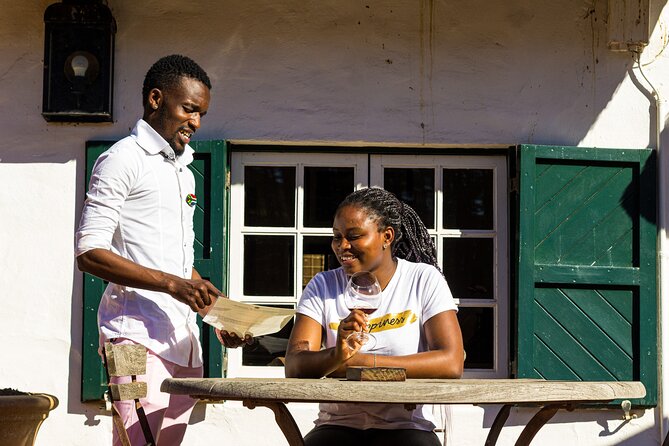
- Cool-climate wine: Hamilton Russell offers a 45-minute tasting focused on the Pinot Noir and Chardonnay styles suited to the sea-facing Hemel-en-Aarde valley.
- A private vehicle matters: Your group travels alone in an air-conditioned vehicle, allowing some flexibility when wind or rain changes the best order.
- Hermanus adds seasonal wildlife: From June through November, you may look for whales along the shore, then have lunch in town.
- Plan for extras: Lunch, snacks, and optional gratuities are not included in the $201.30 price.
Why Cape Agulhas makes this a full-day trip
Cape Point often gets more attention because it is closer to Cape Town. Cape Agulhas offers a different kind of satisfaction. It is the actual southernmost tip of the African continent, not simply the point that looks most dramatic on a map.
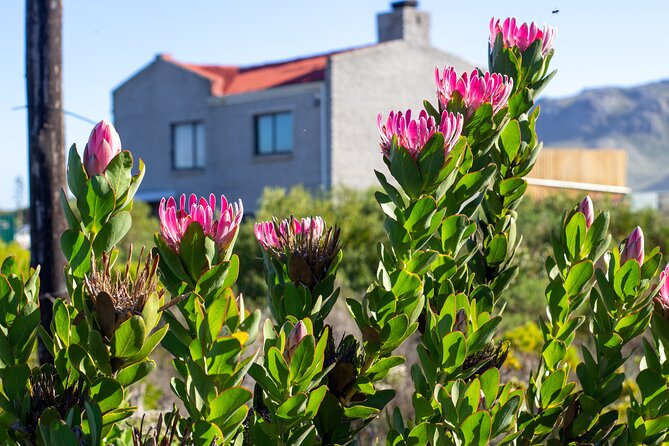
The setting is broad and exposed. Coastal plains lead toward a rugged shoreline, and the meeting point of the Indian and Atlantic oceans is marked by a stone monument. The area is also part of the Cape floral kingdom, with about 2,000 plant species recorded here and more than 100 found nowhere else.
You will not spend the whole day at the marker. The tour allows about two hours at Cape Agulhas, enough time to walk along the coast, see seabirds, visit the museum, and climb the lighthouse if it is open for your visit. The lighthouse is the second oldest in South Africa, and the view from its summit gives you a useful sense of the low town, shoreline, and open sea.
That two-hour stop is important. A rushed photo beside the monument would not justify the long drive. The chance to walk the coastal plains and take in the weather, birds, plants, and restless water gives the destination more weight.
More full day trips in Cape Town:
- Cape Point and Boulder’s Penguins Full Day Tour
★ 5.0 · 3,118 reviews - From Cape Town: Cape Point & Boulders Beach Full-Day Tour
★ 4.8 · 3,032 reviews - Cape of Good Hope & Boulder Penguins Full-Day Tour from Cape Town
★ 5.0 · 2,347 reviews
The long coastal road from Cape Town
Pickup begins at 7:00 a.m. at the Victoria & Alfred Hotel on the Pierhead at the V&A Waterfront. The early start helps fit five substantial stops into one day, though you should expect to return to the same meeting point late in the day.
The drive is part of the experience. The route follows the eastern side of the Cape peninsula and passes coastal views, mountains, farming country, and small settlements. Several accounts of the trip describe occasional coffee and photo pauses, but these are not listed as fixed stops, so treat them as possible extras rather than a promise.
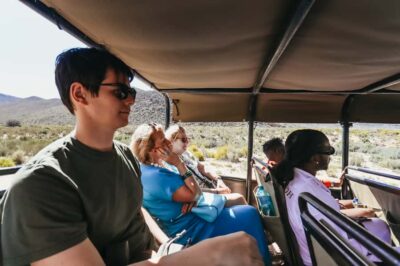
A private, air-conditioned vehicle is included, along with chilled bottled water. That makes a real difference on a day with so many hours on the road. The private setup also means you are not sharing the vehicle with unrelated passengers, and your guide can spend the day talking with your group rather than managing a large coach.
The distance still demands stamina. One account described a drive of nearly 300 miles there and back. Even in a comfortable vehicle, that is a lot of road time. Bring a phone charger, wear easy walking shoes, and keep a light jacket handy. The coast can be cold and windy even when Cape Town feels mild.
Betty’s Bay and the Stoney Point penguins
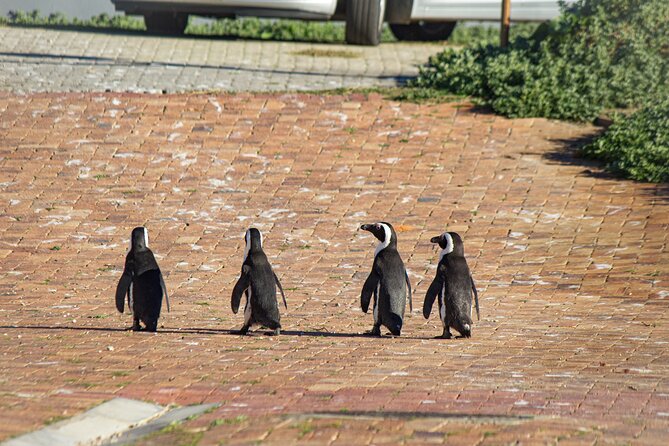
The first listed stop is Betty’s Bay, about an hour east of Cape Town. The town was once linked to whaling in the late 19th century, but today it is best known for the African penguin colony at Stoney Point.
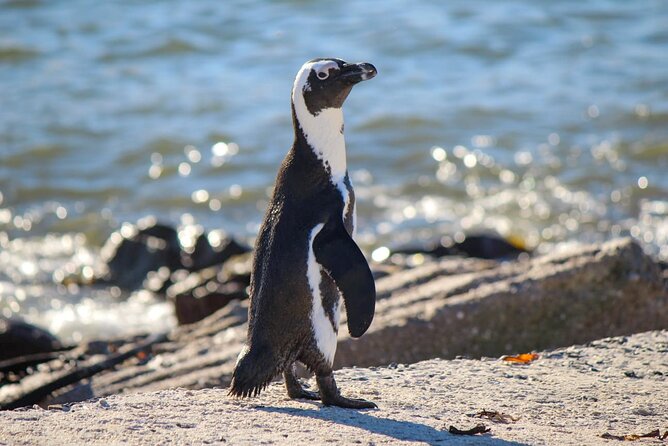
You get about 40 minutes here. A boardwalk and viewing area let you walk near the colony without entering the birds’ space. The penguins are the main attraction, and you may see them standing among the rocks, moving between the water and their nesting areas, or gathering in small groups.
Stoney Point is one of only two mainland African penguin colonies. That detail gives the stop more meaning than a quick wildlife photo. African penguins are a South African coastal symbol, and seeing them in a natural colony is a good early contrast to the built-up waterfront where the day begins.
Forty minutes is enough for a focused visit, but not for a long nature walk. If you want extended wildlife watching, this tour will feel brief. The advantage is that Stoney Point is one piece of a much larger day, not a separate half-day outing.
Rain and wind do not necessarily spoil the stop. The coastal weather can be rough, and one guide rearranged the order of the day during wet, windy conditions so the group could still see everything. That kind of flexibility is one of the strongest reasons to choose a private tour rather than a rigid group departure.
Hamilton Russell and the cool-climate Hemel-en-Aarde wines
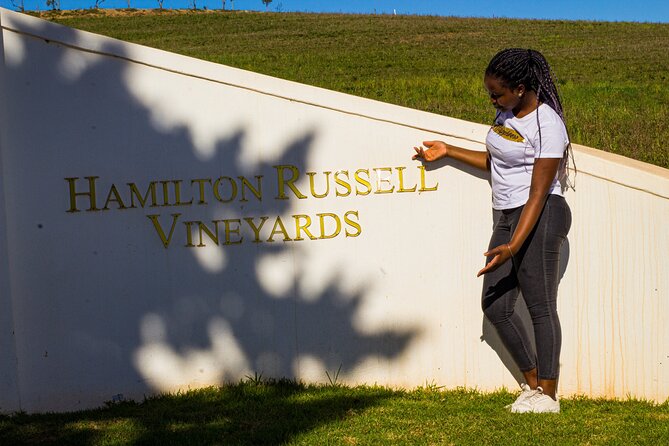
The wine stop at Hamilton Russell Vineyards lasts about 45 minutes. It takes place in the Hemel-en-Aarde region, a valley close to the sea and at a higher elevation than the better-known Cape Winelands around Stellenbosch and Franschhoek.
The climate shapes the wine. Sea air and cooler conditions suit grapes that produce crisp acidity, bright fruit, lighter body, and a restrained style. Hemel-en-Aarde is particularly associated with Pinot Noir and Chardonnay, so this stop gives you a taste of a wine region with its own character rather than repeating the fuller, warmer styles found elsewhere near Cape Town.
The tasting fee is included. That helps the $201.30 price make more sense, especially for a private vehicle and guide. You are not paying for transport alone, though the value depends on how much you care about wine. Someone who already has a full Winelands program planned may see this as an extra tasting squeezed into an already packed day.
The timing is also worth noting. Forty-five minutes allows for a proper introduction to the wines, but it is not a long estate visit with several leisurely tastings, a large meal, and hours on a terrace. Lunch is separate, and you should not expect the wine stop to replace it.
A few more Cape Town days worth comparing
- Wine Tour: Paarl, Franschhoek & Stellenbosch incl 3 wineries
★ 5.0 · 3,940 reviews - Cape Town: Hop-On Hop-Off Bus Tour with Optional Cruise
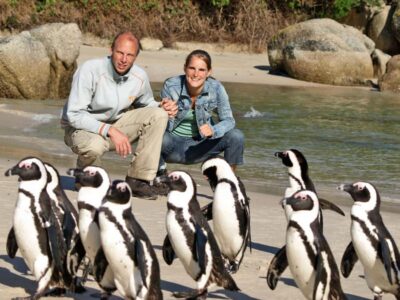
★ 4.8 · 3,929 reviews - Cape Town: Cape of Good Hope & Penguins Day Tour with Pickup
★ 4.7 · 3,362 reviews - Zipline Cape Town – From Foot of Table Mountain Reserve
★ 5.0 · 3,179 reviews
Hermanus for whales, lunch, and a change of pace
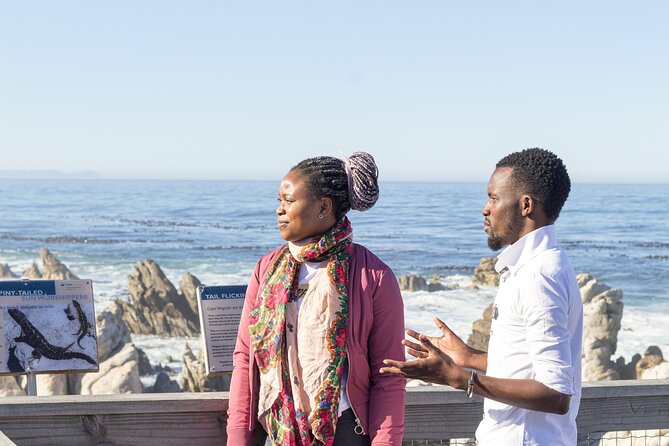
After the tasting, the route continues to Hermanus, a coastal town known as South Africa’s whale-watching capital. The stop lasts about 1 hour 30 minutes, and you have time for lunch, a walk along the shore, or a little shopping before heading southeast.
Whale watching is seasonal. The stated season runs from June through November, when whales may be seen from the shore along the whale trail. Sightings are never guaranteed, so think of this as a chance to look rather than a promised wildlife encounter. Bring patience and scan the water from the coastal paths.
Hermanus also gives the day a useful pause between wine country and Cape Agulhas. After an early start and two focused stops, you can sit down for a meal and enjoy the town at your own speed. Lunch is not included, so the cost and length of the meal depend on what you choose.
I like this stop because it keeps the tour from becoming a string of roadside viewpoints. Hermanus is presented as a real town with food, shops, and a coastal life of its own. The limit is time. An hour and a half must cover lunch and any whale watching, so a slow restaurant meal could leave little time outside.
Elim, a preserved Moravian village
The route to Cape Agulhas includes a 30-minute stop in Elim. German settlers established the village in 1824, and it became the third Moravian station near Cape Town.
Elim is small and visually distinctive. Whitewashed cottages with thatched roofs line the streets, and fig trees shade the lanes. The village church gives the layout a clear center, with the roads leading toward it. You can walk around, see the rose garden, and take in a quieter side of the Cape.
Half an hour is enough to stretch your legs and take photographs. It is not enough for an in-depth historical visit, and there is no claim of a long guided museum program here. That is fine. Elim works best as a short, calm interlude before the final approach to Cape Agulhas.
This is also where the private format can feel useful. A guide can explain the village’s Moravian background while you walk, and your group can move on when ready. The stop is simple, but it adds a human and architectural layer to a day otherwise focused on wildlife, wine, and the sea.
Cape Agulhas lighthouse and the meeting point of two oceans
The final major stop allows about two hours at Cape Agulhas. Start at the southernmost point, where the Atlantic and Indian oceans meet. The water may look like one continuous stretch, of course, but the location is meaningful because it marks the geographic division between the two ocean systems.
The shoreline is rugged and exposed. Wind can be strong, so pack a warm layer even during a sunny season. Wetland and coastal habitats support more than 21,000 wetland and seabirds of different kinds, and the area’s plant life is unusually varied.
The Cape Agulhas lighthouse is the other essential stop. It is the second oldest lighthouse in South Africa, and the museum at its base is included in the tour. If you climb to the summit, you get a bird’s-eye view over the town and coast. The climb may not suit everyone, but it gives the visit a stronger sense of place than the monument alone.
Two hours is a sensible amount of time here. You can take the required photograph, walk the shoreline, visit the museum, and allow time for the lighthouse. If the weather turns rough, the guide may adjust the order of earlier stops, but Cape Agulhas itself can still be cold and windy. This is not a polished seaside resort stop. Its appeal comes from the open coast and the feeling of being at the end of the continent.
What the guide adds to a private tour
The driver-guide is central to the experience because you spend so many hours together. Kevin is repeatedly described as friendly, safe, entertaining, and well informed about South African history. Rodney receives particularly strong praise for keeping conversation going during the long drive while remaining prompt and considerate.
Peter is noted for explaining history, wildlife, plants, and flowers, and Joseph is praised for sharing South African history and making additional stops when requested. The exact guide is not guaranteed, but these names give you a sense of the team attached to the experience.
The best part of the private format is not simply having more room. It is the chance to ask questions, slow down for a photograph, or change the order when rain and wind make one stop less appealing. The tour remains a long fixed day, but it is not the same as being moved from stop to stop on a large bus.
Guide quality matters even more here than on a short city tour. The drive covers coastal ecology, wine, local history, geography, and village life. A guide who can connect those subjects makes the road time feel useful rather than wasted.
Price, inclusions, and the real value
The listed price is $201.30 per person. For that amount, you receive a private air-conditioned vehicle, bottled water, Stoney Point entrance, the Hamilton Russell wine tasting, and Cape Agulhas museum admission.
The price is strongest for couples, families, and small groups who value privacy. Group discounts are offered, though the exact discount is not stated. Since the vehicle and guide are private, splitting the cost among several people can make the experience more attractive than booking separate transport and admissions.
Lunch and snacks are not included. You should budget for both, along with an optional gratuity. Wine purchases are also not listed as part of the tasting fee, so treat any bottles or additional purchases as extra.
I see this as a transport-and-guiding value rather than a low-cost sightseeing trip. You are paying to connect distant places in one day without renting a car or handling the long drive yourself. If you prefer to linger at one winery or spend a whole day in Hermanus, the price may feel less attractive. If you want penguins, wine, whales, Elim, and Cape Agulhas in a single private outing, the package covers a lot.
Who will enjoy this day most
I would choose this tour if you have limited time in Cape Town and want to see beyond the usual city and peninsula circuit. It suits people who like geography, coastal scenery, wildlife, local wine, and small historic communities.
Families may appreciate the mix of short stops, especially the penguins and lighthouse. Wine lovers should enjoy the Hemel-en-Aarde tasting, though the visit is brief. Anyone fascinated by maps and physical geography will get a special thrill from standing at Africa’s southernmost point.
I would hesitate if long drives wear you down, if you need a slow pace, or if Cape Agulhas is your only priority. In that case, a private overnight trip would allow more time in the south. This one is designed as a packed but carefully varied day.
Most people can participate, and the meeting point is near public transportation. Pickup is offered, but the stated start point is the Victoria & Alfred Hotel. Confirm the pickup arrangement when booking if you are staying elsewhere.
Cancellation is free up to 24 hours before the 7:00 a.m. start time. Within 24 hours, the payment is not refunded, and changes are not accepted.
Should you book the Cape Agulhas tour?
Book it if you want the southernmost point to be part of a larger Cape experience rather than a single long drive. The combination of Stoney Point penguins, cool-climate wine, seasonal whale watching, Elim, and the lighthouse gives the day real range.
Skip it if you want a lazy wine outing or dislike spending much of the day in a vehicle. The road is long, and the weather at Cape Agulhas can be cold and fierce. For the right person, though, that exposed coast is exactly the reward. Bring a jacket, leave room for lunch, and ask for a guide such as Kevin, Rodney, Peter, or Joseph if the operator can accommodate the request.
FAQ
How long does the Cape Agulhas tour last?
The tour lasts approximately 10 to 12 hours, including the return journey to Cape Town.
What time does the tour start?
The stated start time is 7:00 a.m.
Where does the tour begin and end?
It begins at the Victoria & Alfred Hotel on the Pierhead, Dock Road, at the Victoria & Alfred Waterfront in Cape Town. It ends back at the same meeting point.
Is this a private tour?
Yes. Only your group participates in the private activity.
Is hotel pickup available?
Pickup is offered, although the listed meeting point is the Victoria & Alfred Hotel. Confirm the exact pickup details when booking.
What is included in the price?
The price includes a private air-conditioned vehicle, chilled bottled water, Stoney Point entrance fees, the wine tasting fee, and Cape Agulhas museum fees.
Is lunch included?
No. Lunch and snacks are not included.
Can I see whales on the tour?
You can look for whales along Hermanus’s whale trail. The stated whale-watching season is June through November, but sightings are not guaranteed.
How much time is spent at Cape Agulhas?
The Cape Agulhas stop lasts about two hours. This gives you time to see the meeting point of the oceans, walk the coastal plains, visit the lighthouse, and explore the museum.
What is the cancellation policy?
You can cancel at least 24 hours before the start time for a full refund. Cancellations or changes made less than 24 hours before the start are not accepted, and no refund is provided.
Just listed around Cape Town
- Cape Town: Inspiring sustainable change through Street Art★ 4.9 · 5 reviews
- Cape Town Tandem Paragliding Square 1 Paragliding★ 5.0 · 5 reviews
- SandBoarding in Capetown + PhotoShoot★ 4.0 · 5 reviews
- Cape Town: Full-Day Private Peninsula Tour★ 3.6 · 5 reviews
- Private FULL DAY Tour: Cape of Good Hope & Boulders Beach★ 5.0 · 5 reviews
- Cape Town Full Day Family Fun With Kids Private Tour★ 4.0 · 5 reviews
- Private Tour to Aquila Game Reserve in Cape Town – see the Big5★ 5.0 · 5 reviews
- Peninsula Tour Cape Town★ 5.0 · 5 reviews
Cape Town Tours, compared.

Wine Tour: Paarl, Franschhoek & Stellenbosch incl 3 wineries
Read our review →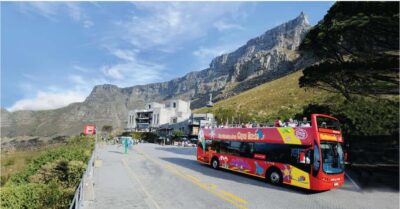
Cape of Good Hope & Penguins Day Tour with Pickup
Read our review →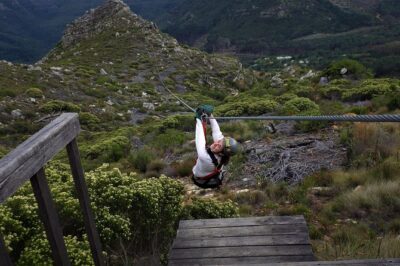
Zipline Cape Town – From Foot of Table Mountain Reserve
Read our review →
Table Mountain Cable Car, Hop-On Hop-Off Bus Tour
Read our review →
Cape Point and Boulder’s Penguins Full Day Tour
Read our review →