Reviewed · CAPE TOWN TOURS
Taste of Africa
Cape Town’s Taste of Africa is less a single restaurant meal than a guided tour through the country’s many food traditions. You may sample East African stew, Xhosa braai meat, and Cape Malay curry in one sitting, with pap, rice, chapati, beans, and fried greens filling out the table.
I like the chance to compare several regional styles without arranging separate meals, and I like the personal touch from guide Tingo, who handles pickup and helps you choose dishes. The private format also lets your group set the pace and ask questions freely.
The main caution is that the menu and route are not laid out with much precision. The experience lasts about four hours and begins at noon, but the food sequence, restaurant details, and any added market, beach, or high tea stops should be confirmed before you pay.
Key points at a glance
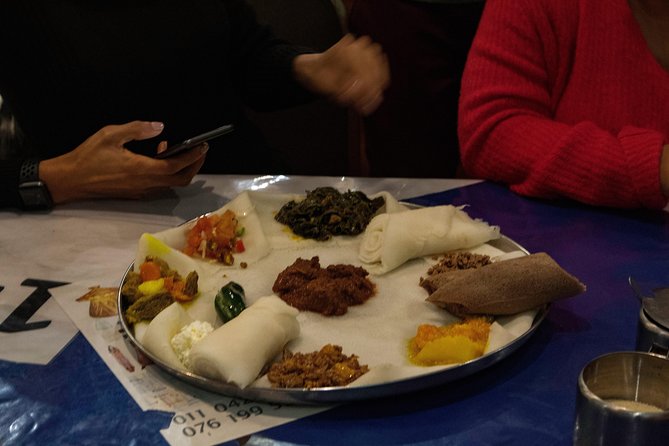
- Several African food traditions in one outing: Try dishes linked with East Africa, Xhosa cooking, and Cape Malay cuisine.
- A private tour with pickup: Only your group participates, which makes this easier for families, couples, and groups of friends.
- A hands-on choice of starches: Beef, fish, or braai dishes may come with pap, rice, or chapati.
- A warm guide-led experience: Tingo is praised for friendly service, local recommendations, photography, and cultural explanations.
- A four-hour midday plan: The 12:00 pm start fits neatly into a Cape Town day, though it takes a substantial block of time.
- Best for food-focused visitors: At $230.87 per person, the value rests on the private transport, guiding, and cultural context, not food alone.
What this Cape Town food tour is really about
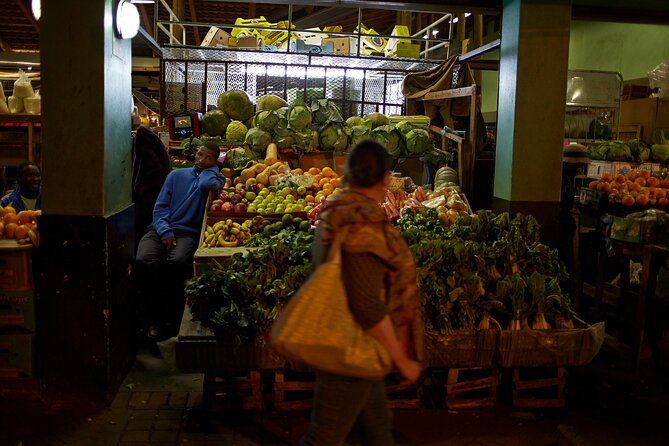
The central idea is simple: food offers a way into South Africa’s many communities. The phrase rainbow nation can sound like a slogan, but here it points to something you can actually taste. Different racial groups, regions, and tribes have shaped the country’s cooking, and the menu tries to put several of those influences on one table.
You are not signing up for a narrowly defined cooking class. There is no clear promise that you will prepare the food yourself, and the description focuses on eating, learning, and connecting with local culture. Think of it as a guided tasting meal with transportation and conversation rather than a formal culinary lesson.
I find that approach useful early in a Cape Town visit. A familiar sightseeing route can show you the city’s landmarks, but a meal gives you a more personal sense of daily life. The food also gives Tingo a natural way to explain how ingredients and cooking styles connect with different communities.
The private setup matters. Your group is not combined with strangers, so you can ask about unfamiliar foods, take your time with a dish, or tell the guide about dietary preferences before the meal begins. The listing says most people can participate, but it does not provide a detailed dietary or allergy policy, so ask directly about ingredients if that matters to you.
A few more Cape Town days worth comparing
- Wine Tour: Paarl, Franschhoek & Stellenbosch incl 3 wineries
★ 5.0 · 3,940 reviews - Cape Town: Hop-On Hop-Off Bus Tour with Optional Cruise
★ 4.8 · 3,929 reviews - Cape Town: Cape of Good Hope & Penguins Day Tour with Pickup
★ 4.7 · 3,362 reviews
Starting with chapati or mandasi at noon

The experience starts at 12:00 pm, making it a lunch-centered outing. The first item listed is chapati or mandasi, two useful introductions to the meal.
Chapati is a flatbread commonly eaten across parts of East Africa. Mandasi is a fried dough, often served as a snack or breakfast-style bread. Both are approachable choices if you are new to African cuisine, and both can help you understand how breads function alongside stews and curries.
This opening also sets the tone. You are not beginning with a tiny decorative bite that disappears in one mouthful. You are starting with food meant to be shared, handled, and eaten with the other dishes.
Because the experience is only about four hours, the timing is worth considering. You will likely want a light breakfast and plenty of room for lunch. The menu includes several substantial dishes, so this is not a quick tasting where you sample a few spoonfuls and move on.
Beef stew, pap, rice, and greens
The beef stew course comes with a choice of pap, rice, or chapati. Pap is a soft maize-based staple and an important part of many southern African meals. Its mild flavor makes it a good match for a strongly seasoned stew, while rice and chapati offer familiar alternatives.
The plate also includes sugar beans and fried kale or cabbage. Those sides are not just decoration. Beans add body and protein, while the greens bring a savory vegetable element to a meal that could otherwise feel heavy.
I like that you get a choice of starch rather than being locked into one serving style. If you want the most local-feeling combination, pap may be the one to try. If you prefer a more familiar texture, rice is the safe choice. Chapati gives you a bread-based option and may be especially appealing if you enjoyed the opening course.
The drawback is portion control. With beef, fish, braai meat, and up to three curries listed, the meal can become large. Ask how the dishes are served and whether the courses are shared before selecting every option. You want enough appetite left to notice differences between the dishes.
East African fish stew with familiar sides
The East African fish stew follows a similar format, served with pap, rice, or chapati and accompanied by sugar beans and fried kale or cabbage. This repetition is useful because it lets you compare how one set of accompaniments works with different main dishes.
Fish stew can bring a lighter contrast to beef, though the exact fish and seasoning are not specified. Do not book this expecting a particular species or heat level unless the provider confirms it in advance. The useful question is whether you prefer fish, beef, or both, and how the kitchen plans to season the dish.
The choice of starch again gives you control. Pap can soften a saucy stew, rice keeps the flavors distinct, and chapati can be used to scoop. If you are sharing food with your group, ordering different starches creates an easy comparison without adding another main course.
This part of the meal is also a reminder that East African food is not one fixed style. The tour presents it as one part of a larger African food story, alongside South African and Cape Malay dishes. That broad frame is one of the experience’s strengths, provided you understand that a four-hour tasting can only offer an introduction.
A different side of Cape Town altogether:
- Zipline Cape Town – From Foot of Table Mountain Reserve
★ 5.0 · 3,179 reviews - Cape Town: Table Mountain Cable Car, Hop-On Hop-Off Bus Tour
★ 4.6 · 3,157 reviews - Cape Point and Boulder’s Penguins Full Day Tour
★ 5.0 · 3,118 reviews - From Cape Town: Cape Point & Boulders Beach Full-Day Tour
★ 4.8 · 3,032 reviews
Xhosa braai meat and the social side of food

The Xhosa braai meat experience adds a South African grilling tradition to the menu. Braai is closely tied to outdoor cooking and social gatherings, and the appeal is as much about the shared meal as the meat itself.
The listing does not specify which cuts are served, how they are cooked, or whether the braai is prepared in front of you. That uncertainty is important. If you are hoping to watch a live grilling demonstration, ask before booking. The confirmed detail is that you receive Xhosa-style braai meat with pap, rice, or chapati, plus sugar beans and fried kale or cabbage.
For many people, this will be the most immediately recognizable part of the meal. Grilled meat has a direct, satisfying quality, and the starches and vegetables keep it grounded in a complete plate rather than a standalone barbecue sample.
I would approach this course as a cultural tasting, not a definitive survey of Xhosa cooking. One meal cannot represent an entire people, and the menu gives you only a brief introduction. Still, the combination of guide commentary and food can help you understand why shared meals matter so much in South African social life.
Cape Malay curries bring a different flavor profile
The menu then turns toward Cape Malay cuisine, a key part of Cape Town’s food identity. Three options are listed: Cape Malay lamb curry with basmati rice, butter bean curry, and chicken curry with rice.
The lamb curry is likely the richest choice, while the butter bean curry gives vegetarians a substantial option. The chicken curry sits between the two for people who want meat without choosing lamb. The description does not specify spice levels, so ask Tingo or the servers for guidance before ordering.
Basmati rice suits the lamb curry, allowing the sauce and aromatics to remain the focus. The butter bean curry is especially useful for a group meal because it gives non-meat eaters a proper main dish rather than a plate of side vegetables.
The menu’s Cape Malay section is valuable because it shows how Cape Town’s food differs from the dishes listed as East African or Xhosa. You are not simply eating different meats with the same sauce. You are comparing distinct culinary traditions within one city and country.
There is a practical issue here, too. The description lists beef stew, fish stew, braai meat, and three curries, but it is not clear if every item is served to every person. At $230.87 per person, that detail affects value. Confirm whether the price covers a full multi-course meal, a selection of dishes, or a private tasting built around your choices.
Coffee or rooibos tea to finish
Dessert is described as coffee or rooibos tea. Rooibos is a South African herbal tea with a naturally mild, slightly sweet character and no caffeine. It is a fitting end to a meal that focuses on local identity, even though the experience does not list a separate sweet dessert.
If you expect cake, fruit, pudding, or another traditional sweet, adjust your expectations. The listed finish is a drink, not a full dessert course. That is not necessarily a problem after such a large menu, but it should be clear before you book.
I would choose rooibos if you want to keep the local focus going. Coffee is the more familiar option and may be welcome after a long midday meal. Either way, the final drink provides a natural pause for conversation and questions.
Tingo’s role makes the difference
The strongest part of this experience is likely the guide relationship. Tingo is described as a joyful, patient host who treats groups warmly and shares his affection for South Africa. His role goes beyond getting you from pickup to meal. He helps with food choices, explains cultural differences, and may take photos with his phone during the wider outing.
That personal service is particularly useful when a menu includes unfamiliar terms. Pap, mandasi, sugar beans, braai, and Cape Malay curry are easy to understand after a short explanation, but much less useful if they are simply placed in front of you without context.
Tingo is also associated with broader Cape Town touring. Some descriptions of the day include a market, high tea, a beach, and an African restaurant. Because those elements are not clearly laid out in the core four-hour food description, treat them as possible additions rather than guaranteed stops. Confirm the exact plan, especially if you are booking this as a food tour rather than a general sightseeing day.
The private format lets Tingo adapt the experience to your group. A birthday party of 12, a girls’ trip, and a first visit to Cape Town can all use the same guide differently. If you want the food explained in detail, say so. If you want photos, mention that early. Good communication should help you get more from the time.
Is $230.87 per person fair?
At $230.87 per person, this is expensive if you judge it as the cost of lunch alone. You could almost certainly spend less on a meal in Cape Town. The price makes more sense if you value private pickup, a dedicated guide, cultural interpretation, and the convenience of having the food experience arranged for you.
The group discount feature may improve the calculation for larger parties. A private outing can also be worth more to families or friends who want to stay together instead of joining a public food walk. For a group of 12 celebrating a birthday, the service and transport may be part of the event’s value.
You should still ask what is included. The available information confirms pickup is offered, but not the pickup area, vehicle details, drinks beyond coffee or rooibos, gratuities, or the exact number of dishes served. Those answers will tell you if the price fits your plans.
I would book this for the guide and cultural access, not because it is a bargain meal. If your main goal is to eat as cheaply as possible, choose a local restaurant independently. If your goal is to have someone arrange a private introduction to several food traditions, the price may be reasonable for your priorities.
Who will enjoy this most?
This experience suits you if food is one of the main reasons you visit Cape Town. It is also a good match for first-time visitors who want a guided introduction rather than a list of restaurants to find on their own.
Groups should consider it seriously. The private format, group discounts, and flexible conversation work well for families, birthday parties, couples traveling together, and friends on a shared holiday. The warm hosting style also makes it suitable for people who appreciate personal contact more than a formal lecture.
It may be less suitable if you need a tightly scheduled itinerary. The menu is broad but not fully itemized, and the route is not explained in detail. You should also think twice if you want a cooking class, a dedicated dessert tasting, or a long restaurant meal with no transport or sightseeing element.
The tour is also not ideal for anyone with serious food allergies unless the provider confirms safe alternatives. The information says most people can participate, but it does not promise vegetarian, vegan, halal, gluten-free, or allergy-specific arrangements.
Booking details worth checking before you go
Confirmation is provided when you book, and mobile tickets are available. Pickup is offered, but the meeting and pickup details should be checked carefully because the stated start time is 12:00 pm and the experience lasts about four hours.
You can cancel for a full refund if you do so at least 24 hours before the start time. Cancellations within 24 hours are not refunded, and changes during that period are not accepted. If the minimum number of participants is not met and the provider cancels, you will be offered another date or experience, or a full refund.
Before booking, I would ask four practical questions: Which dishes are included for each person? What is the exact pickup area? Are the market, beach, or high tea included in this booking? Can the kitchen handle your dietary needs? Clear answers will make the price and schedule much easier to judge.
Should you book Taste of Africa?
Book it if you want a private, guide-led introduction to Cape Town’s food traditions and you value personal service from Tingo. The combination of East African stew, Xhosa braai, Cape Malay curry, pap, chapati, beans, greens, and rooibos gives you plenty to discuss and compare.
Do not book it blindly as a simple four-hour lunch. At $230.87 per person, the value depends on what pickup, guiding, and any extra stops add to the meal. Confirm the menu and route first.
For a first Cape Town visit, a food-centered outing like this can give you a useful sense of the city beyond its views. If the provider answers your questions clearly and you want the private format, this is a worthwhile choice for a curious eater.
FAQ
How long is the Taste of Africa experience?
The experience lasts approximately four hours.
What time does the tour start?
The stated start time is 12:00 pm.
Where does the experience take place?
It takes place in Cape Town, South Africa.
Is pickup available?
Yes. Pickup is offered, though you should confirm the exact pickup arrangements when booking.
Is this a private tour?
Yes. Only your group participates in the activity.
What foods may be included?
The listed foods include chapati or mandasi, beef stew, East African fish stew, Xhosa braai meat, Cape Malay lamb curry, butter bean curry, and Cape Malay chicken curry.
What can accompany the beef, fish, and braai dishes?
Those dishes are served with a choice of pap, rice, or chapati. Sugar beans and fried kale or cabbage are also listed as accompaniments.
What is offered at the end of the meal?
The listed finish is coffee or rooibos tea.
Can I cancel for a full refund?
Yes. You must cancel at least 24 hours before the experience start time for a full refund. Cancellations made less than 24 hours in advance are not refunded.
Just listed around Cape Town
- Cape Town: Inspiring sustainable change through Street Art★ 4.9 · 5 reviews
- Cape Town Tandem Paragliding Square 1 Paragliding★ 5.0 · 5 reviews
- SandBoarding in Capetown + PhotoShoot★ 4.0 · 5 reviews
- Cape Town: Full-Day Private Peninsula Tour★ 3.6 · 5 reviews
- Private FULL DAY Tour: Cape of Good Hope & Boulders Beach★ 5.0 · 5 reviews
- Cape Town Full Day Family Fun With Kids Private Tour★ 4.0 · 5 reviews
- Private Tour to Aquila Game Reserve in Cape Town – see the Big5★ 5.0 · 5 reviews
- Peninsula Tour Cape Town★ 5.0 · 5 reviews
Cape Town Tours, compared.

Wine Tour: Paarl, Franschhoek & Stellenbosch incl 3 wineries
Read our review →

Cape of Good Hope & Penguins Day Tour with Pickup
Read our review →
Zipline Cape Town – From Foot of Table Mountain Reserve
Read our review →
Table Mountain Cable Car, Hop-On Hop-Off Bus Tour
Read our review →
Cape Point and Boulder’s Penguins Full Day Tour
Read our review →