Reviewed · CAPE TOWN TOURS
Cape Agulhas Tour
Cape Agulhas is the real prize here: Africa’s southernmost point, where the Indian and Atlantic Oceans meet. Getting there by public transport would be awkward, so this full-day road trip gives you a direct ride, local commentary, and a string of South African towns and viewpoints along the way.
I like the door-to-door pickup and the chance to see far more than the cape itself. I also like the route’s variety, from Khayelitsha and Sir Lowry’s Pass to Hermanus and the quiet mission town of Elim. The drawback is the long drive, with roughly six hours on the road during an 8 to 9-hour day, and the stated maximum of 60 people is larger than I would expect from the small-group description.
Key points to know before booking
- Cape Agulhas is the southernmost point of Africa, not the Cape of Good Hope.
- Hotel pickup and drop-off in Cape Town remove the need to arrange long-distance transport.
- Hermanus is a major stop on the route, with possible whale watching from July through November.
- The guide provides commentary on towns, roads, farming, water supply, and local history.
- Lunch and the Cape Agulhas lighthouse entrance are extra, so budget for both if you want them.
- The actual group size needs checking, since the experience is described as small-group but lists a maximum of 60 people.
Why Cape Agulhas makes this long day worthwhile
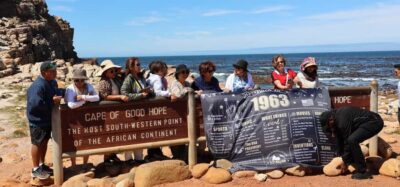
Cape Agulhas has a different feel from the better-known Cape of Good Hope. The Cape of Good Hope is famous for cliffs, beaches, and dramatic coastal scenery. Cape Agulhas offers a more geographic sense of achievement: you are at the bottom tip of Africa, at the point where two oceans meet.
That distinction matters when planning your Cape Town days. If you want a short scenic outing, this is not the right choice. If you want to mark a particular place on the map and see the Overberg region on the way, the long ride has a clear purpose.
I also like that the tour does not treat Cape Agulhas as an isolated photo stop. The route gives you a look at working towns, farming areas, transport corridors, and coastal communities. You see how the Cape changes as you move east from the city.
The day lasts about 8 to 9 hours. That is enough time for the drive, stops, commentary, and Cape Agulhas visit, but not enough for a leisurely stay in every town. You should think of it as a guided road trip with selected stops, not a slow village-hopping tour.
A few more Cape Town days worth comparing
- Wine Tour: Paarl, Franschhoek & Stellenbosch incl 3 wineries
★ 5.0 · 3,940 reviews - Cape Town: Hop-On Hop-Off Bus Tour with Optional Cruise
★ 4.8 · 3,929 reviews - Cape Town: Cape of Good Hope & Penguins Day Tour with Pickup
★ 4.7 · 3,362 reviews
A three-hour ride through Cape Town’s eastern edge
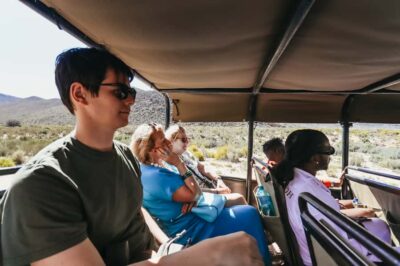
Pickup begins at your accommodation in Cape Town. The stated starting point is Cape Town City Centre, but hotel pickup is included, so confirm the exact time and location before the day begins. A driver-guide handles the transport and commentary, and bottled water is provided.
The first part of the ride follows the National Highway. This is a major route linking the Western Cape with the Eastern Cape and KwaZulu-Natal. It is also one of Cape Town’s main commuter roads, carrying people into the city each day.
That detail helps you understand why the first stretch can feel urban and practical rather than scenic. You are seeing a working transport route, not taking a quiet coastal lane.
The road passes Khayelitsha, whose name means our new home in Xhosa. It is Cape Town’s largest township, with a population of about half a million. Many residents rely on public transport for work in the city, while others work in the nearby Cape Winelands.
This is one of the more useful parts of the commentary because it adds social and economic context to the view outside the vehicle. You are not simply passing buildings. You are seeing a major residential area connected to the city and surrounding agricultural districts.
The tour does not present Khayelitsha as a formal walking visit, so expect to observe it from the road. If your main interest is a detailed township visit, this route alone will not provide that. Its value is as part of the wider journey.
Sir Lowry’s Pass, Steenbras Dam, and the Elgin Valley
As the road continues east, you pass Somerset West and climb through Sir Lowry’s Pass. The pass is named for Sir Galbraith Lowry Cole, governor of the Cape in 1828.
The road then reaches Steenbras Dam, one of the water sources serving the province. This is another example of the tour’s practical side. The guide does not only point out postcard views. You also get a sense of the infrastructure that supports life in the Cape.
Next comes the Elgin Valley, known here as the birthplace of Appletizer. The drink was created in 1966 by blending fruit juice with carbonated water. The valley’s connection to fruit production gives this stretch a clear local identity, even if you do not stop for a tasting.
For me, this part of the ride is useful because it breaks up the long drive with distinct subjects. You move from city transport and township life to mountain roads, water supply, and agriculture. The guide’s commentary matters most here, since much of the interest comes from knowing what you are looking at.
Hermanus gives the journey its best coastal pause
Hermanus is one of the strongest points on the route. It is described as a coastal town surrounded by ocean and mountains, with a strong fishing tradition and a reputation for fresh seafood.
It is also a major whale-watching center. Southern right whales come close to the coast from July through November. The name comes from the days when these whales were considered the right whales to catch because they were slow-moving and not shy around boats or shore.
The tour can include a whale-watching stop in Hermanus, but the supplied details do not promise a sighting or specify a separate boat trip. I would treat this as a chance to look for whales from the town rather than a guaranteed whale excursion.
Timing matters. If you visit outside July through November, do not book this tour mainly for whale watching. Hermanus still provides a pleasant coastal stop, but the seasonal whale element will not be available.
The town has about 50,000 residents and serves as a natural break in the drive. Lunch is not included, so Hermanus may be a sensible place to buy food if the timing allows. You should ask the guide about the planned lunch stop, since the precise schedule is not provided.
A different side of Cape Town altogether:
- Zipline Cape Town – From Foot of Table Mountain Reserve
★ 5.0 · 3,179 reviews - Cape Town: Table Mountain Cable Car, Hop-On Hop-Off Bus Tour
★ 4.6 · 3,157 reviews - Cape Point and Boulder’s Penguins Full Day Tour
★ 5.0 · 3,118 reviews - From Cape Town: Cape Point & Boulders Beach Full-Day Tour
★ 4.8 · 3,032 reviews
Caledon and Bredasdorp show the farming side of the Overberg
After Hermanus, the road continues through Caledon. This small town is mainly agricultural, with grain production and some stock farming.
You then pass Bredasdorp, the main economic and service center for the Overberg region. It is described as a busy local town rather than a sightseeing stop, and that is part of the appeal. The route gives you a look at places that support the region’s farms and residents, not only towns built for sightseeing.
Do not expect long visits in Caledon or Bredasdorp. Their role is to help explain the area you are crossing. The guide’s narration can turn what might otherwise be a series of road signs into a clearer picture of farming, trade, and regional life.
This is also where the day may feel repetitive if you prefer constant attractions. The reward comes from the overall progression, with the city giving way to open country and then the southern coast.
Reaching the Cape Agulhas lighthouse and ocean meeting point
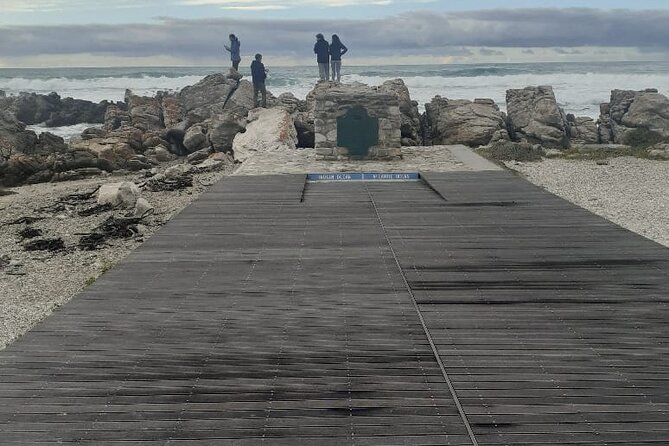
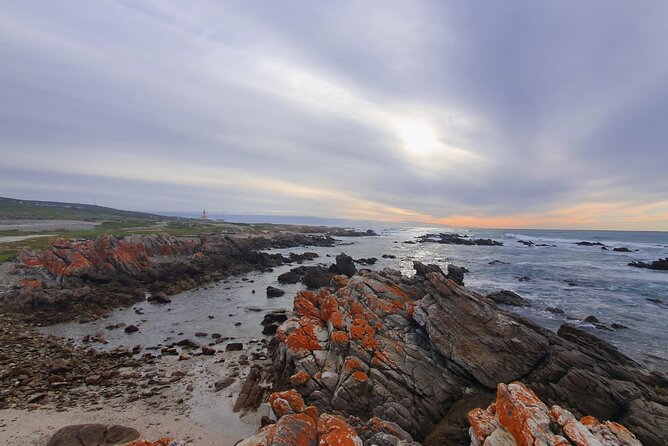
The main stop is Cape Agulhas, the southernmost point of Africa. Here, the Indian and Atlantic Oceans meet.
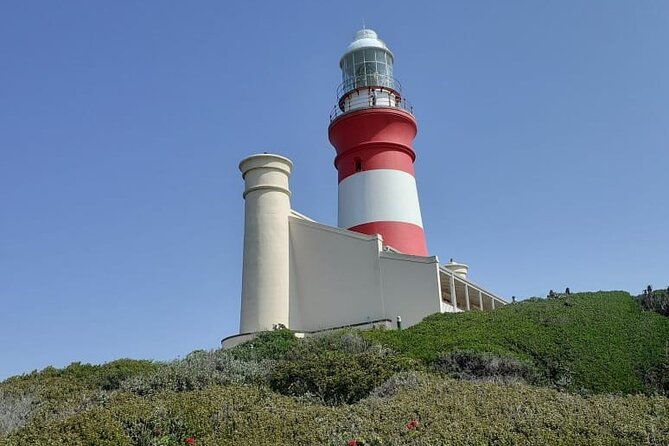
This is the moment to allow extra time for photographs and to take in the geographic significance of the place. The tour includes transport to the cape, but entrance to the Cape Agulhas lighthouse is not included. If entering the lighthouse is important to you, bring extra money and confirm the available visiting time with the guide.
The lighthouse adds historical and visual interest, but you do not need to enter it to understand why the stop matters. The meeting point of the oceans is the central reason to make the journey.
The information provided does not spell out how long you spend at Cape Agulhas. That is worth asking before booking if you want a relaxed visit. With a full route and a return through several towns, the schedule is likely structured rather than open-ended.
The return route adds Elim and Gansbaai
The trip back is not simply a repeat of the outward journey. It includes Elim, a small town founded in 1824 by German missionaries as a Moravian mission station.
Elim is known for its white fisherman’s cottages and has about 2,000 inhabitants. Its small scale gives it a different mood from the larger towns on the route. This is the sort of stop I value on a long excursion because it shows a quieter side of the region.
The town is not presented as a large attraction with many organized activities. You should expect a brief visit or drive through, depending on the guide’s schedule. Its appeal is the setting, the cottages, and the contrast with Cape Town.
The return also passes Gansbaai, a fishing town in the Overberg region with about 15,000 residents. It is associated with great white sharks.
Again, the tour does not include a shark encounter or boat trip. Gansbaai is part of the route, not a separate shark experience. Keep that distinction clear when comparing this tour with dedicated wildlife outings.
Transport, group size, and the value of the price
At $259.73 per person, this is not a bargain bus ride. It is priced as a guided private-style day trip with hotel transport, an air-conditioned vehicle, bottled water, and a driver-guide.
The value depends on what you would otherwise need to arrange. Cape Agulhas is far from Cape Town, and the tour removes the need to rent a car, navigate the route, pay for fuel, or coordinate public transport. For a solo visitor or anyone who does not want to drive, that convenience carries real value.
The guide also adds something a map cannot. You get explanations of Khayelitsha, Sir Lowry’s Pass, Steenbras Dam, Elgin, Hermanus, Caledon, Bredasdorp, Elim, and Gansbaai while someone else handles the road.
The main question is group size. The experience is described as small-group, but the maximum is listed as 60 people. Those two descriptions do not mean the same thing. A group of 60 can feel much less personal than a van with 8 or 12 people, especially during pickup and stops.
Ask the operator for the expected group size on your date. If you receive a small vehicle and a compact group, the price looks easier to justify. If the day runs close to the stated maximum, the experience becomes more about transport and basic guiding than personal attention.
What the guide can add to the day
The driver-guide is central to this experience. The strongest part of the outing is not only reaching Cape Agulhas. It is understanding the places between Cape Town and the cape.
A good guide can explain why the National Highway matters, how Khayelitsha connects to Cape Town’s work economy, why Steenbras Dam is important, and how farming shapes the Overberg. The route has plenty of passing scenery, but commentary gives it meaning.
One guide named in the feedback is Johnny, who was praised for being informative and for making the route from Muizenberg Beach memorable. Pickup from Muizenberg is useful to note if you are staying outside the city center, though you should still confirm that your accommodation is within the pickup area.
The operator also contacted one visitor the day before to confirm pickup spots and times and arrived on time. That is a small detail, but it matters on a day with so much driving. A late start would reduce time at Cape Agulhas and make the return feel rushed.
Who should book this Cape Agulhas trip?
I would recommend it to you if Cape Agulhas is high on your list and you do not want to rent a car. It also suits anyone who likes road trips, regional geography, and guided commentary more than a single packed attraction.
You will get the most from it if you can handle a long day in a vehicle. The experience involves about three hours of driving before reaching the main destination, followed by a return route through Elim, Gansbaai, and Hermanus.
It is a good fit for:
- First-time visitors who want Cape Agulhas without arranging their own transport.
- Solo visitors who prefer a guided day rather than driving alone.
- People interested in towns, farming, local infrastructure, and coastal communities.
- Anyone visiting Hermanus during whale season from July through November.
- Visitors who want a southern Africa geography milestone rather than another city tour.
I would be more cautious if you dislike long drives, want a slow lunch, or need guaranteed whale sightings. I would also ask about group size if personal attention is important to you.
The tour is generally open to most people, and confirmation is sent at booking. The cancellation terms are simple: cancel at least 24 hours before the start time for a full refund. Cancellations or changes within 24 hours are not refunded or accepted.
Practical costs and planning tips
Bring money for lunch and the Cape Agulhas lighthouse entrance. Neither is included, and no meal plan is specified.
Wear comfortable clothing for a full day out and keep your phone charged for photos. The vehicle is air-conditioned, and bottled water is supplied, but the tour details do not specify the exact walking distance at each stop.
Confirm these points before you pay:
- Your precise pickup time and location.
- The expected number of people in the vehicle.
- How long you will spend at Cape Agulhas.
- Where lunch will be taken.
- Whether the Hermanus stop includes shore-based whale watching only.
- The current lighthouse entrance fee.
The tour is booked, on average, 51 days ahead. That suggests you should reserve early if your Cape Town dates are fixed, especially during the July to November whale season.
Should you book it?
Book this Cape Agulhas tour if you want the simplest way to reach the southernmost point of Africa and you value a guide who can explain the route. The pickup, air-conditioned transport, water, and return service make a difficult day trip much easier.
Skip it if you want a short outing or a guaranteed wildlife activity. The day is long, lunch costs extra, the lighthouse costs extra, and the maximum group size may be larger than the small-group wording suggests.
For most people, the decision comes down to one question: is Cape Agulhas important enough to justify a full day on the road? If the answer is yes, this route offers more substance than a direct transfer because Hermanus, Elim, Gansbaai, Khayelitsha, and the Overberg farming towns give the journey a real sense of place.
FAQ
Where does the Cape Agulhas tour start?
The stated starting point is Cape Town City Centre, Cape Town, 8000, South Africa. Hotel pickup in Cape Town is included, so confirm your exact pickup location and time when booking.
How long does the tour take?
The experience lasts approximately 8 to 9 hours. The outward drive to Cape Agulhas takes about three hours.
Is hotel pickup included?
Yes. Hotel pickup and hotel drop-off in Cape Town are included.
Is transport air-conditioned?
Yes. The tour uses an air-conditioned vehicle.
Is bottled water included?
Yes. Bottled water is included in the tour price.
Is lunch included?
No. Lunch is not included, so you should budget for your own meal.
Is the Cape Agulhas lighthouse entrance included?
No. Entrance fees at the Cape Agulhas lighthouse are not included.
Can I watch whales in Hermanus?
A whale-watching stop in Hermanus is possible from July through November. The tour information does not guarantee whale sightings or specify a separate boat excursion.
What is the cancellation policy?
You receive a full refund if you cancel at least 24 hours before the experience starts. Cancellations or changes made less than 24 hours before the start time are not accepted, and the amount paid is not refunded.
Just listed around Cape Town
- Cape Town: Inspiring sustainable change through Street Art★ 4.9 · 5 reviews
- Cape Town Tandem Paragliding Square 1 Paragliding★ 5.0 · 5 reviews
- SandBoarding in Capetown + PhotoShoot★ 4.0 · 5 reviews
- Cape Town: Full-Day Private Peninsula Tour★ 3.6 · 5 reviews
- Private FULL DAY Tour: Cape of Good Hope & Boulders Beach★ 5.0 · 5 reviews
- Cape Town Full Day Family Fun With Kids Private Tour★ 4.0 · 5 reviews
- Private Tour to Aquila Game Reserve in Cape Town – see the Big5★ 5.0 · 5 reviews
- Peninsula Tour Cape Town★ 5.0 · 5 reviews
Cape Town Tours, compared.

Wine Tour: Paarl, Franschhoek & Stellenbosch incl 3 wineries
Read our review →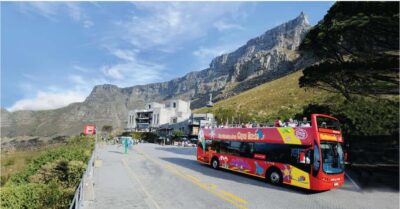

Cape of Good Hope & Penguins Day Tour with Pickup
Read our review →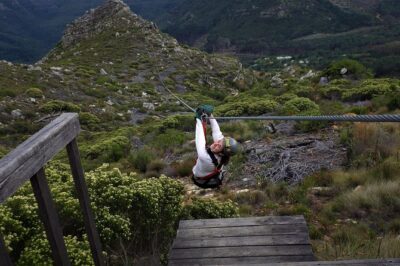
Zipline Cape Town – From Foot of Table Mountain Reserve
Read our review →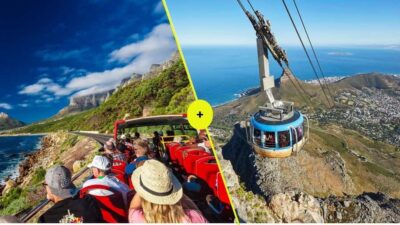
Table Mountain Cable Car, Hop-On Hop-Off Bus Tour
Read our review →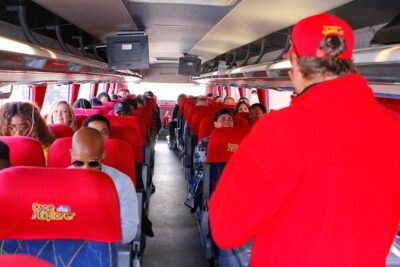
Cape Point and Boulder’s Penguins Full Day Tour
Read our review →