
Reviewed · CAPE TOWN TOURS
AFRIKOA Bean-to-Bar Chocolate Experience
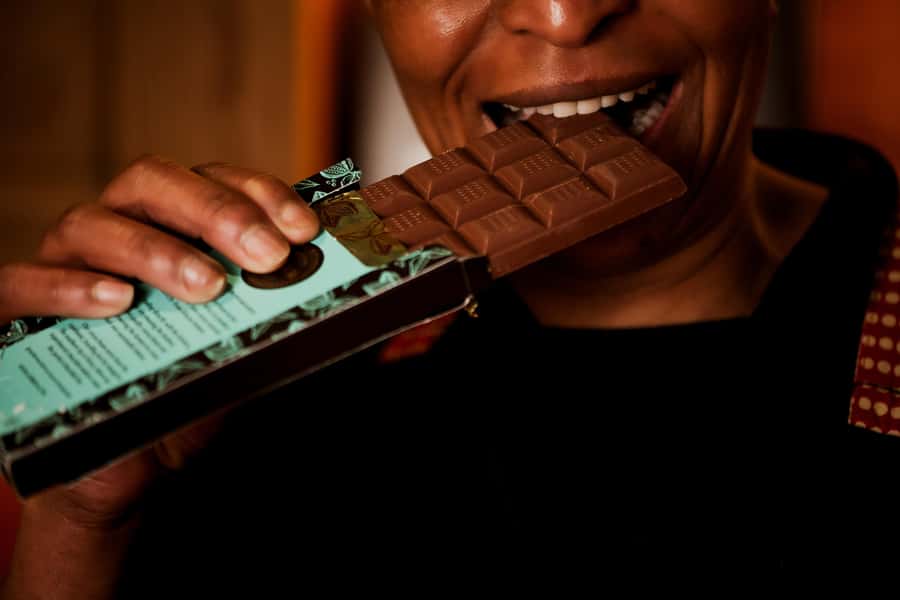
The most interesting part of this short bean-to-bar chocolate experience is its clear focus on Tanzanian cacao. You follow the bean through fermenting, drying, roasting, grinding, refining, conching, and tempering, then taste the result. It is a compact look at the work behind a bar of chocolate, not just a quick sampling stop.
I like the direct connection with farmers who grow heirloom cacao in Tanzania, and I like the chance to compare the finished chocolate with the production story behind it. The English-speaking chocolatier is described as friendly and energetic, and the store’s chocolate smell begins the welcome before the session does.
The main drawback is time. Thirty minutes goes quickly, and one visitor wished the session lasted longer. If you want a detailed workshop or hands-on chocolate-making class, this is more of an introduction and tasting than a full lesson.
Key points at a glance
- Tanzanian single-origin cacao: Learn why beans from one growing region can give chocolate its own character.
- Twelve stages of production: Follow the process from fermentation and drying through roasting, refining, conching, and tempering.
- Live product-making: See how selected Afrika products are made, rather than hearing only a general talk.
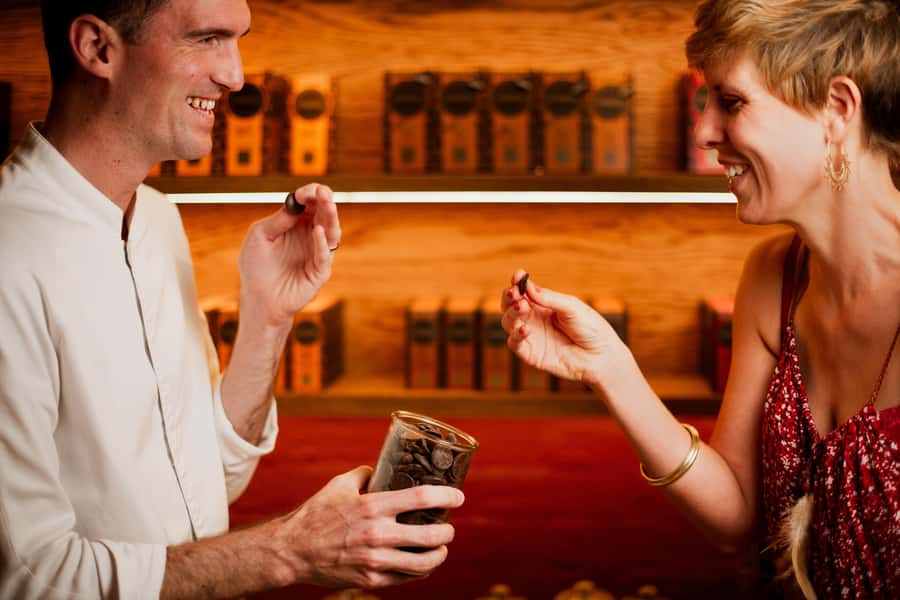
- Chocolate tasting included: Sample Afrika’s chocolates as part of the 30-minute visit.
- Easy Makers Landing stop: Meet at Store G11 in the Western Cape and follow the smell of chocolate.
- Good value for a short visit: At $13 per person, it works well as a quick food stop, though not as a long workshop.
From Tanzanian cacao bean to finished chocolate
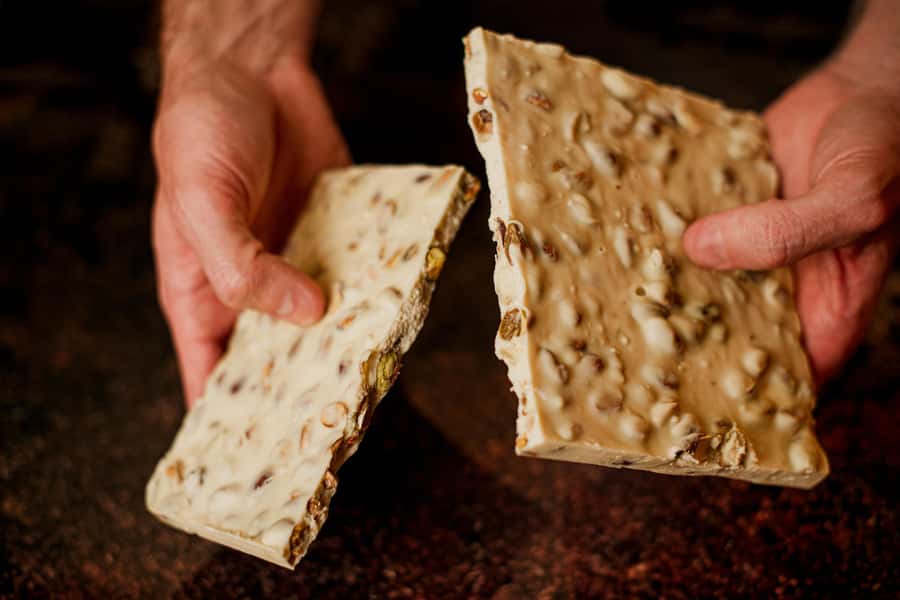
Afrika’s approach begins far from the shop, with heirloom cacao beans sourced directly from farmers in Tanzania. That detail gives this visit more substance than a standard sweets tasting. You are not only looking at the finished product. You are learning how origin, farming, and careful processing shape what you taste.
The focus is single-origin chocolate, meaning the cacao for each creation comes from a particular region of Tanzania. This matters because cacao is not a blank ingredient. Beans from different areas can bring different aromas, textures, and flavors, and keeping the source separate helps preserve those distinctions.
The session presents the journey in 12 steps. The named stages include fermenting, drying, roasting, grinding, refining, conching, and tempering. Some steps are likely grouped into the wider production chain, but the useful point for you is that the process is treated as a series of decisions, not one mysterious factory action.
Fermentation begins the transformation of the cacao bean after harvest. Drying prepares the beans for storage and roasting, while roasting develops the flavors that later appear in the finished chocolate. Grinding turns the roasted beans into a workable chocolate mass, and refining improves the texture by reducing rough particles.
Conching gives the chocolate time and movement to develop a smoother mouthfeel. Tempering controls the way the cocoa butter sets, which helps create the familiar snap and polished finish of a well-made bar. You do not need technical knowledge to follow this sequence. The point is to understand why chocolate can taste and feel so different depending on how it is handled.
More dessert stops in Cape Town:
- The Art of Chocolate Making Bean-To-Bar Experience in Cape Town
★ 3.5 · 6 reviews - Full-Day Chocolate, Cheese, Olive and Wine Tour from Stellenbosch
★ 5.0 · 13 reviews
What happens during the 30-minute visit
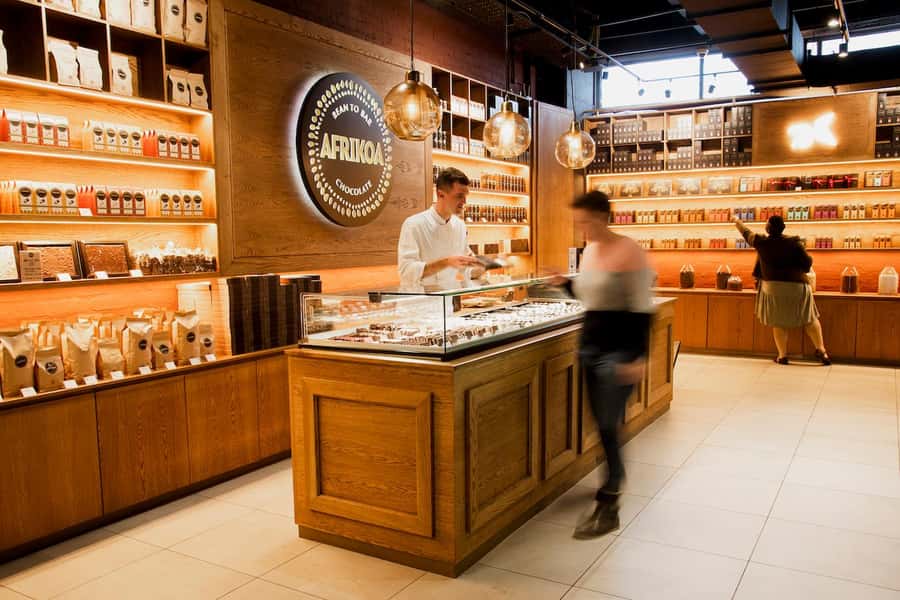
The visit begins at Afrika’s Store G11 in Makers Landing. You should go directly into the store rather than wait outside for a separate meeting point. The practical clue is simple: follow the smell of chocolate.
The first part sets up the bean-to-bar idea and introduces the Tanzanian cacao. This is where the experience earns its value. A quick tasting can tell you if you like a chocolate, but learning where the beans came from gives you a better way to think about its flavor and production.
Next comes the 12-step journey. The chocolatier explains how the beans are fermented and dried before they reach the roasting stage. You then move through grinding, refining, conching, and tempering. The exact presentation may vary depending on the products being made that day, but the purpose is to show how raw cacao becomes something ready to eat.
A highlight is the live look at specific products. This makes the talk more concrete than a general explanation of chocolate-making. You can connect the process with the bars or other items available in the store, then taste the finished chocolate.
The final part is sampling. Chocolate tasting is included in the $13 price, so you do not need to buy something to take part in the core activity. The tasting also gives you a reason to pay attention to the earlier explanation. You can think about the cacao’s origin, the processing stages, and the texture or flavor in front of you.
The schedule is tight. A half-hour is enough to learn the basic chain and sample chocolate, but it does not leave much room for long questions. If you have a special interest in cacao farming, production equipment, or flavor comparison, ask your questions early.
Why Tanzanian single-origin chocolate matters
Many chocolate products blend cacao from several places. That can create a consistent flavor, but it also hides the character of individual growing regions. Afrika’s single-origin focus takes the opposite approach by keeping cacao from a specific Tanzanian region identifiable in the final product.
For you, this makes the tasting more useful. You can consider the chocolate as a product of place, not only as a sweet snack. The experience does not provide a full agricultural tour or a visit to the farms, so you should not expect a detailed lesson about Tanzanian growing communities. It does, however, explain the direct sourcing connection and the importance of the beans’ origin.
The approach also connects with the wider bean-to-bar movement, which values sustainability, transparency, and ethical production. Those ideas can sound broad, but here they relate to a practical question: where did the cacao come from, and who controls the steps that turn it into chocolate?
Afrika oversees the stages from the bean through the finished product. That gives the producer more control over flavor and quality. It also lets the chocolatier explain the work in a way a basic shop tasting cannot.
The tasting: what you are really paying for
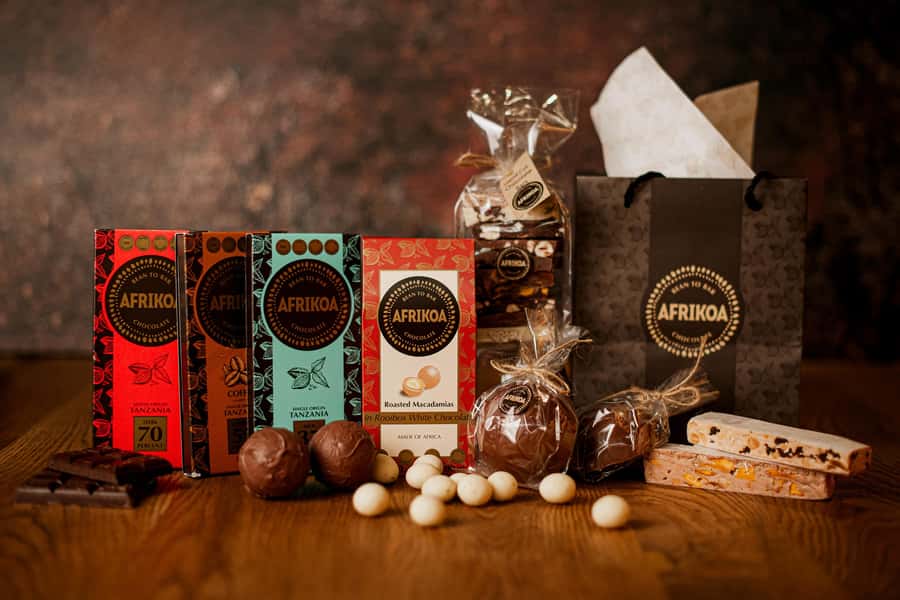
The included samples are the most immediate reward. The chocolate itself was the most strongly praised part of the feedback, with one person calling it an excellent tasting experience and another describing the chocolate as the best they had tried. Those are personal reactions, not a guarantee that every palate will agree, but they point to the tasting as the visit’s main pleasure.
I would treat the samples as a guided introduction rather than a full tasting flight. The supplied details do not specify how many chocolates you receive or which varieties are offered. You should therefore avoid booking with the expectation of a large formal tasting menu.
The chocolate smell in the store is part of the appeal. One visitor singled it out, along with the friendly energy of the chocolatier. That sensory welcome matters in a 30-minute activity because it gets you into the subject quickly. You are in a working chocolate shop, not a lecture room.
If you enjoy dark chocolate, unusual cacao origins, or food production stories, the tasting should feel worthwhile. If you prefer very sweet commercial chocolate, the single-origin focus may be less familiar. The activity gives you context, but it cannot promise a flavor profile that suits everyone.
More Drinking Tours in Cape Town:
- Private Day Tour to Cape Point , Penguins, Wine or Beer Tasting
★ 5.0 · 80 reviews - Wildlife Safari, Olive, Beer/Wine Tasting Day Tour from Cape Town
★ 5.0 · 39 reviews - From Cape Town: Wildlife Safari, Olive, Beer & Wine Tasting
★ 4.7 · 18 reviews - Wine Beer and Biltong Safari – Stellenbosch
★ 5.0 · 17 reviews
Shopping for gifts at Makers Landing
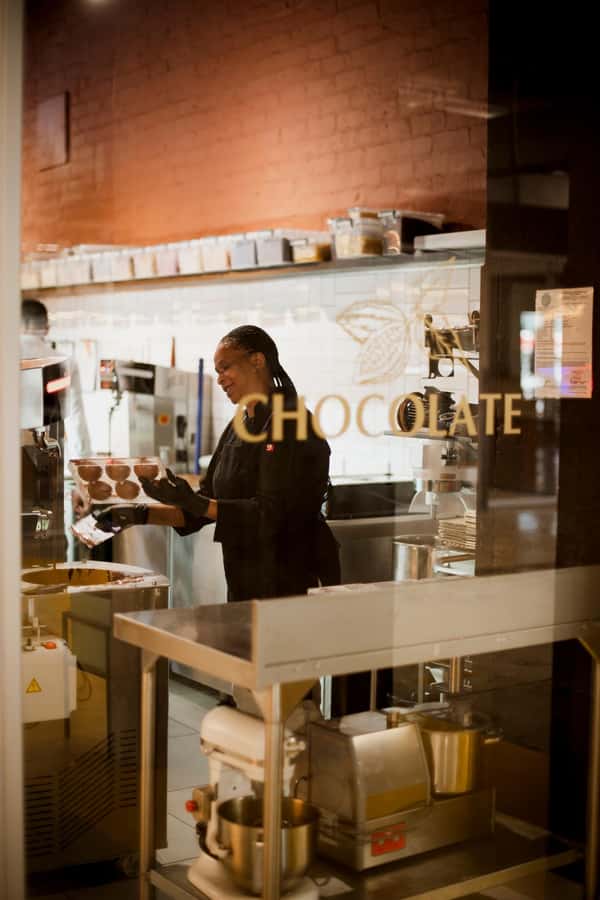
After the session, you can browse Afrika’s products and buy additional chocolate or gifts. Purchases are not included in the $13 price, so keep the tasting and shopping budgets separate.
This is a useful feature for visitors who want a small, local-feeling present for family or friends. A chocolate gift also travels more easily than many food products, though the supplied information does not specify packaging, shelf life, or transport advice. Ask in the store if you need help choosing something for a long journey.
The shopping element should not be the sole reason to book. You can visit the store for products, but the paid experience adds the production story, live demonstration, and samples. If you are already planning to browse Makers Landing, the activity gives your stop a clear focus.
Is $13 a fair price for half an hour?
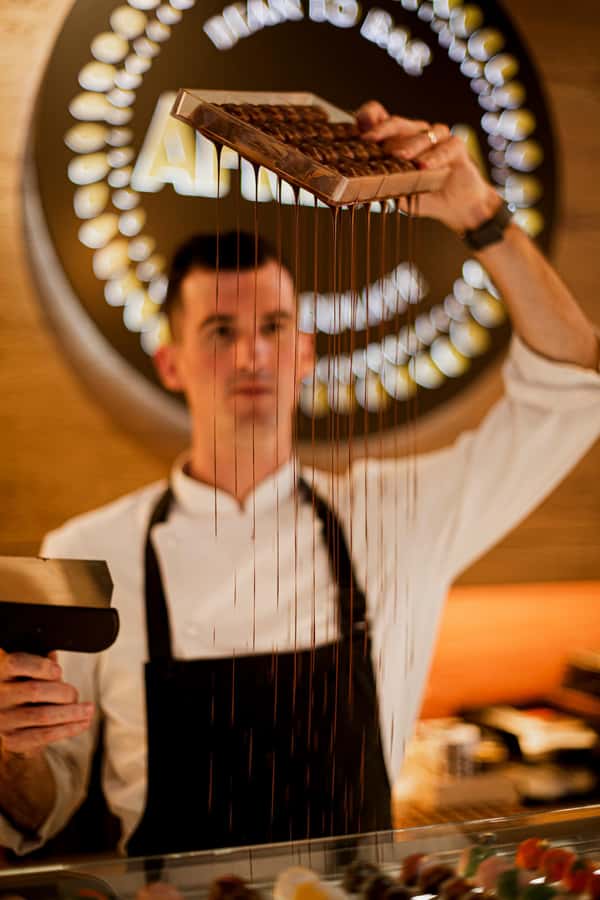
At $13 per person, this is priced as an affordable short activity rather than a major tour. The value depends on how you use it.
For a first introduction to bean-to-bar chocolate, the price is fair. You receive an English-language explanation of the production chain, a look at how particular products are made, and chocolate samples. The single-origin Tanzanian focus also gives the session a stronger identity than a generic chocolate talk.
The value is weaker if you expect to make chocolate yourself. There is no indication that you will handle cacao, temper chocolate, mold bars, or take home something you made. This is a demonstration and tasting.
I would especially consider it good value as part of a day at Makers Landing. It fills only 30 minutes, so it can fit before or after other plans without taking over your schedule. If you are traveling across the Western Cape solely for this activity, the short duration makes the calculation less favorable.
The high rating of 4.8 from 12 ratings supports the idea that the basic format works well, especially for people who want a friendly explanation and a taste. The small number of ratings means I would use that score as a positive sign, not as proof that the activity suits every visitor.
Timing, access, and practical planning
The experience runs Wednesday through Sunday from 10:00 a.m. to 3:00 p.m. The last booking is at 3:00 p.m. It is not available on Mondays or Tuesdays according to the stated schedule, so check your plans before you reserve.
You meet at Store G11 in Makers Landing, in the Western Cape. No transport is included or described, so arrange your own way to the venue. The meeting instructions are simple: enter the store directly.
The activity is wheelchair accessible. Children under seven are not accepted, making this a better fit for older children, teenagers, and adults. Alcohol and drugs are not allowed.
You can cancel up to 24 hours before the start for a full refund, and the reserve-now, pay-later option lets you hold a place without paying immediately. Those policies are useful if your Western Cape plans may change, but they do not make the session longer or more hands-on.
The instructor language is English. If you need another language, this experience is not presented as a multilingual tour.
Who will enjoy this chocolate stop most?
I would recommend it to anyone curious about how food is made, especially if you enjoy seeing the steps behind a familiar product. Chocolate fans get a focused tasting, while families with older children can use the visit as a short educational stop.
It is also a good choice for shoppers looking for distinctive gifts. The Tanzanian origin story gives the products a stronger sense of place than an ordinary supermarket bar.
This is less suitable for children under seven, who cannot take part. It is also not the right pick if you want a long class, farm visit, transport from your hotel, or a large tasting session. None of those are part of the stated format.
I would book it when you are already near Makers Landing and want a compact activity with a clear food theme. I would think twice if your schedule is tight and you dislike paid demonstrations that finish quickly.
Should you book the Afrika Bean-to-Bar Chocolate Experience?
Book it if you want a short, affordable introduction to Tanzanian single-origin cacao, with samples and a look at the full bean-to-bar process. The friendly English-speaking presentation, strong chocolate focus, and store setting make it easy to fit into a Western Cape day.
Skip it if you want to make chocolate yourself or spend several hours learning production techniques. The 30-minute format is its strength for a quick stop, but also its clear limit. At $13, it offers solid value for an explanation, live product-making, tasting, and shopping access, provided you arrive with realistic expectations.
FAQ
Where does the Afrika Bean-to-Bar Chocolate Experience take place?
It takes place at Afrika’s Store G11 in Makers Landing in the Western Cape, South Africa.
How long does the chocolate experience last?
The experience lasts 30 minutes.
What hours is the activity available?
It runs Wednesday through Sunday between 10:00 a.m. and 3:00 p.m. The last booking is at 3:00 p.m.
What does the experience cost?
The price is $13 per person.
What will I learn about chocolate-making?
You will follow 12 stages of bean-to-bar chocolate-making, including fermenting, drying, roasting, grinding, refining, conching, and tempering cacao beans.
Is chocolate tasting included?
Yes. Chocolate samples are included in the experience.
Can I buy extra chocolate or gifts?
Yes. Additional products are available to buy at the store, but they are not included in the activity price.
What language is the experience in?
The instructor presents the experience in English.
Is the activity wheelchair accessible?
Yes. The activity is wheelchair accessible.
Can children join the experience?
Children under seven are not suitable for the activity.
Can I cancel my booking?
Yes. You can cancel up to 24 hours in advance for a full refund. You can also reserve now and pay later.
Just listed around Cape Town
- Cape Town: Inspiring sustainable change through Street Art★ 4.9 · 5 reviews
- Cape Town Tandem Paragliding Square 1 Paragliding★ 5.0 · 5 reviews
- SandBoarding in Capetown + PhotoShoot★ 4.0 · 5 reviews
- Cape Town: Full-Day Private Peninsula Tour★ 3.6 · 5 reviews
- Private FULL DAY Tour: Cape of Good Hope & Boulders Beach★ 5.0 · 5 reviews
- Cape Town Full Day Family Fun With Kids Private Tour★ 4.0 · 5 reviews
- Private Tour to Aquila Game Reserve in Cape Town – see the Big5★ 5.0 · 5 reviews
- Peninsula Tour Cape Town★ 5.0 · 5 reviews
Cape Town Tours, compared.

Wine Tour: Paarl, Franschhoek & Stellenbosch incl 3 wineries
Read our review →

Cape of Good Hope & Penguins Day Tour with Pickup
Read our review →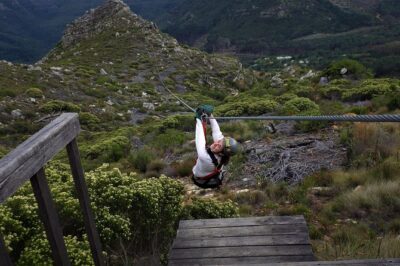
Zipline Cape Town – From Foot of Table Mountain Reserve
Read our review →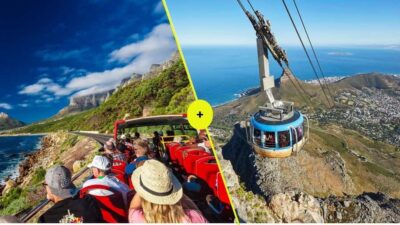
Table Mountain Cable Car, Hop-On Hop-Off Bus Tour
Read our review →
Cape Point and Boulder’s Penguins Full Day Tour
Read our review →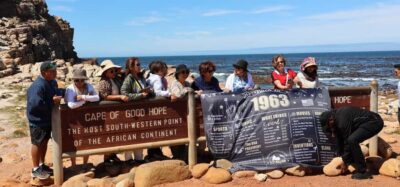

Browse the lists this tour appears in