
Reviewed · KRUGER NATIONAL PARK SAFARIS
4 days Kruger Park Big 5 Safari and Awesome Panorama Route
Kruger’s Big Five and the Panorama Route make a fine four-day pairing. You get lions, elephants, buffalo, rhinos, and perhaps leopard, then trade the bush for Pinnacle Rock, God’s Window, waterfalls, potholes, and a boat ride on Blyde Dam. It is a busy trip, but it packs two very different sides of northeastern South Africa into one journey from Johannesburg.
I like the way the trip uses several kinds of wildlife viewing, including a sunset drive into the night and long daytime drives through Kruger. I also like the practical guidance from Jakes, whose opening explanation of South Africa’s past helps you understand the places you pass. The main drawback is the pace: some days run 10 to 12 hours, and lunch and dinner are not included.
Key points to know before booking
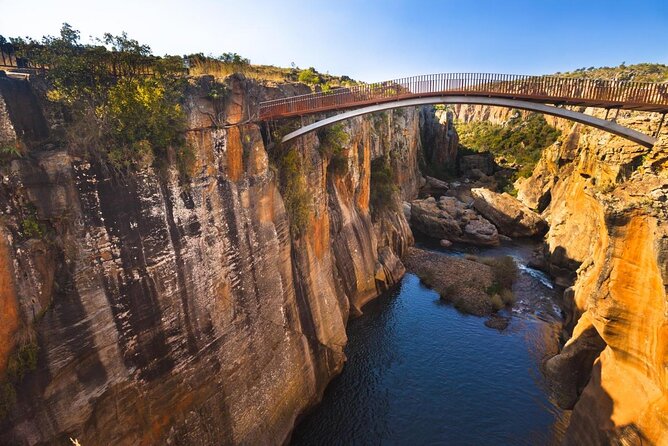
- Panorama Route on day one: Pinnacle Rock, God’s Window, Berlin Falls, Bourke’s Luck Potholes, and Blyde River Canyon fill the first long day.
- Three nights in or near Kruger: The plan uses chalets and park camps such as Satara, Lower Sabie, Skukuza, Letaba, or Olifants, depending on availability.
- Several ways to seek wildlife: Expect daytime drives, a sunset drive into darkness, and a possible early morning guided walk at your own cost.
- Small group limit: Transportation and guiding are arranged for a maximum of 16 people, with pickup and return at O.R. Tambo.
- Breakfast is included, other main meals are not: Restaurants are available, but you need to budget for lunch, dinner, drinks, and optional activities.
- Book well ahead: The operator asks you to book 60 days in advance, and accommodation depends on availability.
Why this four-day route works
The appeal is simple: you do not have to choose between dramatic scenery and wildlife. Many short South African trips focus on one or the other. This one gives you the waterfalls and canyon viewpoints first, then puts most of the remaining time into Kruger.
That split also helps you understand the region. The Panorama Route is about rock, water, high viewpoints, and the story of gold mining at Pilgrim’s Rest. Kruger is slower and more watchful. You may spend part of a drive searching a roadside thicket for a leopard, then stop beside a river where hippos and elephants are easier to spot.
At $1,390 per person, this is not a budget park transfer. The price includes three nights, park fees, professional guiding, pickup and drop-off, breakfast each morning, and transport. It also saves you from arranging the long drive from Johannesburg, park entry, accommodation, and several sightseeing stops yourself.
The value depends on how much structure you want. If you prefer to rent a car, choose your own camps, and handle park fees and meals, you could build a different trip. If you want one booking to link Johannesburg, the Panorama Route, Blyde Dam, and Kruger, the package is easier to justify. Groups of six or more adults receive a 20 percent discount, which changes the calculation considerably.
More Safaris in Johannesburg
- From Johannesburg: Pilanesberg Nature Reserve Game Safari
★ 4.8 · 1,327 reviews - Full Day Ultimate Pilanesberg National Park Safari from Johannesburg or Pretoria
★ 4.5 · 718 reviews - Early Morning Balloon Safari with Breakfast from Magaliesburg
★ 5.0 · 418 reviews
Day one: Johannesburg to the Panorama Route
The first day begins at 7:00 a.m. at O.R. Tambo in Kempton Park. You then spend about 10 hours moving east toward Graskop and the Blyde River Canyon area. This is a sightseeing day, but do not confuse it with a gentle afternoon outing. You have a long road transfer, several stops, and a final overnight stay at Forever Blyde Canyon or a similar resort.
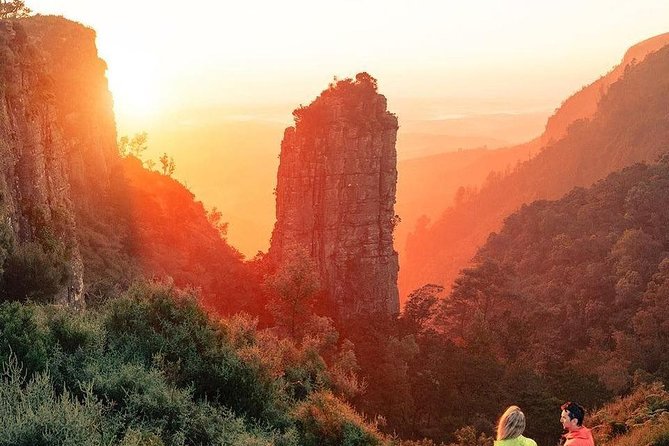
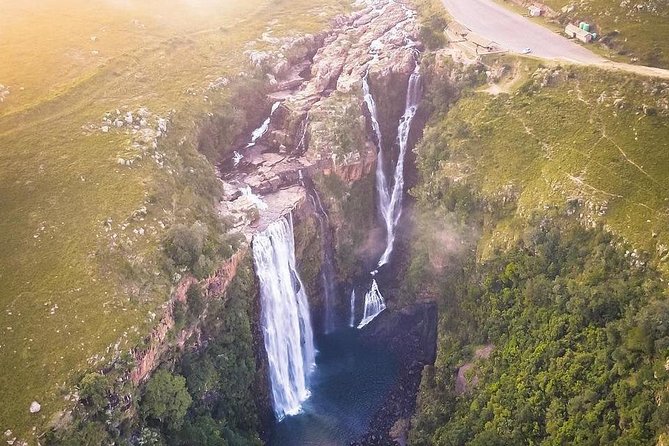
Pinnacle Rock is an early reminder that this route is about unusual stone formations as much as big views. From there, God’s Window and Wonder View offer broad high-country outlooks. Weather matters here. Clear conditions can give you long views, while cloud and mist may soften or block them. That uncertainty is part of mountain sightseeing, so keep expectations flexible.
Berlin Falls adds moving water to the day. Local arts and crafts are sold nearby, giving you a chance to browse rather than simply step off the vehicle, take a photo, and leave. If you buy something, remember that the tour price does not include personal purchases.
After lunch at a local restaurant, the route continues to Bourke’s Luck Potholes. These rounded hollows were cut into the rock by swirling water at the meeting point of the Blyde and Treur rivers. They are easy to appreciate from the walkways and viewing areas, but allow for uneven ground and sun exposure.
The day finishes at the Blyde River Canyon area. A chalet at Forever Blyde Canyon, or a similar property, gives you a more restful setting before the early start into Kruger. Accommodation is subject to availability, so the exact property and room setup may change.
Day two: Blyde Dam before entering Kruger
After breakfast, you take a boat trip on Blyde Dam. This is not just a scenic cruise. The interpretation tour points out the Kadishi Tufa waterfall and the Three Rondawels, two of the region’s signature sights.
Kadishi Tufa waterfall is described as about 200 meters high and the second tallest tufa waterfall on earth. Tufa forms when mineral-rich water deposits material around plants and rock surfaces. The result is a waterfall with a distinct geological character, not simply a tall drop of water.
The boat trip gives you a different angle on the canyon. After a full day of viewpoints, being down on the dam changes the scale of what you saw above. You should still expect the timing to be tight, since the day continues into Kruger through Orpen Gate.
Entering through Orpen Gate begins the wildlife portion in earnest. The drive to Satara Rest Camp, or a similar camp such as Letaba or Olifants, doubles as a game drive. Keep your camera and binoculars ready. The animals do not follow the schedule, and the first sighting may happen while the vehicle is still making its way to camp.
Satara is described as an area with open bush and good animal viewing. That matters because open ground gives you a better chance of spotting larger animals at a distance. You may see giraffe, elephant, antelope, zebra, or buffalo, but no guide can promise a particular species on a particular road.
The day can last around 12 hours. That is a lot of sitting, looking, and getting in and out at scheduled points. The reward is that you reach the park’s interior without wasting a separate day on transport.
At night, the camp sounds change. Owl calls, nightjars, and the whoop of hyenas may replace the noise of the road. You should not expect a private wilderness camp, but this is still a valuable part of staying inside or close to the park. It puts you near the next morning’s wildlife routes.
Day three: the main Kruger wildlife day
Day three starts early, with coffee before the game drive. Early hours matter because the cooler part of the day can be active, and the light is often better for photographs. The plan is to use scenic routes toward the southern section of Kruger, ending at Lower Sabie or, depending on arrangements, Skukuza.
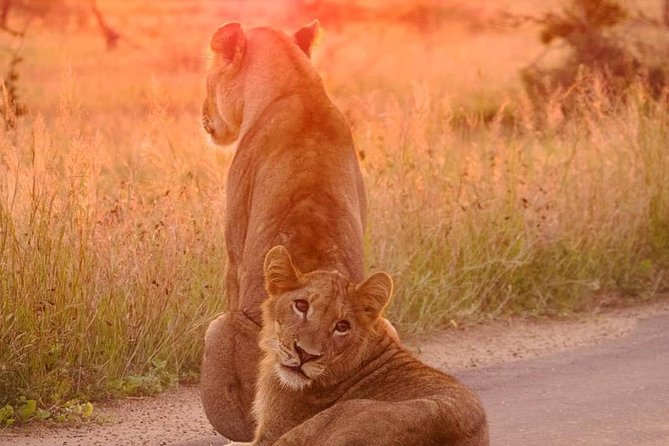
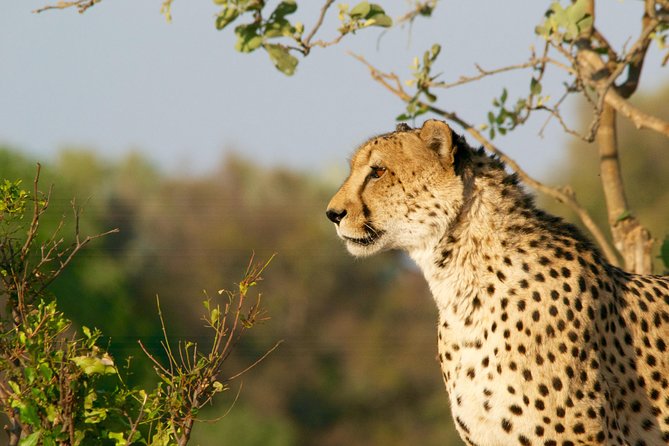
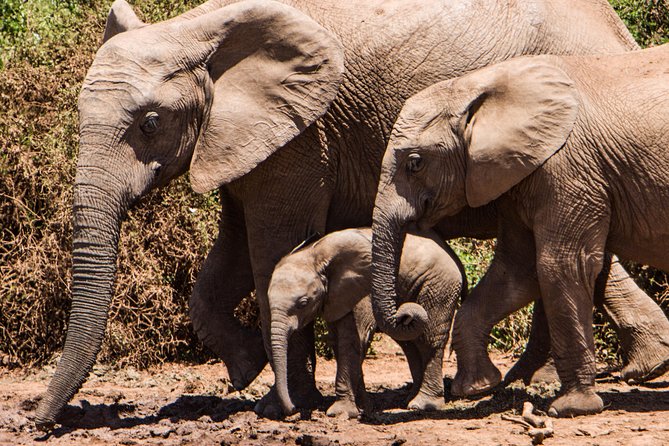
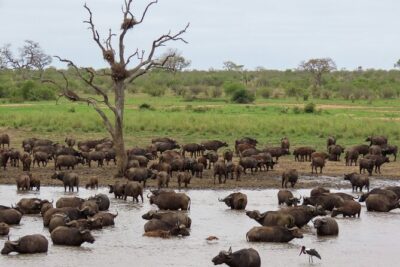
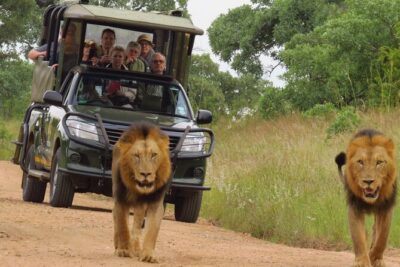
This is the day built around variety. Possible sightings include lion, leopard, cheetah, wild dog, spotted hyena, elephant, zebra, hippo, warthog, giraffe, buffalo, eland, kudu, roan antelope, and sable antelope. The list is broad, but you should treat it as a set of possibilities rather than a checklist.
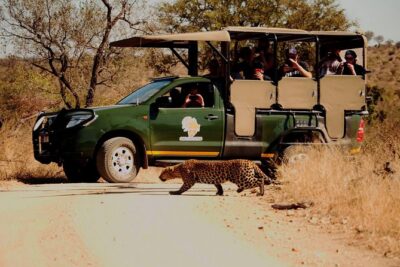
The Big Five are elephant, rhinoceros, lion, leopard, and buffalo. Elephant and buffalo can be easier to notice because of their size and group behavior. Lion may be resting in shade. Rhino can blend into pale scrub. Leopard is often the hardest prize because it can remain hidden in trees or thick brush.
Your guide’s role matters most here. Jakes is praised for explaining South Africa’s background as well as identifying wildlife. That combination is useful. A good safari is not only about naming an animal. It is also about understanding why the park was created, how people and wildlife share the region, and what you are actually looking at.
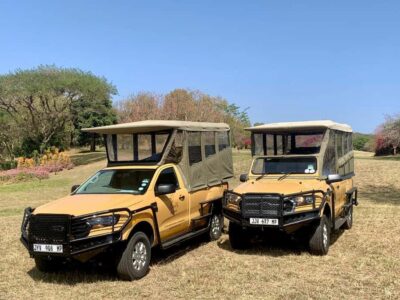
You ride in the tour vehicle, so the experience is not the same as driving yourself. That can limit your control over stops, but it also means you are not busy with directions, park rules, or vehicle decisions. The tour uses a closed, air-conditioned vehicle according to the number of passengers, while the sunset outing uses an open safari vehicle.
Lower Sabie sits beside the Sabie River, one of the few rivers in Kruger that flows all year. A river setting improves the chance of seeing animals come to drink, rest, or cross nearby, although wildlife remains unpredictable. Skukuza is another possible overnight location if the arrangement changes.
Day three lasts about 11 hours. Bring patience. You may spend long stretches scanning trees and grass, then see several species in quick succession. That contrast is normal and is one reason a safari needs time.
More Kruger safaris:
- From Johannesburg: 3-Day Budget Tent Kruger Park Safari
★ 4.5 · 163 reviews - 3-Day Kruger National Park Open Vehicle Safari
★ 5.0 · 61 reviews - Johannesburg: 4-Day Classic Kruger National Park Safari
★ 4.8 · 52 reviews - All Inclusive 3 Day Kruger Safari Adventure From Johannesburg
★ 4.5 · 50 reviews
The sunset drive and night wildlife
The sunset drive is one of the strongest parts of the plan because it extends viewing beyond daylight. You may see animals that are less active during the heat of the day, and the return drive allows you to listen for night sounds as darkness settles.
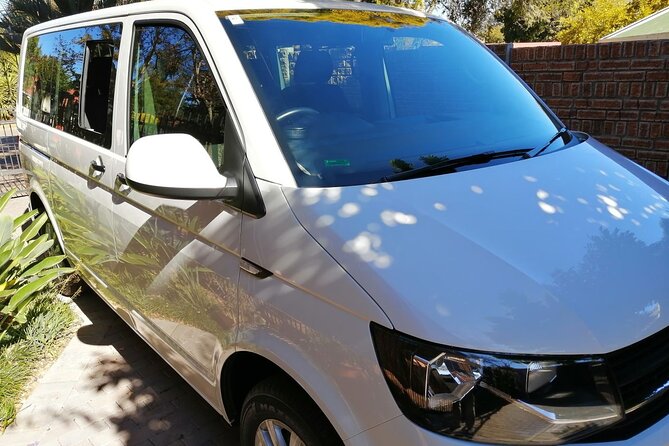
This drive takes place in an open safari vehicle and has a minimum age of six. Families with younger children need to plan around this rule. Parents can take turns doing game drives, since other drives are available, but that means one adult may miss the sunset outing.
The open vehicle gives you a more exposed view than the closed transport vehicle. Bring a rain coat even if the morning looks clear, and carry mosquito repellent because Kruger is a malaria area. Sun block, a hat, binoculars, and a camera are sensible additions.
Do not book the trip expecting a guaranteed night spectacle. The value is in changing conditions, sounds, and the chance to see different behavior. A hyena call or a shape moving beyond the road can be exciting, but the drive may also produce quiet stretches.
Day four: one last drive and the return to Johannesburg
The final morning offers an optional early guided walk, at your own cost and subject to the time needed to reach the airport. This is worth considering only if your onward schedule has enough margin. The return drive to Johannesburg takes about four to five hours after you leave the park, and the day itself is listed at roughly 10 hours.
After breakfast at the restaurant, you make a final game drive while leaving Kruger. This last stretch can be surprisingly useful. Animals do not know it is your departure day, and the exit route may offer one more elephant, giraffe, antelope, or large predator sighting.
Lunch is taken en route and is not included. The return to the O.R. Tambo meeting point completes the trip. If you have a flight the same day, allow plenty of extra time beyond the stated driving estimate. Road conditions, park exits, stops, and traffic can all affect the schedule, and the supplied details do not promise an airport transfer time.
Accommodation, food, and daily comfort
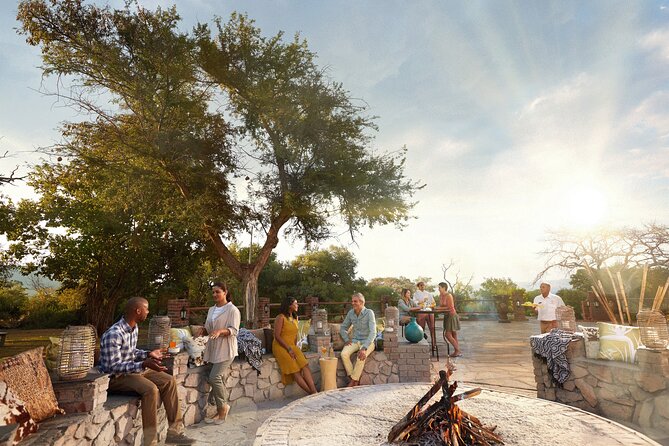
Three nights of accommodation are included, but the exact camps and properties depend on availability. The plan names Forever Blyde Canyon for the first night, then Satara or similar, followed by Lower Sabie or Skukuza. Letaba and Olifants may also be used.
This arrangement is practical rather than luxurious. You are paying for location and access to the route, not a resort holiday with every meal included. Ask about the confirmed properties when your booking is accepted if the camp location is important to you.
Breakfast is included on all three mornings. Lunch and dinner are extra, as are alcoholic drinks and optional activities. Restaurants are available where you eat, and a vegetarian option can be arranged if you advise the operator at booking. Specific dietary needs should also be given in advance.
Transport is in a closed, air-conditioned vehicle sized for the group. The maximum is 16 people. That is small enough to keep the guide within reach, but it is not a private safari. If you want complete control over stops and seating, ask about private arrangements before paying.
Is $1,390 a fair price?
The cost looks high until you separate the included parts. You receive three nights, park fees, a professional guide, hotel pickup and return, breakfast, the Panorama Route stops, the Blyde Dam boat trip, and multiple Kruger drives. You also avoid the work of linking several remote attractions by road.
The price is less attractive if you need a private vehicle, want upgraded accommodation, or expect full-board meals. Those extras are not included. You should budget separately for lunch, dinner, drinks, optional activities, crafts, and any personal expenses.
The six-adult discount is important. A 20 percent reduction brings the listed price down to $1,112 per person before other costs, assuming the discount applies as stated to your group. For a family group or several friends, this can make the trip much better value.
Who should book this safari?
I would choose this for someone with only four days who wants both scenic touring and a first Kruger experience. It also suits people who prefer a guide to handle the long drives and explain what they are seeing.
Families can participate, but the sunset vehicle has a minimum age of six. Anyone with limited patience for long road days should think carefully. The schedule is full, and there is not much spare time for lingering at each viewpoint or resting between drives.
This is also a good fit for first-time safari visitors who want a broad introduction rather than a specialist wildlife trip. You get a chance at the Big Five, but sightings are never guaranteed. If your only goal is leopard photography or a particular camp, a longer and more focused safari would give you better control.
Practical details before you commit
Pickup and return are at O.R. Tambo, with a stated 7:00 a.m. start. The tour is near public transport, and the information says most people can take part, but you should still be ready for long periods in a vehicle and several early mornings.
Confirmation is sent within 48 hours, subject to availability. The operator asks you to book 60 days ahead, which is sensible given the limited accommodation and the maximum group size.
The cancellation terms are strict. The experience is non-refundable and cannot be changed for any reason. If the minimum number of participants is not met and the operator cancels, you are offered another date or experience, or a full refund. Make sure your dates are firm before booking.
Should you book it?
Book this trip if you want an efficient mix of canyon scenery, geological sights, a dam cruise, and several chances to see Kruger wildlife without arranging each part yourself. The best reasons are the varied route, the full third day in the park, and Jakes’s ability to add South African context to the drive.
Think twice if you need slow mornings, included dinners, luxury rooms, or a guaranteed animal list. This is a busy, road-heavy safari with extra costs and firm cancellation rules. For an organized first look at the Panorama Route and Kruger, especially with six or more adults sharing the discount, it offers a strong and practical four-day plan.
FAQ
Where does the tour start and finish?
It starts and ends at O.R. Tambo in Kempton Park, Johannesburg. Pickup and drop-off at the meeting point are included.
What time does the tour start?
The stated start time is 7:00 a.m.
How long is the tour?
The experience lasts approximately four days and includes three nights of accommodation.
Are the Big Five guaranteed?
No specific animal sighting is guaranteed. The trip offers good opportunities to look for elephant, rhinoceros, lion, leopard, and buffalo, along with many other species.
Is the sunset game drive suitable for children?
The open safari vehicle used for the three-hour sunset drive has a minimum age of six. Parents can take turns joining drives if needed.
What meals are included?
Three breakfasts are included. Lunches, dinners, and alcoholic drinks are not included, although restaurants are available.
Is accommodation fixed?
No. Accommodation depends on availability. The plan names Forever Blyde Canyon, Satara, Lower Sabie, Skukuza, Letaba, and Olifants as possible properties or camps.
Is this a malaria area?
Yes. Kruger is a malaria area, so you should bring mosquito repellent. Sun block, a rain coat, binoculars, and a camera are also advised.
More four day trips in Johannesburg
- 4 Day Classic Kruger National Park Safari
★ 5.0 · 41 reviews - 4 Day Lodge and Treehouse Kruger National Park Safari
★ 4.5 · 33 reviews - 4 Day Kruger National Park Tour
★ 5.0 · 30 reviews - 4-Day Kruger National Park Safari from Johannesburg
★ 5.0 · 24 reviews
More Big 5 safaris in Johannesburg
- Big 5 Safari Experience at Pilanesberg National Park
★ 5.0 · 16 reviews - Johannesburg: Half-Day Big 5 Safari Tour
★ 4.0 · 7 reviews - Private Safari Tour: Pilansberg National Park Big 5
★ 5.0 · 7 reviews - From Cape Town: Big Five Game Reserve with Lunch
★ 4.6 · 2,409 reviews
Just listed around Johannesburg
- Constitutional Hill and Soweto 5 hours tour.★ 5.0 · 5 reviews
- 5 Day Kruger Glamping Safari and Panorama Tour★ 5.0 · 5 reviews
- Cradle of Humankind and Maropeng Day Tour from Johannesburg★ 4.0 · 5 reviews
- Johannesburg: Hot Air Balloon Flight★ 5.0 · 5 reviews
- Lion park★ 4.5 · 5 reviews
- Half Day Soweto and Apartheid Museum Guided Tour★ 5.0 · 5 reviews
- Pretoria Historical Tour★ 4.0 · 5 reviews
- 5 Day Kruger National Park and Panorama Route Safari★ 4.5 · 5 reviews
Kruger National Park Safaris, compared.
Kruger National Park sunrise Morning Private safari
Read our review →
Marloth Park: Kruger National Park Safari Game Drives
Read our review →Browse the lists this tour appears in